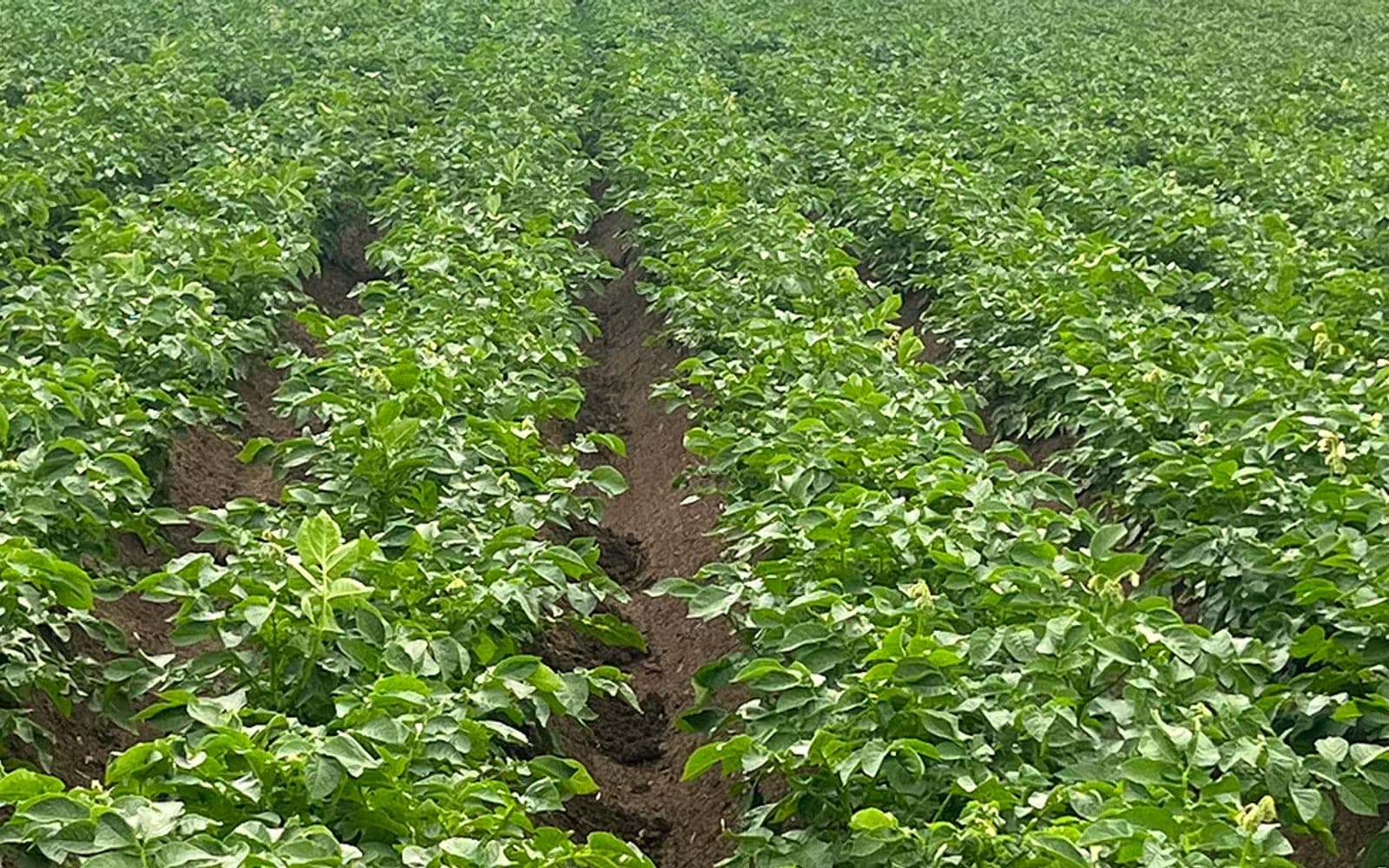
Whether a batch of potatoes is accepted is decided by the assessment of a sample at unloading: the buyer takes a sample, weighs the contamination, looks the tubers over from the outside and cuts some of them open. What disqualifies a batch is not single defects but their scale in the sample, and defects that cannot be undone: greening and rot, which the buyer would have to sort out at their own cost, and internal defects, which cannot be seen from the outside at all. Below we describe what a packhouse and a processing plant look for, where these defects come from and how we prevent them.
How a batch is assessed at unloading
The assessment usually goes in this order:
- Taking a sample from several places in the load, so that the top layer alone is not what gets assessed.
- Contamination, organic and mineral: soil, stones, haulm, in other words what the buyer does not want to pay potato money for.
- External assessment, tuber by tuber: greening, bruising, skin abrasion, shape defects, signs of skin diseases, sprouts.
- Cutting part of the sample open, because the most expensive defects sit inside and are not visible on the belt.
- Processing parameters for potatoes going to industry: dry matter and a fry test, which we write about under dry matter and sugars in Innovator. Results from the plant's laboratory may only come in after the truck has been unloaded.
The result from the sample carries over to the whole batch, which is why in B2B deliveries it matters so much that a batch is uniform: one field, one harvest date, one chamber. How we build that record, we describe in our post on vegetable batch traceability.
Defects visible from the outside
| Defect | Where it comes from | Why it bothers the buyer |
|---|---|---|
| Greening | light in the field with shallow planting, or in the warehouse | the tuber turns bitter and it cannot be reversed |
| Bruising and skin abrasion | harvest and transfers, especially with cold tubers | dark patches after peeling, a shorter shelf life |
| Common scab | soil pH and dryness while the tubers are setting | weight lost in peeling, worse appearance |
| Black scurf (rhizoctonia) | infection from the soil and from seed potatoes | black growths on the skin, waste at washing |
| Deformities and secondary growth | breaks in the water supply during growth | the tuber misses the size grade and the peeling line |
| Sprouts | storage that is too warm, the end of dormancy | weight loss and softening of the tuber |
Buyers treat greening particularly strictly, because it goes with bitterness and does not disappear in storage. The requirements for potatoes in domestic trade are set by the Polish Minister of Agriculture and Rural Development regulation of 29 October 2003 on detailed requirements for the commercial quality of potatoes, amended in 2026 (Dz.U. 2026 item 423). It treats a ware potato tuber as greened when the green colour covers more than 1/8 of its surface and reaches deeper than 5 mm into the flesh. Under the law as it stands in 2026, the main limits for a batch of ware potatoes are as follows:
| Tubers in a batch of ware potatoes | Maximum share |
|---|---|
| greened and with internal defects, combined | up to 2% by weight |
| affected by rot | up to 1% by weight |
| with sprouts longer than 3 mm | not allowed |
| damaged mechanically or by pests deeper than 5 mm | up to 3% by weight |
| affected by common scab on more than 1/4 of the surface | up to 3% by weight |
In small ware potatoes, greened tubers are not allowed at all. Size counts separately: the minimum diameter is 28 mm for early potatoes and 35 mm for round and round-oval ware varieties, while for long varieties 30 mm is measured across the cross-section. Since 30 April 2026 there are also categories for small early potatoes, with a diameter from 20 to 28 mm, and small ware potatoes, from 20 to 35 mm, and from 20 to 30 mm for long tubers. Potatoes intended for food processing are not covered by these rules, so whether such a batch is accepted is decided by the contract with the plant.
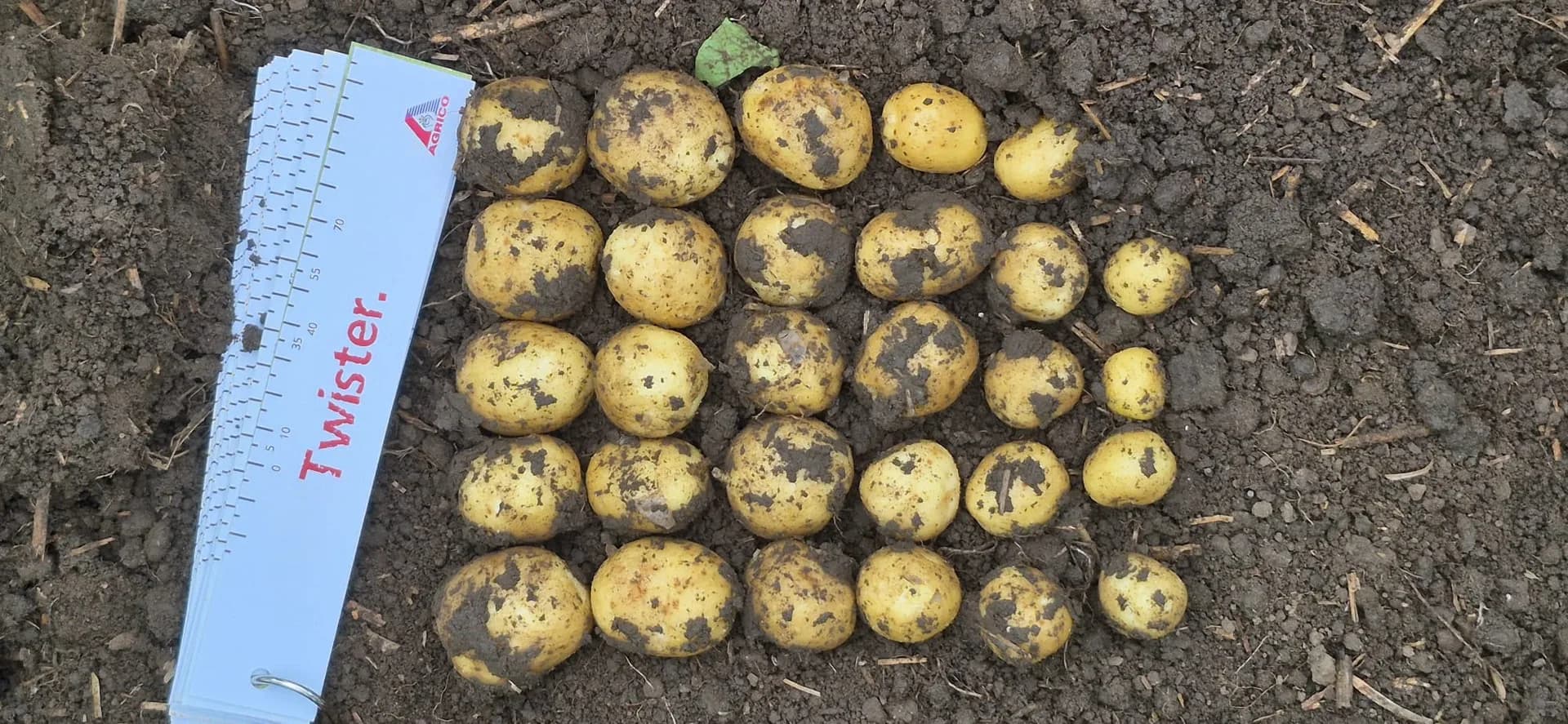
Polish commercial quality rules for potatoes do not introduce quality classes. In domestic trade, marking a batch "Class I" therefore has no basis in the rules, even if the produce is good. The reference point in international trade remains the UNECE FFV-52 standard for early and ware potatoes, and in contracts what decides anyway is the wording agreed with the buyer.
Defects that only show once a tuber is cut open
These are the most expensive, because a batch looks fine right up to the moment someone cuts it open or peels it:
- blackspot bruising, the grey-blue discolouration under the skin after knocks, visible only after a few days,
- internal rust spot, linked to the course of growth and the water supply,
- hollow heart and internal cracks, typical of very large tubers grown unevenly,
- rots, wet and dry, which develop faster in warm transport than in the warehouse.
We put bruising in the same basket as damage from the line and from transfers, because the mechanism is the same as with other vegetables. Most of it arises in the few metres between the harvester's sieve and the trailer. We describe it in our post on mechanical damage to vegetables.
How we limit defects before delivery
The cheapest quality control is the one that happens in the field, not on the buyer's ramp.
- Rotation and choice of field. We do not plant potatoes year after year on the same field, which limits the pressure from soil-borne diseases. We describe the rules under crop rotation in onion growing.
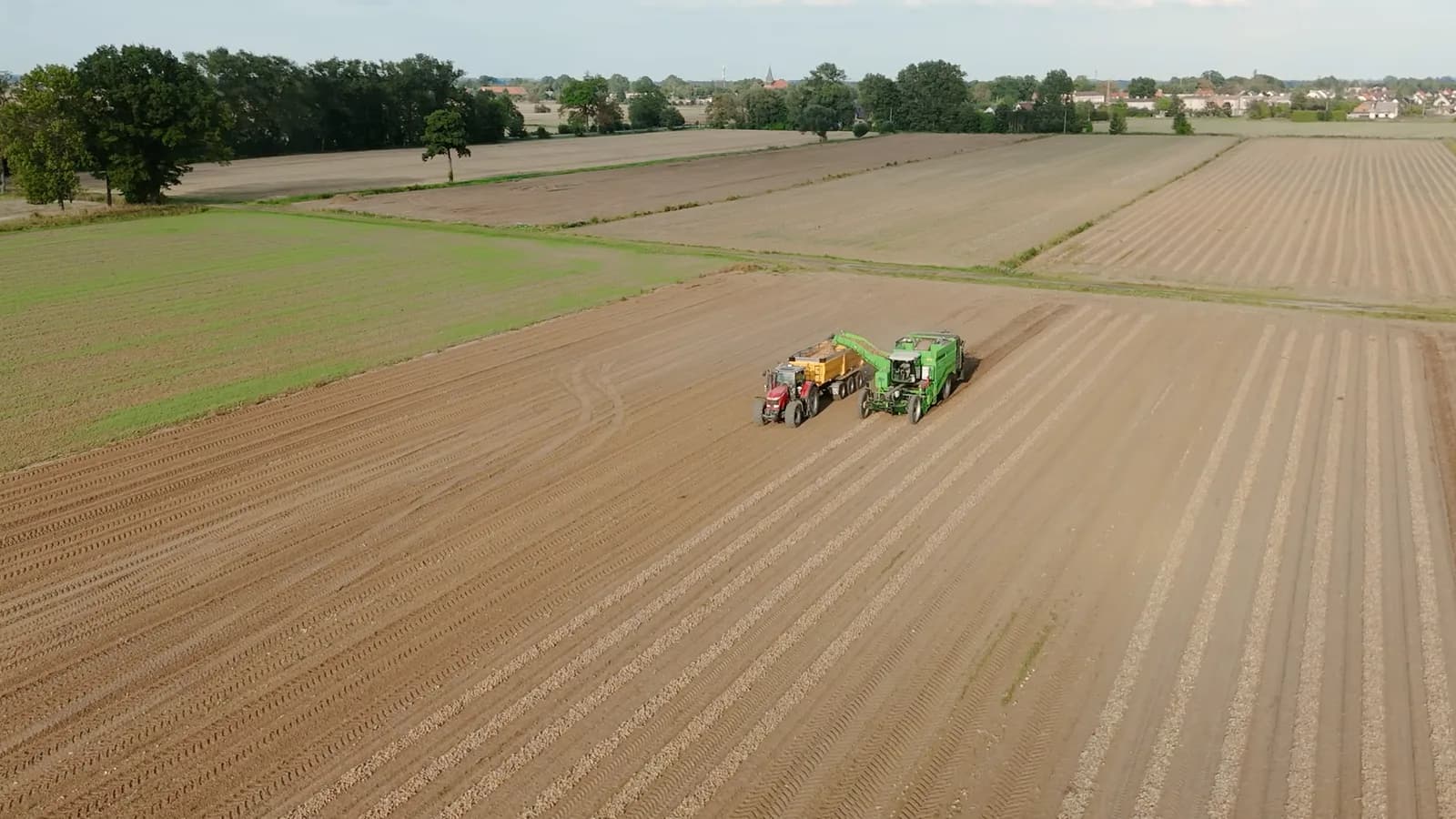
- Mature skin. We lift after the haulm has been killed off and after waiting for the skin to set, because an immature skin comes away at the transfer alone. We describe the timing in our post on when we lift potatoes for fries.
- Tuber temperature at harvest. A cold tuber cracks and darkens after a knock, so we avoid lifting on cold mornings.
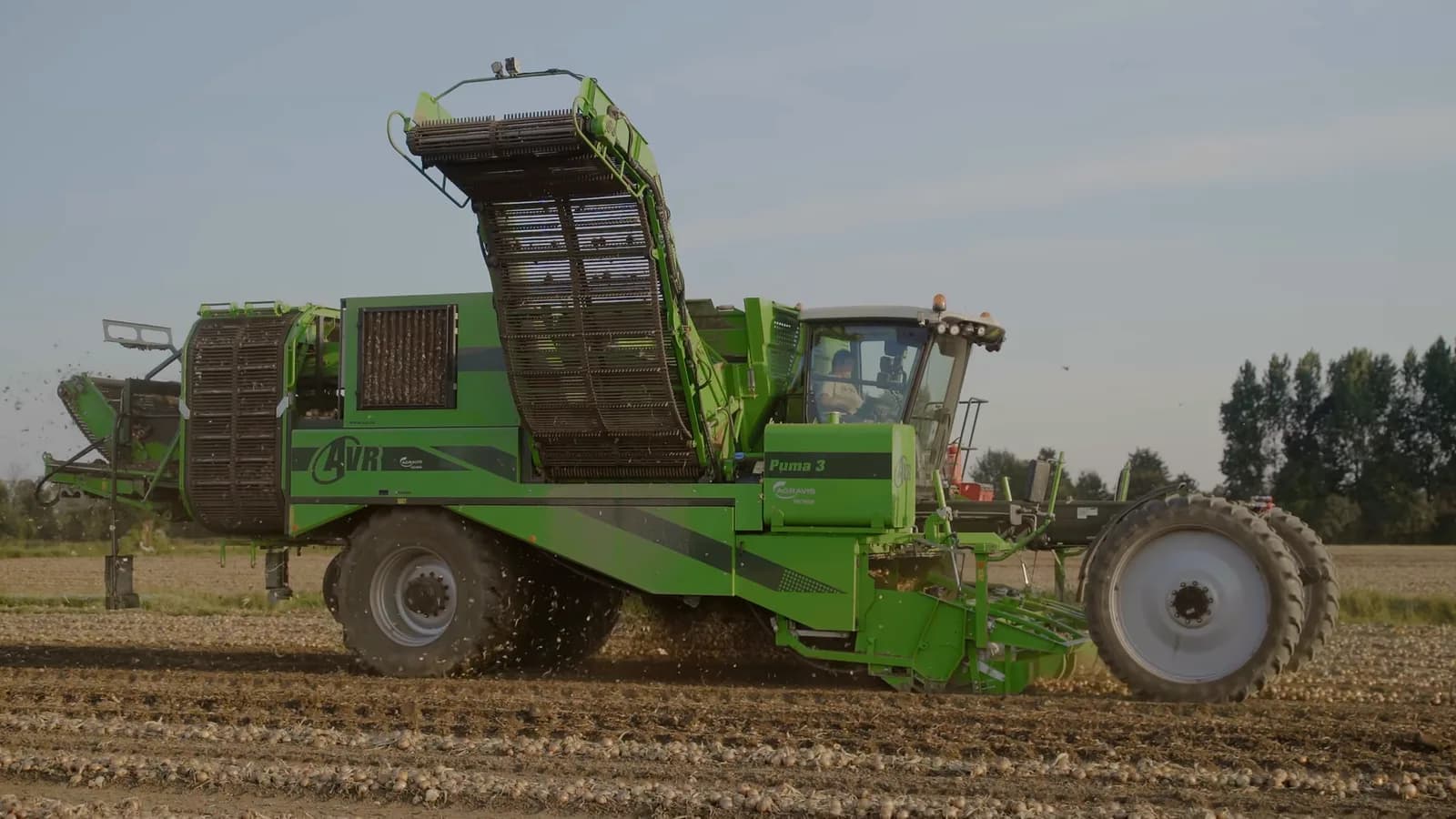
- Harvester settings and the fewest possible transfers. The fewer high drops, the less blackspot.
- Optical sorting. We sort our potatoes on the DOWNS CropVision sorter, which views the tubers through 360 degrees and rejects stones, clods and defective pieces at a capacity of up to 100 t/h. So we sort out greened and rotting tubers ourselves, instead of leaving them to the buyer.
- Storage at a temperature matched to what the batch is for, which we write about under storing potatoes for fries.
If you are looking for a supplier where a batch has one source and a full record, take a look at our potato offer and get in touch through the contact form. We calculate the price based on current market rates.