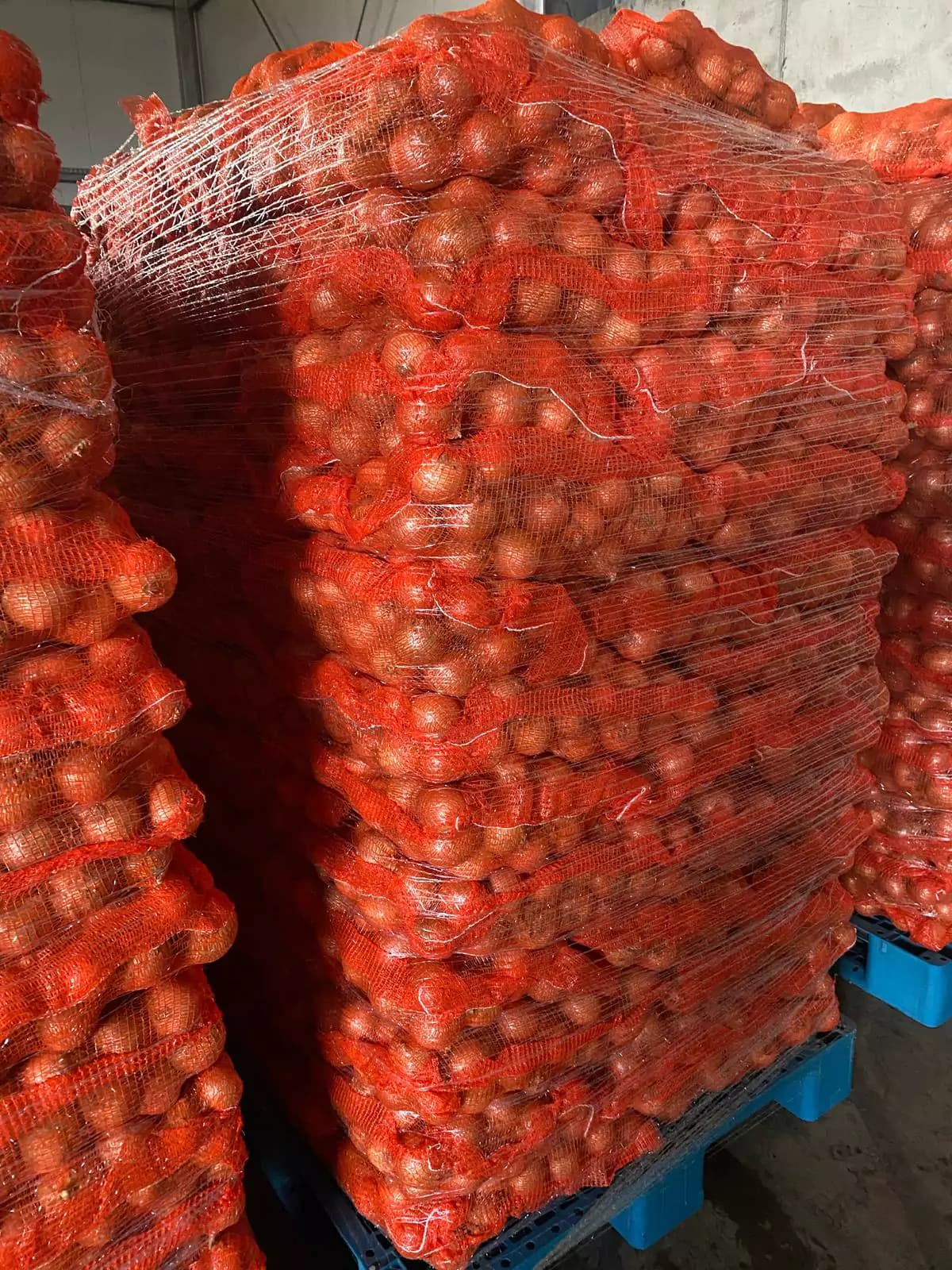
Vegetable batch traceability means being able to say, for every pallet, which field the produce came from, when it was harvested, which chamber it lay in, which sorter it passed through and what tests it has behind it, and in the other direction: which buyer a given batch went to. We keep it for all our vegetables, and below we show it using onions as the example, because with around 250 hectares of that crop the differences between fields are real and the buyer has a right to know exactly what they are getting. Green peas go straight from the field to the buyer, with no store and no sorter, so a pea batch is one field and one harvest date. Cereals run on a separate track: no optical sorter, no class and no size grade, but with grain parameters, under Integrated Plant Production and, in feed trade, under GMP+; what that looks like, we describe in our post on milling wheat parameters.
What the law and GlobalG.A.P. require
The basis is Regulation (EC) No 178/2002, which places a traceability obligation on every operator in the food chain: you have to be able to say who you received a product from and who you passed it on to, that is one step back and one step forward. For a farm, one step forward is the buyer we released the batch to. The seed, fertilisers and plant protection products we use are recorded separately: plant protection products in the treatment records required by Regulation (EC) No 1107/2009 (product, date, dose, area and crop), and seed and fertilising in the Integrated Plant Production notebook and in the records GlobalG.A.P. requires. The law does not dictate how we run batches on the farm, but without that we could not answer a question about a specific pallet.
On top of that comes the general EU marketing standard for fresh fruit and vegetables (Annex I to Commission Delegated Regulation (EU) 2023/2429), which besides quality requirements also governs labelling: onion packaging must carry the details of the packer or dispatcher and the country of origin, and the product name when the contents are not visible from outside. We declare the class and size grade in the language of the UNECE FFV-25 standard, because that is how we agree things with the packing houses, and we write about the quality requirements and classes in our post on onion quality classes.
GlobalG.A.P. goes a step further. Certified produce must be traceable to the registered production site, must be kept separate from non-certified produce, and the quantities released must tally with the quantities harvested. The standard also requires a product recall procedure, which the farm rehearses at least once a year, and showing the auditor the full history of a batch of their choosing. What that day looks like, we describe in our post on the GlobalG.A.P. audit on the farm, and what the certificate gives the buyer in our post GlobalG.A.P. in practice.
What counts as a batch for us
A batch is produce from one field, harvested on a known date, stored in one chamber and packed in one run. We run every batch with a record of the field, harvest date, chamber, sorting and tests, and the batch marking ties that record to the produce on the pallet and to the delivery note. We keep the record down to the specific field and the specific chamber, and we can pin it to a single pallet, not only to a whole delivery.
With around 250 hectares of onions, yields of around 60 tonnes per hectare and a 13 000 tonne store, a great many batches pass through our chambers and our line over a season. Without this system we could not answer a buyer's simple question: which field is this pallet from and what has happened to it. Why we think in batches rather than a farm average, we explain in our post on batch-by-batch quality control.
The batch's journey step by step
| Stage | What we record | What the buyer gets from it |
|---|---|---|
| Field | plot, variety, seed, every treatment with its date, dose and pre-harvest interval | certainty that the produce has a documented crop protection history |
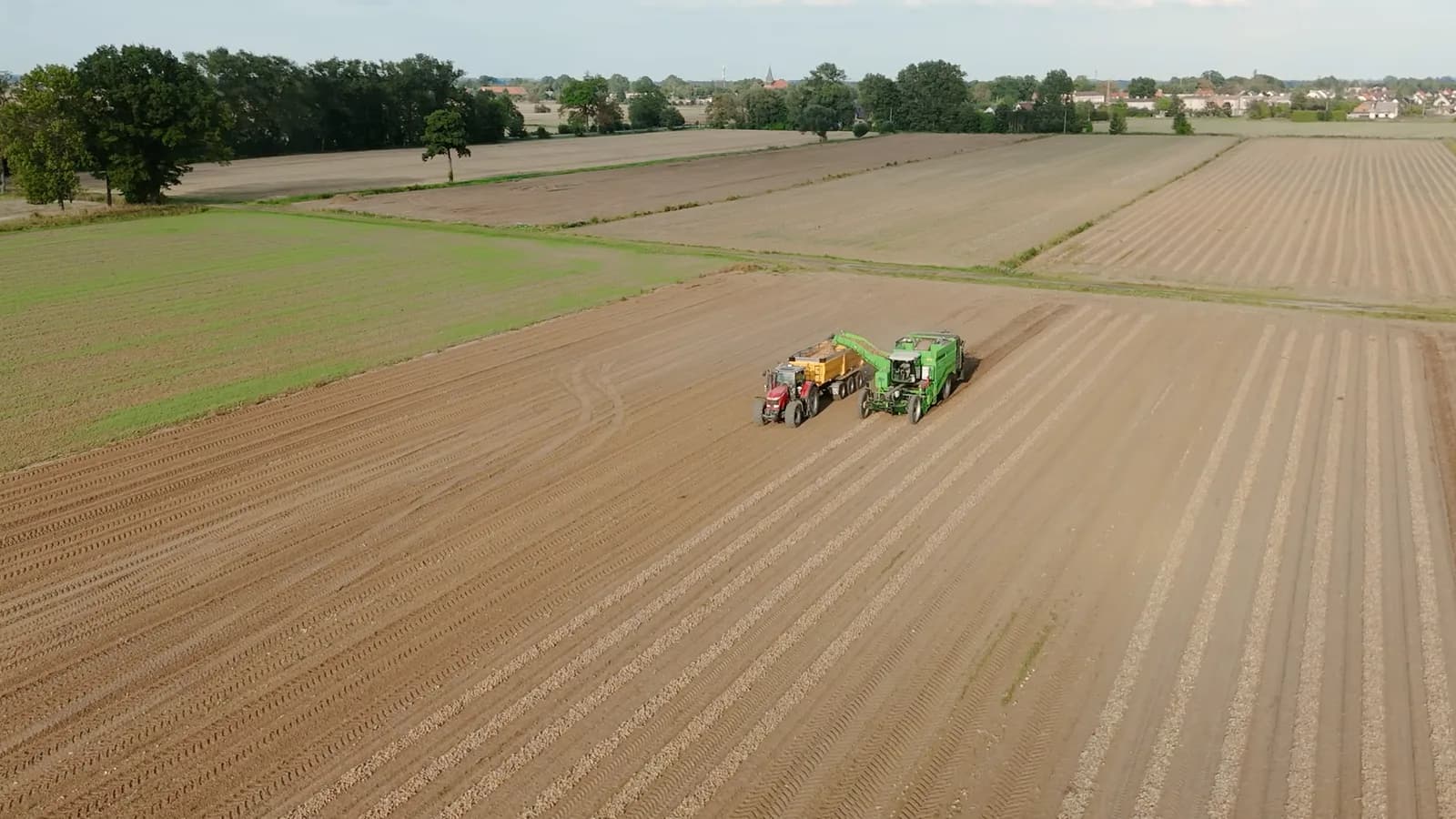
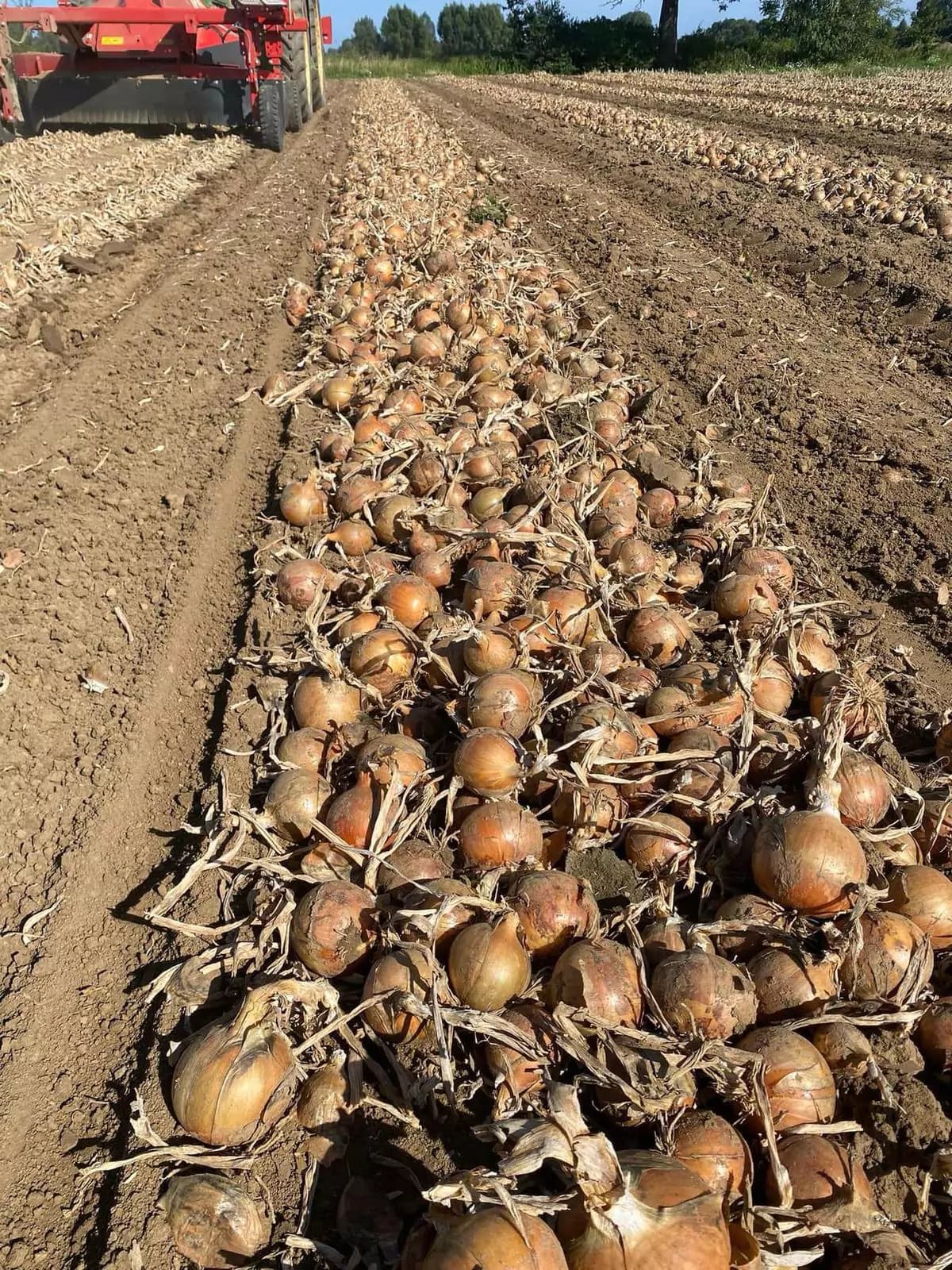
| Harvest | date, field and place of unloading | it is known when the onions came off the field and how long they have been lying |
| Store | chamber, curing for 2-4 days, temperature and humidity record | a batch that lay in known, measured conditions |
| Sorting and packing | incoming batch, size grade, class, type of packaging, packing date | produce that matches the order, with no mixing of batches |
| Release | batch marking, number of pallets, delivery note, full set of test results | a complaint or a question lands on a specific batch, not the whole warehouse |
The sorter and the laboratory add to the batch record
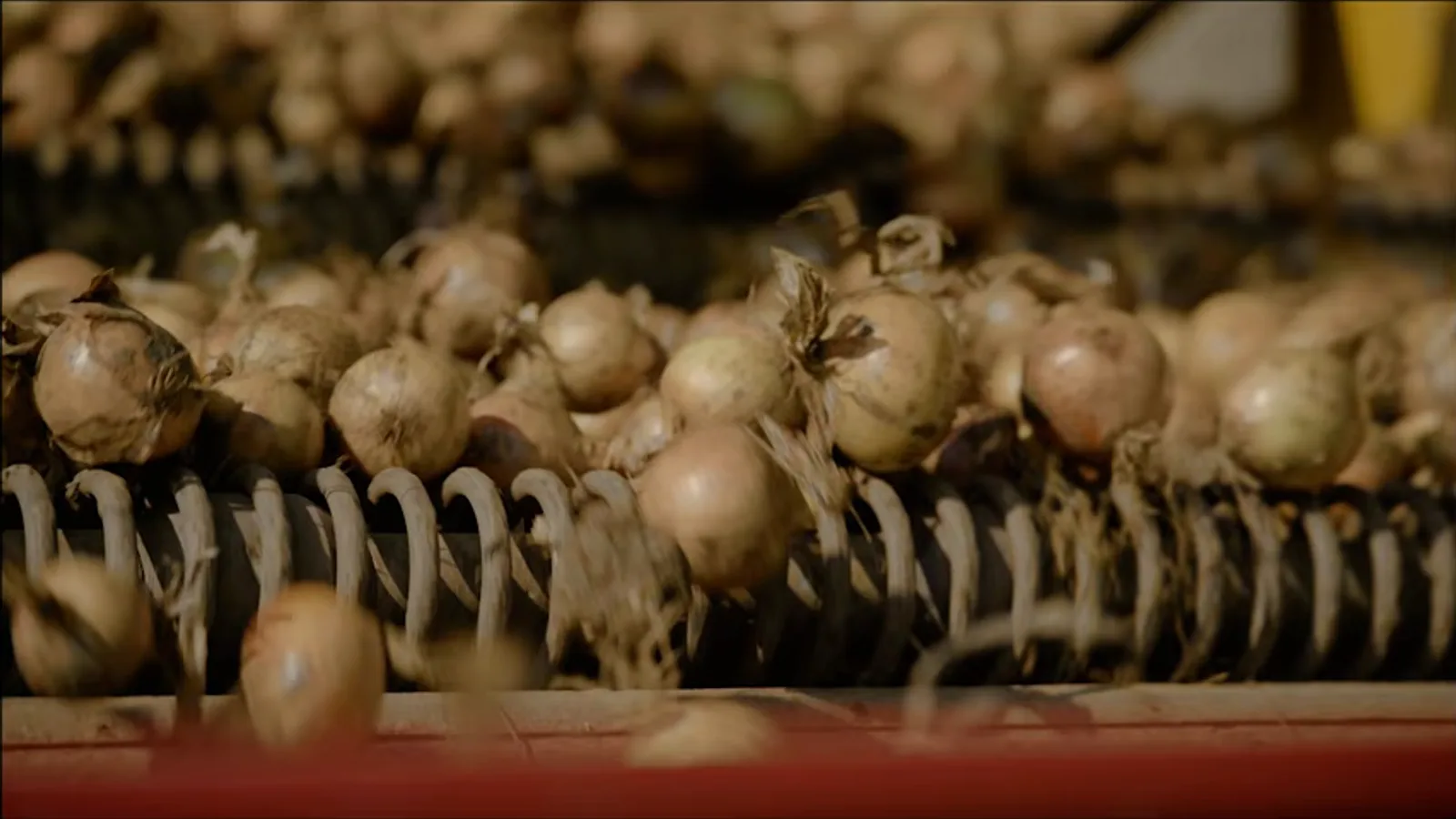
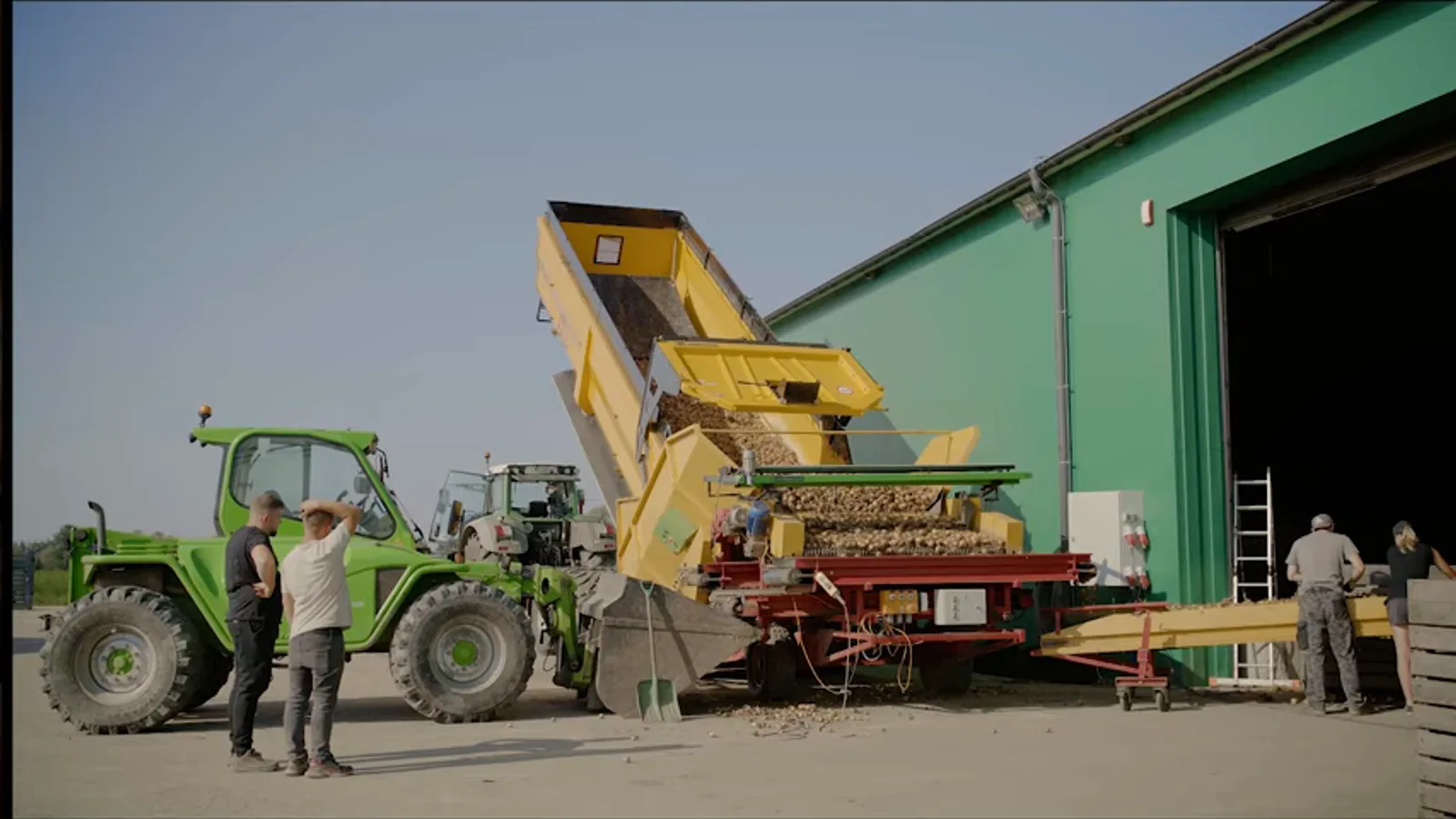
Every batch of onions, potatoes and beetroot goes through the DOWNS CropVision optical sorter before release. The cameras scan every piece through 360 degrees, and artificial intelligence rejects stones, clods of soil and defective pieces, at a capacity of up to 100 tonnes an hour. Sorting is another entry in the batch history: it is known which batch went onto the line and in what size grade and packaging it came off. More about the machine in our post on the DOWNS CropVision optical sorter.
The second entry in the batch history is the laboratory testing: pesticide residues, heavy metals and substances hazardous to health. The result is assigned to a specific batch and issued together with it, so the buyer does not get a result "from the farm" but the result for the produce standing on their loading bay. How sampling works and what we test for, we describe in our post on pesticide residue testing.
What is on the packaging
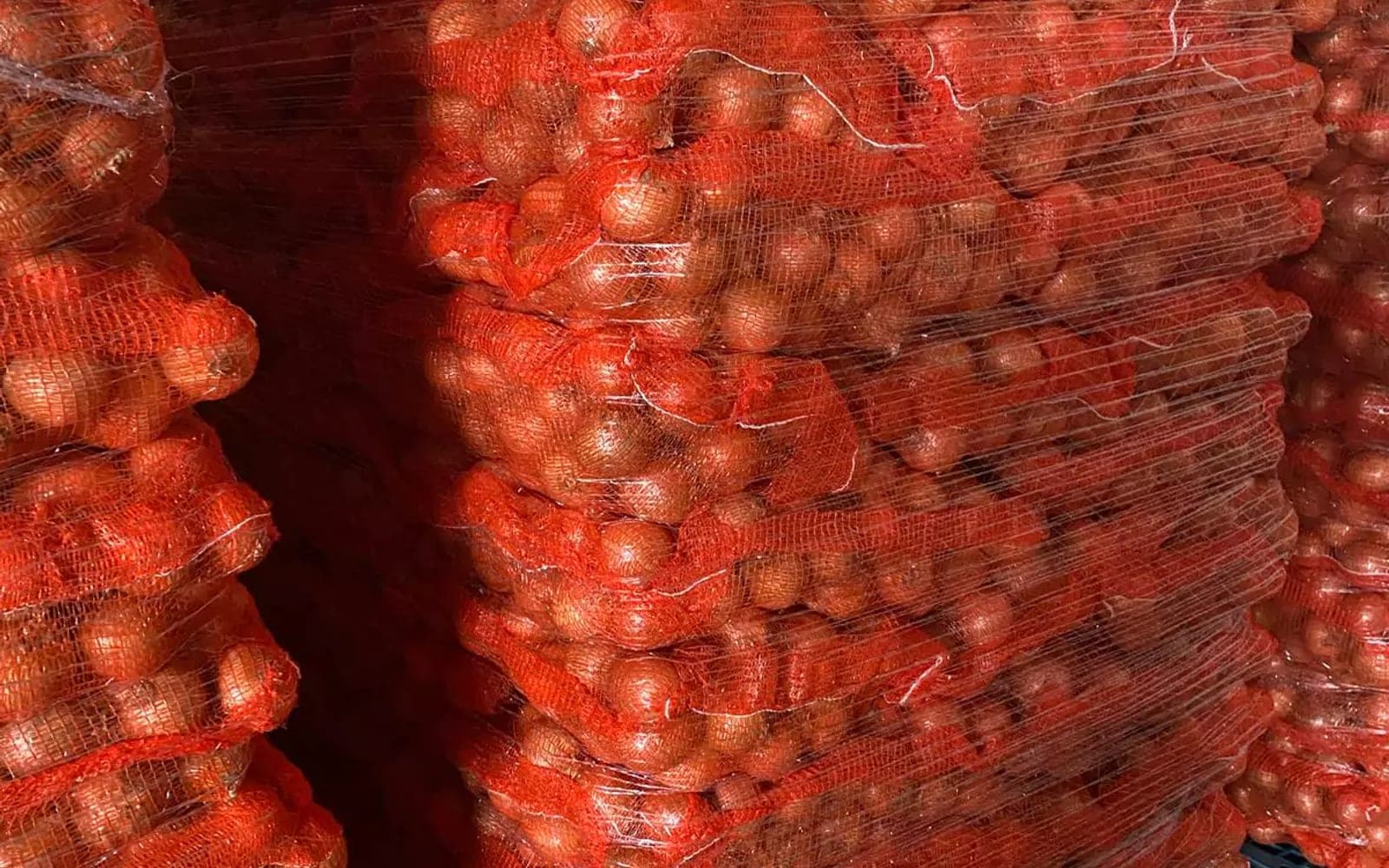
On the packaging we give what the marketing standard requires: the packer's details, the country of origin, that is Poland, and the product name when it cannot be seen through the packaging. To that we add the batch marking, without which the paperwork would not tie up with the produce: we always put it on the delivery note, and on unit packaging in line with the rules on marking trade batches; for produce released loose to a packing house, the document carries the marking. The class and size grade we give as agreed with the buyer.
From the batch marking the buyer, and in the event of an inspection also the authorities, get to the full documentation: field, treatments, chamber, sorting and tests. On its own the marking says nothing without that documentation, which is why what counts is not the label but what stands behind it.
What the buyer gets out of it
Traceability is not paperwork for the audit. It is a quick, concrete answer when a buyer asks where the produce on one particular pallet came from.
Three situations in which the system does its everyday work:
- A complaint. The buyer gives us the batch marking from the document or the packaging. We check its history, put a hold on the rest of that batch on our side and know who else it went to. The problem stays in one batch instead of spreading across the whole warehouse.
- A buyer's audit. Packing houses and processing plants are audited by their own customers and audit their suppliers in turn. A full batch history is a ready answer to their questions about origin and crop protection.
- A recall. We rehearse it every year in line with GlobalG.A.P. requirements: we pick a batch and check how quickly we can reconstruct its path in both directions.
This is how we work for market leaders such as Onix, Farm Frites and FreshPol, partners supplying the largest retail chains and processing plants in Poland and Europe. What else large packing houses expect from a supplier, we describe in our guide to wholesale onions. Yellow and red onions with full batch documentation you will find in our onion offer, and you can send us an enquiry through the contact form.