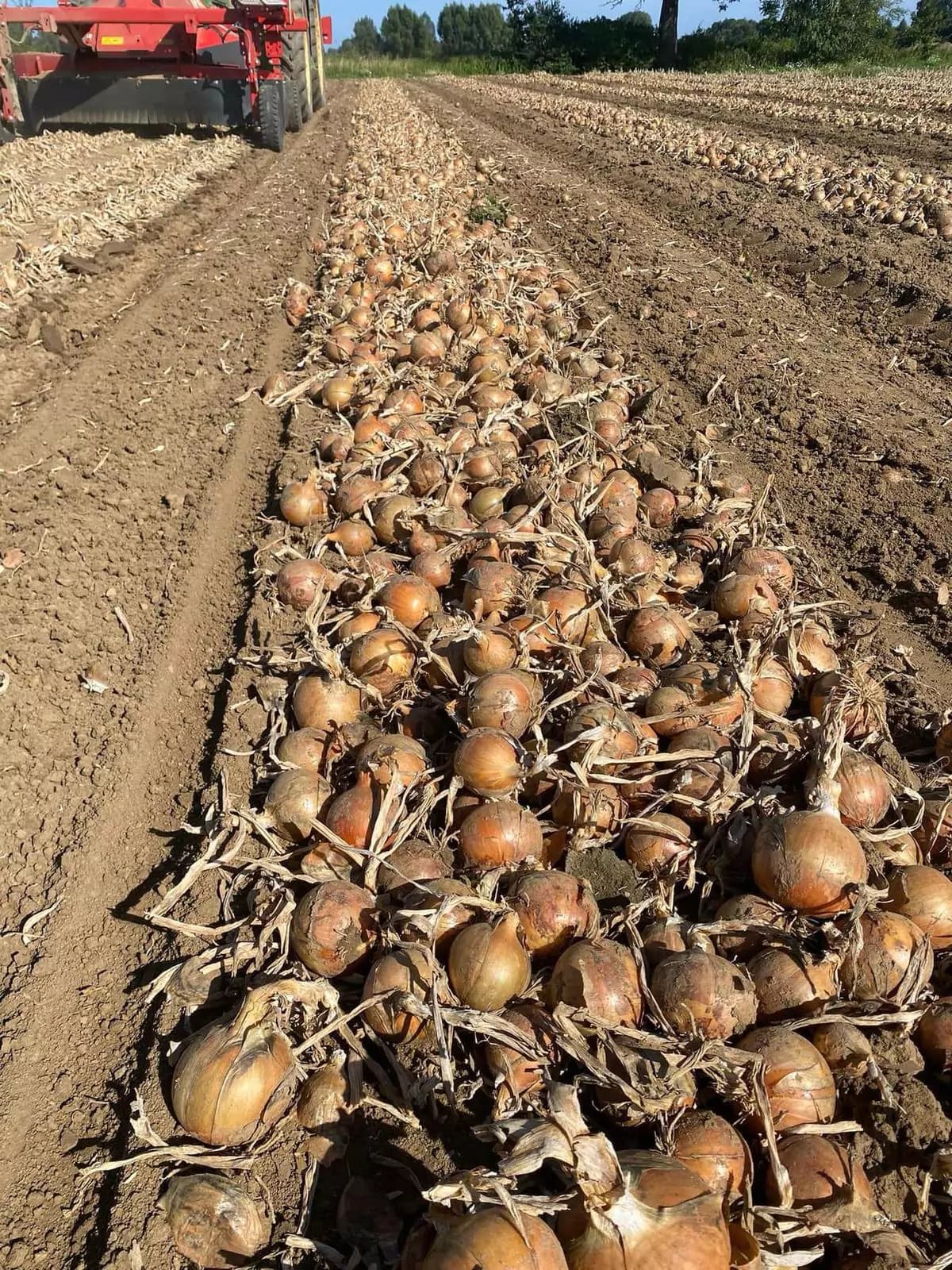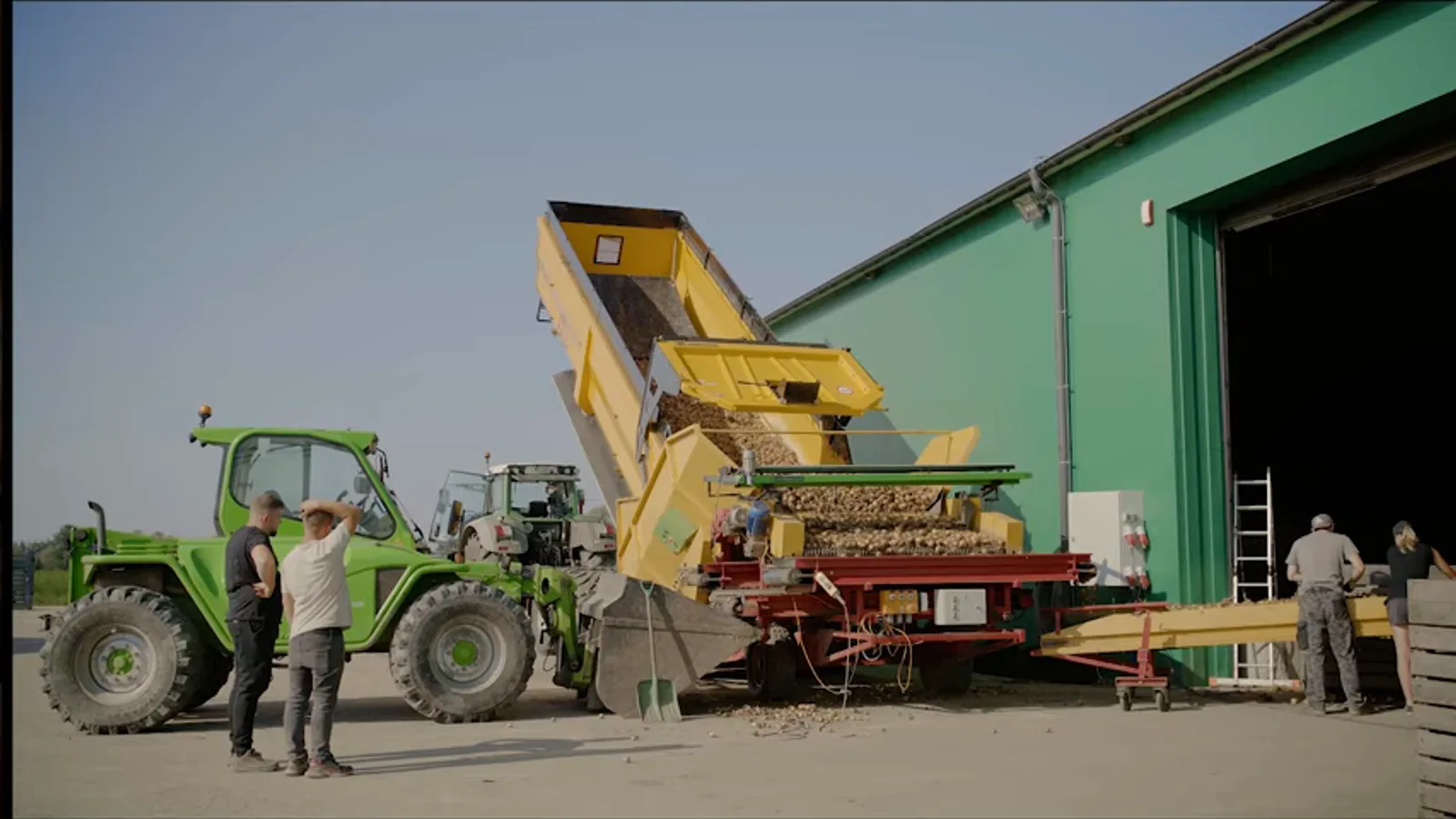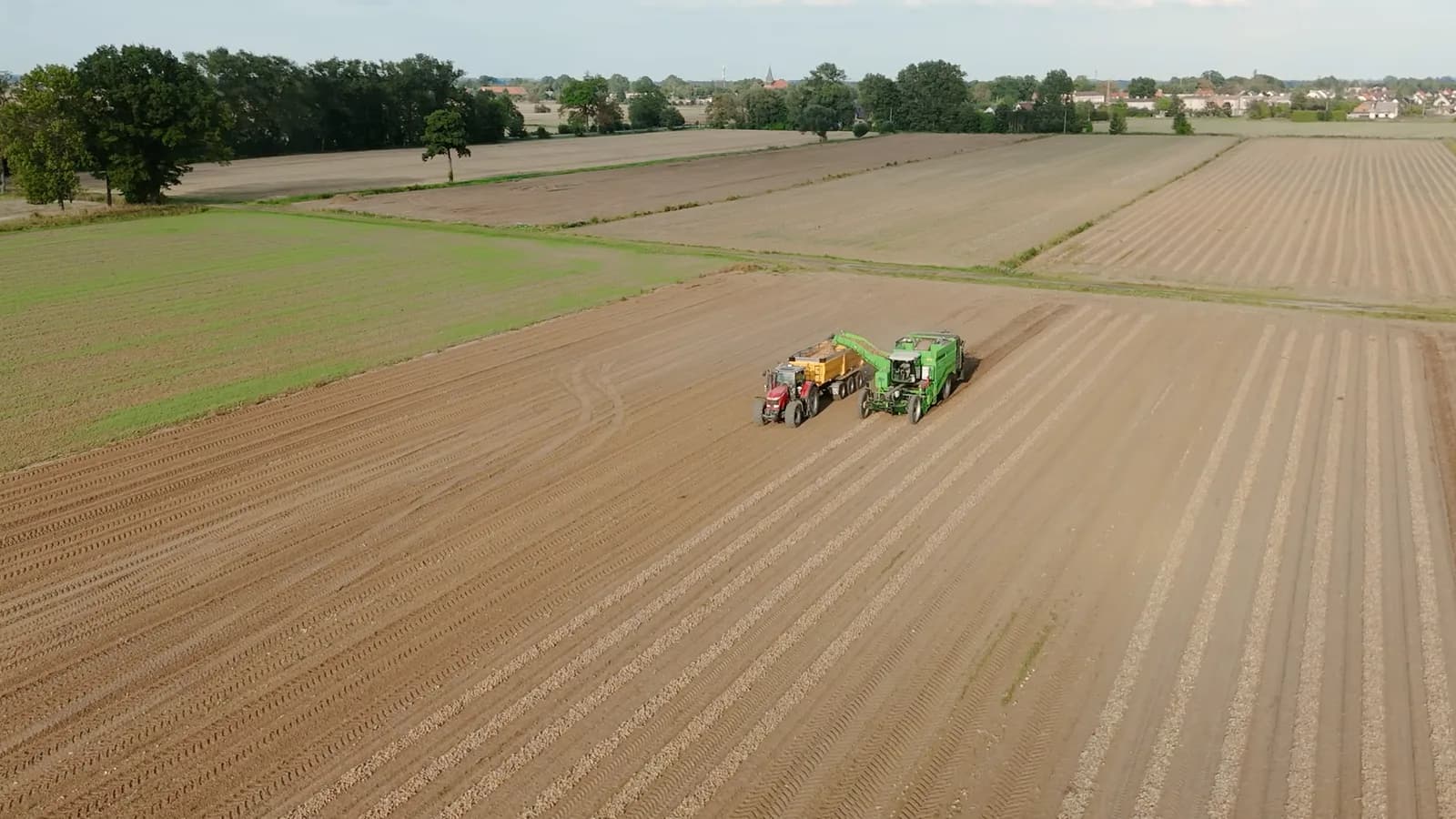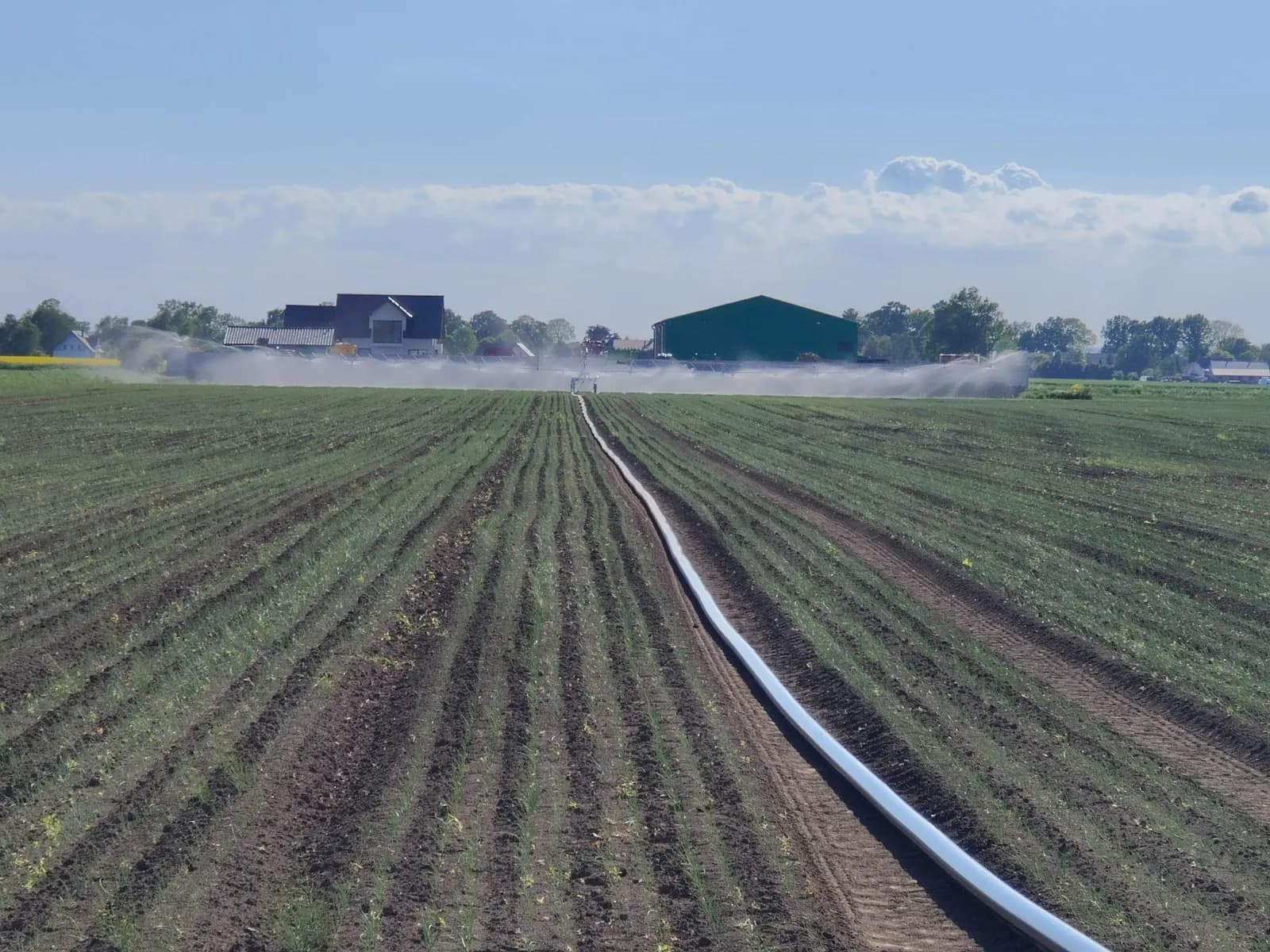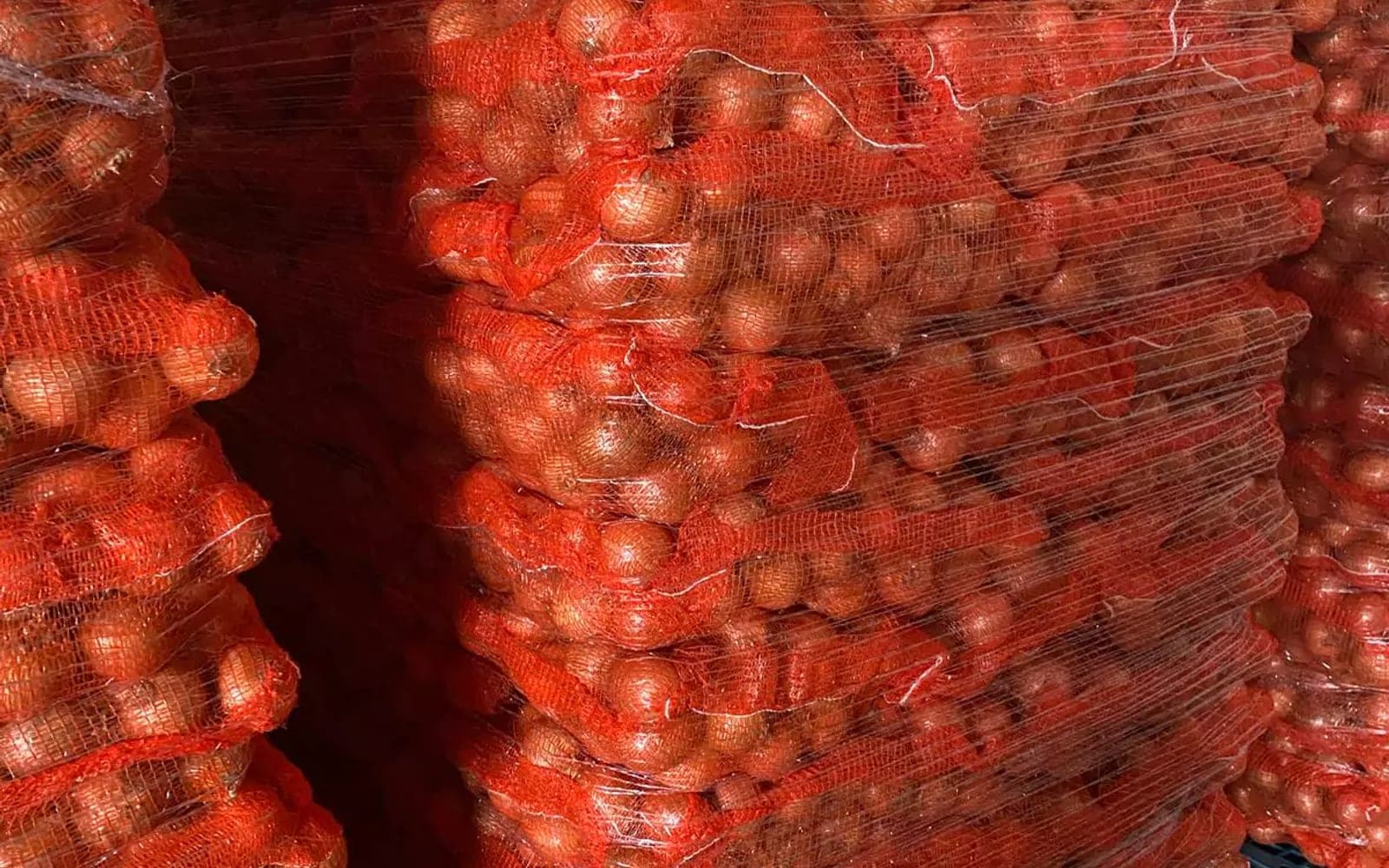
Onions sprout in storage when their natural dormancy comes to an end, or when the conditions in the store cut that dormancy short: too warm, too humid, with swings in temperature, and often the trouble starts back in the field, because the batch was immature or under-cured. Onions start growing fastest at around 10-20°C and sleep longest at 0-2°C. In our 13 000 tonne store, holding back sprouting begins while the crop is still in the field, and inside the building it comes down to three words: cold, dry and steady.
What onion dormancy is
A mature onion is a storage organ with a dormant growing point in the middle. After harvest it goes into dormancy, a state in which even good conditions do not set the shoot going. This phase, known as deep dormancy, lasts from a few weeks to a dozen or so, depending on the variety. The onion then passes into relative dormancy: left to itself it would already be growing, but low temperature and dry air hold it back. It is this second stage that lasts from autumn to spring in our store, and it decides how long a batch stays fit for sale.
The length of dormancy is largely down to genetics. The yellow Rijnsburger-type varieties on which we base our storage production were chosen among other things because they sleep long and hard. Which of them lie longest, and why red onions keep for a shorter time, we describe in our post on which onion varieties store best.
An important practical detail: an onion sprouts from the inside. Before the green top pushes out, a cross-section already shows a lengthening, greenish shoot inside the bulb. A buyer who cuts or peels onions will notice it sooner than someone looking at whole onions in a sack.
What wakes onions up in the store
| Factor | What it does to the onion | How we respond |
|---|---|---|
| Temperature of around 10-20°C | fastest sprouting once deep dormancy is over | we pass through this range only during controlled cooling after curing, while the batch is still in deep dormancy; the target is 0-2°C |
| Temperature swings | condensation on the onions and a signal to grow | steady control and ventilation matched to the weather |
| Humidity above 80 percent | roots first, then the shoot, plus disease | we keep it at 65-75 percent |
| An under-cured neck | an open door for moisture and fungi, earlier growth | curing for 2-4 days straight after harvest |
| Late nitrogen, harvesting immature onions | a thick, open neck and short dormancy | we finish fertilising early and harvest after the tops have fallen over |
A side note: onions can also be kept dormant at high temperature, above 25°C, and that is how it is done in tropical countries without cold stores. The price is heavy weight loss and disease, so in our climate that route makes no sense.
Sprouting starts in the field
A batch that is meant to lie until spring has to be prepared for it before it enters the store. We watch four things:
- Maturity at harvest. Onions harvested once most of the tops have fallen over have a closed neck and full dormancy. Harvested too early, they have a thick, juicy neck through which they lose water, and they start growing sooner.
- Nitrogen on time. Late doses of nitrogen prolong growth and thicken the neck. That is why we finish nitrogen fertilising early, as we explain in our post on fertilising onions with nitrogen and sulphur.
- Curing. For 2-4 days after harvest we blow warm air through the onions until the skin rustles and the neck is dry and closed. How we do it, we describe in our post on curing onions before storage.
- No damage. Bruised and cut onions rot rather than sprout, but in the chamber both end the same way: with the loss of part of the batch.
The store cannot fix what the field has spoilt. A batch harvested immature, overfed with nitrogen or under-cured will come out of dormancy earlier no matter how well we set the chamber. That is why our fight against sprouting starts with the harvest date and curing, not with the thermostat.
How we keep onions dormant in the store
After curing we cool the onions down gradually, so as not to cause condensation, and hold them at 0-2°C and 65-75 percent relative humidity. The full parameters and the four phases a batch goes through, we describe in our post on what temperature onions should be stored at, and the whole process from intake to release in our guide to storing onions.
We run the ventilation by the temperature and humidity sensors in the chamber and outside, not by the clock, and we keep to one rule: never blow warm, humid air onto cold onions, because water will condense on them. Moisture on the skin is an invitation to disease and to roots, and from there it is a short step to the shoot.
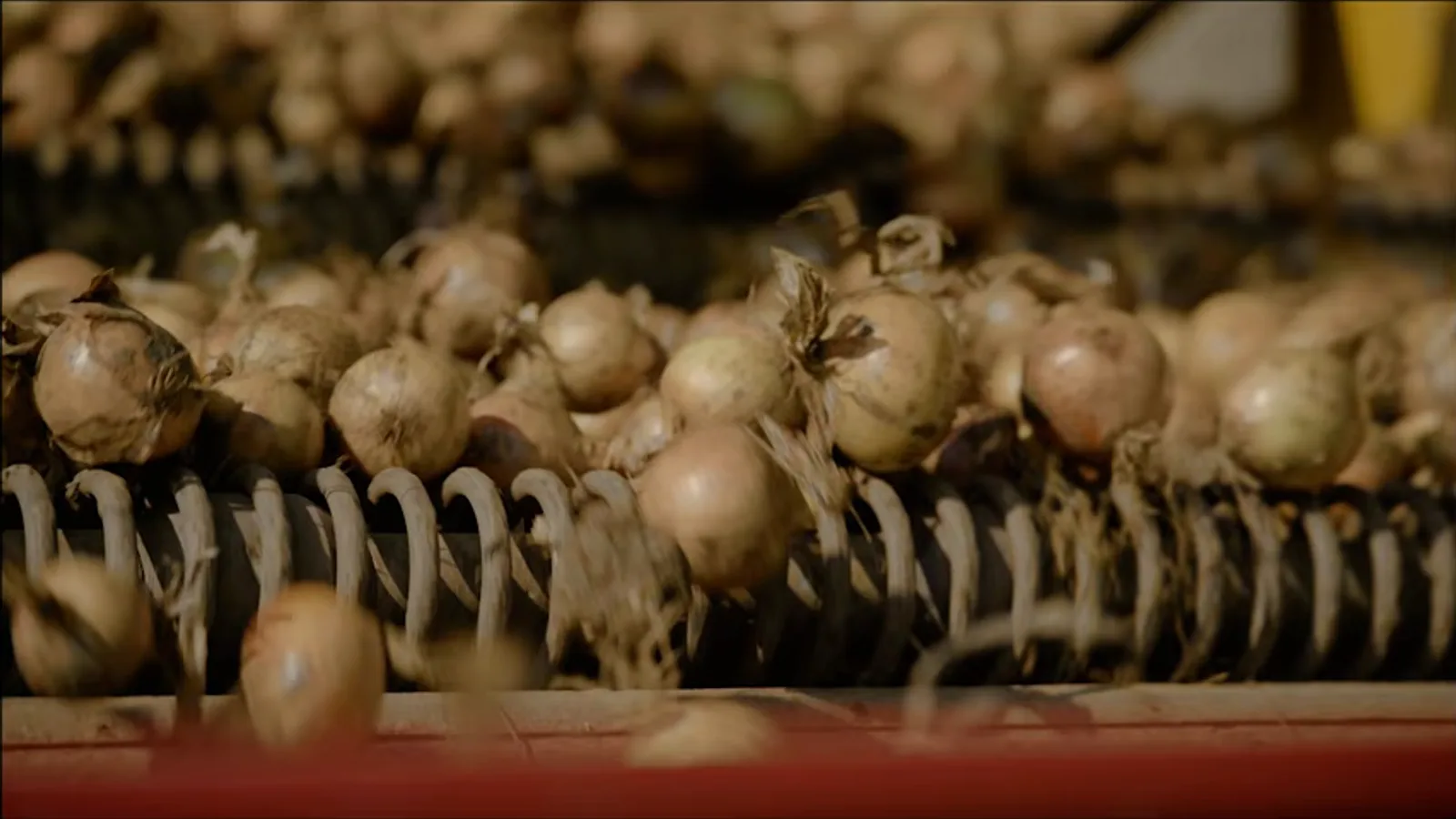
We check batches during storage with the cut test: it shows how much dormancy a batch has left, long before anything is visible from the outside, and it decides the order of release. Batches with the least remaining dormancy we plan for the earliest release and direct to buyers with fast turnover, and every batch goes through a fresh selection and the sorter before dispatch. Varieties with the deepest dormancy we leave for the end of the storage season. How we build that queue, we describe in our post on how we manage onion sales with our storage facility.
In spring, keeping the temperature low gets harder and harder, and the dormancy of even the best varieties is coming to an end, so we plan the batches to clear the store before the onions wake up on their own. The best batches of the deepest-dormancy varieties can lie until mid-June, and from early summer fresh set onions come in; we arrange the delivery windows so they overlap, and we confirm the specific dates in the schedule with the buyer.
What sprouting means for the buyer
Under the UNECE FFV-25 marketing standard, a grown-out shoot excludes an onion from Class I, and Class II only allows early signs of sprouting, and only within tolerances counted per batch; how exactly the classes and tolerances work, we explain in our post on onion quality classes. Packing houses and processors usually do not accept a batch with clearly grown-out shoots. We set the bar higher for ourselves: a batch in which the cut test shows a shoot on the move does not go to a buyer as produce for long storage, but gets a shortened keeping declaration and a fast-turnover channel. That is why buyers ask us not only about size but about how long a given batch will safely lie in their own store. We answer with an estimate based on the cut test and the chamber's history, not a farm average, on the assumption that on the buyer's side the batch goes into the agreed storage conditions.
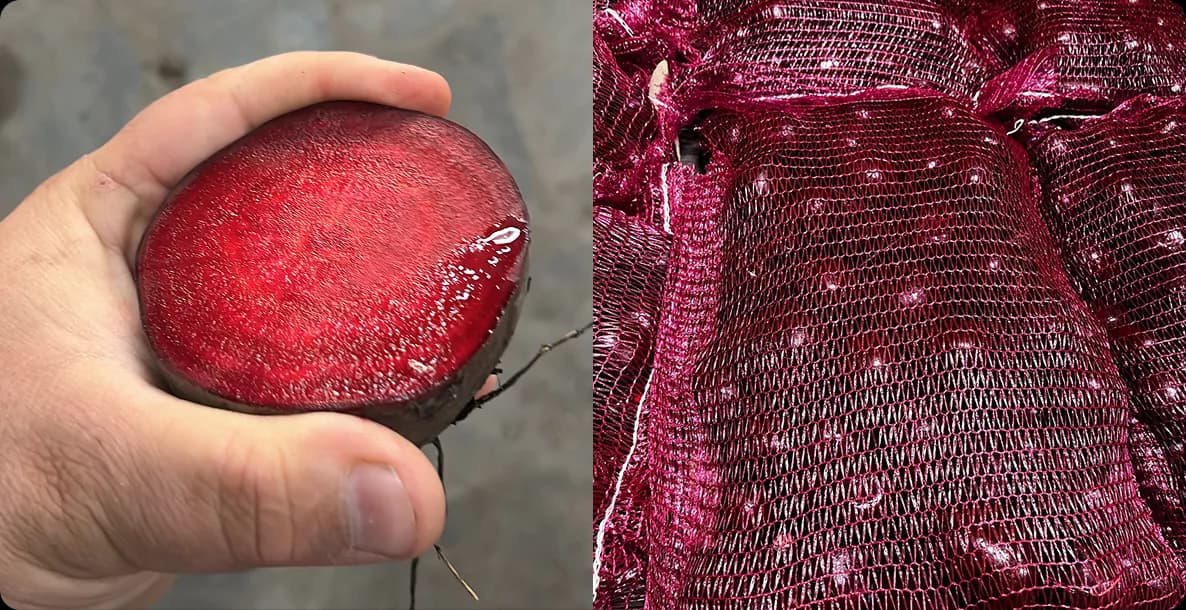
We deliver hard, dormant yellow onions from the store right through winter and spring, and red onions, which keep for a shorter time, usually until the end of March and beyond that as agreed with the buyer. You will find the details in our onion offer, and for regular deliveries to a packing house or processing plant, ask us through the contact form.