You spot a frost-damaged onion by its fleshy scales: once thawed they turn glassy and watery, and the whole onion goes soft in your fingers. Soft, wet tissue picks up rot faster, so it pays to catch such a batch before it goes into sacks or onto the line. Below we describe how to recognise a frost-damaged onion, how it differs from a sweaty one and what to do when a batch arrives after a freeze.
How to tell if an onion is frost-damaged
From the outside, a frost-damaged onion looks normal for a long time. The dry outer skin does not give away what happened inside, so you judge an onion in the hand and in cross-section, not by how the sack looks.
- Glassy scales in cross-section. The fleshy scales lose their white, matt colour and turn translucent, as if soaked in water. Often it is one or a few scales, while the rest of the onion looks healthy.
- Watery tissue. A damaged scale is wet and loose instead of firm and crisp.
- Softening once thawed. A frozen onion can be rock hard. The truth only shows after thawing, when the onion gives under your finger.
The simplest check is to cut a few onions across from different sacks and look at the scales in good light. One glassy scale in one onion is not yet a verdict on the batch. The same picture in many onions from different sacks is a sign that the batch caught the frost.
Frost damage or sweating
In winter it is easy to confuse frost damage with dew on the skin. Both involve water and cold, but the consequences are completely different.
| What we check | Frost damage | Sweating (dew) |
|---|---|---|
| Where the water is | inside, in the fleshy scales | on the surface of the dry skin |
| Firmness | the onion goes soft once thawed | the onion stays firm |
| Cross-section | glassy, watery scales | white, firm flesh |
| What happens next | soft tissue picks up rot faster | the skin dries after ventilation |
Glassy, watery scales can have other causes too, for example storage diseases. That is why the history of the batch matters when you assess it: whether the onions were exposed to frost at all, and when and where.
Why a frost-damaged batch spoils faster
A soft, wet scale is tissue in which rot sets in faster than in a firm, dry onion.
The second issue is the neighbours in the sack. A rotting onion wets the ones next to it, and a wet skin favours storage diseases. We write about what water does on the skin in our post on onion sweating and condensation.
For the buyer this means a loss at sorting and a risk that the produce spoils after it has already been packed.
How we release onions from storage in winter
We run our own store of 13 000 tonnes and sell onions from it for most of the year, so winter releases are routine for us, not an exception. We cure onions for 2-4 days. We describe the whole process, from curing to release, in our guide to storing onions.
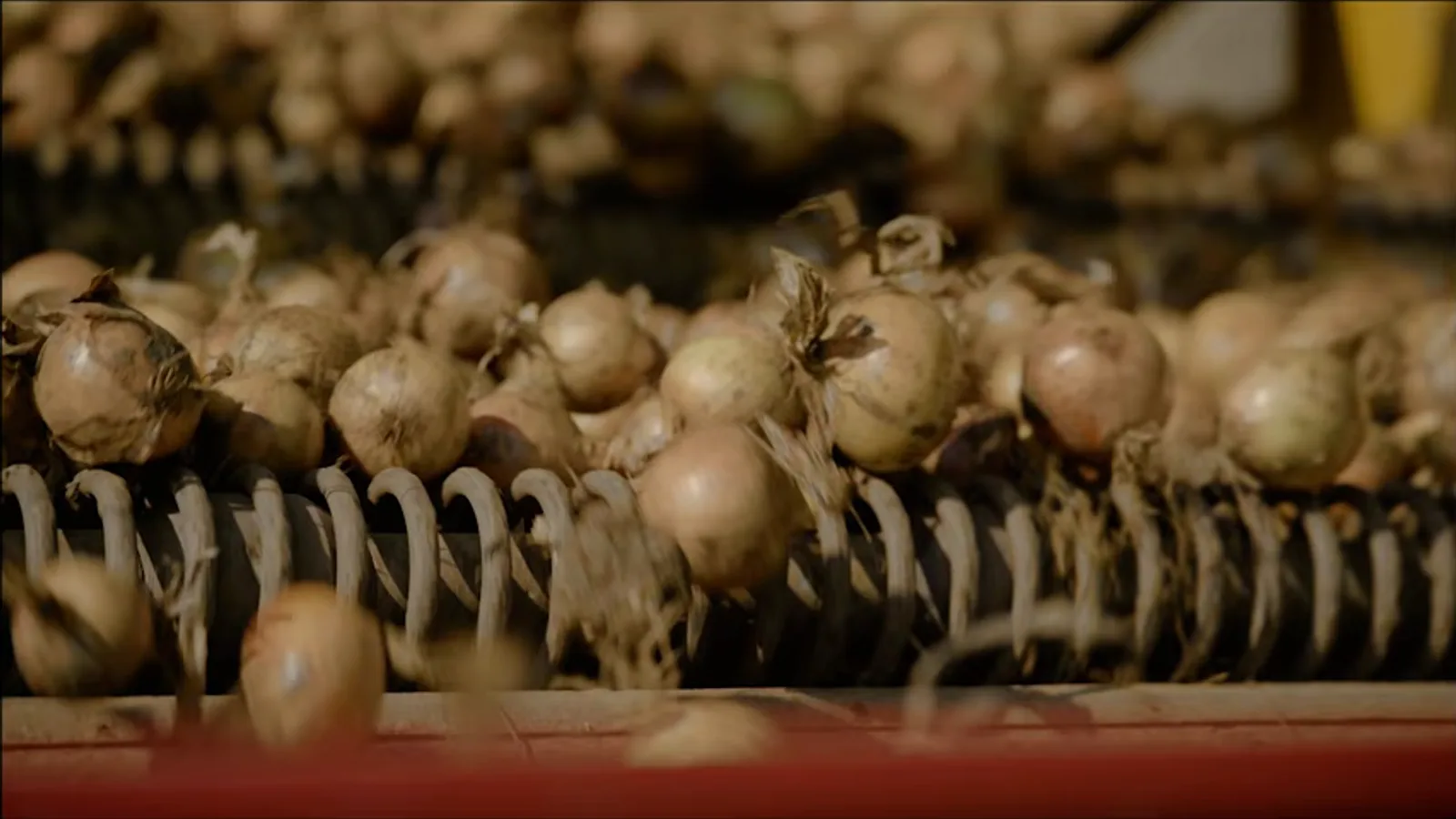
We sort onions on the DOWNS CropVision optical sorter. Cameras and AI scan every onion through 360 degrees and reject stones, clods of soil and defective onions, at up to 100 tonnes per hour.
More about onion transport
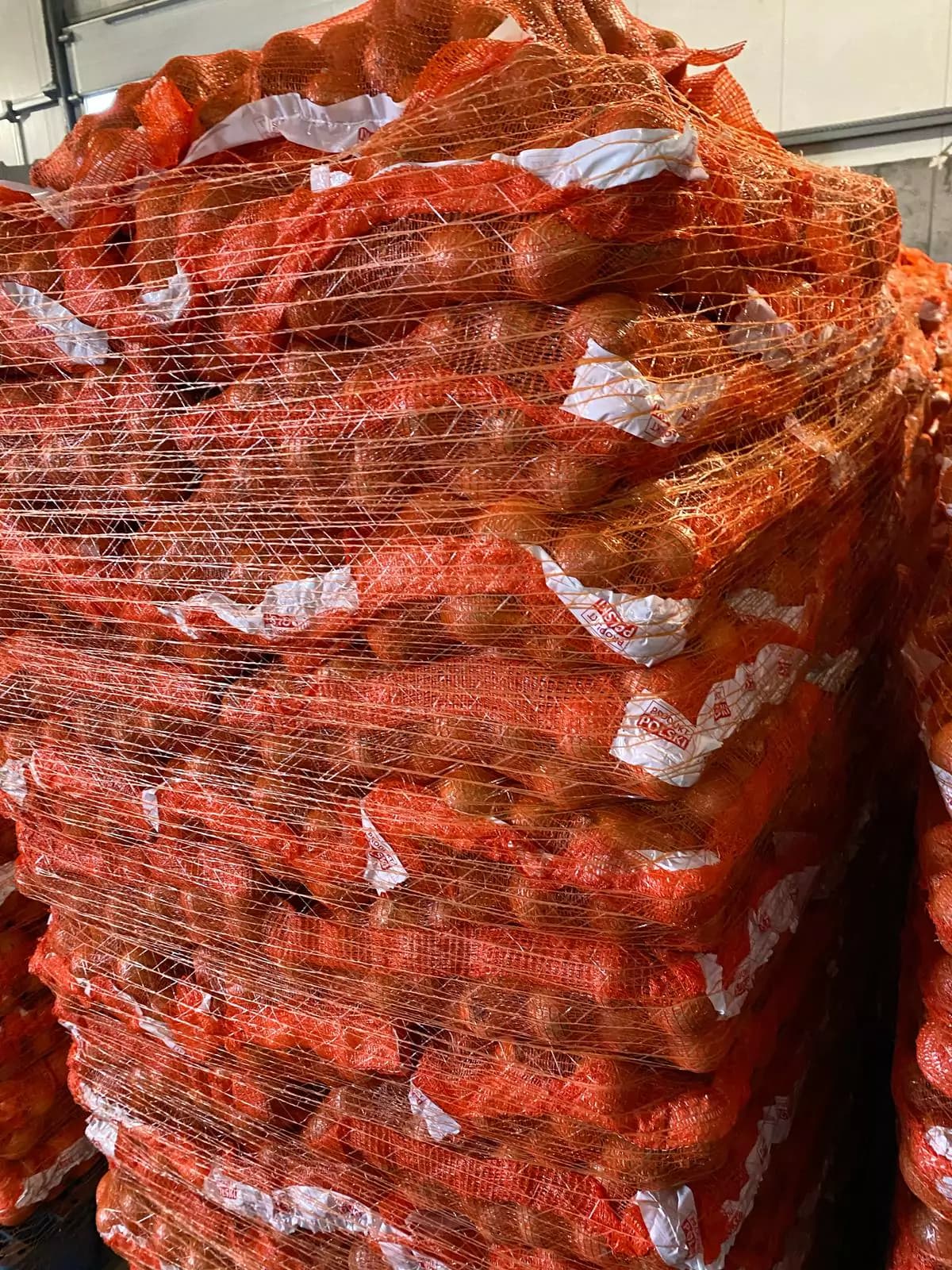
In winter the risk does not end at the ramp. We write about packaging formats, stacking pallets and what travels with the produce in our post on onion transport and palletising.
Do not judge frozen onions by firmness at the ramp. A hard, frozen onion looks healthy, and the damage only shows after thawing and in cross-section.
What to do when a batch arrives after a freeze
If the truck arrived after a frosty night and you see glassy scales in cross-section, act straight away and do not repack the produce before inspection. Once it has been re-sorted, it is hard to establish how bad the damage was.
- Note it on the consignment note at unloading. If the damage is not visible at that point, we describe the deadlines for reporting hidden damage in our post on complaints about a batch of vegetables.
- Take photos of the pallets, the labels and cross-sections of onions from several sacks.
- Give the batch marking and say where the rest of the produce is.
We describe the whole process in our post on how a complaint about a batch of vegetables works.
Onions for winter and spring
We grow about 250 ha of onions at a yield of about 60 t/ha, and in winter and spring we release them from our own store. Our vegetables go to market leaders such as Onix, Farm Frites and FreshPol, partners who supply the largest retail chains and processing plants in Poland and Europe.
If you are planning deliveries for winter and spring, take a look at our onion offer and write to us through the contact form. We calculate the price based on current market rates.