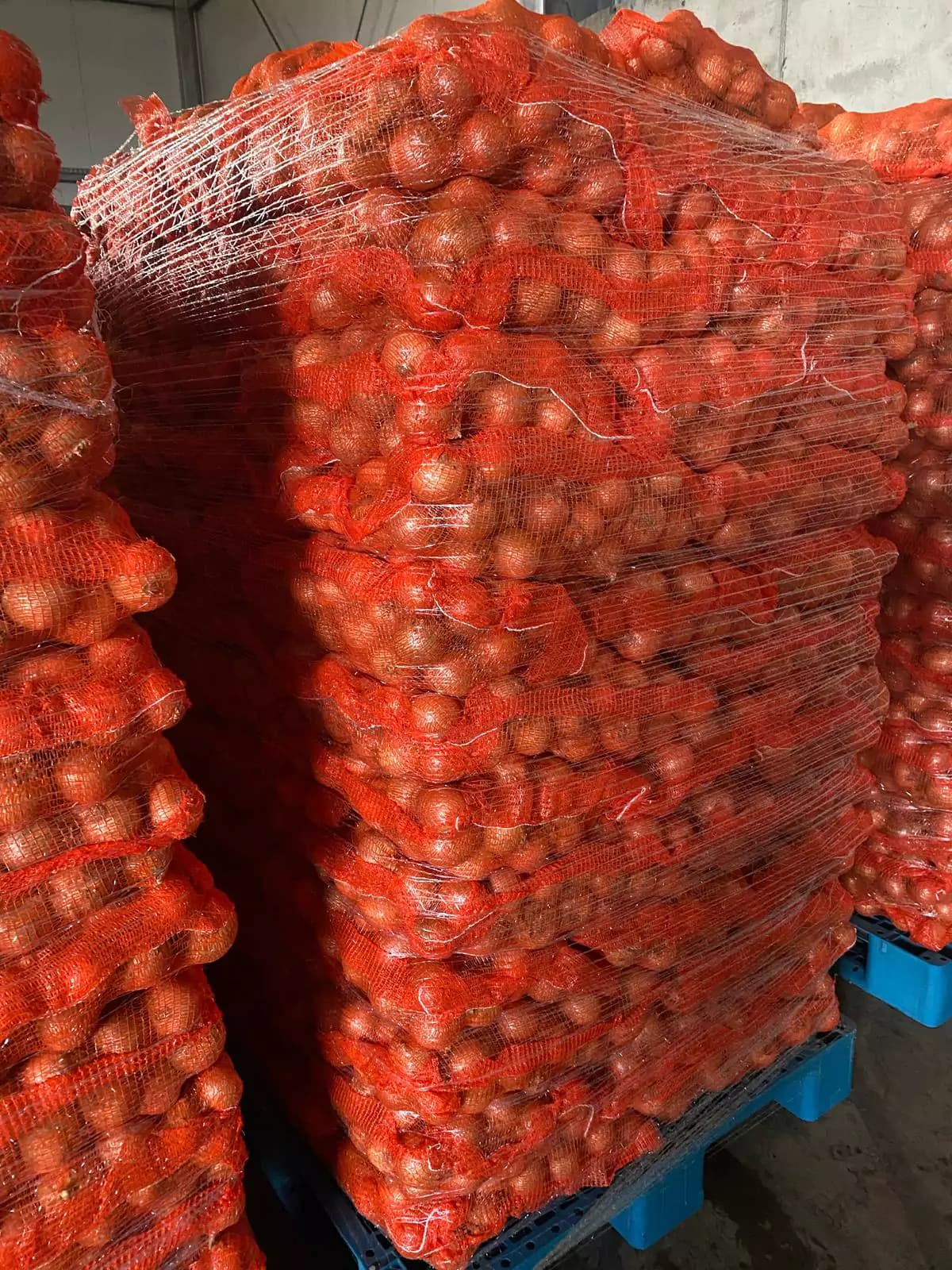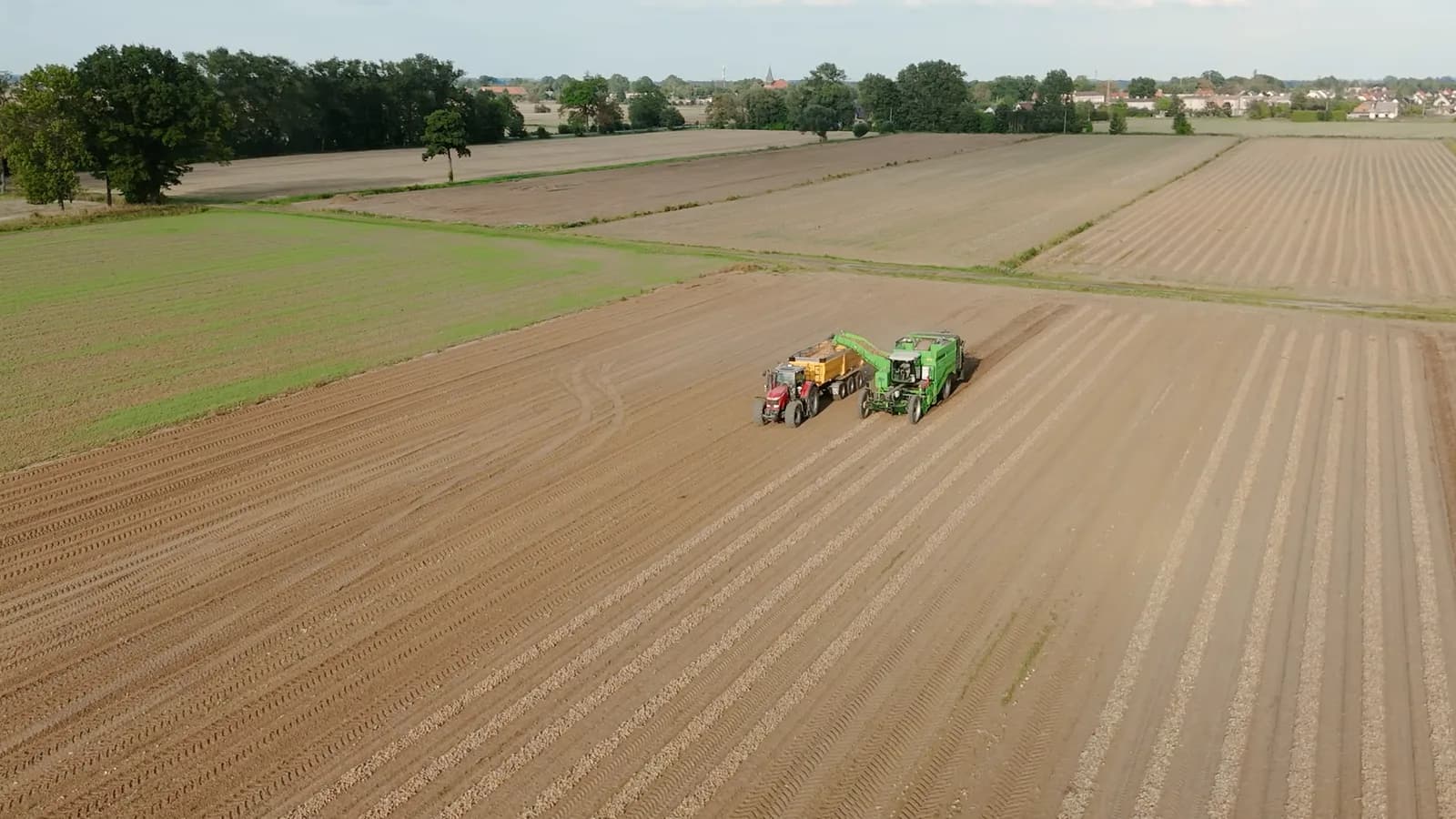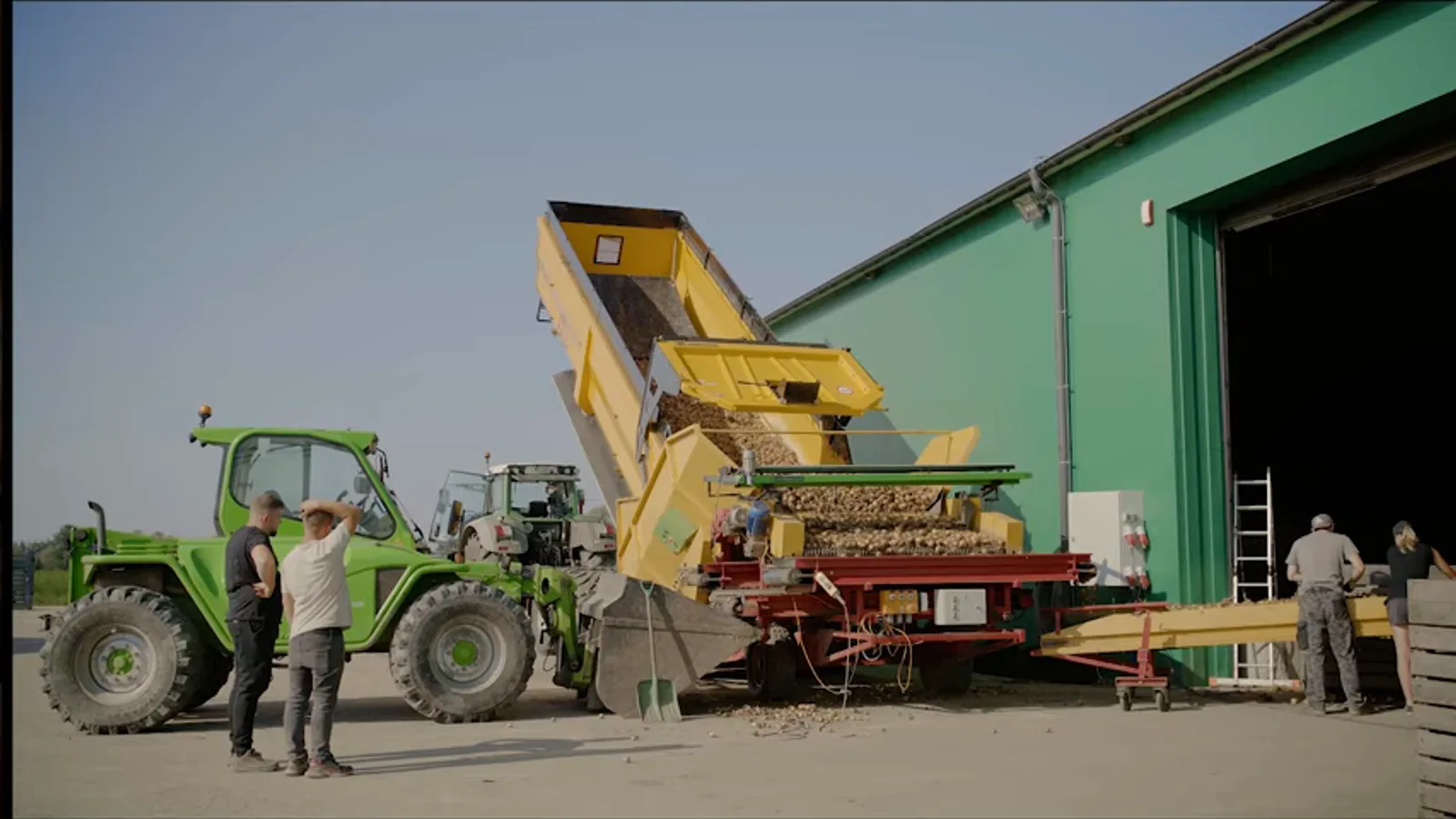
A good onion can keep from harvest right through to spring, even into early summer, if you know how to store it. This is not a matter of luck, but of three things: the right variety, proper drying and stable conditions in the store. On our farm the onions go into our own store, which holds around 13,000 tonnes, and it lets us manage sales over time and supply produce all year round.
In this guide we explain how onions are stored seriously: not in a home pantry, but at scale, from the perspective of a farm that does it every season.
What determines how long onions keep
The storage life of an onion depends above all on three factors:
- Variety. Firm, well-covered Rijnsburger-type onions keep far longer than thin-skinned varieties.
- Drying. A well-dried onion with a closed neck is the foundation. A moist neck is an open gate for disease.
- Conditions in the store. A steady, low temperature, the right humidity and a constant, dry airflow.
If any one of these elements fails, even the best onion will start to rot or sprout. That is why we look after storage life right from the field, which we describe in our post about growing onions in Żuławy.
Ideal temperature and humidity
Onions store best in the cold and at moderate humidity. Too damp means rot. Too dry means weight loss. Below freezing means frost damage.
| Parameter | Recommended range |
|---|---|
| Temperature | approx. 0 to 1°C |
| Relative humidity | approx. 65-75% |
| Airflow | constant, dry |
| Storage time | 6-8 months as standard, longer in good conditions |
Onions do not tolerate frost. Storing them below 0°C leads to damage that only shows up once the onions are taken out of the cold.
Drying and grading, the most important stage after harvest
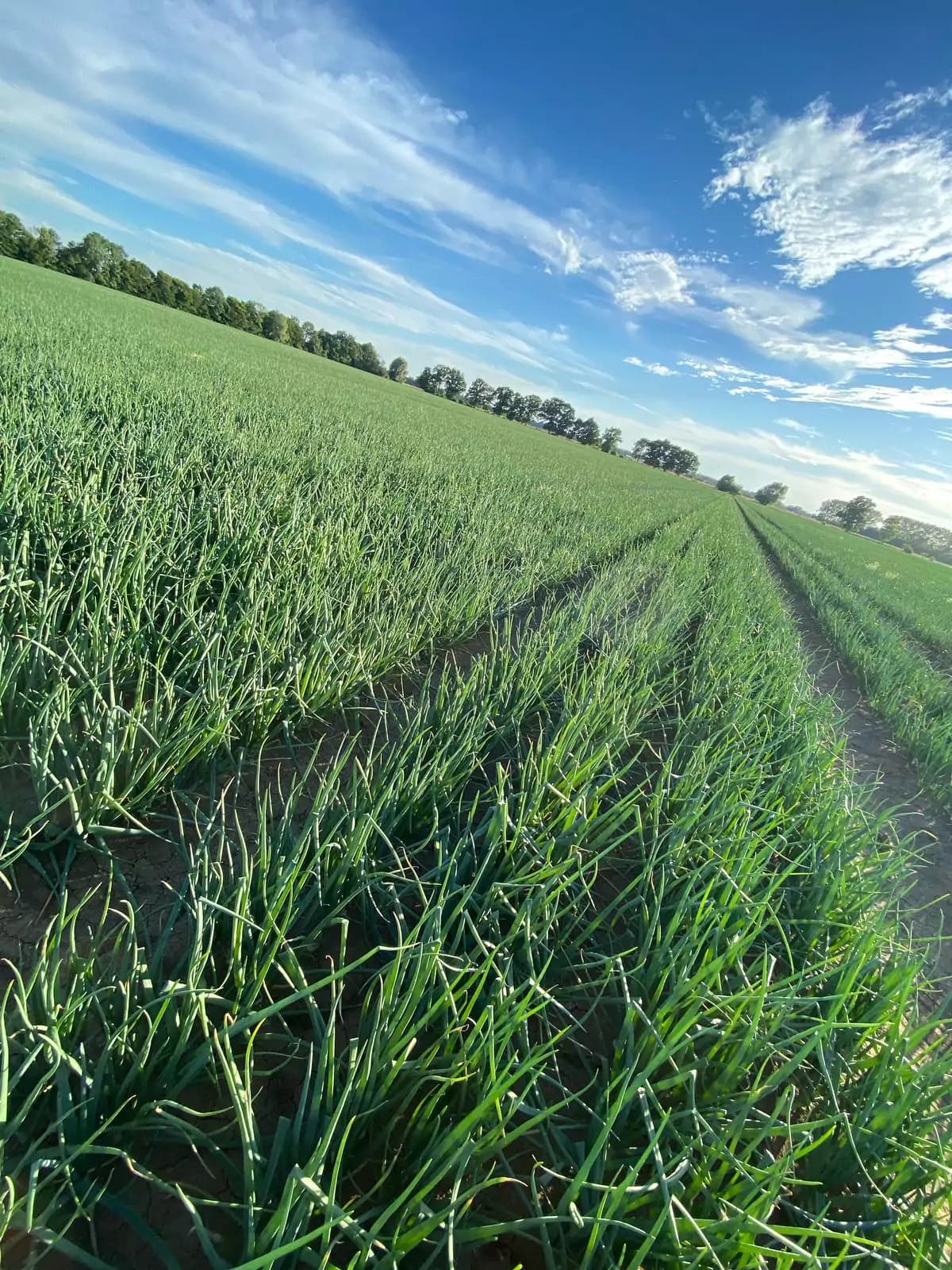
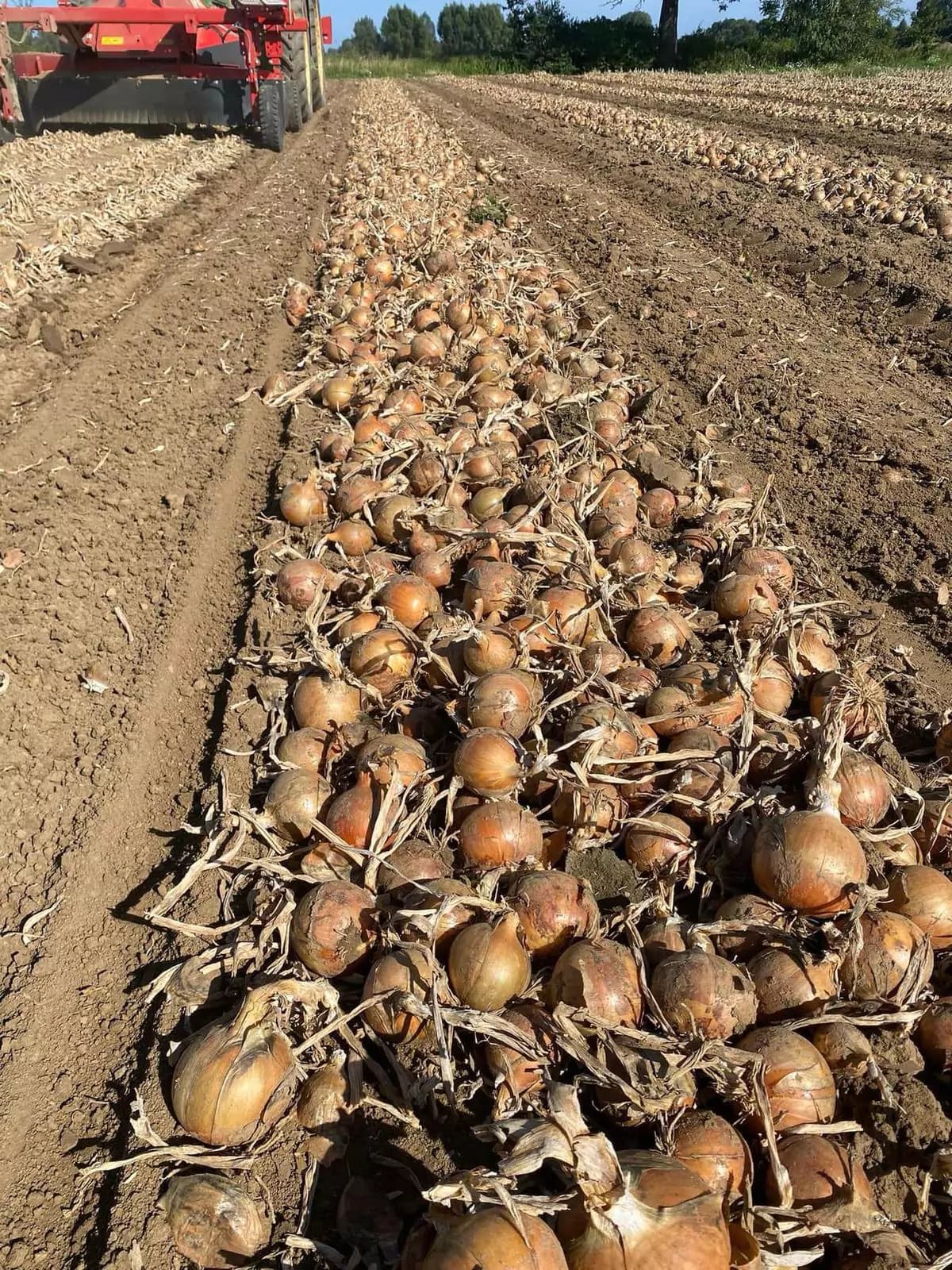
This is the stage where the fate of the whole batch is decided. We harvest the onions when the foliage falls over, and then we dry them until the neck is closed and dry. Only an onion like this is fit for long storage.
After drying we grade: we reject soft, damaged bulbs and any showing signs of disease. One diseased onion can spoil its neighbours, which is why the selection is ruthless. Only healthy, dry and uniform material goes into the store.
Cooling down after harvest, step by step
Onions are not dumped straight from the field into a cold store. A sudden change in temperature causes moisture to condense on the skin, and moisture means rot. That is why we cool them down gradually.
- Harvest with the foliage fallen over and the skin mature.
- Drying with warm, dry air, until the neck closes.
- Gradual cooling over several weeks, step by step, down to the target temperature.
- Stabilisation at steady conditions, around 0 to 1°C and 65-75% humidity.
This rhythm gives the onion time to close its neck and enter dormancy. That is precisely when it is decided whether the batch will keep until spring.
Ventilation and a dry atmosphere
Onions breathe, and moisture gathers around them. Without air movement a microclimate forms in which moulds develop. That is why we keep a constant, dry airflow in the store and dry the onions themselves.
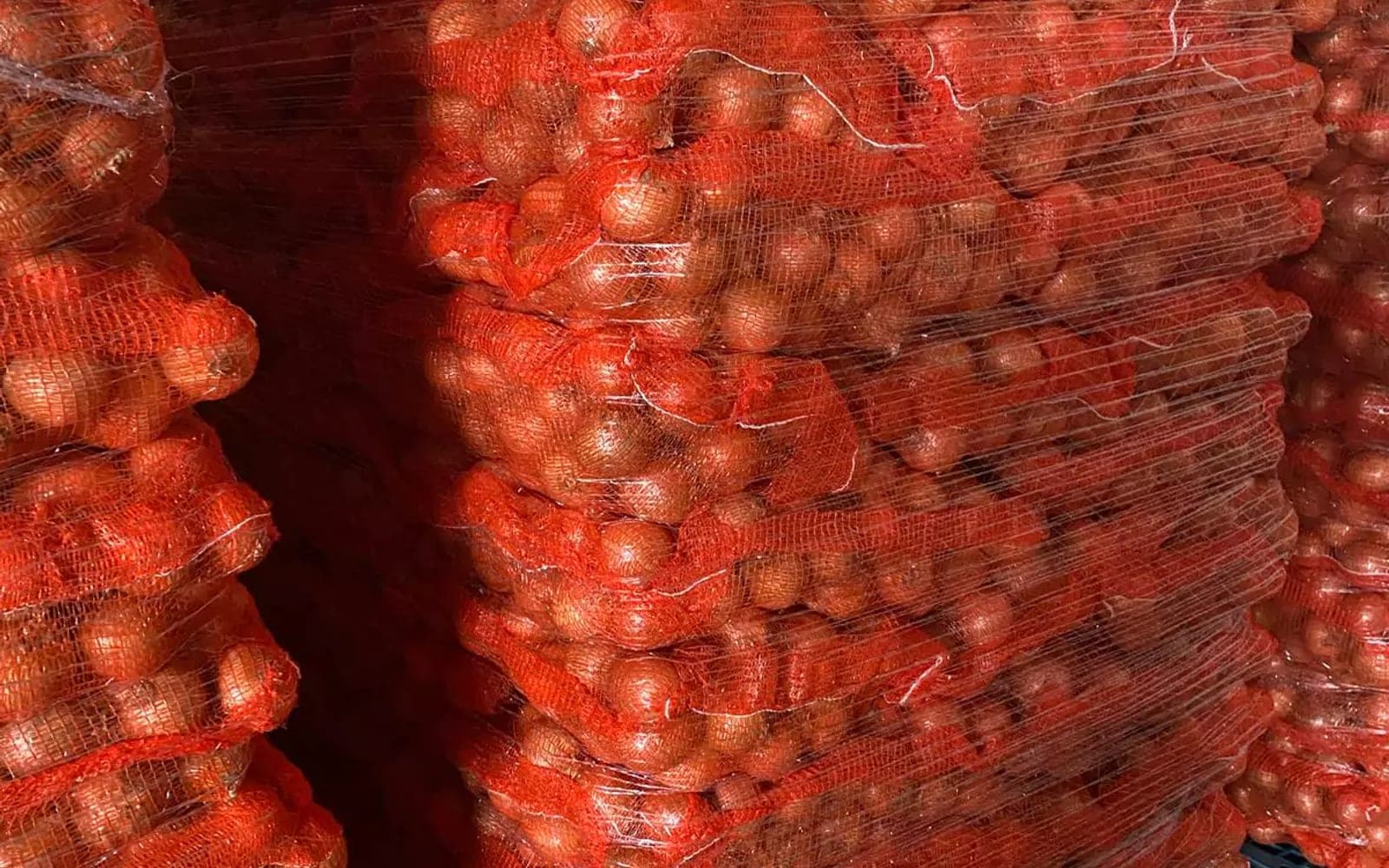
For the same reason onions are not kept in plastic bags. Plastic traps moisture and speeds up rot. The trade uses breathable packaging, such as net bags and big bags, which we touch on in our post about wholesale onion supply.
Which varieties keep the longest
Not every onion is suited to long storage. The longest keepers are the firm Rijnsburger-type varieties.
| Variety / type | Approximate storage life |
|---|---|
| Hybelle F1 (Rijnsburger) | until mid-June |
| Hysinger F1 (Rijnsburger) | long storage |
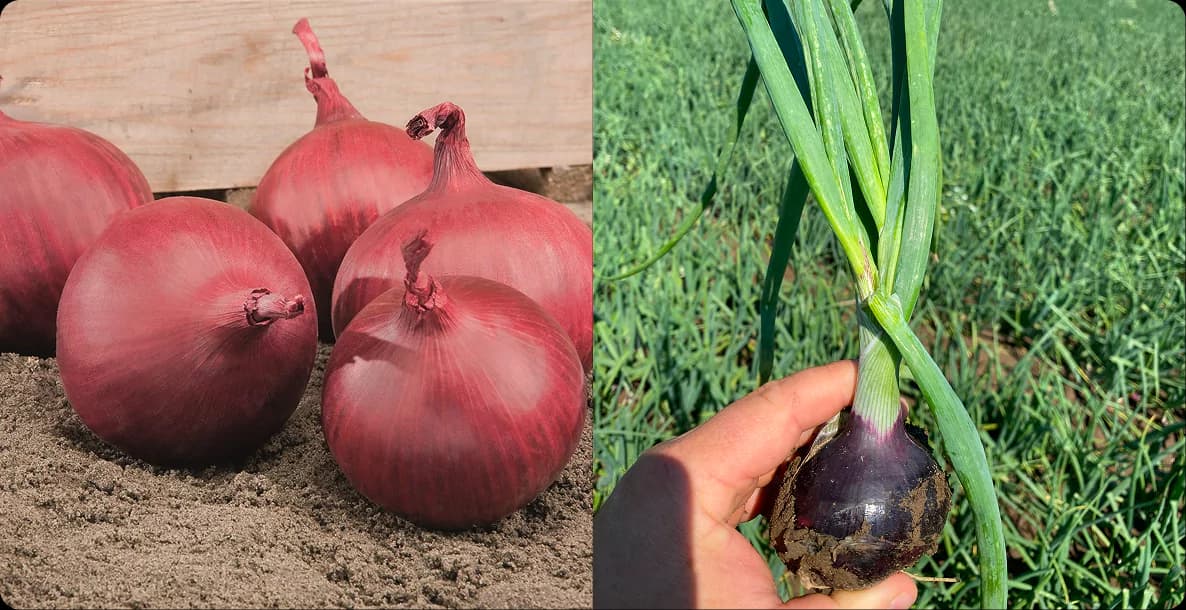
| Redtide F1 red onion | shorter, usually until the end of March |
That is why we rely above all on yellow Rijnsburger-type varieties for storage. Red onions are excellent, but by their nature they keep for less time. You will find more about our varieties in the onion offer.
Why onions rot and sprout
The two most common problems usually have a simple cause:
- Rot comes from excess moisture, poor drying of the neck or diseases brought in from the field. An onion rotting from the neck is most often neck rot, while one rotting from the base is fusarium rot.
- Sprouting sets off when the temperature is too high. The onion reads warmth as a signal that it can start growing again. That is why a steady, low temperature matters so much.
Onion storage diseases
Most losses can be avoided with good drying and selection. It is still worth knowing how to spot the symptoms:
| Disease | How it shows | Prevention |
|---|---|---|
| Neck rot (Botrytis) | rotting from the neck, grey coating | thorough neck drying, low temperature |
| Fusarium rot | rotting from the base, soft tissue | healthy material, crop rotation, selection |
| Bacterial soft rot | soft bulbs, vinegary smell | dry harvest, fast cooling |
The cheapest protection against storage diseases is a dry, healthy onion and stable conditions. Prevention works better than any intervention after the fact.
Our 13,000-tonne store and managing sales
Our own store is an advantage in time for us. It holds around 13,000 tonnes of onions and has controlled ventilation and drying.
Thanks to it we do not have to sell the whole crop right after harvest, when the price tends to be lowest. We come to the market when it makes sense, and we supply onions all year round. We describe the equipment that makes this possible in the machinery section.
For the buyer this means one thing: consistent availability and steady batch quality. We explain exactly what that delivers in wholesale in our post about onions for packers and processors.
From the store to the buyer
Storage is not the end, just the stage before dispatch. Before an onion reaches the customer, it goes through another round of selection and grading by size, followed by packing on an automated line. As a result the buyer gets uniform produce, whether they order in September or in March.
We pack onions in breathable packaging: loose, big bags and net bags. We match the format and size to the specific buyer. This combination of store and packing line lets us fulfil larger orders quickly and to a steady quality.
Looking for onions available all year round, at a steady quality? See what wholesale B2B cooperation looks like or get in touch through our contact page.