An ordinary phone GPS is off by a few metres and nobody minds. In the field, a few metres of error means a ruined row of onions, a strip sprayed twice and fuel burned on overlaps. That is why we guide our machines with GPS RTK correction, which brings the error down to about 2-3 centimetres. In this post we explain where that centimetre accuracy comes from and what exactly it gives us across roughly 250 hectares of onions.
What GPS RTK is and where centimetre accuracy comes from
RTK stands for Real Time Kinematic, meaning position correction in real time. On its own, the satellite receiver in a tractor, just like the one in a phone, knows its position to within a few metres. That is not enough for precise fieldwork.
RTK adds a second source of information: a known, fixed reference point (a base station or a network of stations) that receives the same satellite signals at the same moment. Because its exact position is known, it can work out by how much the satellites are "lying" in a given second and send the tractor a correction. The receiver in the cab applies that correction to its own reading, and instead of a few metres it has an error of around 2-3 centimetres.
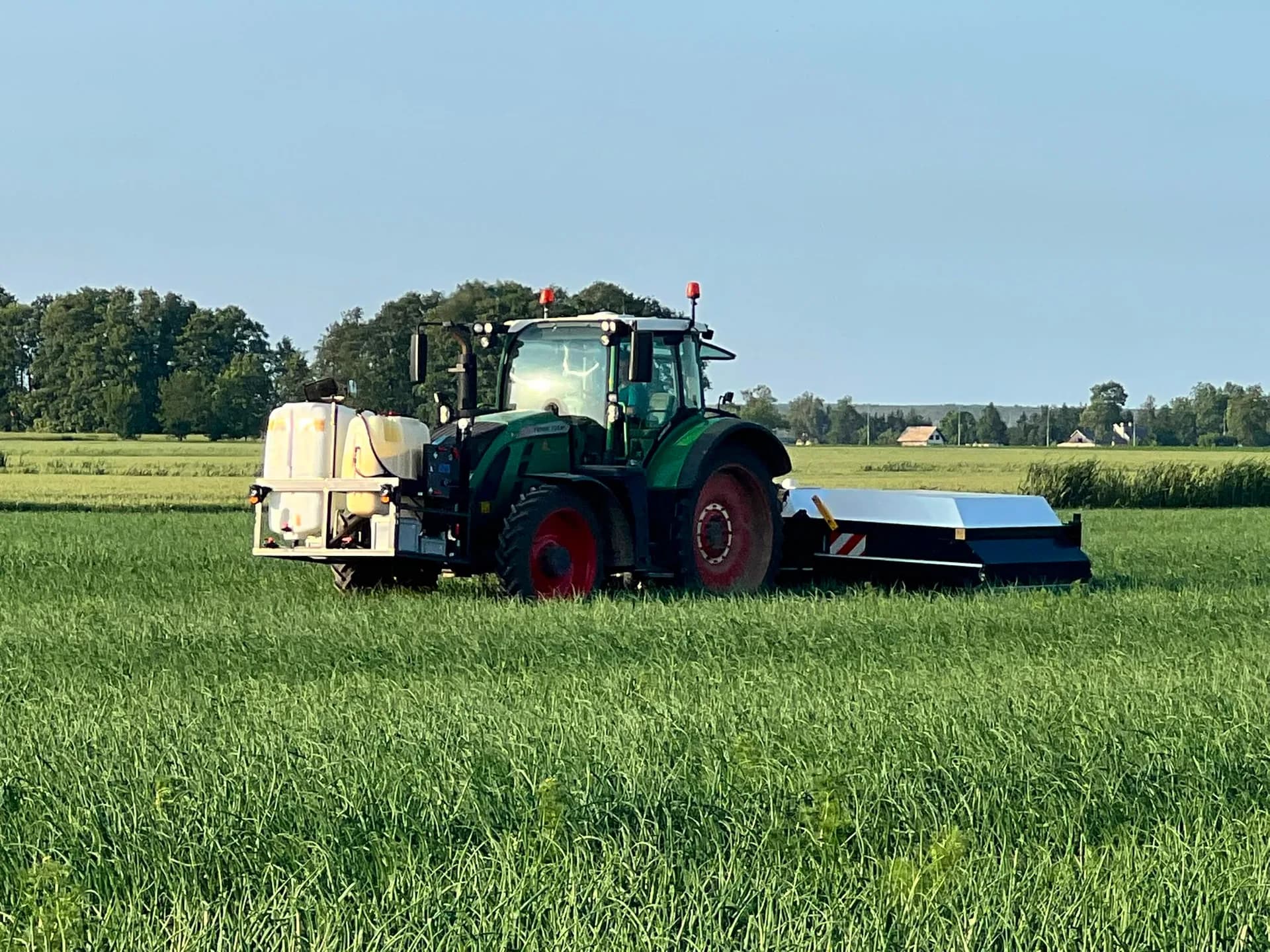
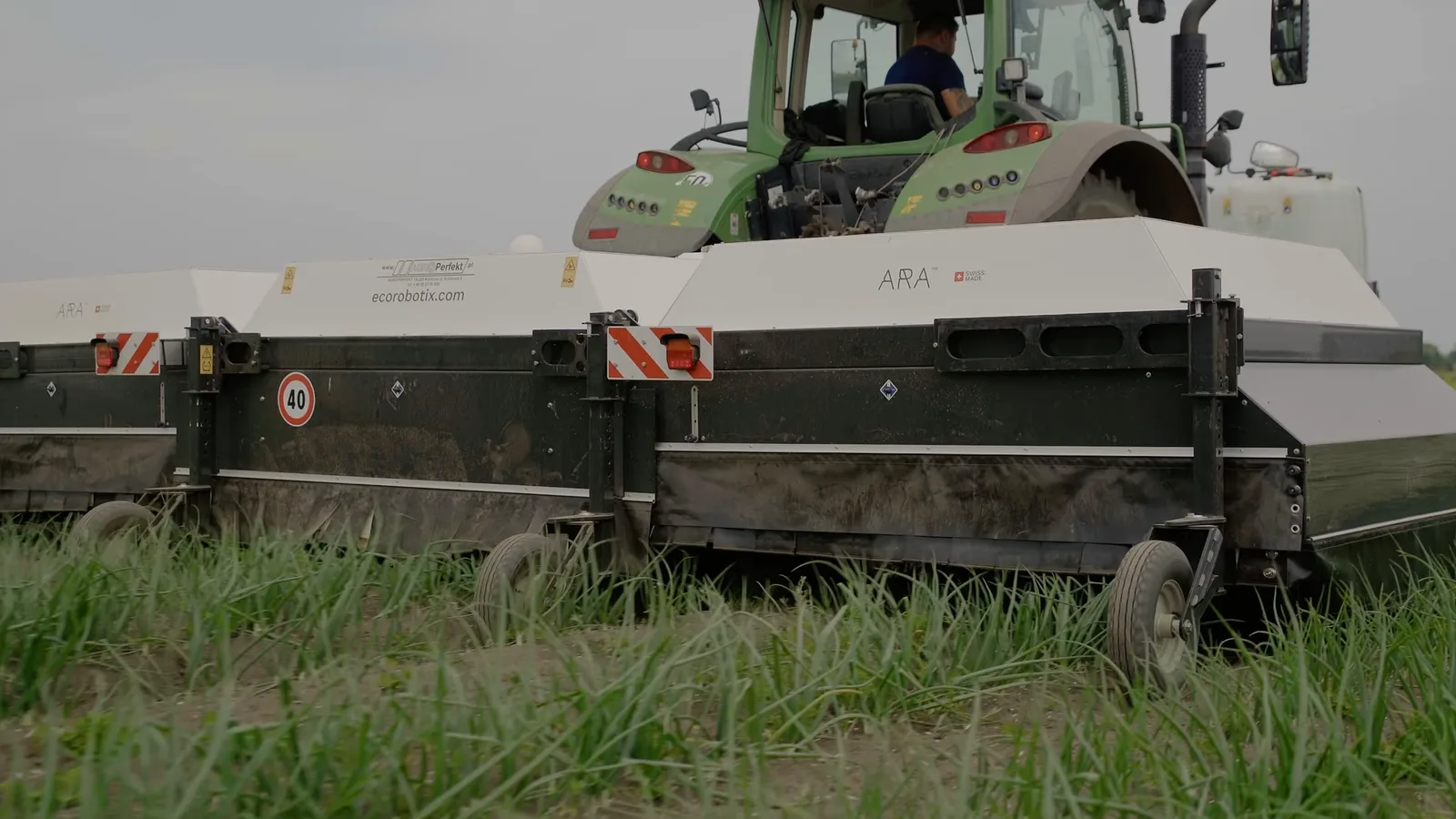
In practice it works like this: our tractors (Fendt and John Deere) run on the GPS Trimble signal with RTK correction. The terminal in the cab shows the guidance line, and the automatic guidance system keeps the machine on that line with an accuracy no person can hold across a full day of work.
An important distinction: plain "GPS" and "GPS with RTK correction" are the difference between metre-level accuracy and centimetre-level accuracy. In precision agriculture, only the latter really counts.
Why centimetres matter on onions in particular
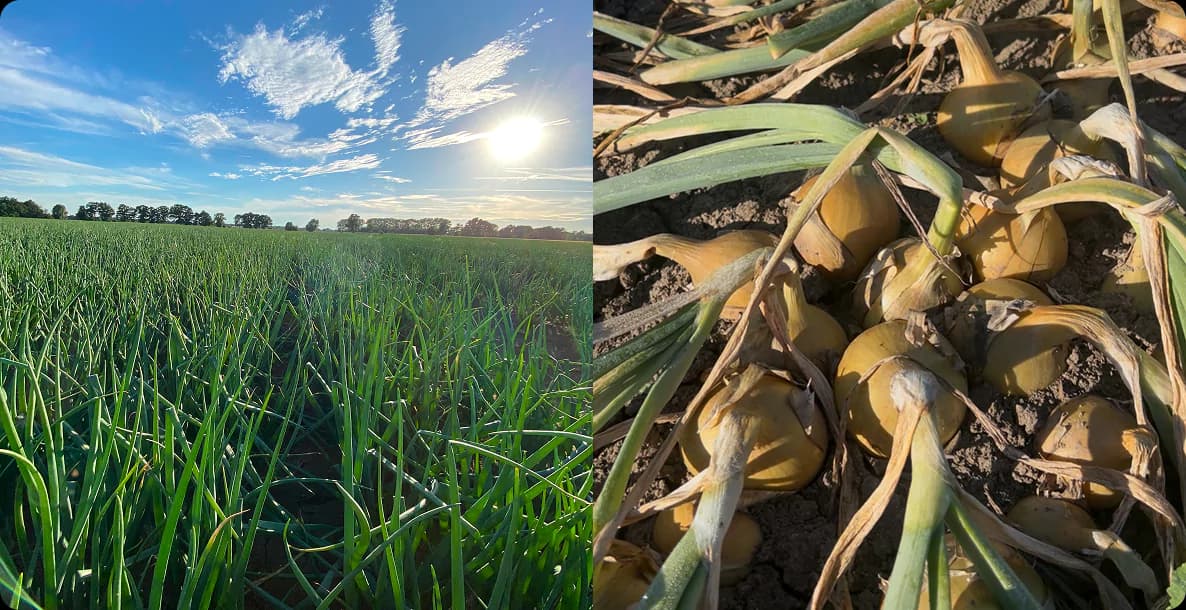
Onions are demanding. We sow them in narrow, dense rows, and then drive into the same field many times over the whole season: cultivation, fertilising, crop protection and finally harvest. Each of these passes has to land between the rows, not on them.
On the Zulawy alluvial soils, heavy and fertile ground, there is a second reason. This kind of soil handles needless compaction badly. The fewer random passes and the narrower, more repeatable the tramlines, the less compacted the ground and the better the conditions for the roots. Centimetre accuracy lets us drive along the very same tracks year after year.
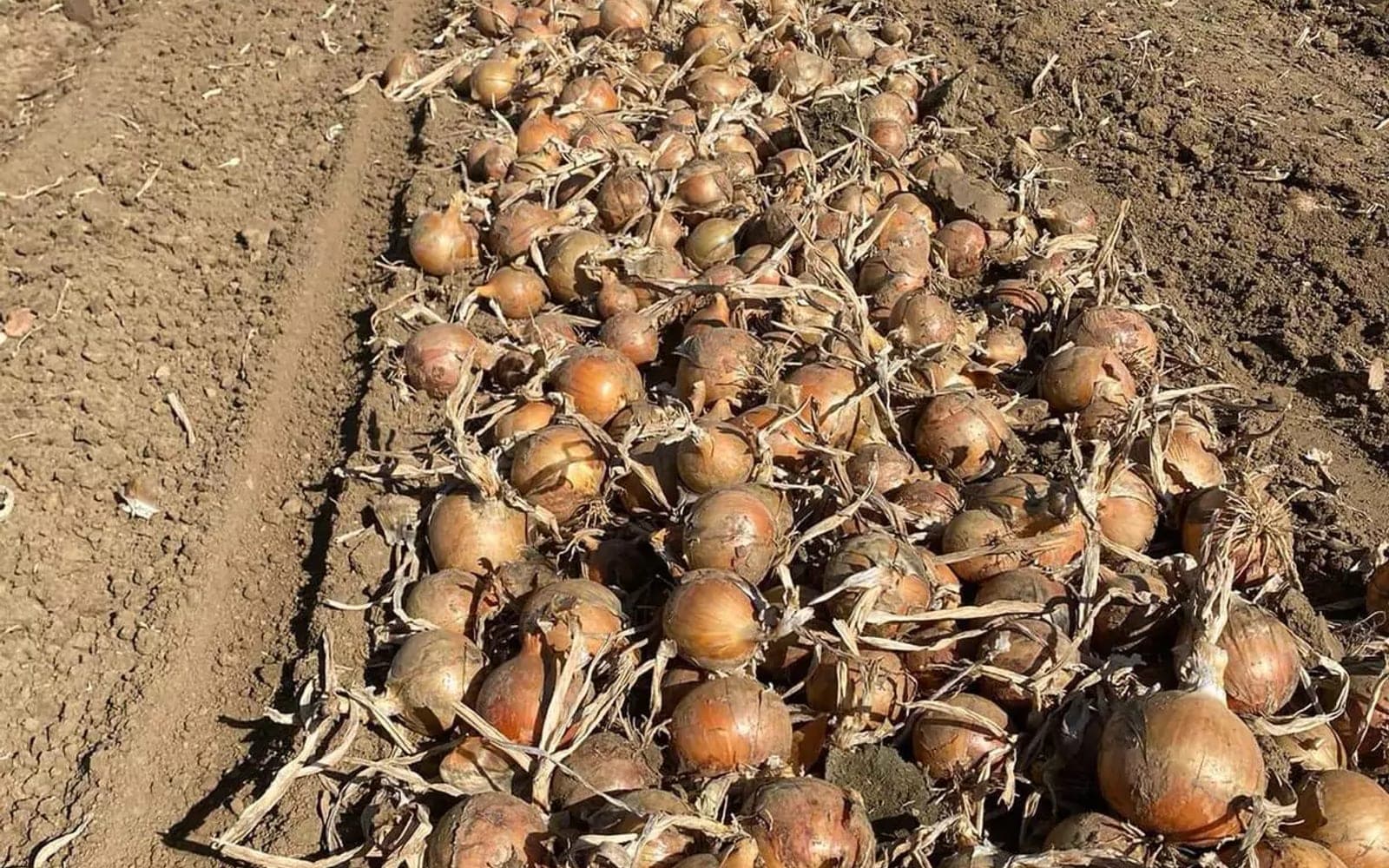
On a large scale, with yields of around 60 tonnes per hectare, an error that multiplies across hundreds of hectares and dozens of passes stops being a trifle. Centimetres decide whether onions grow in even, clean rows that are later easy to lift and harvest with the machine.
What RTK really saves
Centimetre accuracy is not for show. It translates into concrete savings in every operation, because the most expensive mistake in the field disappears: driving "by eye". Without RTK the operator either leaves a margin and overlaps passes (double the cost), or drifts too far apart and leaves misses (lost yield).
| Area of work | What centimetre accuracy delivers |
|---|---|
| Sowing | Even, repeatable rows with no doubling and no empty strips |
| Fertilising | No overlaps, fertiliser lands where it should, not twice on the same strip |
| Crop protection | Full coverage with no double spraying and no gaps |
| Passes | Fixed tramlines, less compacted soil |
| Fuel and time | Fewer wasted metres, work also after dark |
On top of that comes something the table does not show: working in the dark and in poor visibility. A machine guided by RTK runs just as straight at dawn and at night as it does at noon, which matters a great deal during the short onion harvest window.
How we use RTK across the whole cycle, from sowing to harvest
RTK correction is the foundation the rest of our precision farming stands on. Accurate position alone changes little; it is what we build on top of it that delivers the effect.
We base two things on RTK, which we cover separately because each deserves its own post:
- Parallel guidance. The tractor holds the guidance line with no overlaps or misses. How this works for us with parallel guidance and John Deere Auto Pilot, we show in a separate post.
- Variable rate application. The dose of fertiliser and inputs matched to the field zone, rather than the whole area treated uniformly. How we do variable rate application, we describe in detail alongside.
Both techniques need an accurate position to make any sense at all. If the system does not know to the centimetre where the machine stands, you can neither hold a fixed track nor land the dose in a specific field zone. That is why we treat RTK as a foundation, not an add-on. Our whole machinery fleet and the way we grow onions in Zulawy are set up for this precision.
What the onion buyer gets out of it
Precision agriculture sounds like a topic strictly for the farmer, but the wholesale buyer benefits too, if indirectly.
Even rows and fixed tracks mean onions that grow in uniform conditions, so the batch is more consistent in size. Fewer overlaps in crop protection mean better control over how much goes where, which supports our work in the residue-free technology, in line with the principles of Integrated Plant Production. Precision also brings repeatability: what we do well on one field, we repeat on the next, because the machines work the same way every time.
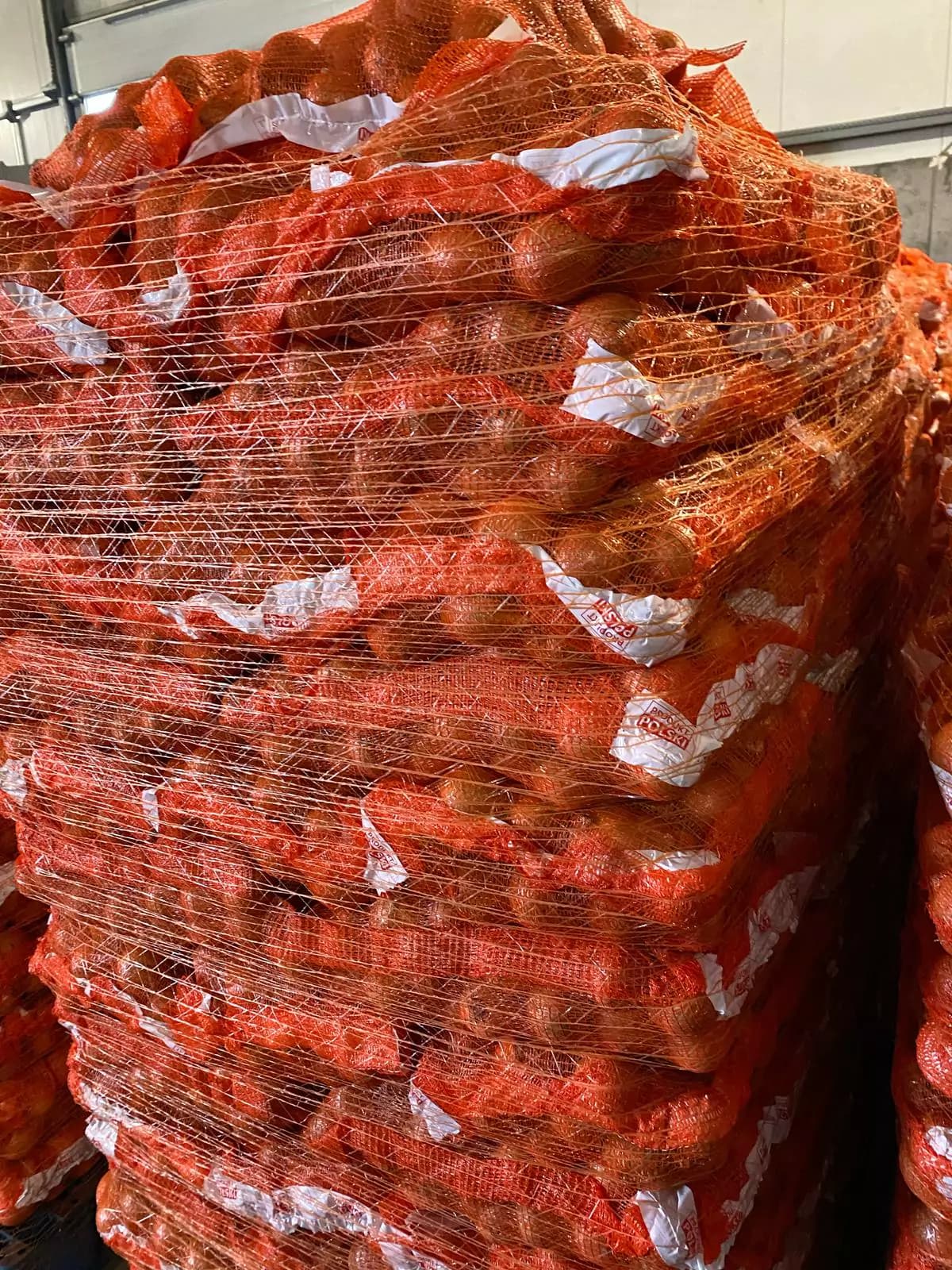
For a packhouse or a processing plant this means one thing: uniform, predictable produce from a farm that stays in control at every stage of cultivation. It is the same philosophy we apply in wholesale onion supply, from field to pallet.
Want onions from a farm that stays in control at every stage of cultivation? Get in touch through our contact page or take a look at the onion offer. You will find more about our technology in the description of our machinery fleet.