Plant protection treatment records are a mandatory log of every spray: which product, when, at what dose, on which field and on which crop. Every professional user of plant protection products keeps them, and stores them for at least 3 years. For a vegetable buyer it is the simplest way to check what we did in the field and whether we observed the pre-harvest intervals. Whether anything remained in the vegetable is shown only by testing the batch.
What the law says: three layers
The duty has three levels, which are easy to mix up:
- Regulation (EC) No 1107/2009, Article 67. Professional users keep and store for at least three years the records of the products they use: the product name, time of application, dose, area and crop. On request they make them available to the competent authority. The provision also names third parties explicitly, such as retailers or the drinking water industry, which may ask for access to this information through the competent authority.
- Commission Implementing Regulation (EU) 2023/564. It standardises the content of an entry and introduces an electronic, machine-readable form. Every treatment is recorded without undue delay.
- The Polish act on plant protection products. It adds its own requirement: the records must show how integrated pest management was applied, stating at least the reason for carrying out the treatment. For failing to keep records the act provides a fine.
Electronic records: when they become mandatory in Poland
We describe the legal position as of October 2026. Information still circulates online that electronic records are mandatory from 1 January 2026. That is out of date. Regulation 2023/564 applies from that date, but in autumn 2025 the European Commission amended it with Regulation 2025/2203 and allowed member states to exempt from the electronic form treatments carried out before 1 January 2027. Poland used this option in the transitional provisions of the act on plant protection products (Article 78a).
| Treatment carried out | Form of the record |
|---|---|
| until the end of 2026 | any, including paper, kept for at least 3 years |
| from 2027 to the end of 2029 (Regulation 2023/564) | electronic; a paper record has to be transferred to an electronic format by 31 January of the year following the year of the treatment |
| from 2030 (Regulation 2023/564) | electronic; a record that was not created in this form straight away is transferred no later than 30 days after the treatment |
The duty to keep records itself is not new and has applied without a break, only its form changes.
The most common mistake in articles about the new rules is mixing up two deadlines. 30 days is the time to transfer a record to the electronic form. The treatment itself has to be recorded without undue delay.
What an entry must contain
Regulation 2023/564 sets the minimum content of an entry for treatments in the field. The GlobalG.A.P. standard, which we hold on the farm, requires more. A comparison:
| Element of the entry | Required by EU law | Additionally GlobalG.A.P. |
|---|---|---|
| product name and authorisation number | yes | trade name and active substance |
| date, and where relevant the start time | yes | from-to dates |
| dose in kg or l per hectare | yes | dose and concentration |
| field location and number of hectares | yes | field or plot |
| crop (EPPO code) and growth stage (BBCH) | where applicable | crop or variety |
| reason for the treatment | required by the Polish act | yes |
| pre-harvest interval | no | yes |
| operator and the person who decided on the treatment | no | yes |
| equipment and weather conditions | no | yes |
For the buyer, the two most valuable fields are the ones beyond the EU minimum: the reason for the treatment and the pre-harvest interval. The first shows that a spray came from a real threat, not from the calendar. The second lets you check whether enough time passed between the last treatment and harvest.
How we keep records on our farm
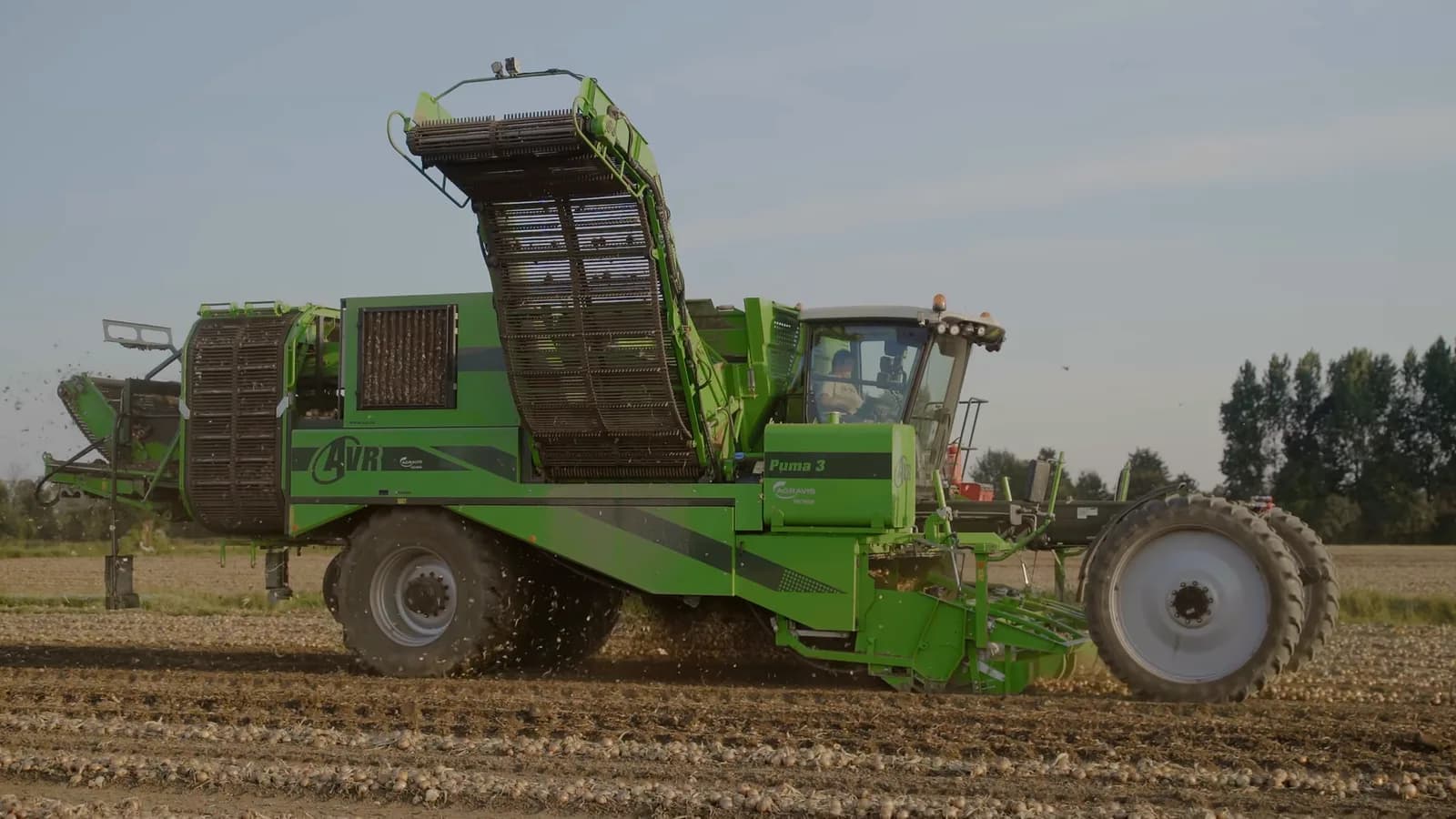
We grow more than 800 ha, including around 250 ha of onions, so there are many treatments in a season, and each one concerns a specific field and a specific crop. The farm works under Integrated Plant Production and holds GlobalG.A.P. certification, so recording treatments is part of our daily work, checked at the annual audit.
For us records are also a planning tool. From them we know when the pre-harvest interval ends on a given field, and we set the harvest date to match. How this looks in practice, we describe in our post on the pre-harvest interval in onion growing.

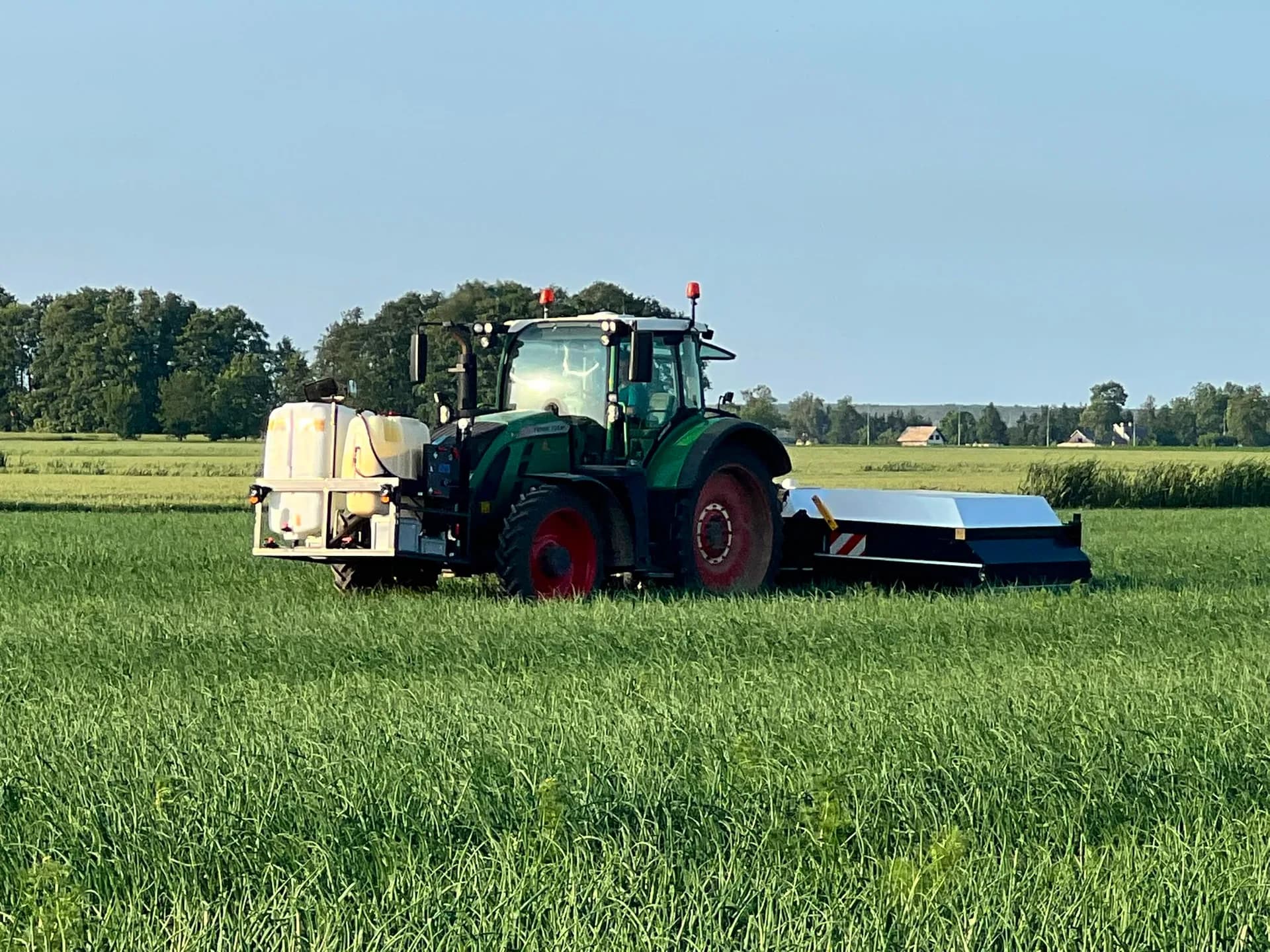
We control part of the weeds with the Ecorobotix ARA spot sprayer. Cameras and AI recognise plants, and the machine applies liquid only where needed, which cuts chemical doses by around 70 percent. Every such treatment goes into the records just like a whole-field treatment: with the product name, date, field and reason.
What the buyer gets from the records
The treatment log ties in with the rest of a batch's documents. From the pallet we get to the field, and from the field to the list of treatments carried out on it. We describe this chain in our post on batch traceability from field to pallet.
A buyer who wants to check a supplier can ask for:
- an extract from the records for the fields the batch comes from, with dates, products and reasons for treatments,
- confirmation that the pre-harvest intervals were observed before harvest,
- batch pesticide residue test results, which show whether anything remained in the produce and how the result compares with the MRL, which we write about in our post MRL for pesticides in vegetables,
- the GGN number, which lets you check the GlobalG.A.P. certificate in the standard's database.
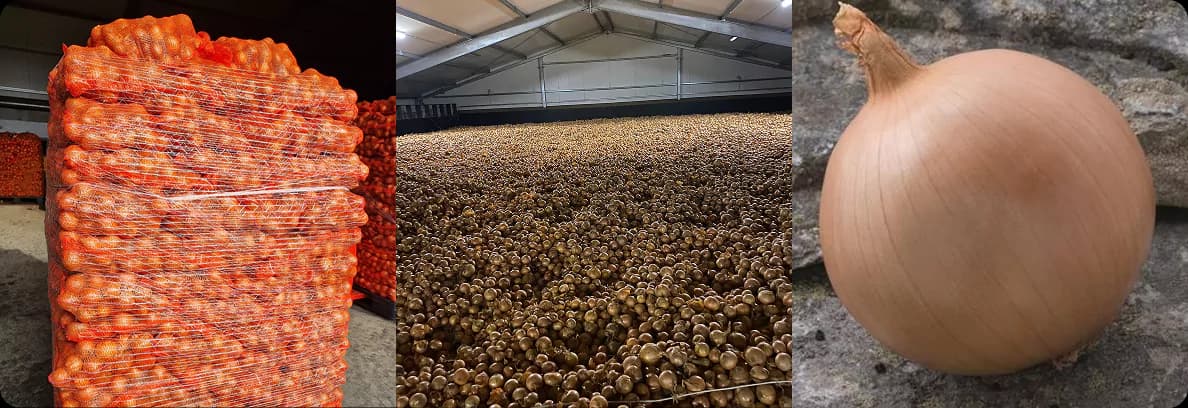
Records and testing complement each other. The records say what we did in the field. Testing says what remained in the vegetable. We produce onions using a technology free of pesticide residues, in line with the principles of Integrated Plant Production, and we test every batch for pesticide residues, heavy metals and substances hazardous to health. How we grow onions from sowing to harvest, we show in our guide onions from Żuławy: how we grow them.
You will find product details in our onion offer. If you want to see the batch documents before the first delivery, write to us through the contact form.