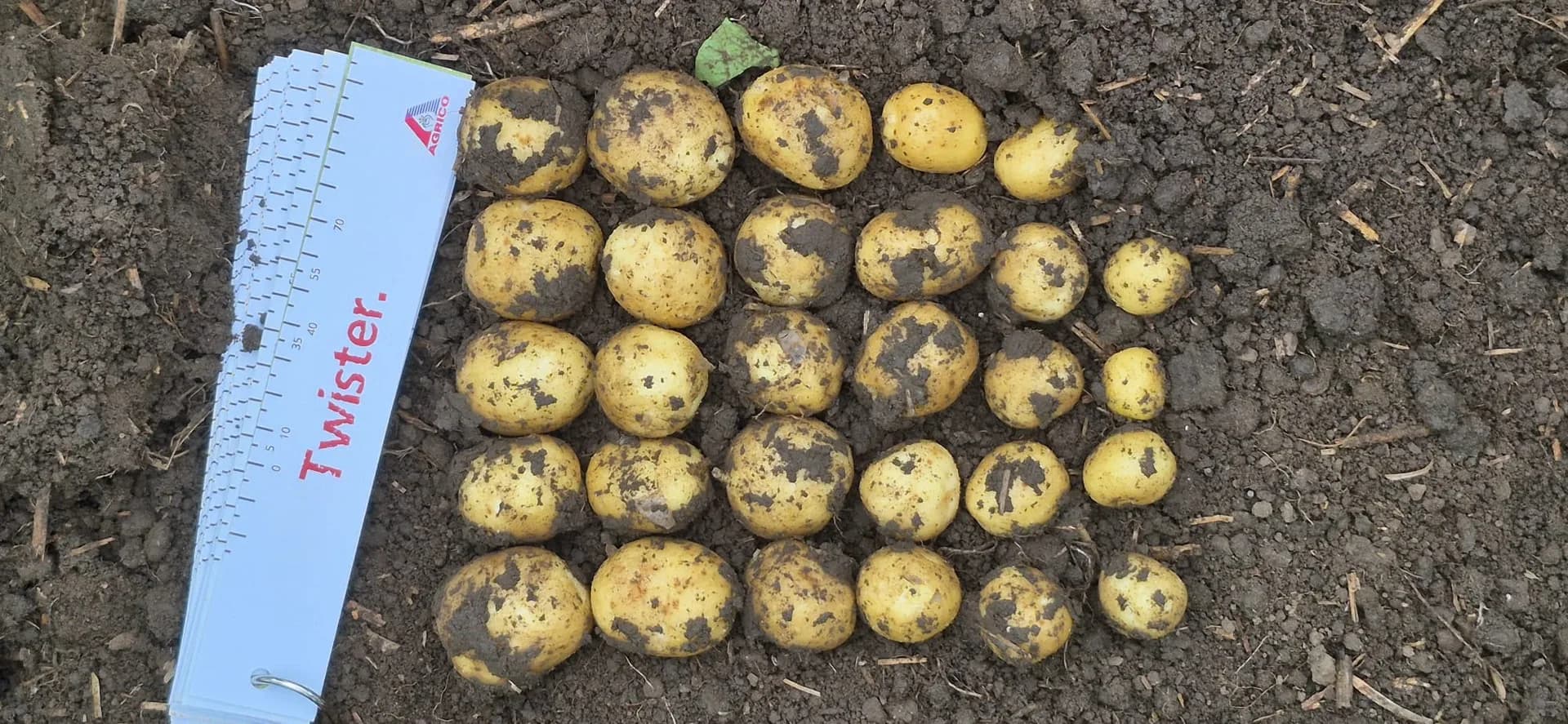
The culinary type of a potato tells you how the flesh behaves after cooking: according to COBORU type A is salad, B is general-purpose, C is floury and D is very floury. For a packhouse selling potatoes for the kitchen, this tells you what the customer will get in the pot, so it is worth knowing the type before you order a batch. Below we set out the scale, show the types of our varieties according to the breeders' sheets and say plainly where a sheet is silent.
The A, B, C and D scale according to COBORU
We take the definitions from the Research Centre for Cultivar Testing (COBORU), not from seed potato sellers' catalogues. According to COBORU the culinary and usage type of a variety is set by the properties of the flesh: disintegration on cooking, consistency, moisture, texture and mealiness.
| Type | Name | How COBORU describes it |
|---|---|---|
| A | salad | firm tubers that can be sliced, slightly moist, with a smooth, fine texture |
| B | general-purpose | fairly firm tubers, slightly mealy, moist, with a fine texture |
| C | floury | fairly firm tubers with a strong tendency to fall apart on cooking, mealy, crumbly, dry |
| D | very floury | tubers fall apart completely on cooking, are crumbly, very dry and very mealy |
Between the letters lie the intermediate types: COBORU notes that many varieties correspond to types AB, BC and CD.
Who assesses the culinary type and how
The type comes from assessing the tubers, and COBORU assesses raw and cooked tubers separately. According to COBORU the methodology is based on methods accepted by the European Association for Potato Research (EAPR).
According to COBORU the sensory traits of cooked tubers are assessed by at least three assessors, and the potatoes are cooked without salt. Darkening of the flesh after cooking is checked separately: COBORU assesses it twice, after 10 minutes and after 24 hours, on 10 cooked tubers.
COBORU publishes the results of the eating quality assessment every year in its Descriptive Lists of Varieties.
Can the culinary type of a batch change
The type is a trait of the variety, but a specific batch also has its own history. COBORU writes that culinary and usage properties are genetic traits, and that the grower influences tuber quality through the soil type, fertilisation, crop protection and the way the potatoes are stored. According to the same source, COBORU, the taste of potatoes can deteriorate the longer they are stored.
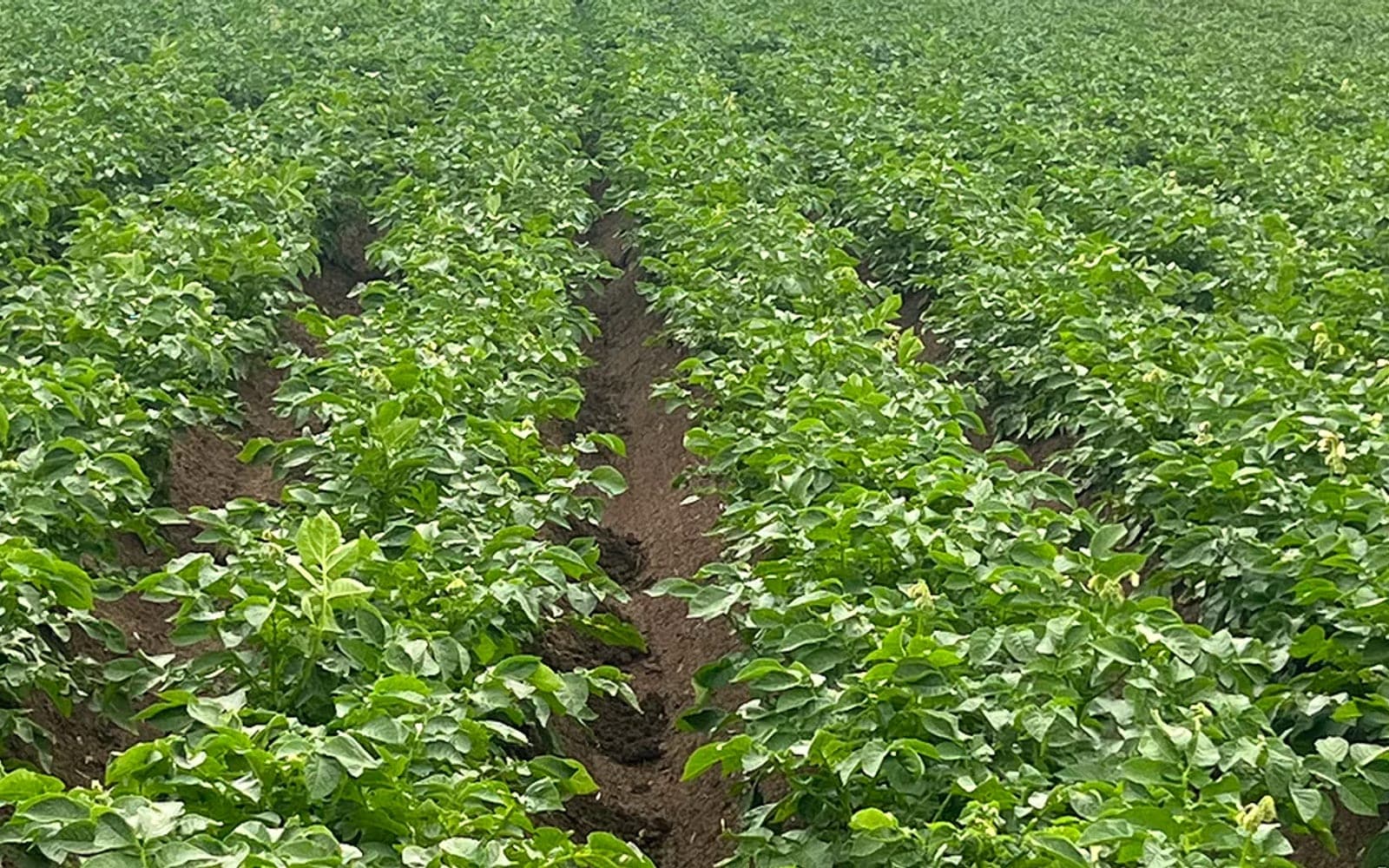
That is why we do not treat the letter on the sheet as a guarantee for a batch. Our potatoes grow on Żuławy alluvial soils, heavy, humus-rich soils that hold moisture well. We apply fertiliser at variable rates, giving each part of the field as much as it needs, and we select every batch for firmness, colour and dry matter content.
Our varieties and their culinary type
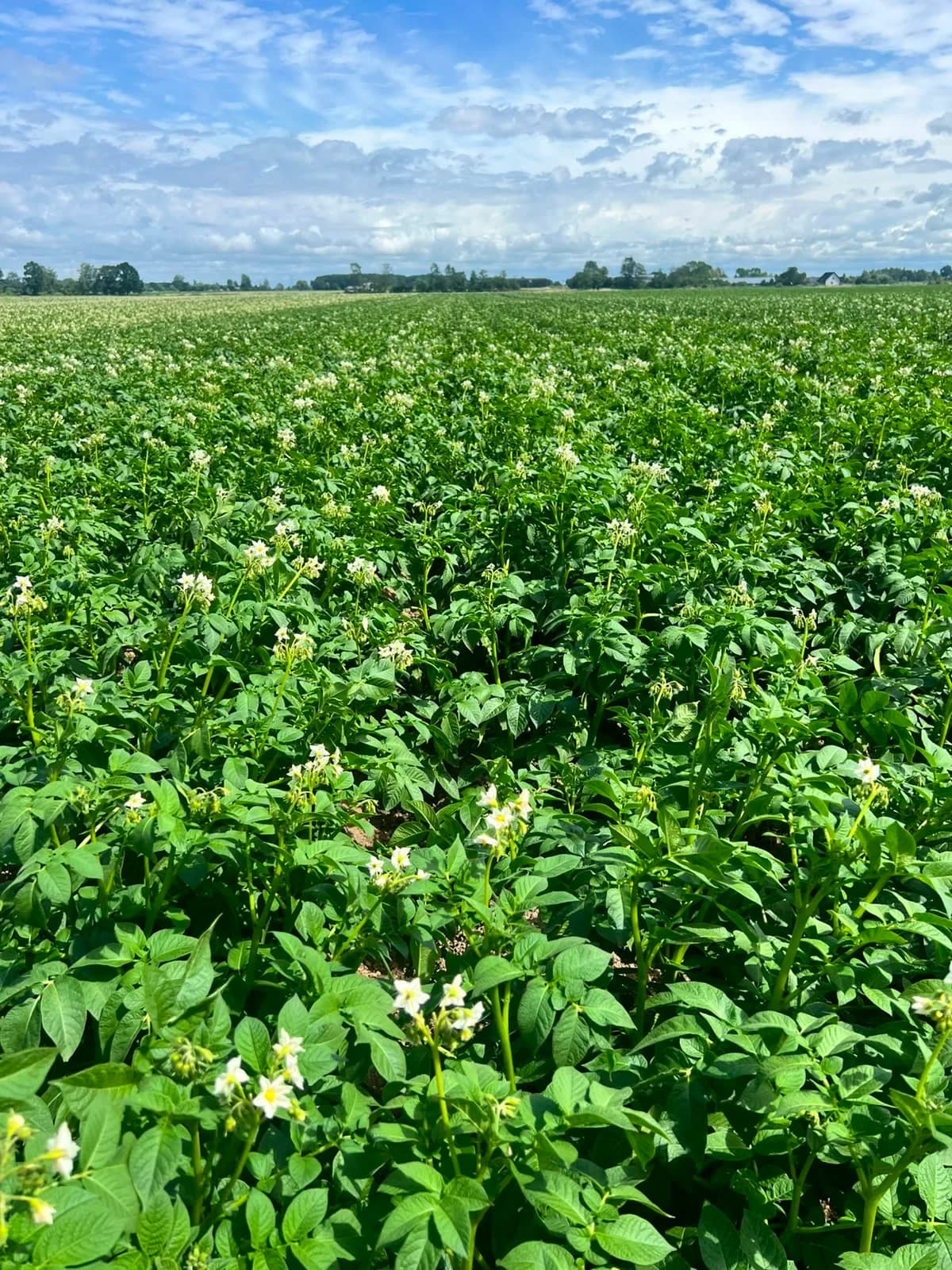
We farm more than 800 ha, including around 400 ha of vegetables. For potatoes we most often base our crop on two fry varieties, Innovator and Donata, and four table varieties: Twister, Bella Rosa, Joline and Gala. We checked the type in breeders' sheets and trial reports, and where we found no source, we leave the field empty.
| Variety | Our use | Type or description in the source | Source |
|---|---|---|---|
| Twister | table | AB, rather firm, 19% dry matter | Agrico |
| Innovator | fries | B, slightly mealy, 20.6% dry matter | HZPC |
| Gala | table | breeder's sheet gives no type; in variety trials the mostly firm segment (vorwiegend festkochend) | Norika, LWK NRW |
| Bella Rosa | table | mostly firm (vorwiegend fest), no letter | Europlant |
| Donata | fries | floury (mehlig), no letter | Europlant |
| Joline | table | we found no breeder's sheet, so we do not give a type | none |
The Norika sheet gives only the use "Speise" for Gala, meaning table, with no culinary type. We found the type in a 2012 report in which Landwirtschaftskammer NRW placed Gala in the mostly firm segment. Bella Rosa's breeder, Europlant, writes it as Bellarosa and describes it as a very early, red-skinned table potato, mostly firm.
The Europlant sheets and the LWK NRW report describe the type in words, not letters. We do not convert them to the COBORU scale, because none of these sources gives such a conversion. For Joline we found no breeder's sheet, so we leave the field in the table empty instead of guessing.
What the type means for our varieties
At Agrico Twister has type AB, rather firm. Agrico rates its after-cooking blackening at 6.5 and describes it as quite sensitive, which is worth knowing before selling for the kitchen. We cover the sheet and how we lift and pack this variety in our post on Twister potatoes, and Gala separately in our post on Gala potatoes.
Innovator is a potato for fries: HZPC issues growing recommendations for it with fries as the end use. It is the same variety Farm Frites uses. Europlant describes Donata as a medium-early processing variety for fries and purée.
We set all four table varieties side by side in our post on table potato varieties. On the same alluvial soils grows our speciality, which we describe in our guide to onions from Żuławy.
How we choose and prepare a batch
We match the produce to the specific customer, for the fresh market and for processing. We lift potatoes with a self-propelled AVR Puma 3 harvester, four rows at once. Then they pass through the DOWNS CropVision optical sorter, which scans every tuber through 360 degrees and rejects stones, soil clods and defective pieces, at up to 100 tonnes per hour.
We grade and pack loose, in big bags or in sacks of 15 kg, 10 kg and smaller. We produce using a technology free of pesticide residues, in line with the principles of Integrated Plant Production, and we hold GlobalG.A.P., GRASP, FSA Gold (Farm Sustainability Assessment) and GMP+ certificates. We have gathered the varieties and delivery forms in our potato offer.
How to check a variety's culinary type before ordering
- Ask the supplier for the exact variety name, not just the skin colour.
- Open the variety sheet on the breeder's site and find the culinary type field (cooking type, Kochtyp).
- Read the entry as it stands: a letter (A, AB, B, BC, C) or a word description, without converting it.
- If the sheet is silent, check the Descriptive Lists of Varieties published by COBORU, or variety trial reports.
- Ask for a sample before ordering. On request we send a free sample.
- Cook the tubers without salt and assess them with a few people, and check darkening after 10 minutes and after 24 hours, as in the COBORU methodology.