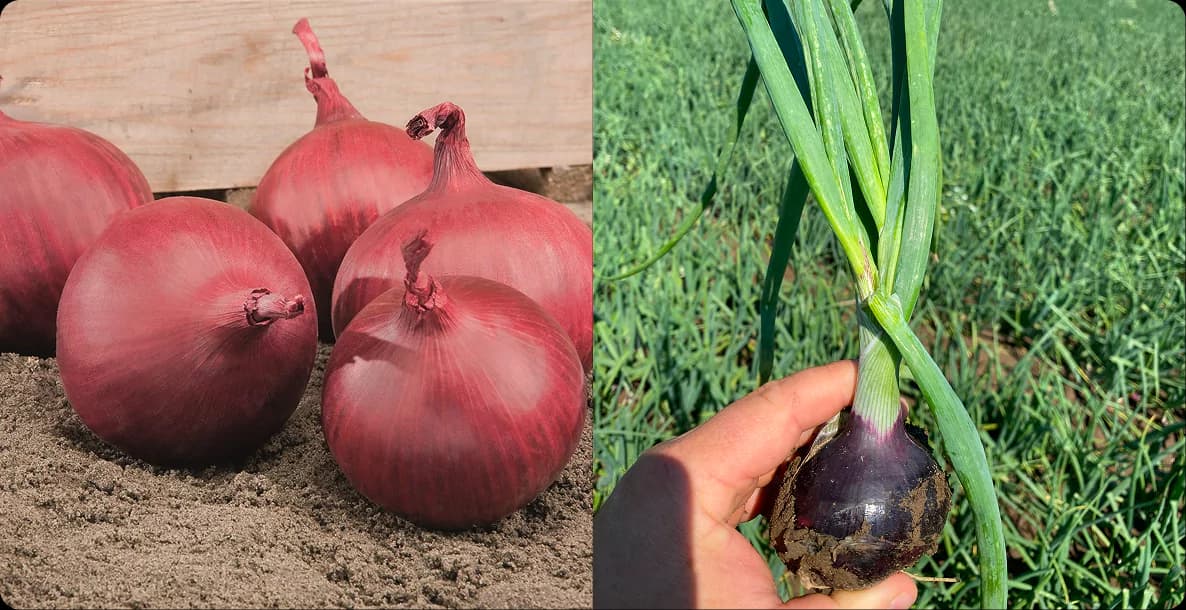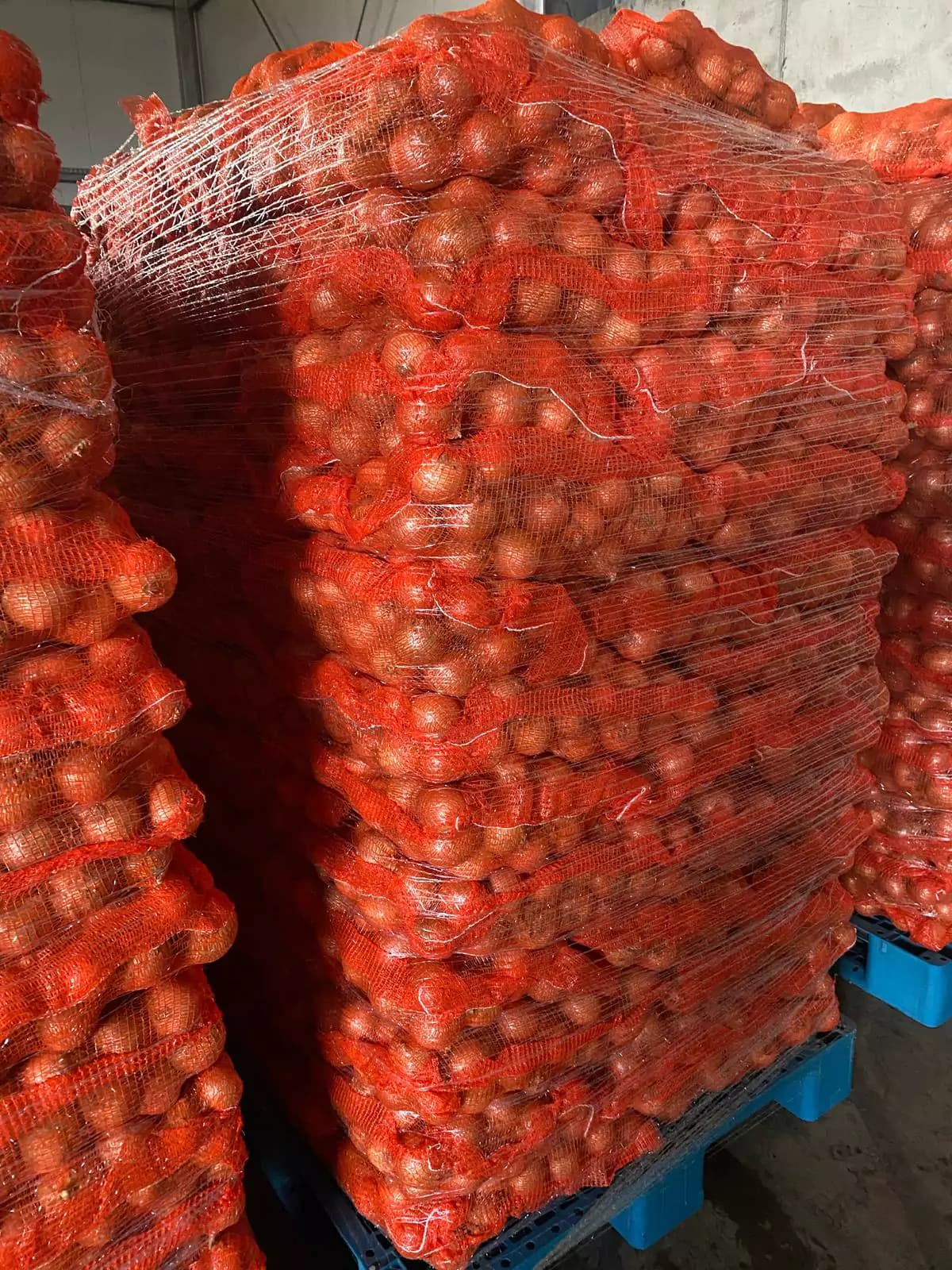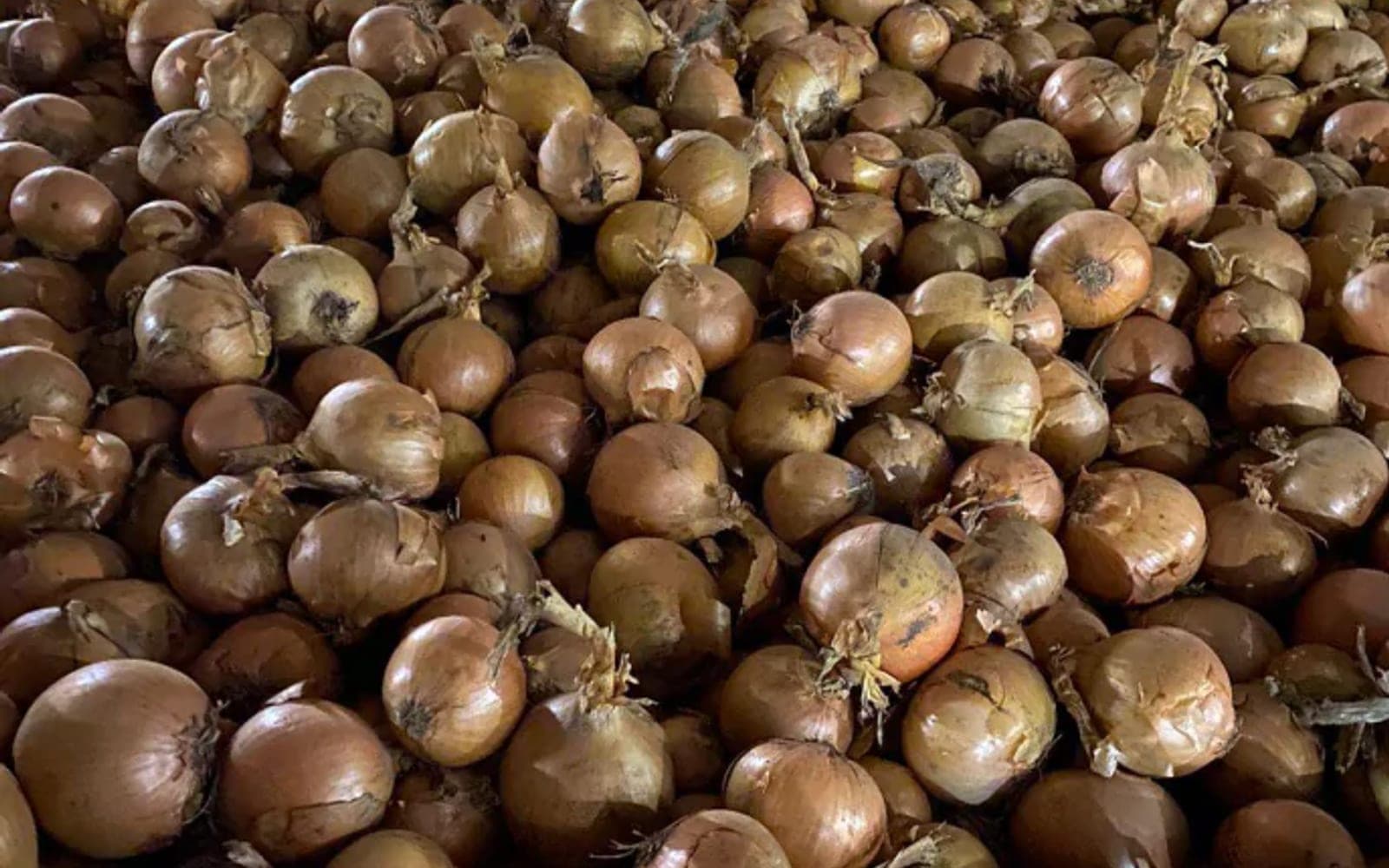
Onions are the gem of our farm. We started with 2.5 hectares, in the 2025 season we harvested onions from 150 hectares, and today we grow about 250 hectares of them. We aim for a high, consistent yield. In this post we show how we do it: from choosing the variety and the soil, through the field and precision farming, all the way to harvest and the journey to the store.
We write from practice. We are not copying out a textbook, just describing what really happens on our field over the course of a year.
Why Żuławy suits onions
Żuławy is a remarkable region: fertile alluvial soils, that is heavy, humus-rich ground deposited by water, packed with nutrients and good at holding moisture. Onions like soil that is fertile, well-drained and slightly acidic to neutral (pH around 6 to 6.5). Combined with our Pomeranian climate, these soils give onions steady, even growing conditions throughout the season.
This ground has one defining trait: it is heavy. That is why we choose our machinery and methods to draw the yield out of it without destroying the soil structure. The same goes for harvesting, which we cover below.
The Żuławy alluvial soils are our natural advantage. This ground cannot be copied, and onions repay it with yield and quality.
The varieties we grow
We rely on proven Rijnsburger-type varieties and on red onions. We pick each one for a specific purpose: firmness, size and how long it can be stored.
| Variety | Type | What sets it apart |
|---|---|---|
| Hybelle F1 | yellow, Rijnsburger | our leading variety: large, round onions in a strong, multi-layered skin, exceptionally firm, excellent for long storage |
| Hysinger F1 | yellow, Rijnsburger | exceptionally large size, well-attached straw-coloured skin, ideal for peeling and food service |
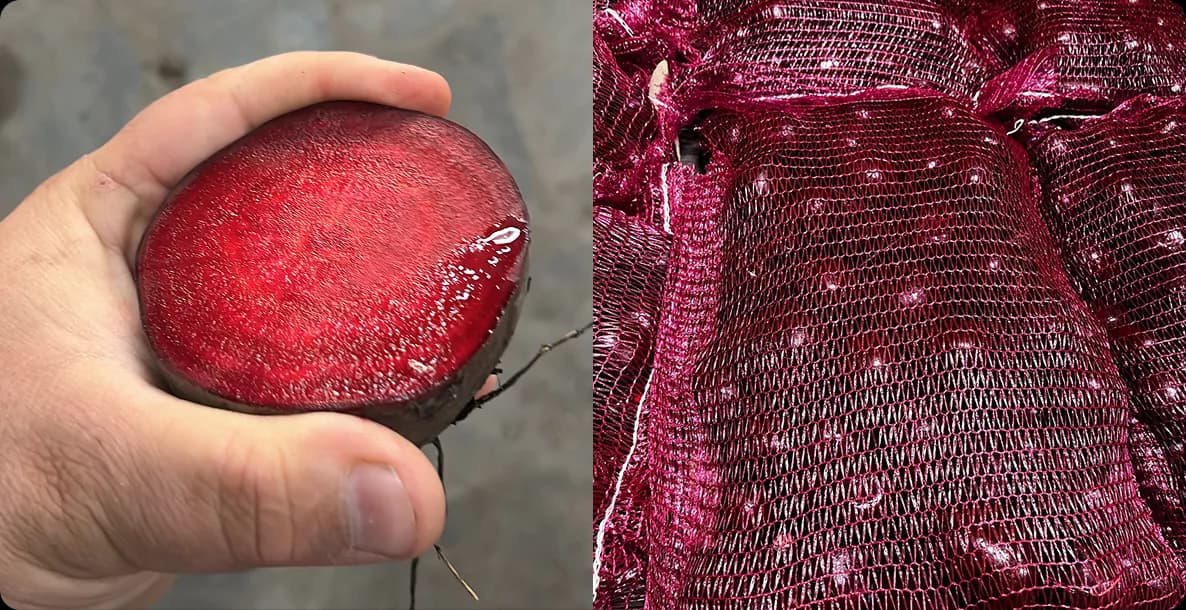
| Redtide F1 | red | deep maroon skin, round bulbs, good for processing and the fresh market |
Our variety palette is wider today: in yellow onions we also grow Hyfive, Nation, Revelation and Bingo, and in red onions Redmate, Aurelion and Tannat. On top of that comes onion grown from sets, which comes off the field as early as the start of summer. You will find our yellow onions in our onion offer, and the red variety on the red onion page.
What the Rijnsburger type is and why we choose it
Rijnsburger is a type of onion, not a single variety. It is marked by round bulbs, a firm, well-covered skin in a straw-gold colour and very good storage life. Good varieties of this type can keep in store until May, even June, without losing quality.
For us this makes sense on two counts. First, a firm onion stands up well to machine harvesting and packing. Second, the long storage life lets us sell the crop all year round, not just right after harvest. We explain how we make use of this in a separate post about onion storage.
Our growing year, from sowing to harvest
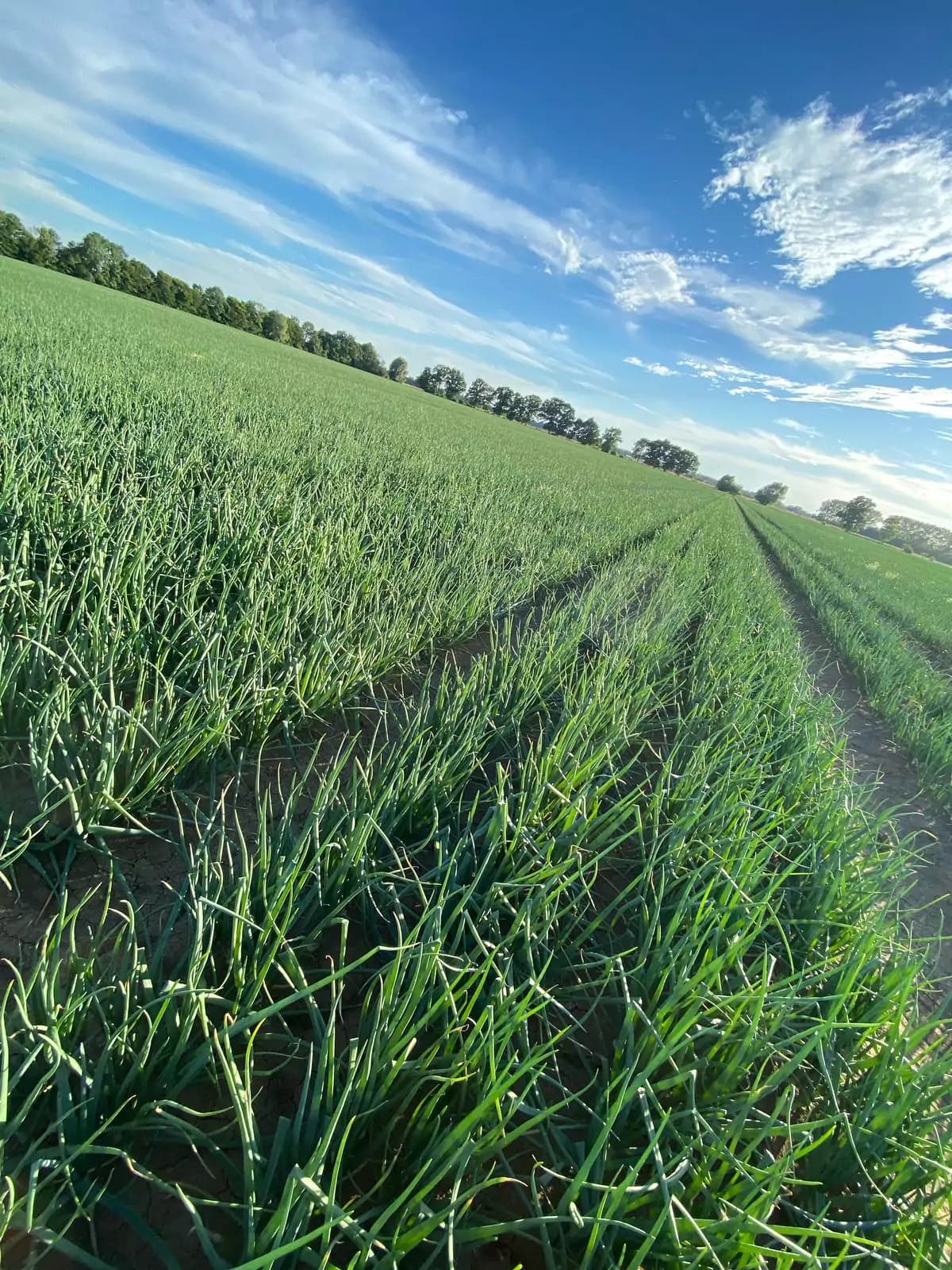
We grow our onions from seed. The season follows a fixed, well-tested order on our farm:
- Soil preparation and sowing in early spring, usually in April, once the ground is ready.
- Fertilisation matched to the soil's nutrient status and the planned yield.
- Protection under Integrated Plant Production, meaning we treat when it is genuinely needed, not by default.
- Irrigation and care during the season, so the onions grow evenly.
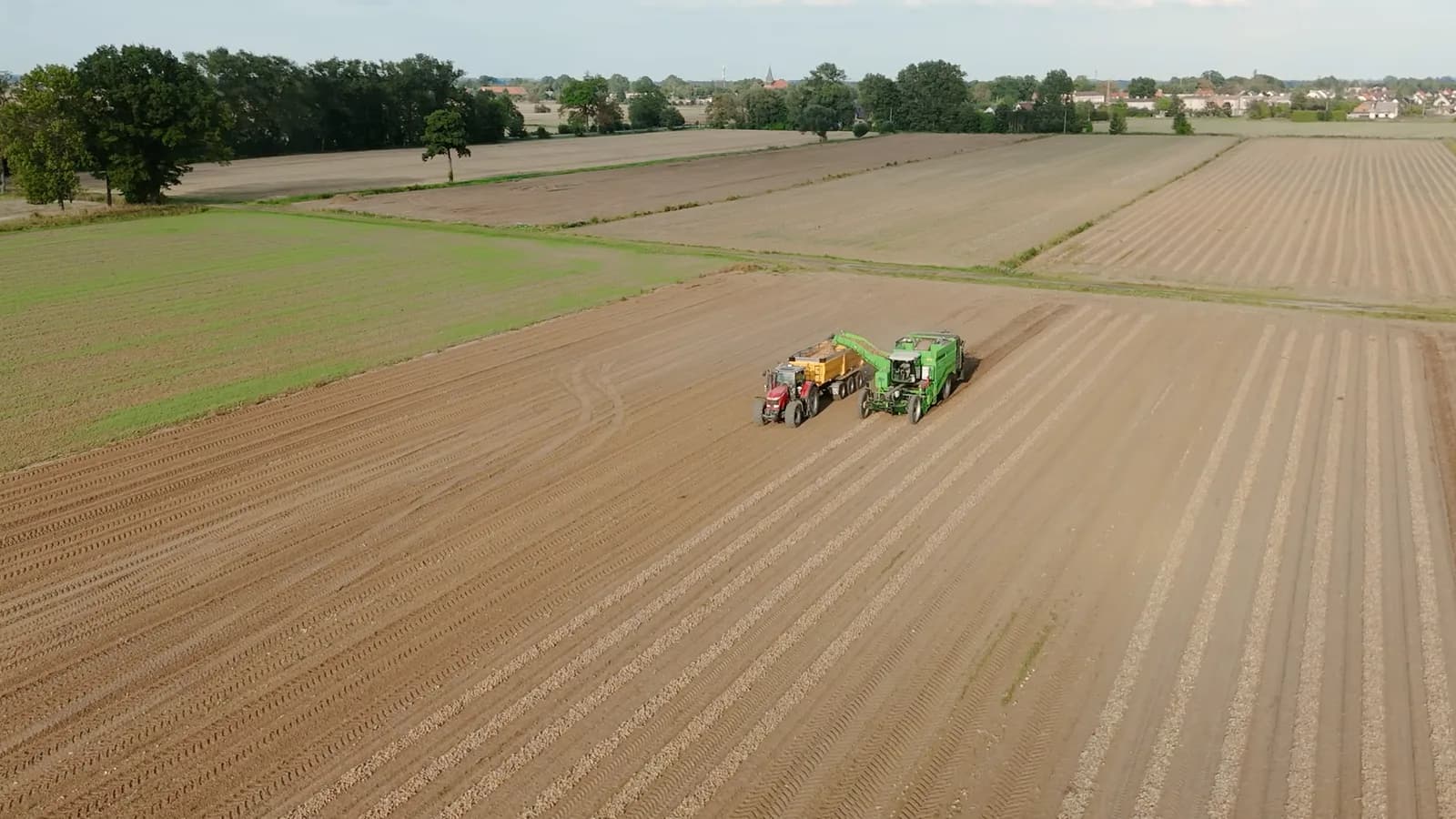
- A two-phase harvest, once the foliage falls over and the skin is mature: first the Grimme WV 180 windrower undercuts the onions and lays them in windrows to dry, then the self-propelled AVR Puma 3 harvester picks them up.
- Cleaning, grading and storage in our own facility.
Rough fertiliser rates for a yield of around 50 tonnes per hectare look roughly like this in onion growing:
| Nutrient | Approximate rate |
|---|---|
| Nitrogen (N) | approx. 120-140 kg/ha |
| Phosphorus (P2O5) | approx. 60-80 kg/ha |
| Potassium (K2O) | approx. 150-200 kg/ha |
That is a starting point. On our farm the actual rates come from soil tests and from variable rate application, which we get to in a moment.
Precision farming: how we lift the yield
We run the field with precision farming, and that is one of the reasons our yields are high. We use Trimble GPS navigation with RTK correction, the John Deere Auto Pilot system and variable rate application.
- RTK GPS gives centimetre-level accuracy, so we drive straight pass after pass, with no overlaps or gaps.
- Auto Pilot steers the tractor in parallel lines automatically, which saves fuel and reduces operator fatigue.
- Variable rate application lets us give each part of the field exactly as much fertiliser as it needs.
The result is fewer wasted seeds and fertilisers and a more even crop. We describe all of our equipment, including the onion harvester, in the machinery section.
Irrigation and protection during the season
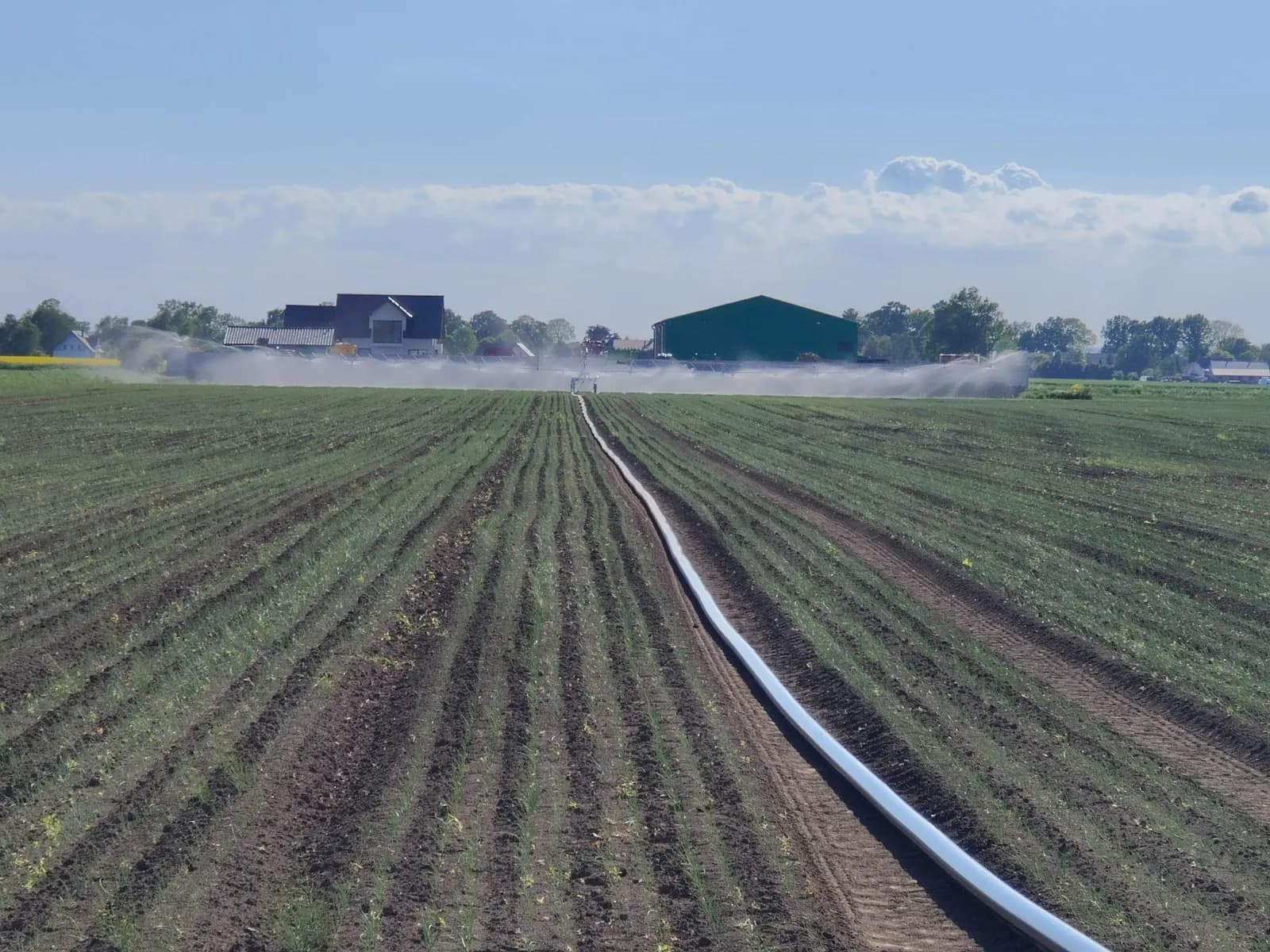
Onions do not like drought during their key growth stages, which is why we irrigate the field during the season whenever it is needed. Even watering translates directly into bulb size and a uniform batch, and that matters when it comes to selling: the buyer wants consistent produce, not a lottery.
We carry out crop protection under Integrated Plant Production. In short: we act when field observation and damage thresholds call for it, not by default and not just in case. Working this way reduces the number of treatments and leaves fewer residues in the onion, which we confirm by testing every batch.
A high, consistent yield, where it comes from
There is no single trick here. The result comes from the sum of decisions: good soil, the right variety, precise fertilisation, irrigation and harvesting at the right moment.
| Parameter | At our farm |
|---|---|
| Onion area | ~250 ha |
| Storage | approx. 13,000 t |
| Onion availability | year-round |
A high, consistent yield in field conditions comes from practice, not from a single treatment.
Quality from the field: Integrated Production and certificates
Quality starts in the field, not in the grading shed. We run the farm in line with the principles of Integrated Plant Production and the GlobalG.A.P. and GRASP certificates. In practice that means controlled, careful use of plant protection products, traceability for every batch and regular testing for pesticide residues and heavy metals.
For a B2B buyer this is not a formality but a condition of working together. We explain exactly what these certificates give the buyer in our post about wholesale onion supply.
What happens after the harvest
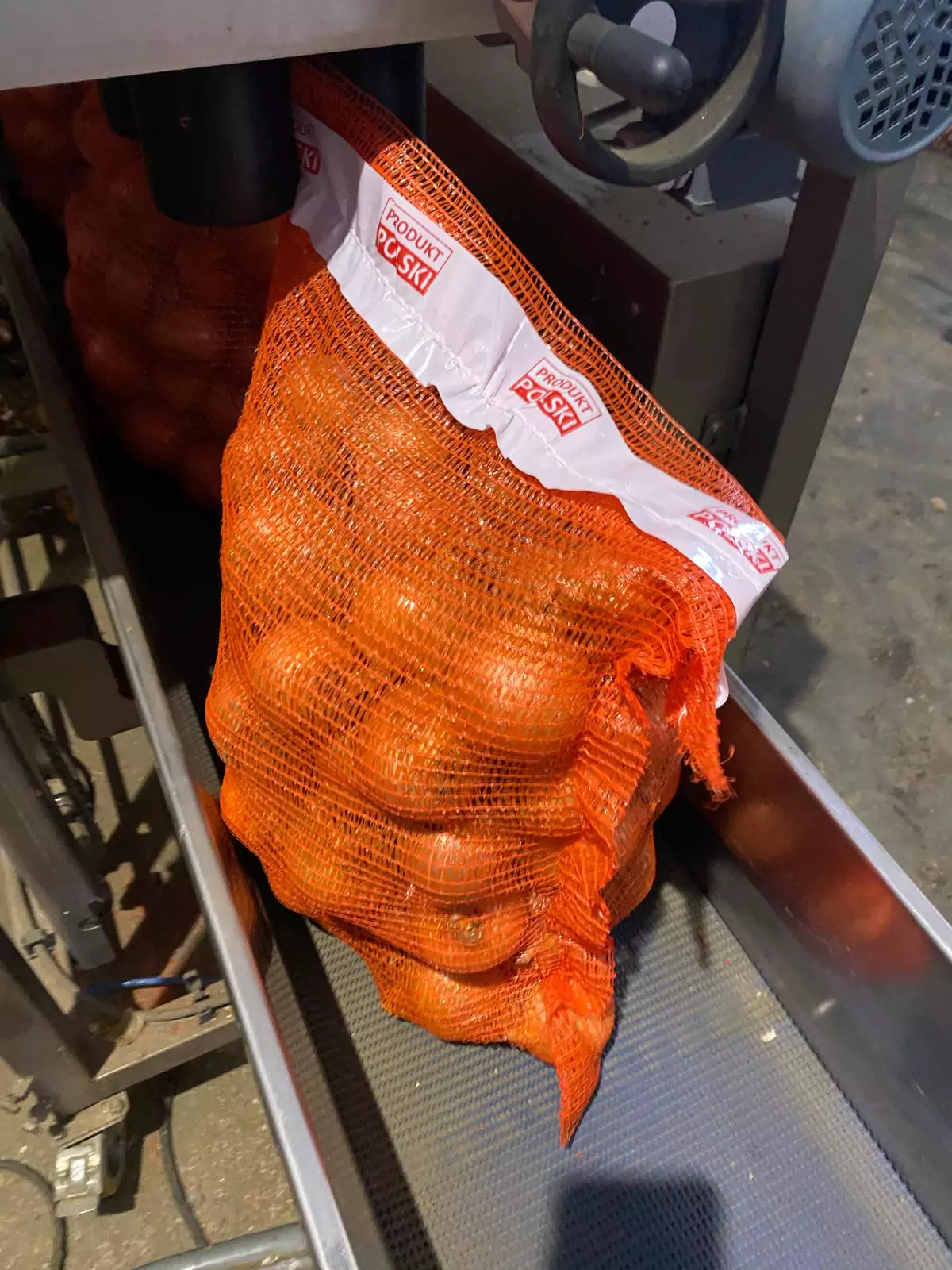
Harvest is not the end, just the halfway point. Once lifted, the onions are cleaned, dried and graded, and then they go into our store, which holds around 13,000 tonnes. It is what lets us manage sales over time and supply produce all year round. We describe how we do this in our guide to onion storage.
The most common mistakes in growing onions
From our practice, a few things most often spoil yield and quality:
- Poor soil or pH. Onions do not forgive waterlogged, overly acidic ground. Without the right pH and structure, the rest of the work counts for little.
- Uneven sowing. Without precision the plants compete for light and nutrients, and bulb size becomes inconsistent. RTK GPS guidance helps here.
- Wrong harvest timing. Harvesting before the skin matures, or too late, hits storage life.
- Skipped drying. Even a good onion will rot if it goes into store with a moist neck.
Every one of these mistakes can be eliminated with planning and field observation.
Want to know who we pack onions for and what B2B cooperation looks like? See our post about wholesale onions from Żuławy or get in touch through our contact page.