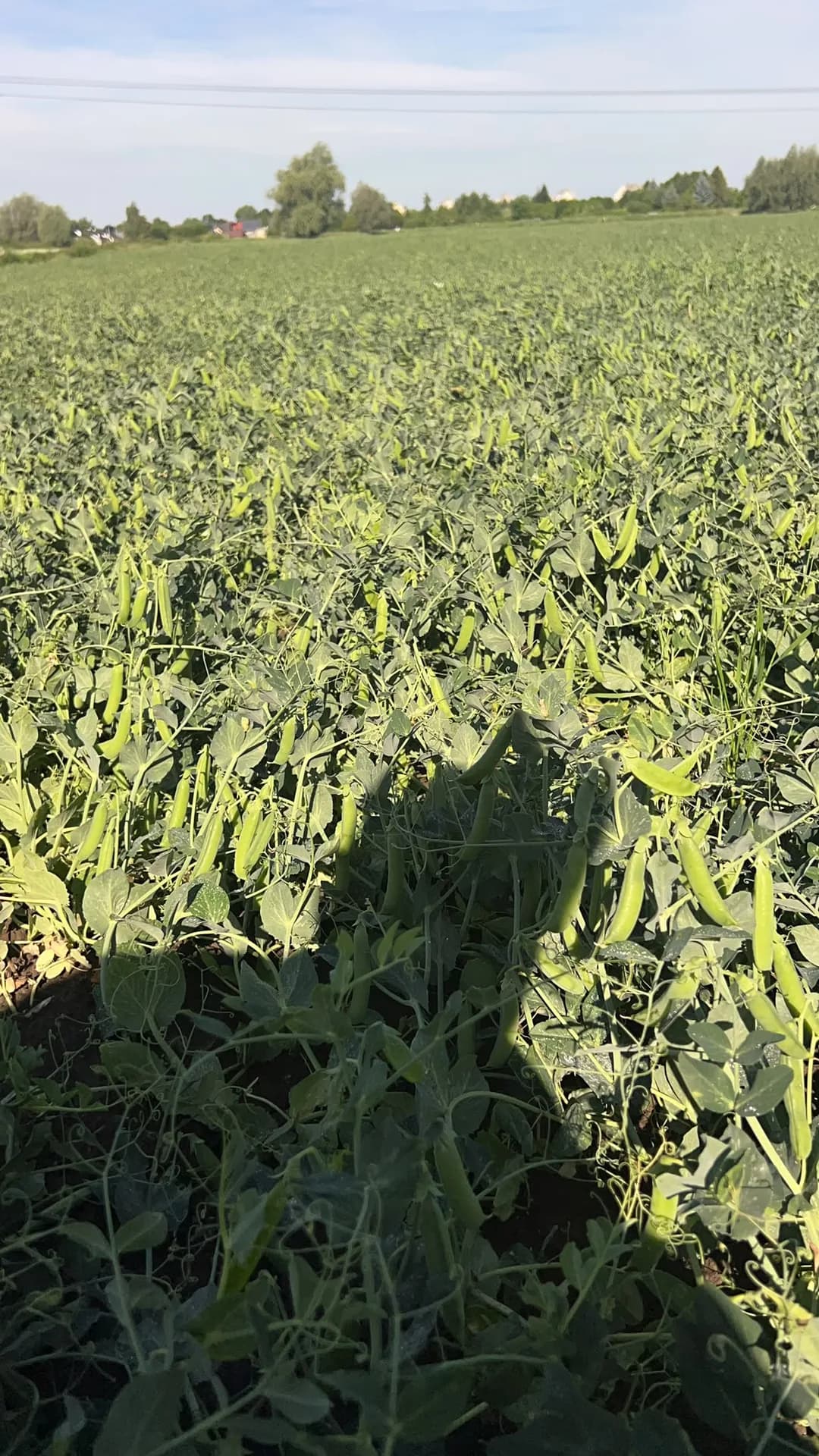
Green peas harvested green are a crop where a few days decide the result. We pick them at full young maturity, when the seed is still sweet and tender, because that is exactly what a freezing plant and a processor want. A day too late and the sugar turns to starch, the seed hardens and the batch drops a class. So we run peas differently from onions or cereals: not for the store, but for a specific collection date agreed with the buyer.
Why we keep peas in the rotation
Peas are one of the eight crops we run across more than 800 hectares, including around 400 hectares of vegetables. They are not our main crop and we do not pretend otherwise. But they have two advantages no cereal can give us.
First, they are a legume, so they fix nitrogen from the air and leave the ground richer than they found it. Second, they come off the field early, which gives time for post-harvest cultivation and proper preparation of the ground for the next crop. At our scale of onions, around 250 hectares, a healthy rotation is not an extra, it is the condition for holding yields. How we lay out the whole rotation is in our post on onions in rotation with cereals.
Harvested green, and exactly when that is
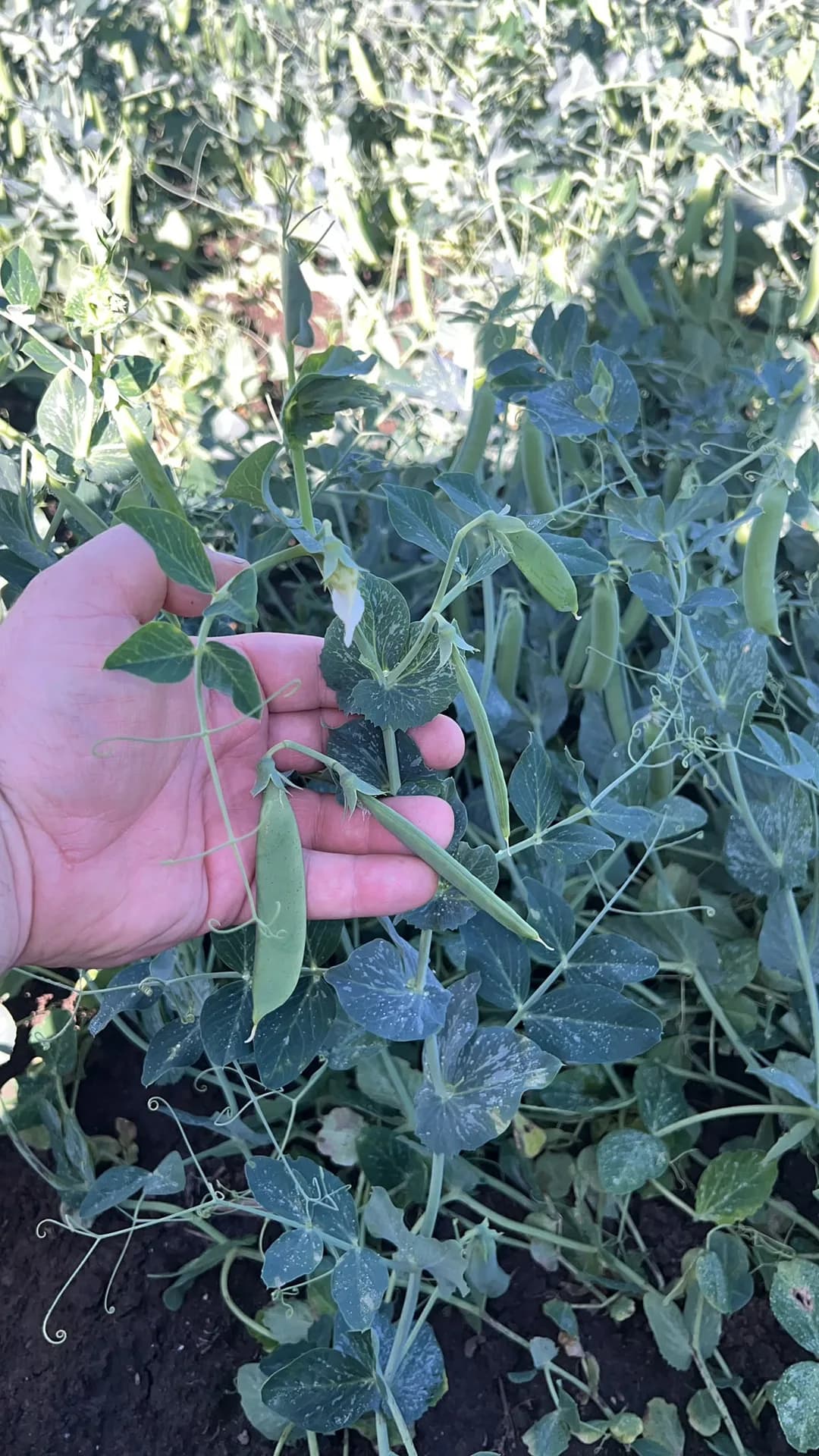
Peas are harvested green when the pods are already filled, but the seed has not yet started moving into technical maturity. We read it off the pod: swollen and deep green, with the seed inside full but soft and sweet. Once the green colour starts to fade and the seed turns mealy, it is too late for freezing.
The window is short, because in warm weather everything happens faster. Peas do not wait for a free slot in the calendar, so we check the crop more and more often as harvest gets closer. Processors judge the tenderness of the seed, because that decides the class of the finished frozen product, and it is their assessment, not our convenience, that sets the day we go into the field.
| Stage | What happens in the plant | What we do |
|---|---|---|
| Sowing, early spring | Peas start in cold soil | We sow early, to be off the field before the heat |
| Flowering | The pods set | We watch the water and the health of the stand |
| Pod filling | The seed grows, sweet and soft | We check the crop more and more often |
| Young maturity | Pod swollen, seed full and tender | We harvest, and the peas go straight to the buyer |
| After the harvest window | Sugar turns to starch, the seed hardens | Too late for freezing |
Peas go to the processor, not to the shelf
Our peas go mainly to processing and freezing, in bulk. That is a completely different sales logic from onions, which we release from a store holding 13,000 tonnes all year round. Peas cannot be put aside for later: they are only fresh inside the harvest window, so the whole job is lining the harvest date up with the collection date.
So we set the dates together with the buyer before we go anywhere near the field. The plant knows when it has a free line, we know when the crop will reach the right stage, and the date comes out of those two things. We run potato deliveries for processing on the same principle, which we write about in our post on potato contracting.
We only have green peas in the offer inside the summer harvest window. Outside that window they are not there, and we do not promise availability we cannot deliver. The full picture of the season is in our vegetable availability calendar.
What this means for a processing plant
A plant buying raw material for freezing looks at three things: whether the batch is in the right stage, whether it will arrive on the agreed date and whether it comes with documentation. We grow peas free of pesticide residues, in line with the principles of Integrated Plant Production, and we test every batch for pesticide residues, heavy metals and substances dangerous to health. What those tests look like in practice is in our post on pesticide residue testing.
On top of that comes the documentation a large buyer always checks: GlobalG.A.P., GRASP, FSA Gold, that is Farm Sustainability Assessment, and GMP+. Scale counts too, and so does the fact that the produce comes from one farm, not from buying in from a dozen suppliers. One batch means one field, one growing method and one party responsible. If you are looking for raw material for the season, see our green pea offer or write through the contact page, and we will give you the dates for the current season and can send a free sample.
Want the dates for this season? See our green pea offer or write through the contact page.