A large processor does not buy potatoes by chance. Before the season starts, it agrees with farms on a specific variety, acreage and quality parameters. That is contracting: an agreement made before planting, which gives the plant certainty of raw material and the grower certainty of sale. In this post we explain how potato contracting for processing works, what the contract sets out and how it looks with us, using the Innovator variety as an example.
What potato contracting is
Contracting is an agreement between a farm producer and a buyer, most often a processing plant or a packing company, made before planting begins. The buyer orders a set variety and quantity in advance, and the farm commits to producing it to an agreed quality and delivering it within a set time window.
For the processor this is a way to secure the raw material it needs throughout the production year. For the farm it is a sales direction known in advance and less dependence on spot-market swings. Both sides plan the season calmly, rather than reacting to a momentary price.
Why processors contract potatoes
A plant producing fries or chips cannot run on random raw material. The line is set up for specific tuber parameters, so the buyer wants to be sure it will get exactly the potato it planned. Contracting handles three things at once.
- Certainty of quantity. The plant knows in advance how much raw material will come in and from whom, so it can plan production months ahead.
- Repeatable variety and quality. The contract names the variety and parameters, so the crop from the field fits the line with no surprises.
- Deliveries spread over time. Collection is set in windows rather than all at once, which relieves both the plant's warehouse and the farm's storage.
That is why serious processors build supply on contracts, not on ad-hoc purchases on the market.
What a contracting agreement sets out
A good contract states plainly what the parties expect from each other. In contracting industrial potatoes, these elements appear most often:
| Contract element | What it defines |
|---|---|
| Variety | a specific variety for a given product, e.g. Innovator for fries |
| Acreage or quantity | the growing area or the tonnage to deliver |
| Quality parameters | dry matter, size, shape, sugar content, absence of defects |
| Delivery schedule | collection windows during the season and after it, from storage |
| Delivery form | loose, big bag, sacks, transport |
| Pricing rules | a settlement method based on current market prices |
The more precisely the parameters are described, the fewer disputes at collection. For a processing plant, dry matter and low sugar content are usually key, because they decide the quality of the fry. We write about this in more detail in our post on which potatoes for fries work best.
Contracting is not only about price. Above all it is about setting the variety and quality parameters, so that the raw material from the field fits the processor's line with no unpleasant surprises.
Our role: what our farm gives the processor
We farm over 800 hectares, including around 400 hectares of vegetables, and for fries we rely above all on the Innovator variety, and alongside it Donata. Innovator is the same variety used by Farm Frites, our partner producing fries for a major fast-food chain. For the buyer this is a signal that we work with raw material proven in industry, not an experiment.
To the contract we bring not only the tuber, but also what happens around it:
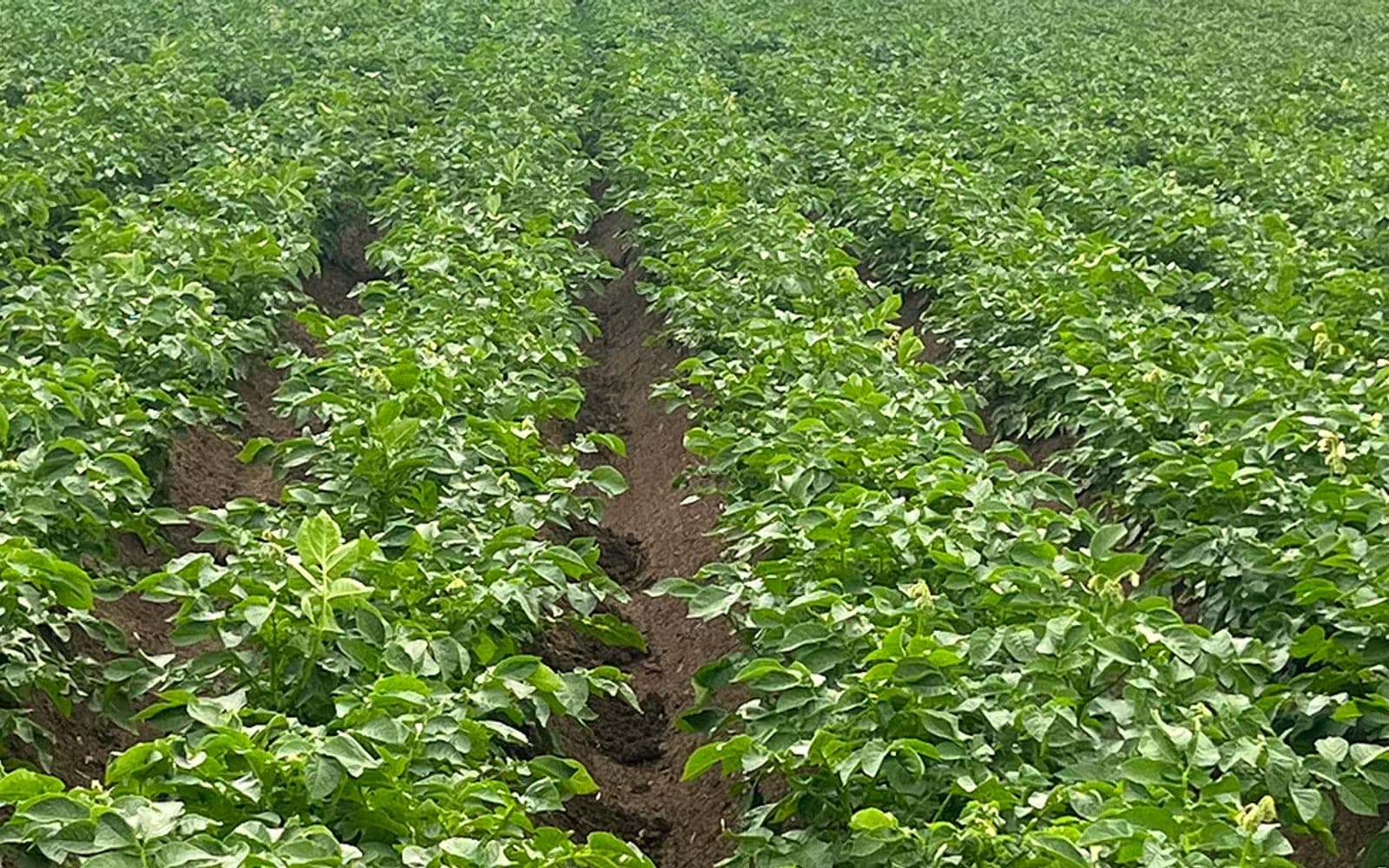
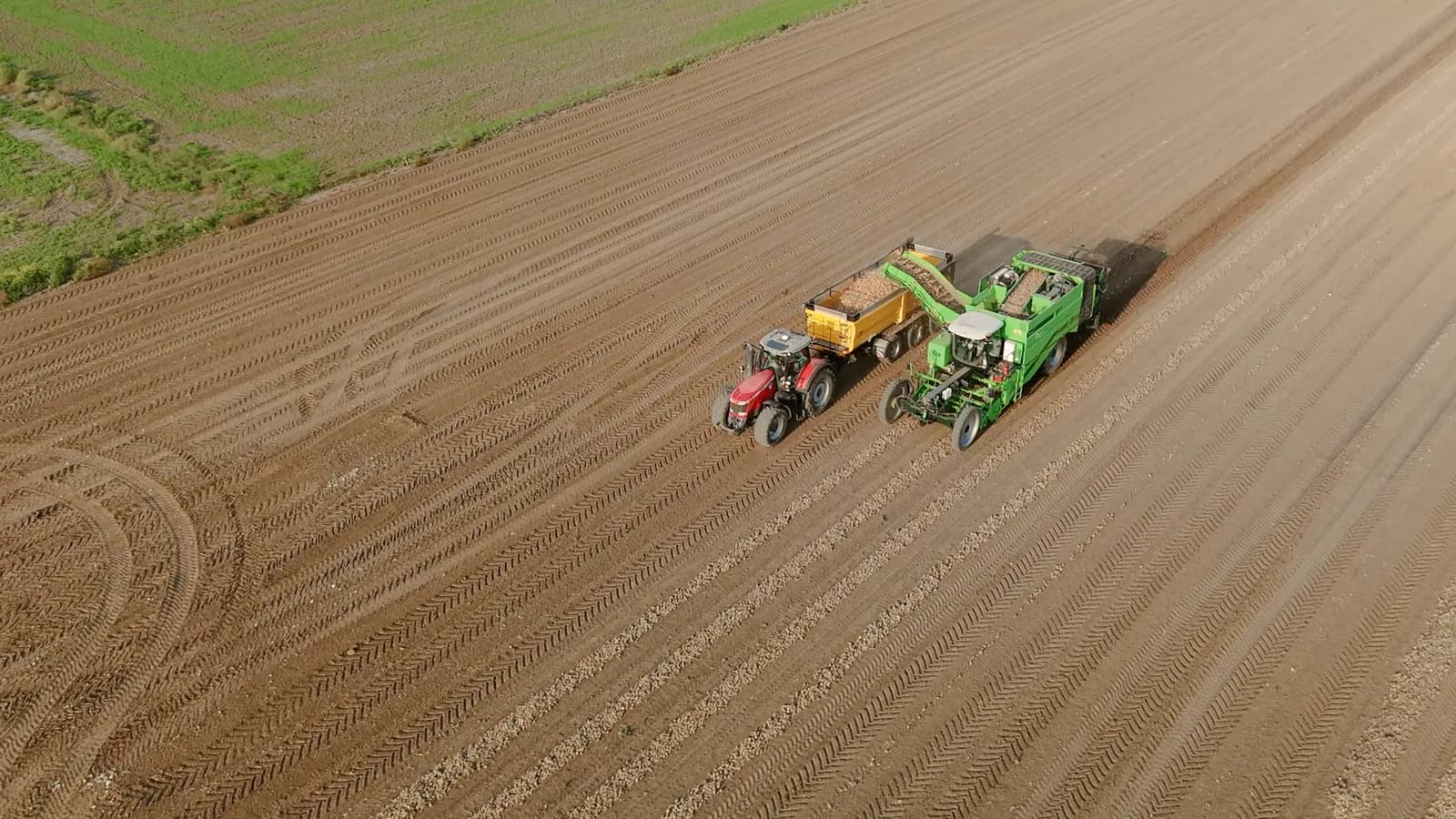
- Scale and field precision. We run the crop with precision agriculture, with GPS guidance and RTK correction, which gives uniform tubers and more of the crop in the desired size.
- Sorting and selection. We select every batch for firmness, color and dry matter, and for sorting we use an optical sorter that rejects defects and impurities.
- Storage. Our storage for around 13,000 tonnes lets us release goods in the windows set in the contract, including outside the harvest peak.
- Documentation and testing. We hold GlobalG.A.P. and GRASP certificates, run Integrated Plant Production and test every batch for residues of pesticides and heavy metals.
The variety for the contract: why Innovator
In contracting the variety is not a detail but the foundation. The plant sets its line for a specific type of tuber, so the first thing it writes into the contract is the variety. Innovator gives long, round-oval tubers with a light skin, shallow eyes and high dry matter, which is why it is excellent for fries and chips.
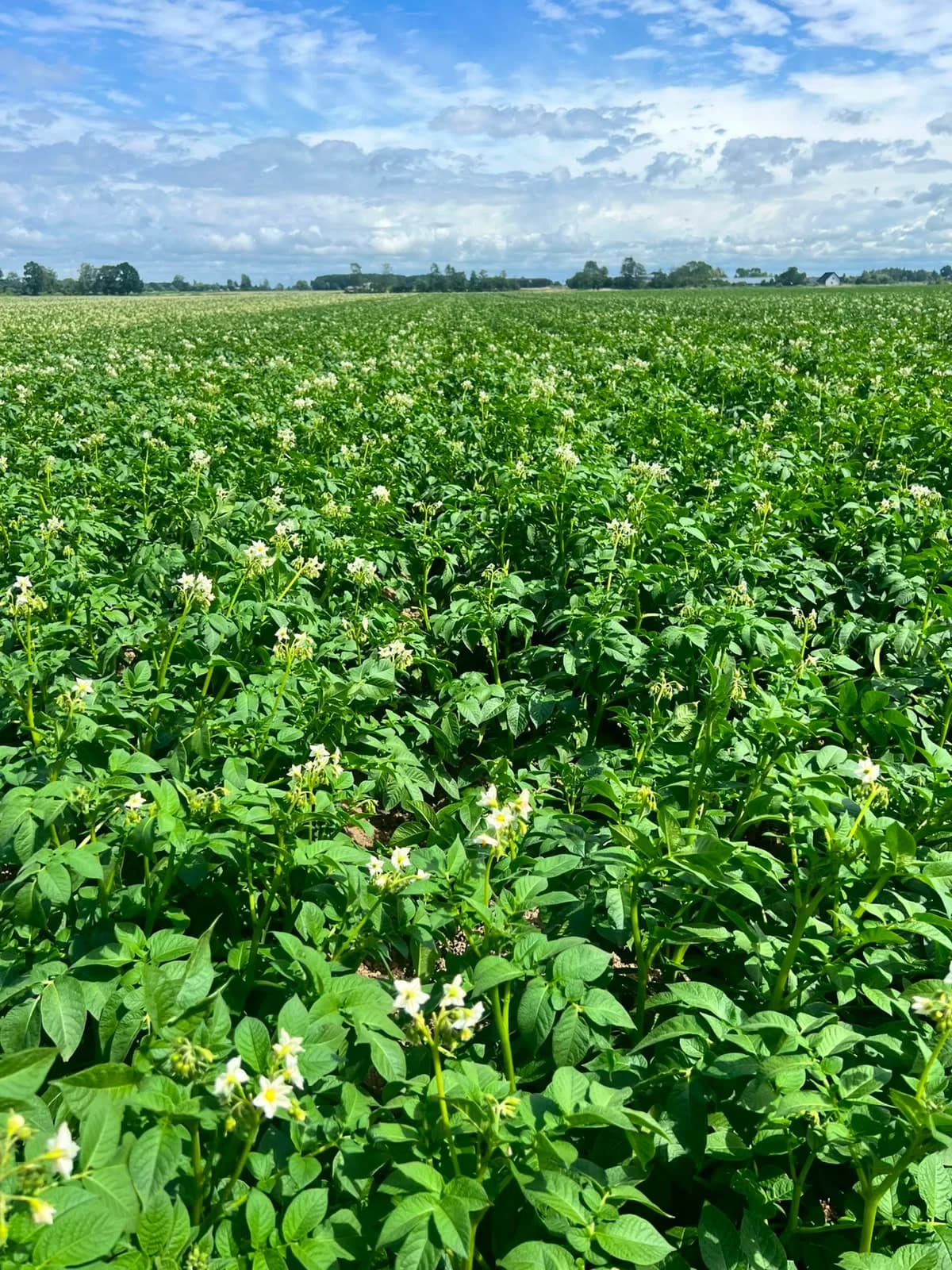
We grow it on the Zulawy alluvial soils, with parameters close to those of Dutch polders. These are rich, deep soils where the tubers build dry matter well and grow evenly to industrial size. As a result, the contracted batch holds the parameters the buyer cares about. We also describe the variety and delivery forms in our potato offer.
Quality and documentation, the condition of entry
For a large processor the tuber alone is not enough. What counts is whether the supplier can document how it was produced. We run every batch according to the principles of Integrated Plant Production and test it for residues of pesticides, heavy metals and substances harmful to consumer health.
The GlobalG.A.P. and GRASP certificates are not decoration for us but a pass to cooperation with serious buyers. The same goes for sizing and the form of the goods, which we match to the customer, just as we do with onions, which we write about in our post on sizing for processing.
Price and settlement
In contracting the price is rarely a fixed number for the whole season. It is most often settled based on current market prices, taking into account the variety, quality and delivery form. We calculate the price exactly on the basis of current market prices and set it individually in conversation with the buyer.
Before we sign anything, we send a free sample so the processor can judge the tuber, size and dry matter for themselves. What wholesale cooperation and delivery forms look like with us we describe in more detail in our post on vegetables from Zulawy in wholesale.
Looking for a steady supplier of industrial potatoes on contract? Get in touch through our contact page or see our potato offer. See also which potatoes for fries work best.