The optimum sowing date for winter triticale depends on the region: the Integrated Production methodology for triticale gives 10-25 September for the north-eastern and eastern part of the country, 15-25 September for the central and south-central part, and 20 September to 5 October for the western and north-western part. We run the farm under the principles of Integrated Plant Production, so below we gather what this document says about the sowing date, seed rate and sowing depth.
Winter triticale sowing window by region
The IP methodology for triticale, approved by the Chief Inspector of Plant Health and Seed Inspection, counts the sowing date among the more important yield-forming factors.
The optimum sowing periods for winter triticale according to the methodology look like this:
| Part of the country | Optimum sowing date |
|---|---|
| north-eastern and eastern | 10-25 September |
| central and south-central | 15-25 September |
| western and north-western | 20 September - 5 October |
According to the methodology, the need to sow by the end of September, or possibly in the first ten days of October, places significant demands on the site and the preceding crop. How we prepare a field for a winter cereal after the onion harvest, we describe in our post on what to sow after onions.
Seed rate by soil, variety and sowing date
The starting point in the methodology is the soil complex, and the table of seed rates for winter triticale looks like this:
| Soil complex | Seed rate |
|---|---|
| wheat complex | 250-300 seeds per m2 |
| very good rye complex | 300-400 seeds per m2 |
| good rye complex | 400-500 seeds per m2 |
On top of that come differences between varieties. According to the methodology, varieties can be divided into those with lower, higher or intermediate light requirements, which are sown more densely, at 320-380 seeds per m2, or more sparsely, at 250-300 seeds per m2.
Last come adjustments for field conditions. The methodology recommends increasing the seed rate:
- by 3-6% with a delayed sowing date,
- by 2-4% with acidic soil,
- by 3-5% with heavy weed infestation in the field,
- by 2-4% with less careful tillage.
Fertility works the other way. According to the methodology, on fertile soils well supplied with nutrients and water, plants tiller strongly and sparser sowing is justified.
The methodology gives the sowing depth as 2-4 cm, depending on soil moisture and compaction.
Preceding crop and soil pH
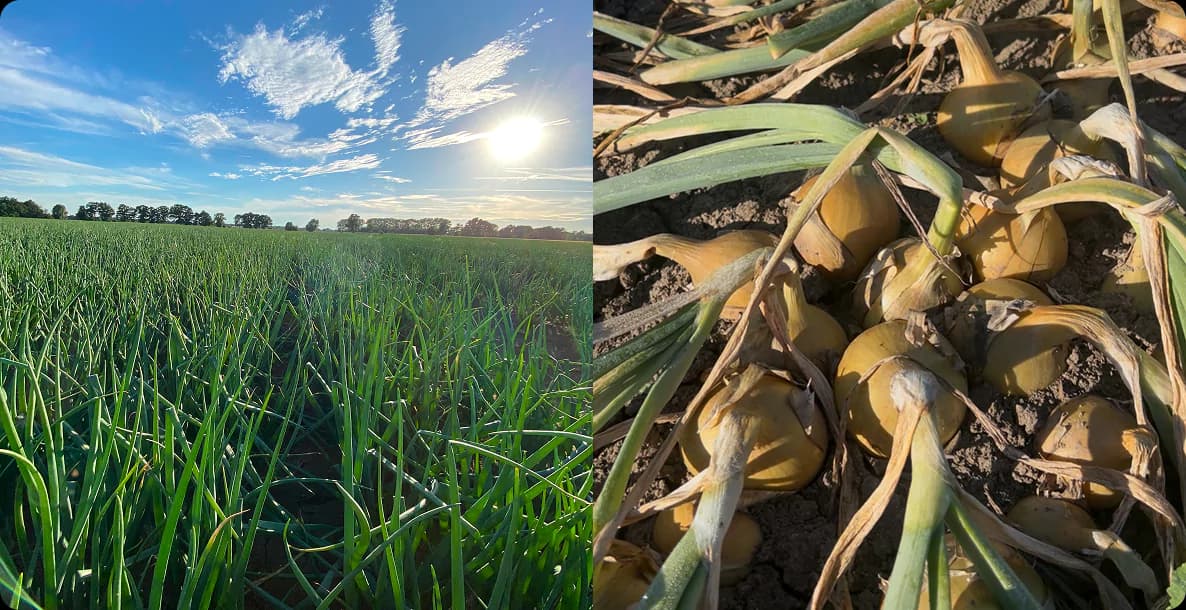
Onions take up around 250 hectares of our farm's more than 800 hectares. How we grow them, we describe in our guide onions from Żuławy: how we grow them.
For triticale the preceding crop matters a lot. The IP methodology for triticale names cereals, with the exception of oats, as the worst preceding crops for winter triticale and notes that in the IP system they cannot be used as a preceding crop.
The second matter is soil pH. According to the methodology, winter triticale has the best conditions on wheat soils and on very good and good rye soils with a slightly acidic or near-neutral pH, and its negative reaction to lower pH is stronger than that of rye.
What triticale does better than wheat and who we sell it to, we write about in more detail in our post on growing triticale.
Sowing and GPS RTK navigation
According to the methodology, even seed distribution is very important for proper plant development, and the most common row spacing is 10-11 cm.
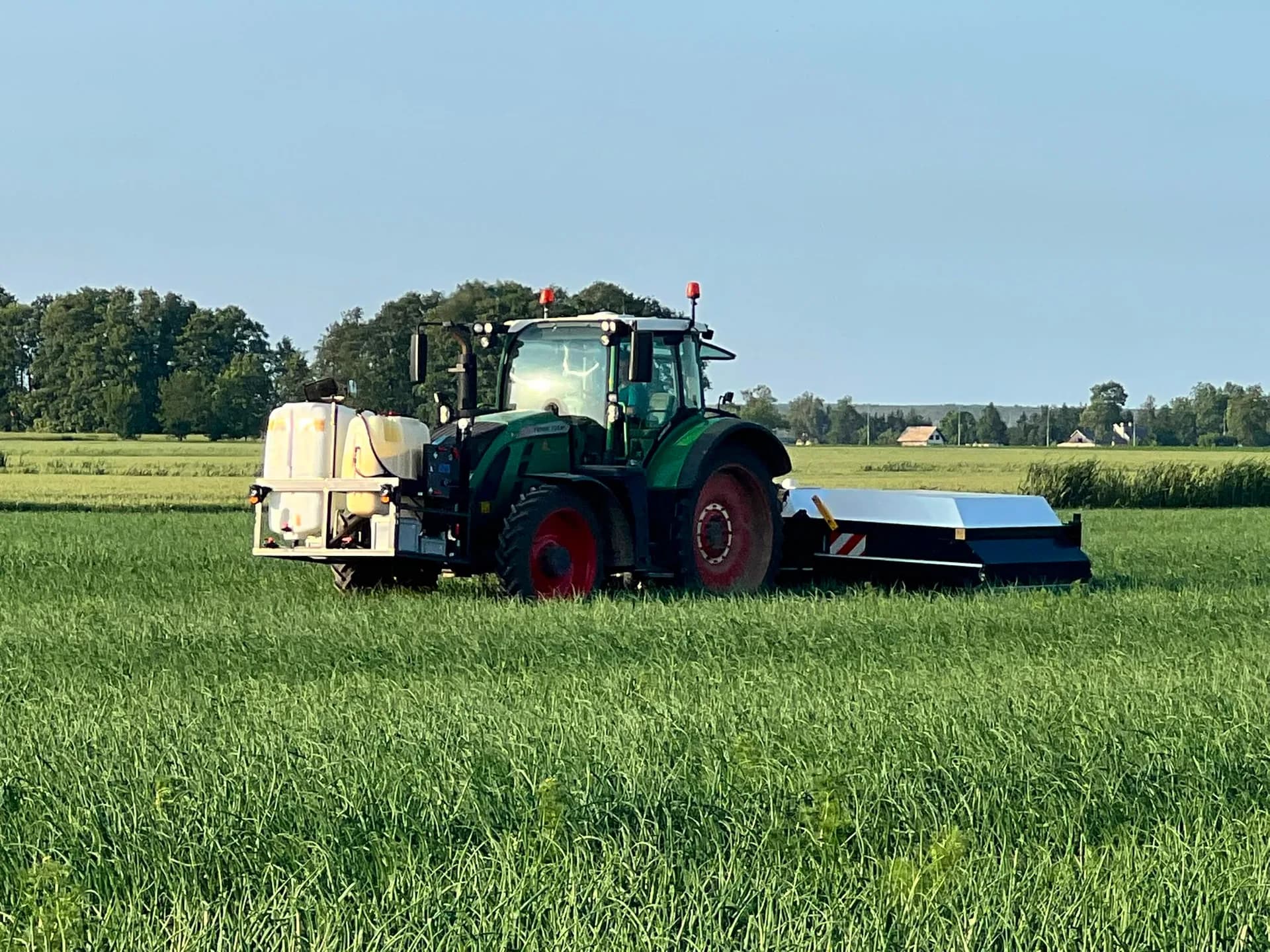
We work with Trimble GPS navigation with RTK correction, John Deere Auto Pilot and parallel guidance. We cover the whole acreage with a fleet of 87 machines.

Triticale for grain buyers
We sell triticale wholesale, in bulk or in big bags, we hold the GMP+ certificate, and before a larger delivery we can send a free sample.
The details are on our triticale from Żuławy page. The price is calculated on the basis of current market prices, so for volume and collection date it is best to ask us through the contact form.