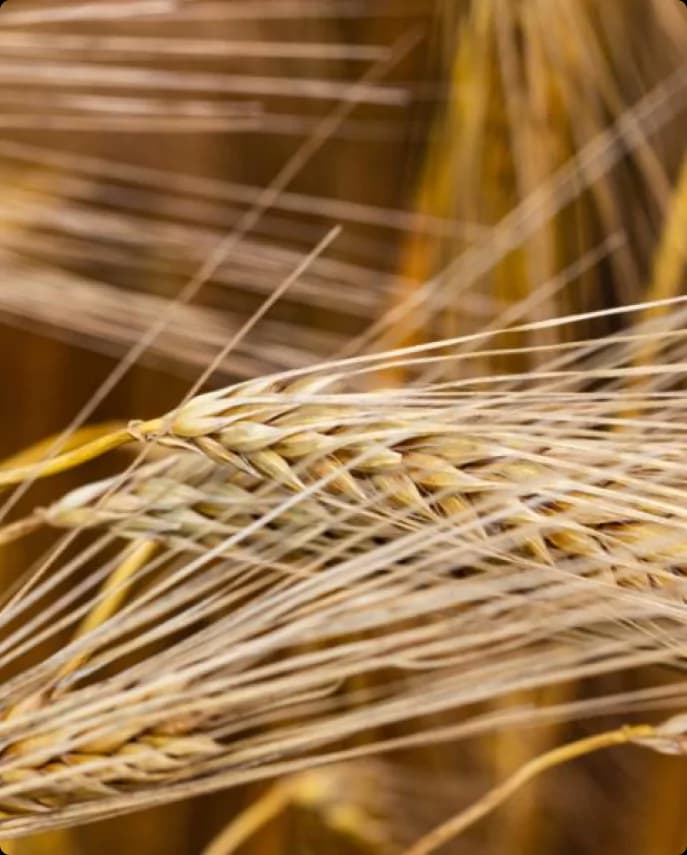
Triticale is a cross between wheat and rye that took yield from one parent and resilience from the other. It has been in our fields for years and it is not there for sentimental reasons: it handles tougher field positions well, gets sick less often than wheat and gives grain we sell wholesale. Here we show how we run it on a farm of more than 800 hectares and what a buyer cares about when they come for the goods.
What triticale does better than wheat
Triticale was created to combine the yield of wheat with the toughness of rye. Out in the field you see it best where conditions are not textbook: on a weaker field position, after a difficult preceding crop, in a season with heavy disease pressure.
| Feature | Triticale | Milling wheat |
|---|---|---|
| Soil requirements | moderate, copes with weaker positions | high, the best fields |
| Disease resistance | higher, fewer protection treatments | lower, needs watching |
| Main use | feed, groats, some for baking | flour, baking |
| Key parameters at intake | moisture, impurities, grain evenness | falling number, protein, gluten, specific weight |
| Role in the rotation | preceding crop for vegetables, plenty of straw | preceding crop for vegetables |
This is not a ranking, it is a division of labour. Wheat goes where milling parameters matter, and triticale goes where a reliable yield and feed value matter. We have both cereals in our offer and we take both as seriously as we take vegetables.
Triticale in our crop rotation
Onions take up around 250 hectares here and cannot come back to the same field sooner than after several years. For that to work, we need crops that prepare the field position and clear off it early enough. Cereals do exactly that, as we describe in more detail in our post on crop rotation in onion growing.
Triticale brings three advantages here:
- A dense stand. It smothers weeds well, so the field is left with a smaller seed bank. For onions, which keep the soil profile exposed all season, that is real work saved.
- Plenty of straw. Chopped straw and stubble feed the soil with organic matter, and heavy alluvial soil pays that back with better structure.
- Fewer treatments. Higher disease resistance means less pressure on crop protection, and that fits how we run the whole farm under Integrated Plant Production.
How we grow it
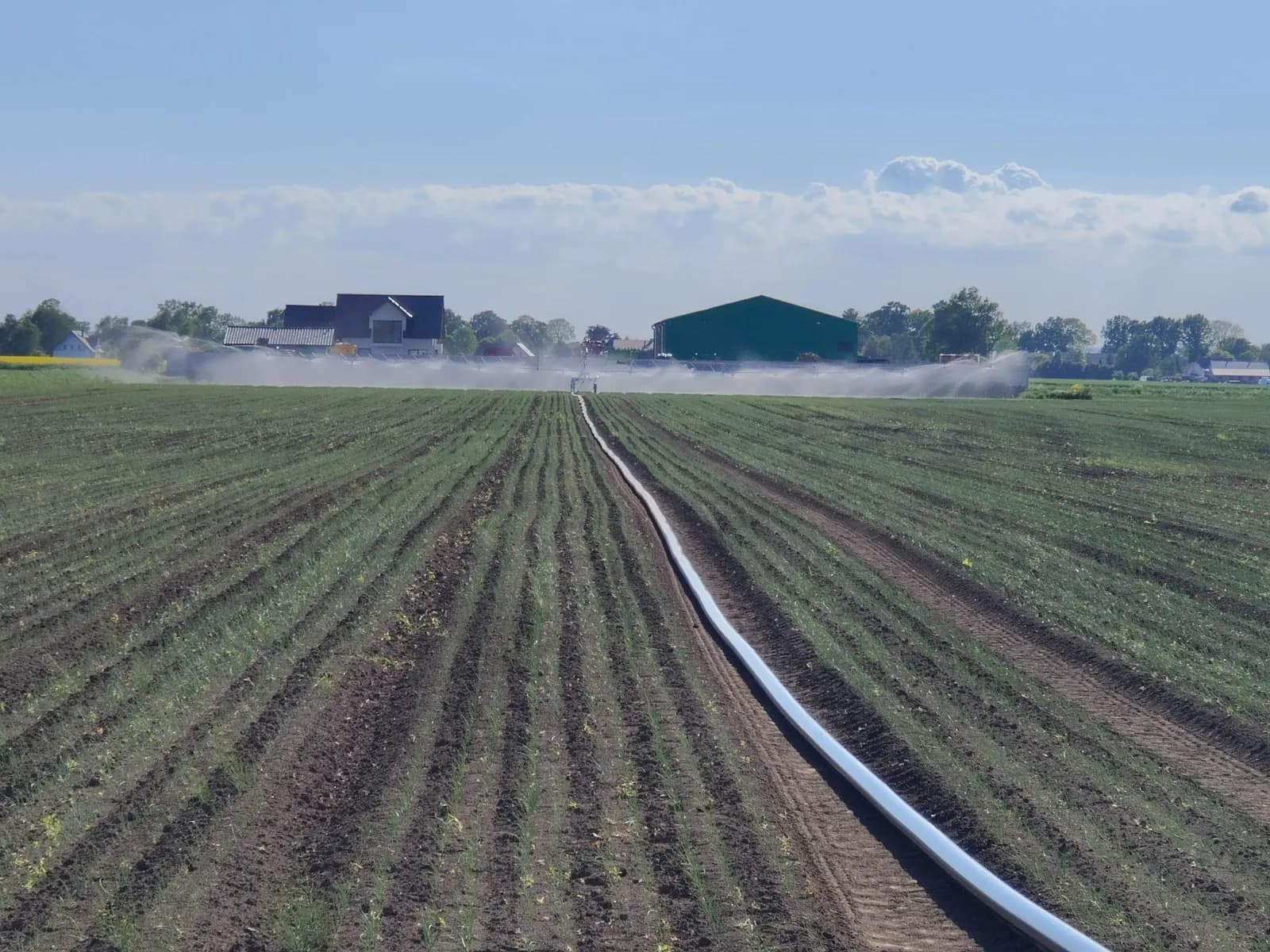
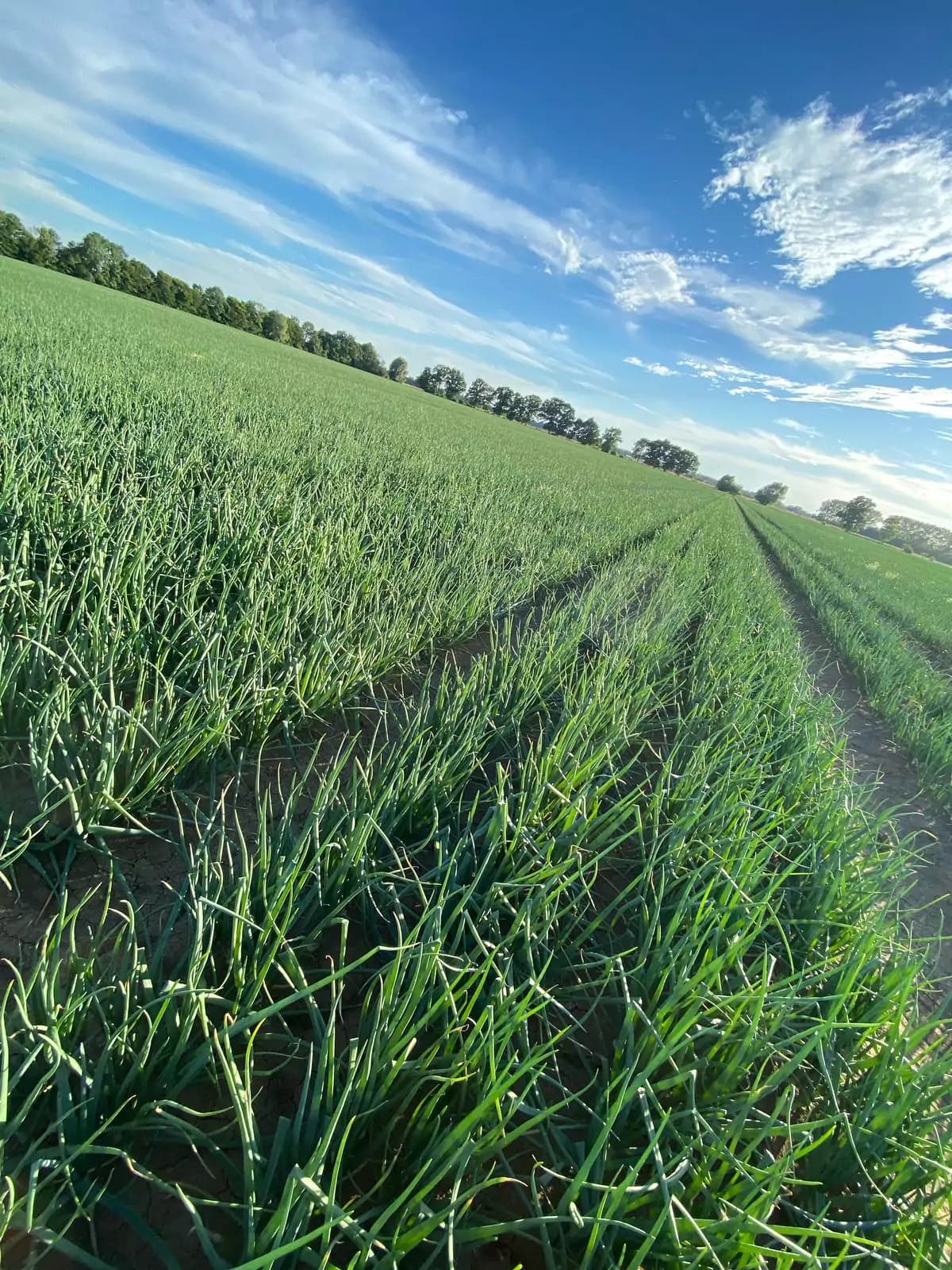
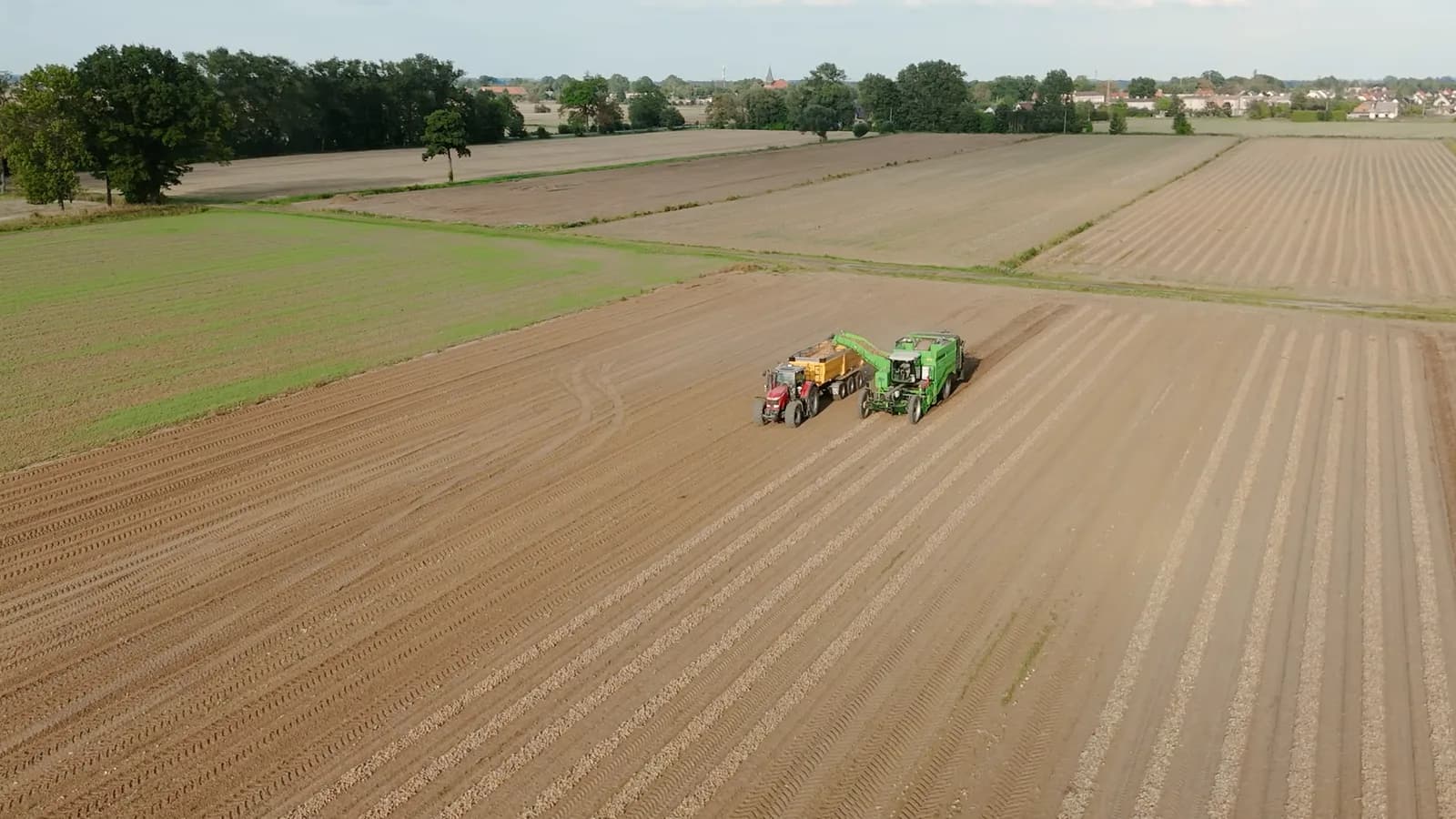
We drill triticale in autumn, once the preceding crop is off, and it overwinters in the field. In spring it comes back into growth early, so it covers the soil quickly. We run it with the same equipment and the same technology as our vegetables: RTK GPS navigation keeps the passes straight, and variable rate application spreads fertiliser according to what a given zone of the field needs, instead of pouring one rate over everything.
This is not technology bought for cereals. We simply have 87 machines covering the whole acreage, and there is no reason for cereals to run to a lower standard than onions. The ground is the same: Żuławy alluvial soils, which we write about in our post on the soils of Żuławy.
We handle crop protection in line with the principles of Integrated Plant Production, which means a treatment goes in when it is justified, not preventively by the calendar. Triticale makes that job easier on its own, because it gets sick less than wheat.
Who we sell the grain to and what the buyer checks
Triticale mostly goes to feed mills, with some going into groats and baking. In feed trading what counts above all is consistency and documentation, which is why we hold the GMP+ certificate, the standard that applies across the feed chain, alongside GlobalG.A.P. and GRASP.
When a batch is taken, we talk specifics:
- Moisture. The grain has to be safe in storage, otherwise it starts to heat up.
- Impurities. How much screenings, foreign seed and mineral matter the batch contains.
- Grain evenness. It affects processing efficiency and how the grain behaves in the mixing plant.
- Documents. Certificates and test results, including the pesticide residue and heavy metal analyses we run for every batch.
Before a larger delivery we send a free sample. The buyer checks the grain on their own site, against their own specification, and only then do we agree terms. It is easier to talk about numbers from an analysis than about declarations.
We ship the goods in bulk or in big bags, depending on how the buyer takes the grain. We calculate prices based on current market prices, because the grain market shifts from week to week. The details are on our triticale offer page.
Looking for triticale from a farm that runs its cereals to the same standard as its vegetables? See our triticale offer or write to us through the contact page.