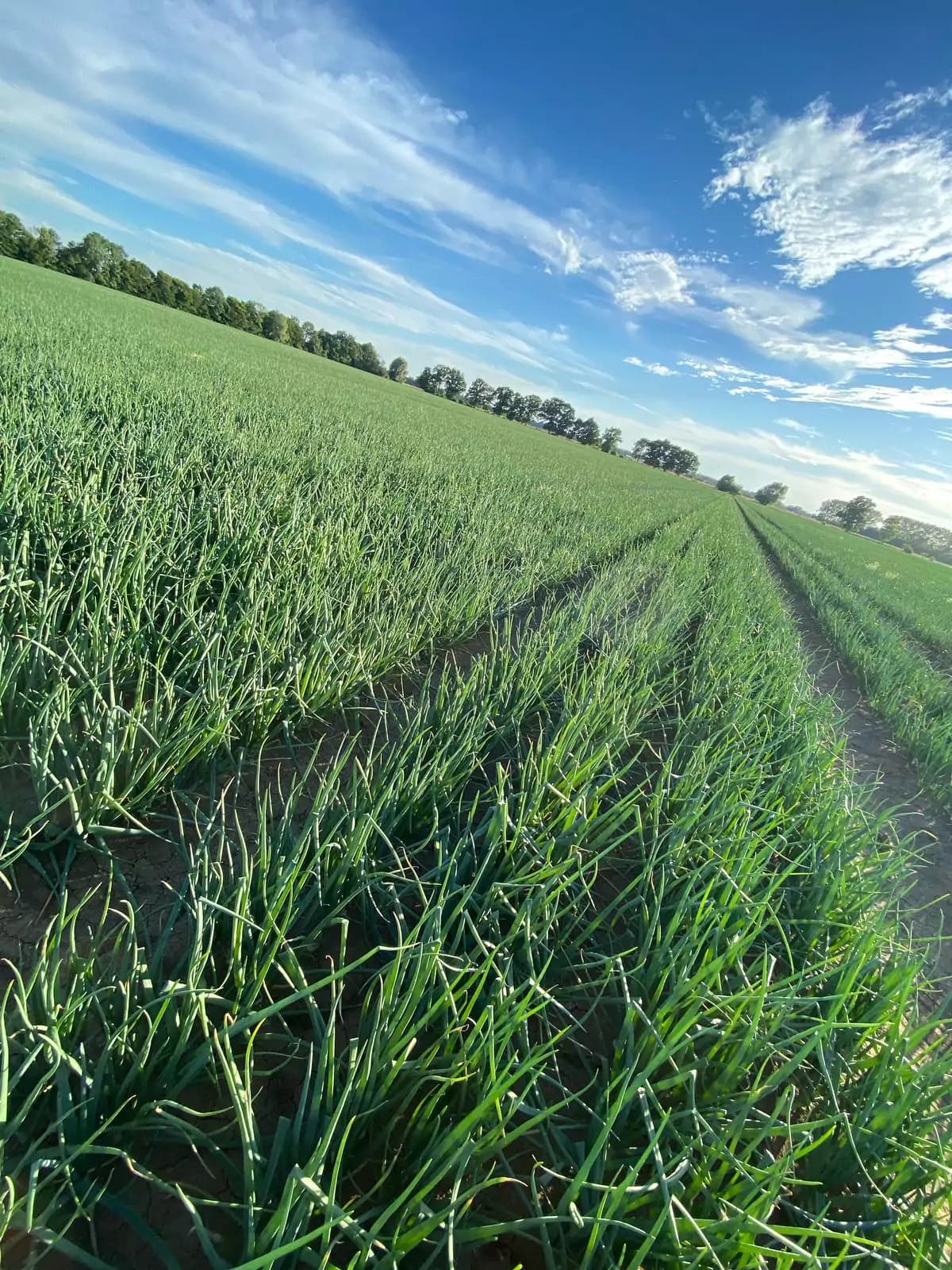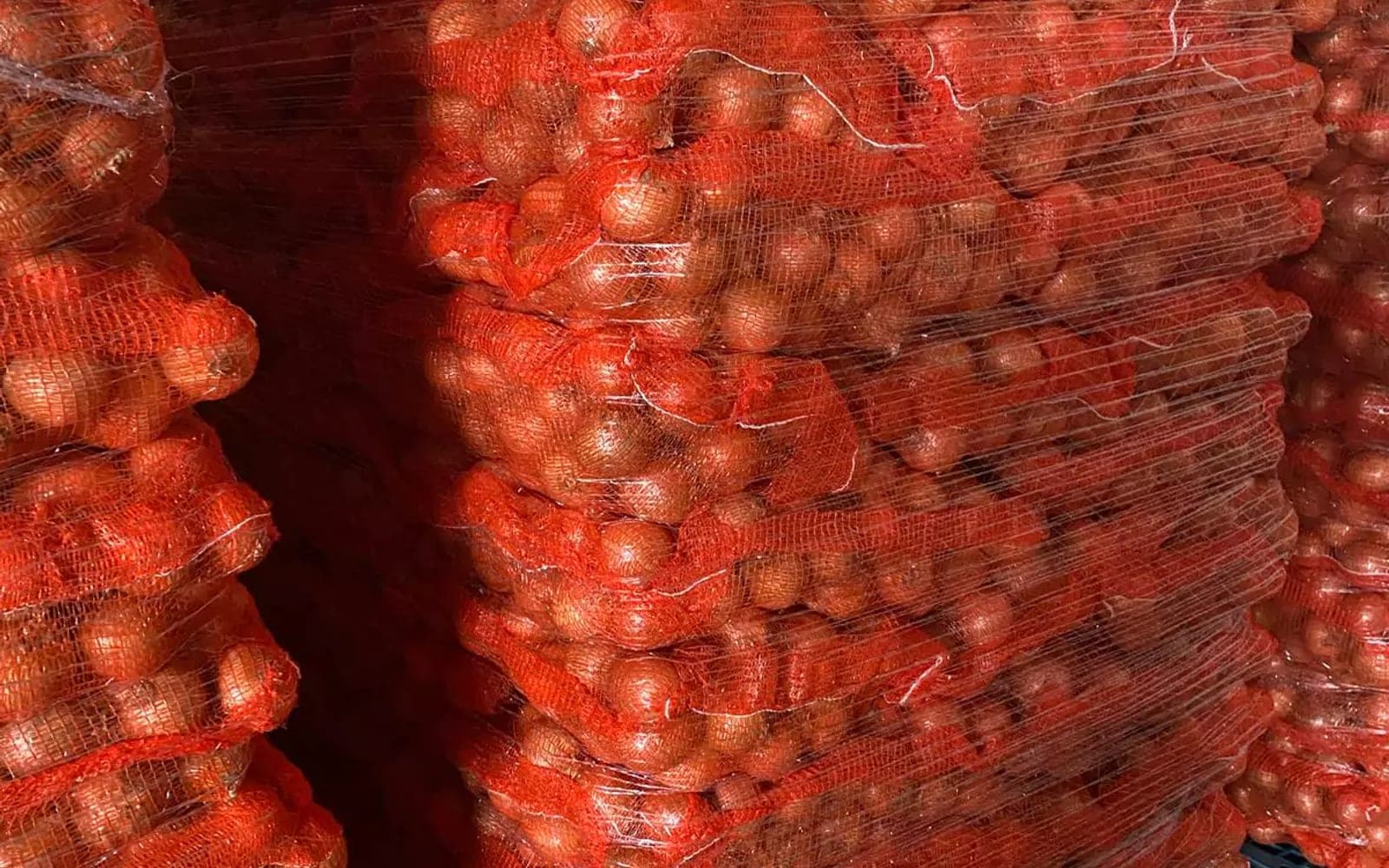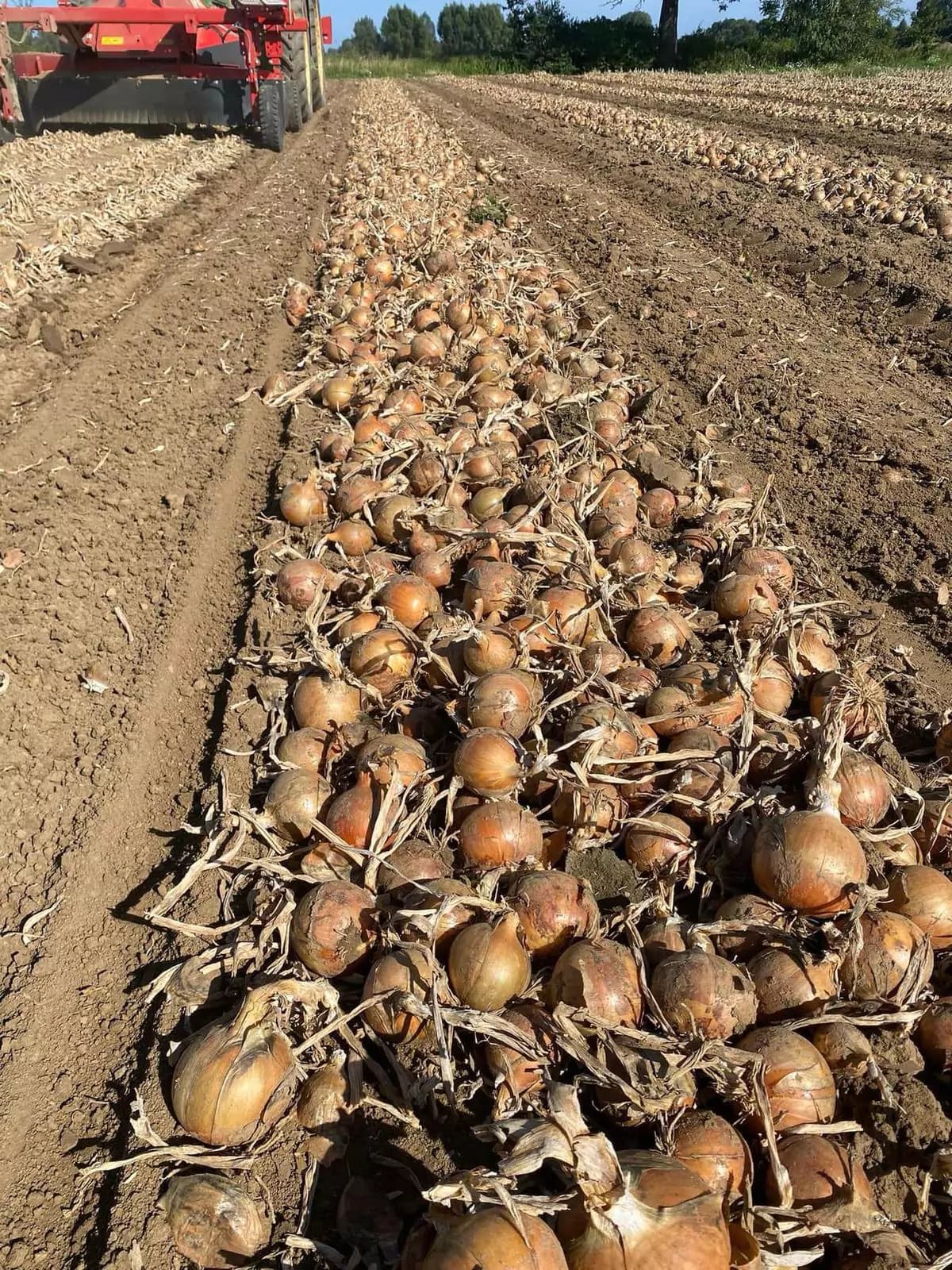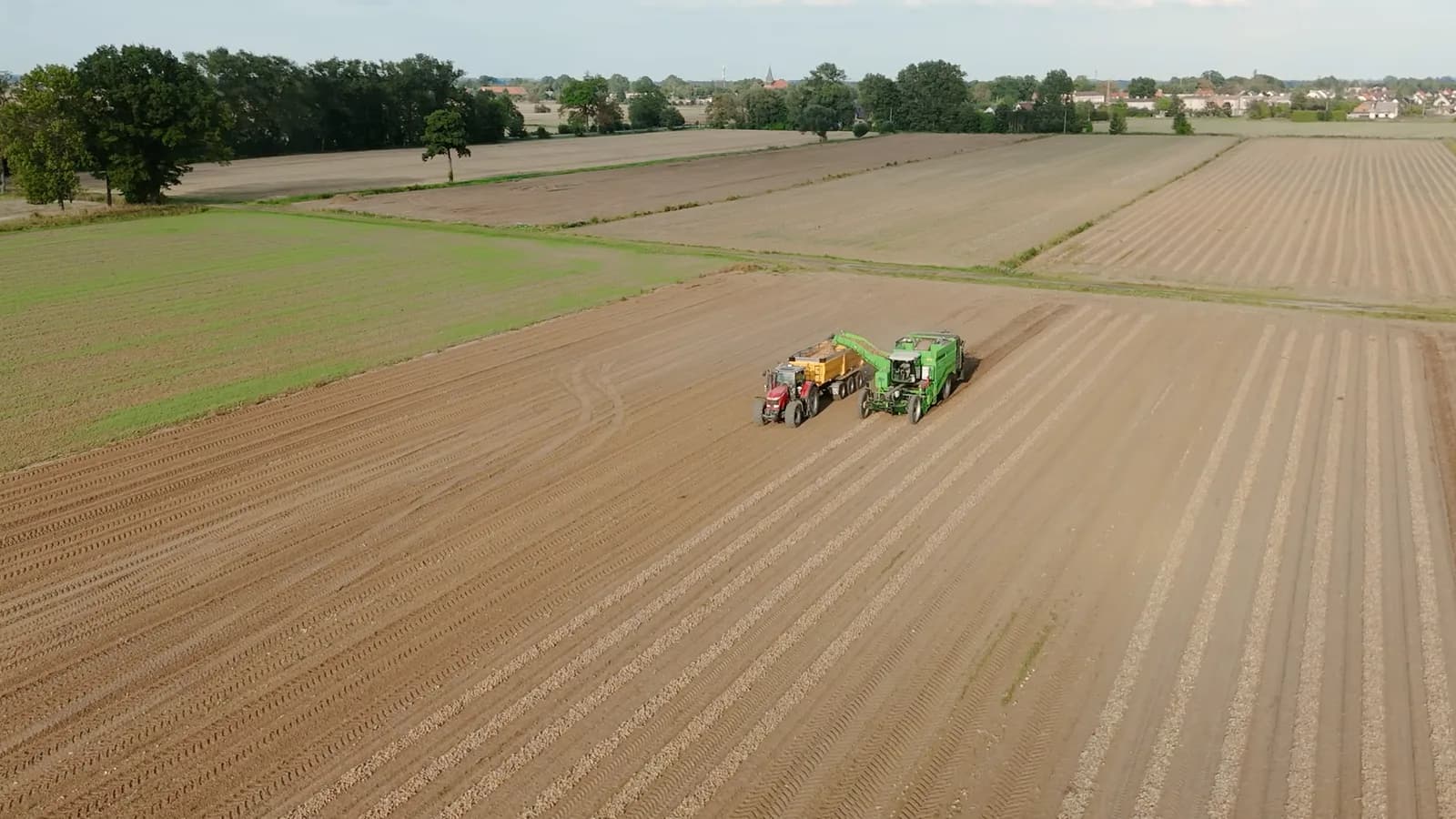
On a vegetable farm a tractor rarely does just one thing. The same machine that pulls a cultivator in spring hauls the crop off the field in summer and works the harvest in autumn. That is why we do not have one big tractor for everything, but a fleet from 155 to 415 hp, matched to specific operations across more than 800 hectares. Here we show how we make that choice and why we make it this way.
One power class will not cover the whole season
It is tempting to buy the most powerful tractor and haul everything with it. In practice that is the road to downtime and to ruined soil. A big machine on light work burns fuel for nothing and compacts the field unnecessarily, and on hauling duty it ties up equipment that should be working somewhere else.
| Operation | What it needs | What we run |
|---|---|---|
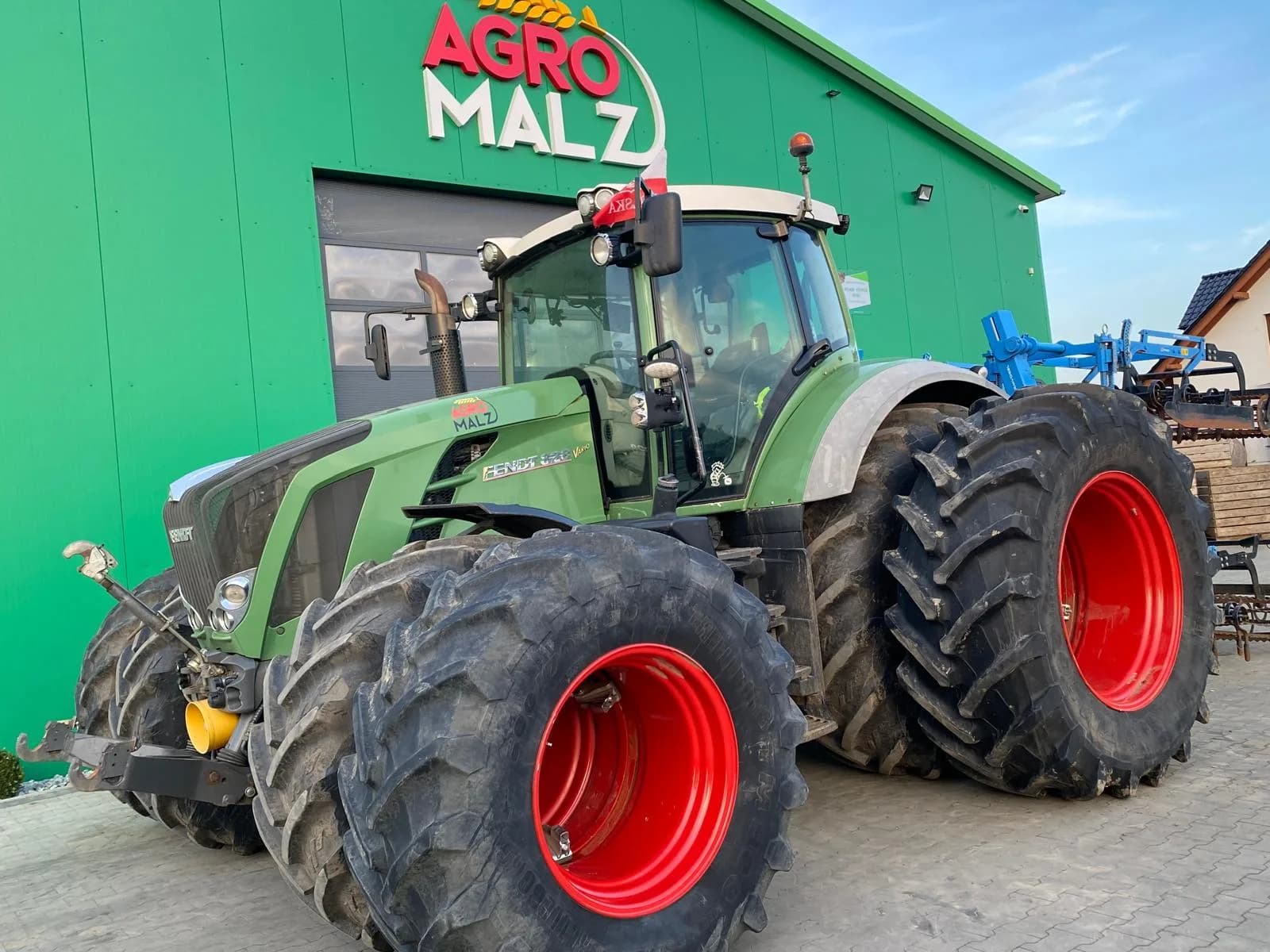
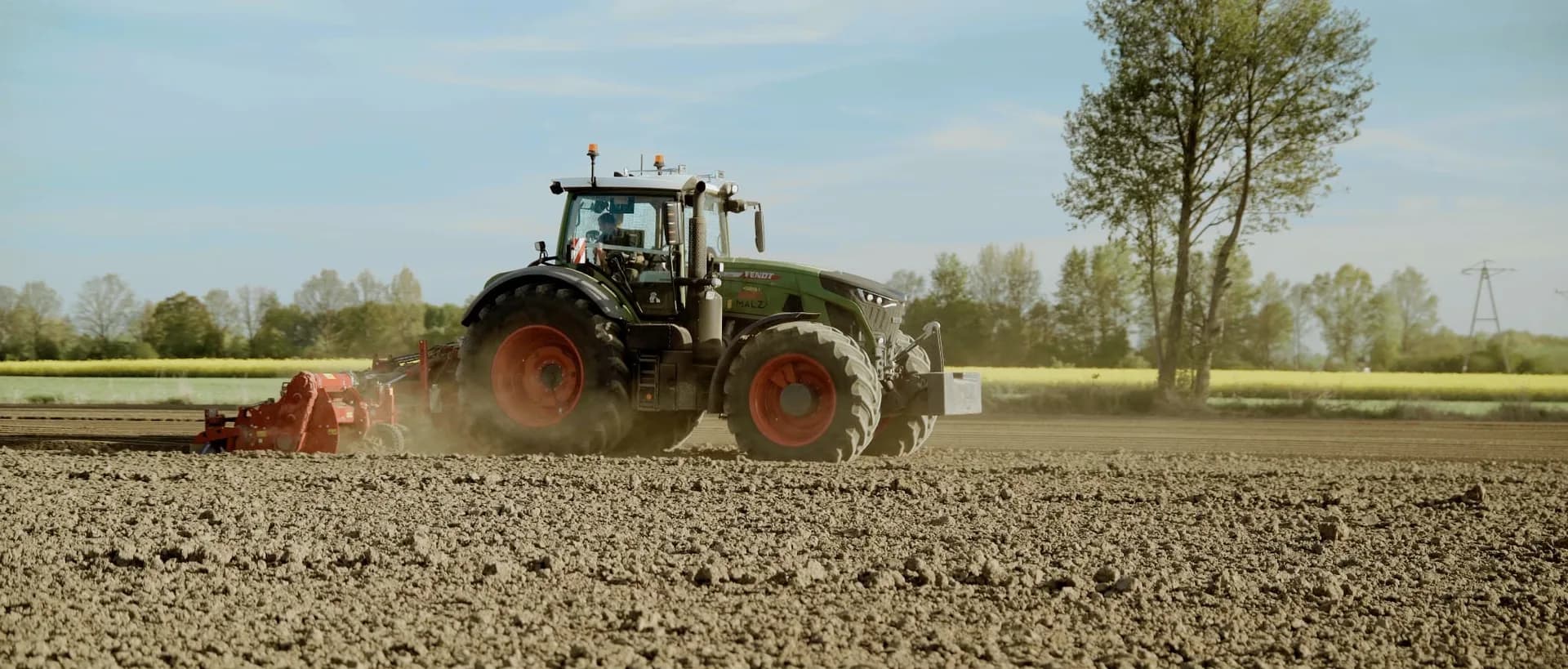
| Tillage and seedbed preparation | high power and weight, working a heavy cultivator | Fendt 942 and 936 Vario, John Deere 8RX 410 |
| Drilling and crop care | precision, repeatable passes, lower ground pressure | Fendt 828 and 724 Vario |
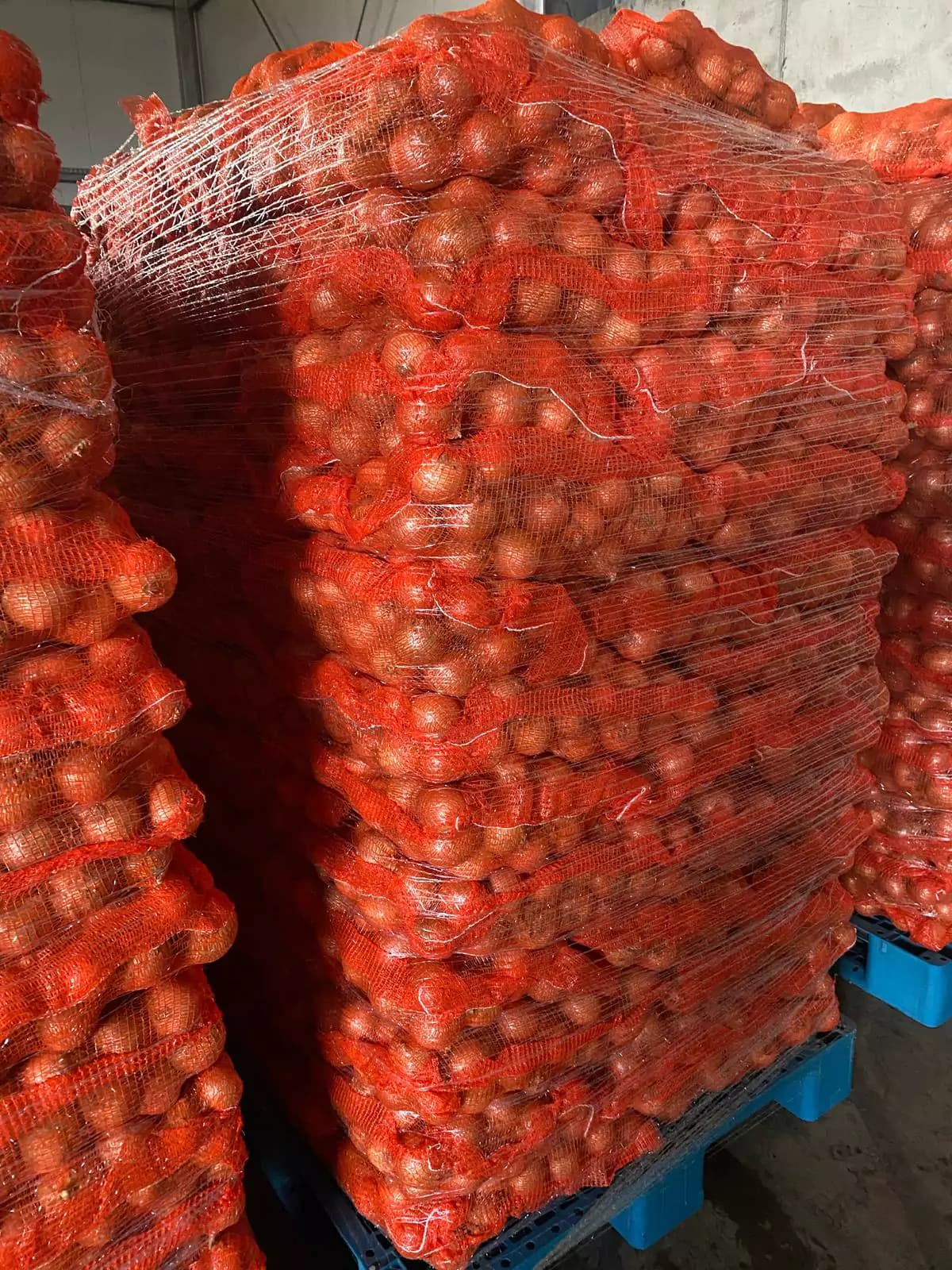
| Hauling the crop off the field | manoeuvrability, continuous work in a cycle, lower fuel use | Fendt 620 Vario, John Deere 6930 Premium |
| Working the harvest | matching the pace of the harvester | tractor and trailer running alongside the harvester |
Splitting the jobs up has one more advantage: when the grain harvest or the onion harvest starts, several teams work in parallel. With 87 machines in our machinery fleet, we can move into a narrow weather window on a broad front instead of working through it one set at a time.
Why Vario, or the case for a stepless transmission in vegetables
The Fendts in our fleet have the stepless Vario transmission. In short: there are no gears to shift, speed is set smoothly and the engine holds whatever revs are most economical at that moment.
In vegetables this is not operator comfort, it is a condition for doing the job properly. In planting, drilling and crop care what counts is holding an even, often very low working speed, no matter whether the machine has just hit a heavier patch of the field. A stepped gear change at that moment leaves a mark in the crop: uneven seeding, a gap in the row, uneven depth.
The tracked John Deere 8RX, because alluvial soil demands it
We work on Żuławy alluvial soils: ground that is very fertile but heavy and easily compacted. Once soil like that is packed down, water does not drain away, roots do not go deep, and you see it in the yield for seasons afterwards. We write more about this ground in our post on Żuławy alluvial soils.
That is why the heaviest work here is done by a John Deere 8RX 410, a 410 hp tractor on four tracks. Tracks spread the machine's weight over a far larger area than wheels, so pressure per unit of area drops. At the same power we leave less of a mark in the soil, and that matters above all in spring, when the field has not fully dried out yet.
The 2025 season showed how fine that line is. In July we had 150 to 220 litres of water per square metre in a single day, drainage canals overflowed and the soil was compacted. On a field like that every pass has to be thought through, because the effects stay with the crops that follow.
A smaller tractor for hauling off the field
For hauling onions we use, among others, a John Deere 6930 Premium with a Wielton tridem trailer. This is not cutting corners on equipment: in hauling what counts is manoeuvrability on the headlands, a pace matched to the harvester, and not driving a heavier machine around the field than the job needs.
The cycle itself looks like this: the harvester does not stop, it unloads on the move onto a trailer running alongside, the full outfit heads for the store and the next one takes its place. We describe the whole chain in our posts on harvesting potatoes with the AVR Puma 3 and on the onion harvester.
RTK GPS in every cab
We run all our tractors on GPS navigation with RTK correction, which gives accuracy measured in centimetres. This is not a gadget: straight passes mean no overlaps and no misses in drilling, fertilising and crop protection, and in vegetables it also means the crop care machine goes exactly between rows planted a few weeks earlier.
That system is the basis for parallel guidance and John Deere Auto Pilot and for variable rate fertiliser application, which spreads the rate according to what a given zone of the field needs. Where that accuracy comes from, we explain in our post on RTK GPS in precision farming.
Want to see exactly what we work with in the field and in the store? Take a look at our machinery fleet, and for vegetables from these fields write through the contact page.