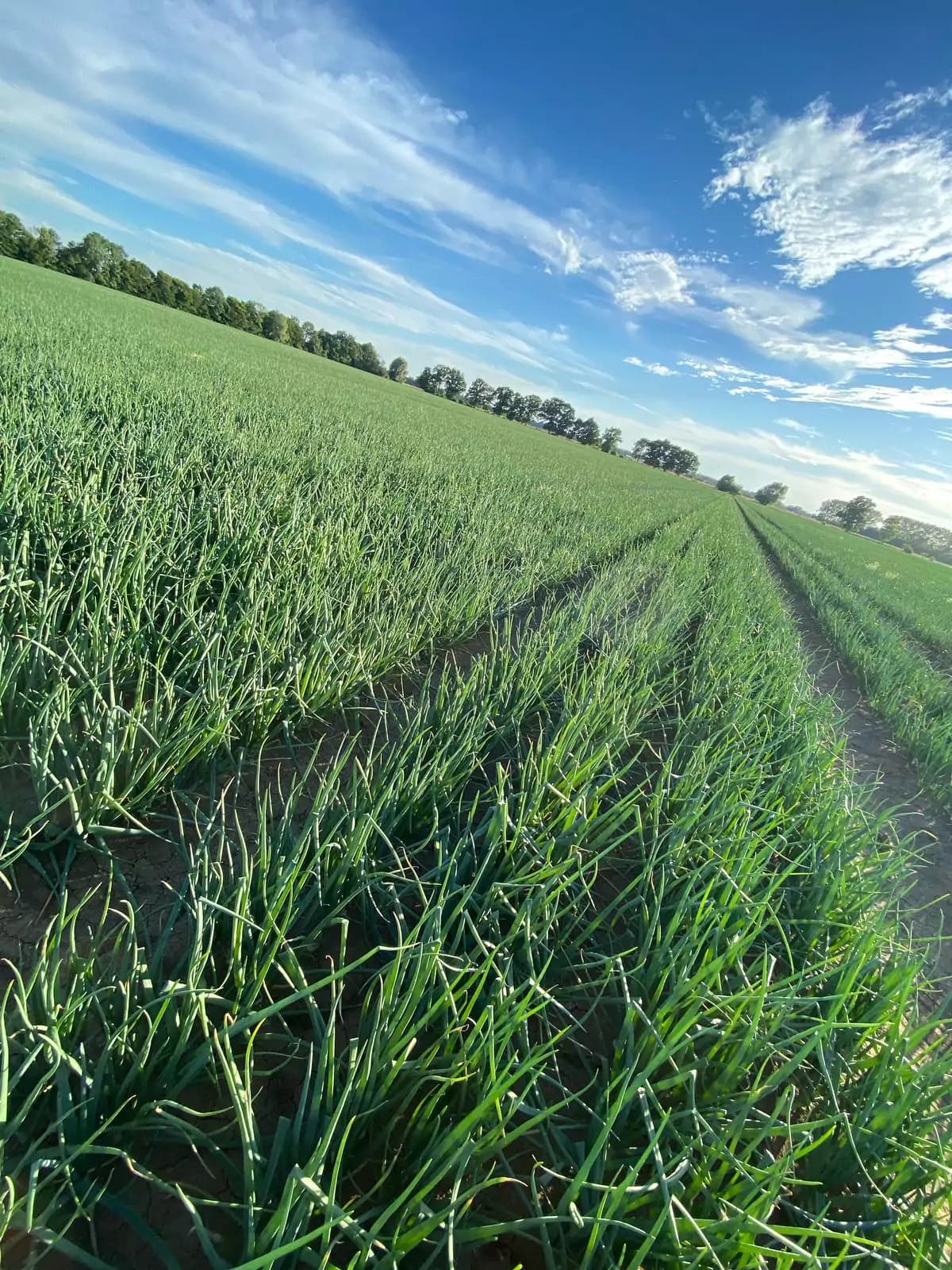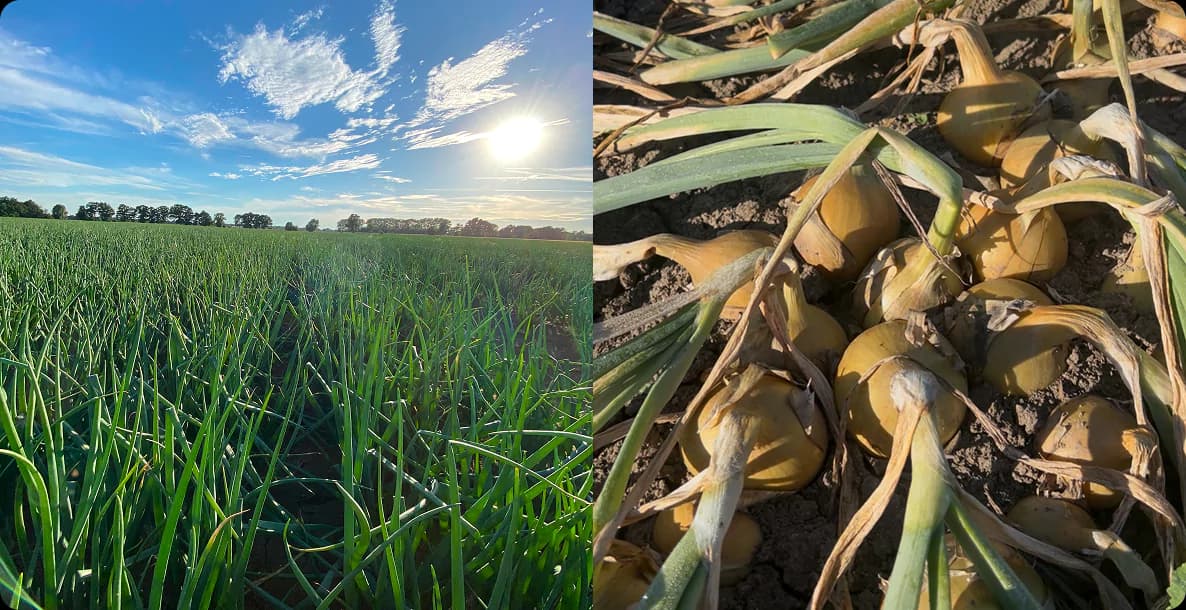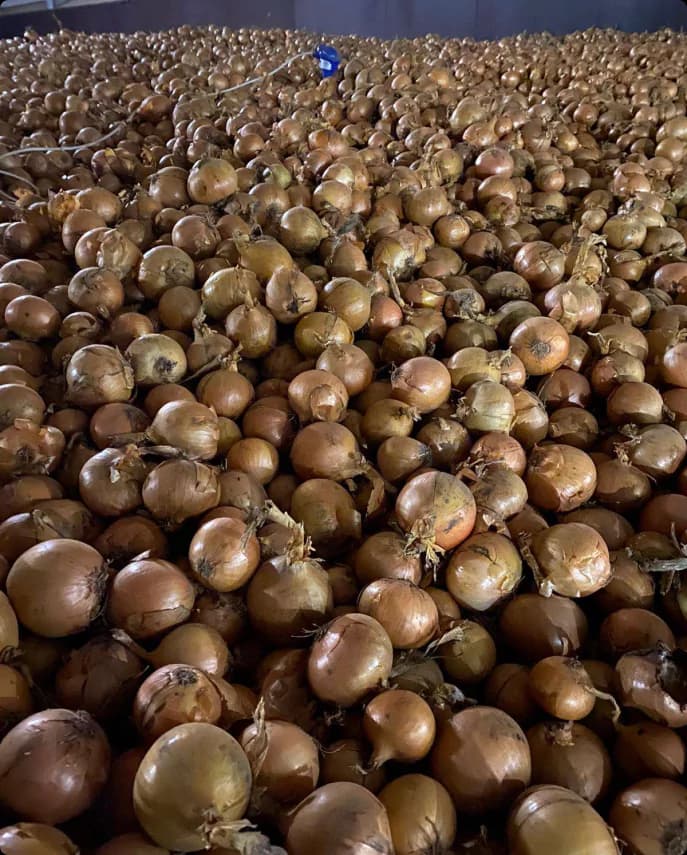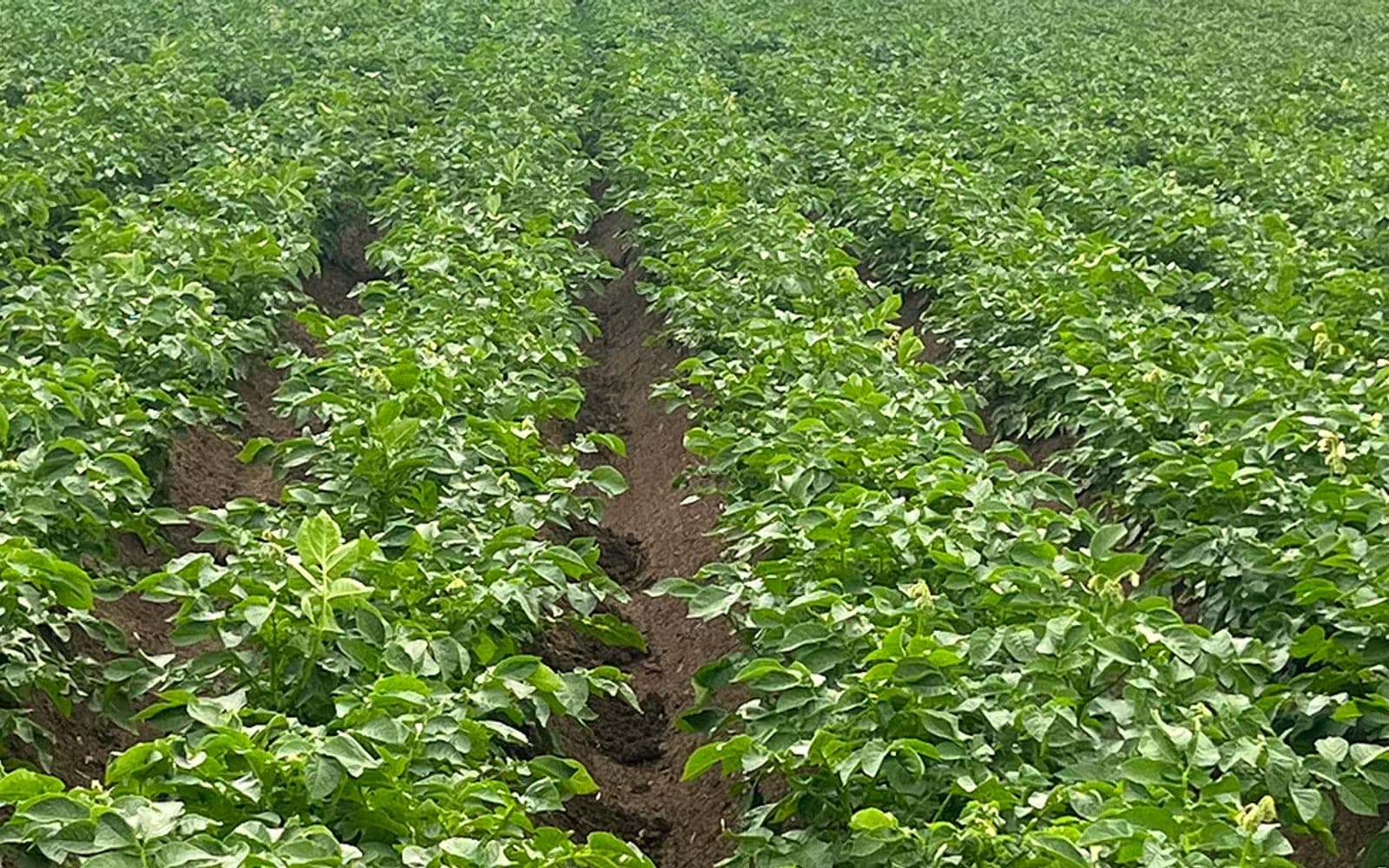
Good onions start with the soil. We grow ours in Zulawy, on mada soils, the soils that the Vistula river built over centuries from silt. These are some of the most fertile soils in Poland and one of the main reasons our onions give high, even yields. In this post we explain what Zulawy mada soils are, why they suit onions and how we work with them.
What Zulawy mada soils are
Mada soils are alluvial soils. They formed from the silt that the river deposited on the flooded land of the Vistula delta. In Zulawy they make up the vast majority of soils and run through the whole delta. Their hallmark is a dark colour and a deep layer of humus, that is decomposed organic matter, which feeds plants and holds water.
The humus in mada soils reaches deep, and the organic matter content can be several times higher than in an average Polish arable soil. That is why medium and heavy mada soils rank among the most fertile soils in the country. For onions, which keep the soil profile bare all season long and draw nutrients from the top layer, that fertility is a huge advantage.
Why onions like our soils
Onions are demanding. They have a shallow, not very developed root system, so they need a soil that is rich, holds water well and is even across the whole field. Zulawy mada soils give them exactly that.
First, richness. High humus means a reserve of nutrients and a better structure, in which roots work more easily. Second, water. Mada soils manage moisture well, which in hot weeks helps the onions finish their yield. Third, evenness. Uniform soil across the whole area gives an even onion, so after sorting more of the crop falls into the desired size.
The parameters of our mada soils are close to those of Dutch polders: similar humus and soil characteristics. These are the same conditions in which the Netherlands built its world position in onions.
This comparison is not an overstatement. Zulawy formed much like the Dutch polders, as drained low-lying land protected by a network of canals and pumping stations. Hence the twin soil and twin conditions for vegetables.
Mada soils and onions in Zulawy: a quick overview
| Soil feature | What it means for onions |
|---|---|
| High humus | A reserve of nutrients and a better rooting structure |
| Good water retention | Onions finish their yield even in dry weeks |
| Field uniformity | Even size, less waste after sorting |
| Heavy, compact structure | Requires good crop planning and drainage |
| Low-lying terrain | Water must be managed: canals, drainage |
Fertile soil is not everything
Mada soils are fertile, but also demanding. They can be heavy and compact, and Zulawy is low-lying terrain, so managing water is key. In the wet 2025 season we learned this the hard way: downpours reached even more than 150 litres per square metre in a single day, drainage canals overflowed, and the soil compacted and gave up less of its yield. This shows that even the best soil needs good agronomy to show its full potential.
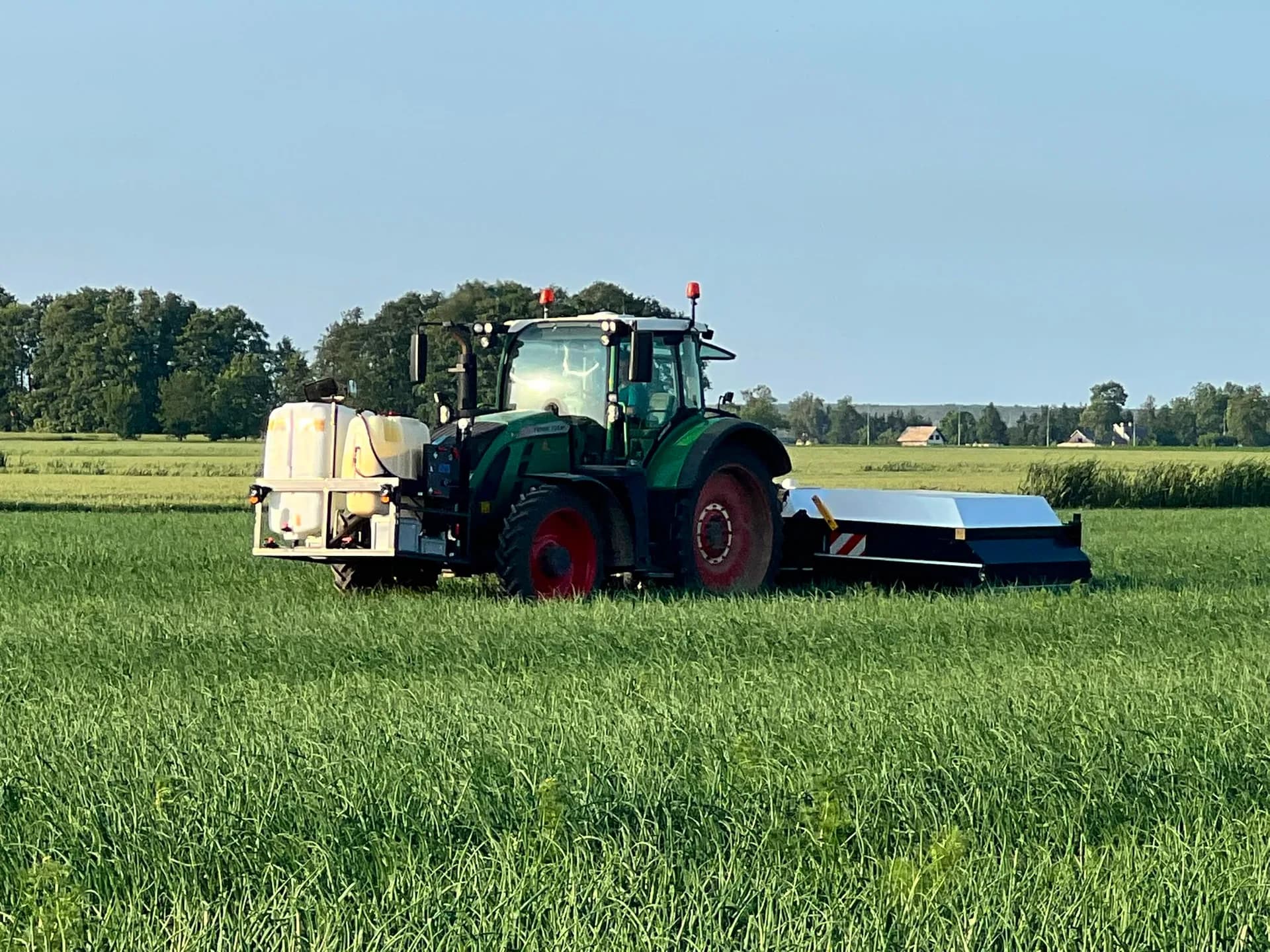
That is why we do not leave the soil to itself. We work with precision farming: GPS guidance with RTK correction, even sowing and variable rate application, that is matching the fertiliser dose to the real needs of a given part of the field. We describe how variable rate works in our post on variable rate in practice. This way we use the fertility of the mada soil where it is lacking, and do not waste it where there is enough.
We also look after crop rotation. Onions come into rotation with potatoes, beetroot and cereals, so the soil can rest and not lose its structure. We describe our whole way of growing onions on these soils in the guide on growing onions in Zulawy.
From soil to crate
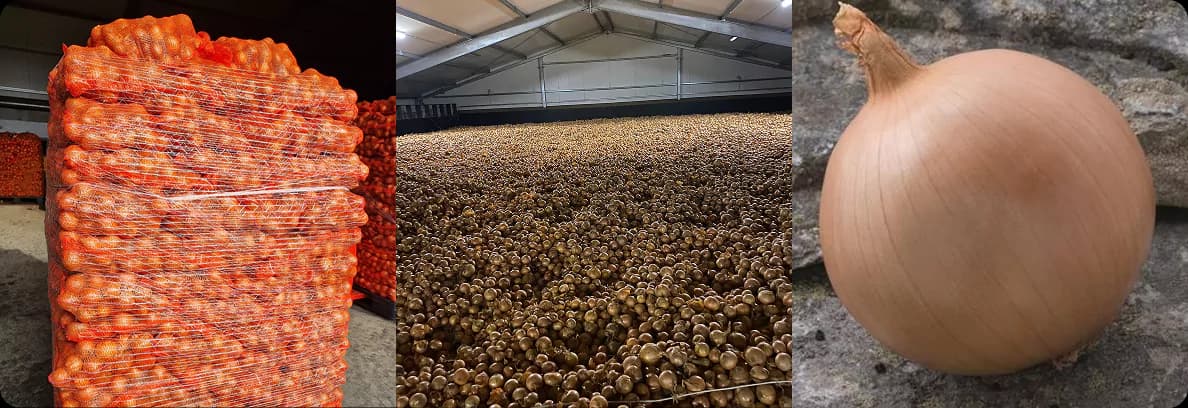
Good soil gives good raw material, but the crop still has to be kept after harvest. Once dug, the onions go to our storage facility with a capacity of about 13,000 tonnes. First we dry them for a few days, close the neck and remove excess moisture, and only then they go into long storage. This way we control sales over time and release onions even outside the harvest peak. We explain exactly how we do it in our post on storing onions.
The result from the field also shows in the offer. Even, healthy onions from fertile mada soil sort well for a specific buyer, which we write about in the text on onion size for processing. You will find our onions and other vegetables in the onion offer.
What this means for the wholesale buyer
For packing houses and processors, fertile, uniform soil is a concrete benefit: even size, healthy raw material and consistency from batch to batch. On top of that, with us you get:
- High, consistent onion yields across ~250 ha of onions.
- GlobalG.A.P. and GRASP certificates and farming according to the principles of Integrated Plant Production.
- Analyses of pesticide residues, heavy metals and substances dangerous to health.
- Our own storage facility, which lets us supply produce all year round.
We calculate the price based on current market prices. We describe more about wholesale cooperation and delivery options in our post on Zulawy onions in wholesale.
Looking for onions from fertile Zulawy mada soils in consistent quality? Write to us through the contact page or see how we grow our onions.