Variable rate, or VRA, means fertilising and protecting according to what a particular part of the field needs, rather than the whole area evenly. We divide the field into zones and give each one the dose it deserves. For us this is not a curiosity but daily practice on onions, which we grow on about 250 hectares. We do it with GPS Trimble navigation and RTK correction and the John Deere Auto Pilot system, because without centimetre accuracy variable rate makes no sense.
What variable rate is
In classic fertilising a spreader or sprayer works the whole time at the same rate. A field, however, is not uniform: one part has more humus, another is weaker, water stands longer somewhere, and elsewhere the soil dries faster. A flat rate means that in one place we apply too much and in another too little.
Variable rate turns that logic around. First we divide the field into zones, assign each one a dose from an application map, and the machine changes it on the move during the pass. The plant gets as much as it needs, not a gram more. We do the same not only with fertiliser but also with crop protection.
Why we use it on heavy Żuławy clay
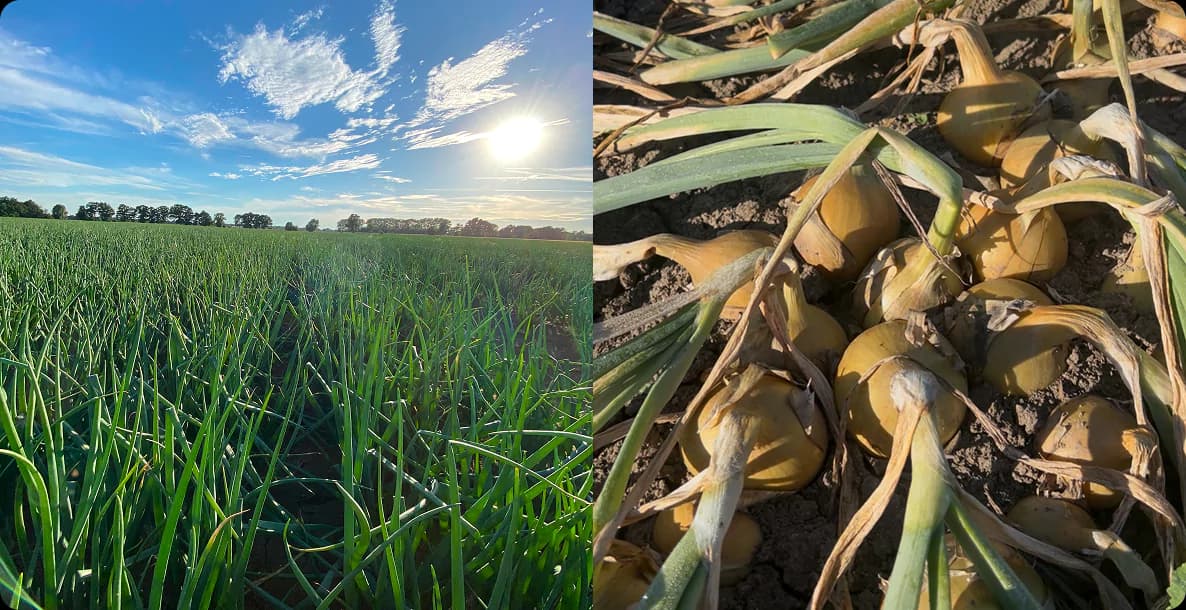
The Żuławy clay soils are heavy and fertile, comparable in their parameters to the polders in the Netherlands. They have their own variability, though: within a single field the nutrient status and structure can differ. Onions keep the soil profile open throughout the season and are sensitive to uneven nutrition, so any difference in fertilising shows up at once in yield and bulb size.
That is why we set the dose not by eye but on the basis of soil tests and maps. Where the soil is stronger, we ease off the fertiliser. Where it is weaker, we add more. The result is an even field and less wasted fertiliser. With onions grown on ~250 ha, even nutrition is one of the reasons we hold such quality, which we describe in more detail in our post on growing onions in Żuławy.
How it looks on our farm, step by step
Variable rate begins long before the spreader goes in. We arrange the whole process in a fixed order:
| Step | What we do | Why |
|---|---|---|
| 1. Soil data | We take samples and test nutrient status by zone | We know where the soil is strong and where it is weak |
| 2. Application map | We split the field into zones and assign doses | Each zone gets its own dose |
| 3. RTK navigation | We load the map into the machine terminal | The machine knows where it is, to within centimetres |
| 4. Application | The spreader or sprayer changes the rate on the move | The plant gets exactly what it needs |
| 5. Check | We assess the effect on yield and quality | We improve the maps for the next season |
The heart of this setup is precise guidance. GPS Trimble with RTK correction and the John Deere Auto Pilot steer the machine in parallel, with no overlaps or misses. The same guidance saves us fuel and seed, because we do not drive twice over the same track. We show all the equipment we use for this in our machinery fleet.

Variable rate, but also variable protection
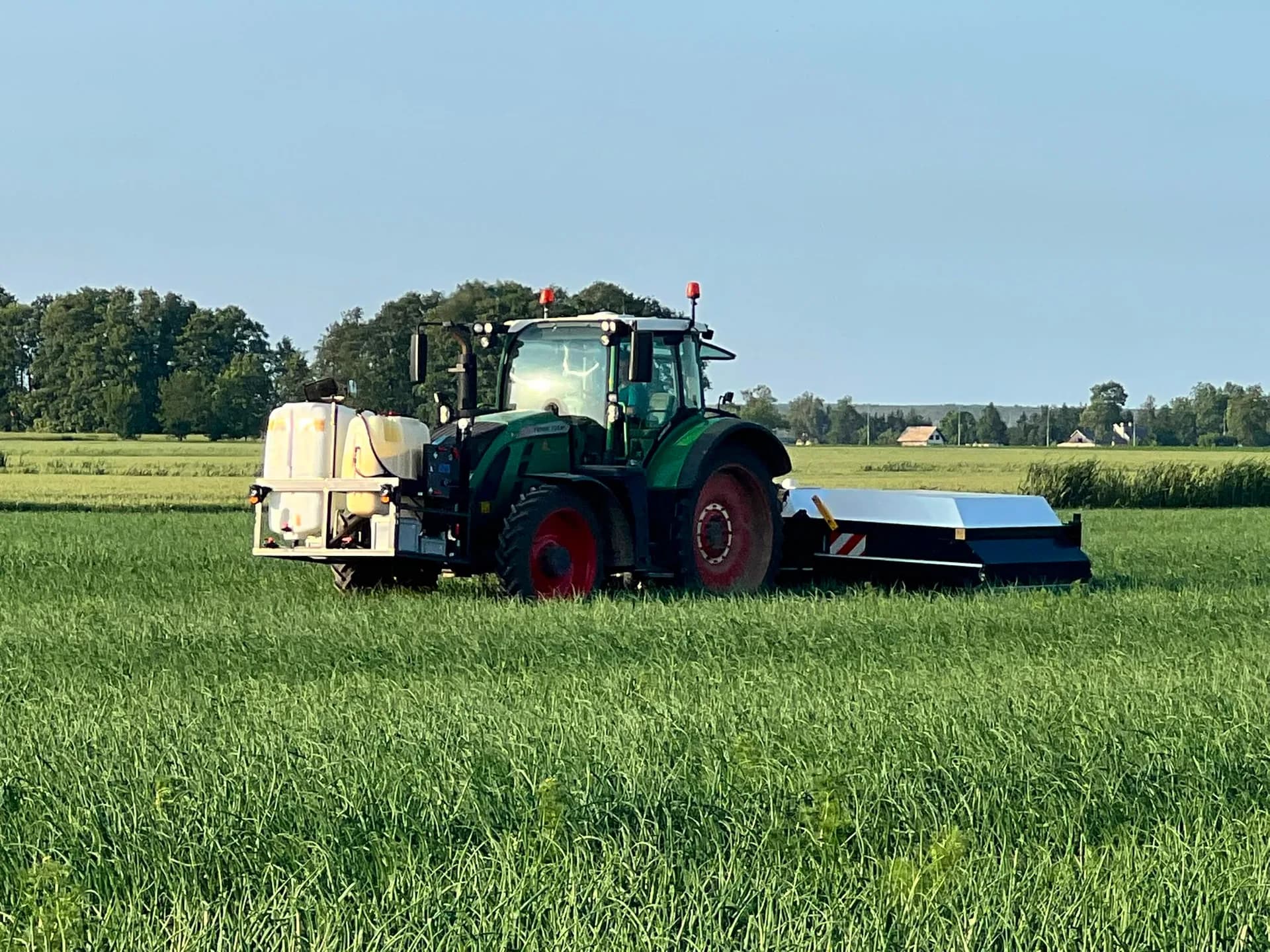
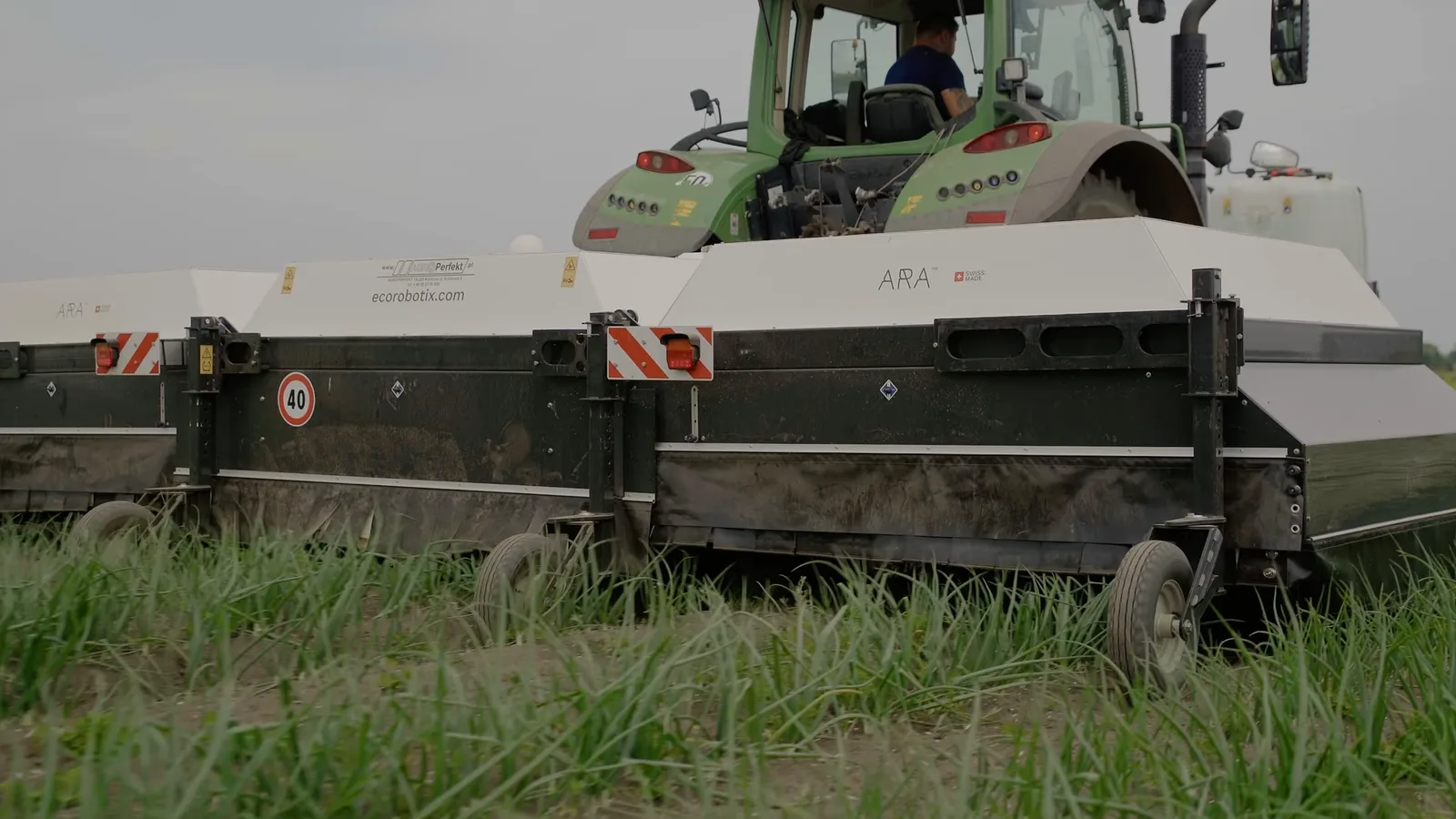
Variable rate is not only about fertiliser. The Ecorobotix ARA spot sprayer works with us permanently: 6 metres wide, 156 nozzles, 6x6 cm grid, cameras with AI, roughly 70 per cent less product. Cameras detect weeds and spray them spot by spot, sparing the crop plant and cutting the amount of product used. It is the same idea as with fertiliser: apply where it is needed, not everywhere evenly.
The 2025 season was very wet, with downpours and strong pressure from secondary weeds, because onions keep the soil bare for a long time. The wet weather forced us to work with split micro-doses of herbicide, meaning more passes at lower single-application rates and lower total-season rates. We confirm this with residue analyses in each batch. Without precision such conditions would have blown up both costs and quality.
Variable rate only makes sense with accurate navigation. First RTK and parallel guidance, then maps and variable doses. Without that first step the rest does not work.
What it gives the buyer
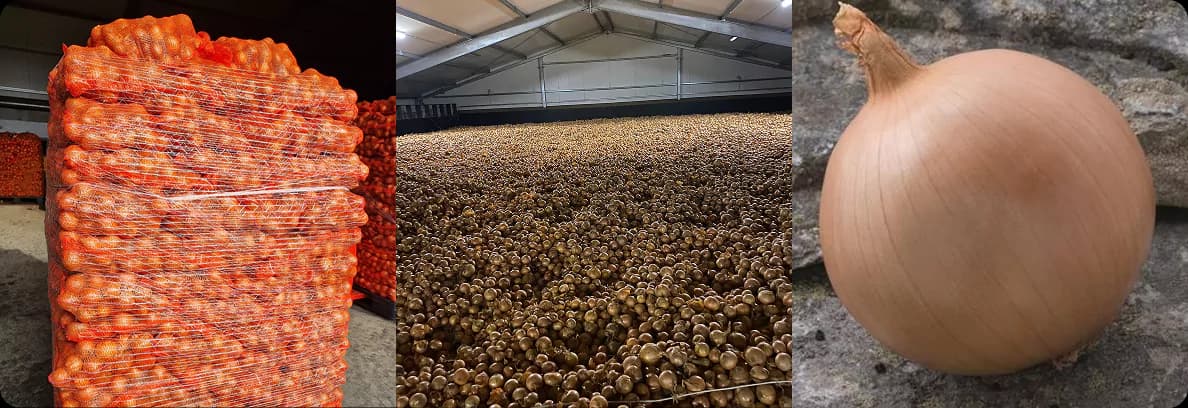
For an onion buyer one thing matters: an even, repeatable product in good size and of steady quality. Variable rate works exactly towards that. Even nutrition gives an even yield, fewer outliers and fewer losses. Less product on the field also means a cleaner, better documented crop, which counts for the GlobalG.A.P. and GRASP certificates and for running the farm under Integrated Crop Production.
Precision is one of the reasons our onions go to large packing plants and processors. An even raw product is easier to grade and pack, and we describe how we then run the harvest in our post on the onion harvester. If you are looking for a supplier, see our onion offer or get in touch through our contact page.
Want to know what else we work with in the field? Take a look at our machinery fleet or get in touch through our contact page.