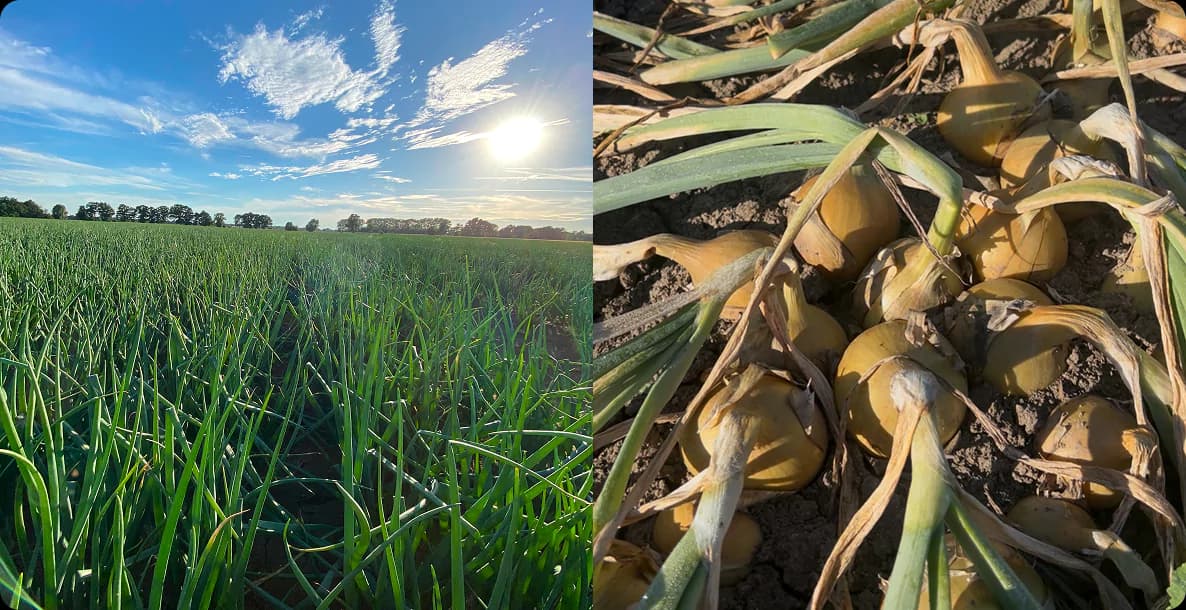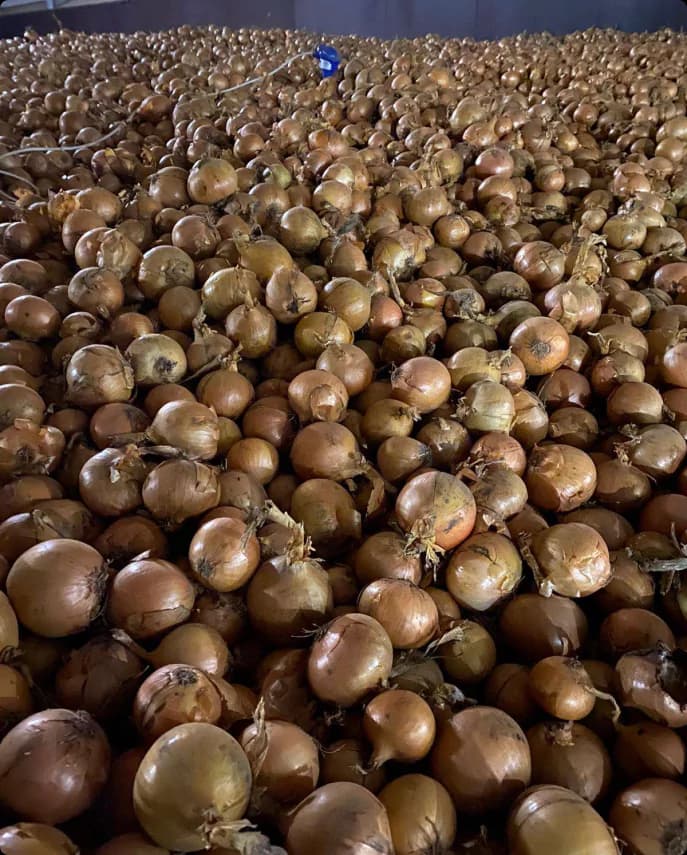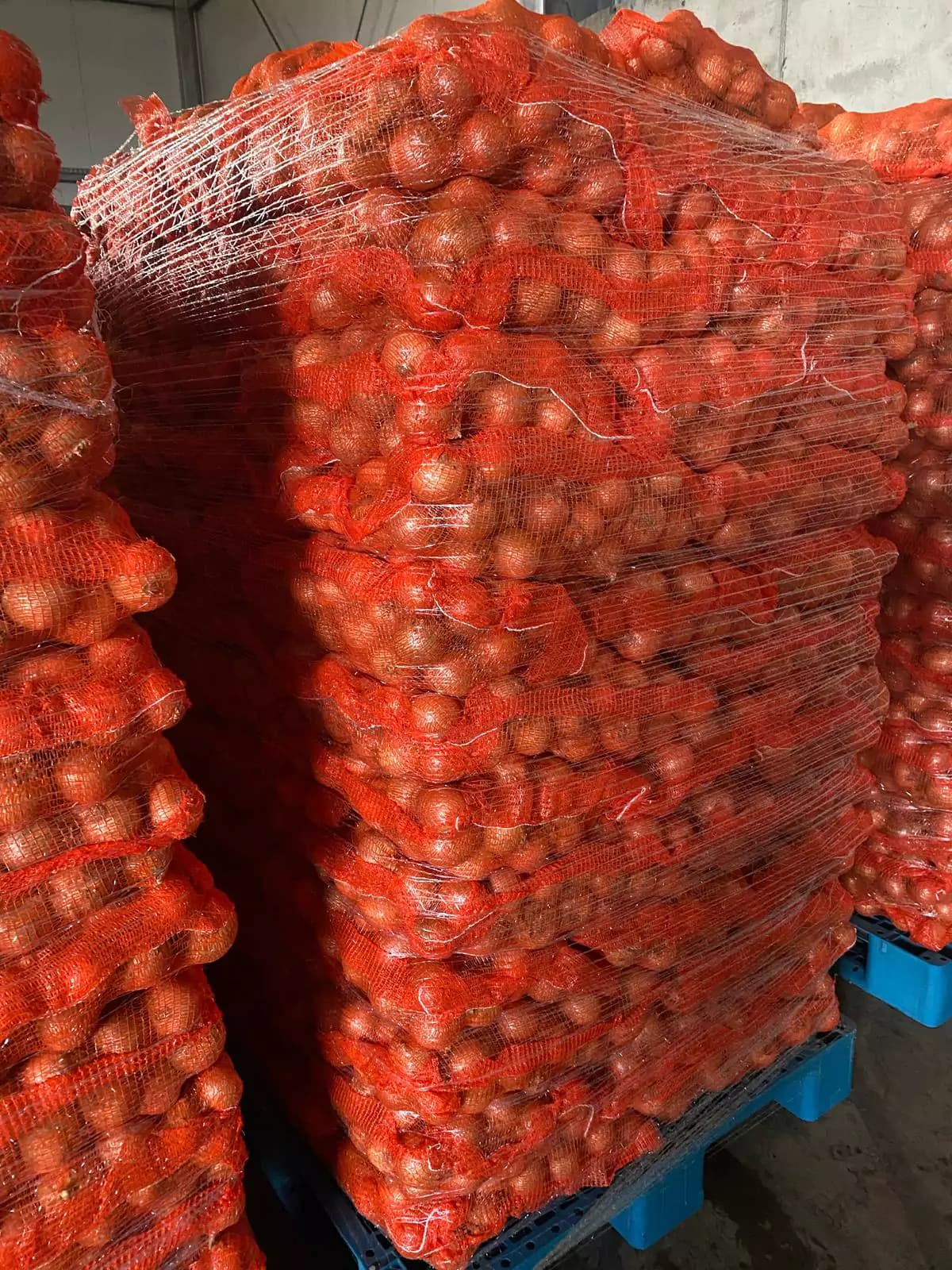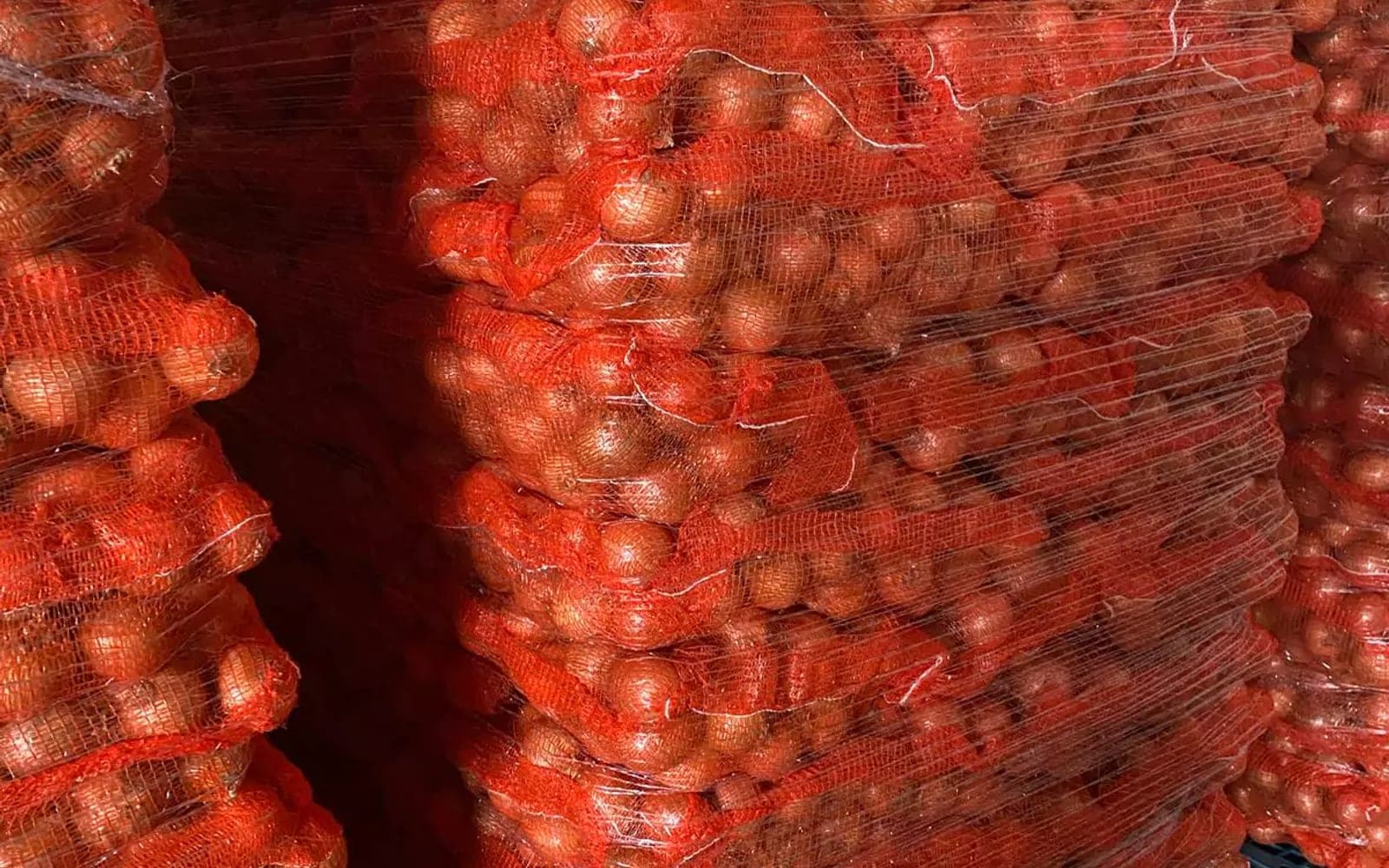
Curing is the first stage in the storage facility, before an onion ever goes into longer-term storage. We lift it from the field with the neck still damp and the skin loose, and before we set it down we have to seal and dry it. We do this with warm, dry air over 2 to 4 days. How we handle this one step decides whether a batch rests quietly for months or starts rotting from the inside. We write this from the practice of our 13,000-tonne storage facility, where every season the onions from about 250 hectares of Żuławy fields pass through.
Why we cure onions after harvest
A freshly lifted onion has an open neck, the spot left by the tops, through which pathogens enter easily. It also holds moisture between the skins and on the surface. In that state it must not be closed up in a pile, because the moisture has no way out, the temperature inside rises, and storage fungi get ideal conditions. Curing solves three things at once.
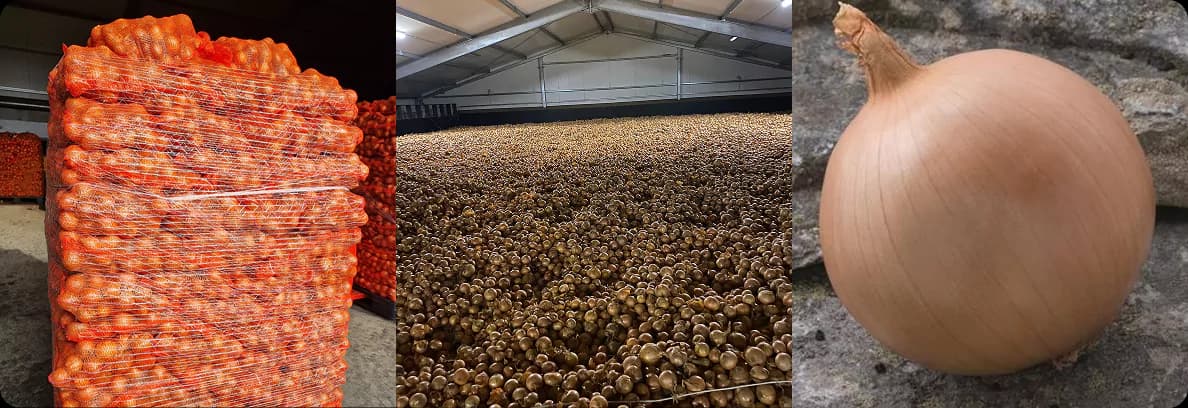
First, it seals the neck. Once the neck dries fully, the onion defends itself against infection. Second, it hardens and dries the outer skins, which become a tight coat protecting the flesh. Third, it takes excess moisture off the whole batch, so there is nothing in storage to cause sweating and rot. Only an onion with a dry, sealed neck and a rustling skin is fit for long resting.
How we cure onions here
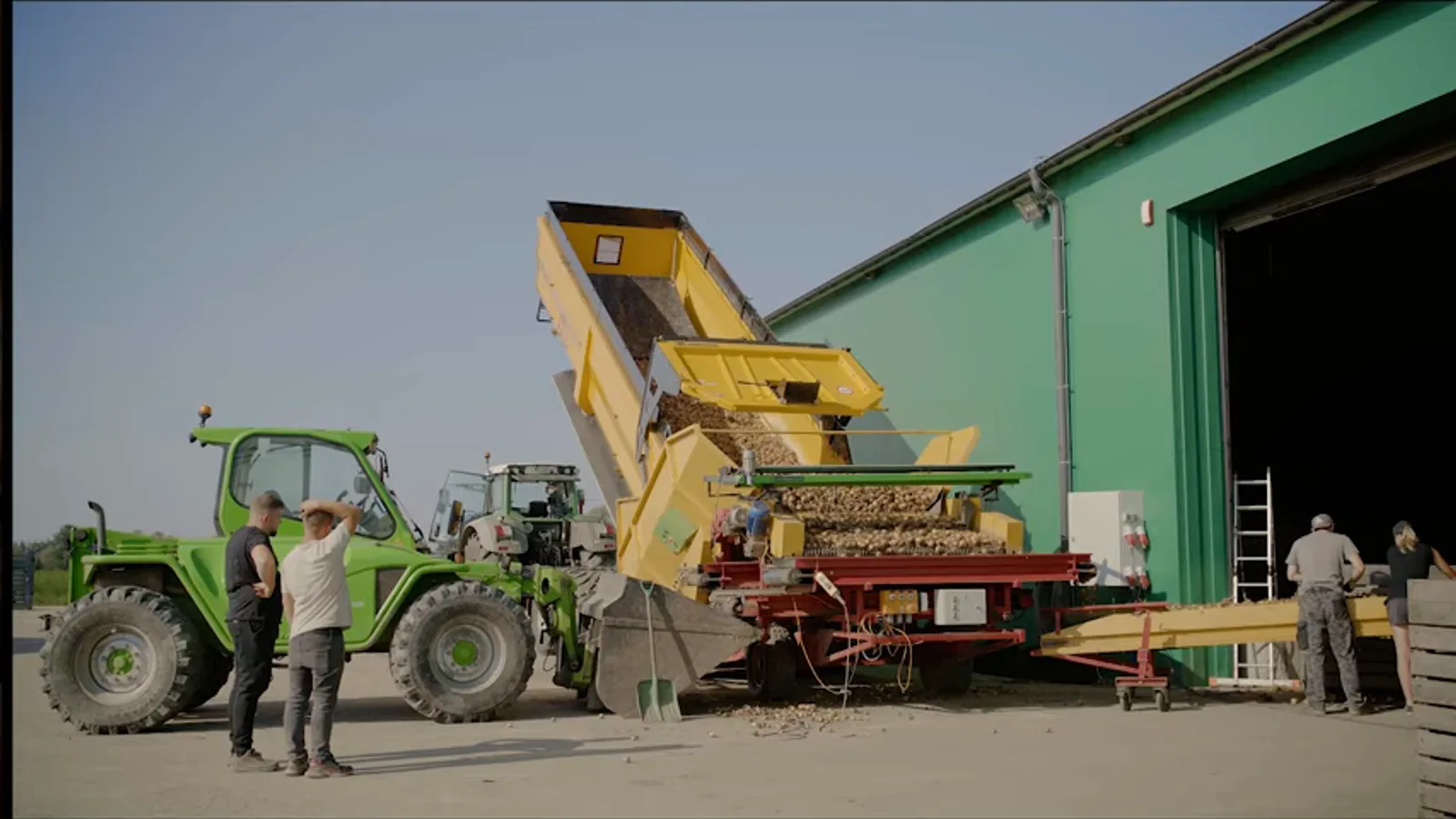
We do not rely on sun and weather. The onion goes straight from the field to the storage facility, and there we cure it with a controlled flow of warm, dry air. This usually takes 2 to 4 days, depending on how wet the batch came in and how humid the outside air is. The air passes evenly through the whole layer of onions, to cure it all the way through and not just on top.
We check the result on the onion, not on the clock. We cut open pieces from different spots in the batch and look at the neck. If it is still damp inside, we keep curing or send the batch for sorting. Only when the neck is sealed and the skin is dry and hard do we move the onion into proper storage. How we carry it further through winter, temperature and ventilation, we write about in the main post on onion storage.
| Stage | What we do | How we know it is ready |
|---|---|---|
| Intake from the field | Onion with a damp neck arrives at the storage facility | Fresh harvest, loose skin |
| Curing | Warm, dry air flow over 2-4 days | Neck dries, skin hardens |
| Check | Cut open pieces from different spots in the batch | Neck dry inside, skin rustles |
| Storage | We move it into long resting | Batch dry, sealed, even |
Why curing matters more in Żuławy
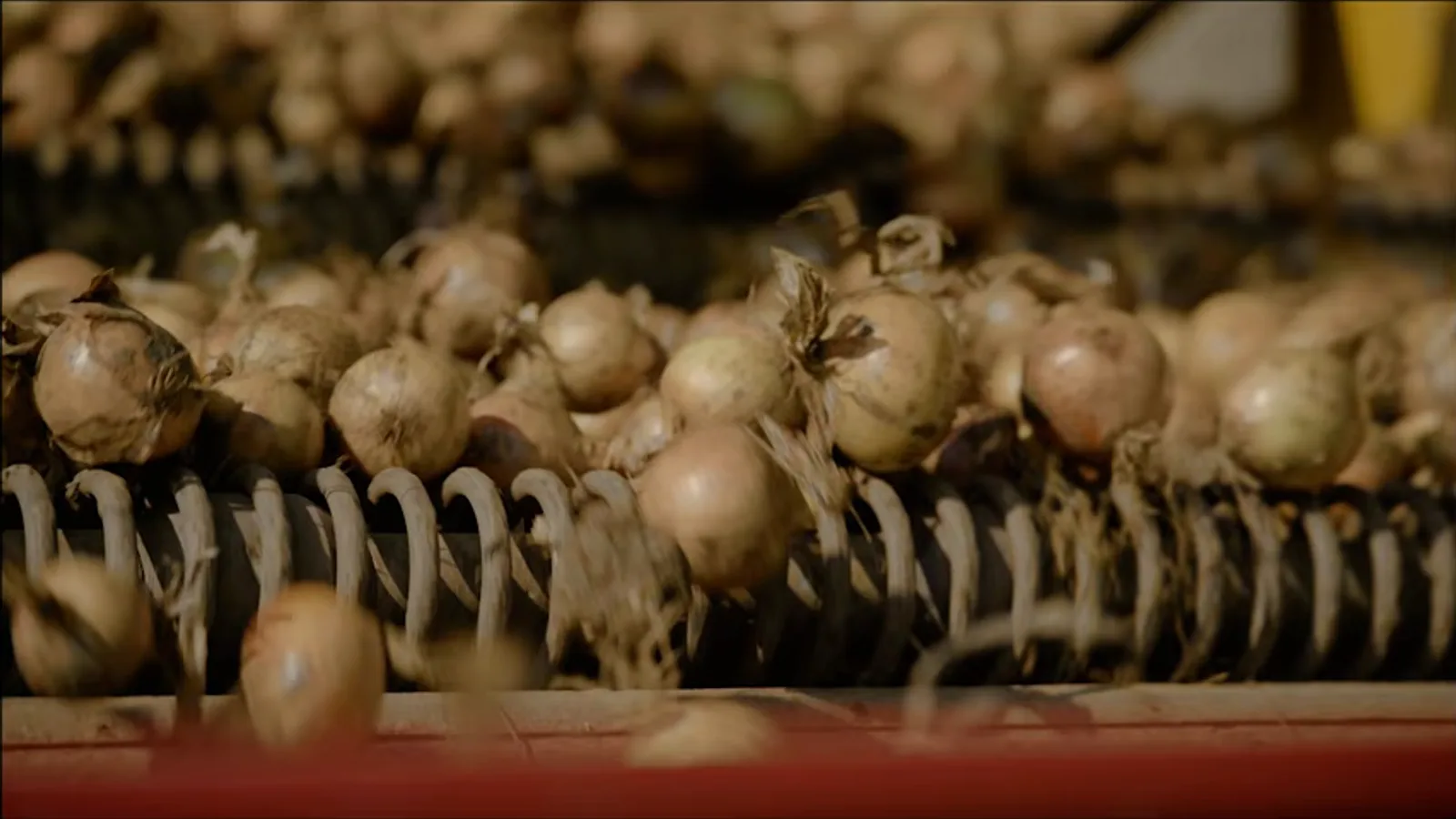
Żuławy lies by the sea, and that means humid air for most of the season. In such a climate an onion will not cure itself in the field the way it does in the dry interior of the country. That is why active curing in the storage facility is not an add-on for us but a necessity. If we left it to nature, we would risk damp necks and rot right at the start of storage.
This matters all the more because we are talking about a large scale. We grow onions on about 250 hectares, so thousands of tonnes pass through the storage facility. Every wet, poorly sealed batch is a real loss. That is why we treat curing as a separate, controlled stage, not something that happens on the side. How our whole season lays out, from sowing to harvest, we write about in the post on the onion harvest season.
A dry neck cannot be made up for later. If an onion goes into storage damp, no ventilation will reverse it. That is why we cure until it is done, not until the clock says so.
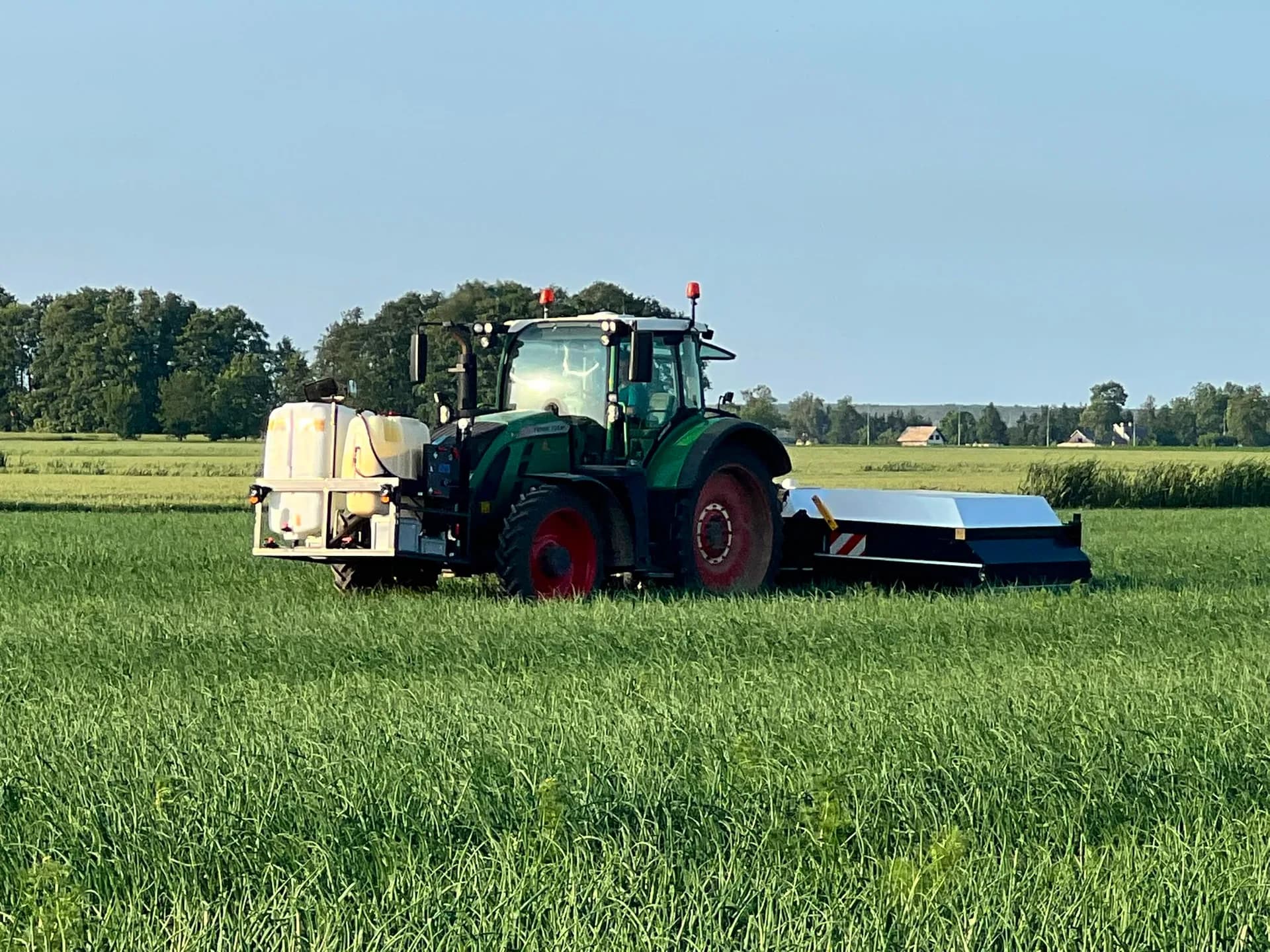
We run the whole chain, from harvest through curing to packing, with our own equipment. We show the storage facility, the packing line and the palletiser in the machinery park, alongside the harvester and GPS navigation.
What the onion buyer gets out of it
For the buyer, a well cured onion is simply produce that does not spoil. A sealed neck and a hard skin mean fewer pieces rotting in transit and on the shelf, fewer complaints and more reliable deliveries throughout the season. Curing also lets us manage sales over time. A healthy, dry batch rests quietly in storage, so we can release it when the buyer needs it, not just right after harvest.
The same stage supports the quality we keep across the whole farm. We run it according to Integrated Plant Production and hold GlobalG.A.P. and GRASP certificates, and every batch goes through inspection. A well cured onion moves more easily through sorting and packing, which is why it reaches large packhouses and processing plants. If you are looking for a supplier, check our onion offer or write to us through the contact page. More on how we sell onions wholesale we write in the post on the wholesale onion supplier.
Want to know how we carry the onion on through winter? Take a look at the post on onion storage or write to us through the contact page.