For packing houses and processing plants, yellow onions in wholesale are the staple product: they have to be firm, covered in dry skin, even in size and available all year round, not just for a few weeks after harvest. We grow them on the alluvial soils of Żuławy as Rijnsburger-type onions, sort them optically and release them from our own 13 000 tonne store. Below we gather what a buyer should know before sending us a first enquiry.
Why we go for the Rijnsburger type
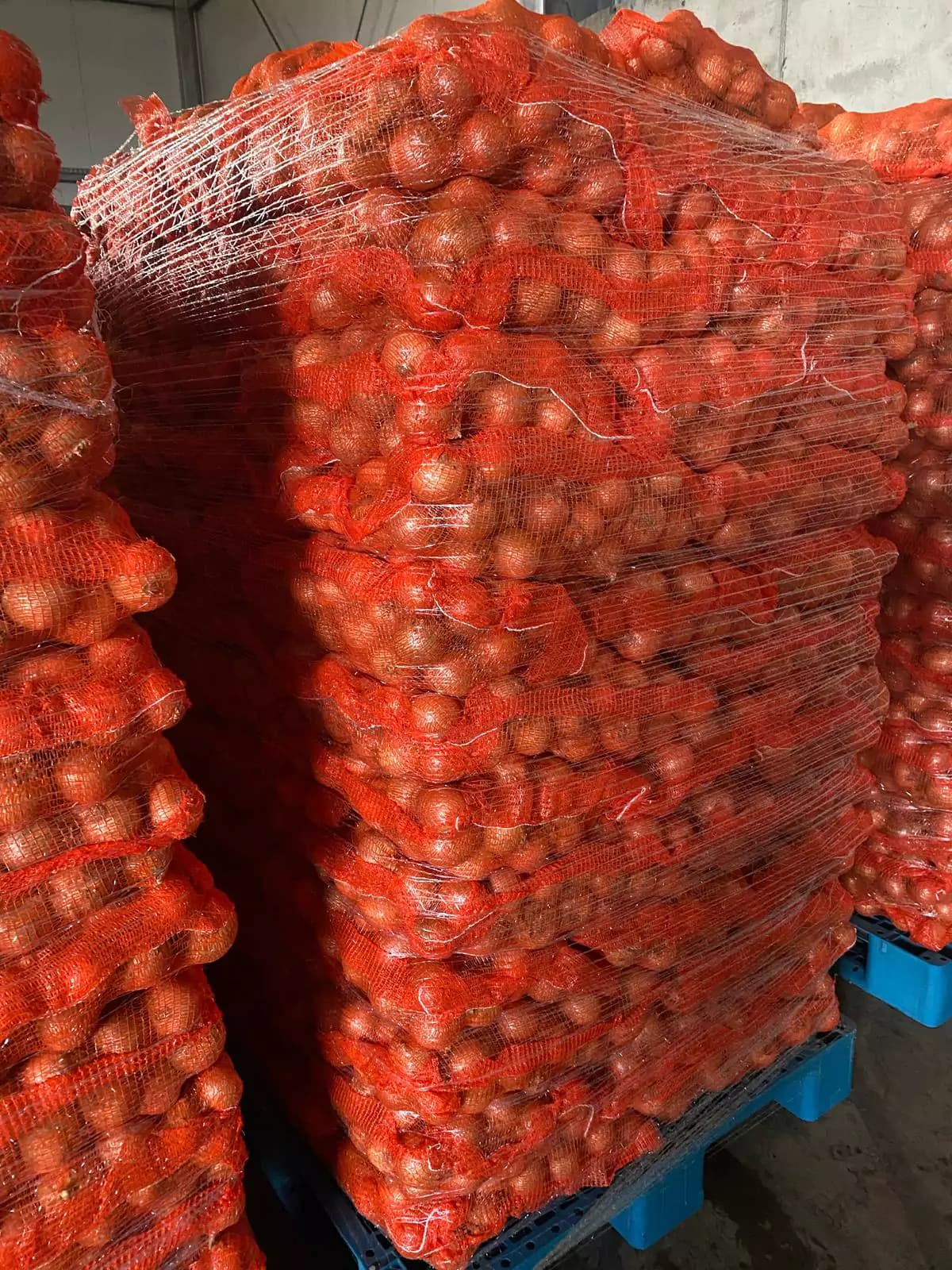
For wholesale trade we choose yellow onions of the Rijnsburger type. It has a round, compact bulb and several layers of dry skin that sits tight. An onion like that withstands handling, transport and long storage, and in a net sack it looks even, bulb after bulb.
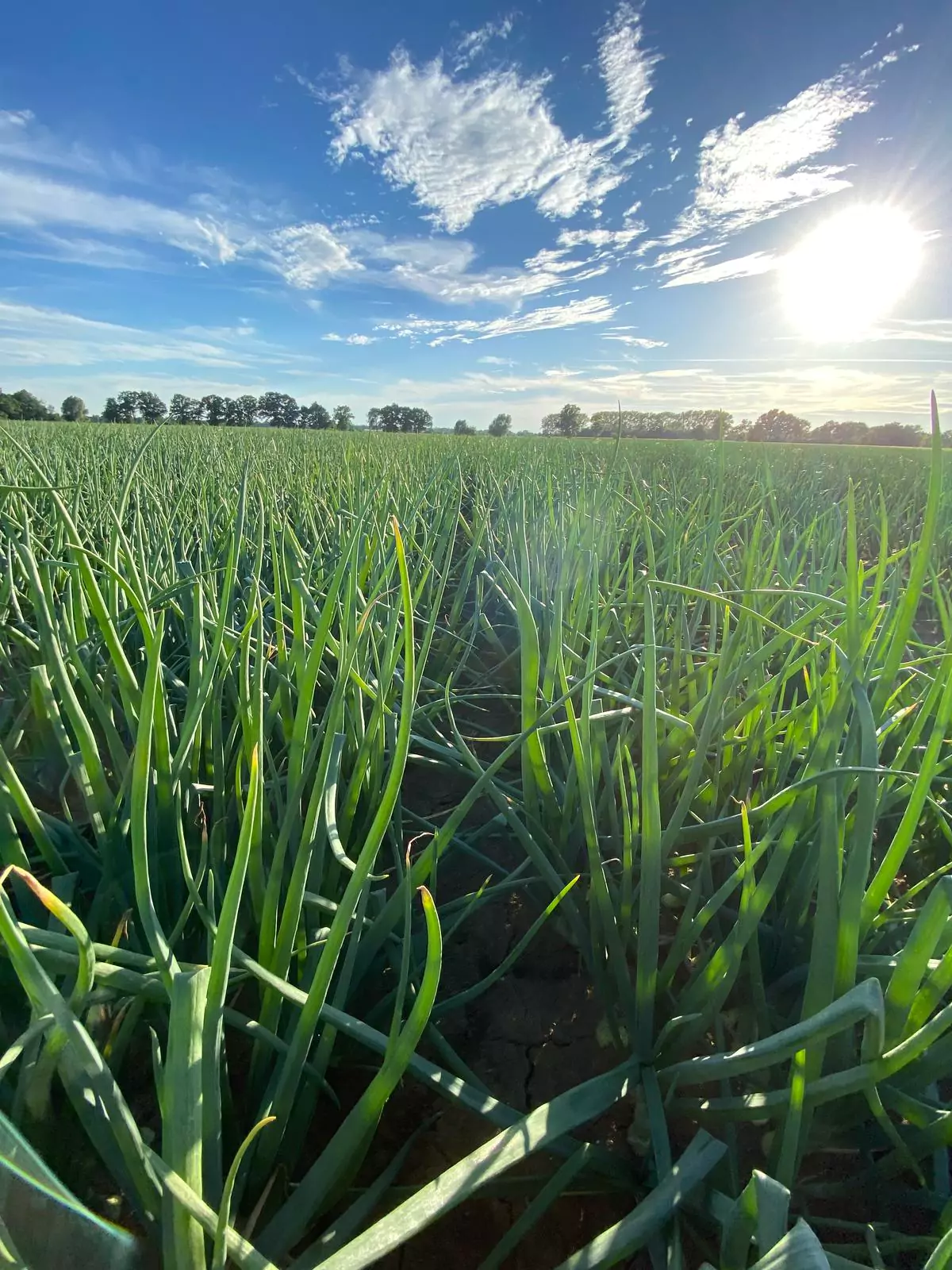
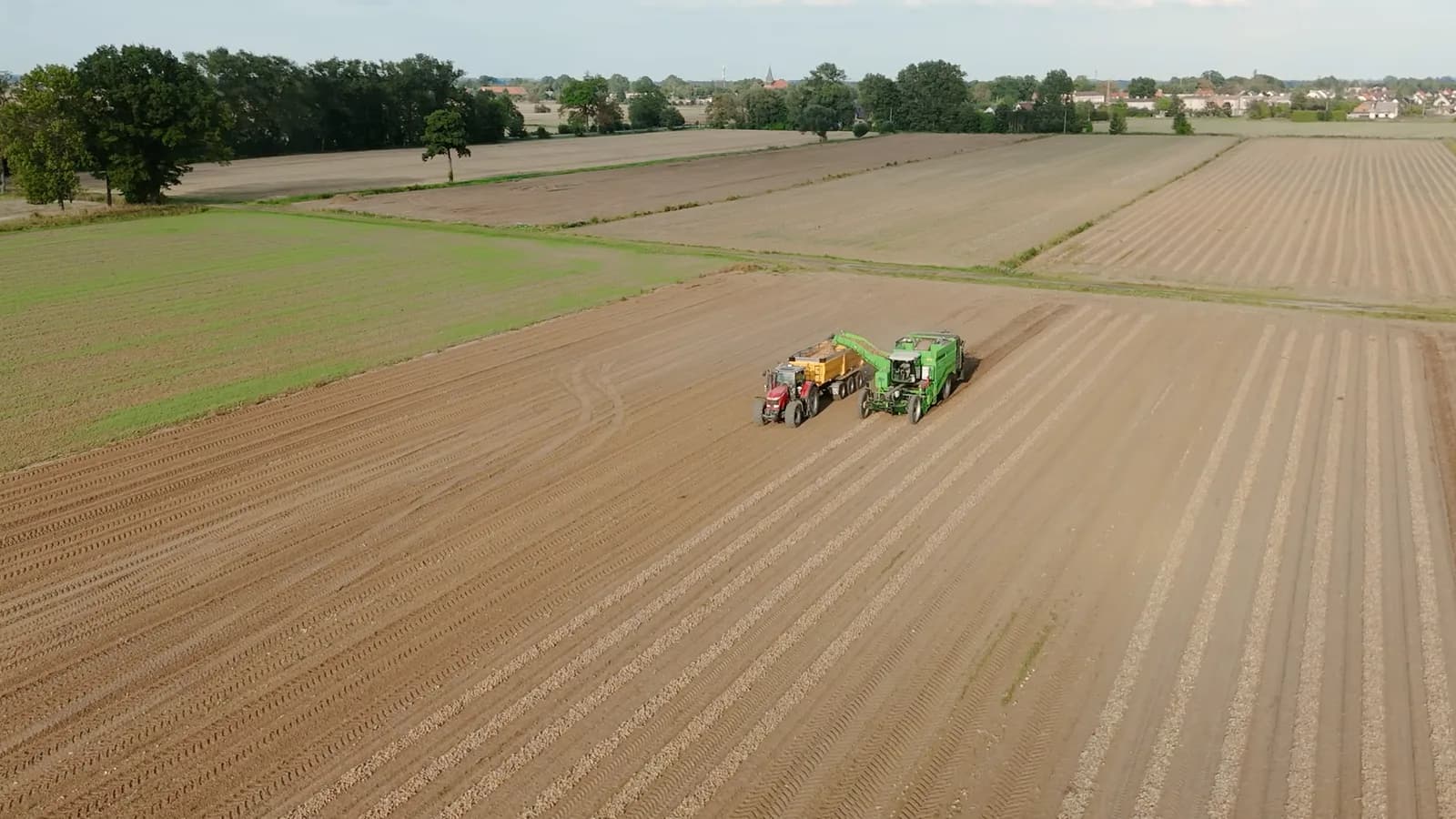
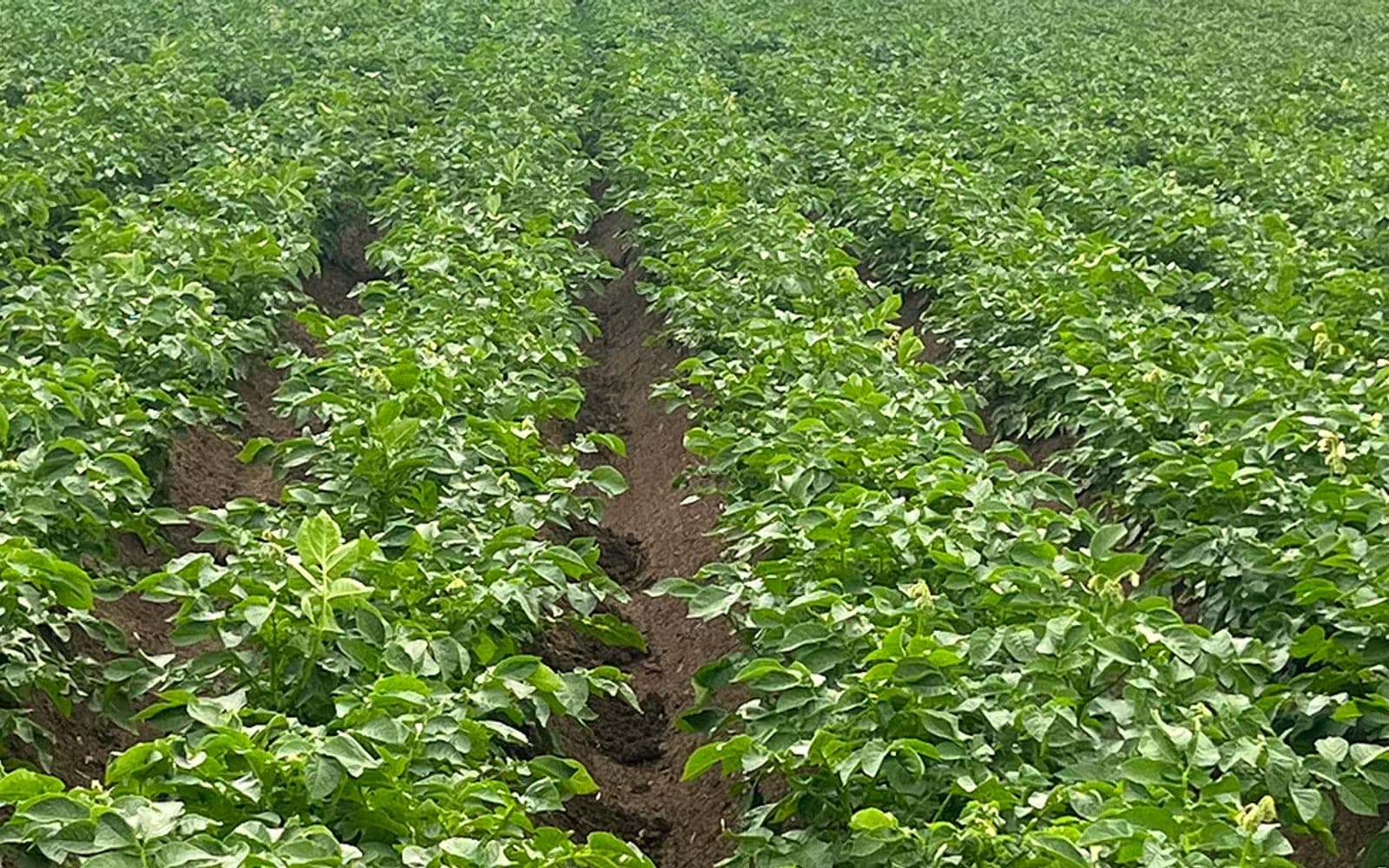
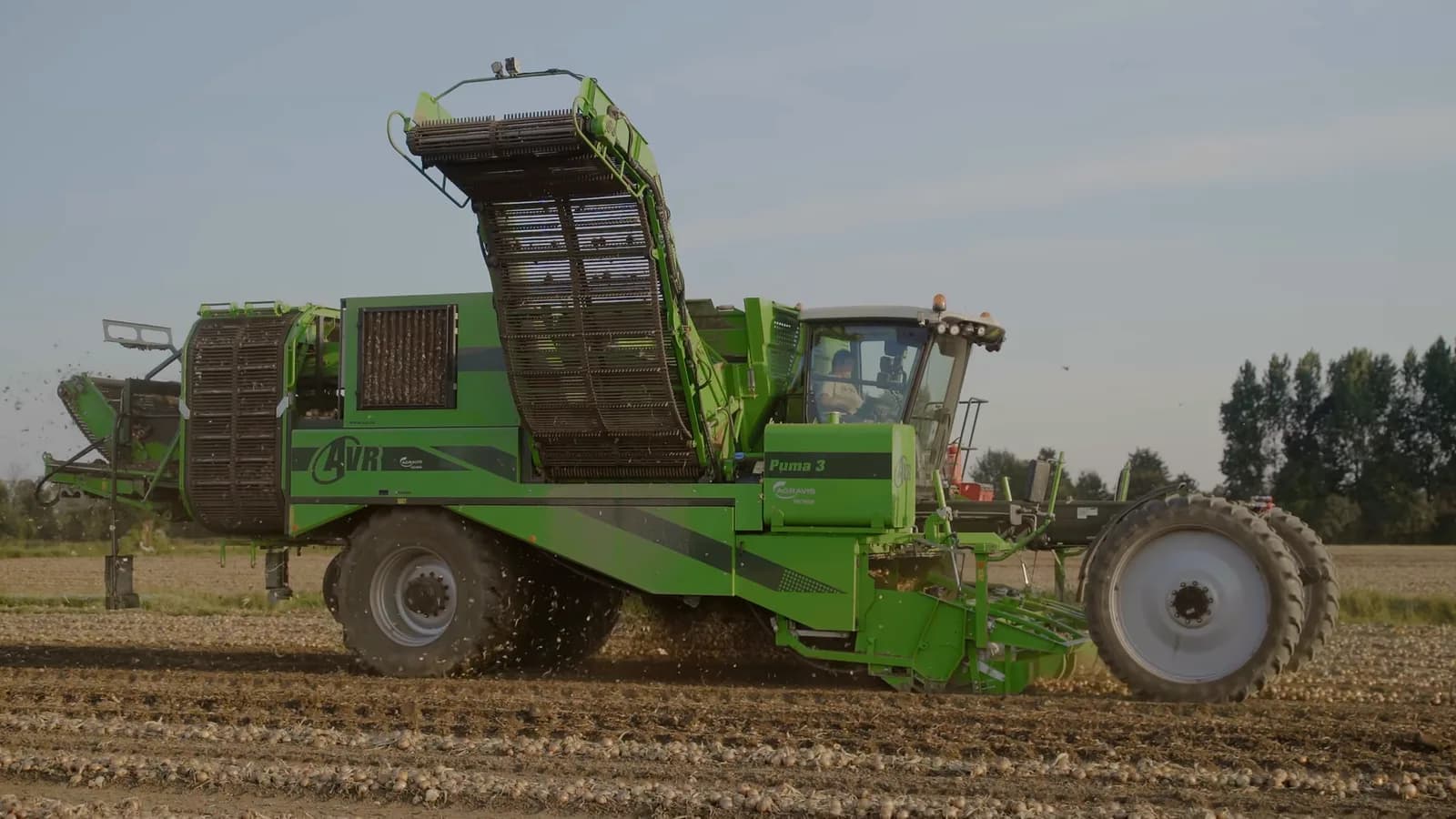
We grow around 250 ha of onions, and our yield reaches around 60 t/ha. For the buyer this scale has a practical meaning: a large batch, or a series of deliveries planned across the whole season, can rest on onions from our own fields, grown with the same technology and kept in one store.
The varieties we base our range on
We mostly base our range on the varieties:
- Hybelle,
- Hysinger,
- Hyfive,
- Nation,
- Revelation,
- Bingo.
We sow all of them in spring and harvest in late summer. They differ in time to maturity, bulb size and length of dormancy, so from one list of varieties we choose a batch for a specific sales route. Hybelle, our leading variety, and Hysinger, which gives a large size for peeling, we describe in detail in our post yellow onion varieties Hybelle and Hysinger.
In early summer, before the onions from sowing come in, we release onion sets. Here we mostly base our range on the Takmark, Comae, Kristine, Medusa and Bonus varieties. Onion sets are not a product for long storage, but they close the gap between the end of the store stock and the new harvest.
Yellow onions all year round: where they come from at a given time
| Period | Where the onions come from | What the buyer gets |
|---|---|---|
| Early summer | onion sets | fresh produce just when last season's stock runs out |
| Late summer and autumn | harvest from spring sowing | the start of deliveries from the new harvest and the first deliveries under seasonal contracts |
| Winter and spring | 13 000 tonne store | releases in batches on a schedule agreed with the buyer |
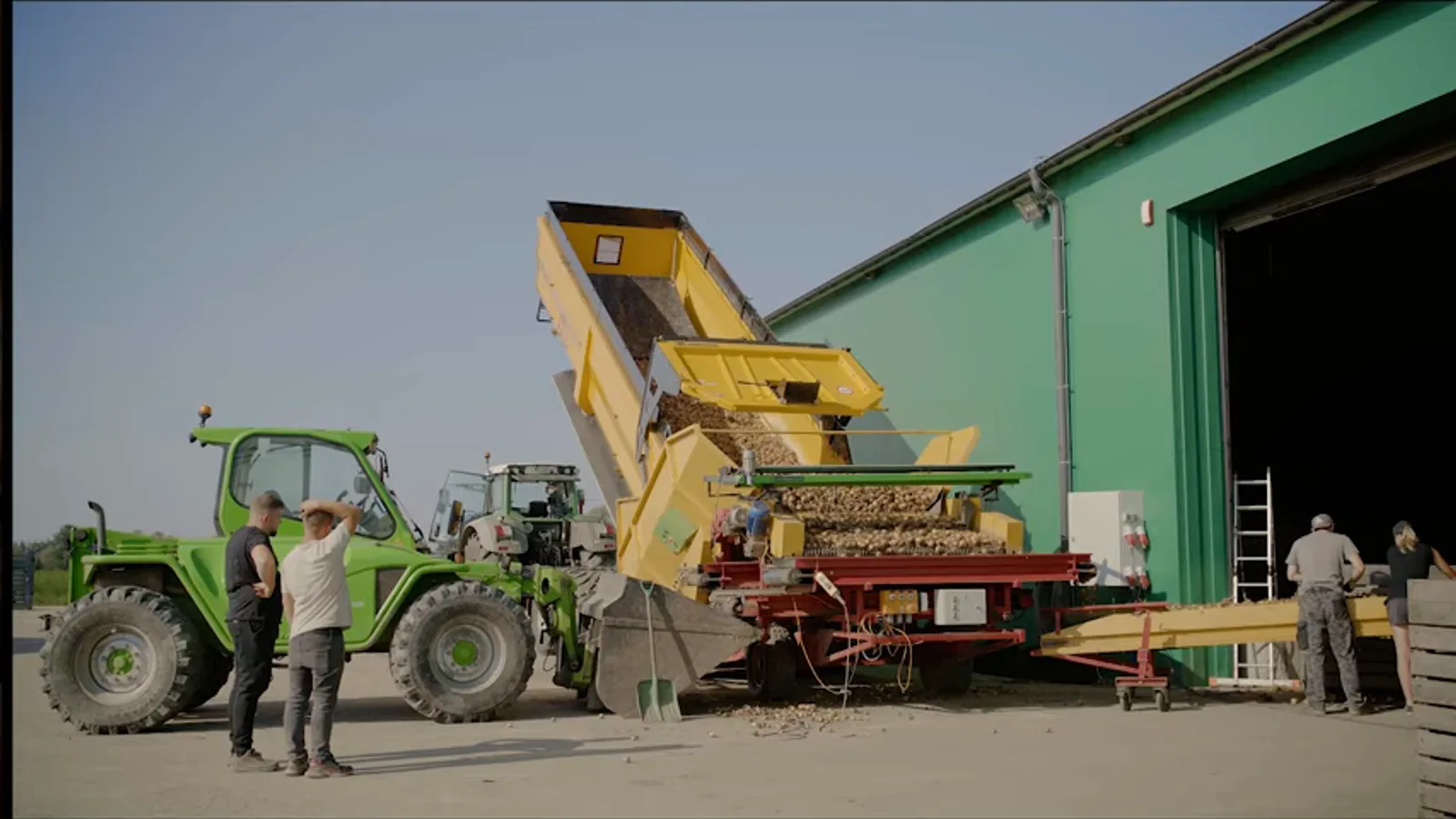
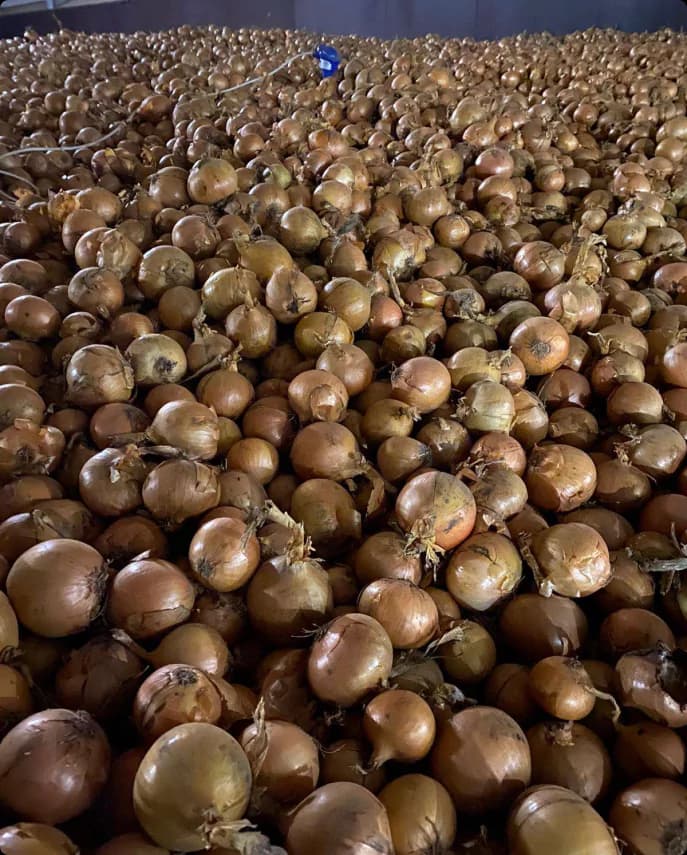
The store is the reason we can plan onion deliveries in February or April too, on a schedule and with batch availability confirmed on an ongoing basis. We cure the harvested onions for 2-4 days to close the neck, and then keep them in the store until the day of release. That way we do not have to sell everything right after harvest, and the buyer does not have to buy in advance.
If an order includes red onions too, we build their schedule separately, because red keeps for less time than yellow. We describe the details in our post red onions wholesale.
Packing house, peeling plant, export: what each one looks for
The same fields give onions for different buyers, but each of them looks at a batch a little differently.
- Packing houses pack onions into net sacks for retail chains. What matters to them is an even, medium size (in trade the most sought-after range is 50-70 mm), dry skin and a uniform colour, because the customer sees the onion through the net.
- Processing and peeling plants prefer bigger bulbs, 60-80 mm and more. Fewer onions per tonne means less work at peeling and less waste. On top of that come firmness and a sound centre, because every soft bulb is a loss on the line.
- Foreign buyers add the requirements of their own market: certificates, labelling and a specification that we agree before the first delivery.
We agree the size boundaries with each buyer individually, because packing houses work on their own sieves and their own net sack standards. How size translates into peeling yield, we show in our guide what onion size for processing.
Sorting, selection and packaging
We sort onions on the DOWNS CropVision optical sorter. Cameras and AI look at every bulb through 360 degrees and reject stones, clods of soil and onions with visible defects, at up to 100 tonnes per hour. Before dispatch we additionally select every batch for firmness, colour and dry skin.
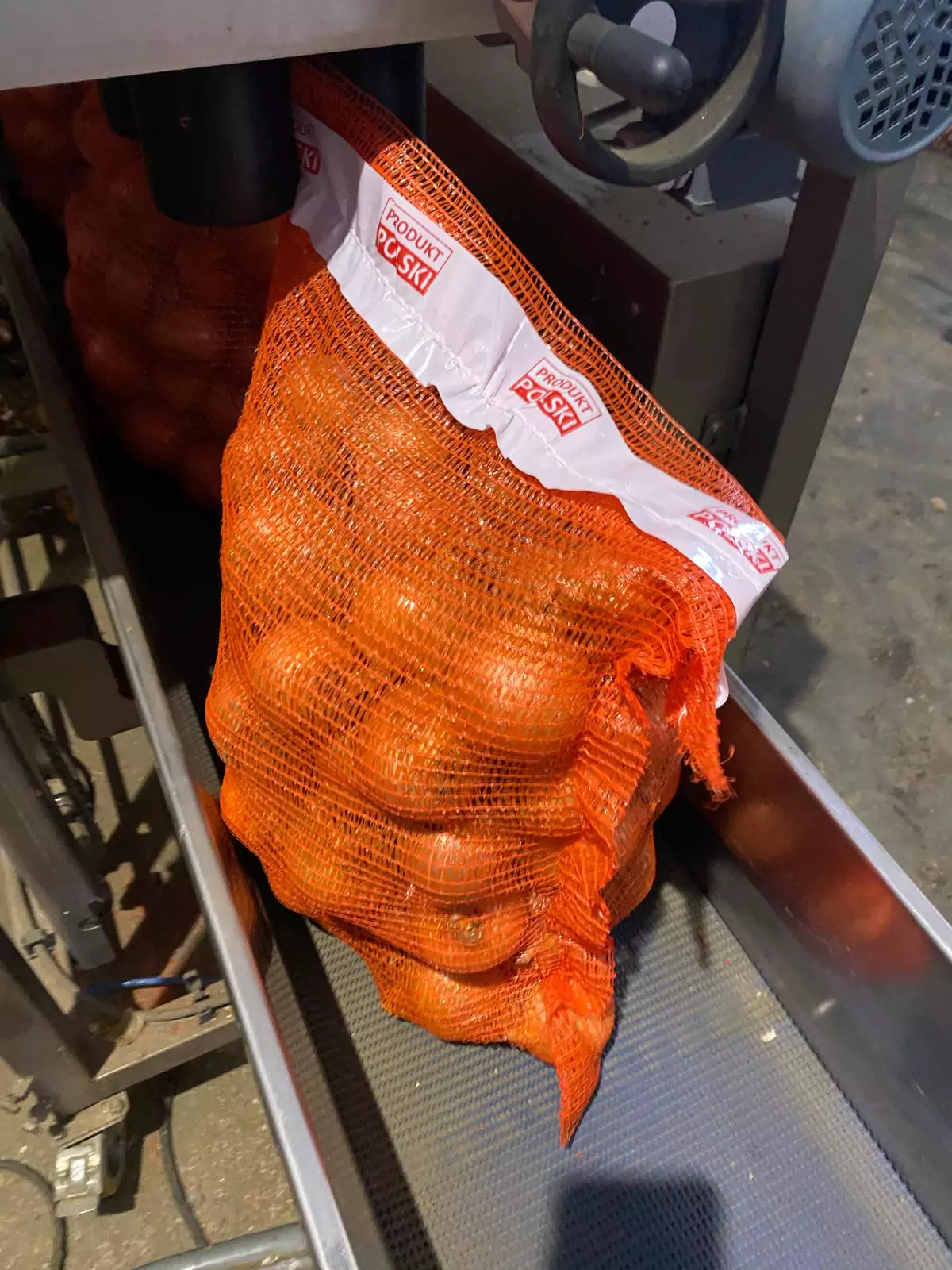
We choose the form of delivery to match what the buyer does with the onions next:
- loose, when the packing house has its own line and packs under its own brand,
- in big bags, when the produce goes on for further processing or repacking in large units,
- in 15 kg, 10 kg and smaller sacks, when the onions are to go from us straight to a wholesaler's loading bay, to catering or to a peeling plant.
Quality, certificates and documents
We produce yellow onions using a technology free of pesticide residues, in line with the principles of Integrated Plant Production. The Ecorobotix ARA spot sprayer recognises weeds with cameras and sprays only where needed, which cuts chemical doses by around 70 percent. We test every batch for pesticide residues, heavy metals and substances hazardous to health.
The farm holds GlobalG.A.P., GRASP, FSA Gold (Farm Sustainability Assessment) and GMP+ certification. Our onions go, among others, to Onix, one of the largest onion suppliers in Poland, which supplies the largest retail chains. You will find the wider picture of working with packing houses and processing plants, together with logistics and export, in our guide wholesale onions from a grower in Żuławy.
How to order yellow onions
It goes fastest when the enquiry includes four pieces of information right away: quantity in tonnes, size grade, form of packaging and the date or rhythm of deliveries. On that basis we check availability, and on request we send a free sample. The price is calculated from current market prices and depends on size, packaging and delivery date.
For deliveries spread across winter and spring, we agree the schedule at the start of our cooperation. It is then easier to plan releases from the store so that every batch reaches the buyer in good condition.
You will find product parameters in our yellow onion offer, and please send your enquiry through the contact form.