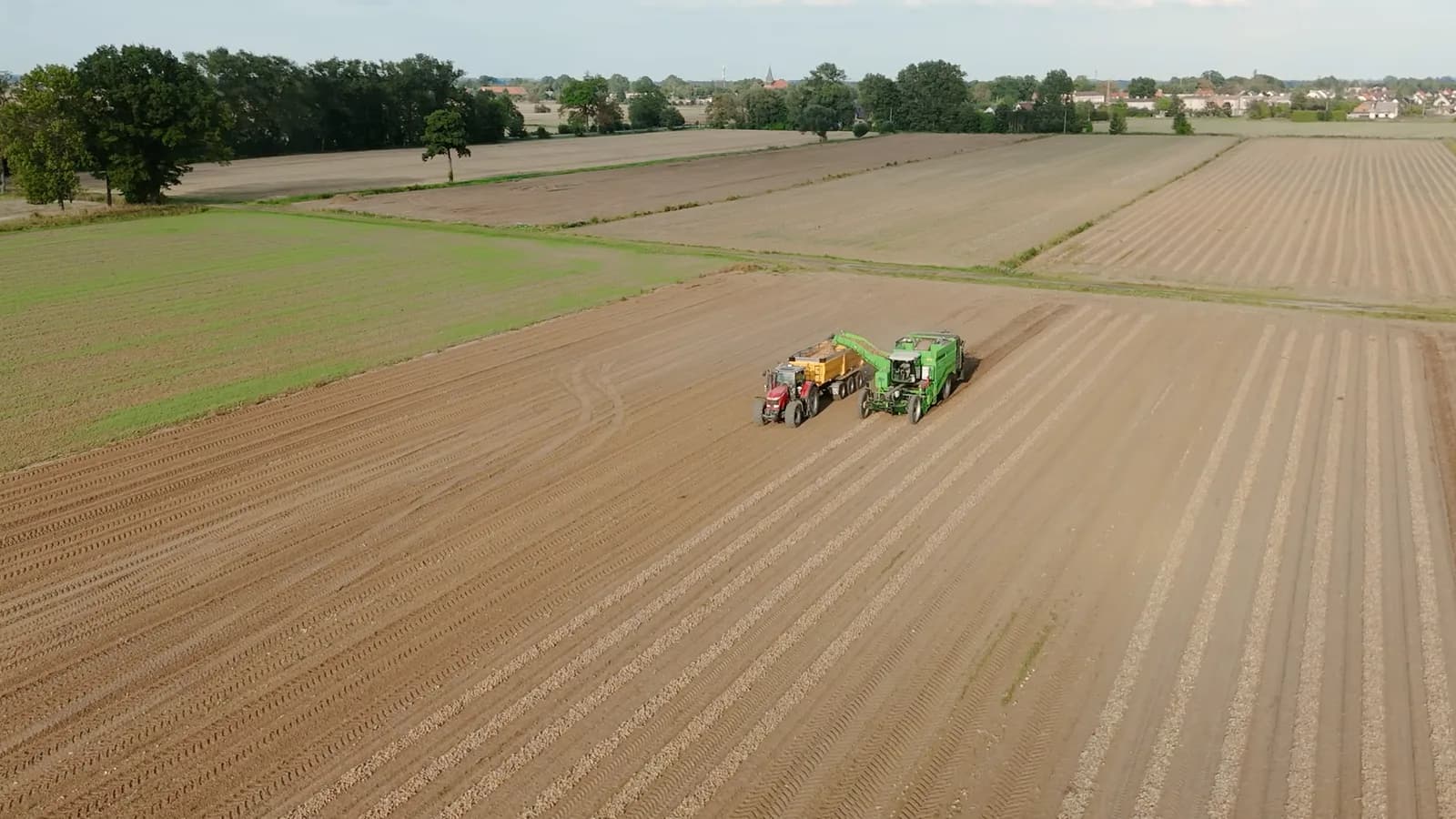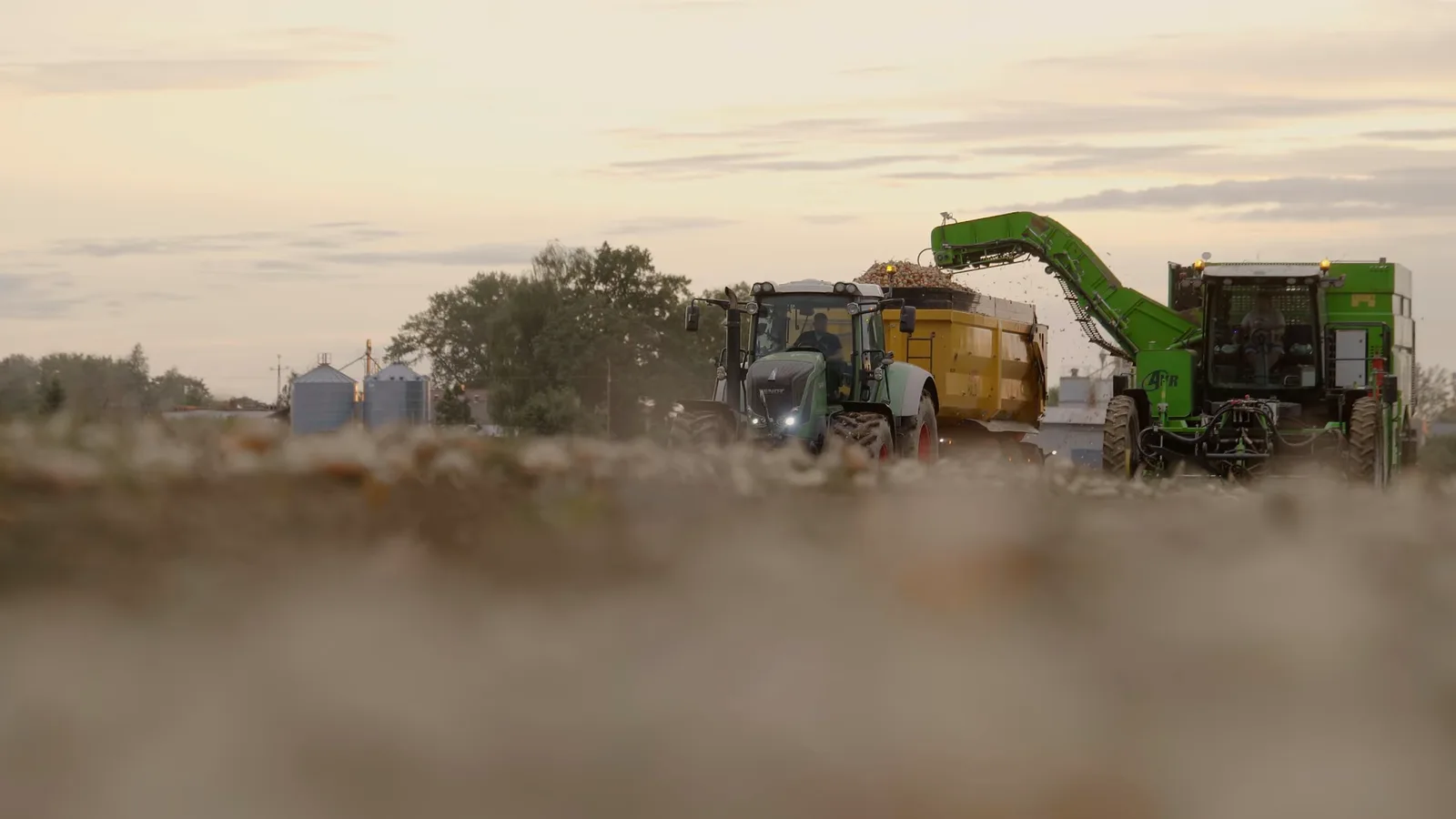
We lift potatoes with a self-propelled AVR Puma 3 harvester. It is a 4-row machine driven by a Volvo engine with 469 hp and an 8-tonne bunker, and it undercuts the tubers, separates them from soil and stones and unloads the crop onto a trailer without ever stopping. In this post we show what a harvest like that looks like here on heavy Żuławy alluvial soil, day after day and often at night too.
What the potato harvest looks like step by step
The harvest starts long before the harvester rolls in. First we destroy the haulm so the skin on the tubers has time to set. Only then can a potato take the transport without peeling at every contact with a sieve.
Then the harvester goes in and the work runs as one continuous line:
- Undercutting. The shares lift four rows at once, along with a layer of soil.
- Separation. Soil falls through the rod conveyors and goes back onto the field, while the tubers travel on.
- Cleaning. Sieves and belts take out the remaining haulm, clods and stones, which alluvial soil never runs short of.
- Sorting. The crew on the picking platform catches whatever got through.
- Bunker and unloading. The clean crop pours into the 8-tonne bunker and from there onto a trailer running alongside on a belt.
Every one of these stages is a chance to bruise a tuber. That is why we set the harvester up for the particular field: dry ground works one way, and ground after rain works another, when the alluvial soil sticks to everything.
Why self-propelled rather than trailed
At our acreage what counts is throughput and how many hours a day the machine is actually lifting rather than standing still.
| Specification | AVR Puma 3 |
|---|---|
| Type | self-propelled 4-row harvester |
| Engine | Volvo, 469 hp |
| Bunker | 8 t |
| Unloading | on the move, onto a trailer running alongside |
| Use | potatoes and onions picked up from windrows |
A self-propelled machine has a single operator, its own all-wheel drive and a cab with a view of the whole working line. It does not need a high-horsepower tractor, which on a trailed harvester spends most of its time simply pulling anyway. It also spreads its weight better, which matters on heavy, damp alluvial soil: we compact less of the ground where next year another crop from our rotation will stand.
Being gentle with the tuber, where a good chip begins
Potatoes do not forgive bruising. A damaged tuber darkens, stores less well and gets rejected during grading at the plant. With chipping varieties such as Innovator and Donata the stakes are high, because the value of a batch is decided by dry matter and chip length, not by tonnage alone. We go into this in more depth in our post on what makes a good chip.
In practice, being gentle comes down to a few decisions: the drop heights between belts, conveyor speeds, how the picking platform is staffed, and filling the bunker rather than dumping into it. The fewer times a tuber falls from a height, the fewer problems the buyer sees later.
We harvest so the tuber falls freely as rarely as possible. Every unnecessary drop is a potential bruise that only shows up weeks later in the store, when the batch is already with the buyer.
Unloading on the move and the night shift
The harvester does not stop to hand over the crop. A tractor and trailer run alongside, the unloading belt feeds the potatoes straight over the side and the harvest carries on. We haul off the field with our own tractors, among them a John Deere 6930 Premium with a tridem trailer, on covers that limit bruising.
We work at night whenever the weather gives us a narrow window. The lights on the harvester illuminate the whole working line, and the operator sees the same as in daylight. The 2025 season was very wet, in July we had 150 to 220 litres of water per square metre, so every dry day was worth its weight in gold. With 87 machines in our machinery fleet, we can move into a window like that with the whole set at once.
The same machine harvests our onions
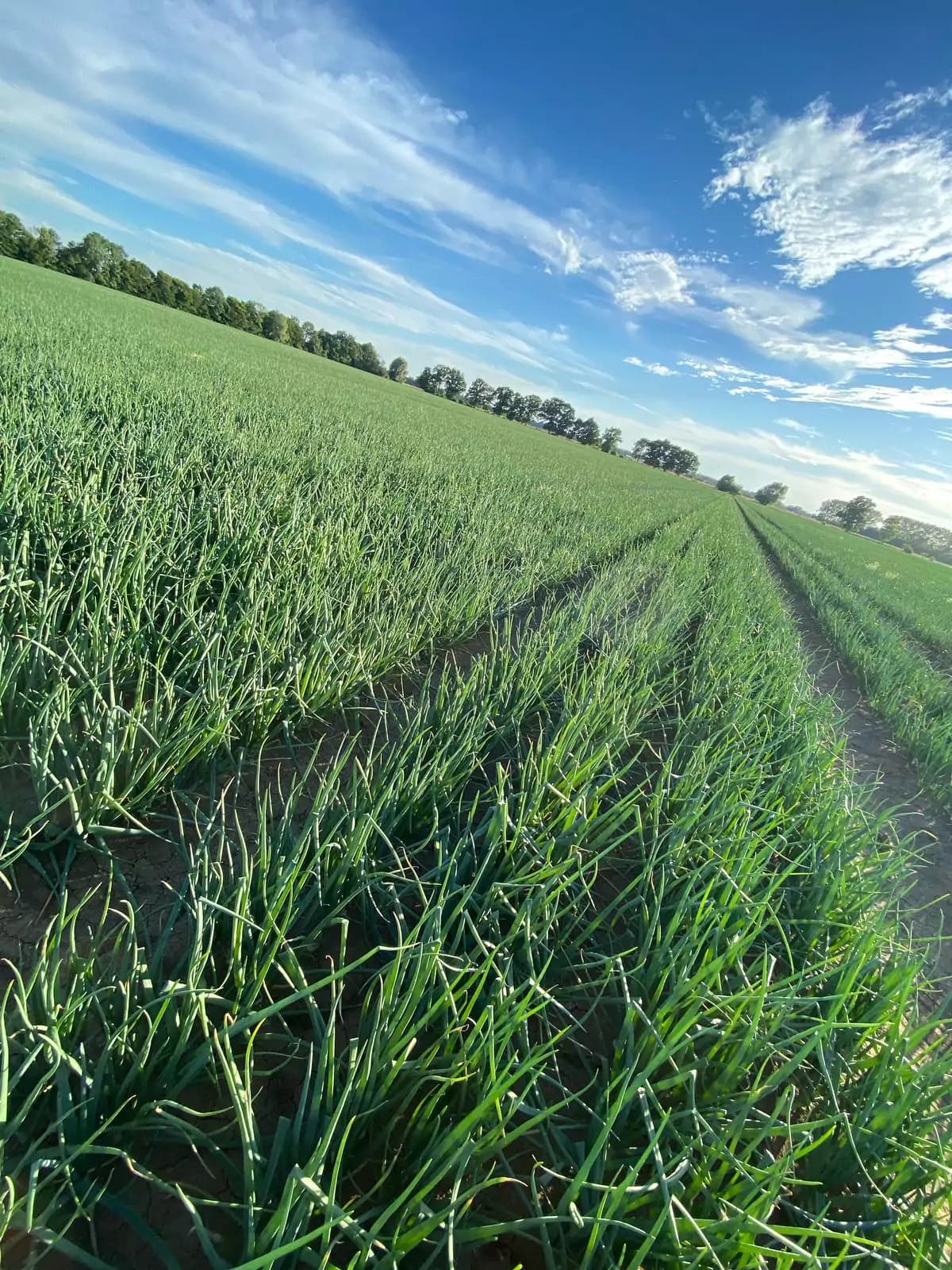
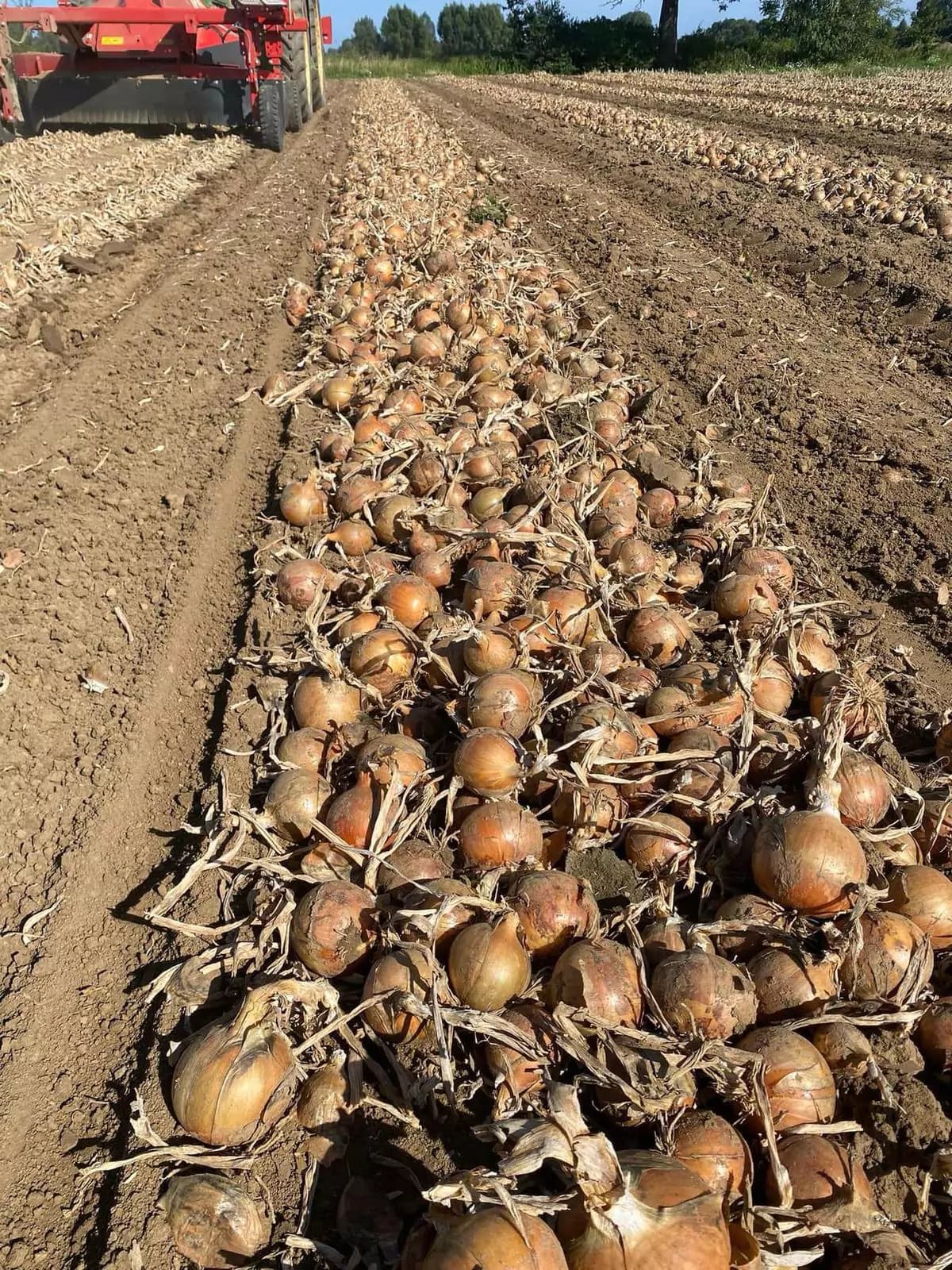
The AVR Puma 3 does not sit idle once the potatoes are in. In onions it works in the second phase of the harvest: it picks up the windrows laid earlier by the Grimme WV 180 windrower and unloads on the move, up to 150 tonnes per hour. We describe the whole process in our post on the onion harvester.
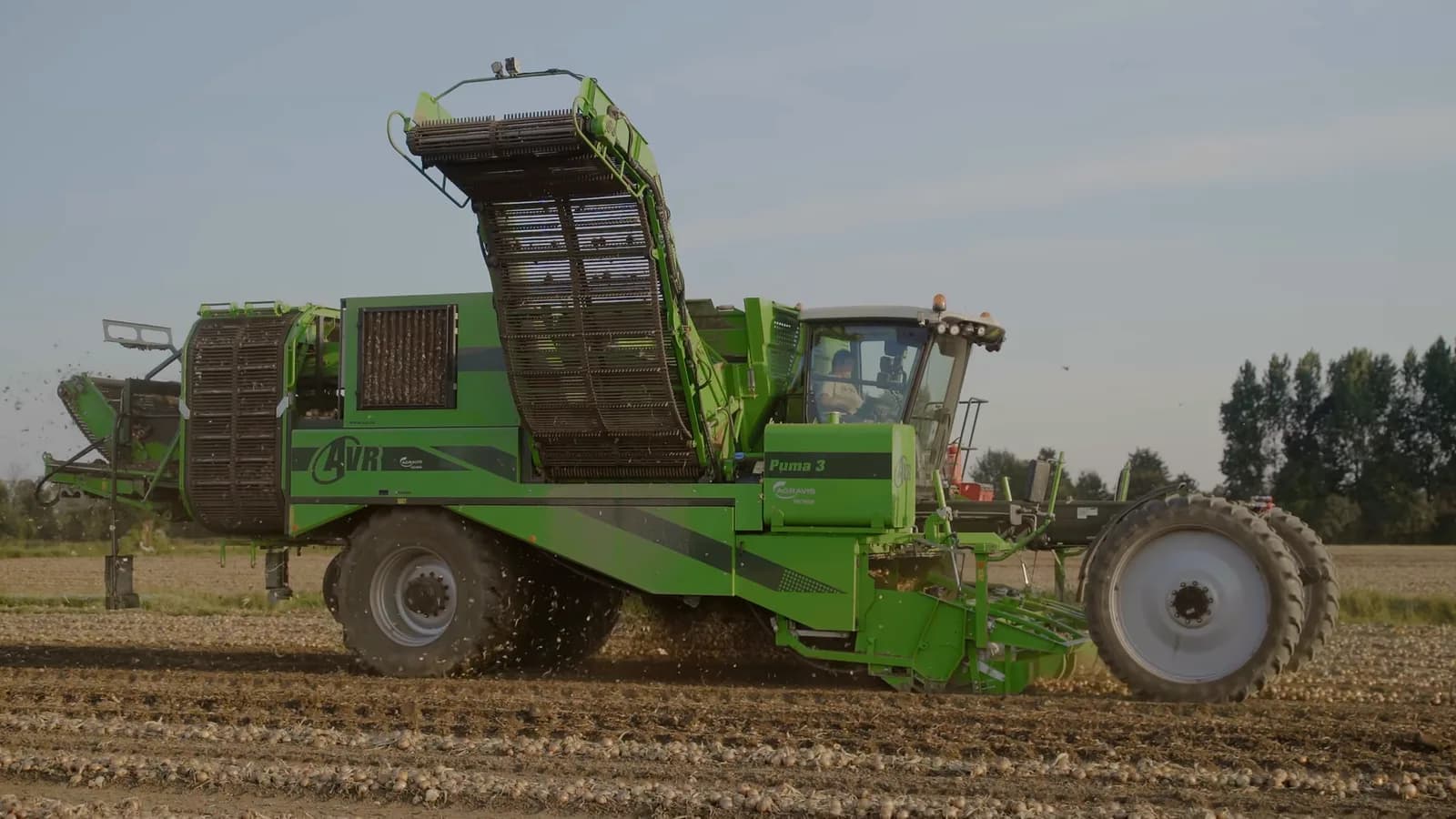
One machine for two crops is not penny-pinching, it is better use of equipment that has to sit on the farm anyway. Potatoes and onions leave the field at different times, so the harvester has work from August into late autumn.
Looking for chipping or table potatoes from a farm that lifts with its own equipment and looks after the tuber from field to pallet? See our potato offer or write through the contact page.