A chip processor looks at two numbers on a potato: dry matter and sugar content. It is those that decide whether the chip will be long, crisp and golden, or watery and dark. For chips we grow above all the Innovator variety, and in this post we explain what those two parameters mean in practice and why this variety holds them steady.
Dry matter: how much tuber, how much water
Dry matter tells you how much of the tuber is flesh and how much is water. The higher it is, the less water has to be driven off during frying. A chip made from a potato with high dry matter fries faster, is crisp on the outside and soft inside, soaks up less fat and falls apart less often. Low dry matter gives a watery chip that goes limp and breaks easily.
The optimal range for chips is roughly 21-25 percent dry matter. Innovator sits in the upper part of that range, which is why it is so valued in industry. On top of that comes a high yield: less water means more finished product per tonne of raw material, which for a plant translates directly into the bottom line.
Reducing sugars and why chips go dark
Sugars work the opposite way to dry matter: here we want as few as possible. During frying, reducing sugars react with amino acids at high temperature. This is the so-called Maillard reaction, the same one that gives bread its colour. In a chip, too much of it is a problem: instead of an even gold you get a dark, patchily scorched colour and a slight bitterness.
Innovator naturally keeps a low level of reducing sugars, so after frying it gives an even, light-golden colour. For a plant this means fewer rejects at grading and a more repeatable result on the line, batch after batch.
Two parameters in one table
| Parameter | For chips we want | What it gives |
|---|---|---|
| Dry matter | high (around 21-25%) | crispness, shorter frying, higher yield |
| Reducing sugars | as low as possible | even golden colour, no scorching |
| Tuber shape | long, oval | long chip, less waste |
| Skin and eyes | light skin, shallow eyes | easier processing, fewer losses |
| Flesh | firm, pale yellow | holds its shape in the oil |
Why Innovator holds these parameters
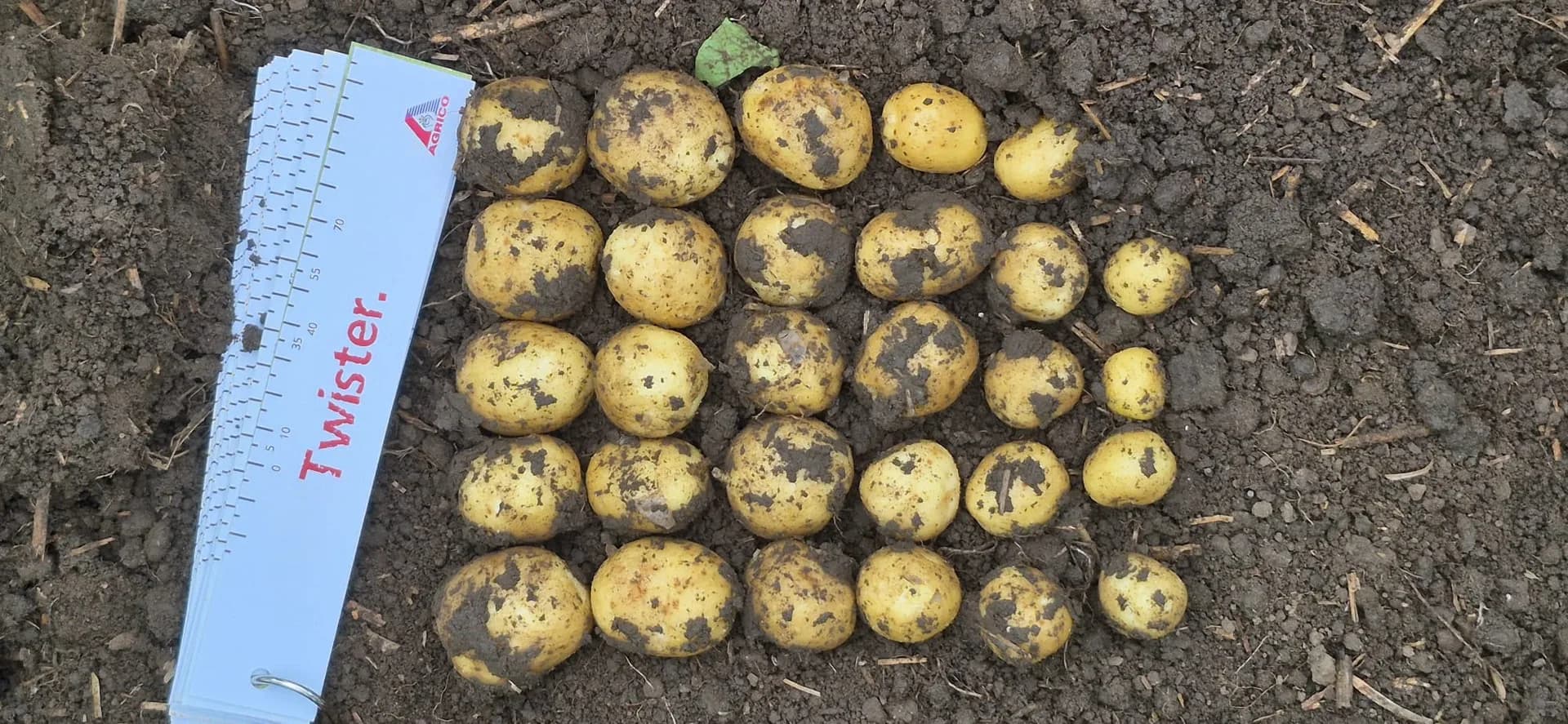
Innovator is a culinary type B variety, general-purpose, with large, oblong, oval tubers, light netted skin and shallow eyes. Its flesh is pale yellow and firm, with a high dry matter content, which is why it performs excellently in industry, especially for chips and crisps.
We chose it not from theory, but from market practice. Innovator is the same variety Farm Frites builds its production on, our partner making chips for a large catering chain. If a serious processor builds its line on it, for us that is a clear signal that for chips it is a proven choice. Alongside Innovator we also grow the Donata variety for chips, and for the fresh market we have table varieties: Twister, Bella Rosa, Joline and Gala. We write more about choosing the variety itself in the post on which potatoes for chips we pick.
Soil and storage: this is where the parameters are settled
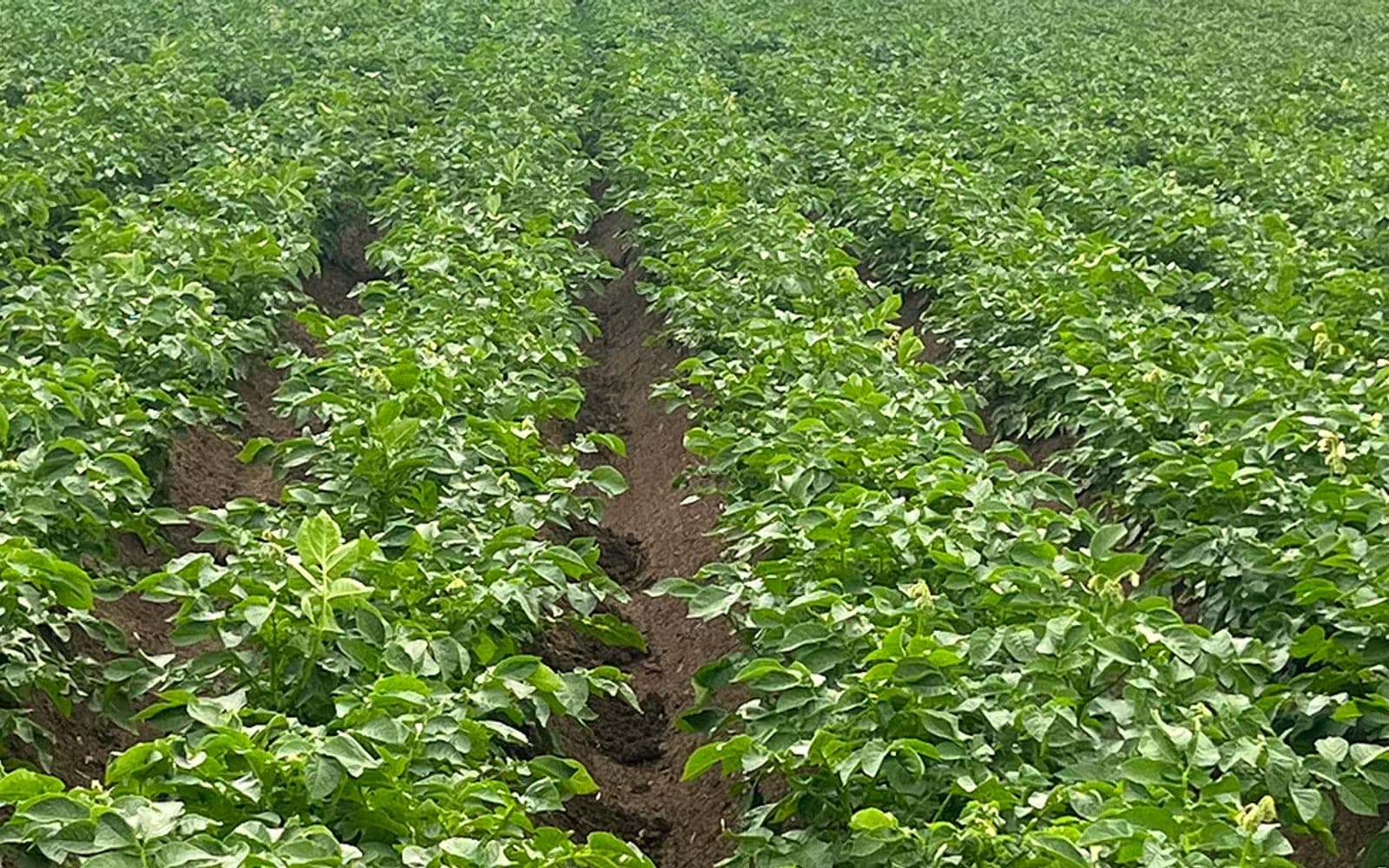
High dry matter starts in the field. We grow potatoes on Żuławy alluvial (silt) soils, heavy and humus-rich soils with parameters close to the Dutch polders. On land like this the tubers build up dry matter well and grow evenly to industrial size grade. Why these silt soils give such a result we explain in the post on the Żuławy alluvial soils behind our vegetables.
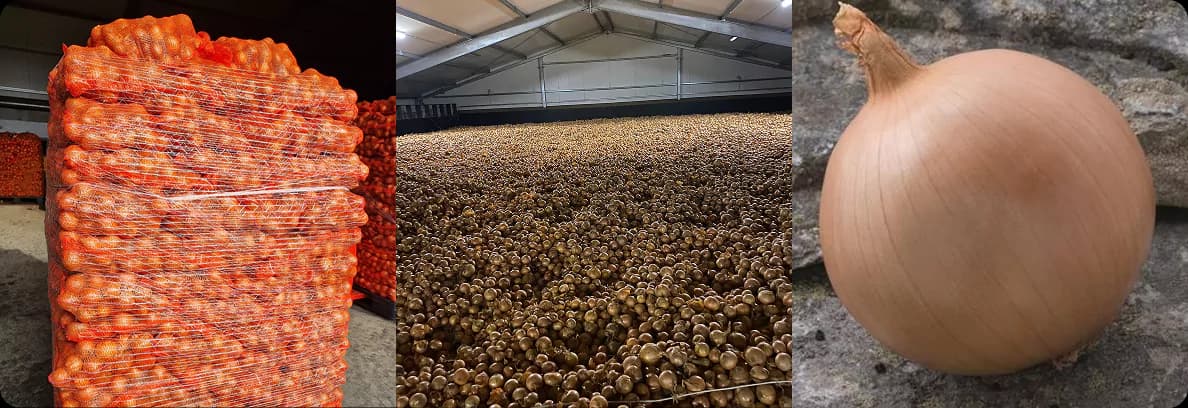
Sugars, in turn, are settled in the storage facility. Stored too cold, a potato starts turning starch into sugars, meaning it sweetens in the cold, and after frying it goes dark. That is why we manage temperatures in the store so the tuber does not turn sugary. This is the same reason we cure and ventilate onions before storage: good storage protects the parameters the buyer looks at.
Dry matter and sugars are not purely theoretical knowledge. They are two numbers the processor checks on arrival, and by which they accept or reject a batch. That is why we watch them from field to crate.
What this means for the processor
For a plant it is not just the tuber that counts, but repeatability. We select potatoes for firmness, colour and dry matter, because those are the parameters the processor looks at. We run the farm with GlobalG.A.P. and GRASP certificates, in line with the principles of Integrated Crop Production, and we test every batch for residues of pesticides, heavy metals and substances harmful to health. For a plant that is not an extra, but a condition of entry.
We deliver wholesale, in a form matched to the buyer: loose, big bags and bags. We also send a free sample so the buyer can assess the tuber and dry matter for themselves. We calculate the price based on current market rates and the parameters of the order. What wholesale cooperation looks like we describe more broadly in the post for wholesale vegetable buyers, and you will find variety details in the potato offer.
Are you looking for an industrial potato for chips in repeatable quality? Write via the contact page or see the potato offer.