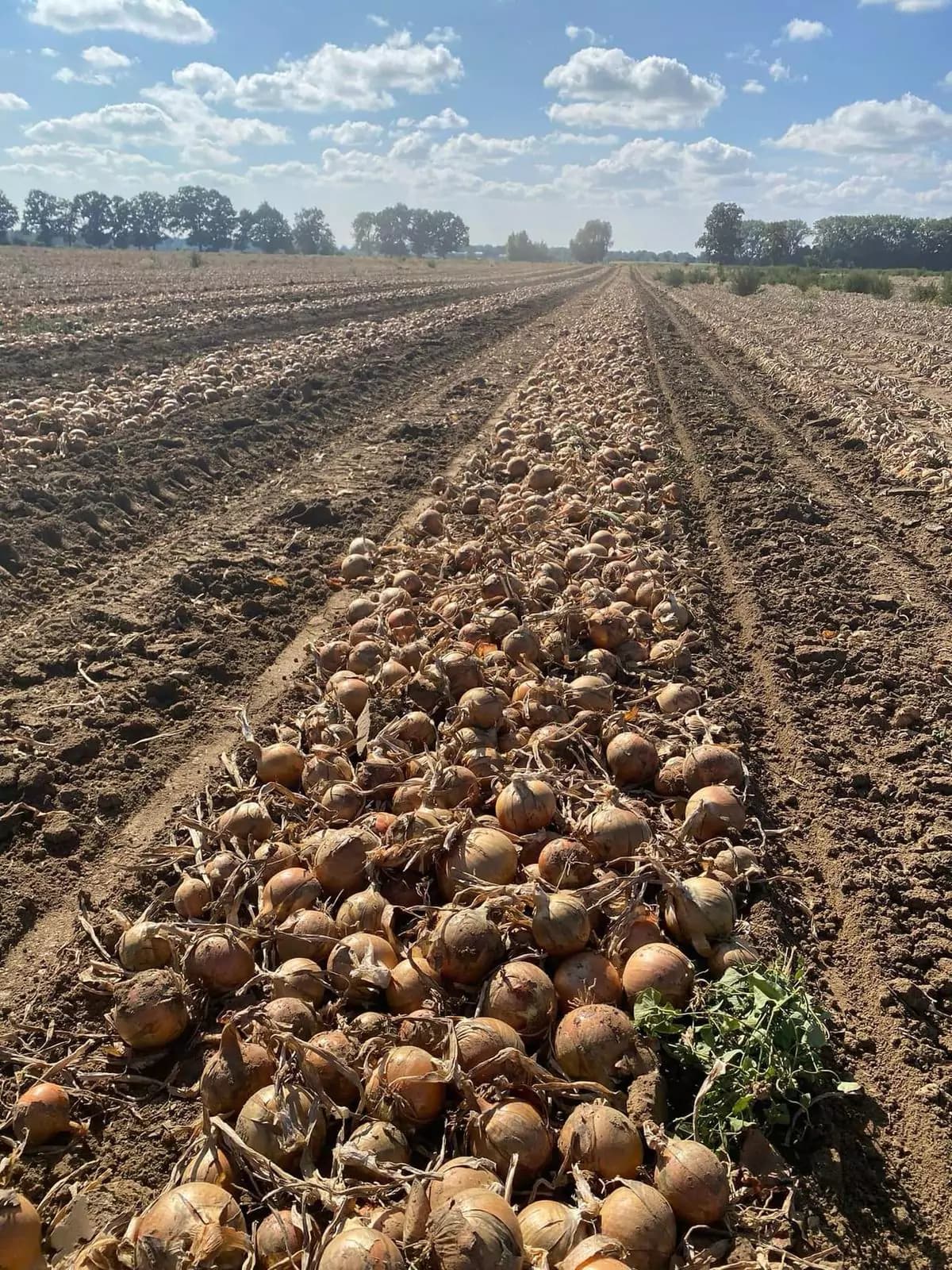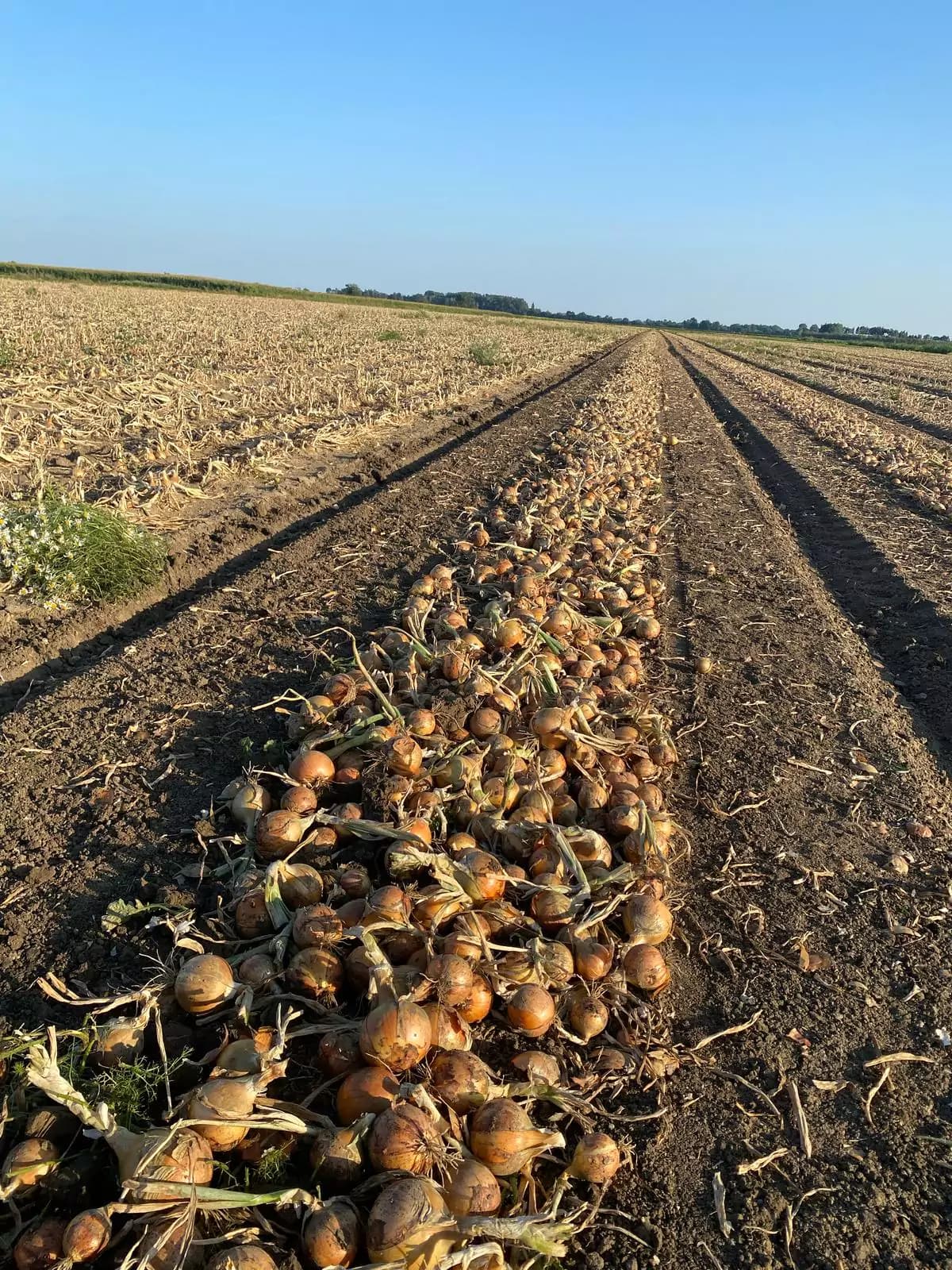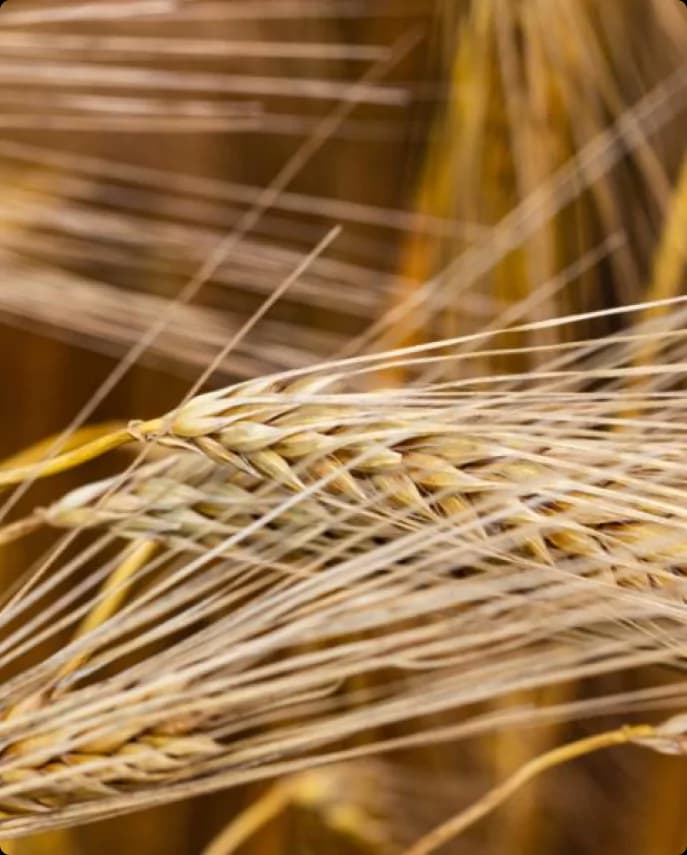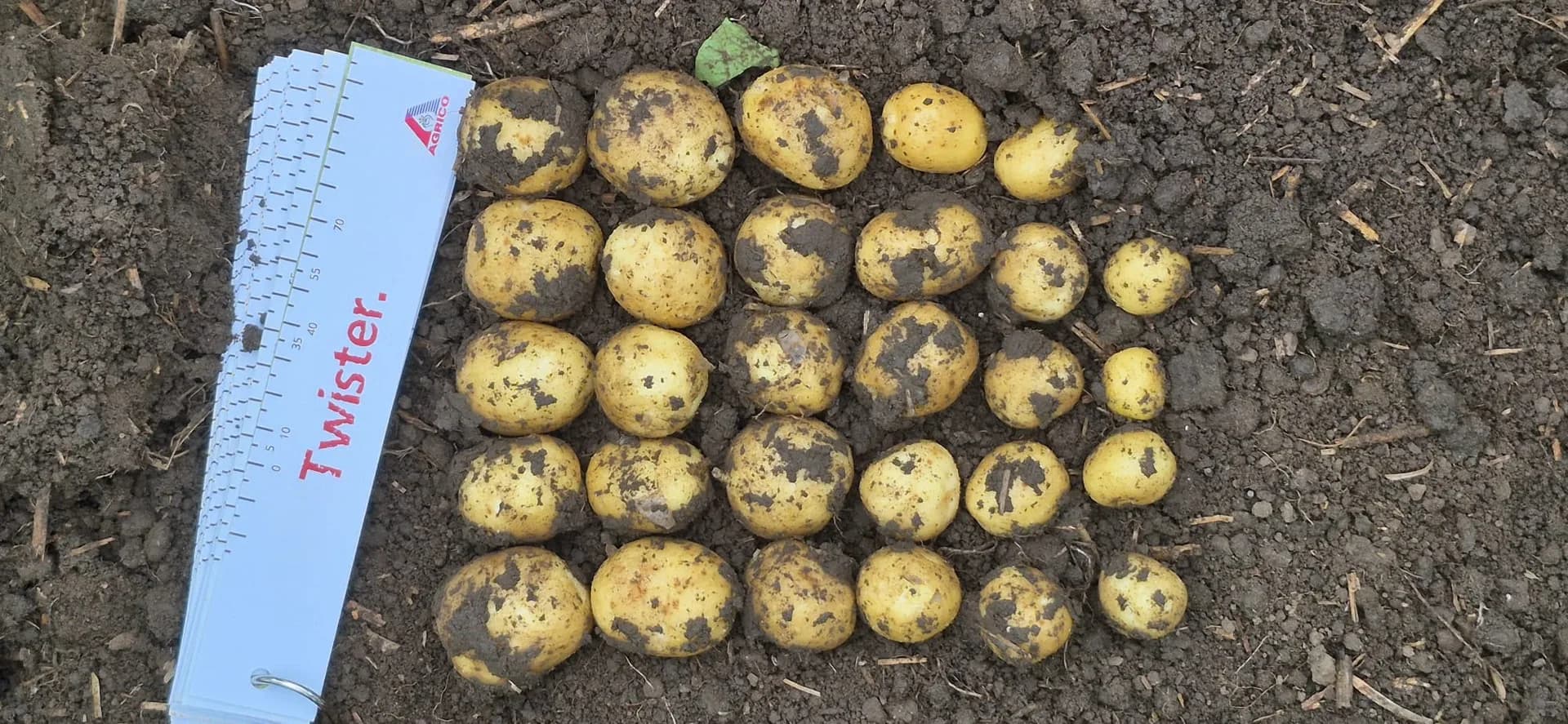
We have farmed in Żuławy for generations, in Wocławy near the Tricity. We started with the crops everybody grows here: cereals and oilseed rape. Today onions take up around 250 hectares, and the whole farm is over 800. That road was not a leap, it was a run of decisions where each one forced the next. We set them out in order, because they explain rather well why we work the way we do. What the growing itself looks like today we cover in our post on onions from Żuławy.
Why onions in the first place
In Żuławy onions are practically not grown at all. The region is associated with cereals and oilseed rape, because those crops go steadily on heavy alluvial soil and do not call for a whole separate fleet of machines. We went into onions for a specific reason: to widen the crop rotation and stop resting the entire farm on one type of conventional crop.
Crop rotation is not textbook theory. Growing the same thing round and round drains the soil and feeds disease. Onions came into the rotation alongside wheat and triticale, and it quickly turned out they do better on our land than we had assumed. How we plan that rotation today is in our post on crop rotation with onions and cereals.
How the area grew
The first year was 2.5 hectares. We learned the crop on a small patch, because onions forgive less than cereals do: they leave the soil profile open all season, they are sensitive to water and to late weeds, and the result hangs on a handful of well-judged dates. The years that followed ran on a simple rule: we only add area once we are keeping up on quality.
| Stage | Onion area |
|---|---|
| The start, a trial crop | 2.5 ha |
| First serious step up | 30 ha |
| Steady production | around 50 ha |
| The 2025 season | 150 ha |
| Today | around 250 ha |
At a yield of roughly 60 tonnes per hectare, that is an entirely different conversation with a buyer. It stops being about selling a batch and starts being about a schedule for the whole season. How much actually comes off a hectare, and what that depends on, we set out in our post on how much onion we harvest per hectare.
The soil that made it possible
Żuławy mada soils have parameters comparable to the polders in the Netherlands: plenty of humus, good structure, high nutrient content. It is depression land, drained, demanding to manage, but it gives a yield that lighter soil simply will not. Onions pick up size and firmness on it, and potatoes pick up dry matter.
That same soil can also turn against you. The 2025 season was very wet: in July we had 150-220 litres per square metre in a day, drainage channels overflowed, the soil compacted and the crop finished off less well. Years like that show that good soil on its own is not enough, you need technology and a storage facility. Why mada soils give the better result we explain in more depth in our post on Żuławy soils for onions.
The machines had to keep up with the field
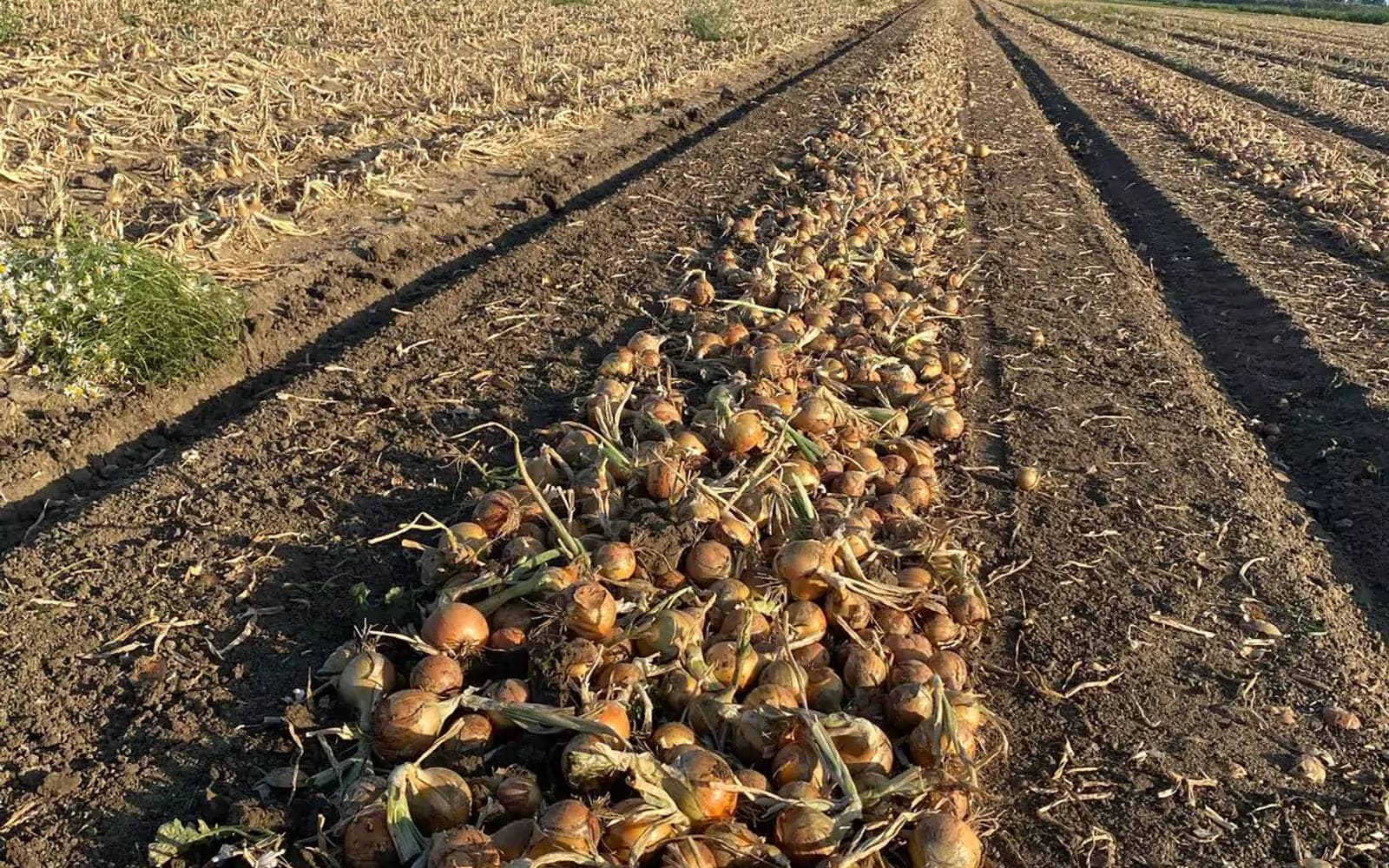
Onions forced a separate machinery park on us. Today we have 87 farm machines, and that is not a collection, it is what the scale demands: 250 hectares of onions have to be undercut, lifted, hauled and sorted inside a narrow weather window.
- the Grimme WV 180 onion windrower, which undercuts the onions and lays them in windrows to dry
- the self-propelled AVR Puma 3 harvester, four rows, an 8-tonne bunker, lifting up to 150 tonnes per hour with unloading on the move
- Fendt Vario and John Deere tractors, including the tracked 8RX 410, which compacts wet mada soil less
- the Ecorobotix ARA spot sprayer with cameras and AI, which cuts our chemical doses by around 70 percent
- the DOWNS CropVision optical sorter, a 360-degree scan, up to 100 tonnes per hour
- guidance on GPS Trimble with RTK correction, and variable rate fertiliser application
The whole fleet, with what we use each machine for, is in our machinery park.
The storage facility changed how we sell
The biggest change, though, was not the harvester but the storage facility for around 13,000 tonnes. Without one, a grower sells when he has to, meaning together with the whole market right after harvest, when the price is at its lowest. With one, he sells when he wants to.
Before the onions go into store we cure them for 2-4 days, so the moisture comes off and the neck dries down. After that we control temperature and ventilation, so the produce comes out firm in February and in May too. That is why we have onions available all year round, and the buyer gets deliveries in batches instead of one mountain of produce in September. How we run it is in our post on onion storage.
The order mattered. First we learned the crop on 2.5 hectares, then the machines came, and only at the end the storage facility and the packing line. The other way round would not have worked: a big shed will not fix a badly managed field.
How we back up the quality
Scale without paperwork does not open the doors to large packers and plants. We run the farm with GlobalG.A.P., GRASP, FSA Gold (Farm Sustainability Assessment) and GMP+ certificates, in line with the principles of Integrated Plant Production. We produce free of pesticide residues, and we test every batch for pesticide residues, heavy metals and substances hazardous to health.
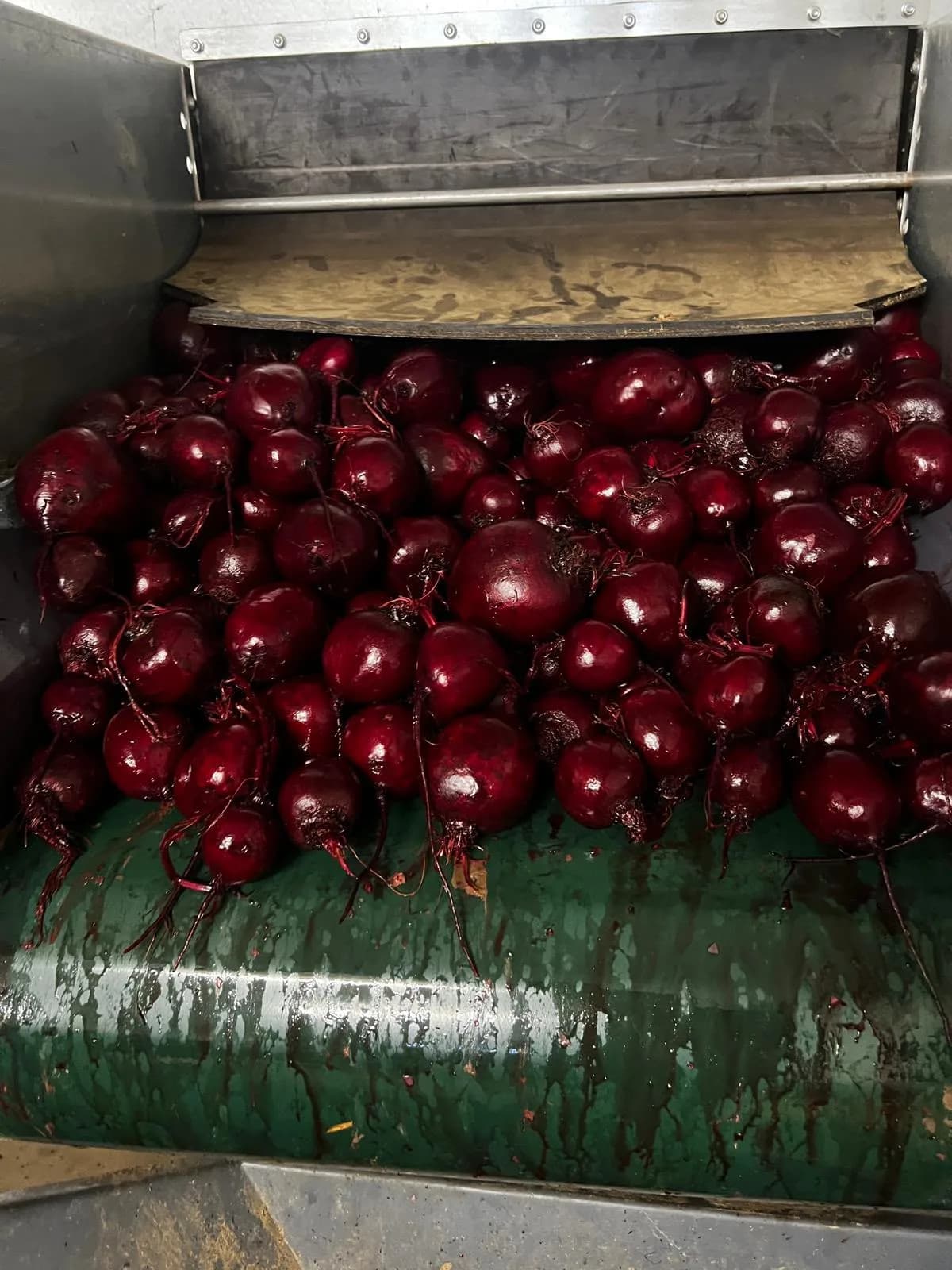
Our vegetables reach market leaders such as Onix, Farm Frites and FreshPol, partners supplying the largest retail chains and processing plants in Poland and Europe. Today we have eight items in the offer: yellow onions, red onions and onions from sets, potatoes, beetroot, green peas, wheat and triticale.
What we do beyond our own fields
Every year we host onion workshops with our partners. We show the field, the storage facility and the line, and we talk about varieties and about what did not work out in a given season. Sharing knowledge comes back to us with interest, because we learn most from people doing the same job in different conditions. What they look like we describe in our post on onion workshops.
For the technology we received a nomination in the "Innowacyjny Farmer" competition (farmer.pl, technology category). We treat it as confirmation of the direction, not a finish line: in our area we are practically the only ones growing onions on this scale, so there is no neighbouring blueprint to copy.
Do you want to buy vegetables directly from the farm that grows them? Write to us through our contact page or take a look at the onion offer.