We started with 2.5 hectares of onions. Today we grow around 250 hectares and are practically the only farm in the area doing it at this scale. The road took us years and taught us more than any textbook, so we describe it step by step: what unlocked each jump in area, and what we would do differently today.
Why we went into onions at all
The reason was prosaic: crop rotation. We did not want to base the farm only on conventional crops, meaning cereals and oilseed rape, because that makes the whole year's result depend on two markets. Onions gave us a chance to diversify, and the Żuławy mada soils, humus-rich and fertile like the soils of the Dutch polders, were asking for vegetables.
There was one more argument: practically nobody grew onions in Żuławy. Where others saw risk, we saw an open niche. On Żuławy onions are practically not grown, and in our area we are practically the only ones growing them at this scale, so every hectare we learned built our advantage.
Five thresholds we had to cross
Looking back, we can see clearly that the growth was not smooth. It was made of thresholds, and each one needed a different investment:
| Stage | Onion area | What unlocked the next step |
|---|---|---|
| Start | 2.5 ha | learning the crop: varieties, protection, harvest |
| Momentum | 30 ha | the first serious mechanisation of sowing and harvest |
| Stability | ~50 ha | the storage facility and regular wholesale buyers |
| The jump | 150 ha (2025 season) | a self-propelled harvester and a full technological line |
| Today | ~250 ha | 13,000 t storage, an optical sorter, spot spraying |
The most important lesson in this table: scaling onions is not "more of the same". On 2.5 hectares you solve problems with your hands and your time. On 250 hectares every process, from sowing to the invoice, has to work as a system, because a mistake multiplies a hundred times over.
The machines had to grow with the field
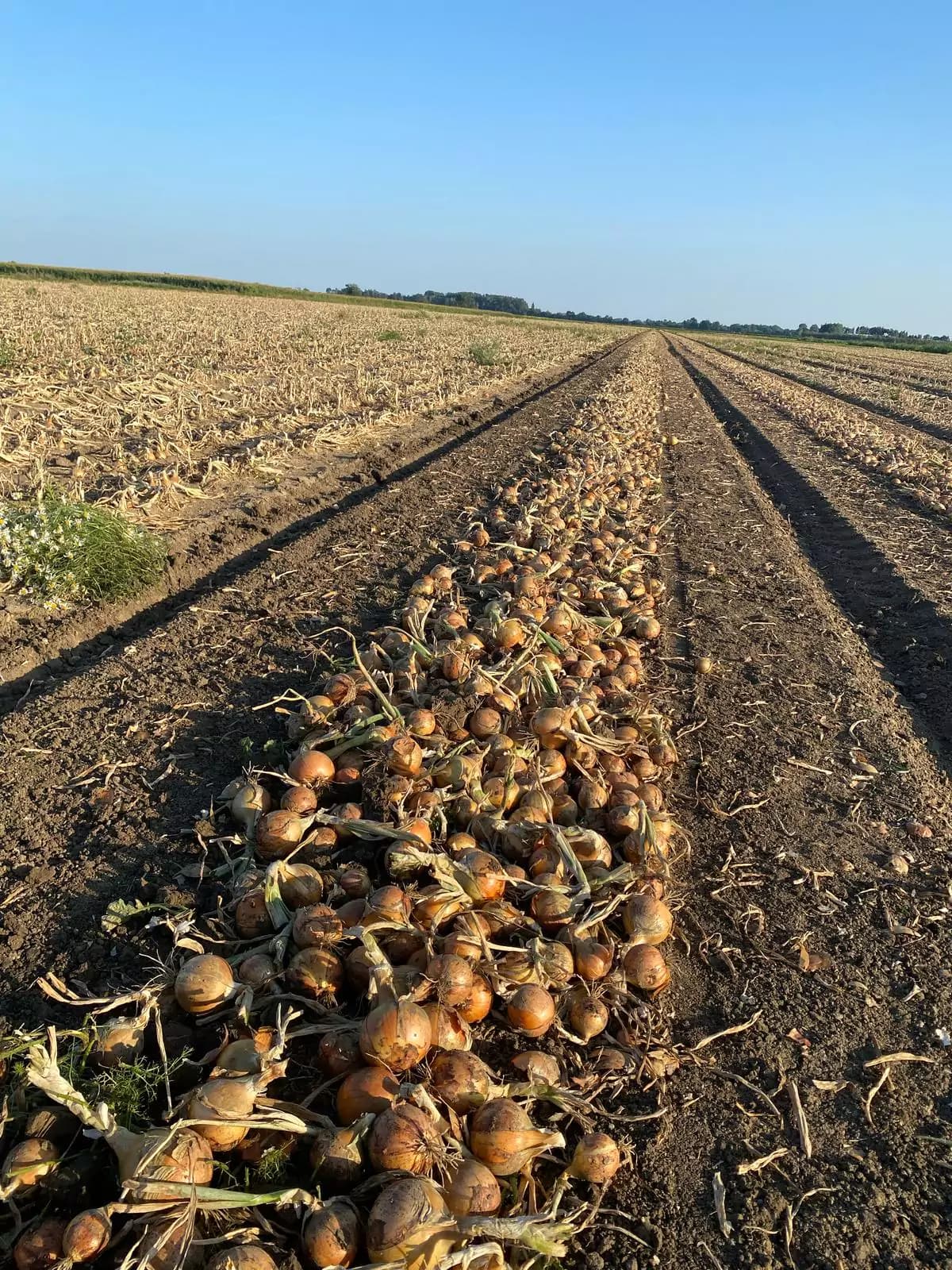
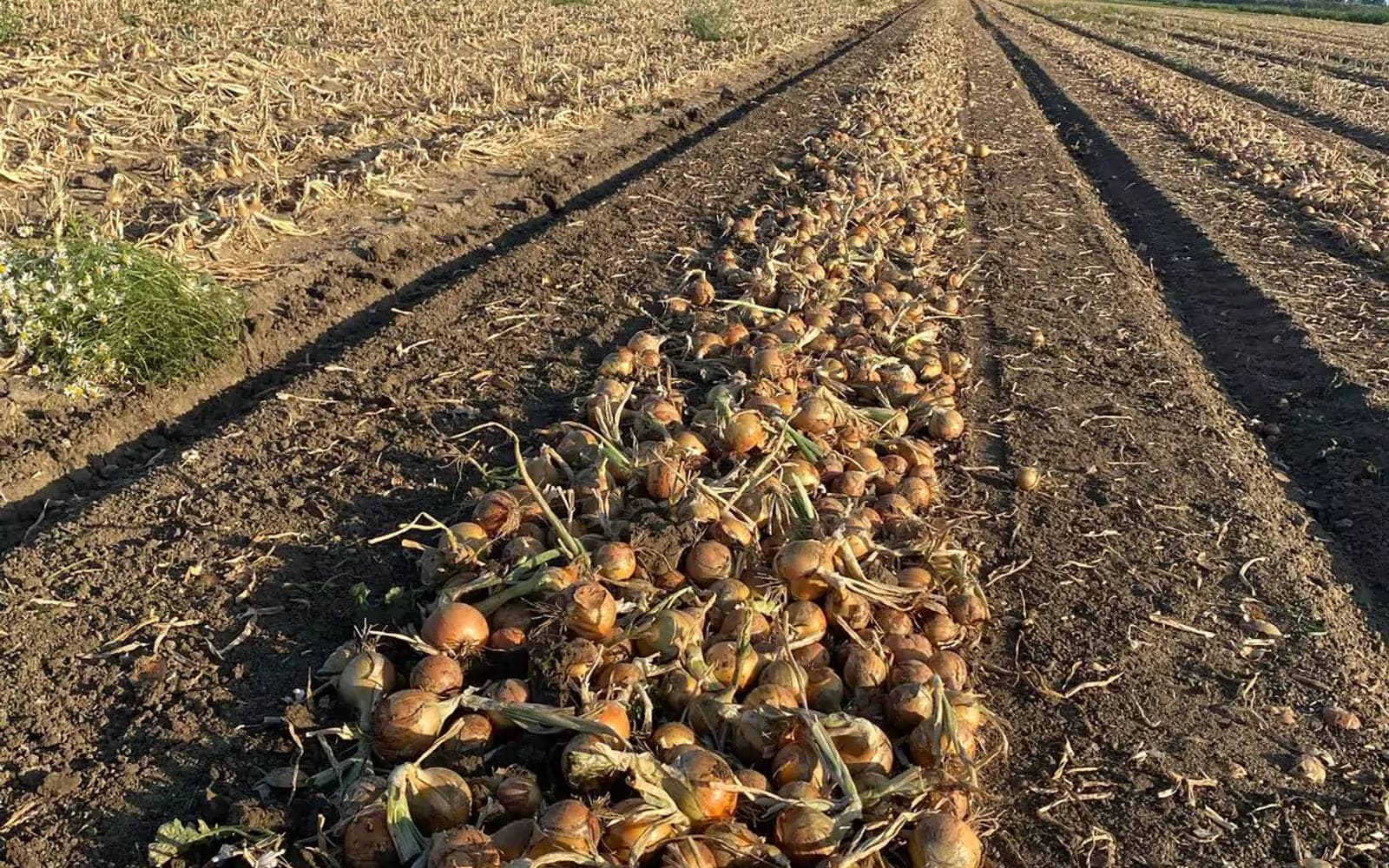
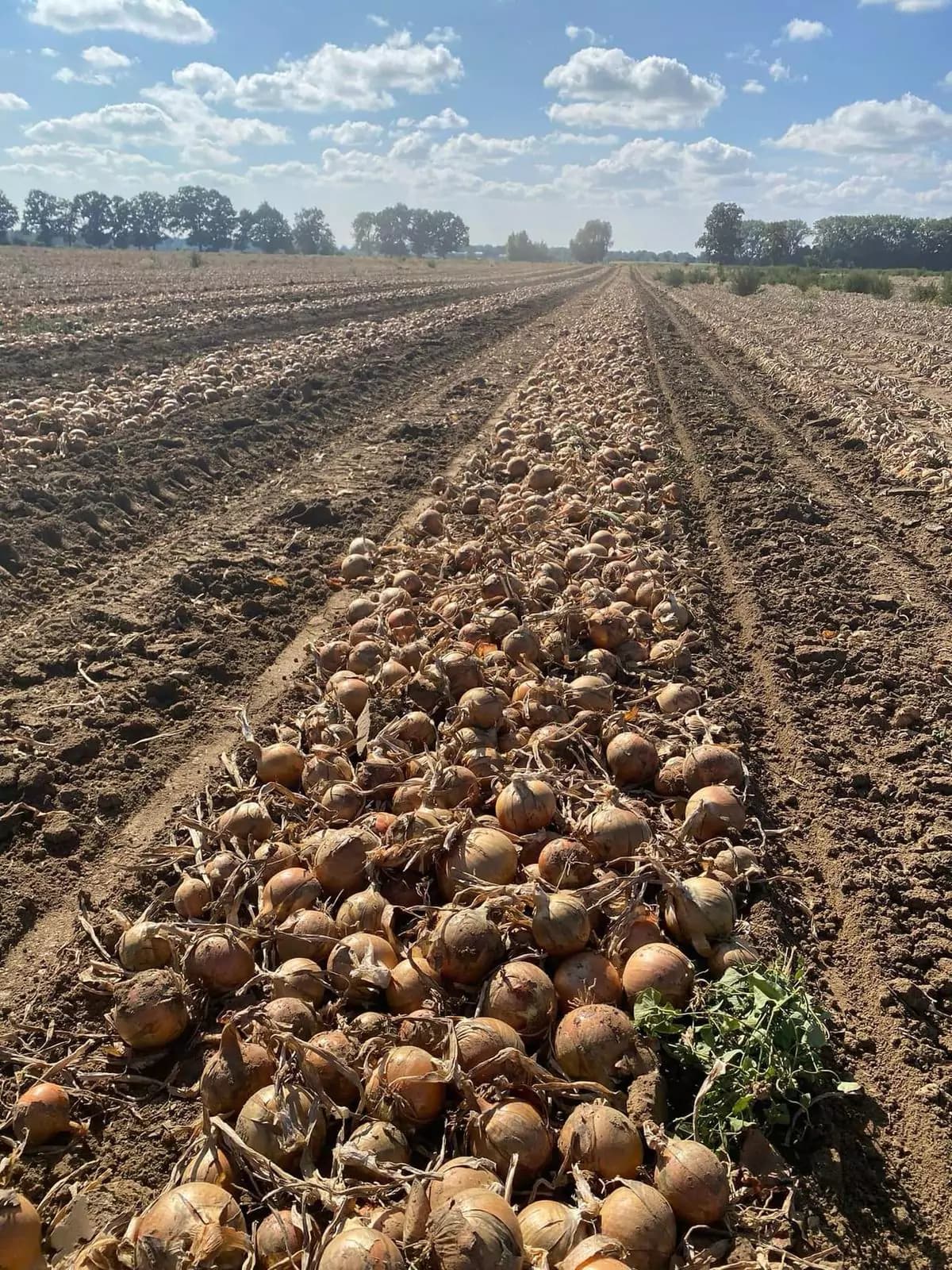
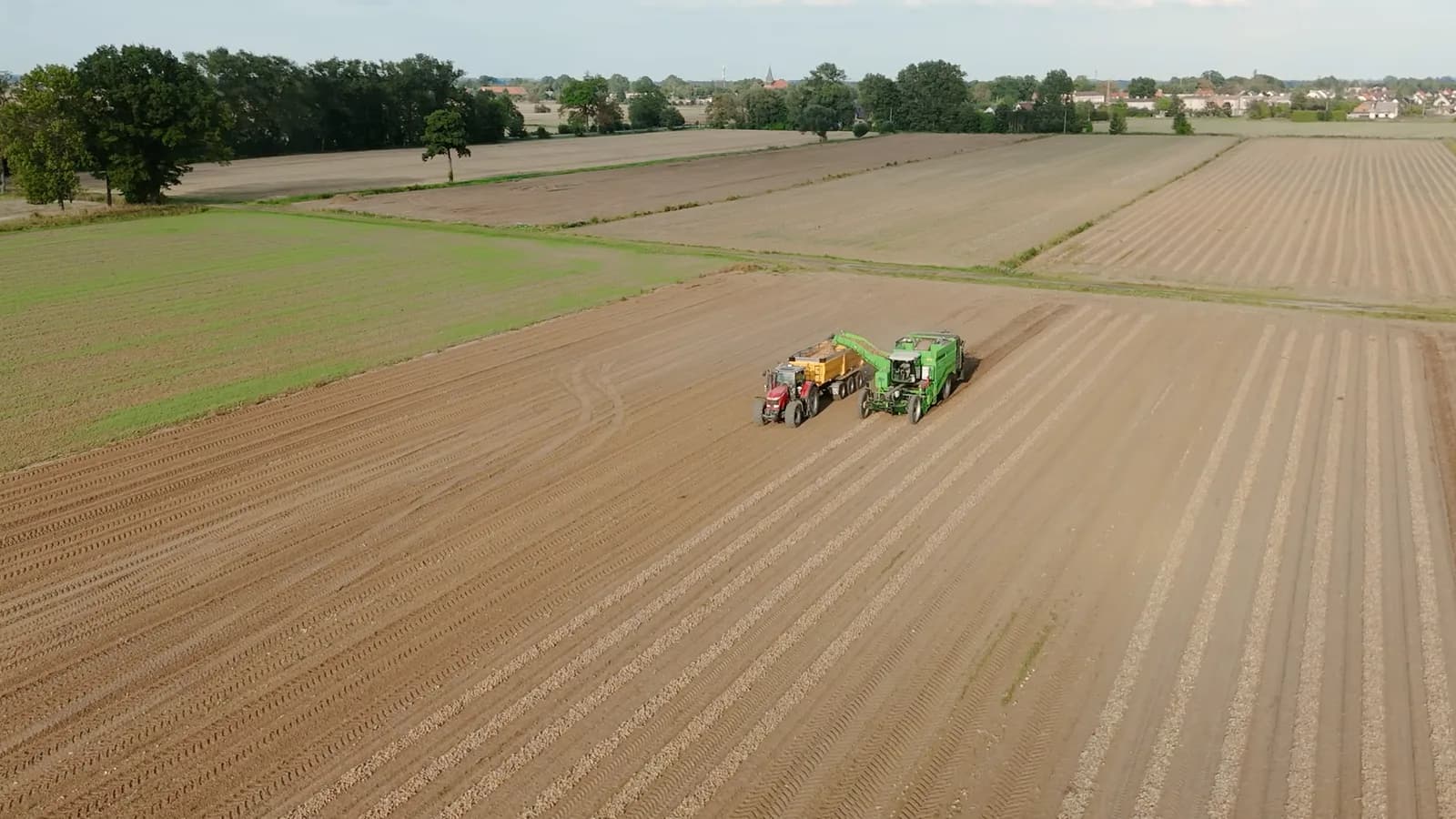
On a small area you can organise the onion harvest with simple kit. On a large one, everything hinges on the throughput of the chain: the Grimme WV 180 windrower lifts the onions and lays them into windrows, and the self-propelled AVR Puma 3 harvester picks up the dried windrows from two rows at once, at the peak of the season up to 150 tonnes per hour, unloading on the move onto trailers.
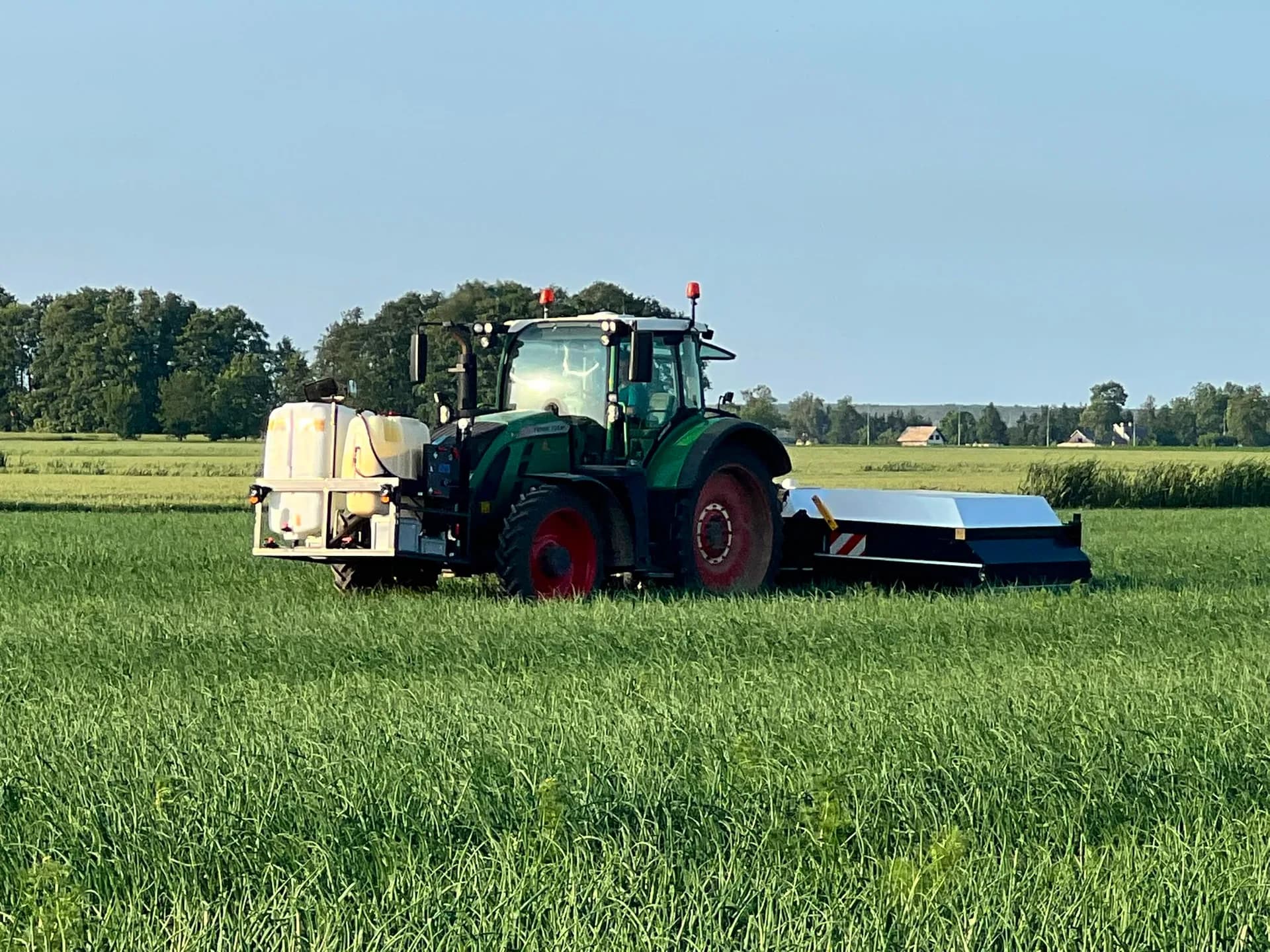
On top of that came precision farming: GPS with RTK correction, parallel guidance and variable rate application, and in crop protection the Ecorobotix ARA spot sprayer, which cuts product use by around 70 percent. Today our park counts 87 machines, and they are the reason 250 hectares of onions runs more smoothly now than 30 once did.
The storage facility turned us from a farmer into a supplier
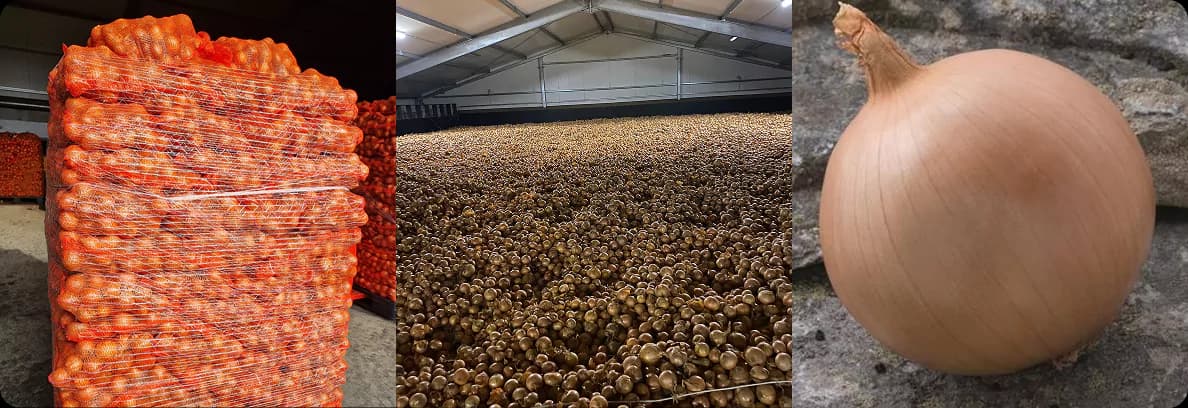
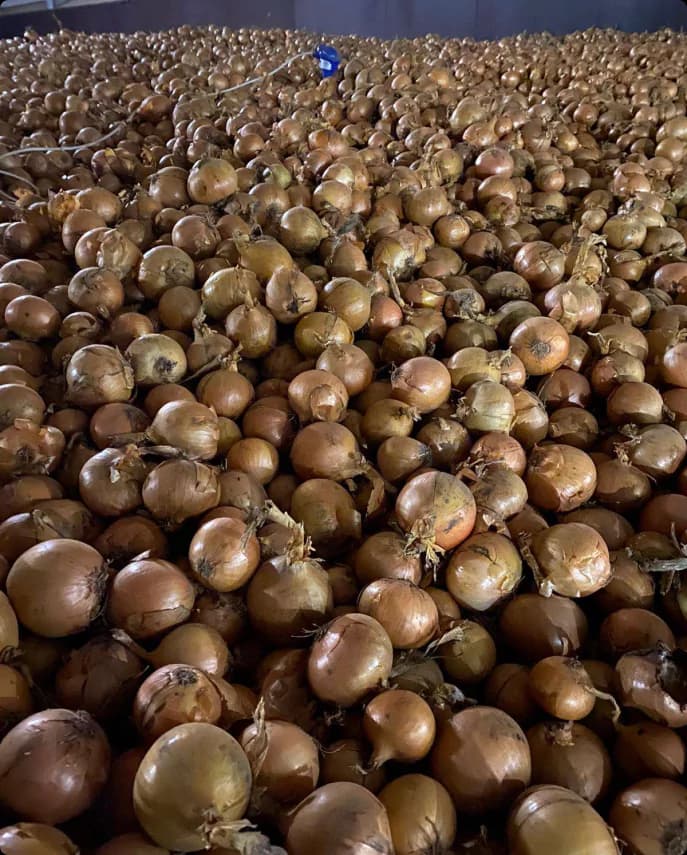
The biggest business change was not any field machine, though, but the storage facility. As long as the onions have to be sold straight off the field, the price sets itself in season, when supply is at its highest. The 13,000 tonne storage facility reversed that: we steer sales all year round, deliver batches when the buyer needs them, and never have to sell under pressure.
Scale also forced changes after harvest. Freshly received batches are cured with warm air for 2-4 days, and the DOWNS CropVision optical sorter scans every onion through 360 degrees and rejects stones, clods and defects at up to 100 tonnes per hour. At these volumes, manual selection simply stopped being possible.
Thanks to this, together with the onions grown from sets harvested in early summer, we have onions available all year round. It is that continuity, not the area itself, that made us a partner for large packing houses and processing plants.
What 250 hectares taught us
If we had to name three things that decided the outcome, they would be:
- patience in scaling: we first worked through each area threshold technologically, and only then added hectares,
- quality as a system, not a sprint: the optical sorter, testing of every batch and the GlobalG.A.P., GRASP and FSA Gold certificates mean quality does not depend on a single person,
- sharing knowledge: our annual onion workshops with partners pay back in relationships that last longer than a single transaction.
Our whole field playbook, from variety to harvest, is in our post on how we grow onions in Żuławy. And if you are looking for a supplier who has this scale already worked through, take a look at the onion offer or write to us through the contact form.