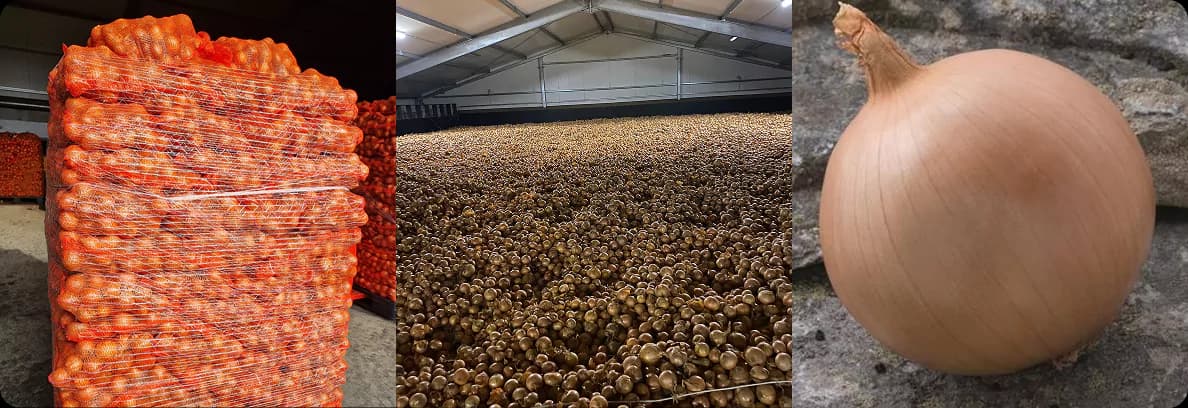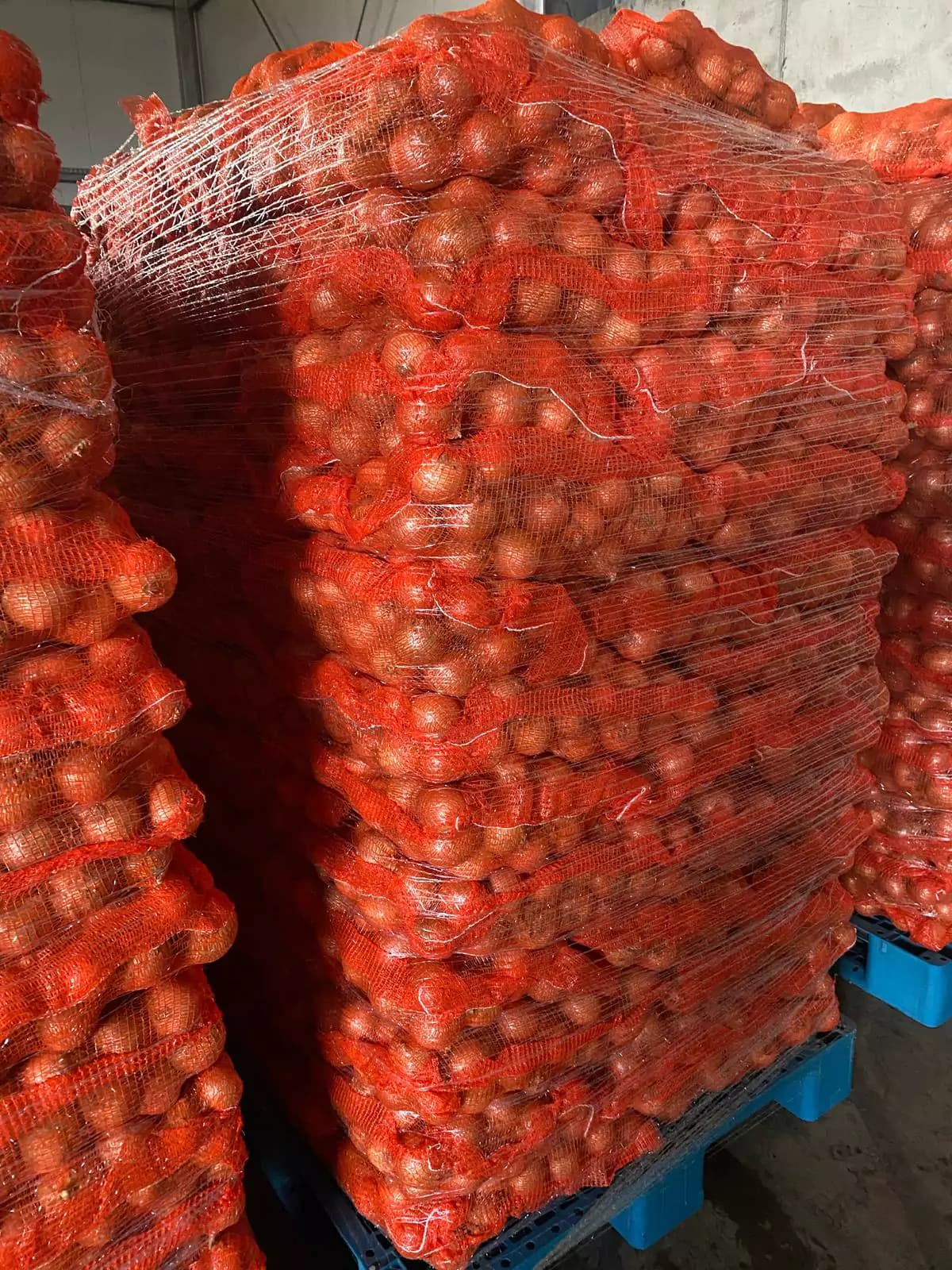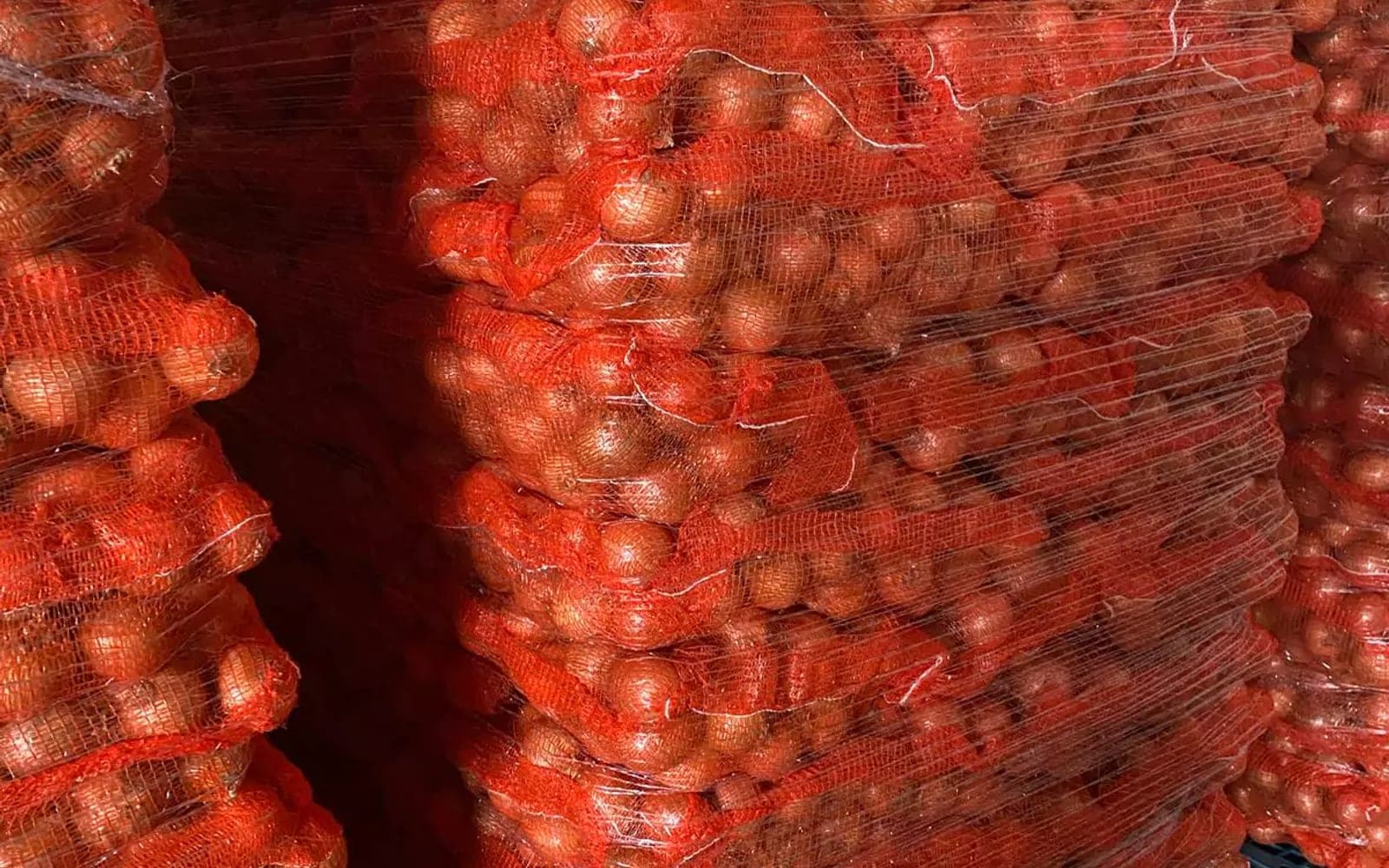
The short answer: mature, well-cured onions keep best at 0-2°C and 65-75 percent relative humidity. Before a batch gets there, though, it has to go through curing and slow cooling, and before winter dispatch it needs to be warmed up again. We run our own 13 000 tonne storage facility and sell onions from it for most of the year, so these parameters are our daily routine, not theory.
The parameters at a glance
| Phase | Temperature | Humidity and airflow | How long |
|---|---|---|---|
| Curing after harvest | warm air, around 25-30°C | intensive airflow through the pile | 2-4 days in our case |
| Cooling down | gradually, roughly 0.5°C per day | 65-75 percent | a few weeks |
| Main storage | 0-2°C | 65-75 percent, regular ventilation | until spring |
| Preparing for dispatch | warming to ambient temperature | no condensation on the skin | 1-2 days |
These are indicative ranges for yellow and red onions meant for long storage. We cover how long onions really last in a store in a separate post on how long onions can be stored.
Why temperature decides everything
An onion is not a dead product after harvest. It breathes, loses water and waits for a signal to start growing again. Low temperature holds that signal back: the closer to zero, the deeper the dormancy and the smaller the losses. When the store gets too warm, the onion wakes up, pushes out roots and shoots, and the batch loses its market value within a few weeks.
Swings are dangerous too. Every jump in temperature brings a risk of condensation, which means a damp skin, and a damp skin is an open door for storage diseases. That is why stability matters more than the number on the thermometer: once we reach 0-2°C, we hold it steady, no see-sawing, until the goods leave.
The four phases every batch goes through
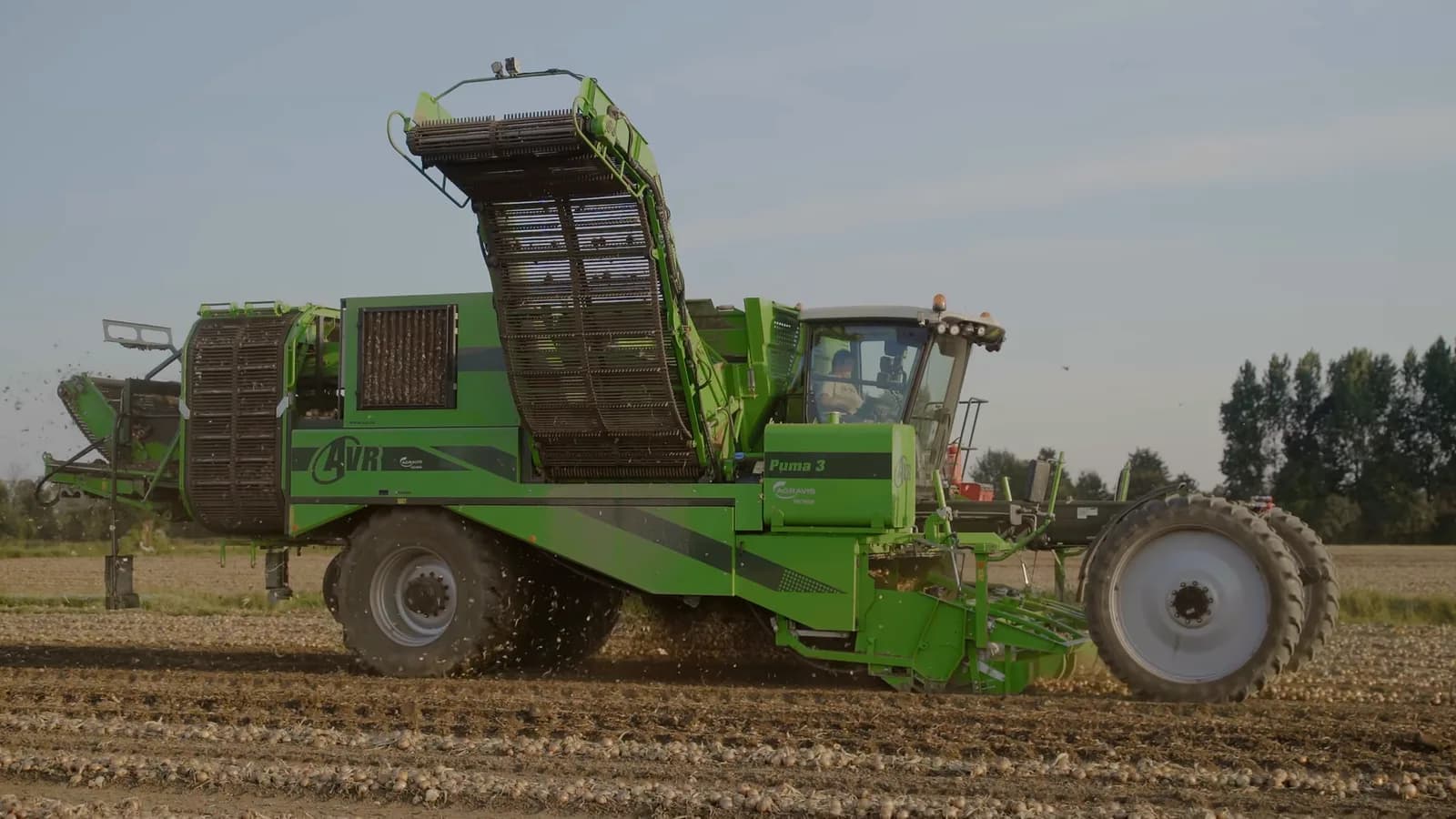
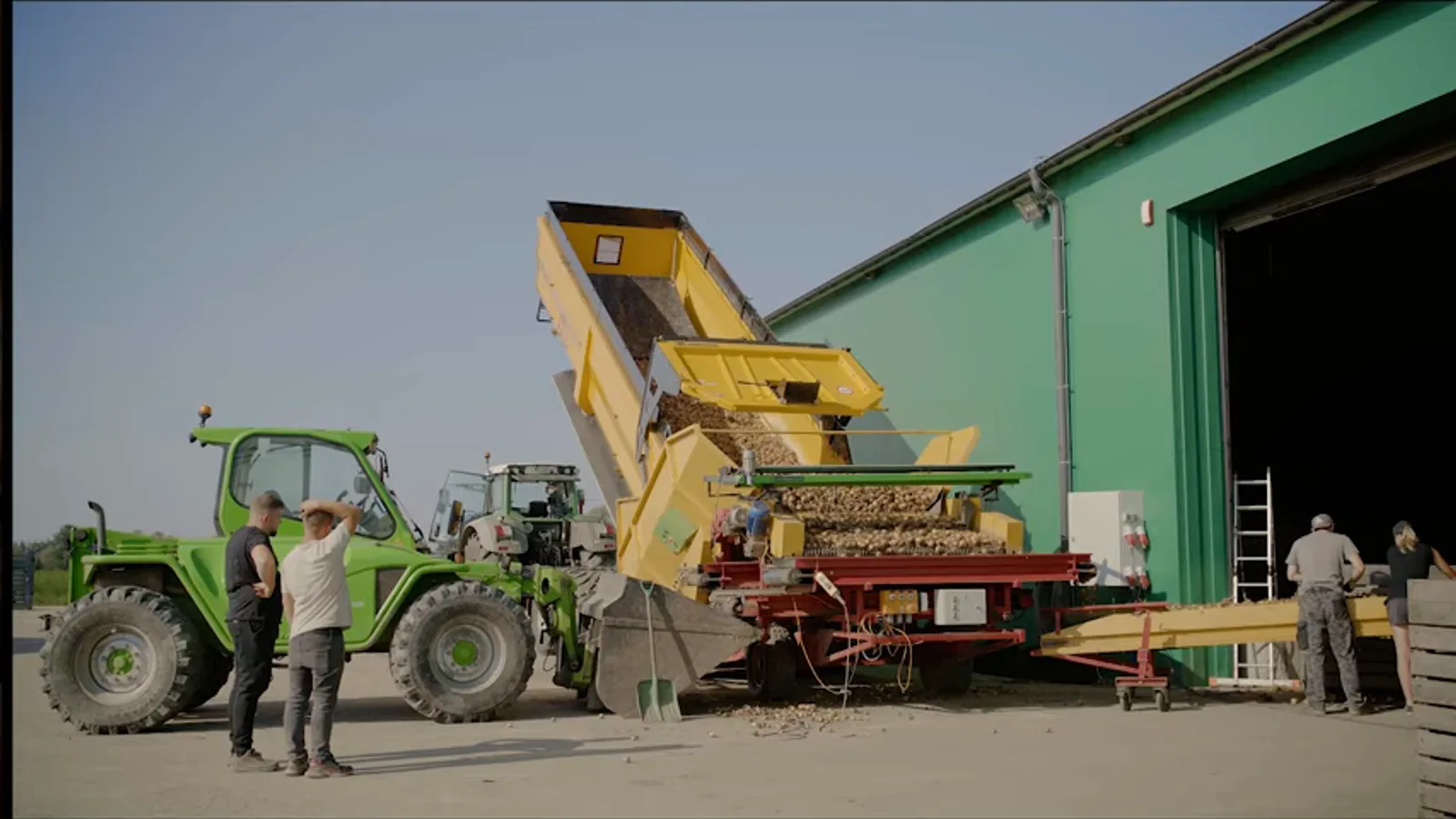
It starts in the field. We harvest our onions in two stages, and after harvest we cure them in the store for 2-4 days, until the neck closes and the skin rustles in your hand. Skip this step and no temperature will save the batch later.
Then we cool. You cannot drop onions from 20 to zero in a single day, because thermal shock and condensation would do more harm than good. We bring the temperature down gradually, using the ever cooler autumn air, roughly half a degree per day.
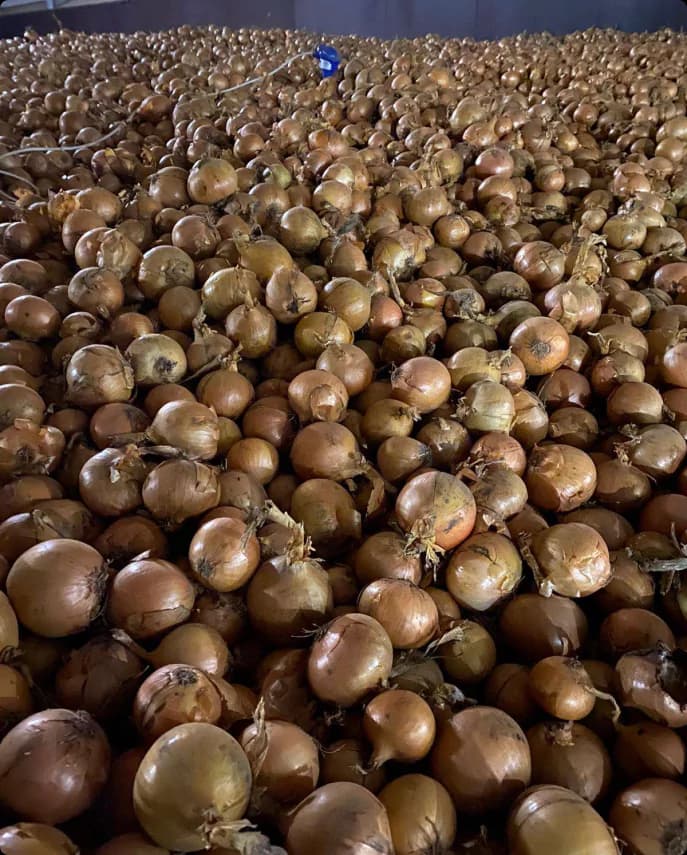
The main phase is quiet months at 0-2°C and 65-75 percent humidity. We ventilate the piles regularly to carry away moisture and carbon dioxide from the breathing onions, and we check batches before anything goes out to a customer.
The last phase is the one most guides skip: preparing for dispatch. Cold onions exposed straight to warm air instantly cover with dew, and wet goods cannot go to the packing line. So before winter dispatch we let the batch come up gently to a temperature close to ambient.
Humidity, the other half of the equation
The 65-75 percent range is no accident. Above it, onions start to root and pick up storage diseases more easily. Below it, they dry out too much: the skin cracks and flakes, and the onions lose weight nobody will pay us for. Ventilation exists precisely to keep us in that corridor: dry, cool air moves through the pile and carries away excess moisture before it can settle on the skin.
How we manage this across 13 000 tonnes
At the scale of a home cellar, a thermometer is enough. At our scale, we watch every chamber separately: we measure temperature continuously, steer the ventilation to match the weather and check batches while they sit, not just at dispatch. That is what lets the facility steer our sales across the whole season: we do not have to sell everything in autumn, when supply peaks.
We describe our whole process, from harvest through curing to winter and spring dispatch, in our post on storing onions. It is a good starting point if the topic is new to you.
What the buyer gets out of it
A buyer does not buy parameters from us, they buy their result: firm, dry onions with closed necks, the same in March as in October. If you are planning deliveries for winter and spring, check our onion offer or write to us via the contact form. We will share available sizes, packing options and dispatch dates from the store.