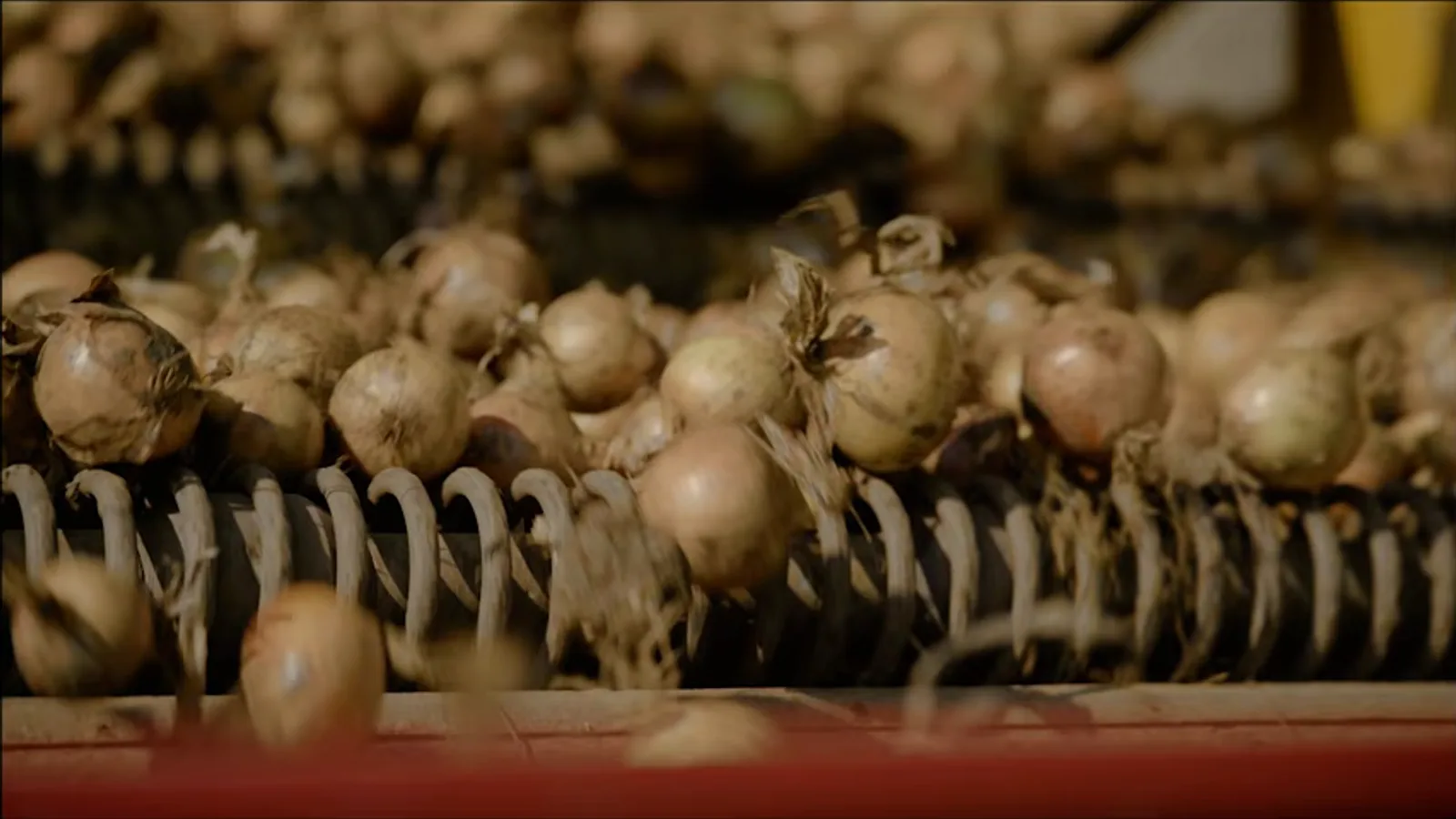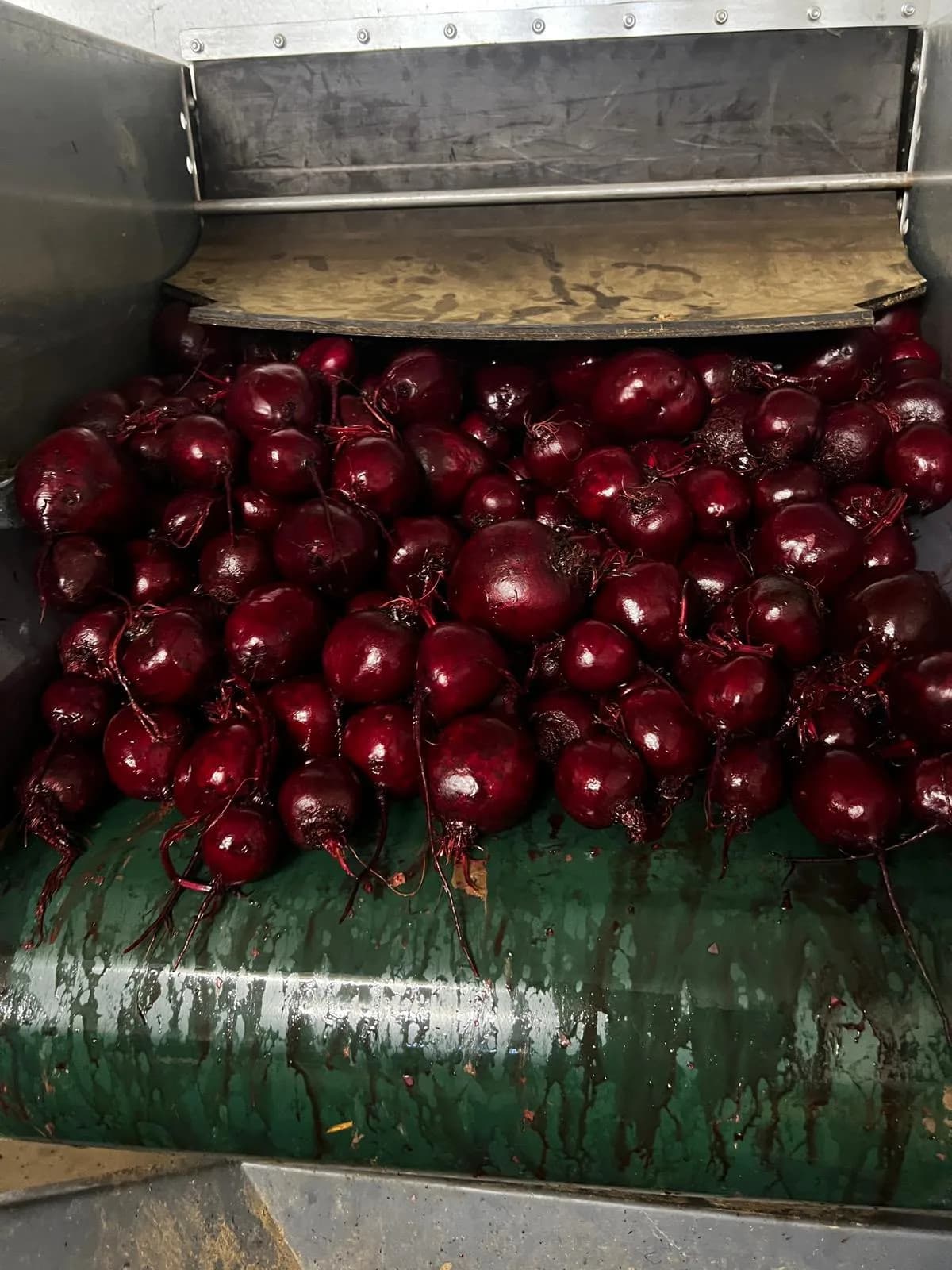
We sort our potatoes before dispatch on the DOWNS CropVision optical sorter. Cameras and AI scan every tuber through 360 degrees and reject stones, soil clods and defective pieces, up to 100 tonnes per hour. Below we show a potato's path from the harvester to the buyer, set what the machine rejects against what the rules count, and suggest how to check a batch at your end.
A potato's path from the field to the buyer
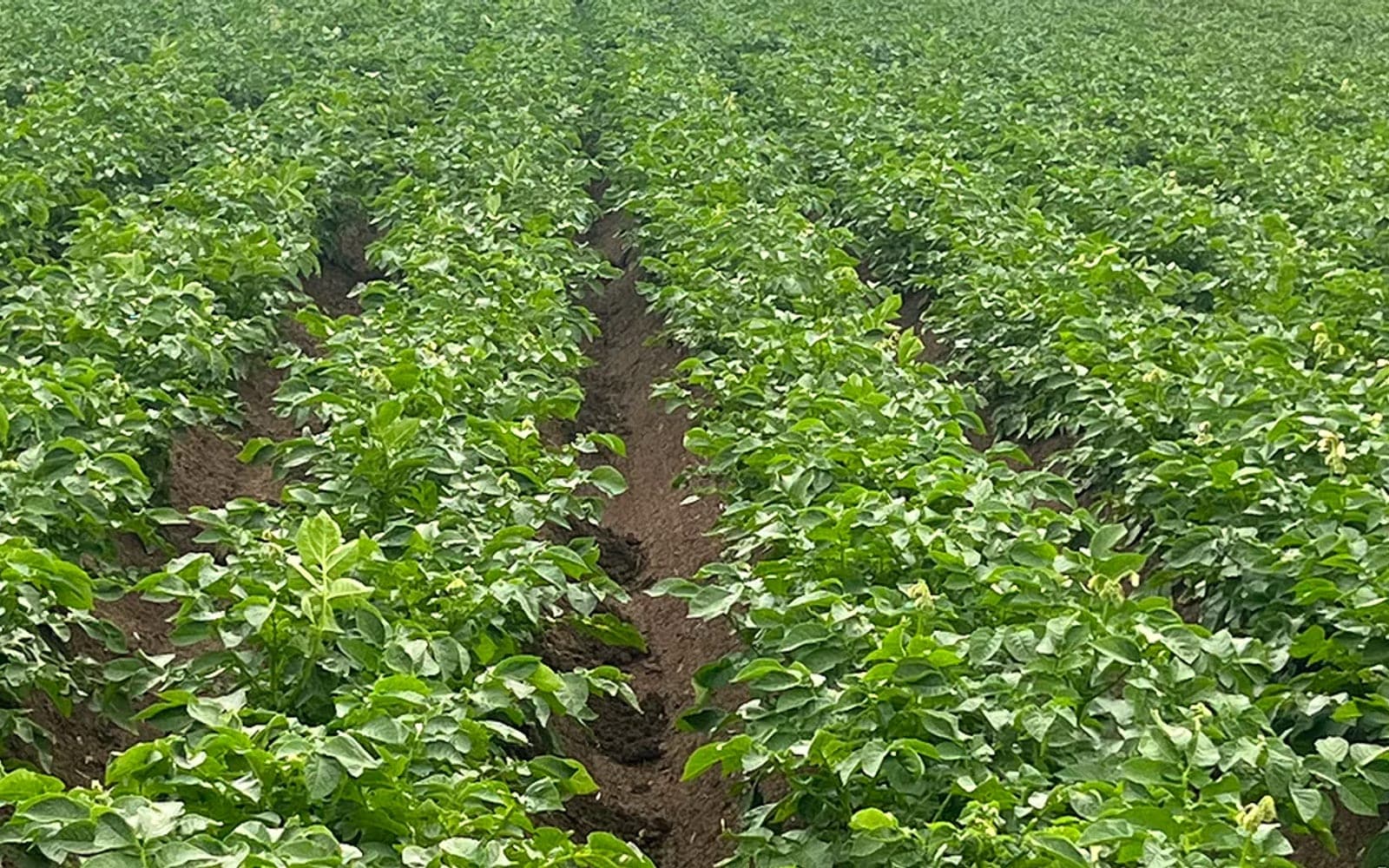
We grow potatoes for fries and ware potatoes in Żuławy. We farm over 800 ha, including around 400 ha of vegetables, and work with 87 machines. We run the whole process ourselves, so before a batch leaves for a packhouse or a processing plant, it goes through these stages:
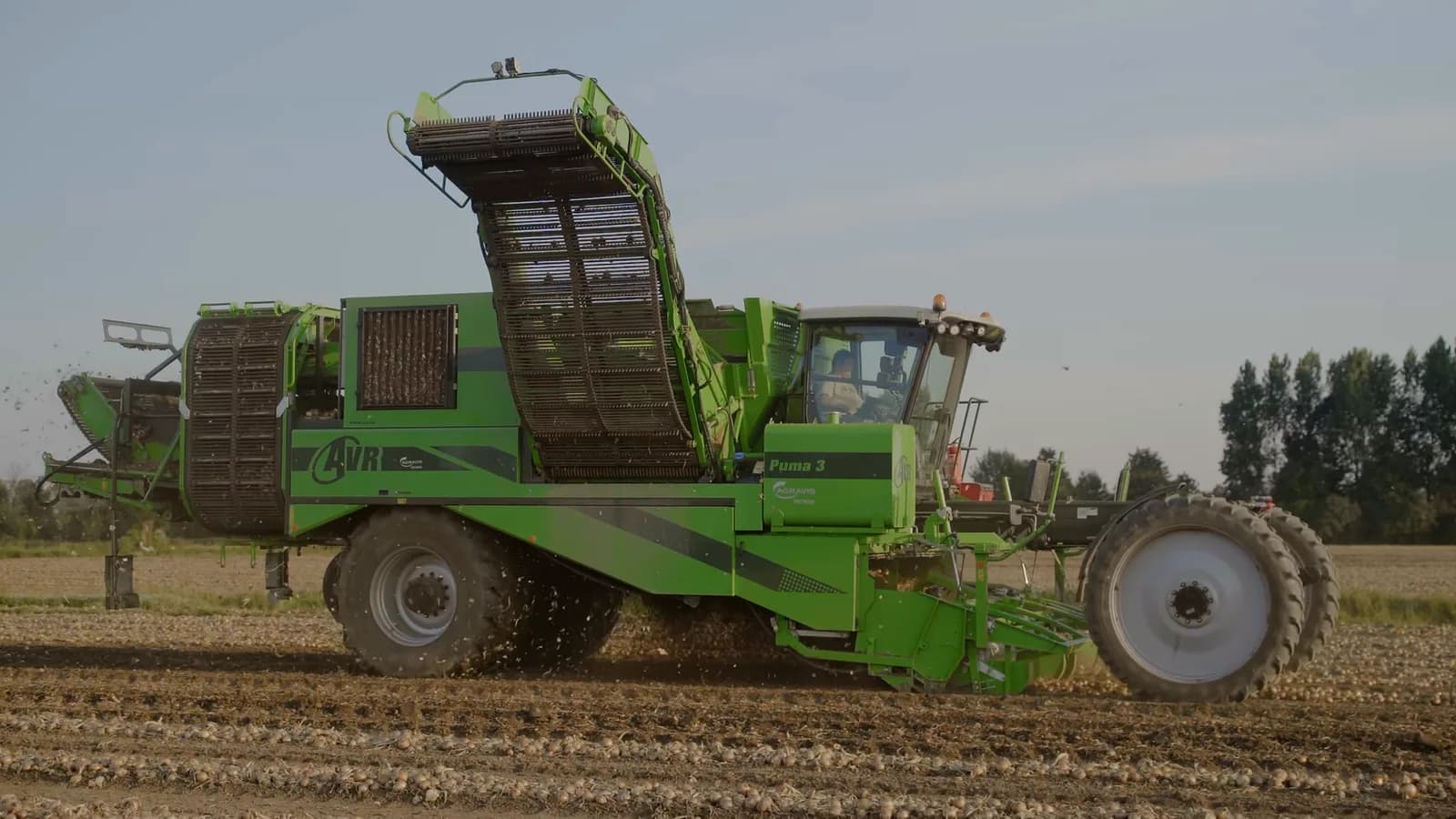
- Harvest. We lift potatoes with a self-propelled AVR Puma 3 harvester, four rows at a time, gently on the tubers. A 469 hp Volvo engine and an 8-tonne tank let us work without downtime, at night too.
- Optical sorting. DOWNS CropVision takes stones, soil clods and defective tubers out of the batch.
- Batch control. We select every batch for firmness, colour and dry matter content. We also test it for pesticide residues, heavy metals and substances hazardous to health.
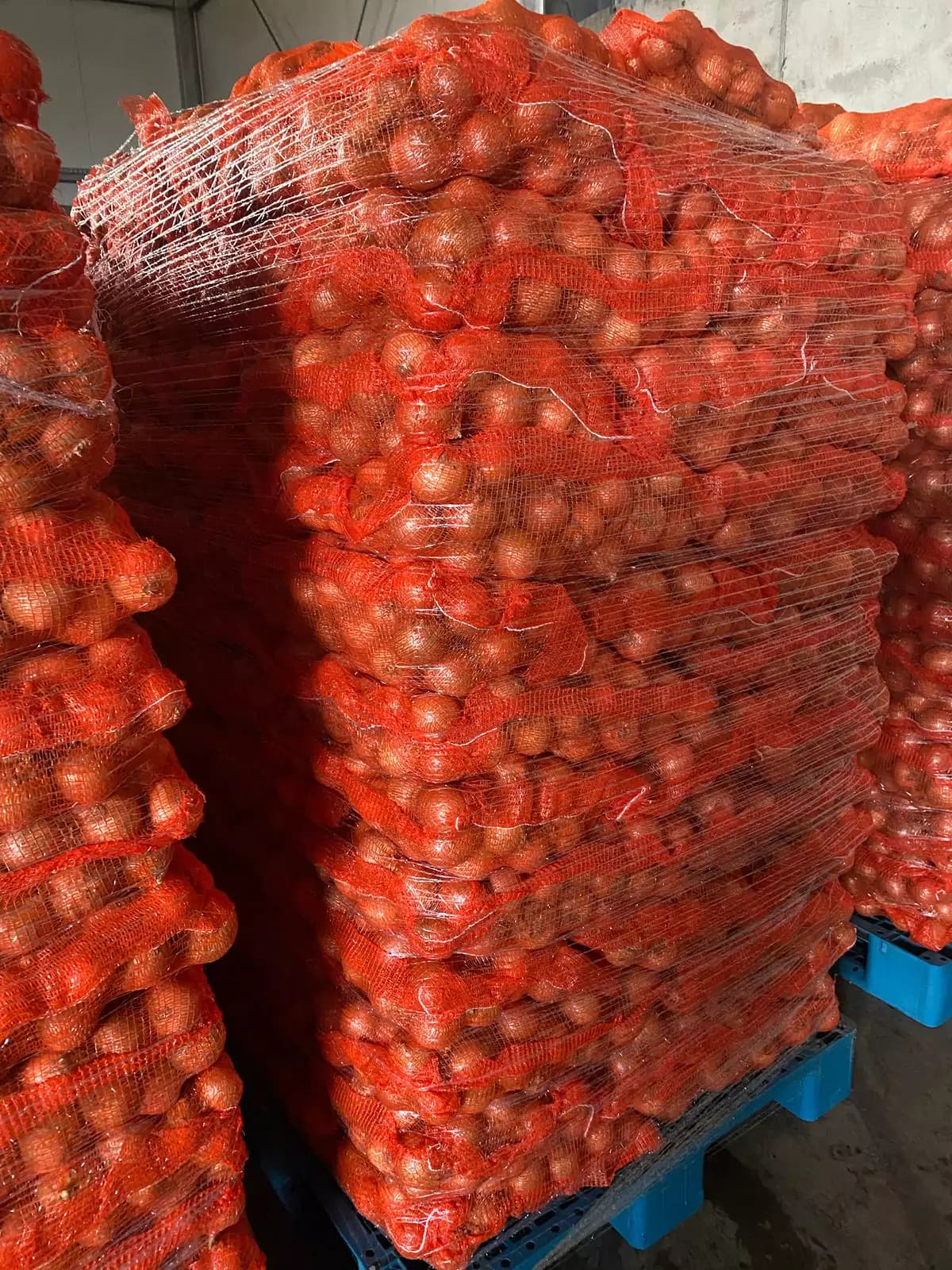
- Sizing and packing. We match the size grade and the form to the buyer: loose, in big bags or in 15 kg, 10 kg and smaller sacks.
What the DOWNS CropVision optical sorter rejects
The sorter views the whole surface of the tuber, in full 360 degrees, not just its top. Industrial cameras and artificial intelligence judge every piece separately. This is the machine in numbers:
- sorts: onions, potatoes and red beets,
- technology: industrial cameras and AI, 360-degree scan,
- rejects: stones, soil clods and defective pieces,
- capacity: up to 100 tonnes per hour.
So large batches go through quickly, and the buyer receives even, clean produce. We describe how the machine is built and how it works in more detail in our post on how the optical sorter works.
Stones and soil clods are not just dead weight on the scale. The regulation on the commercial quality of potatoes describes mineral contamination as tubers contaminated with lumps of soil and stones. Under the same regulation, tubers with mineral and organic contamination may make up at most 1% of the weight of ware potatoes.
Our onions go through the same sorter. How we keep them in our 13,000-tonne store, we describe in our guide to storing onions.
Which potato defects the rules count
For ware potatoes, the defect thresholds are set by the regulation of the Polish Minister of Agriculture and Rural Development, amended in March 2026, which counts them as the maximum share of tubers in a batch by weight.
| Defect in ware potatoes | Definition in the rules | Limit under the regulation |
|---|---|---|
| Greening | green colour on more than 1/8 of the tuber surface, more than 5 mm deep into the flesh | up to 2% together with internal defects |
| Internal defects | internal rust spot, black spot, grey spot and hollow heart | up to 2% together with greening |
| Rot | including dry and wet rot, gangrene, late blight | up to 1% |
| Contamination | lumps of soil, stones, pieces of haulm, straw, weeds | up to 1% |
| Damage | mechanical or by pests, deeper than 5 mm | up to 3% |
| Common scab | patches on more than 1/4 of the tuber surface | up to 3% |
| Misshapen | deformed, with secondary growth, spindle-shaped | up to 3% |
| Undersized | diameter below the required one, not less than 28 mm | up to 2% |
| Sprouts | longer than 3 mm | not allowed |
All the percentage limits together, including undersized and immature tubers and tubers of other varieties, may not exceed 8% of the batch weight under the regulation. The combined limit for some of them is stricter: under the regulation, in ware potatoes, greened tubers, tubers with internal defects, rotten, contaminated, undersized, with common scab and damaged together may not exceed 6% of the weight.
For a processing plant, one sentence at the start of the act matters. Under the consolidated text of the regulation, its provisions do not apply to ware potatoes intended for food processing. So for potatoes for fries this table does not apply, and we match the size grade and the form of delivery to the buyer.
Green, bruised and sprouting tubers
Green
We write more about greening in the warehouse under storing ware potatoes.
Bruised
The regulation counts a ware potato tuber as damaged when mechanical or pest damage goes deeper than 5 mm. The cheapest way to deal with bruising is not to cause it at harvest, which is why we lift with a harvester that is gentle on the tubers.
Sprouting
In ware potatoes, the regulation does not allow tubers with sprouts longer than 3 mm. There is no percentage threshold here, so sprouts are worth checking in every sample.
How to check a batch of potatoes after sorting, step by step
- Ask for a free sample. We send one on request.
- Separate and weigh the contamination: lumps of soil, stones, bits of haulm and straw. This is the simplest test of how well the sorter worked.
- Look the tubers over from all sides in good light and set aside the green, bruised, rotting and sprouting ones.
- Cut some of the tubers open and look for internal defects, which the regulation describes as tubers with internal rust spot, black spot, grey spot and hollow heart.
- Measure the diameter: in ware potatoes, the regulation requires a cross-sectional diameter of at least 35 mm for round and round-oval tubers and at least 30 mm for long ones.
- Work out the share of each group by weight and compare it with the table above, and for potatoes for processing, with the specification in your contract.
What disqualifies a batch at unloading, we describe in more detail in our post on potato defects at intake.
Varieties, documents and ordering
For fries we grow Innovator and Donata, and for the table Twister, Bella Rosa, Joline and Gala. Our Innovator buyers include Farm Frites. We produce without pesticide residues, following the principles of Integrated Plant Production, and we hold GlobalG.A.P., GRASP, FSA Gold (Farm Sustainability Assessment) and GMP+ certificates.
We have gathered the varieties and forms of delivery in our offer of potatoes for fries and ware potatoes. The price is calculated on current market prices, so we quote it after we talk about the volume, timing and form of delivery. Write to us through the contact form.