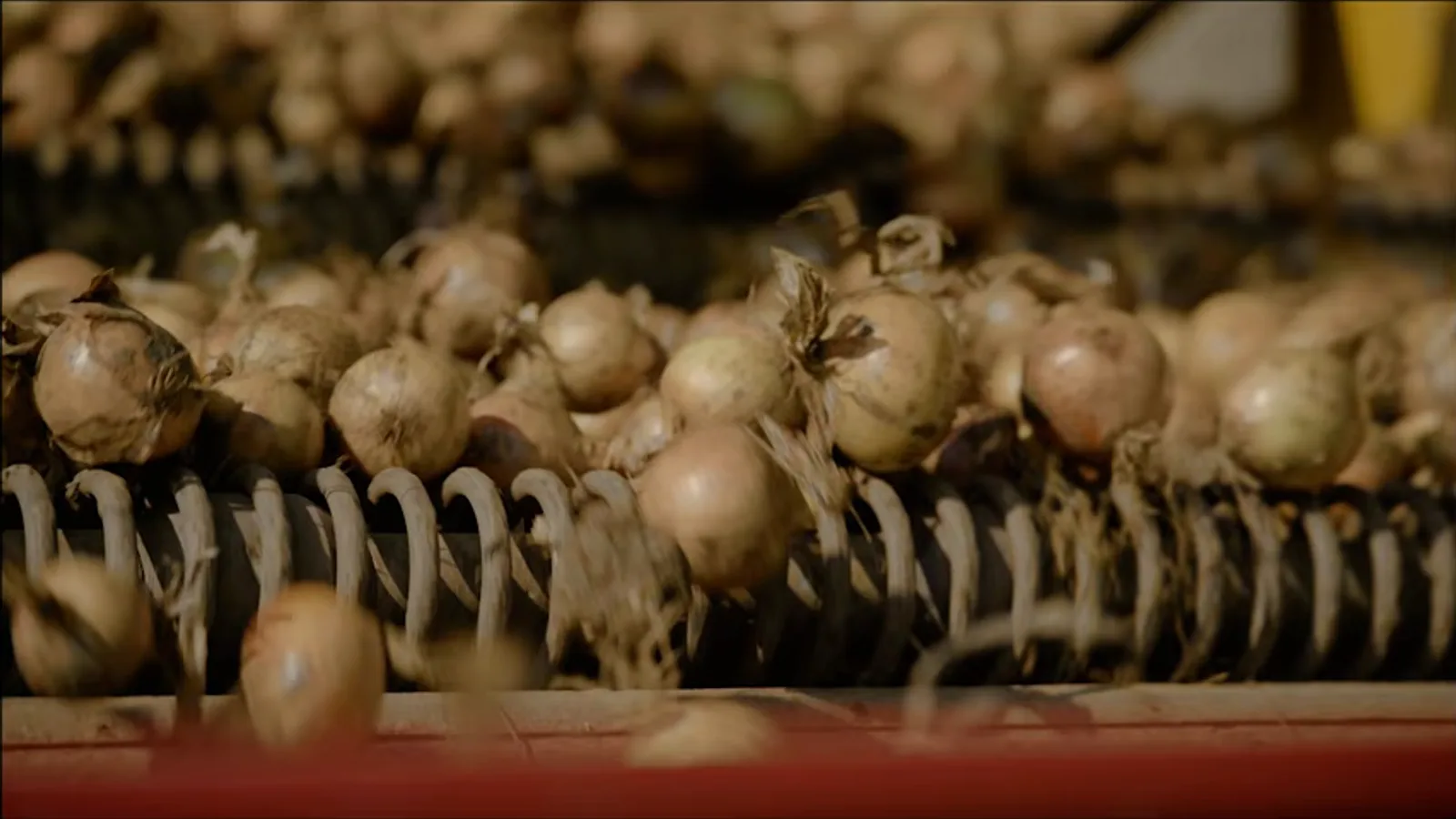
Optical sorting is quality control where every single piece is inspected by a camera, not by a person. In our farm this job belongs to the DOWNS CropVision optical sorter: it scans onions, potatoes and red beets in full 360 degrees, rejects stones, soil clods and defective pieces, and handles up to 100 tonnes per hour. Thanks to it, the batch that reaches the buyer has been checked piece by piece, not by eye.
How optical sorting differs from screen and manual sorting
Classic screen sorting divides produce by size only. A screen cannot see whether an onion has a defect, and it will not tell a potato from a soil clod of the same size. Manual sorting sees defects, but a person at the belt gets tired, has better and worse days, and simply cannot keep up with large batches.
An optical sorter combines both and adds speed:
| Feature | Screen | Manual | Optical (DOWNS CropVision) |
|---|---|---|---|
| Size assessment | Yes | By eye | Yes, every piece |
| Defect detection | No | Yes, but unevenly | Yes, cameras and AI |
| Stones and soil clods | Pass through when the size matches | Depends on attention | Rejected automatically |
| Throughput | High | Low | Up to 100 t/h |
| Consistency | Constant, but blind to defects | Variable | Constant through the whole shift |
How DOWNS CropVision works
The principle is simple. Produce enters the machine in an even stream, and industrial cameras scan the entire surface of every piece, in full 360 degrees. Artificial intelligence judges the image in a fraction of a second: a healthy onion travels on, while a stone, a soil clod or a defective piece drops out of the line. The machine does not guess and does not average, it makes a separate decision for every onion, every potato and every beet.
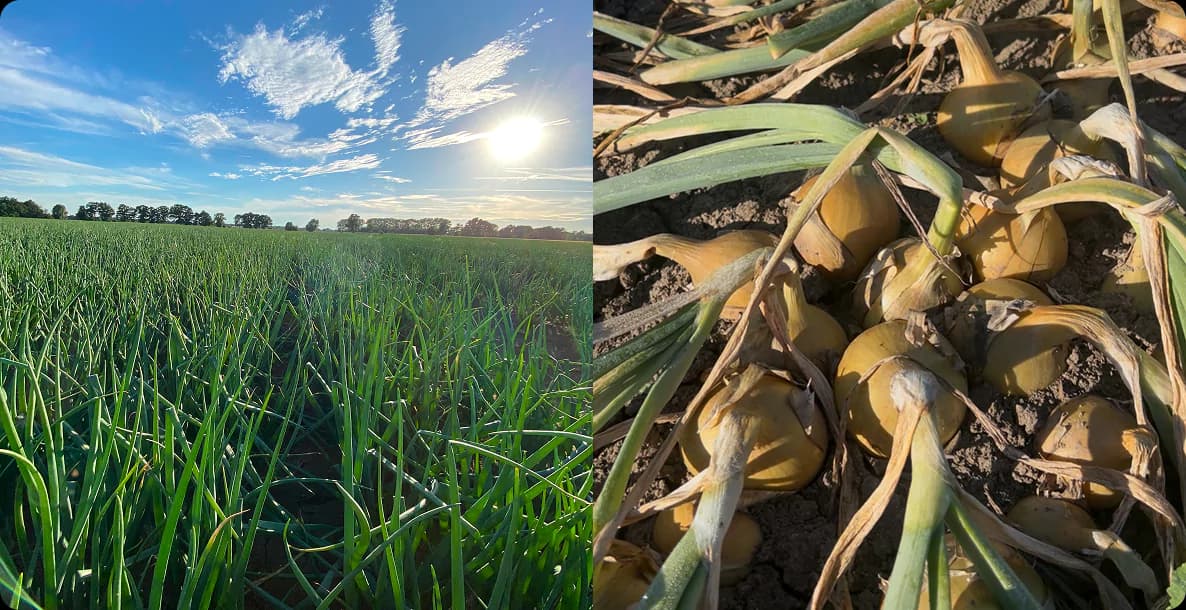
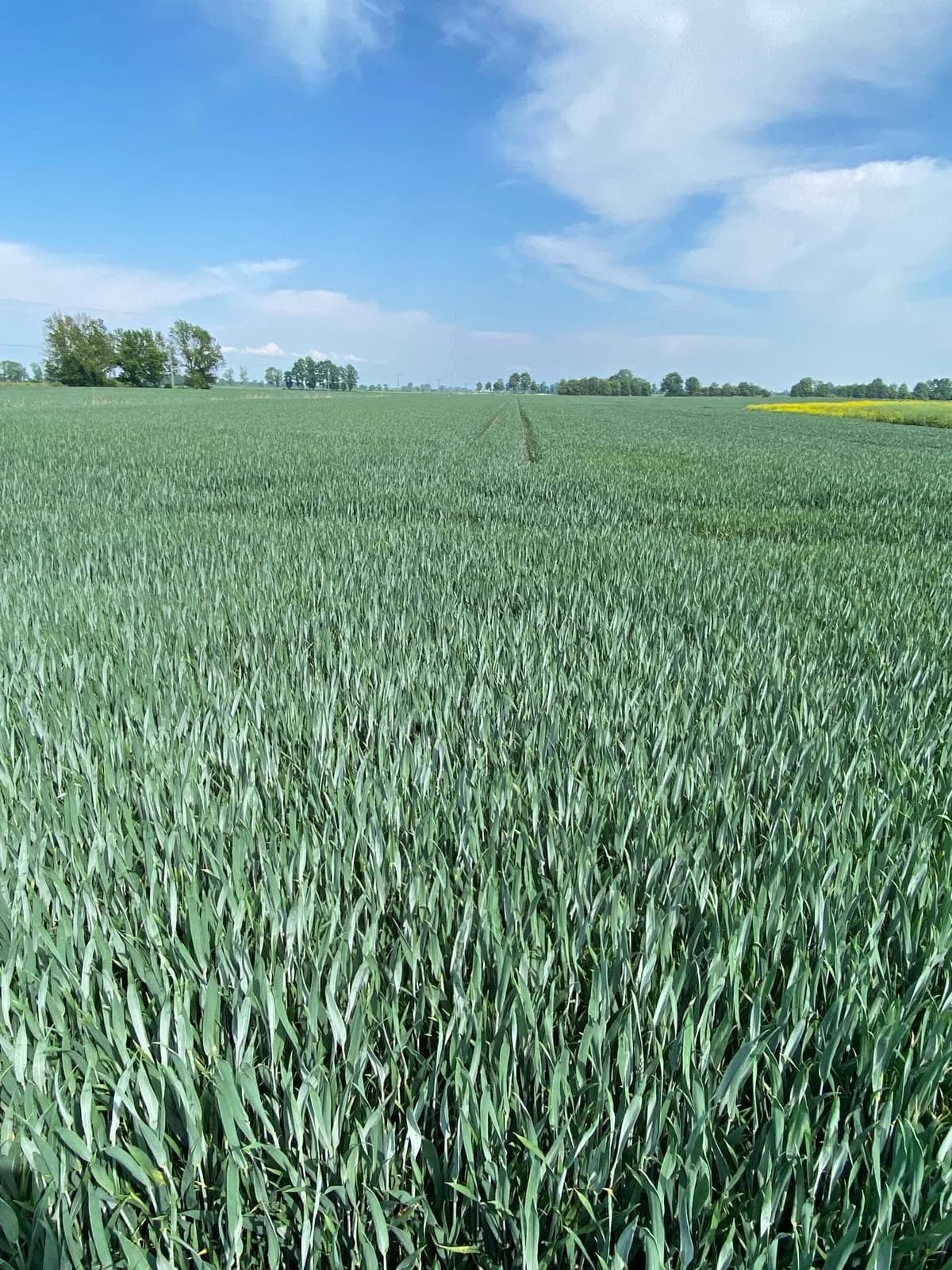
With a throughput of up to 100 tonnes per hour, large batches go through quickly. That matters, because we work at scale: we farm over 800 ha, including around 250 ha of onions with yields of around 60 t/ha. Without a machine of this class, checking every piece at such volumes would be impossible.
A 360-degree scan means the camera sees the entire surface of the piece, not just the side that happens to face up. A defect hidden underneath gets detected too.
Why this matters for produce straight from the field
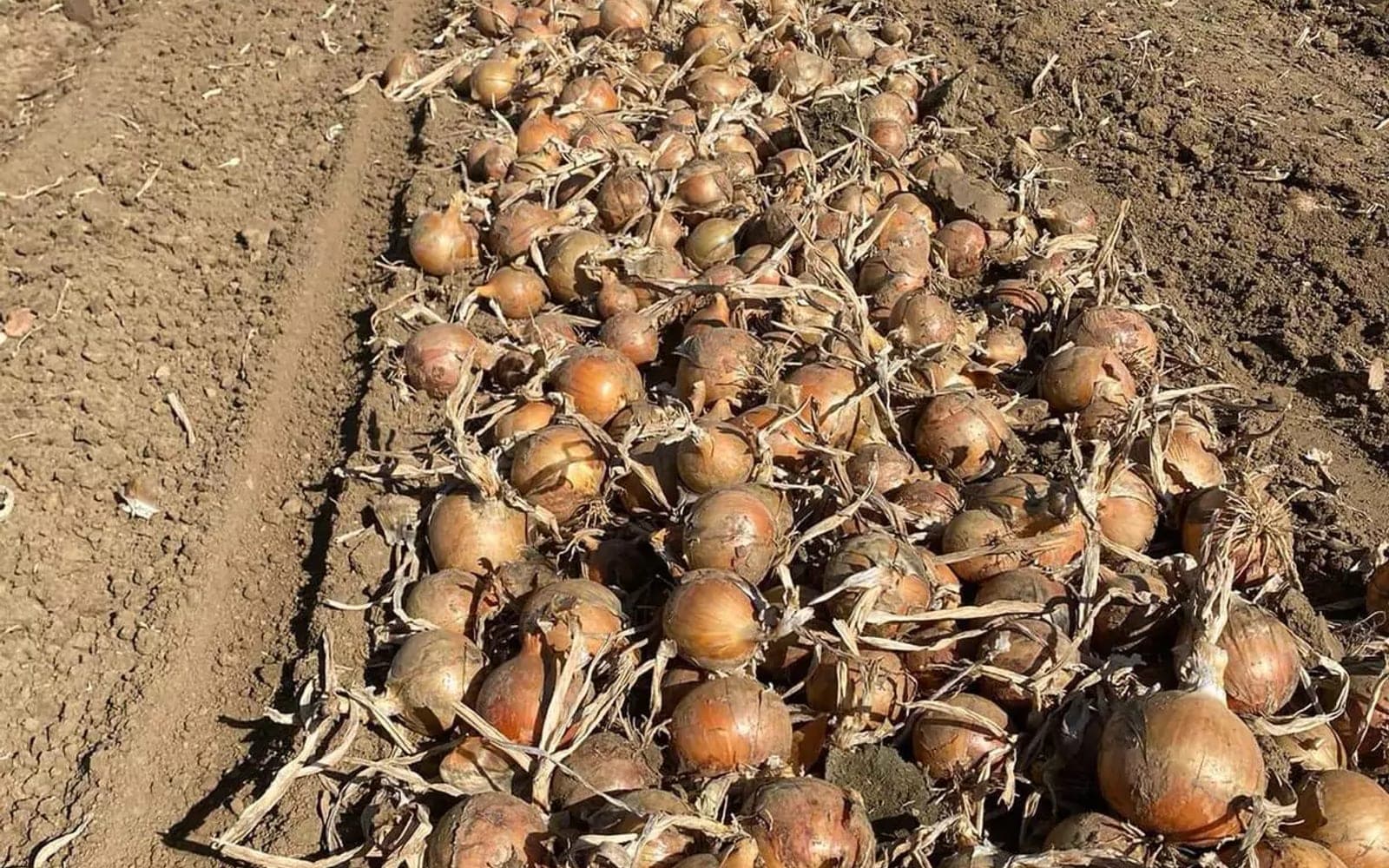
Onions, potatoes and beets come out of the ground, not out of a factory. Along with them, the harvester always picks up some stones and clods. In Żuławy, after a wet season there are more clods, because the heavy, compacted soil clings to the produce. The 2025 season showed this clearly: downpours brought locally 150-220 litres of water per square metre in a day and made it harder to finish the crop.
Then there is the market. With onion surpluses in Europe, sales are decided by quality and sorting, not by volume alone. A batch with a stone or a rotten piece inside means a complaint, a stopped line at the buyer's plant and a conversation nobody wants to have. We prefer our machine to catch that piece before the produce leaves the farm.
One machine, three crops
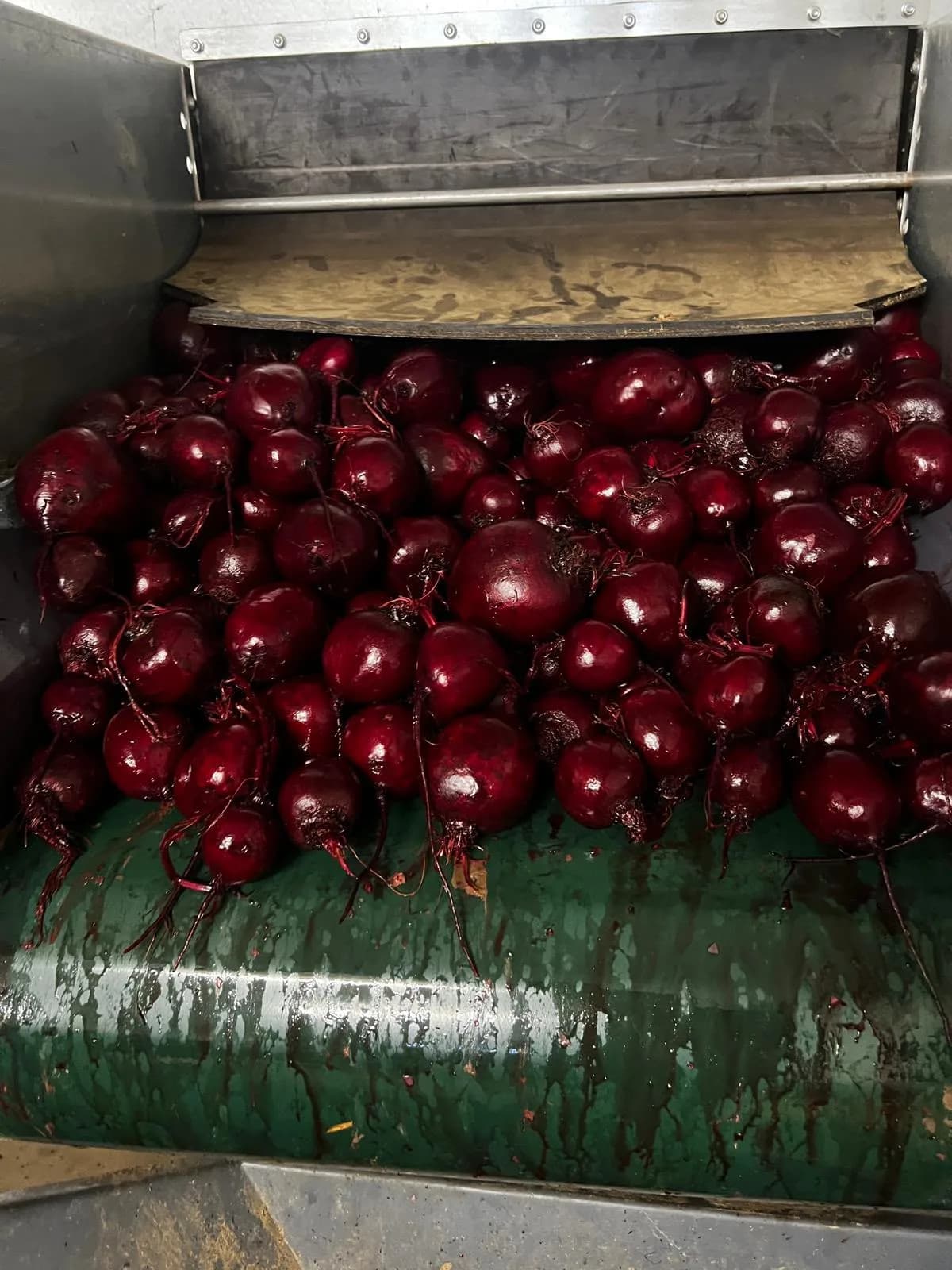
CropVision is not an onion-only machine for us. We also sort potatoes and red beets with it, so it works for most of the year, not just at the peak of the onion season. Each of these crops has its own defects and its own buyer requirements, but the principle stays the same: only what passes the camera check goes into the bag.
After sorting, we still divide the produce into size fractions, because a packing plant needs a different size than a processing plant. How we match the size to the buyer is covered in our post on which onion caliber goes to processing.
The sorter's place in the whole chain
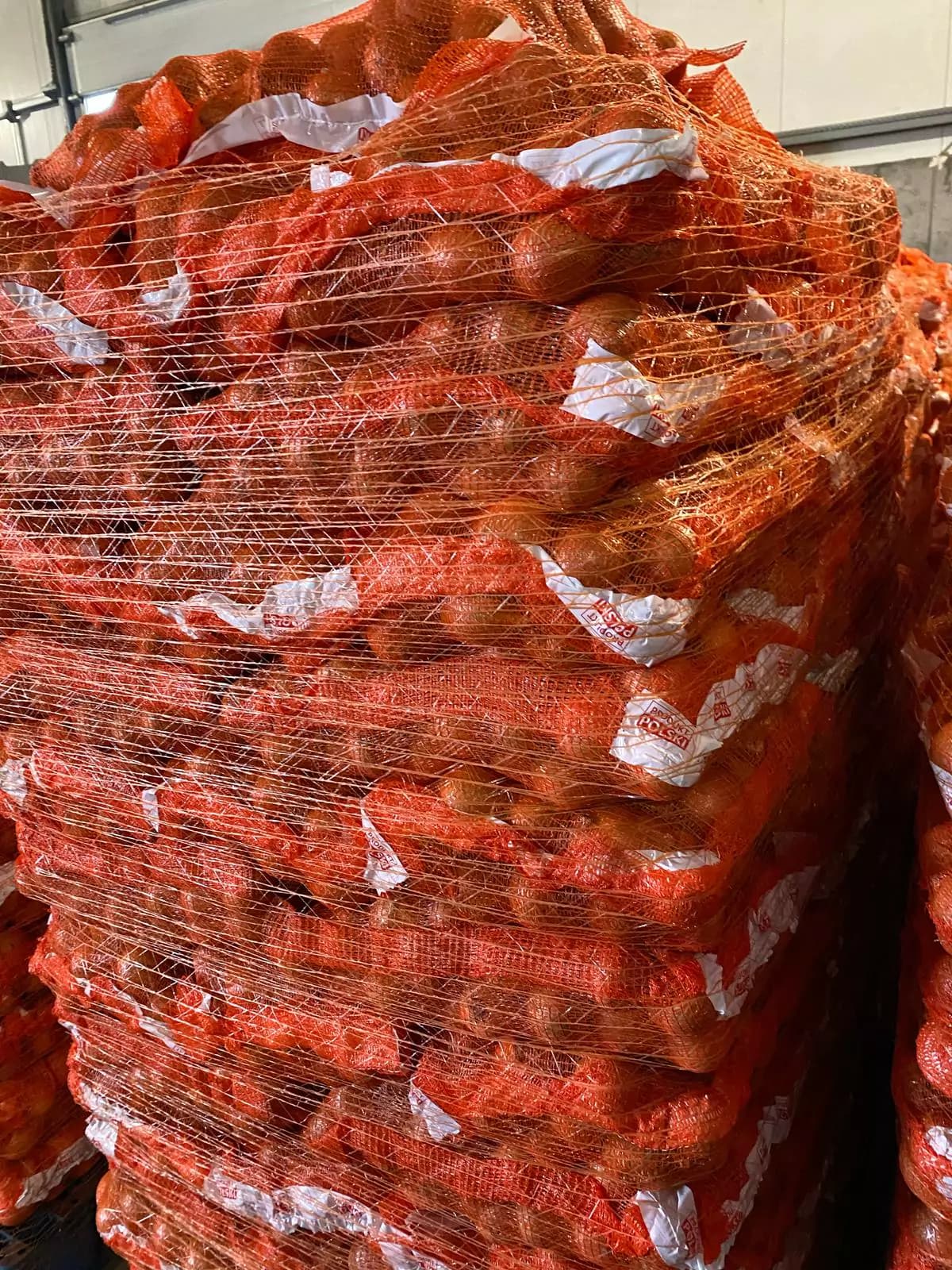
The optical sorter is the middle link on the road from field to pallet. First, the onions rest in our 13,000-tonne storage facility under controlled conditions, which we describe in more detail in our post on onion storage. When a buyer places an order, the produce goes through the sorter and on to the packing line with a palletiser, where it is calibrated, weighed and packed into nets, big bags or loaded loose.
This setup lets us release produce exactly when it is needed, and always at the same quality. A March delivery passes through the same cameras as an August delivery. The sorter, the storage facility and the rest of our equipment, 87 machines in total, are shown in our machinery park.
What the buyer gets out of it
For the buyer, one thing counts: a batch with no surprises. Optical sorting removes the worst risks from their goods-in check, namely stones, clods and hidden defects. Less waste, fewer stoppages, fewer complaints.
It is part of a bigger whole. We produce using pesticide-residue-free technology, in line with the principles of Integrated Plant Production, we hold GlobalG.A.P., GRASP, FSA Gold (Farm Sustainability Assessment) and GMP+ certificates, and we check every batch before dispatch. That is why our produce is taken by large packing and processing companies, including partners such as Onix, Farm Frites and FreshPol, who supply the largest retail chains and processing plants in Poland and Europe.
Looking for a supplier who checks every piece before dispatch? See our onion offer or write to us via the contact page.