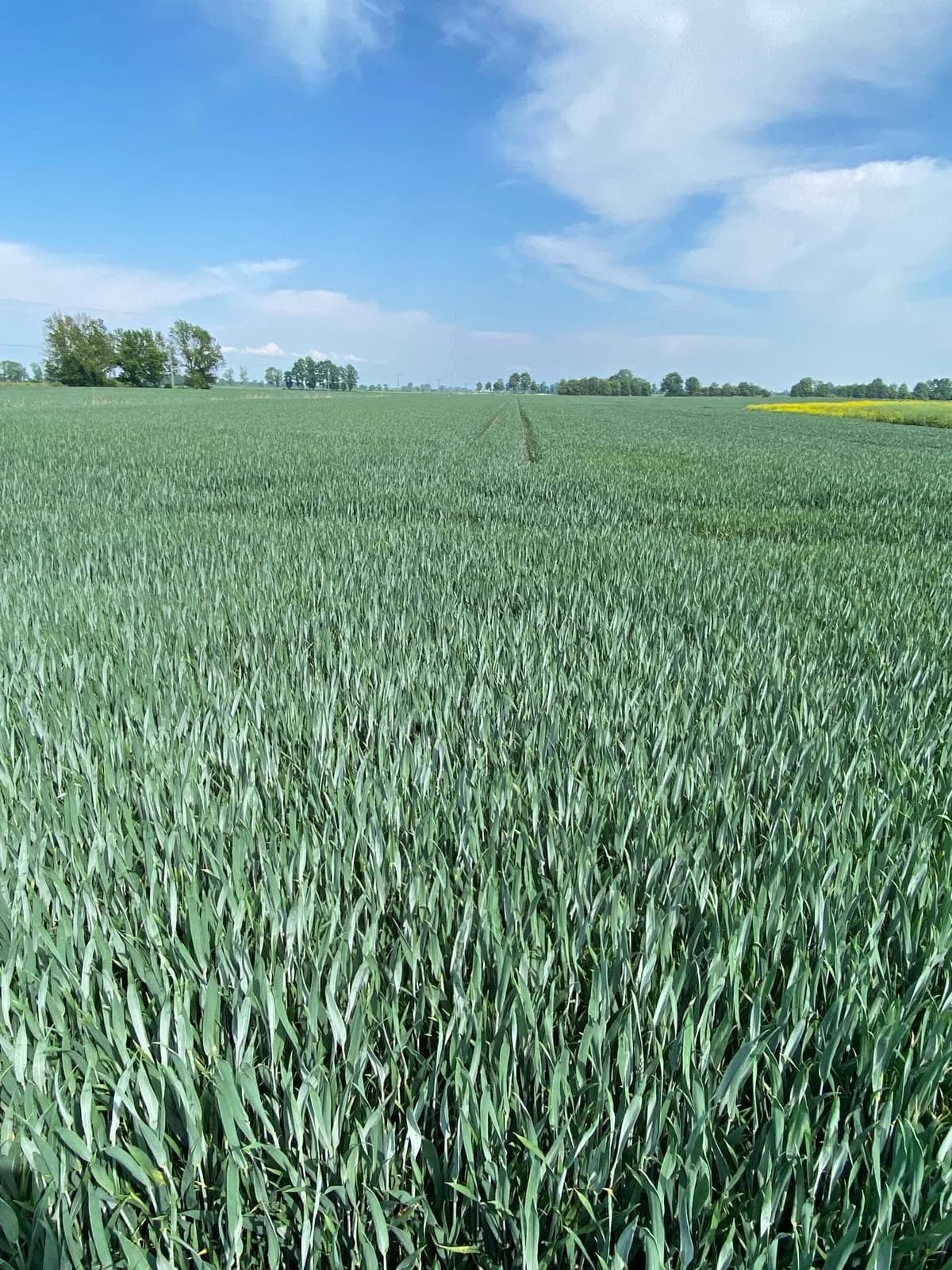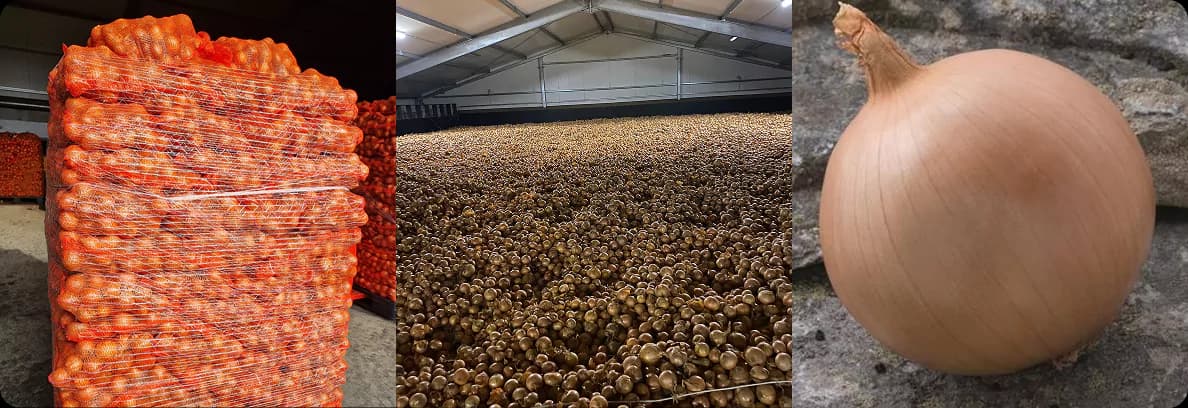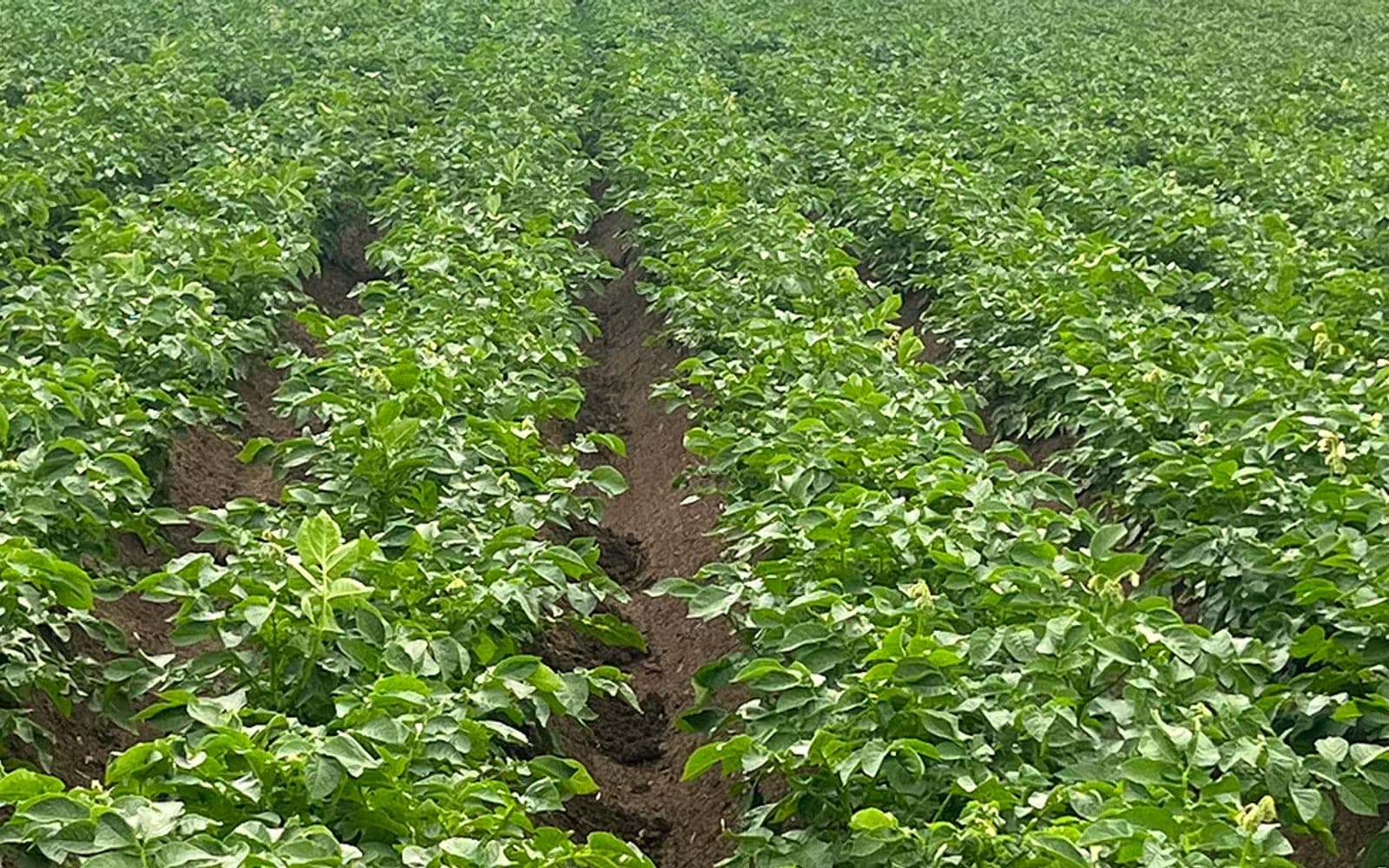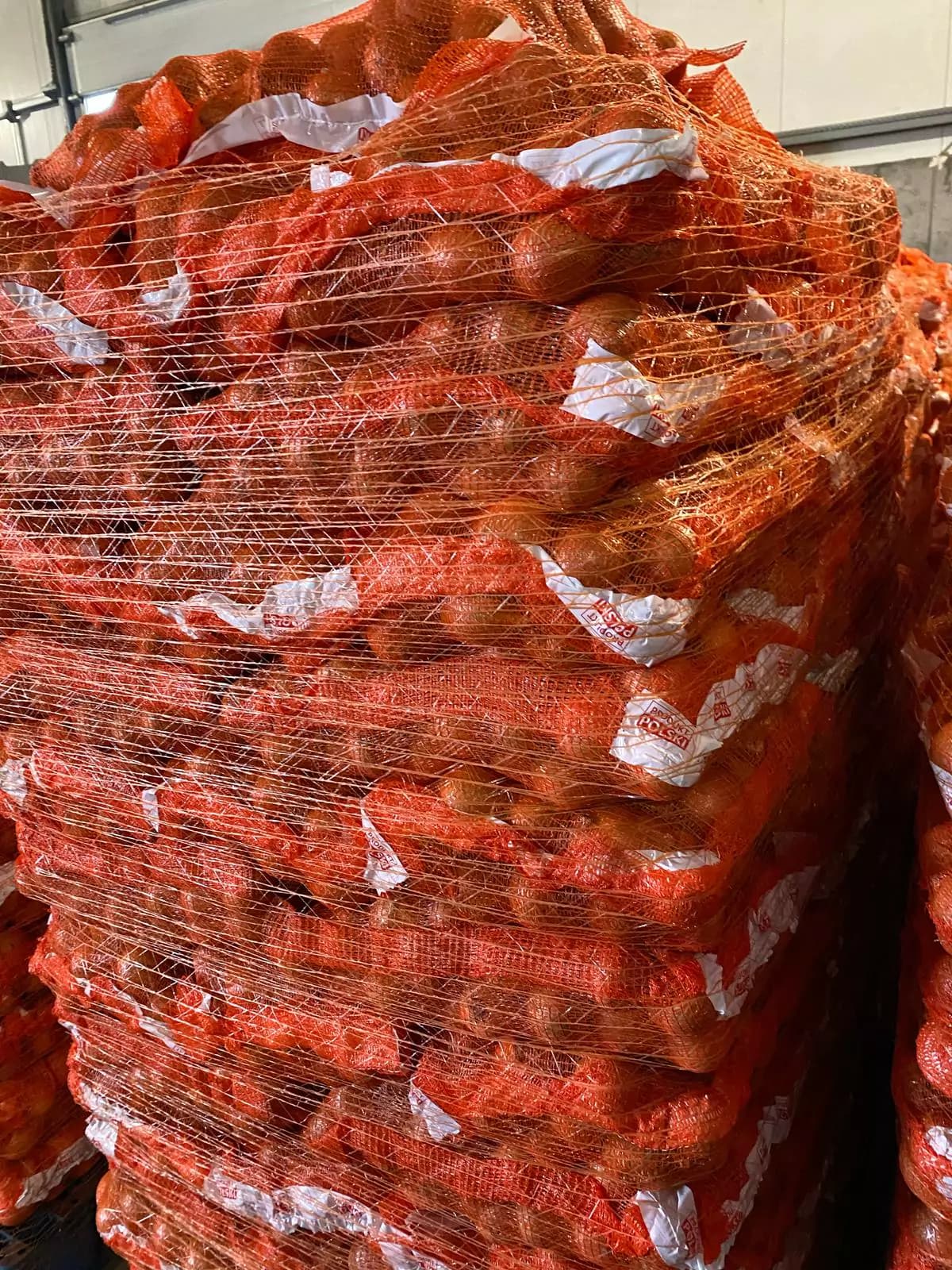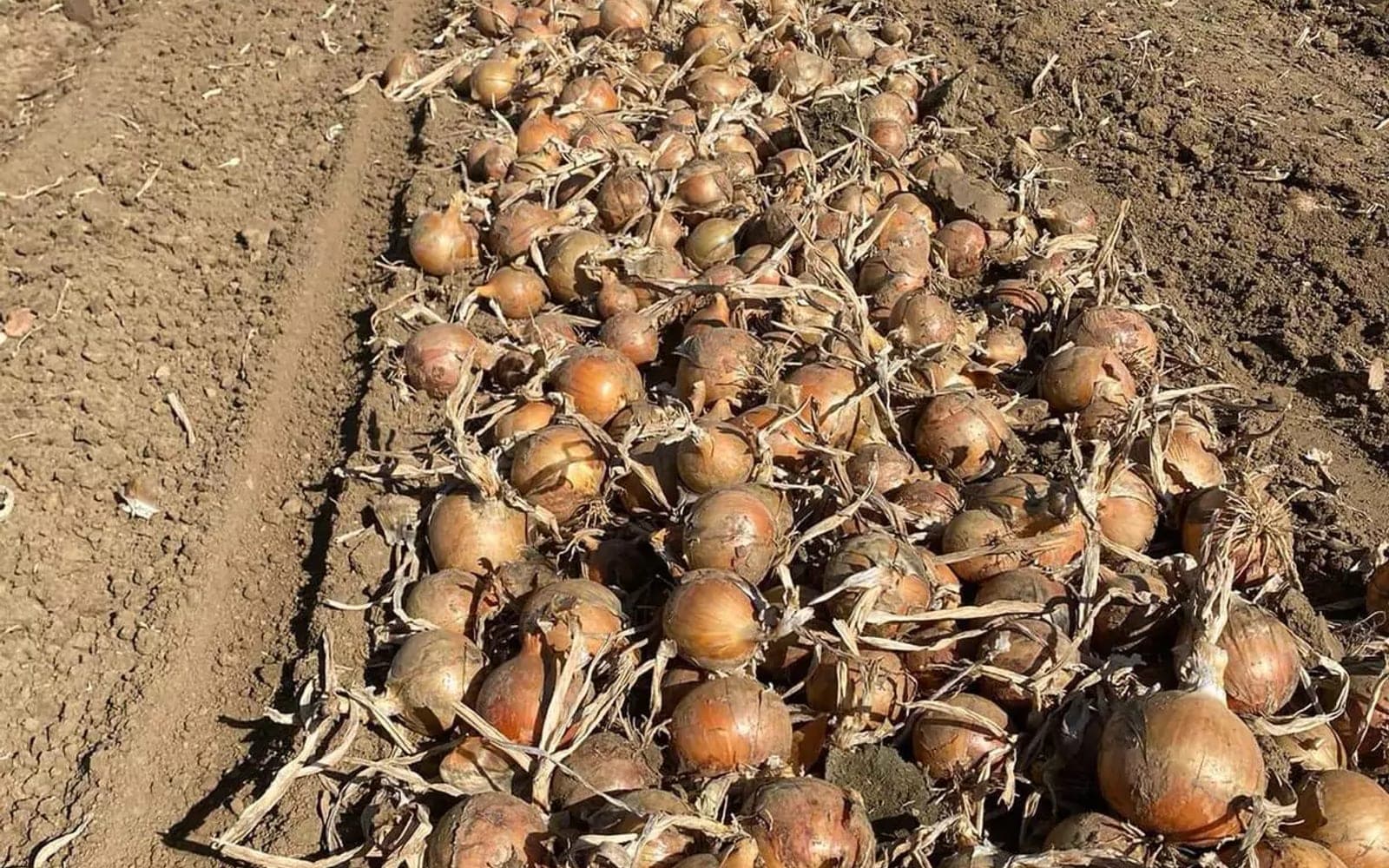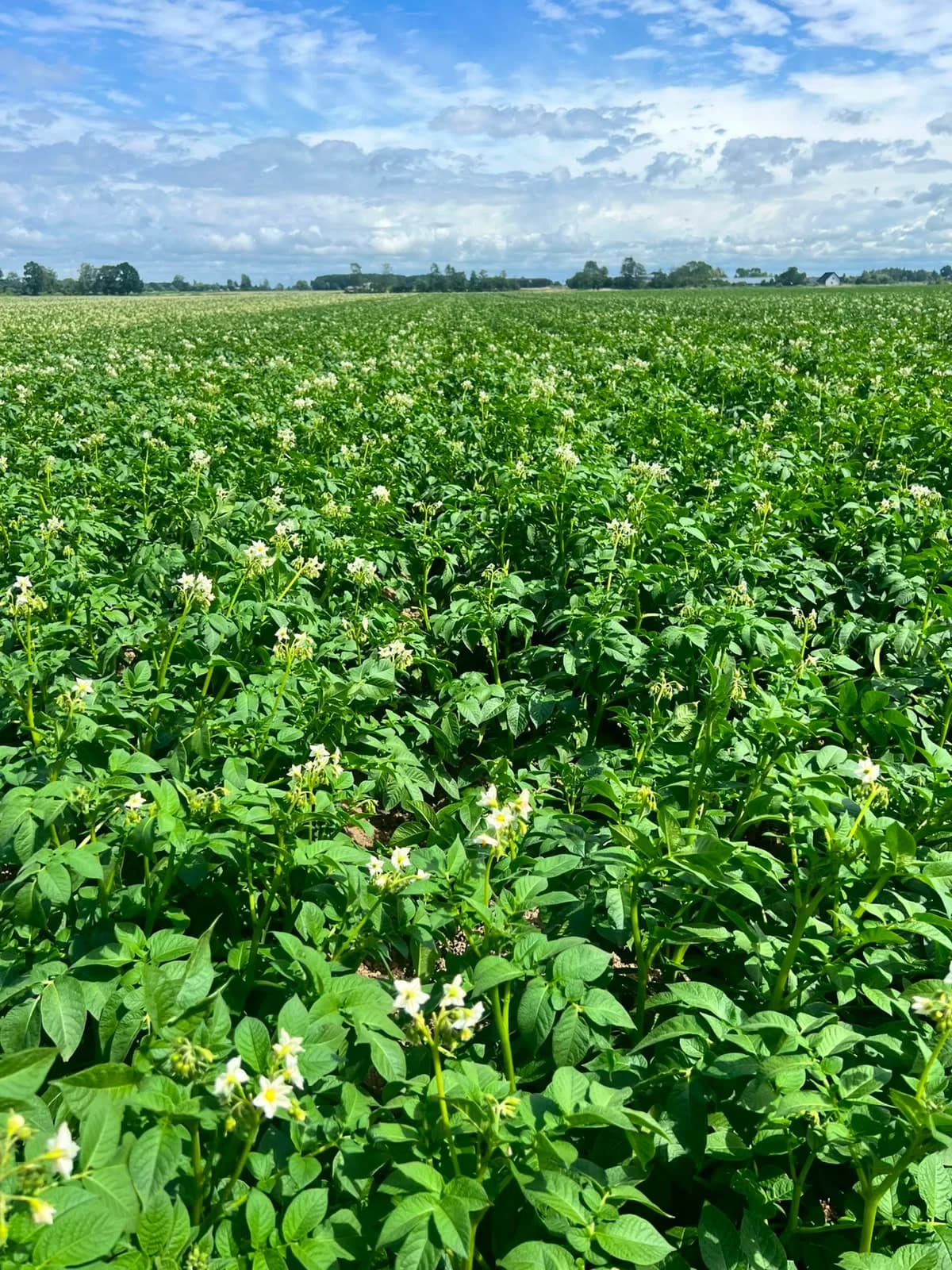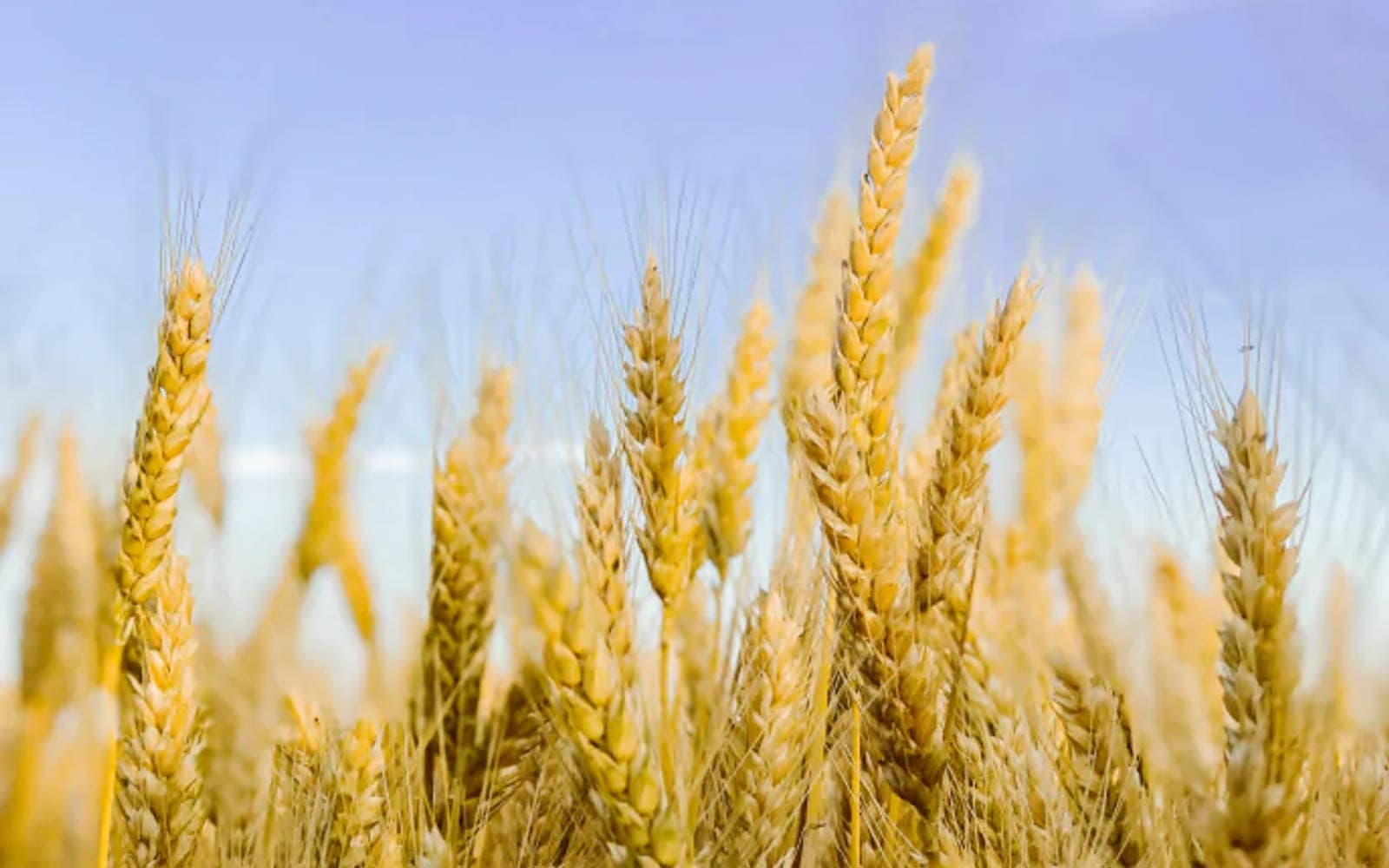
Crop rotation means changing the crops grown on the same field in consecutive years. In onion growing this is not textbook theory but a condition for a healthy crop: onions can return to the same field only after a break of several years. That is exactly why, across more than 800 hectares, we grow wheat, triticale and oilseed rape alongside our vegetables. In this post we show how we plan our rotation and what cereals do for our onions.
Why onions cannot return to the same field every year
Onions grown on the same field year after year get sick. Soil-borne pathogens that can survive in the ground for many years build up, along with pests associated with onion crops. Then there is soil structure: onions have a shallow root system and keep the soil profile exposed all season long, so they do little for the soil itself and leave plenty of room for weeds.
In practice this means a simple rule: onions return to the same field only after several seasons with other crops. Monoculture means accumulating problems and rising chemical doses. We go the other way, because we produce using pesticide-residue-free technology, in line with the principles of Integrated Plant Production. A healthy field position from good rotation is the first step to making that technology work at all.
How we plan the rotation on our fields
We farm more than 800 hectares, of which around 400 hectares are vegetables, with the rest in cereals and oilseed rape. Our offer includes 8 crops, so we have plenty to build a rotation with. Onions, the crown jewel of our farm, take up around 250 hectares and move to different fields every year, while the positions they leave behind are taken over by crops that like what onions leave.
A bit of our history: we got into onions precisely to broaden our rotation and not base the farm solely on conventional crops. Today it works both ways. Cereals work for the onions, and onions work for the cereals.
| Crop | Role in the rotation |
|---|---|
| Onions (approx. 250 ha) | our crown jewel, returns to a field after several years' break |
| Potatoes | root crop, deeper cultivation and a different disease spectrum than onions |
| Red beet | root crop, makes good use of the fertility of Żuławy alluvial soils |
| Green peas | legume, fixes nitrogen and leaves the field early |
| Wheat and triticale | preceding crop for vegetables, straw and soil structure |
| Oilseed rape | deep taproot, breaks cereal disease cycles |
What cereals give onions
First, time. Cereals leave the field in summer, so there is a long window for tillage, levelling the field and fighting weeds before the onion drill arrives in spring. On heavy alluvial soils that is priceless, because this land cannot be prepared in a hurry. We write more about how our soil works in the post on Żuławy alluvial soils.
Second, cleanliness. A dense cereal stand smothers weeds, so a smaller weed seed bank remains in the field. Onions cannot return the favour, because they keep the soil profile exposed all season. The wet 2025 season showed this clearly: secondary weed pressure was strong and every clean preceding crop was worth its weight in gold.
Third, health and humus. Cereals do not suffer from the same diseases as onions, so they give the field a sanitary break. Stubble and chopped straw feed the soil with organic matter and improve the structure of the heavy alluvial soil.
A good preceding crop is half the battle in onions. A field after cereals is level, clean and rich in organic residues, and those are exactly the conditions in which onions build a high and even yield.
Peas and root crops, the rest of the puzzle
The rotation does not end with cereals. Green peas are a legume: they fix nitrogen from the air and leave the field early, so they leave behind a fertile position ready for further work. Potatoes and red beet are root crops that require deeper cultivation and have a different disease spectrum than onions, so they separate onion positions well in the rotation.
As a result, plants with shallow and deep roots alternate on every field, leaving different residues and suffering from different diseases. The soil gets a rest from each crop in turn, and we keep onion yields at around 60 tonnes per hectare. We describe the whole onion growing year, from field preparation to harvest, in our guide on how we grow onions in the Żuławy region.
Wheat and triticale are also a product, not just a preceding crop
Cereals are not an add-on to vegetables for us. They are fully fledged crops that we harvest, store and sell to wholesale buyers. We hold the GMP+ certificate, important in trading grain for feed purposes, and we run everything with the same fleet of 87 machines, with RTK GPS and variable rate technology, that we use in vegetables.
You will find the details on our offer pages: wheat and triticale. We calculate prices based on current market prices and agree them individually.
Looking for wheat, triticale or onions from a farm that takes care of its fields? See our onion offer or write to us via the contact page.