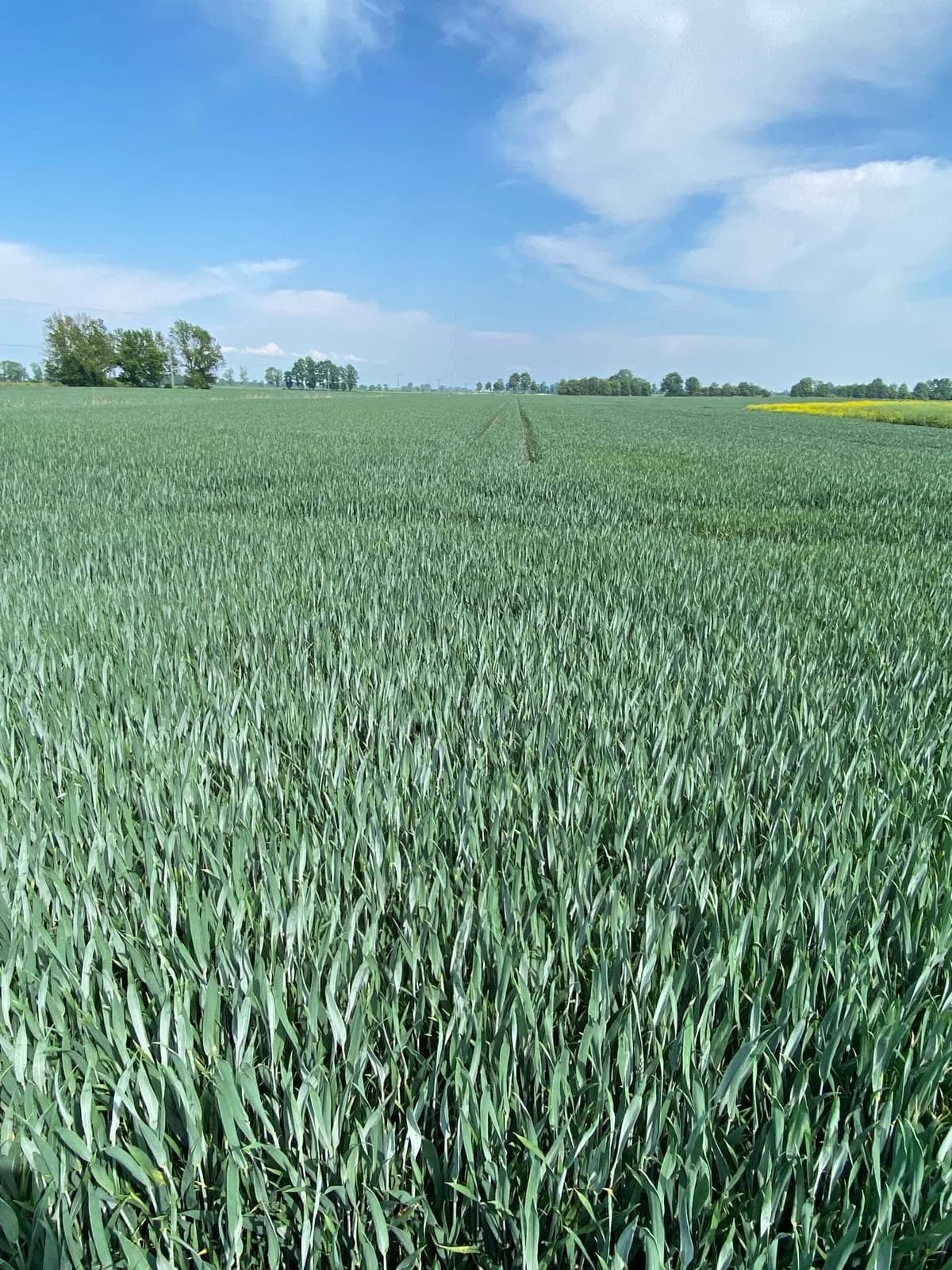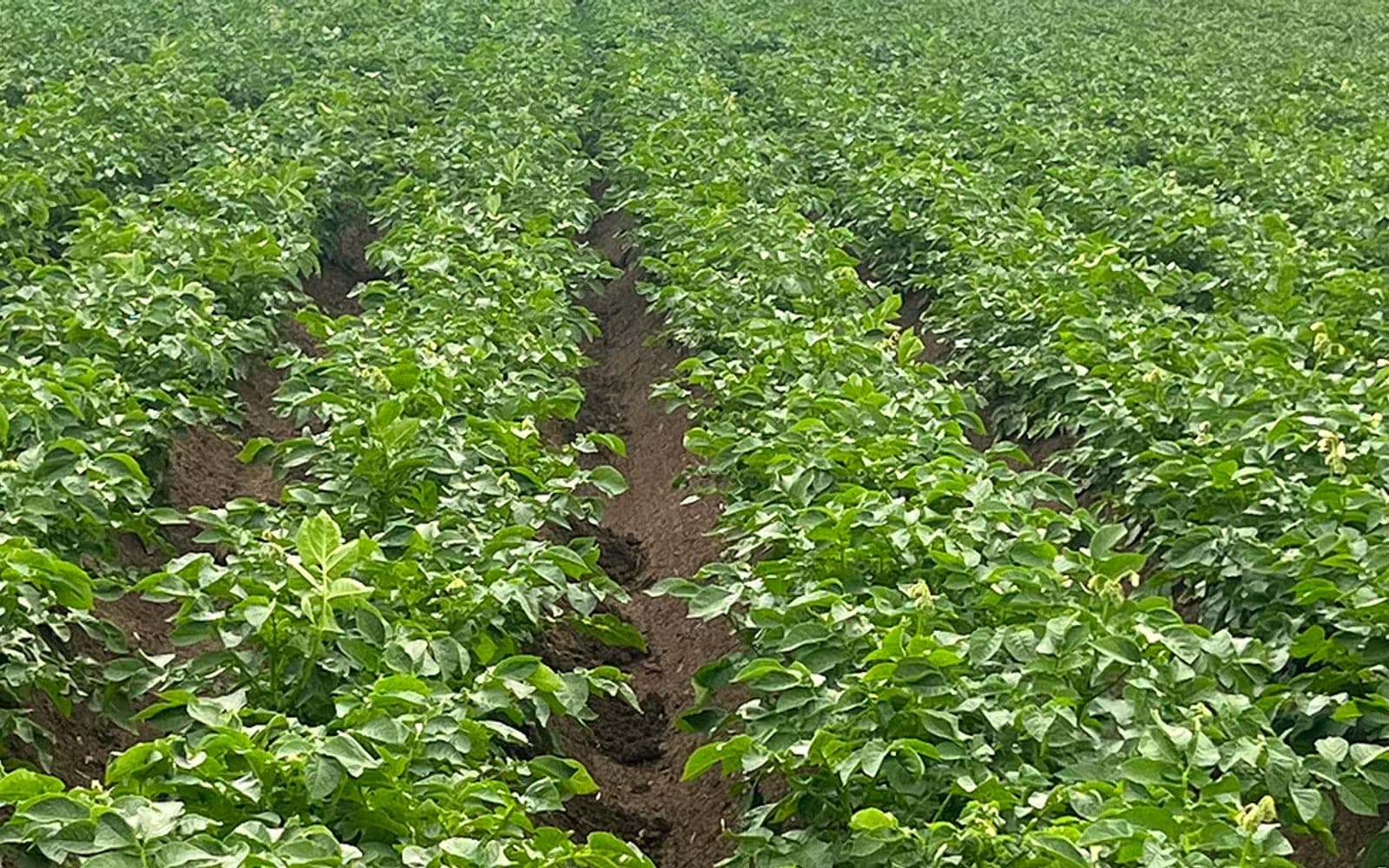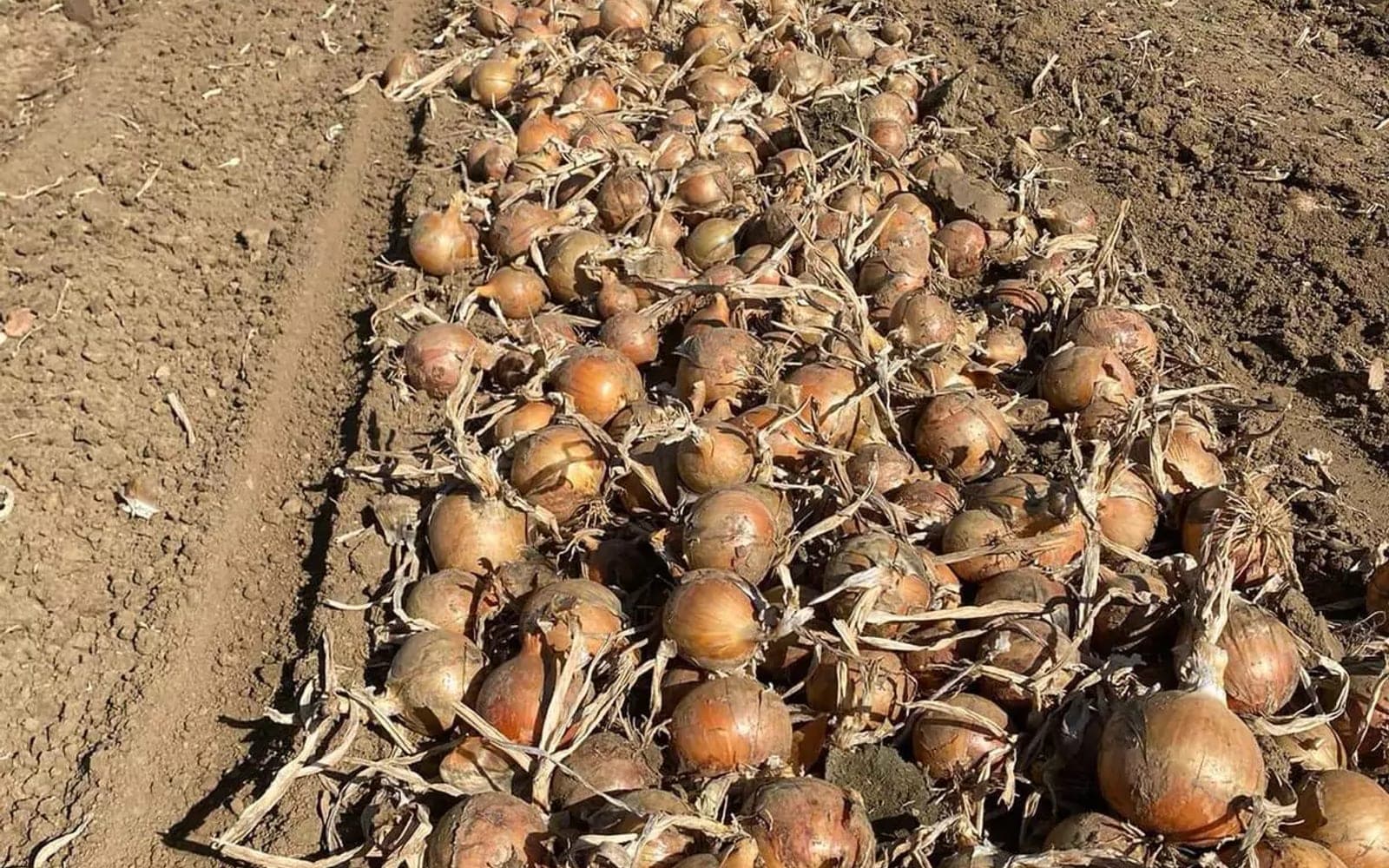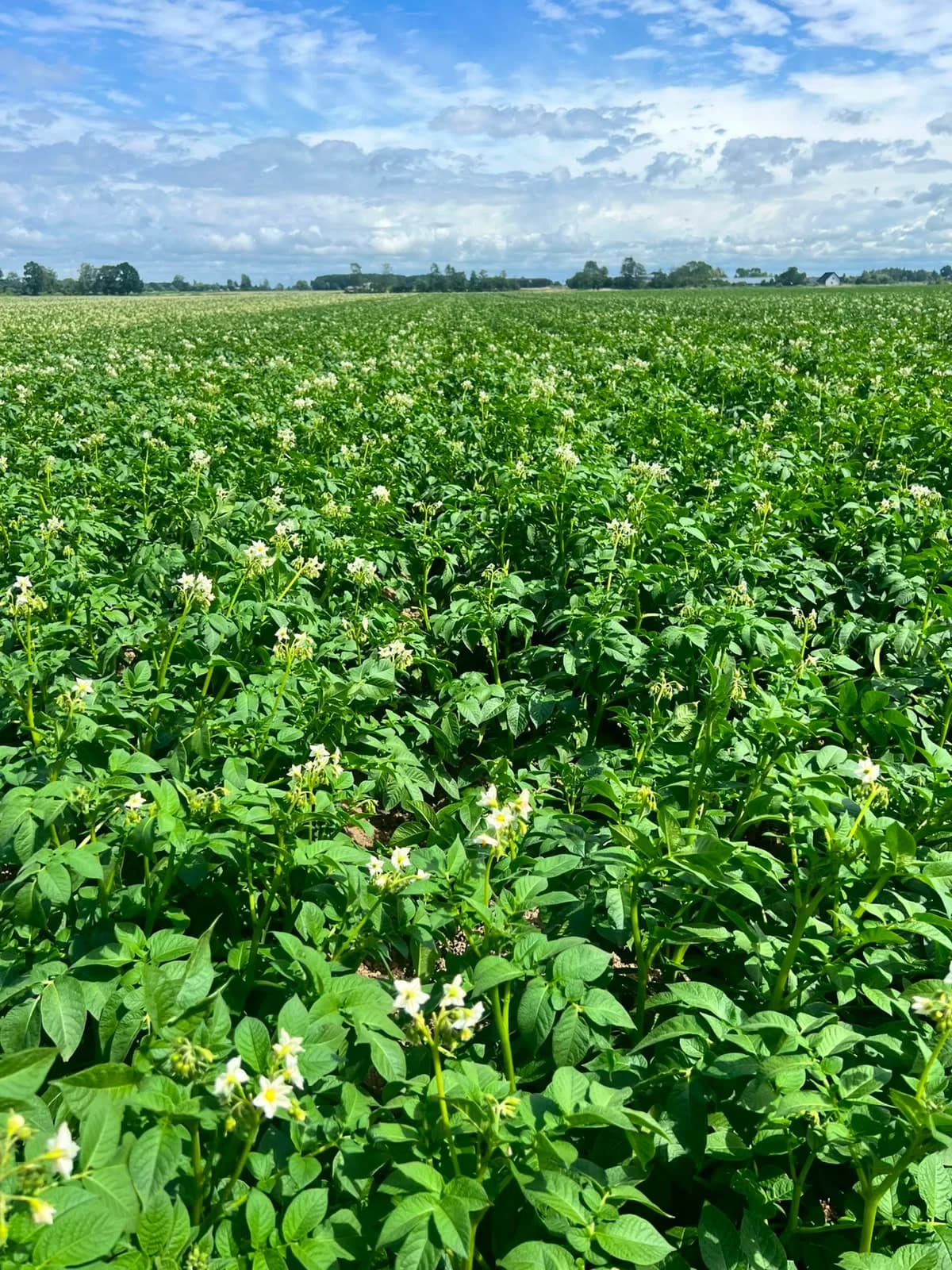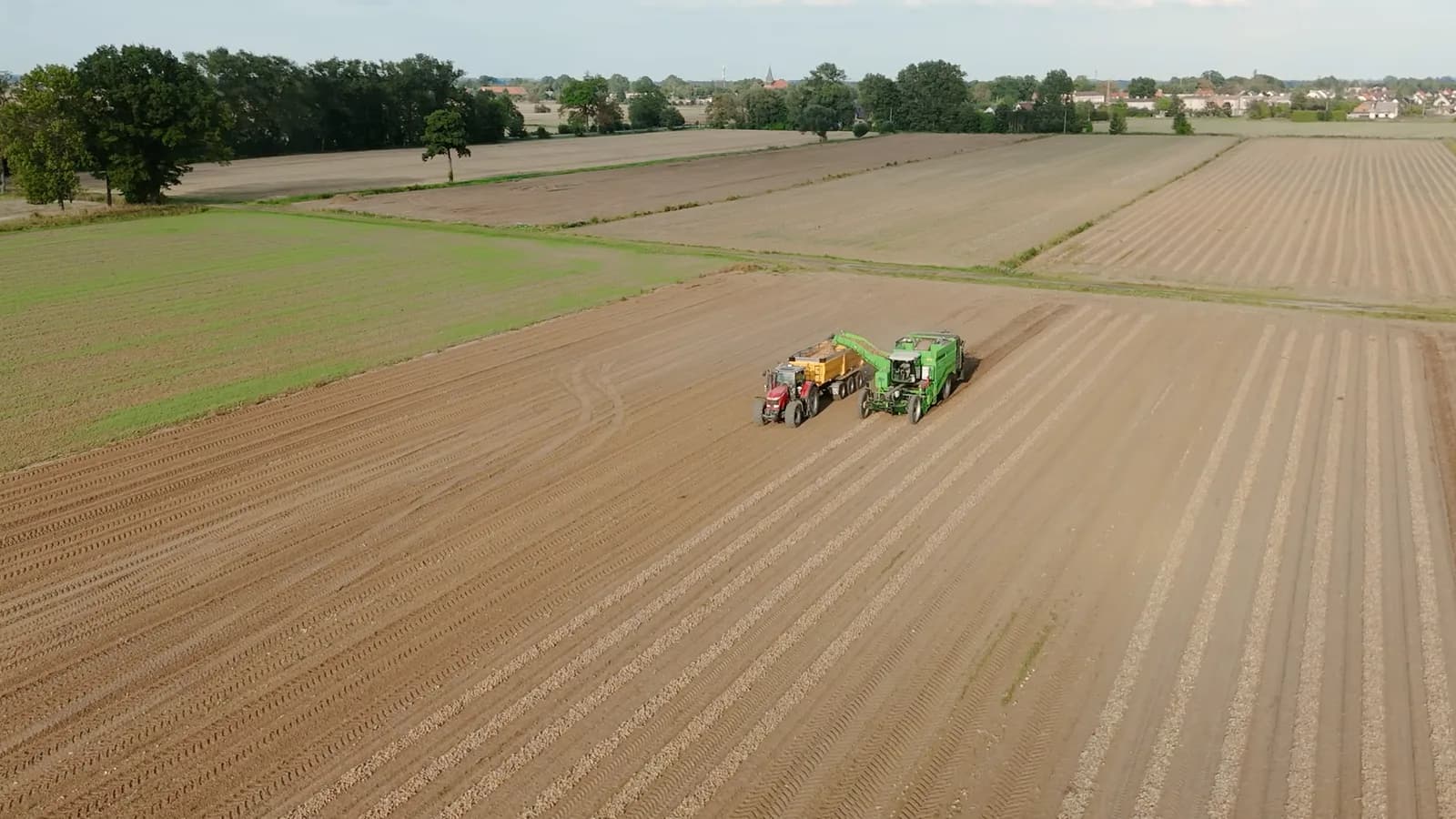
Onions face a handful of diseases and pests, but most of them can be kept away before they ever become a problem. The most serious diseases are downy mildew, grey mould and storage rots, and among pests it is onion thrips and the onion fly. For us the key is not spraying just in case, but prevention: crop rotation, a healthy and even stand, precise protection and careful field monitoring. In this post we show what really threatens onions and how we keep it in check across around 250 hectares.
The most common onion diseases
Our onions grow in a maritime, humid climate in Zulawy, and moisture favours fungal diseases. That is why we tackle disease from the prevention side: through crop rotation, choosing healthy varieties and reacting quickly once monitoring shows a real threat. Below are the diseases we watch most closely.
| Disease | When it strikes and how to spot it | How we limit it |
|---|---|---|
| Downy mildew | Damp, cool nights; a greyish-purple coating and yellowing, collapsing leaves | Monitoring, an airy site, crop rotation, protection guided by the run of the weather and field scouting |
| Grey mould and neck rot | Mainly in storage, enters through an undried neck | Curing for 2 to 4 days, a closed neck, ventilation in the store |
| Fusarium basal rot | A soil-borne disease; a rotting base plate and wilting plants | Crop rotation, several seasons with other crops, healthy planting material, no onion after onion |
| White rot | Soil-borne, the pathogen survives in the soil for many years | A long break in cultivation, clean machinery, field inspection |
The most important rule is the same for all of them: do not plant onion after onion. Onions grown on the same field year after year fall ill, because soil-borne pathogens build up in the ground. Why we keep a long rotation is explained in our post on crop rotation in onion growing.
Onion pests, and what we watch for
Pests can weaken a plant and open the door to disease, so we take them seriously, but without panic. We do not reach for a treatment as a precaution. First we observe the field and the flight of insects, and we act only once the threat exceeds the level that justifies intervention.
| Pest | What it does | How we limit it |
|---|---|---|
| Onion thrips | In warm, dry summers it sucks the sap; silvery streaks on the foliage, a weaker crop | Monitoring, damage thresholds, precise and spot protection |
| Onion fly | The larvae feed in the base of the bulb, plants wilt and die | Crop rotation, healthy strong emergence, watching the timing of the flight |
| Onion weevil | Damages the foliage, weakens the plant | Field monitoring, response at threshold, a clean crop surroundings |
A healthy, strong plant copes with pest pressure far better than a weakened one. That is why we take the first step in protection at sowing: an even, uniform stand with a strong start means fewer openings for pests and diseases. How we grow onions from sowing to harvest is described in our guide to growing onions in Zulawy.
Prevent, do not cure: our approach
Protecting onions for us means, above all, prevention. The fewer opportunities for pathogens and pests, the less we need to intervene. We rely on four pillars.
- Crop rotation. Onions return to the same field only after several seasons with other crops. This is the most effective way to deal with soil-borne diseases and pests tied to onion crops, without reaching for chemicals.
- A healthy, even stand. We sow on GPS navigation with RTK correction, so the rows are even and the plants have equal access to light and nutrients. A strong plant defends itself better.
- Monitoring and thresholds. We look at what is really happening in the field and act only at the damage threshold, not just in case. This is the heart of Integrated Crop Production, the way we run the whole farm.
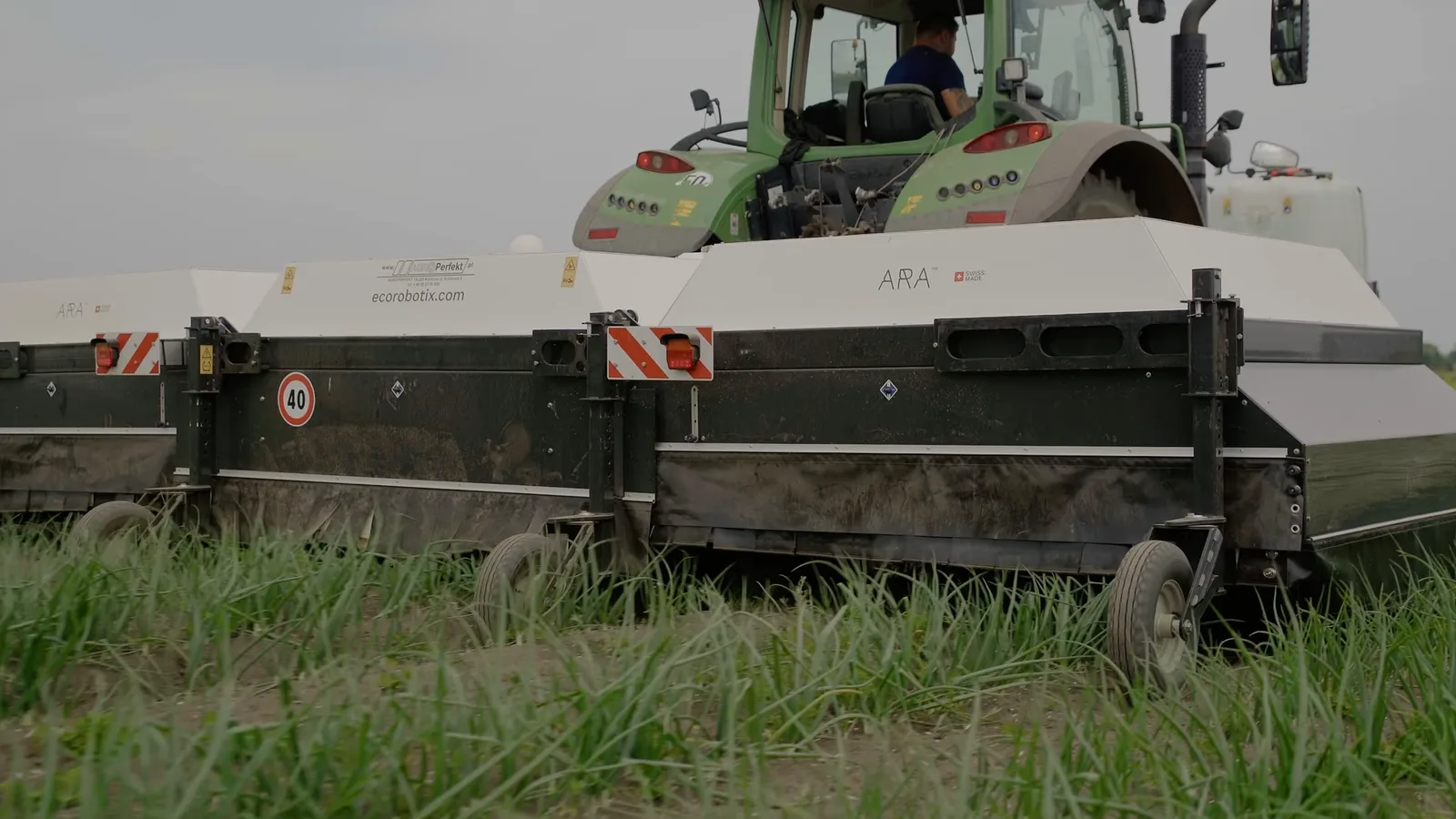
- Precise protection. Weeds that compete with onions and favour disease are dealt with by spot spraying. The Ecorobotix ARA machine sprays only where a camera detects a weed and cuts chemical doses by around 70 percent. How it works is shown in our post on Ecorobotix ARA spot spraying.
We produce with technology free of pesticide residues, in line with the principles of Integrated Crop Production. Fewer treatments and precise, spot protection make it simpler to hold that standard, and we test every batch for residues anyway.
Storage diseases begin in the field
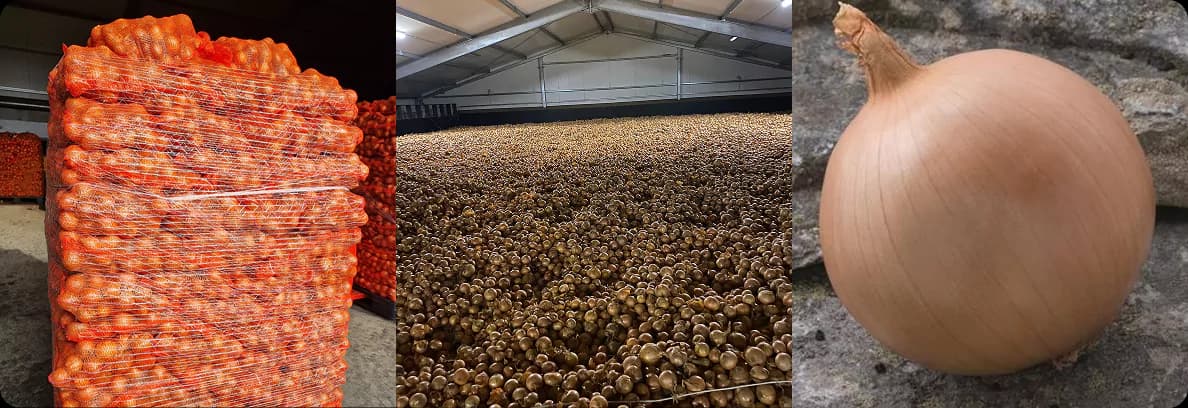
Some diseases do not show in the field, only later in the store. Grey mould and neck rot enter the onion through an undried, open neck, and every bruise from a careless harvest is a ready gateway for rot. That is why we start the fight for healthy produce in the store while still in the field: we harvest gently, and after harvest we cure the onions for 2 to 4 days, until the neck is dry and closed.
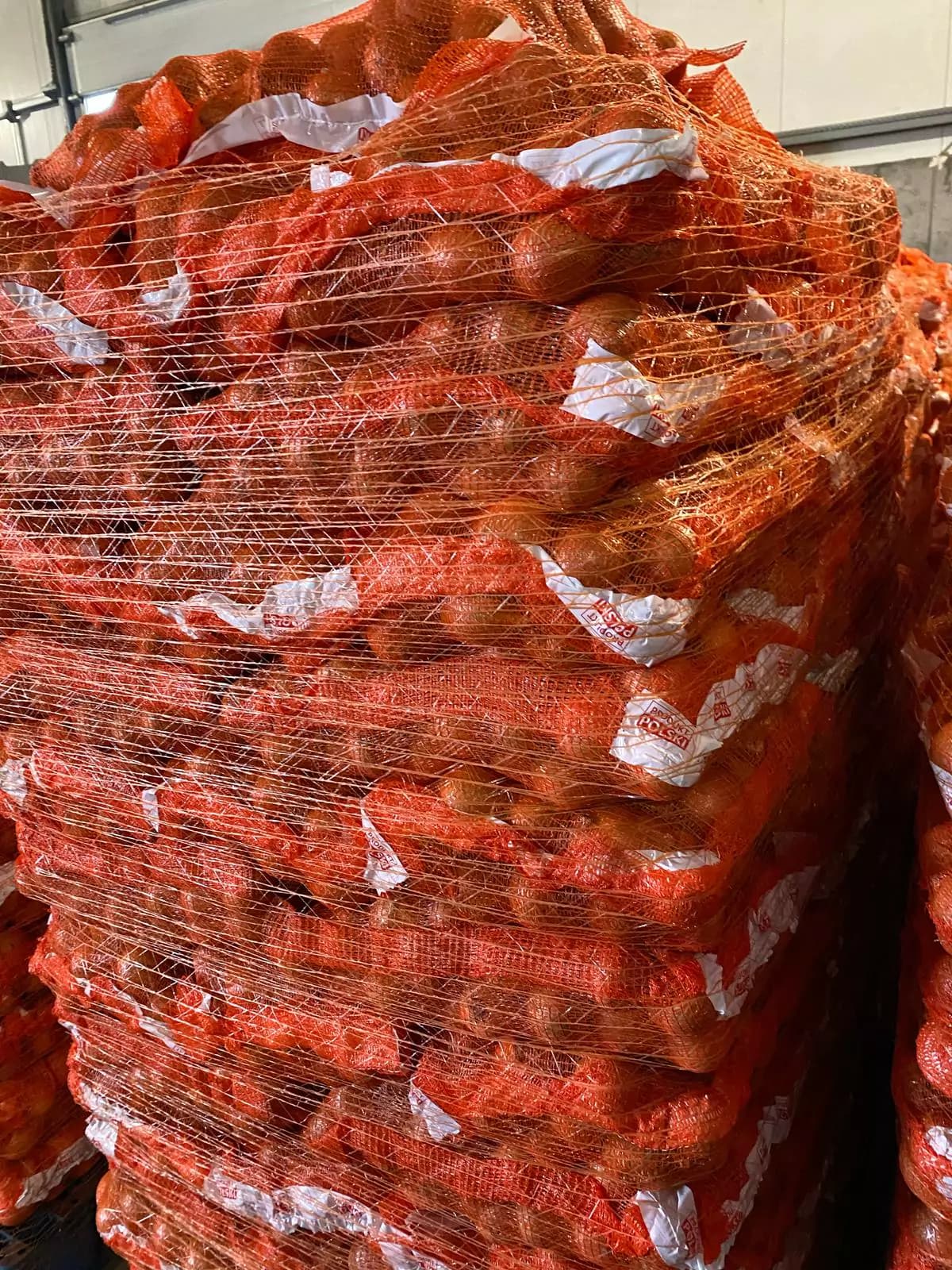
Only onions prepared this way go into storage, where we watch the temperature and ventilation and check the batches regularly. We describe the whole process in our guide to storing onions. It decides how much of the crop survives to sale in good shape.
What it means for the buyer
Prevention instead of cure is not only a healthier crop, but also more reliable produce. The buyer gets onions that pass audits and tests without surprises, grown with minimal, precise use of chemistry. We test every batch for pesticide residues, heavy metals and substances hazardous to health.
For packers and processors one thing matters: produce of repeatable, documented quality. You will find the varieties and delivery formats in our onion offer.
Looking for onions grown with care and minimal use of chemistry? See our onion offer or write to us through the contact page.