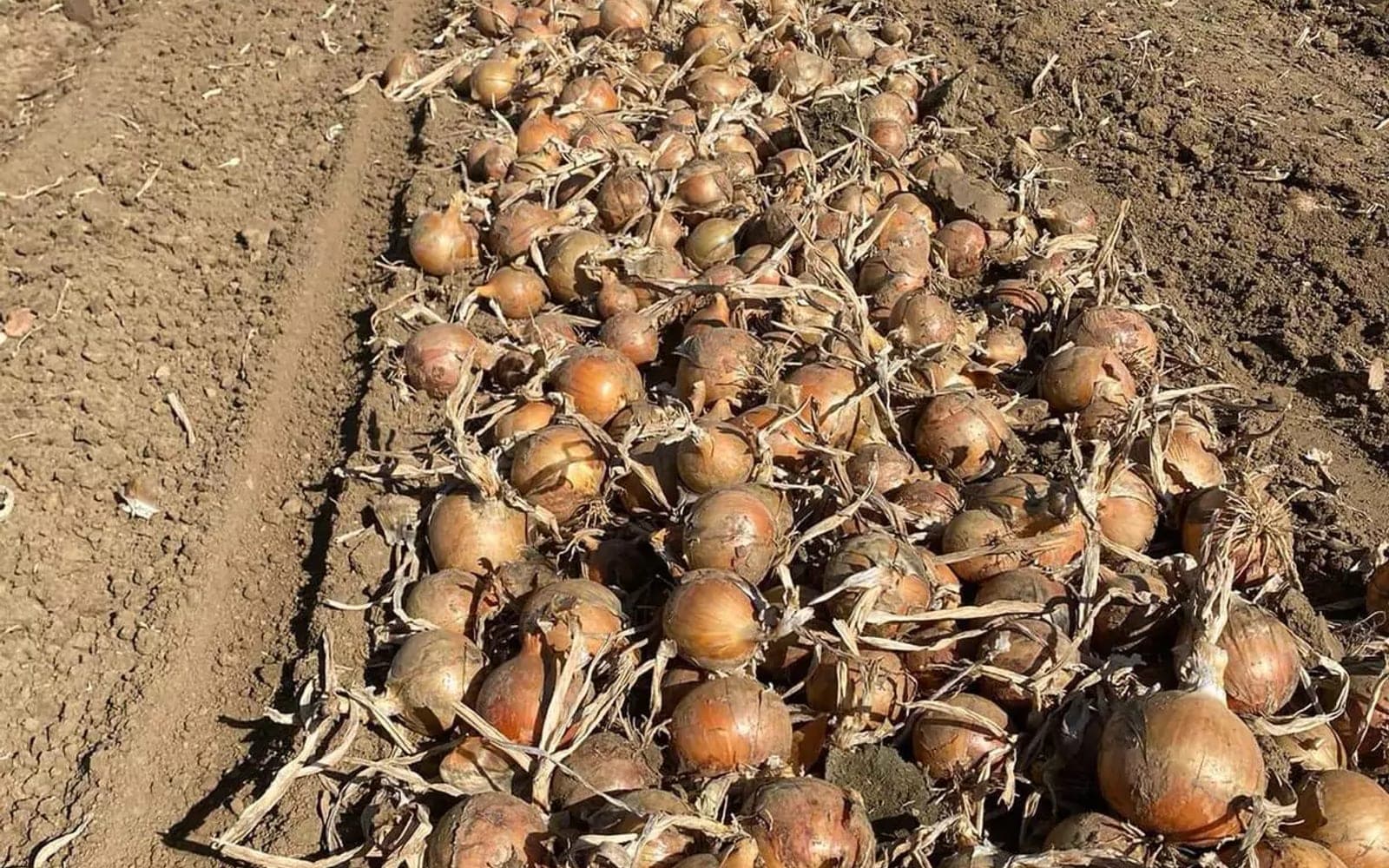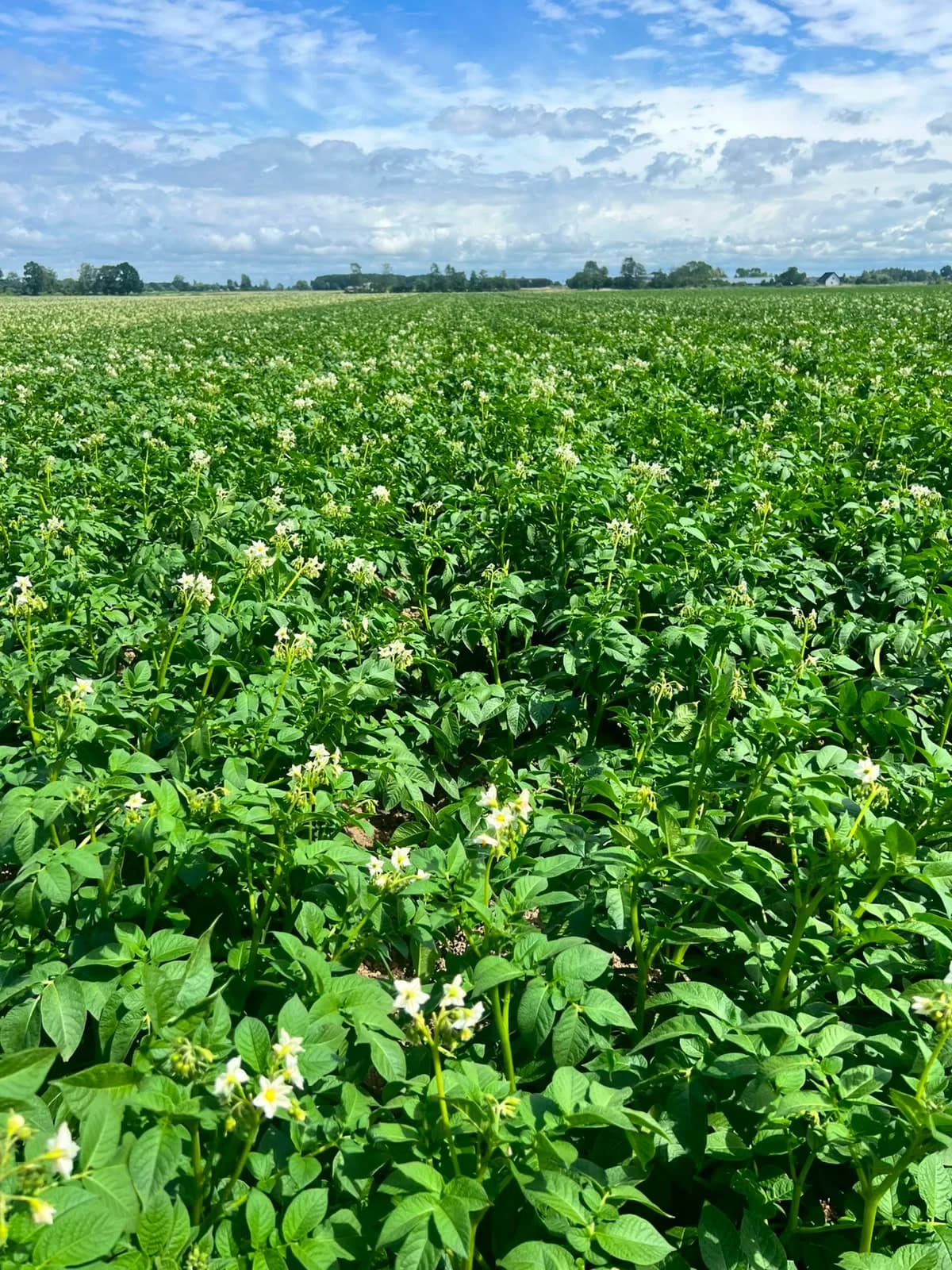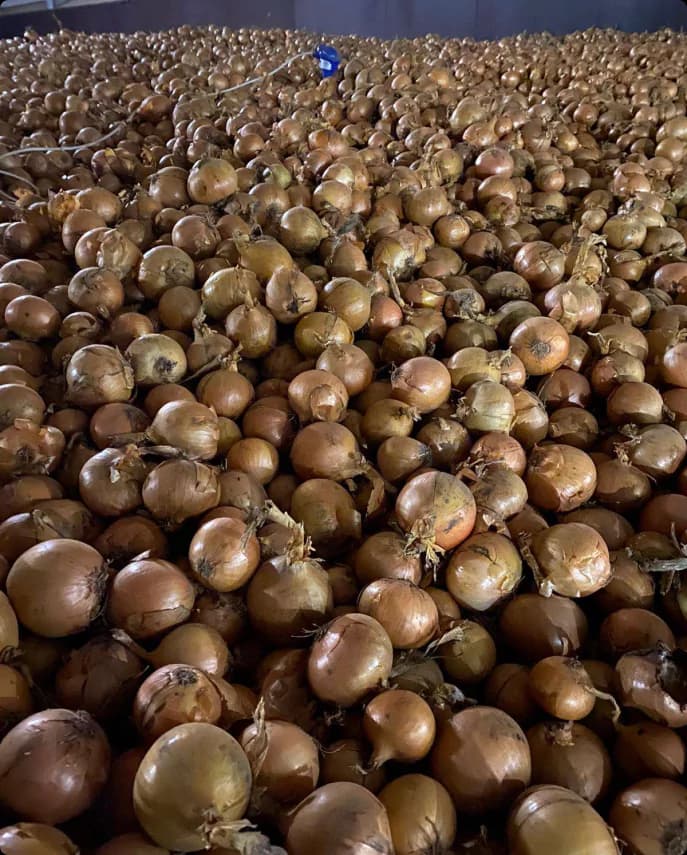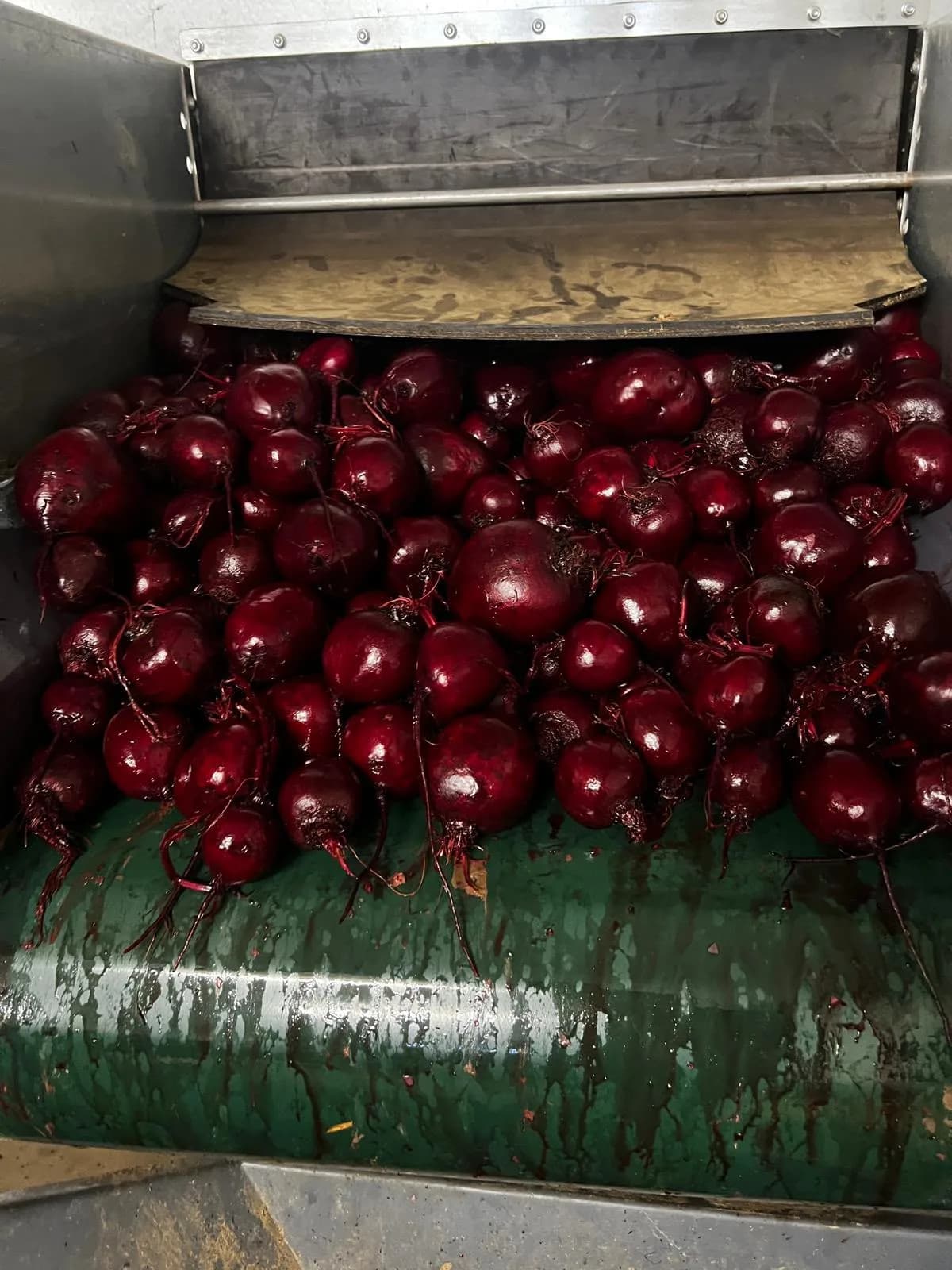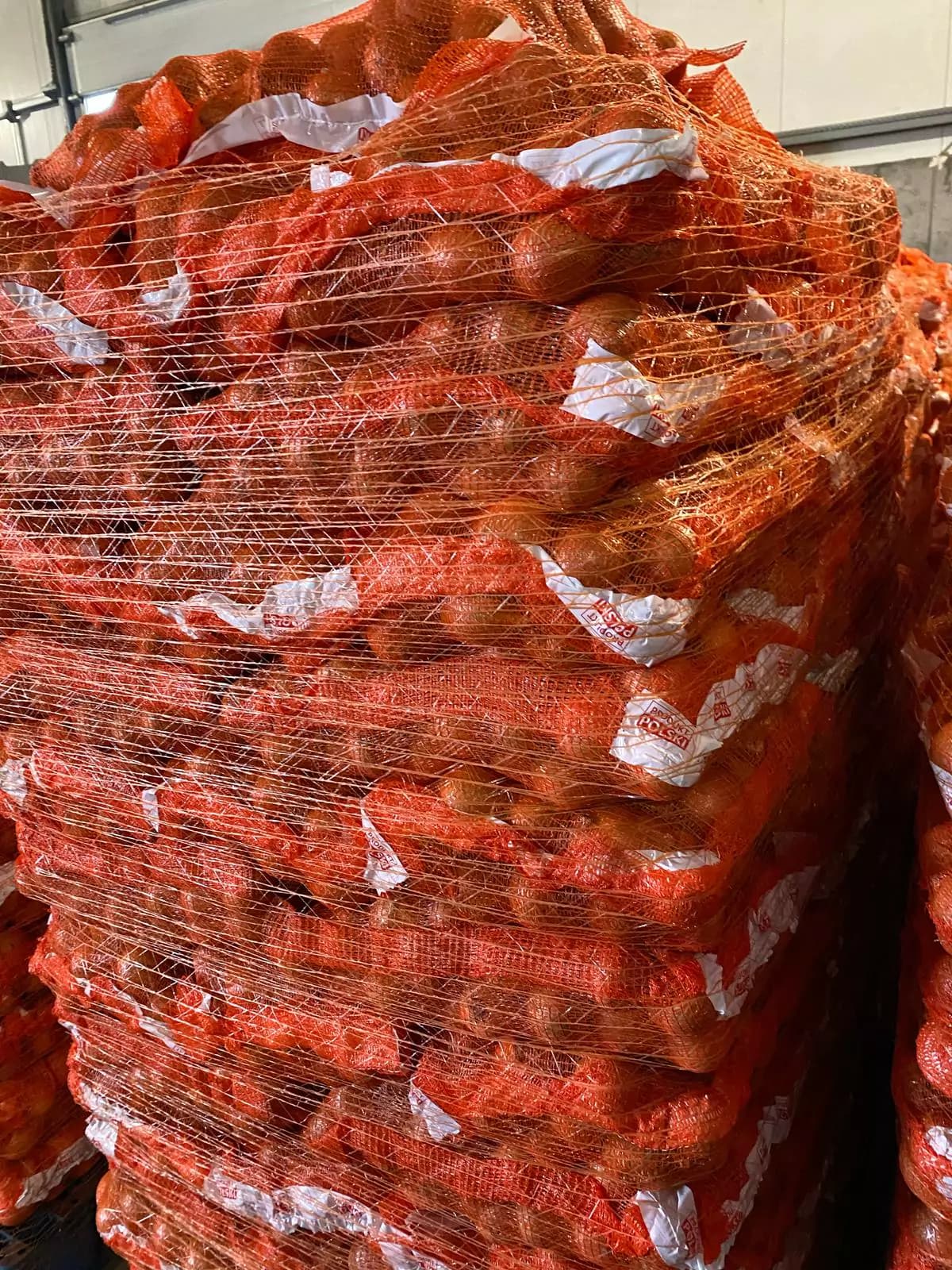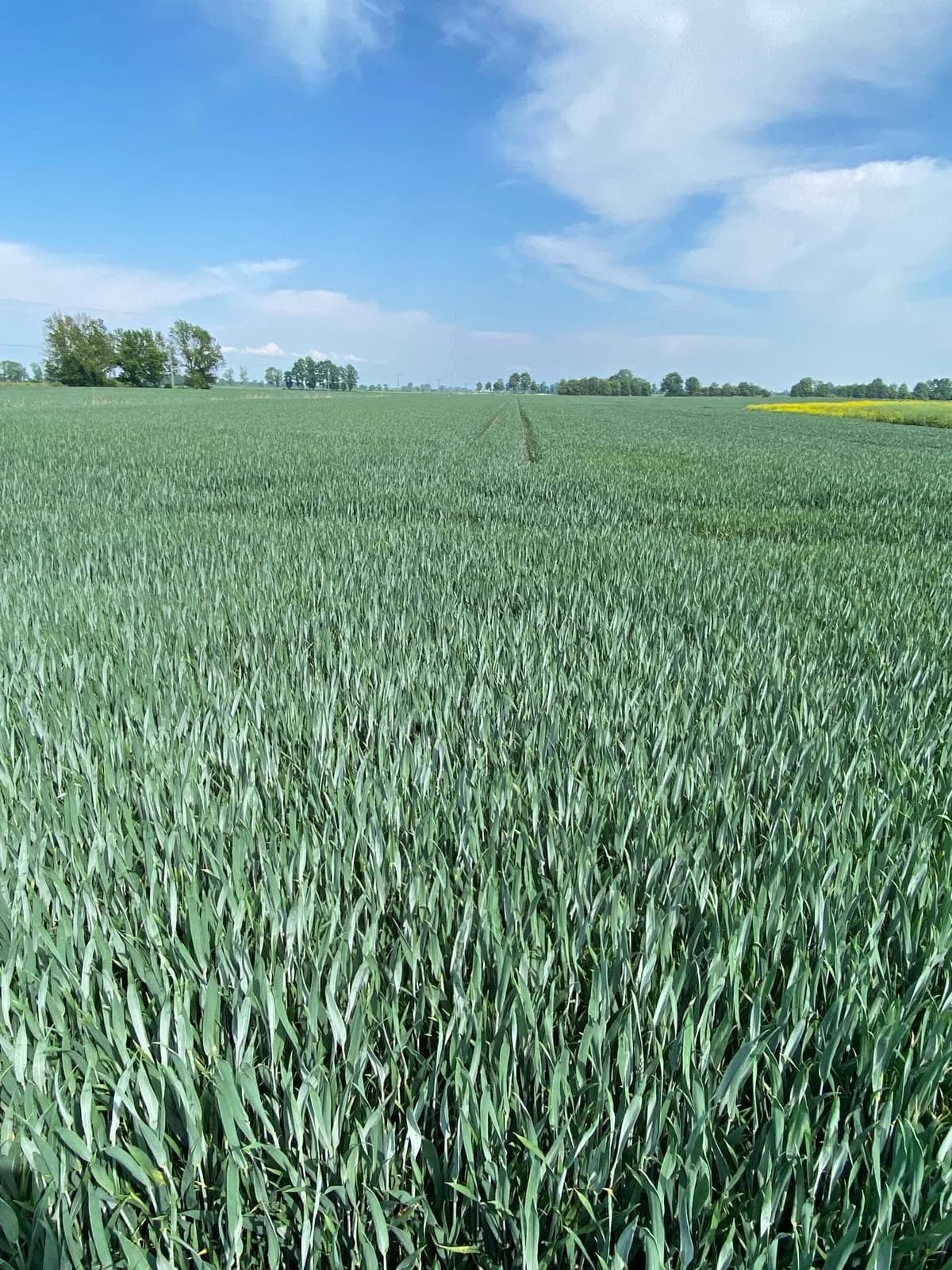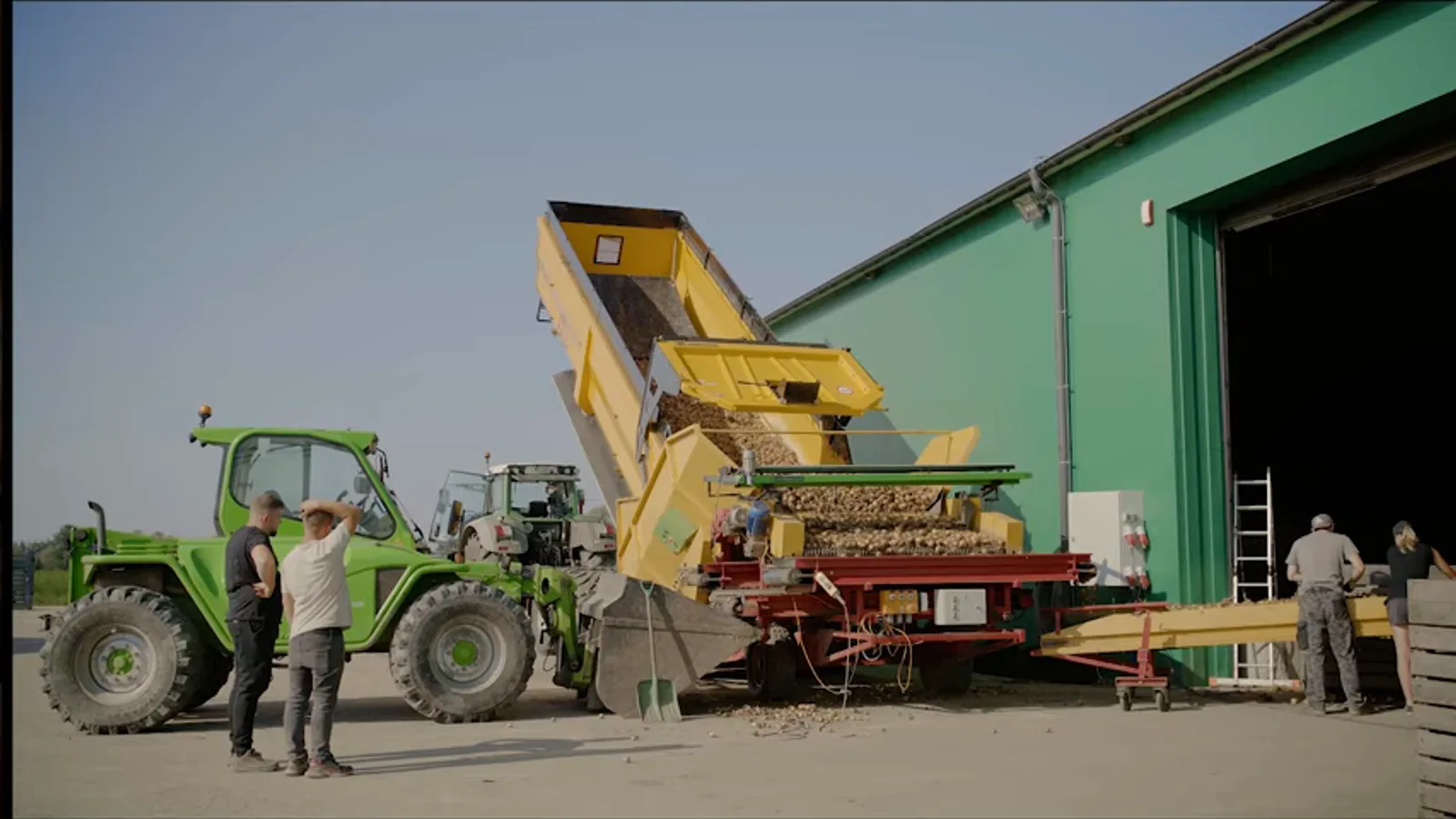
A serious buyer does not buy "onions in general". They buy a specific batch and want to know what they will get before the goods reach their ramp. That is why we run quality control batch by batch: each one goes through the same path with us, from the field before harvest, through the store and the optical sorter, to the tests and documents at loading. In this post we show, step by step, what that path looks like and what it means for the buyer.
What a batch is and why we think in batches
For us, a batch is produce with a known origin: from a specific field, harvested on a known date, stored in a specific chamber and packed in one cycle. We run the farm according to the principles of Integrated Plant Production, and on top of that we hold GlobalG.A.P., GRASP, FSA Gold (Farm Sustainability Assessment, the highest level) and GMP+ certificates. These systems require documentation of every operation, so for every pallet we can name the field it came from and the history of what happened to it.
Thinking in batches has a simple advantage. When a buyer asks about quality, we do not answer with a farm-wide average, but with the result of the specific batch heading their way. With around 250 hectares of onions and yields of around 60 tonnes per hectare, differences between fields simply exist, and it is more honest to measure them than to pretend they are not there.
Five control points, the same path for every batch
The path is always the same, whether the batch goes to a packhouse near Gdansk or abroad.
| Stage | What we check | What the buyer gets out of it |
|---|---|---|
| Field before harvest | Health, maturity, effectiveness of the protection plan and withdrawal periods | Confidence the produce is fit for harvest at all |
| Intake into the store | Post-harvest quality, onion curing for 2-4 days | Onions ready for months of storage |
| Storage | Conditions in the 13,000-tonne store | Produce in constant condition all year round |
| Sorting | Cameras and AI, a 360-degree scan of every single piece | A batch free of stones, soil clods and defective pieces |
| Dispatch | Size grade, packaging, complete tests and documents | Predictable produce on the ramp, no surprises |
Two of these points do the heaviest lifting and deserve a closer look: sorting and testing.
Sorting: every single piece passes in front of the cameras
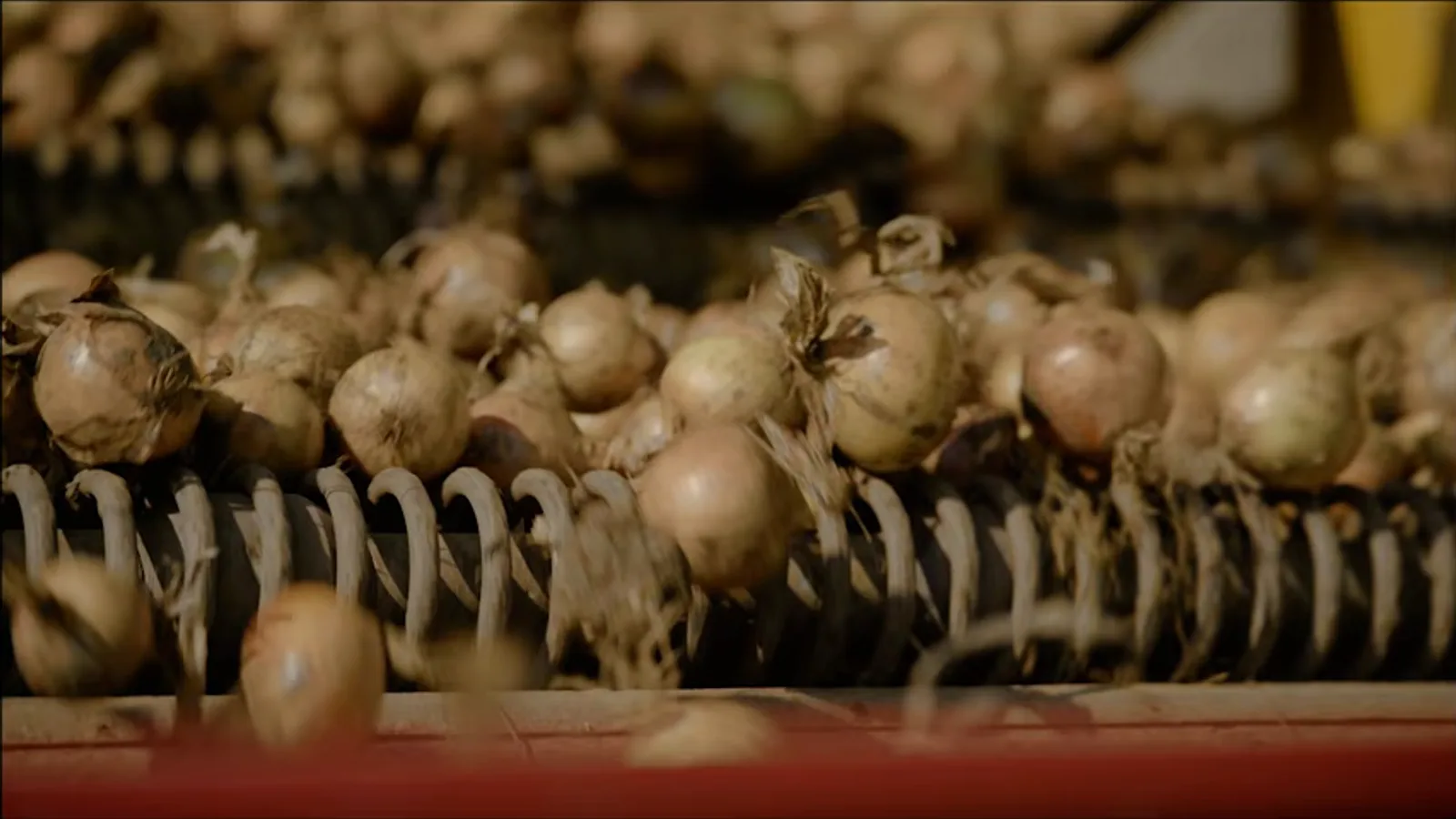
The heart of the control stands in the packhouse. The DOWNS CropVision optical sorter scans onions, potatoes and beetroot in full 360 degrees, rejects stones, soil clods and defective pieces, and handles up to 100 tonnes per hour. That is the difference between spot checks and checking every single piece: at that throughput we do not have to choose between speed and accuracy.
Laboratory tests close the loop
A camera cannot see crop protection residues or heavy metals. That is why we test batches in accredited laboratories: for pesticide residues, heavy metals and substances hazardous to health. We produce in the pesticide residue-free technology, in line with the principles of Integrated Plant Production, and the test is the proof that the technology worked. The result travels with the batch, so the buyer does not have to start their own control from scratch.
The rule is short: a batch without checks and without documents does not leave. That applies equally to full trucks at the peak of the season and to a single pallet in March.
Size grade and packaging matched to the specific buyer
Quality control does not end at "the produce is sound". The batch also has to fit the buyer's line. That is why, before dispatch, we grade the produce to order, match the size grade to processing or packing and pack it the way the customer needs: loose, big bags or sacks. Thanks to the 13,000-tonne store we do not have to ship produce "as it comes" straight after harvest. We dispatch when the batch is cured, sorted and checked.
What the buyer gets out of it
Three things: predictability, lower risk and less work on their side. A batch checked at our end means less waste on the line, fewer complaints and a shorter time from unloading to production. This is how we work for partners such as Onix, Farm Frites and FreshPol, who supply the largest retail chains and processing plants in Poland and Europe. More about how commercial cooperation works with us in our post on wholesale onion supply.
We calculate the price of a batch based on current market prices, the size fraction and the packaging. Take a look at our onion offer and write to us through the contact page, and we will prepare a quote for your specific order.
Looking for a supplier who shows you what they sell before you open the first big bag? Take a look at the onion offer or write to us through the contact page.