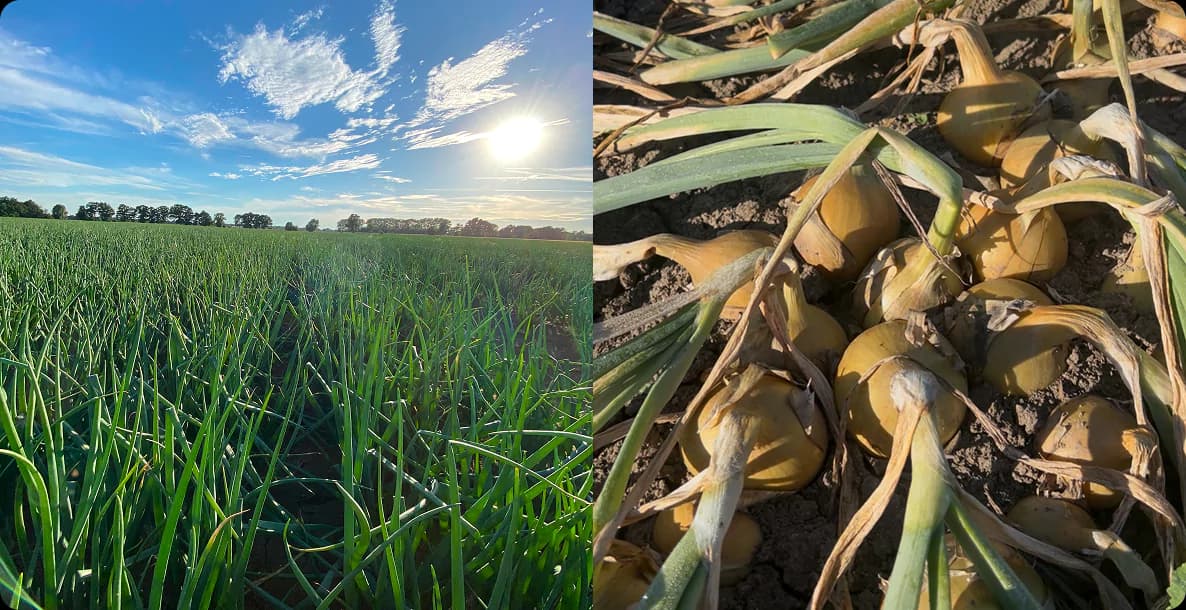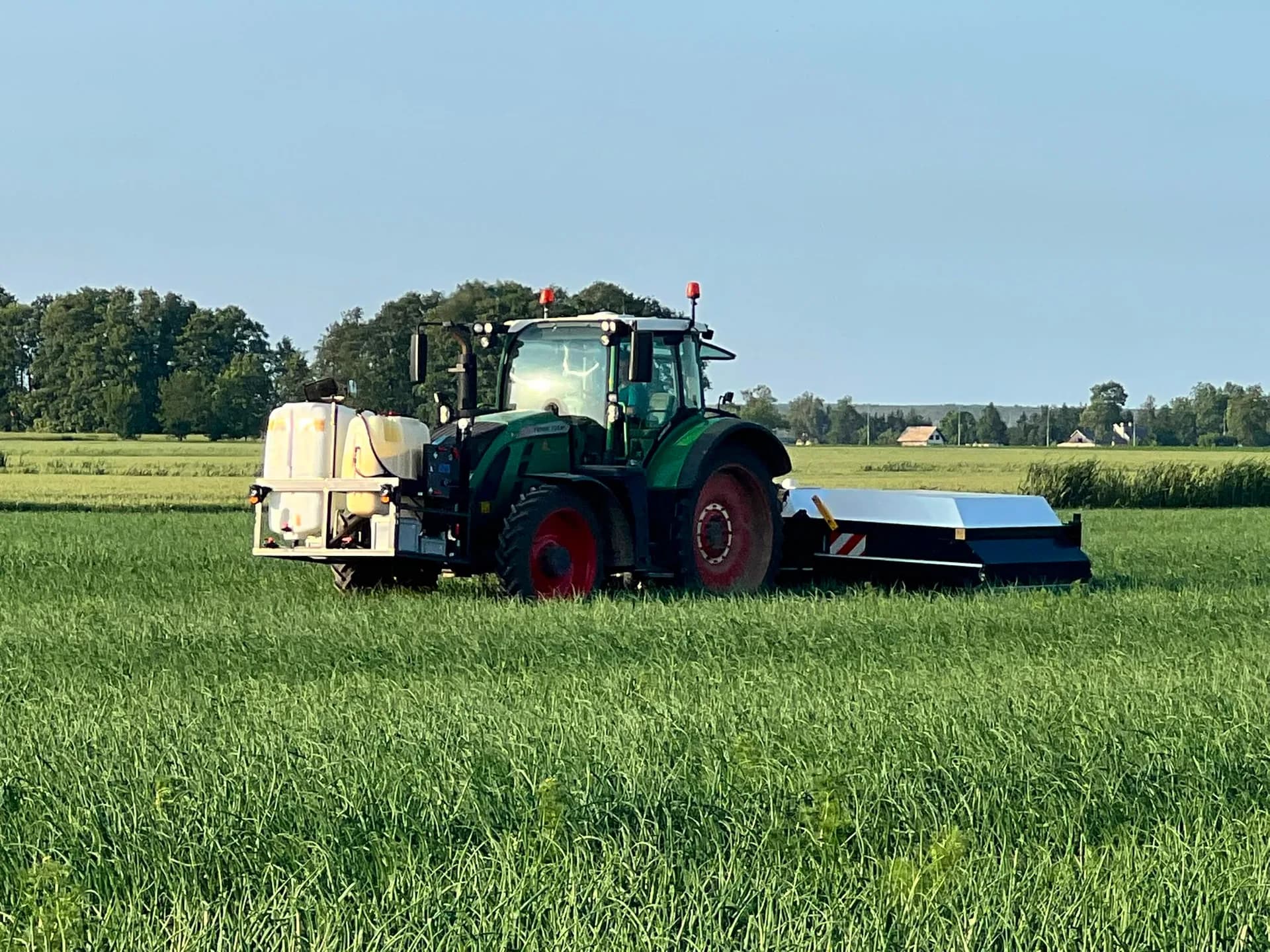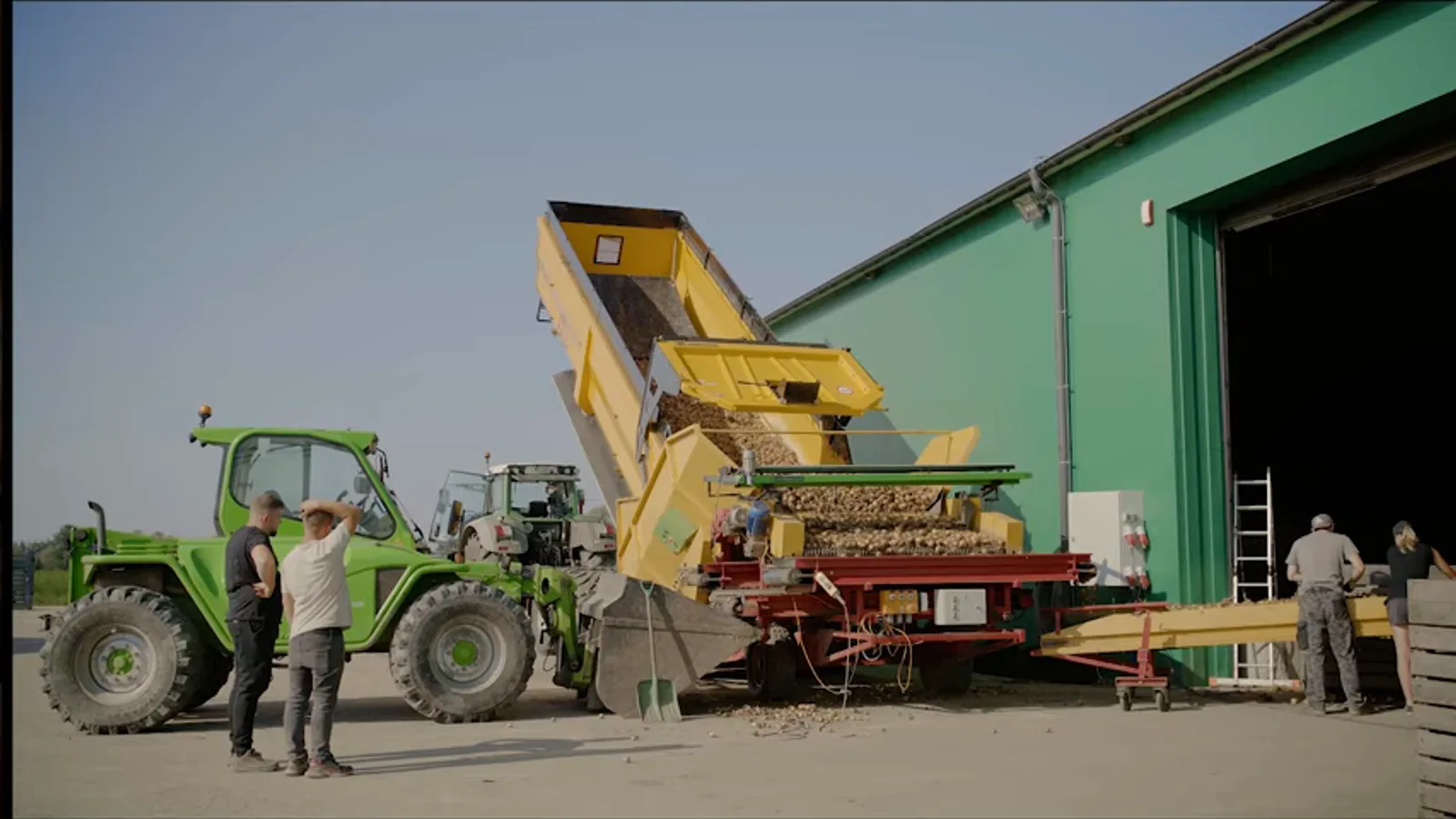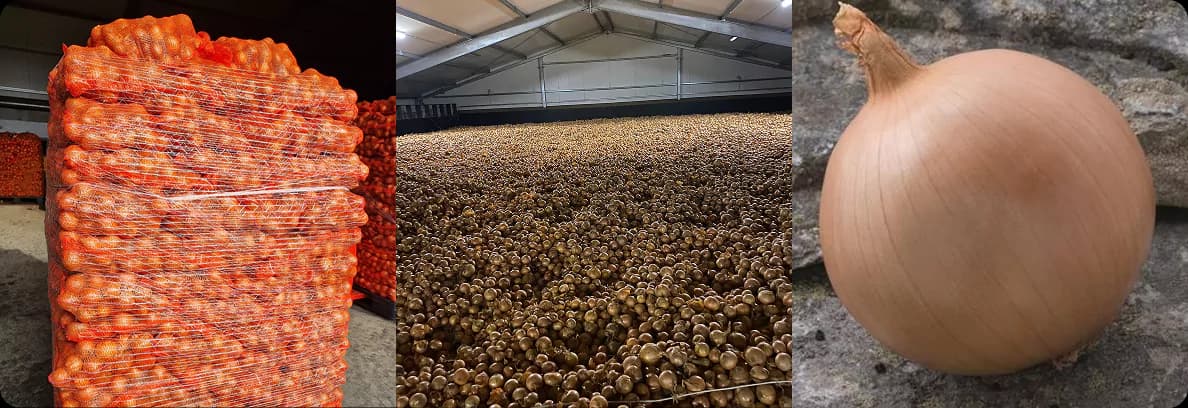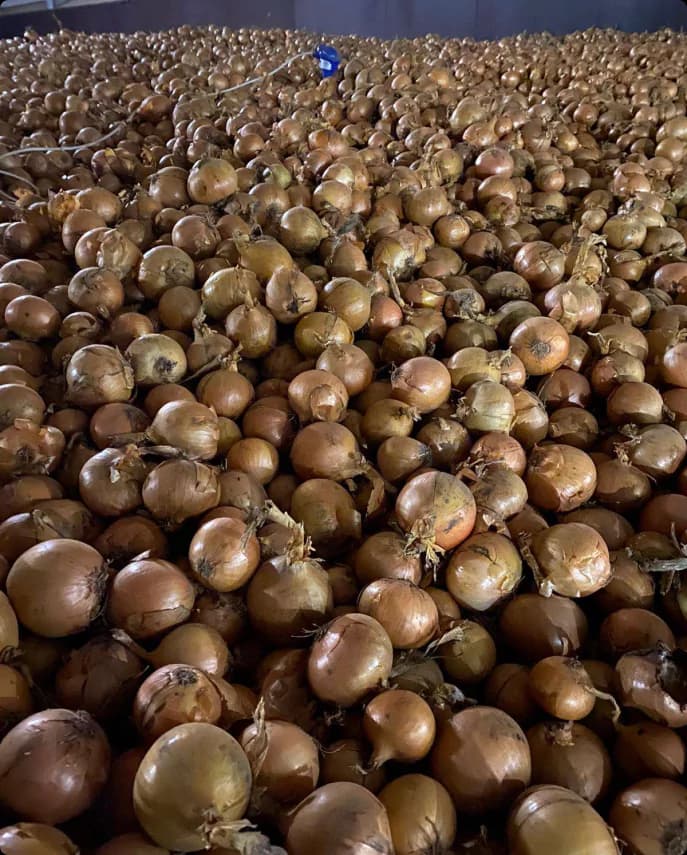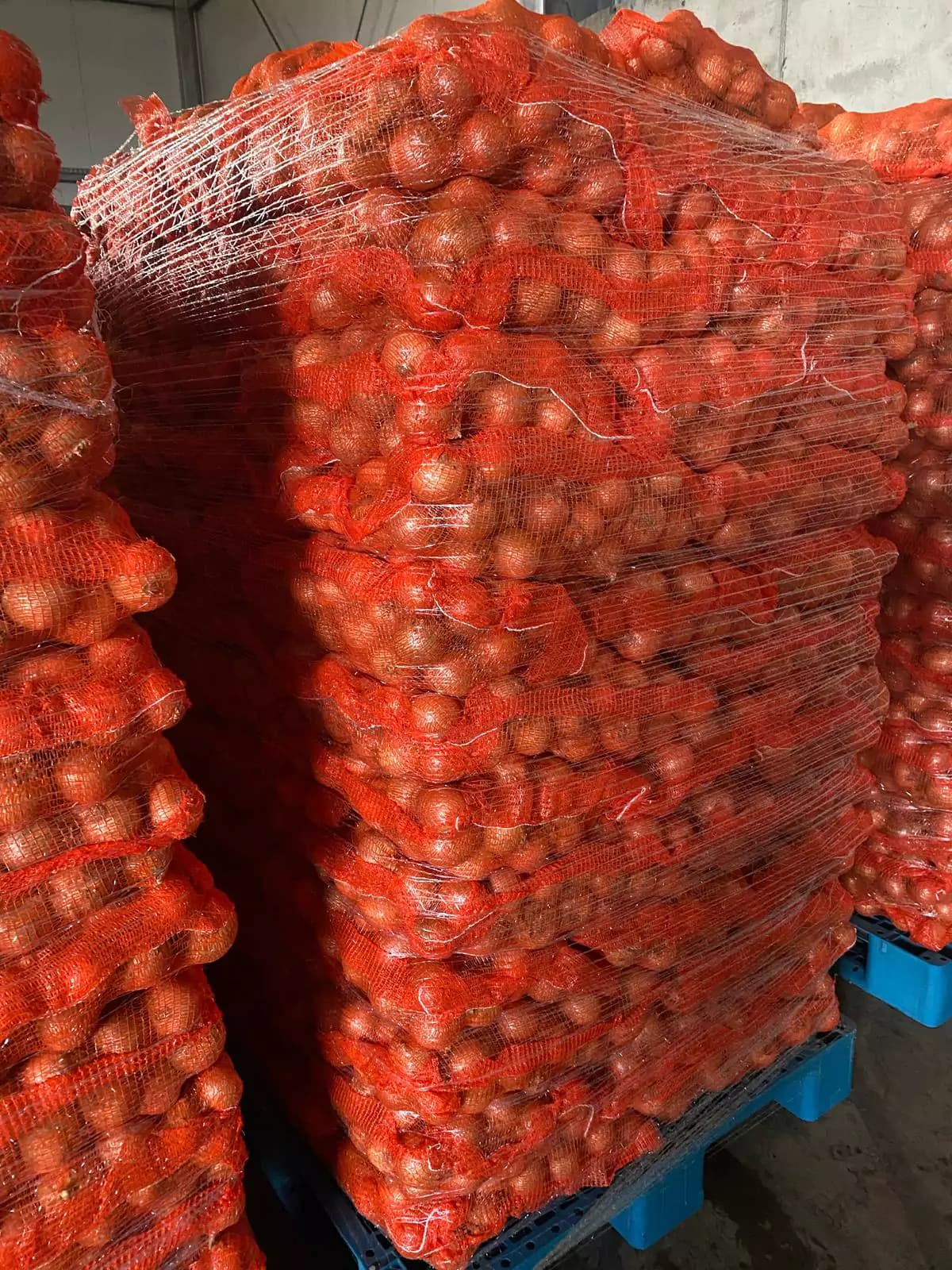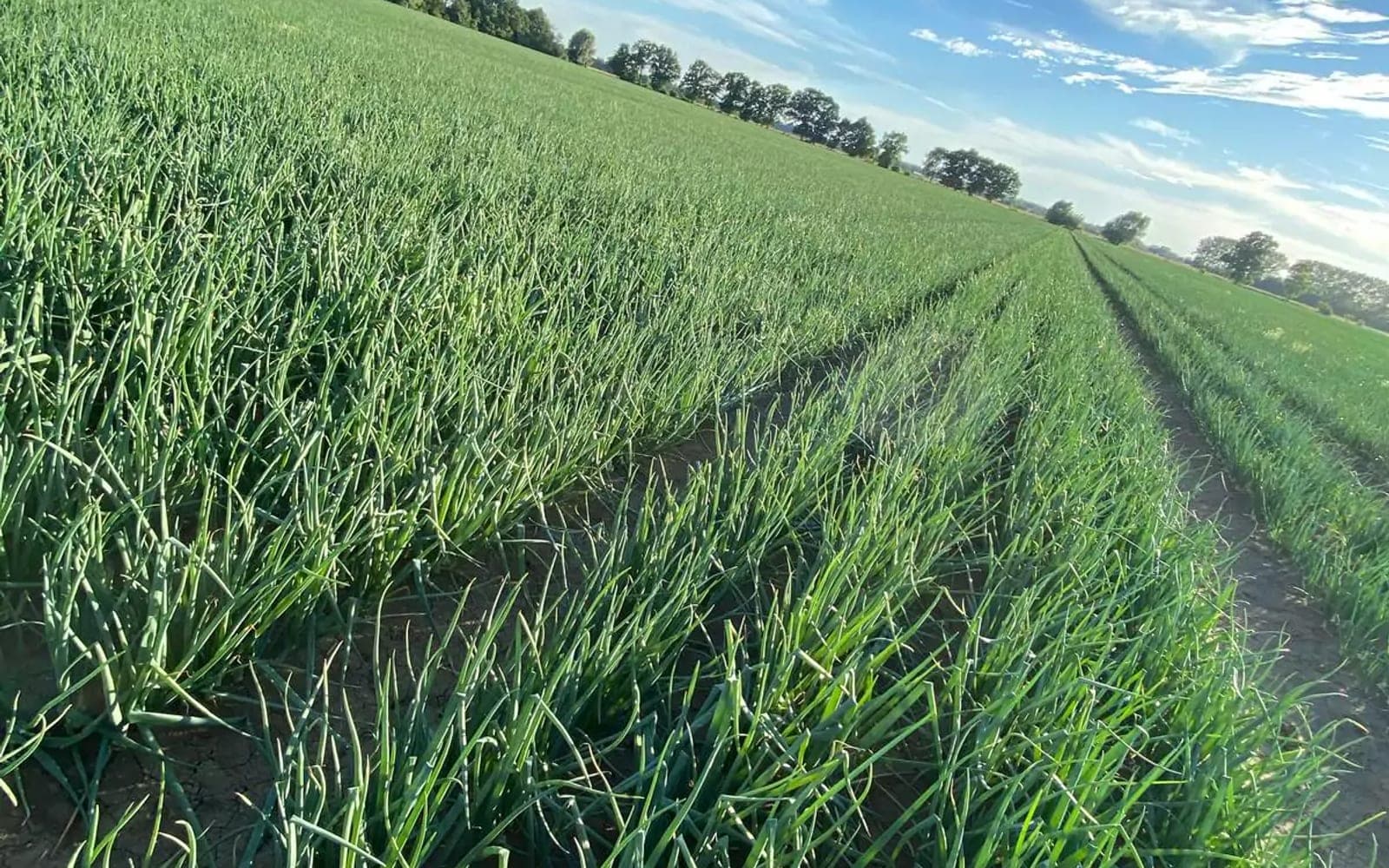
The onion packing line is the last stretch of the road from the field to the buyer's truck. Ours is automated and ends with a palletiser that stacks the finished goods on a pallet. Onions leave our 13,000-tonne store graded, in the packaging the customer asked for and ready to load the same day. Here is how it works, step by step, and what the buyer gets out of it.
What the packing line does, step by step
Onions only reach the line once they are cured and closed at the neck. Before that they pass through the store, where they rest in controlled conditions. On the line several things happen in sequence, and each of them serves one purpose: an even, healthy product on the pallet.
| Stage on the line | What happens | Why |
|---|---|---|
| Feeding | Onions come from the store onto the belt | An even, controlled flow |
| Cleaning | Loose skin and soil come off | A clean, presentable product |
| Sorting | Damaged and uneven bulbs are removed | A healthy batch with no defects |
| Grading | Split into size fractions | Every buyer gets their size |
| Weighing and packing | Bags, big bags or bulk | Packaging built around the buyer |
| Palletiser | Stacks the packaging on a pallet | A finished, stable pallet for transport |
Sorting and grading are the heart of this line. Onions from a single field are never perfectly even, and buyers need different sizes. A packing house wants a different fraction than a processing plant. So we split the batch into fractions instead of selling everything in one bag. We write more about this in our post on what onion size processors want.
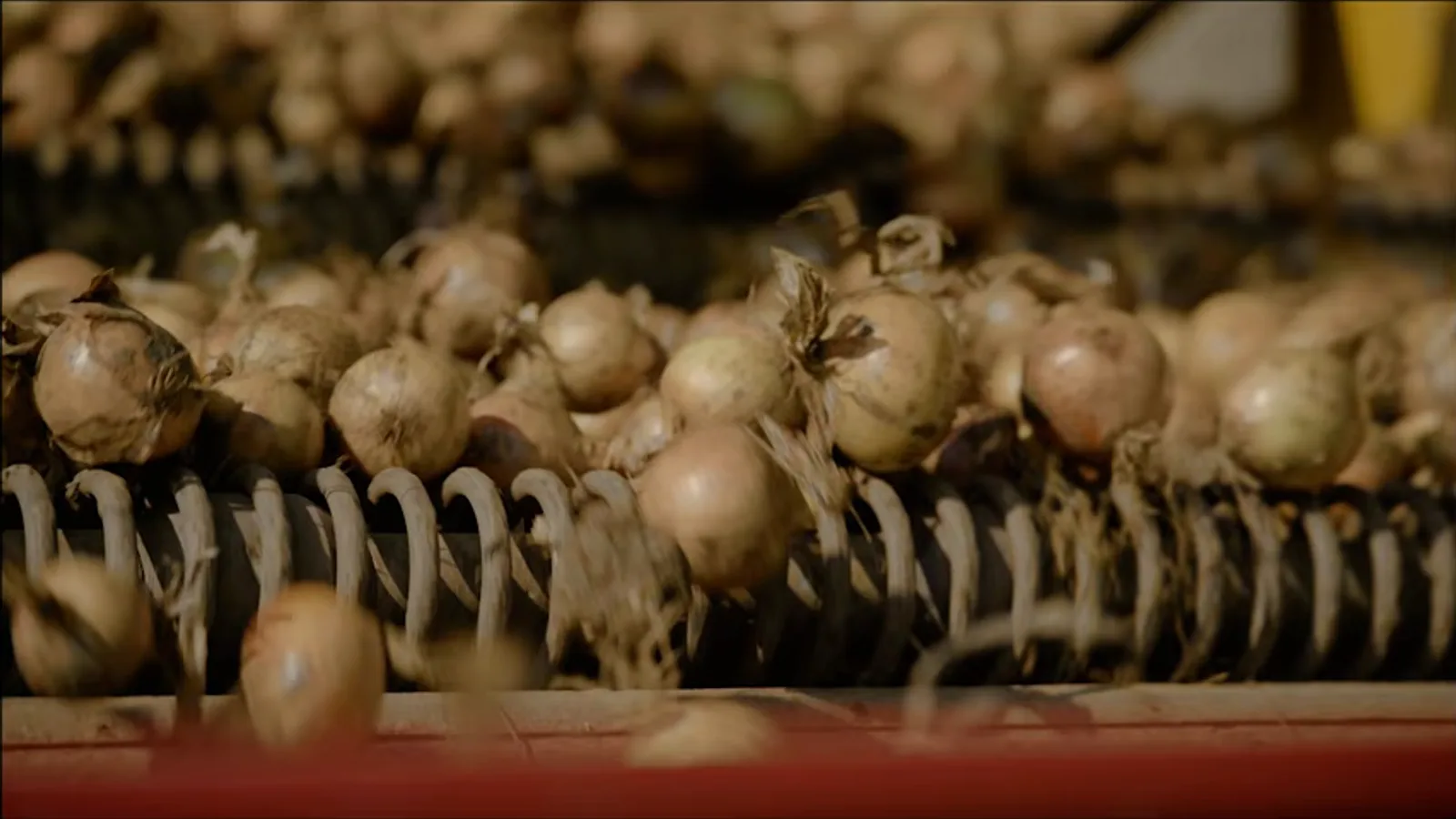
Sorting is where our DOWNS CropVision optical sorter helps. Industrial cameras and artificial intelligence scan every piece in 360 degrees, and the machine rejects stones, soil clods and defective pieces, at up to 100 tonnes per hour. We use it to sort not only onions, but also potatoes and red beets.
Why we use a palletiser
The palletiser is the machine at the end of the line that stacks bags and packaging on a pallet by itself. It sounds like a detail, but it changes three things at once.
First, pace. Stacking by hand is a bottleneck, especially at peak season, when thousands of tonnes come in from the field. The machine holds the same pace all day. Second, repeatability. A pallet stacked the same way every time is stable, does not shift in transport and is easier to receive at the buyer's warehouse. Third, fewer bruises. The fewer times a person throws a bag around, the fewer damaged onions end up at the bottom.
An automated end of line is not there to do things faster and sloppier. It is there so that the same pallet looks identical in July and in March, whatever the volume.
Bags, big bags or bulk
The line lets us pack around the buyer, not the other way round. A large packing house usually takes big bags or bulk, because it will repack the goods anyway. A processing plant most often wants big bags, because what counts for them is tonnage and unloading. Smaller buyers ask for bags in specific weights.
We do not force anyone into a single format. We agree the packaging and the fraction before delivery, and the line is set up accordingly. How much fits into a big bag and when it pays off, we cover separately in our post on big bags and how many onions they hold.
Why it only works together with the store
The line alone would not do much if it stood next to a poor warehouse. It works in tandem with our 13,000-tonne store. The store gives us time: the onions wait there in good conditions and we release them when the buyer needs them, not only right after harvest. The line gives us form: the same goods leave graded and packed the same way every time.
Together it means that a delivery in March looks like a delivery in August. With about 250 hectares of onions and thousands of tonnes in storage, that is the only way to stay on top of it. How we carry onions through the whole winter is described in our main post on onion storage. The store, the packing line and the palletiser, alongside the harvester and GPS guidance, are shown in our machinery park, which counts 87 machines.
What the buyer gets
For the buyer the maths is simple. They get the fraction they ordered, in packaging that suits them, on a pallet that arrives in one piece. Less work on receipt, less waste, fewer complaints.
On top of that comes the quality we watch across the whole farm. We run it under Integrated Plant Production, we hold GlobalG.A.P., GRASP, FSA Gold (Farm Sustainability Assessment) and GMP+ certificates, and we check every batch before dispatch. That is why our onions go to large packing houses and processing plants, including partners such as Onix, Farm Frites and FreshPol, who supply the largest retail chains and processors in Poland and Europe. We calculate the price on the basis of current market prices, the fraction and the packaging. Take a look at our onion offer or write to us through the contact page.
Want to see the rest of our setup? Take a look at the machinery park or write straight away through the contact page.