Table potatoes are stored with as little light as possible, at 4-6°C and 90-95% humidity, after about 2 weeks of drying and healing harvest wounds. That is what the Integrated Production methodology for potatoes published by PIORiN says. It is colder than the 6-8°C the methodology gives for food processing, e.g. potatoes for fries, such as our Innovator. Below we show where these numbers come from and what they mean for a packhouse.
Why table potatoes are stored colder than potatoes for fries
There is no single temperature for all potatoes. The IP methodology gives four ranges, depending on intended use: seed potatoes 2-6°C, table potatoes 4-6°C, food processing 6-8°C and industrial use 2-4°C. If you see different numbers in guides, check first which intended use they refer to.
The same methodology describes both limits: too low a temperature can cause frost damage to the tubers and, as a result, a sweet taste, and too high a temperature makes the tubers sprout sooner, so they may become unfit to eat. We cover potatoes for food processing, such as those for fries, separately in our post on storing potatoes for fries.
Four stages of storage according to the IP methodology
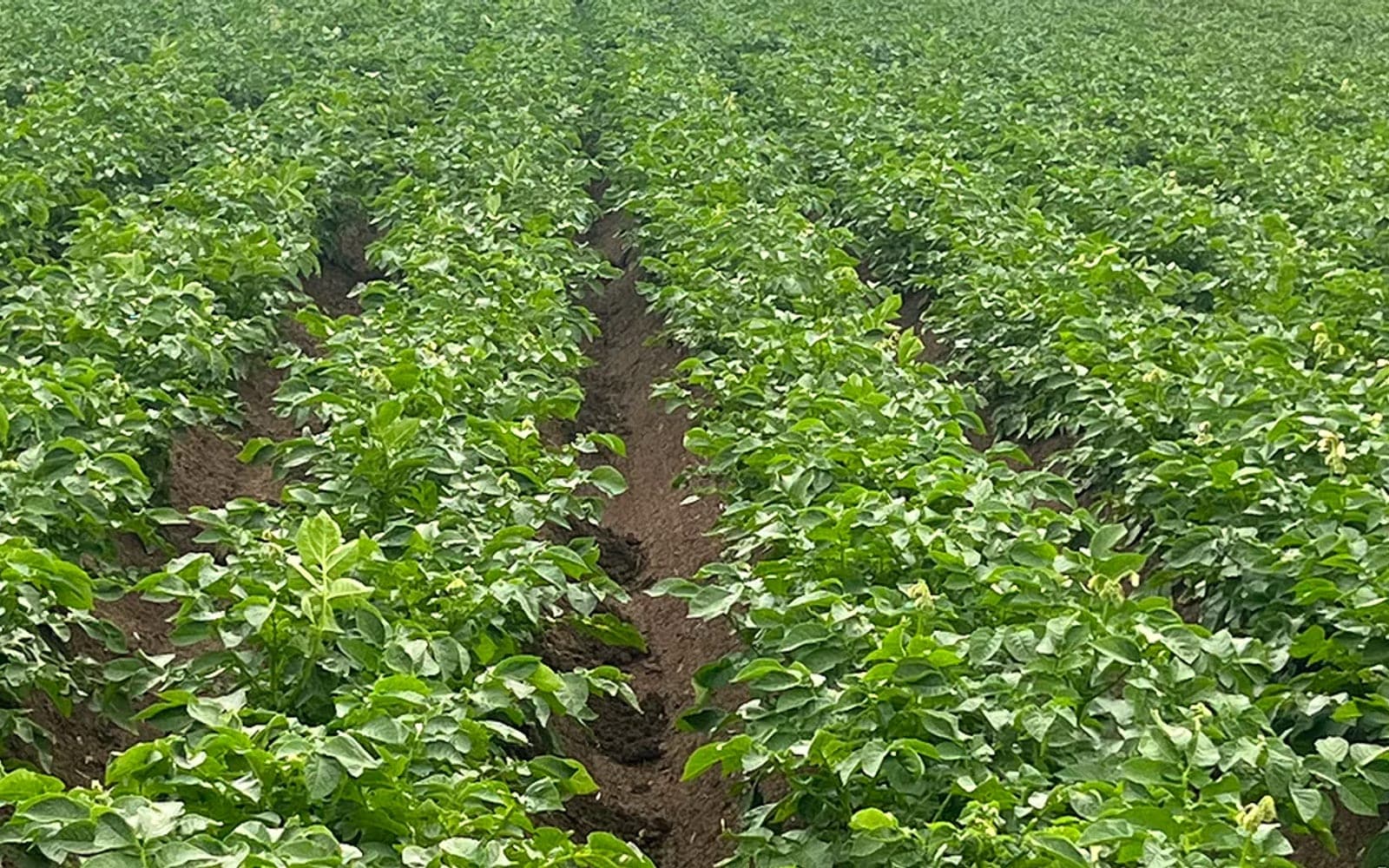
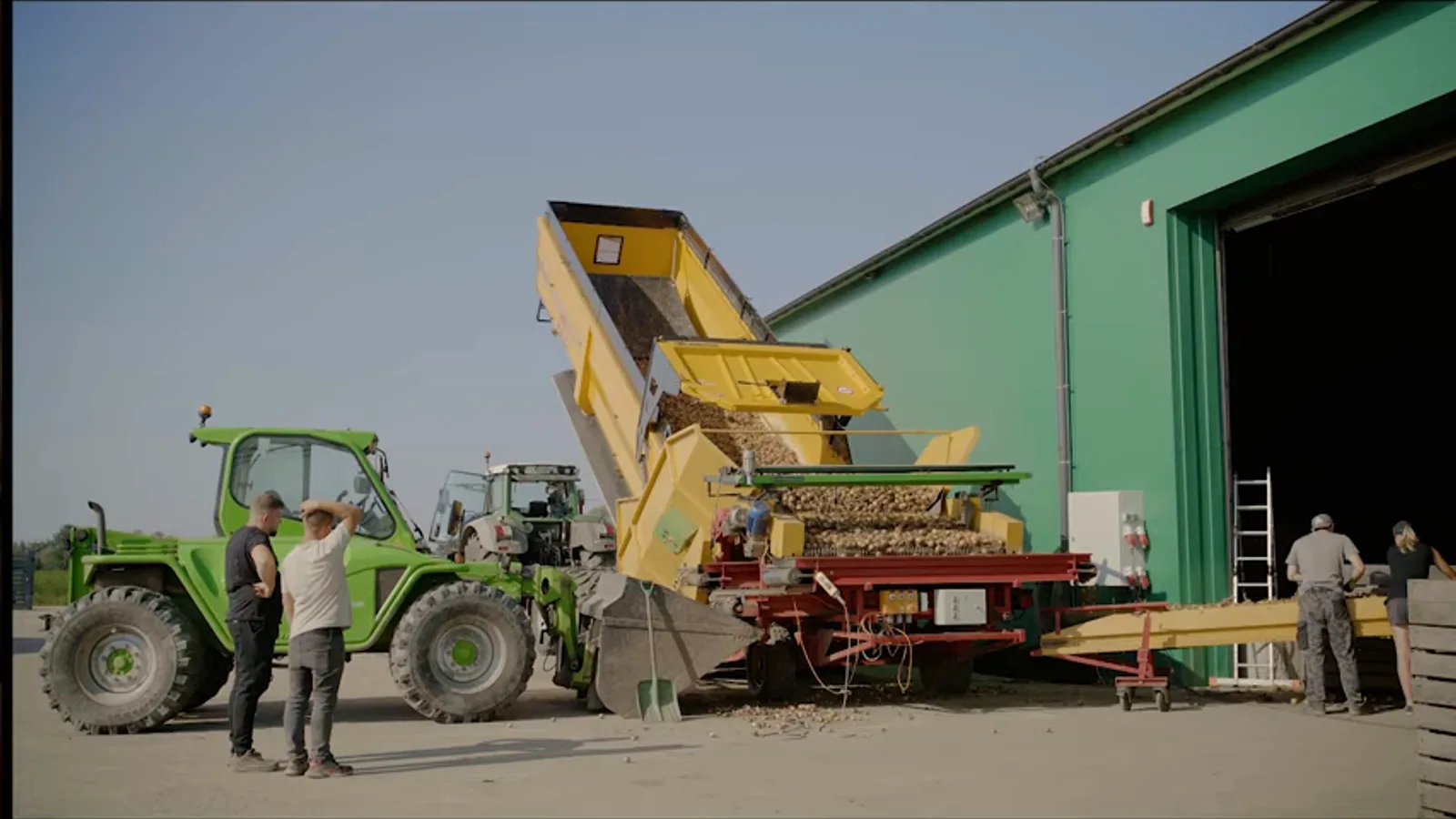
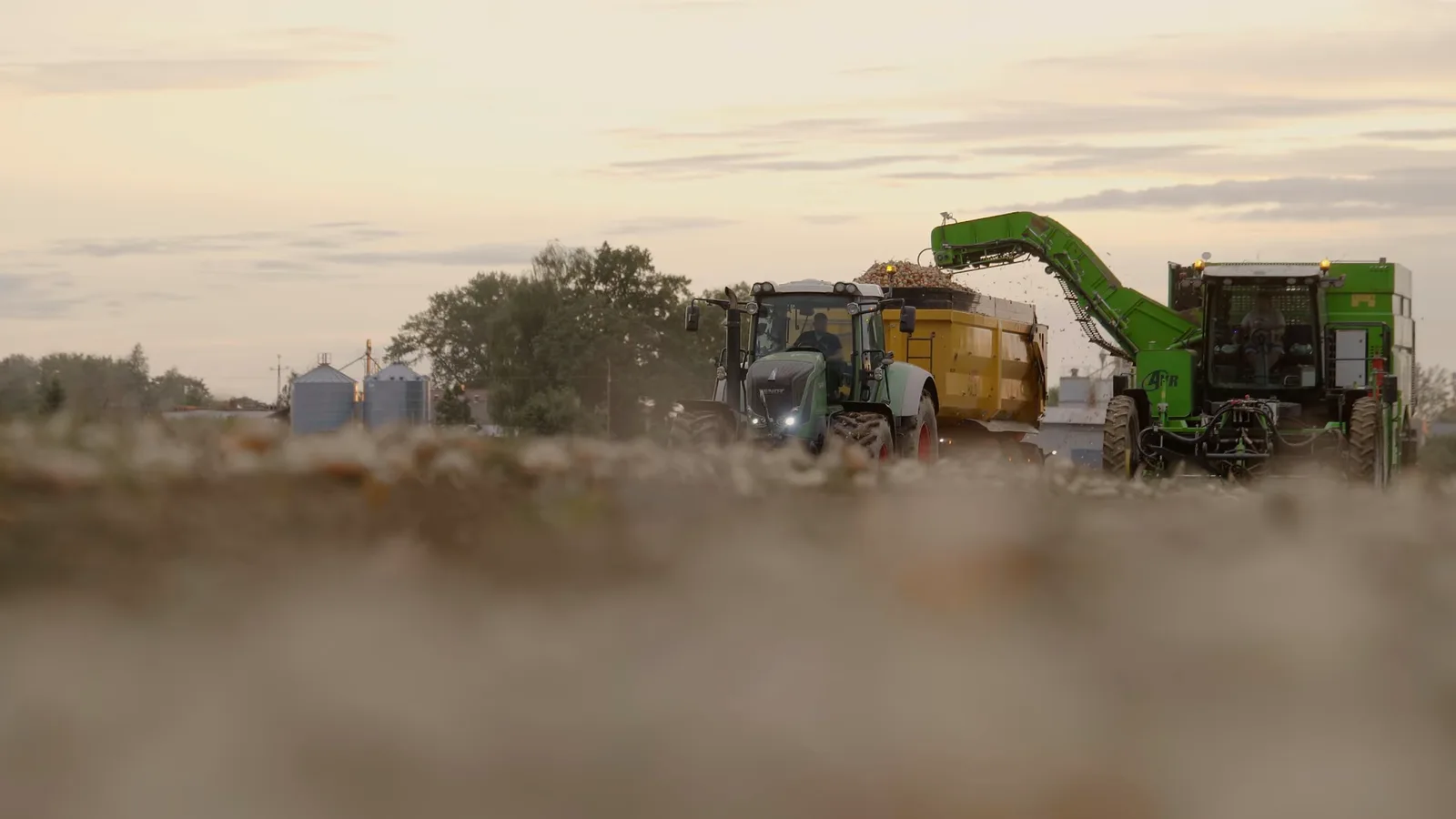
Storage starts at lifting. The IP methodology requires a soil temperature of at least 10°C for harvest, limits the drop of tubers from the hopper to the trailer to 30 cm, and reminds us that less damage at harvest means less disease in the store. We lift our potatoes with the self-propelled AVR Puma 3 harvester, which takes four rows at once. We sort them on the DOWNS CropVision optical sorter: cameras and AI scan every tuber through 360 degrees and reject stones, soil clods and defective pieces, at up to 100 t/h.
This matters, because according to the methodology even the most modern store will not do its job if the tubers going into it are dirty, infected with pathogens, mechanically damaged or immature. The IP methodology divides storage into four stages.
| Stage | Temperature according to the IP methodology | Air humidity | Time | What it is for |
|---|---|---|---|---|
| Drying and wound healing | 12-18°C during drying | 75-95% during drying, 90-95% during skin curing | about 2 weeks | dry, corked skin and less rot |
| Cooling | down by 0.3-1°C a day | 90-95% | about 4 weeks together with the first stage | gradually reaching the target temperature |
| Long storage | table potatoes 4-6°C | 90-95% | depending on when the tubers are to be used | the lowest possible losses and weight loss |
| Preparing for use | raised | depending on intended use | before release | tubers more resistant to damage, fewer reducing sugars |
The last stage matters for a packhouse: according to the methodology, raising the temperature before release makes the tubers more resistant to damage during unloading and sorting, and also lowers their reducing sugar content.

Greening: an effect of light
According to a review of research from IHAR-PIB, published in the journal Kosmos, potatoes contain glycoalkaloids, including solanine and chaconine, which are toxic to humans. The same review points out that both wounding and light stimulate their synthesis and build-up in tubers. According to this review, chlorophyll and glycoalkaloids form independently of each other, although more chlorophyll may stimulate glycoalkaloid synthesis.
According to EFSA, peeling can reduce glycoalkaloid content by 25-75%. EFSA set the lowest dose at which adverse effects are observed at 1 mg per kilogram of body weight per day. According to EFSA, glycoalkaloid poisoning can cause nausea, vomiting and diarrhoea.
In the store, the IP methodology says to keep light to a minimum. But light also acts outside the store: the review in Kosmos recommends taking lifted tubers off the field as quickly as possible, before they start to build up green pigment. How much greening the regulations allow in table potatoes, we describe in our post on potato defects at intake.
Sprouts and losses: what decides how long a batch will last
For the size of losses and weight loss in long storage, the IP methodology points to four factors: temperature, air humidity, storage time and the storability of the variety. We do not give loss percentages here, because we have no source for them that we could show.
Of the table varieties, we most often grow Twister, Bella Rosa, Joline and Gala. We agree the variety, quantity and date with the buyer when they order.
Potatoes and onions: opposite needs in storage
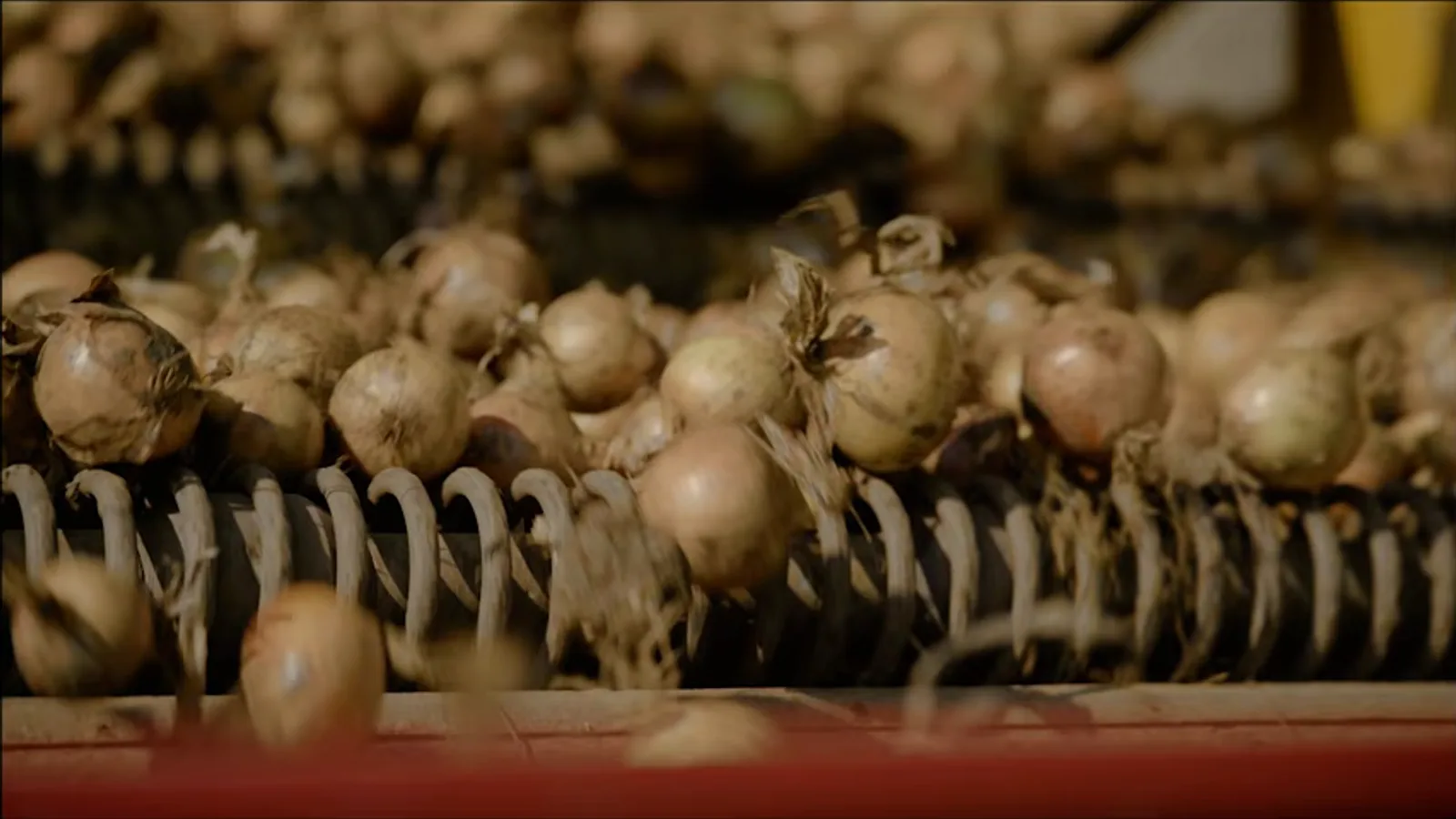
We keep onions in our own store of 13 000 tonnes, where controlled ventilation and drying keep the skin dry. After harvest we dry them for 2-4 days. A potato needs the opposite, that is air humidity of 90-95% during long storage, according to the IP methodology. We answer the question whether onions can be stored with potatoes in a separate post, and we have gathered the rules for onions, from drying to ventilation, in our guide storing onions.
What the packhouse gets out of it
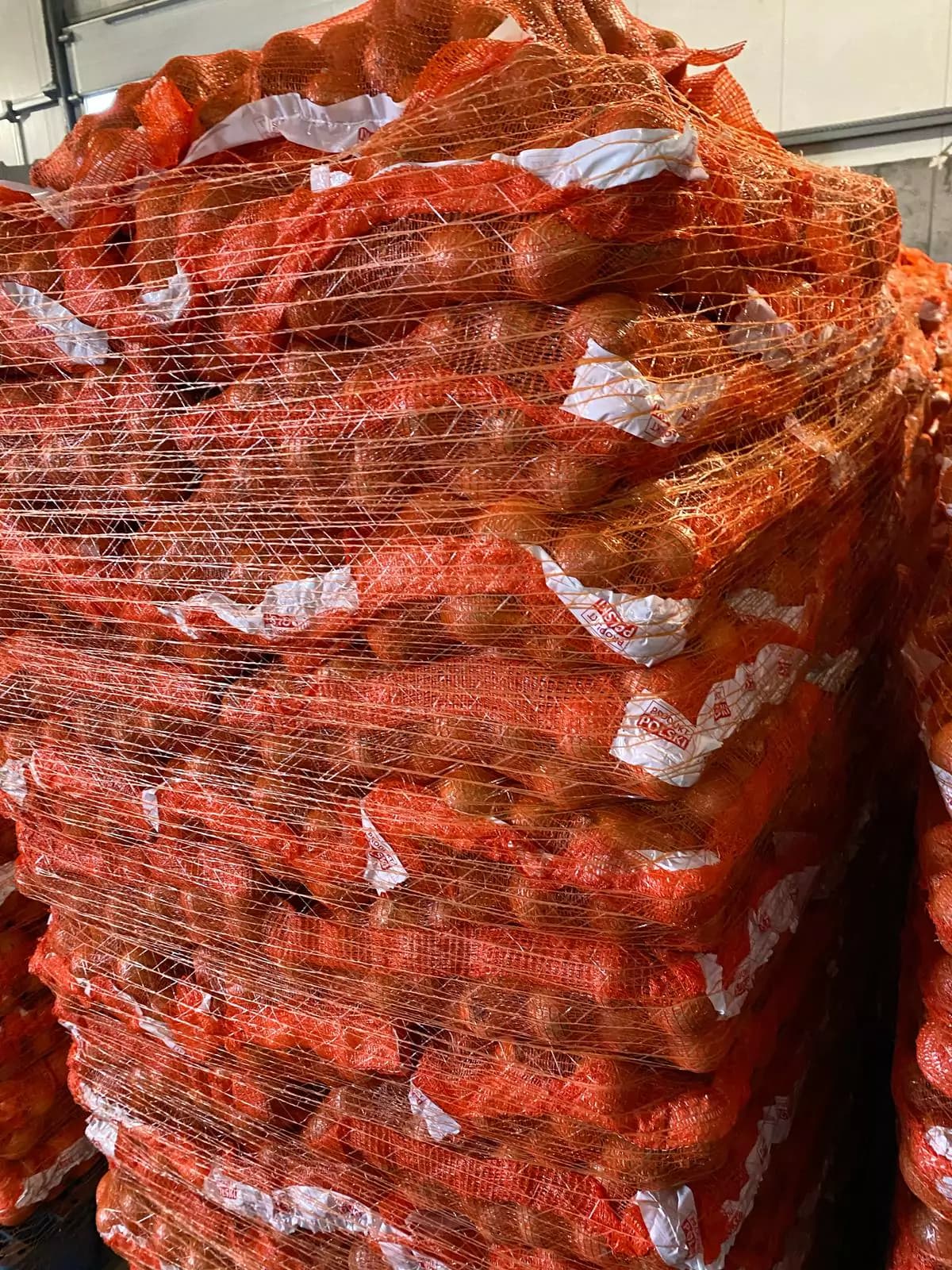
We farm over 800 ha, including about 400 ha of vegetables, and work with 87 farm machines. We deliver table potatoes loose, in big bags or in sacks of 15 kg, 10 kg and smaller, and we select every batch for firmness, colour and dry matter content. We test batches for pesticide residues, heavy metals and substances harmful to health. We run the farm according to the principles of Integrated Plant Production, with GlobalG.A.P., GRASP, FSA Gold (Farm Sustainability Assessment) and GMP+ certificates.
You will find the varieties and delivery forms in our potato offer.
Write to us through the contact form and tell us which variety, quantity and date you need. We calculate the price based on current market rates, and on request we send a free sample.