We store potatoes for fries warmer than table potatoes: at around 7-8°C and about 95 percent humidity. The cold that suits a table potato harms a processing tuber, because it turns starch into sugars, and these darken the fry on the plant's line. Below we show how we run the Innovator variety from trailer to release: drying, wound healing, slow cooling, long storage and a check before delivery.
Why a potato for fries does not like the cold
A tuber keeps living and breathing after it is lifted. The colder it is, the faster the starch in the flesh turns into simple sugars, mainly glucose and fructose, and below about 6-7°C this process speeds up markedly. This is called cold-induced sweetening. It barely bothers a table potato: it just tastes a little sweeter. For a potato grown for fries, it spoils exactly what the plant is paying for.
Glucose and fructose are reducing sugars. In oil at frying temperature they react with amino acids (the Maillard reaction), and instead of an even gold the fry turns brown, with dark tips. The same reaction with asparagine produces acrylamide, for which EU Regulation (EU) 2017/2158, as it stands in 2026, sets a benchmark level of 500 µg/kg in ready-to-eat fries. Among the mitigation measures for acrylamide, the same regulation lists storing potatoes above 6°C. Table potatoes usually sit at 4-5°C, processing potatoes higher. More on where the sugars in a tuber come from, and why Innovator keeps them low, in our post Innovator: dry matter and sugars.
Five stages: from trailer to release
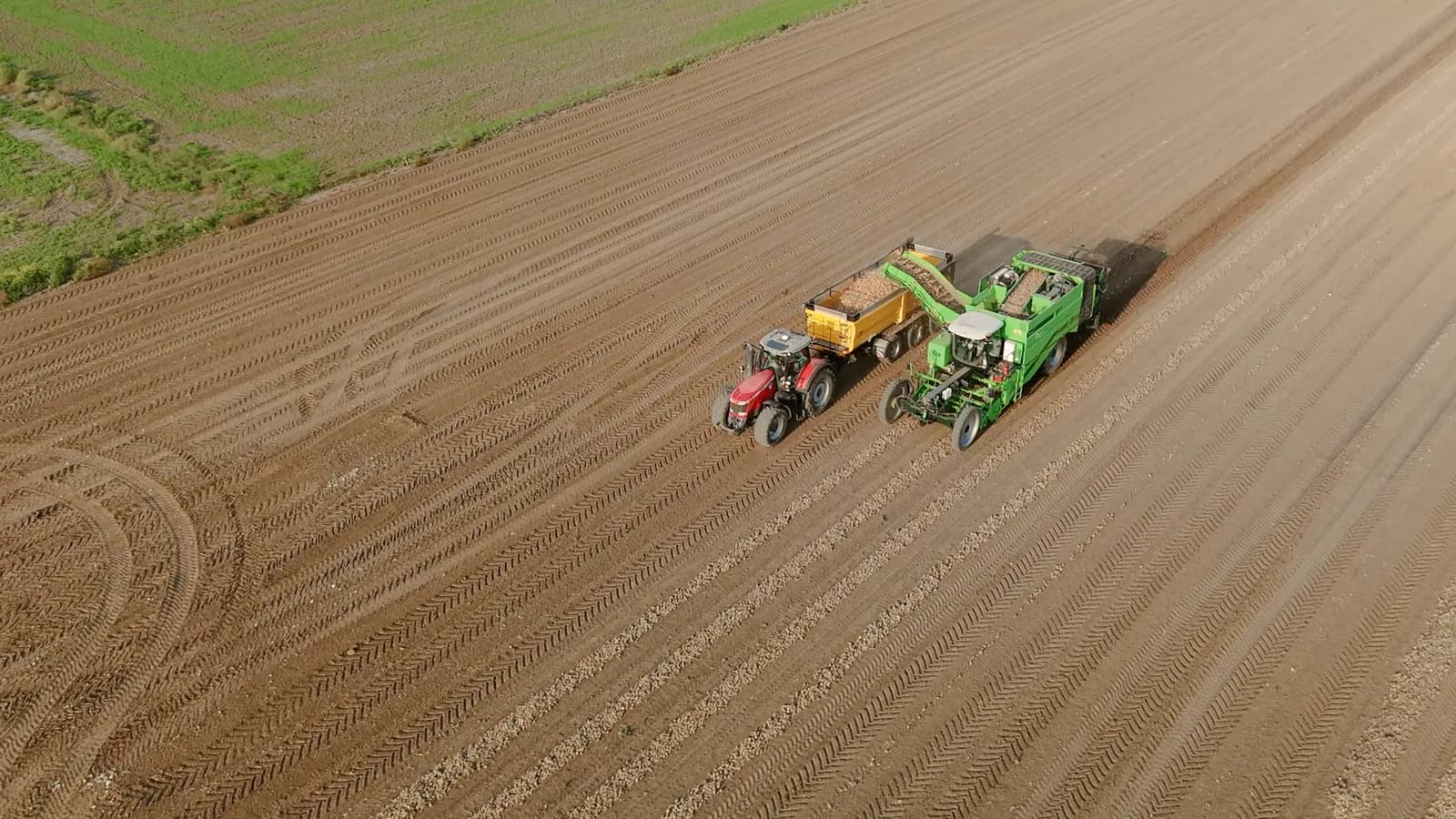
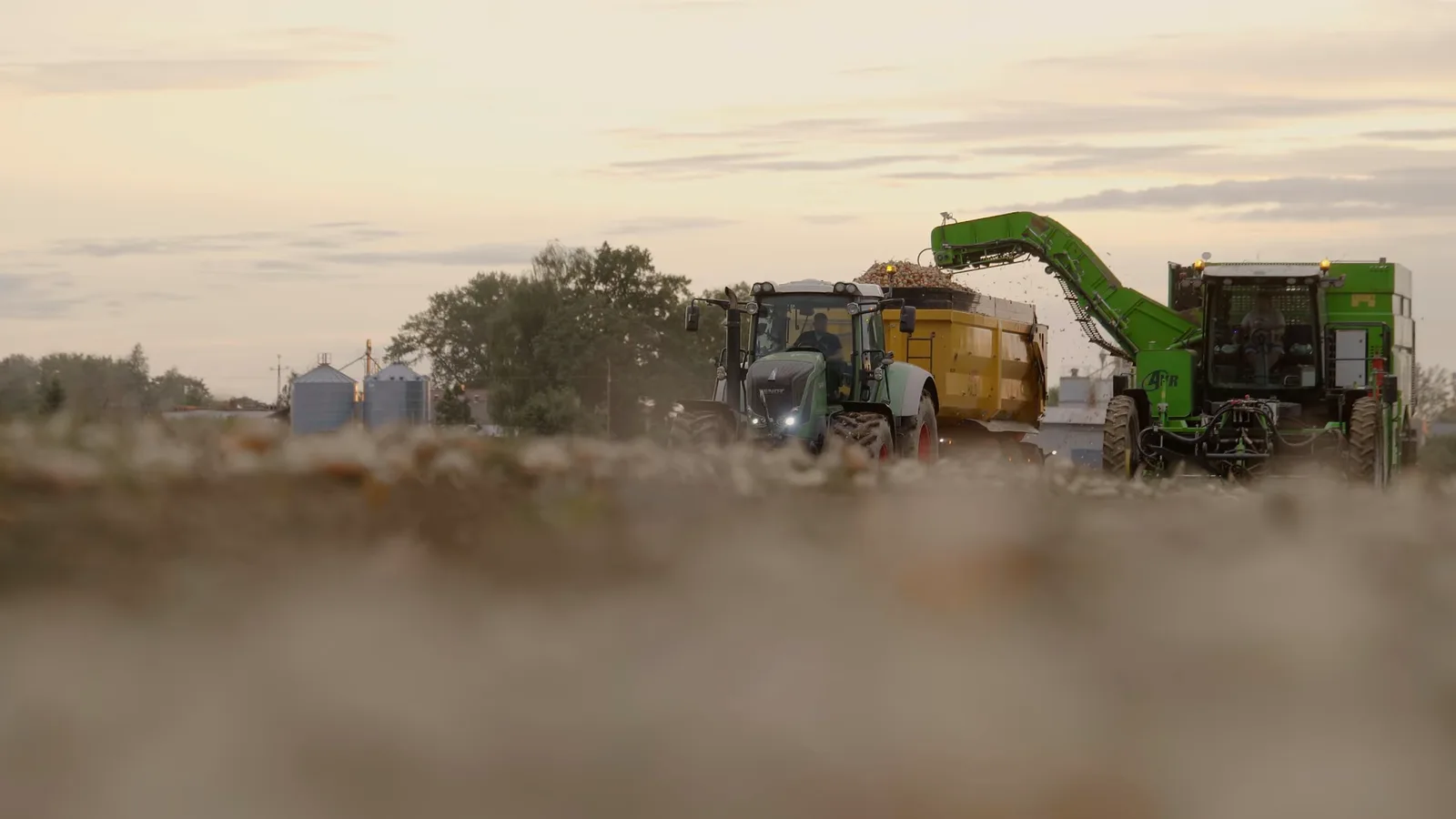
Storage starts on the day of harvest. A cold, wet or bruised tuber will cause trouble all winter, no matter how well we run the store. That is why we do not lift on cold mornings, and we set up the machines so the tubers drop from the lowest possible height, which we describe in our post harvesting potatoes for fries: when we lift. After that the potato goes through five stages.
| Stage | Temperature | Humidity | Time | What it is for |
|---|---|---|---|---|
| Drying | close to the temperature of the tubers | strong airflow lifts the water off the tubers | a few days | dry skin does not rot and does not carry disease |
| Wound healing | 12-18°C | around 95% | a few days to 2 weeks | cuts from the harvester heal over with a layer of cork |
| Cooling | down by 0.2-0.5°C a day | around 95% | a few weeks | the tuber gets no shock and does not start to sweeten |
| Storage | around 7-8°C | around 95% | until spring | steady temperature, weak, even airflow |
| Before release | checking sugars, warming if needed | around 95% | 2-3 weeks, when warming is needed | the fry from the batch should have a light colour |
Most mistakes happen at the cooling stage. It is tempting to bring the temperature down quickly and be done with it. But rapid cooling is a stress for the tuber, and with a big temperature gap the warm, moist air from inside the pile drops its moisture onto the cooler tubers near the top, and diseases develop on that moisture. So we lower the temperature slowly and make sure the gap between the air and the tuber stays small.
Sprouting: the price of a warm store
The higher temperature has its cost. At 7-8°C a tuber ends its dormancy sooner than in the cold and starts to sprout. A sprout means lost water and weight, a softer tuber and a worse batch at intake. How long dormancy lasts depends on the variety and on how the tuber matured in the field, so in a hot, dry year it can shorten by weeks.
That is why we agree the final storage deadline for every batch with the plant in advance, matched to the variety and the buyer's requirements, instead of counting on the tubers to wait. The longer a batch is meant to lie, the earlier this has to be settled.
We do not rescue a sprouting batch by lowering the temperature. Cold will hold the sprouts back, but it will also set off sweetening, and then instead of sprouts at intake the problem will be the colour of the fry.
Reconditioning: when the sugars have to be reversed
If a batch has caught a chill, for example from venting with freezing air in winter, the sugars can be partly brought down. We then warm the tubers to a temperature in the low teens and hold them there for 2-3 weeks, sometimes longer, depending on the variety and how much the batch has sweetened. The tuber starts using the sugars for respiration, and part of them turns back into starch. That is reconditioning, and its effect depends on the variety: some go back to good parameters, others only partly.
There is also a kind of sweetening we cannot reverse. Towards the end of the season the tuber ages and sugars rise even at the correct temperature. This is ageing-related sweetening, and warming does not help against it. That is why storing potatoes for fries has a final deadline, and we set the order in which batches go out by test results, not by which batch went into the store first.
What the processing plant gets out of it
Before a batch goes to the plant, we check dry matter and run a frying test. For fries what counts is dry matter of roughly 21-25 percent and a light, even colour after frying. We grow the Innovator variety, the same one Farm Frites uses, so we know the fries line's requirements from practice. Which potatoes for fries to choose, and why the variety matters so much here, we answer in a separate post.
Our store of around 13 000 tonnes lets us release potatoes and onions in windows agreed with the buyer, including in winter and spring. How we spread deliveries out in the contract, we describe in our post on contract growing of potatoes for processing, and how we run the onion store, in our guide storing onions.
If you are looking for potatoes for fries with deliveries spread across the whole season, take a look at our potato offer and get in touch through the contact form. We calculate the price based on current market rates, and we fit delivery dates to your line's schedule.