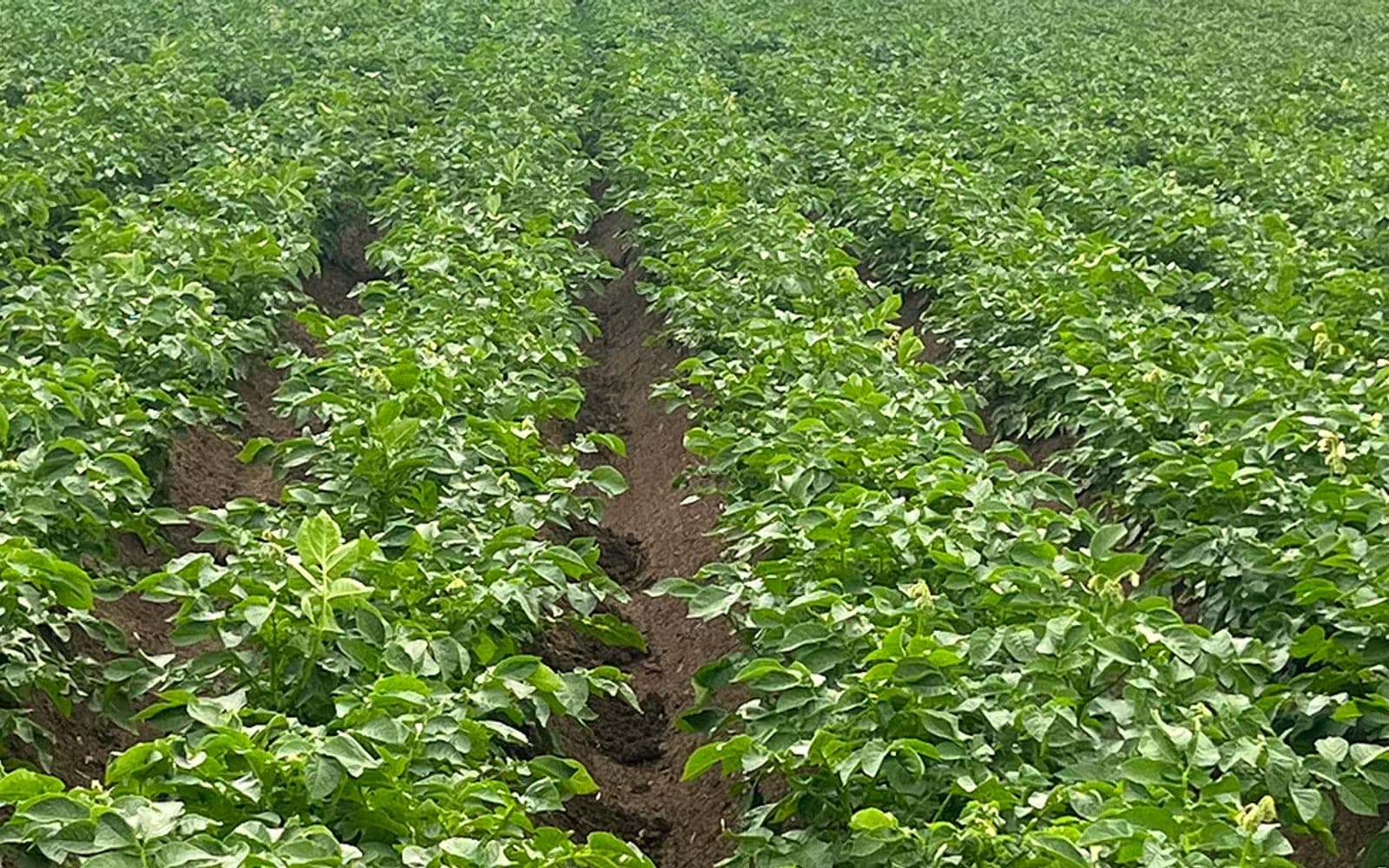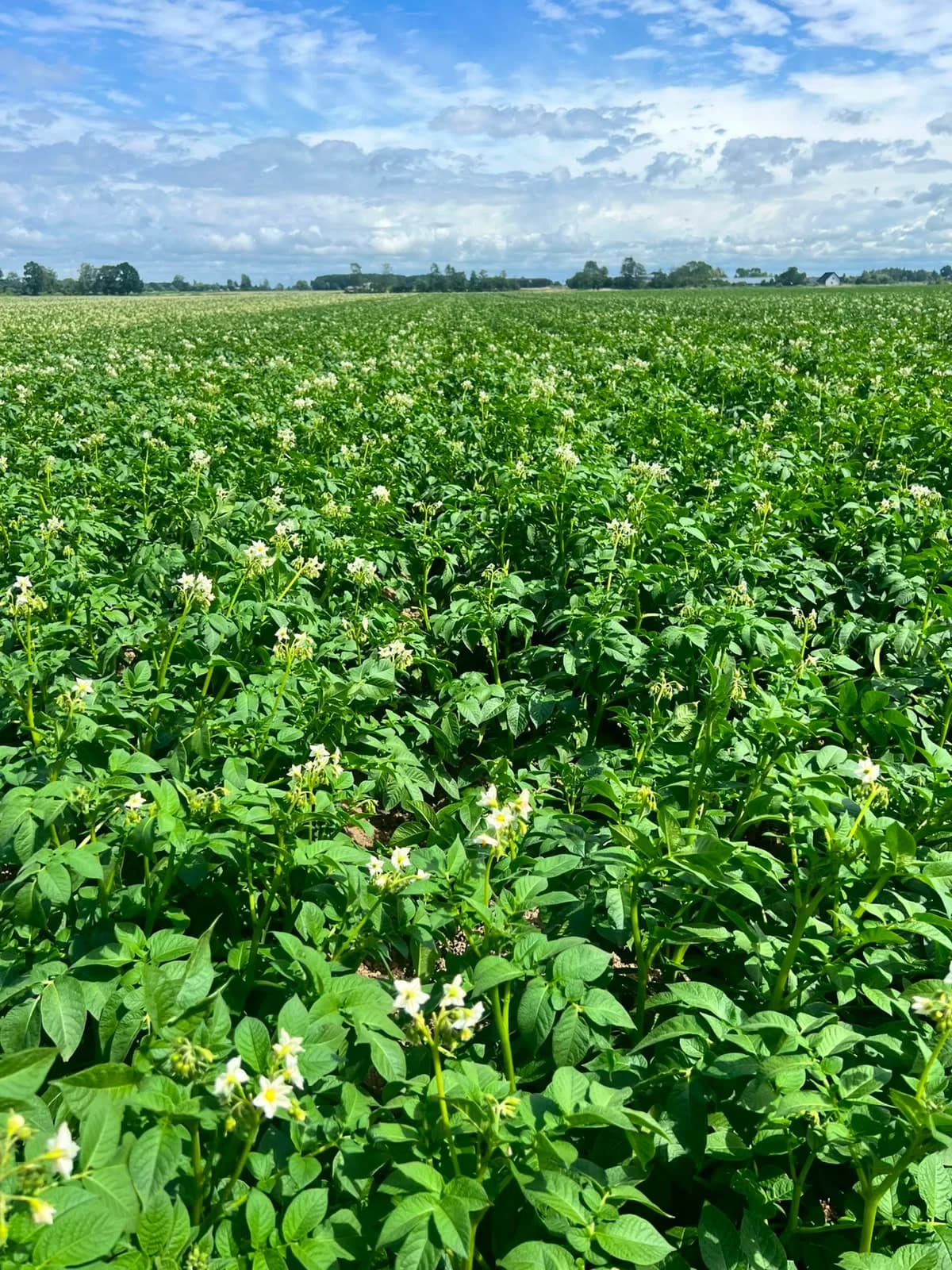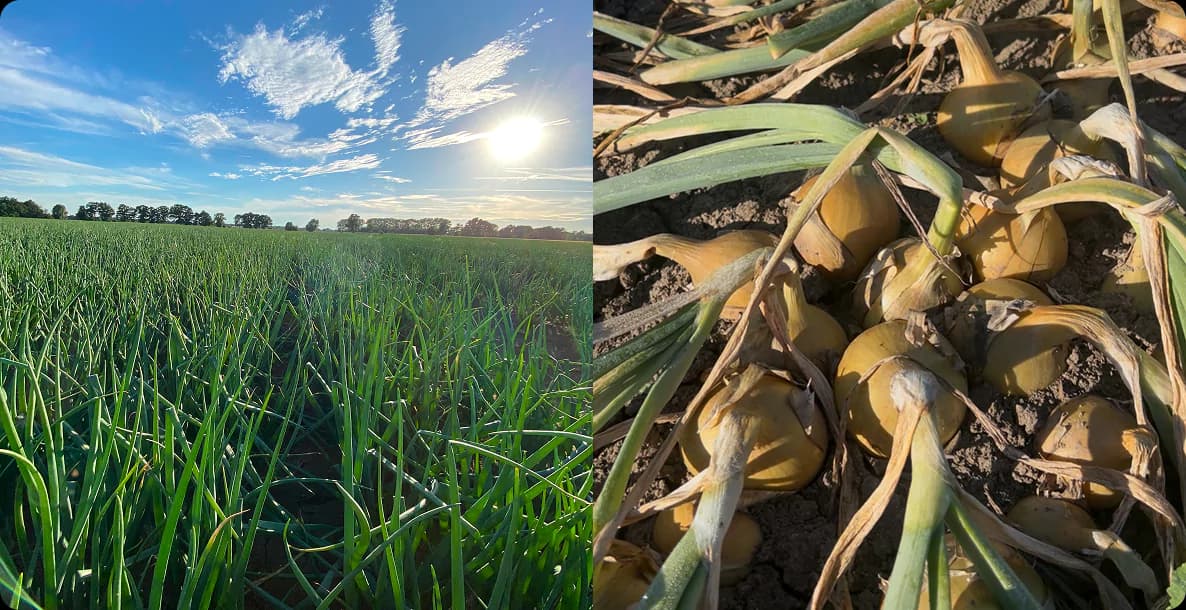
We harvest potatoes for fries when the tuber has a set skin, warm flesh and dry matter in the range the plant expects. So we pick the day for lifting not from the calendar but from the field: after killing the haulm we wait for the skin to set, we check tuber temperature and the weather, and only then does the harvester go in. That is how we run the harvest of the Innovator variety, which we grow on the Żuławy alluvial soils for fries processing.
When a processing potato is ready to harvest
A potato for fries has different priorities from a potato for the fresh market. The buyer is not interested in how the skin looks on the shelf, only in whether the tuber will go through processing without bruising and give a long, evenly browned fry. Three things decide that, and they have to come together at the same moment.
The first is physiological maturity: the haulm dries off naturally, the starch is already laid down and dry matter stops rising. The second is skin maturity: the skin does not rub off under the thumb and protects the flesh from bruising. The third is the conditions on harvest day: tuber temperature and soil moisture, which decide how much damage the machine itself does. More about what the plant expects from a variety in the post which potatoes for fries.
Haulm killing and skin set
The harvest begins a few weeks before the harvester makes its first pass. We kill the haulm to stop the tubers growing at the size the plant wants and to give the skin time to set. From that moment to lifting we usually wait 2-3 weeks. The warmer it is and the healthier the crop, the faster the skin matures; in a cold, wet autumn that time stretches out.
We check skin set simply: we dig up a few plants in different parts of the field and rub the tubers with a thumb. If the skin comes off in patches, we keep waiting. Lifting too early means guaranteed skinning, and every skinned patch is a gateway for rot and a spot that darkens after processing.
After haulm killing the tubers stop growing, but the skin keeps working. Those 2-3 weeks are not time lost but the cheapest protection against damage we have.
Tuber temperature: why we do not lift on cold mornings
A cold tuber is brittle. When the flesh is below about 8-10°C, every knock on the conveyor leaves dark, subsurface bruises that you cannot see at loading and that only show up after peeling and frying. So on chilly mornings we wait for the soil and the tubers to warm up, and when the day is warm we can lift until late. Our harvester is ready for that, because it works at night too.
| Parameter | What we look at | Why it matters |
|---|---|---|
| Time since haulm killing | 2-3 weeks | skin set, less skinning |
| Tuber temperature | above about 10°C | cold flesh bruises easily |
| Soil moisture | friable soil, neither wet nor dried out | fewer clods, less damage on the sieving webs |
| Tuber drop height | as low as possible, no more than about 30 cm | every drop is a potential bruise |
| Dry matter | about 21-25 percent | long, crisp fry, low fat uptake |
How we set up the harvester so as not to bruise the tubers
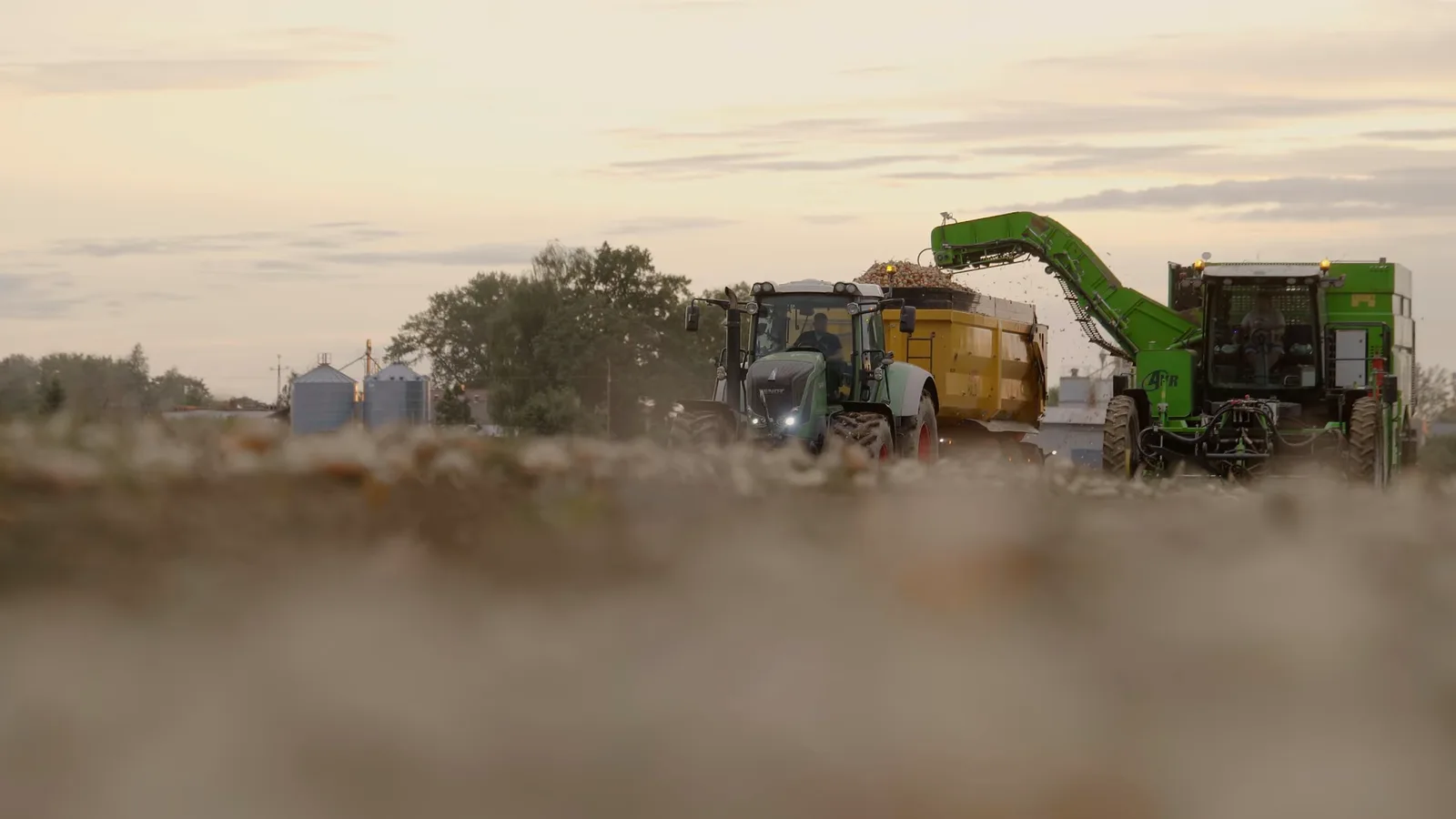
The potato harvest is done by a self-propelled, 4-row AVR Puma 3 potato harvester: a 469 hp Volvo engine, an 8 tonne bunker, unloading on the move into a trailer driving alongside. The machine itself is only half the story, though. The other half is the settings, which we change during the day depending on the soil.
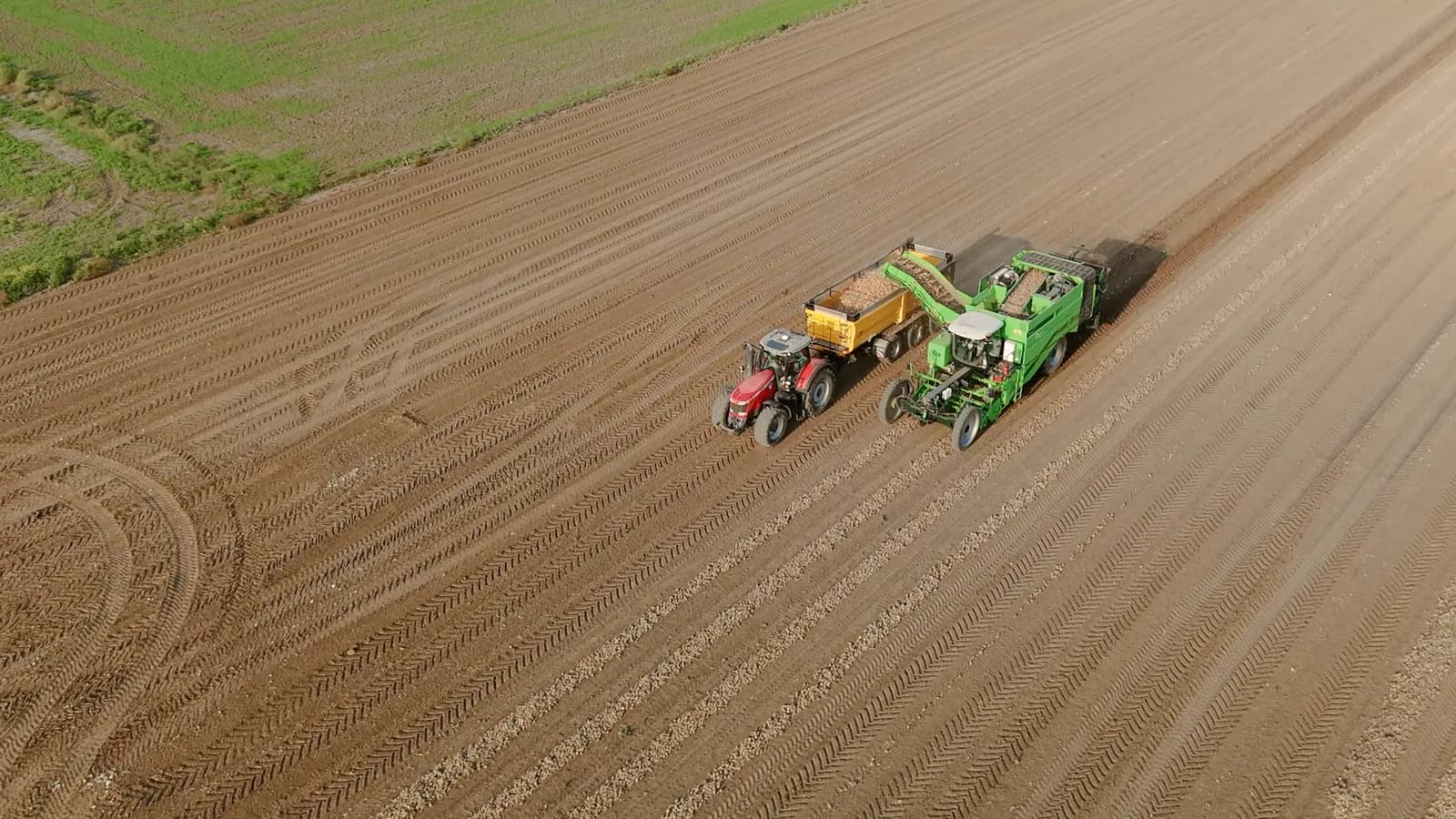
The rules we keep to on every field:
- The conveyors must be full. A potato lying on potatoes, with a layer of soil, bruises less than a single tuber on a bare rod. So we match forward speed to the amount of material going into the machine.
- Drop height as low as possible. When unloading on the move, the discharge elevator runs low over the trailer floor and rises together with the layer of tubers.
- Clods and stones leave on the machine. The Żuławy alluvial soils sieve well at the right moisture, but after rain they can throw up a clod that behaves like a hammer on the conveyor.
- Driving in fixed tracks. Thanks to GPS RTK, the harvester and tractors run on permanent tramlines, so they do not cut into the ridges or drive over the rows being lifted.
Dry matter and the fry test before delivery
Before a batch goes to the plant, we check dry matter and do a frying test. For fries, what counts is a range of roughly 21-25 percent dry matter and a low content of reducing sugars, because they are what cause dark fry tips. Why these two figures decide everything, we explain in the post Innovator: dry matter and sugars.
Batches that do not go straight to the plant cannot go straight into the cold. A freshly lifted tuber first needs a few days in warmth and high humidity to heal the small cuts from the harvester. Only after that stage do we lower the temperature, and carefully, to about 7-8°C and no lower, because a chilled potato starts to accumulate sugars and the fry made from it darkens.
We grow processing potatoes under contract, so we agree the harvest parameters with the plant in advance: size, dry matter, delivery dates. The harvest is the last link in that agreement, not improvisation.
What the processing plant receives
Innovator is the variety used by Farm Frites, our partner producing fries for a large restaurant chain. The plant receives from us tubers with a set skin, no internal bruising, in the size agreed in the contract and with documented parameters for every batch. How that cooperation works from contract to settlement, we describe in the post on contract growing of potatoes for processing.
You will find the Innovator and Donata fry potatoes and our table varieties in our offer: potatoes. If you are looking for a raw material supplier for processing next season, write to us and we will talk about variety, size and the delivery schedule.