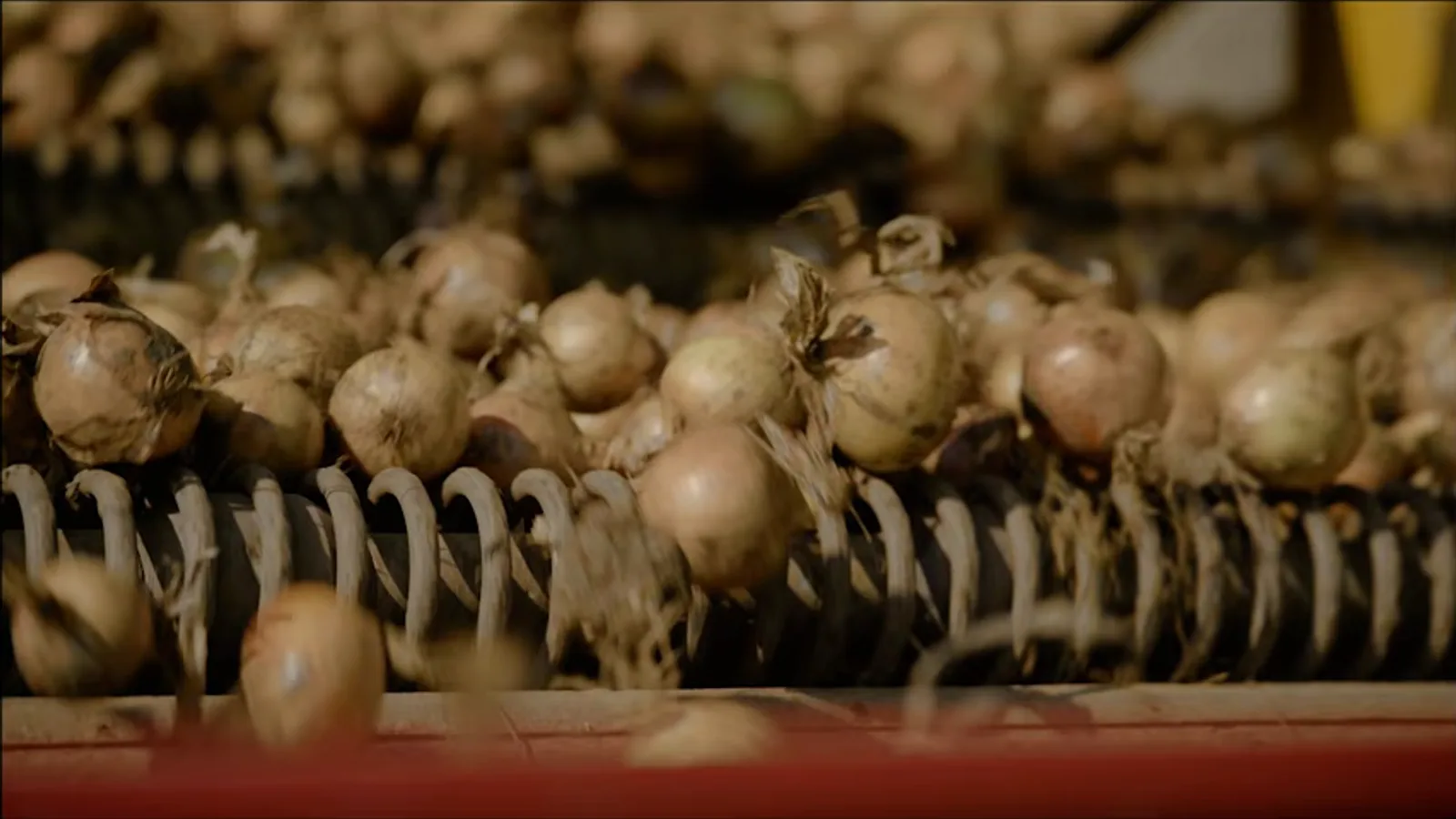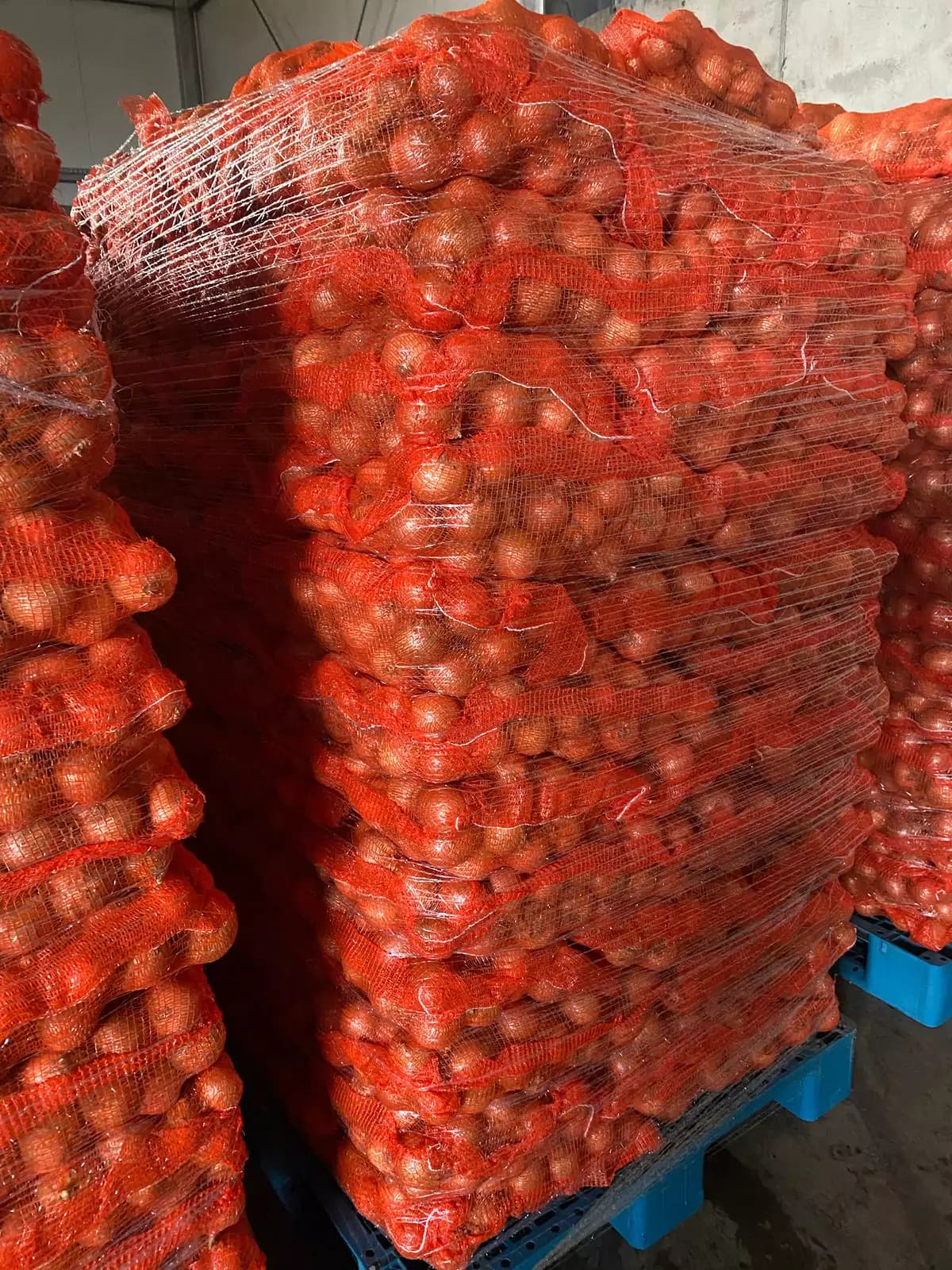
We base our winter onion deliveries on our own 13,000-tonne store: we match the size grade and packaging to the buyer, and agree the delivery method and dates with them individually. The store lets us steer sales over time and release onions through winter and spring, right up to the new season.
Where our winter onions come from
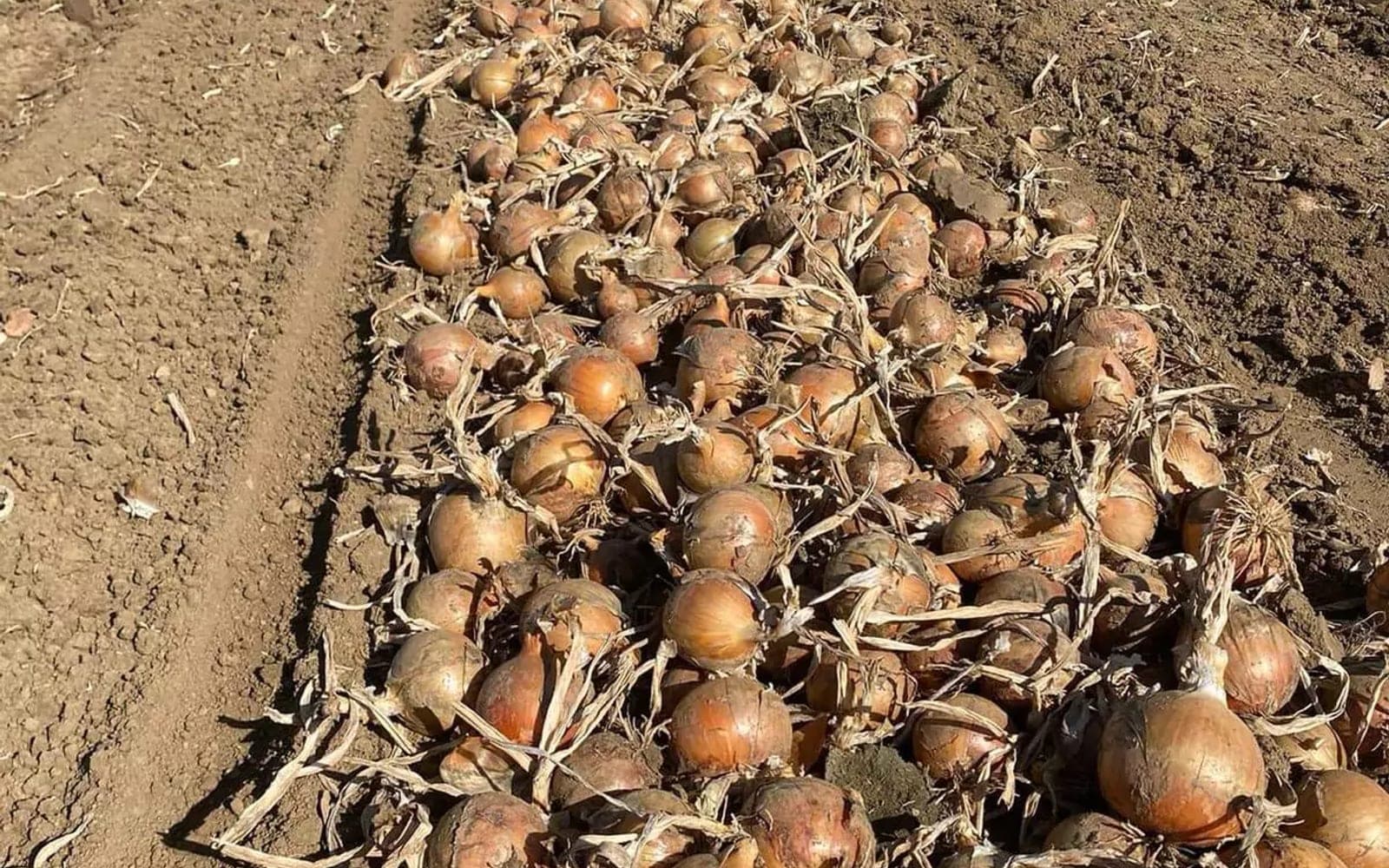
We grow around 250 ha of onions with a yield of around 60 t/ha. After harvest we dry them for 2-4 days and keep them in our own 13,000-tonne store, where controlled ventilation keeps the skins dry. The store lets us steer sales over time. We do not have to sell everything in autumn, so we spread shipments across the whole of winter and spring.
In early summer the season opens with set-grown onions, then come onions from spring sowing, and the store covers the rest of the year. So we have onions all year round, and winter releases are ordinary work for us, not an exception. How we work with wholesale buyers is set out in our guide onions wholesale: a supplier from Żuławy.
What we agree with the buyer
Below we gather in one place what we discuss with the buyer and what our offer says about it.
| What we agree | How it works with us |
|---|---|
| Volume and dates | agreed individually, produce released from the store |
| Packaging | loose, big bag, 15 kg, 10 kg and smaller sacks |
| Size grade | matched to the buyer, onions optically sorted |
| Transport | delivery method agreed individually |
| Batch control | firmness, colour and dry skin, tests for pesticide residues and heavy metals |
| Certificates | GlobalG.A.P., GRASP, FSA Gold (Farm Sustainability Assessment), GMP+ |
| Sample | free of charge, on request |
| Price | calculated on the basis of current market prices |
We do not count again here how many pallets or big bags fit on one truck. We do that in our post on onion transport and palletising.
Delivery dates and method
We agree delivery dates with the buyer individually, and the same goes for the delivery method, including who arranges transport.
In winter, the time onions spend standing in a truck in the frost also counts. We are in Wocławy in Żuławy, near the Tricity. For a packing house in Pomerania that is a short route, and the shorter the produce travels in frost, the fewer chances the frost has to get to it.
How we prepare a batch on the packing line
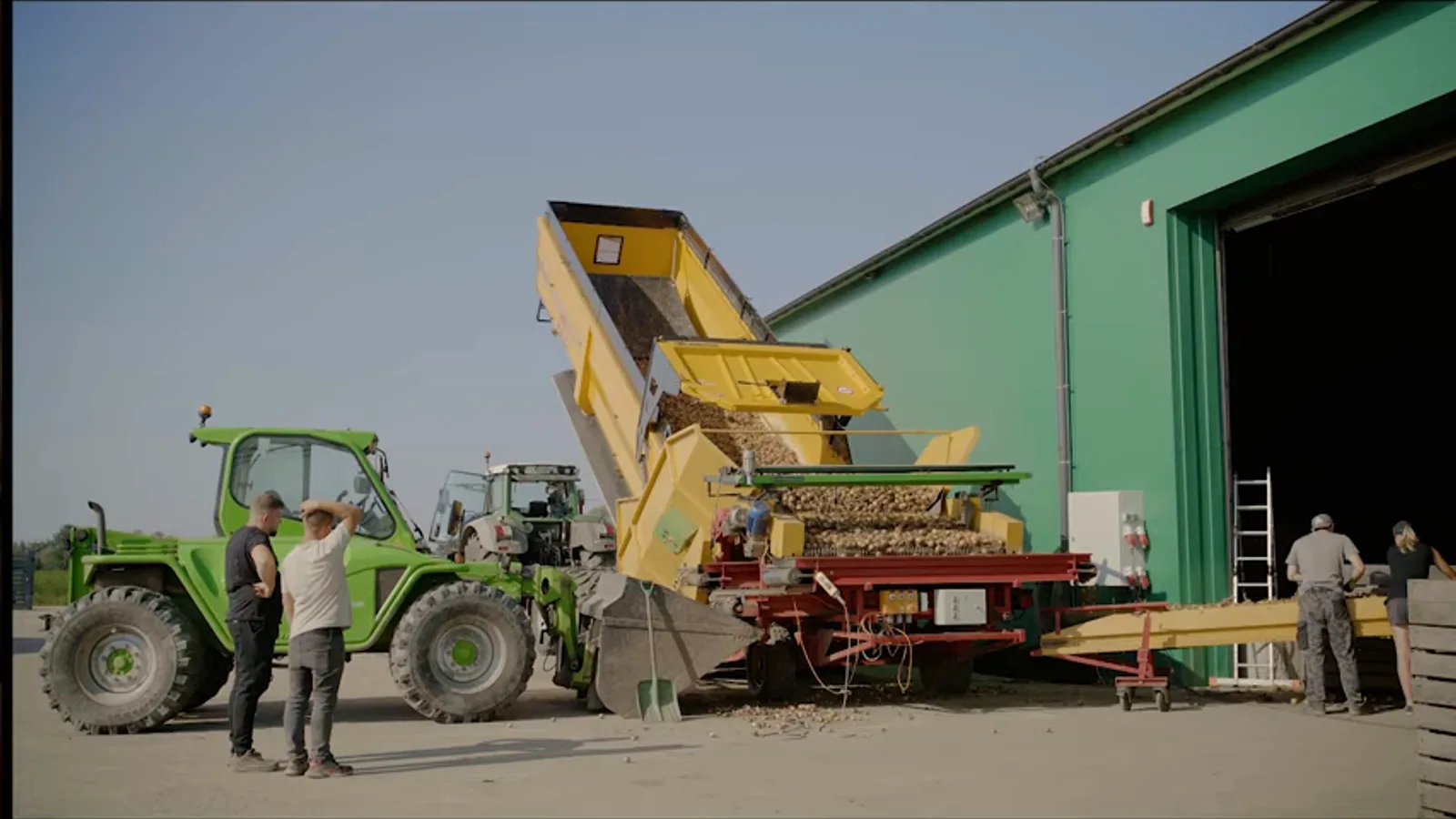
We run a batch for collection through the DOWNS CropVision optical sorter. Cameras and AI scan every onion in 360 degrees and reject stones, clods of soil and defective pieces, at up to 100 t/h. That way even a large collection comes off the line quickly.
Then the onions go onto the automated packing line. We pack them loose, in big bags or in 15 kg, 10 kg and smaller sacks, and a palletiser stacks the finished packs on pallets. We match the size grade and packaging to the buyer. We check every batch for firmness, colour and dry skin, and on top of that we test it for pesticide residues, heavy metals and substances hazardous to health.
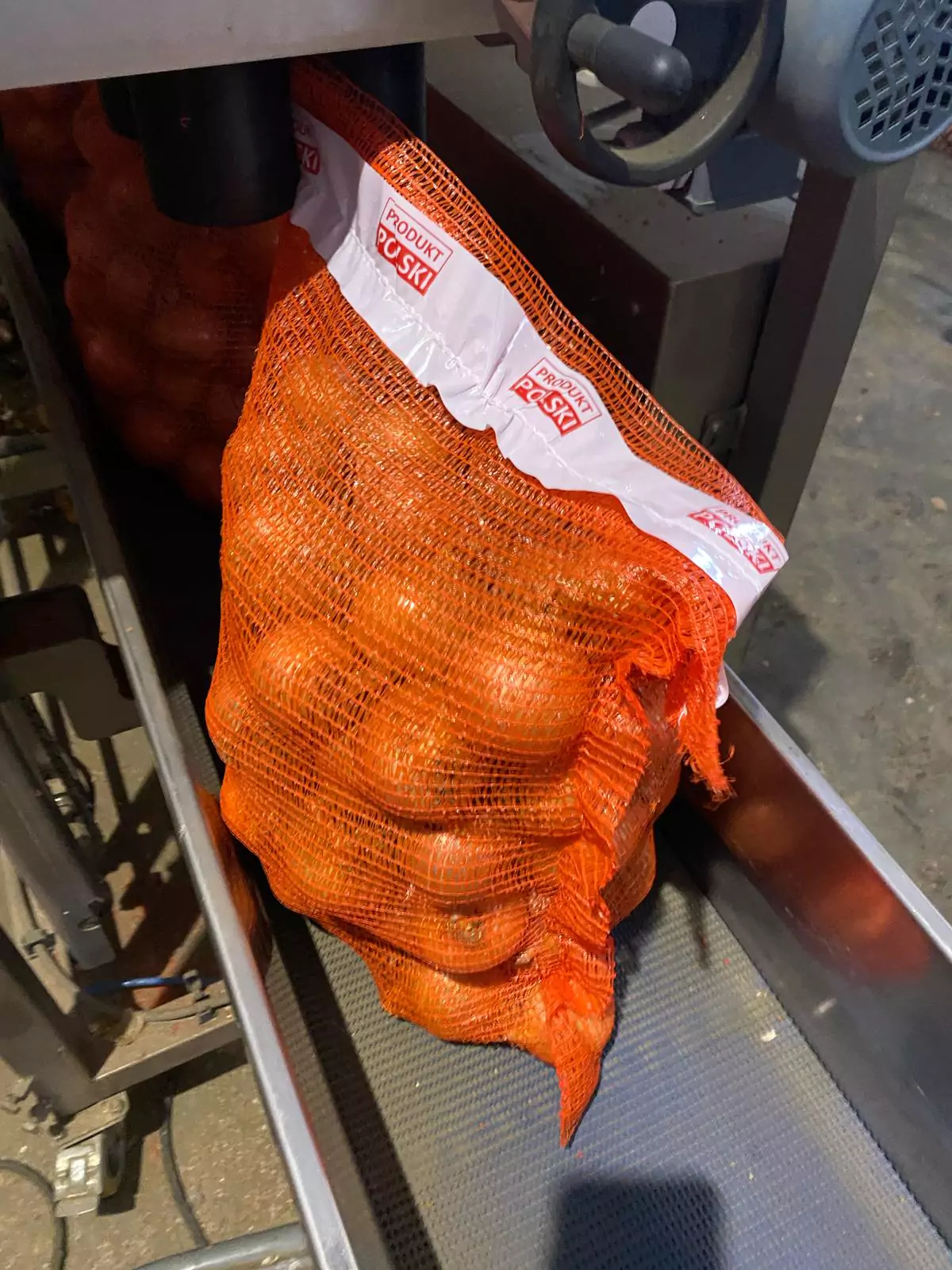
How we follow a batch from field to pallet we show in our post on vegetable batch traceability.
Winter: frost on the road and at the loading dock
The weakest point of a winter delivery is not the store, but the road and the loading dock. Onions leave the store with dry skins, but then they spend several hours in a truck or in the yard. So when frost is forecast, it is worth agreeing three things in advance:
- the truck is loaded without unnecessary waiting,
- unloading at the buyer's site is planned so the pallets do not stand outside,
- a batch that arrives after a frosty night is checked in cross-section, not by how the sack looks.
After a frosty night, do not judge a batch by the look of the sacks alone. How to recognise the damage and what to do with such a batch we show in our post on frost-damaged onions.
How to plan winter onion collections step by step
- Give us the volume and dates. How many tonnes and how often you want to collect.
- Choose the packaging and size grade. Loose, big bag or 15 kg, 10 kg and smaller sacks.
- Order a free sample. We send it on request.
- Agree the delivery method with us, including who arranges transport.
- Check our certificates: GlobalG.A.P., GRASP, FSA Gold and GMP+.
- Plan unloading for the frost, so the pallets do not wait outside.
Who is responsible for the produce
We run the whole process ourselves, from the field through the store to packing. That is why we are responsible for quality and dates at every stage. We work with GlobalG.A.P., GRASP, FSA Gold and GMP+ certificates, and we run the farm according to the principles of Integrated Plant Production.
Our vegetables go to market leaders such as Onix, Farm Frites and FreshPol, partners who supply the largest retail chains and processing plants in Poland and Europe.
If you are planning collections for winter and spring, see our yellow onions from Żuławy and write to us through our contact page. Give us the volume, packaging and dates, and we will come back with specifics. The price is calculated on the basis of current market prices.