We have gathered two reference points: the PN-R-74107:1997 standard, from which the IBPRS-PIB report on triticale from the 2025 harvest gives a minimum triticale bulk density of 68.0 kg/hl, and the GMP+ TS1.5 document, which gives an action limit of 8 mg/kg of deoxynivalenol (DON) for cereals and cereal products. We have put these thresholds in one table, we show step by step how to check a batch, and we say plainly what we deliver from our fields in Żuławy.
What thresholds IBPRS-PIB and GMP+ give for triticale
Here we set out the thresholds from the IBPRS-PIB report and the GMP+ TS1.5 document. These are reference values, not results from our batches.
| Parameter | Reference value | Source |
|---|---|---|
| Grain moisture | no more than 14.5% (grain for safe storage, following PN-EN ISO 712-1:2025-03) | IBPRS-PIB |
| Bulk density | no less than 68.0 kg/hl (PN-R-74107:1997) | IBPRS-PIB |
| Falling number | no less than 80 s (PN-R-74107:1997, taken into account at intake) | IBPRS-PIB |
| Deoxynivalenol (DON) | action limit 8 mg/kg | GMP+ TS1.5 |
| Zearalenone | action limit 2 mg/kg | GMP+ TS1.5 |
| Ochratoxin A | action limit 0.25 mg/kg | GMP+ TS1.5 |
| Ergot | 1,000 mg/kg in feed materials and compound feeds containing unground cereals | GMP+ TS1.5 |
What do the limits in GMP+ mean? According to TS1.5, once the action limit is exceeded the certified company has to investigate the source of the contamination, and above the rejection limit the product is not fit for use as a feed material or feed. For DON, zearalenone and ochratoxin A in cereals and cereal products, TS1.5 gives only an action limit.
Triticale in 2025: what samples from across Poland showed
According to the IBPRS-PIB report, based on data from Statistics Poland (GUS), the 2025 triticale grain harvest was estimated at 5.2 million tonnes, putting it in second place after wheat. The same report states that in 2025 Poland had the largest share of EU triticale production, at 45%.
An average, though, says nothing about a specific batch. According to IBPRS-PIB, 72% of samples from the 2025 harvest met the minimum bulk density of 68.0 kg/hl. According to the same report, only 26% of samples had a falling number of at least 80 s.
With us, every batch of triticale is checked for cleanliness, moisture and grain parameters. On top of that, we test the grain for pesticide residues, heavy metals and substances harmful to health.
What the GMP+ certificate gives you in the feed chain
GMP+ International writes that GMP+ certified companies do business with companies that are also certified. On the same page it states that certified companies are audited every year by auditors from independent certification bodies.
We hold the GMP+ certificate, alongside GlobalG.A.P., GRASP and FSA Gold (Farm Sustainability Assessment), and we run the farm according to the principles of Integrated Plant Production. What the standard itself is and how it differs from GlobalG.A.P., we explain in our post What is GMP+.
And what about a farmer without a certificate? The GMP+ TS1.2 document describes gatekeeping: the certified company buys the feed as a gatekeeper and takes responsibility for its safety. When unprocessed agricultural products are bought directly from a farmer, TS1.2 requires every batch to be sampled according to the TS1.6 document. According to TS1.2, the gatekeeper also has to keep the farmer's name and address, the details of the batches bought and the analysis results.
Triticale in our crop rotation with onions
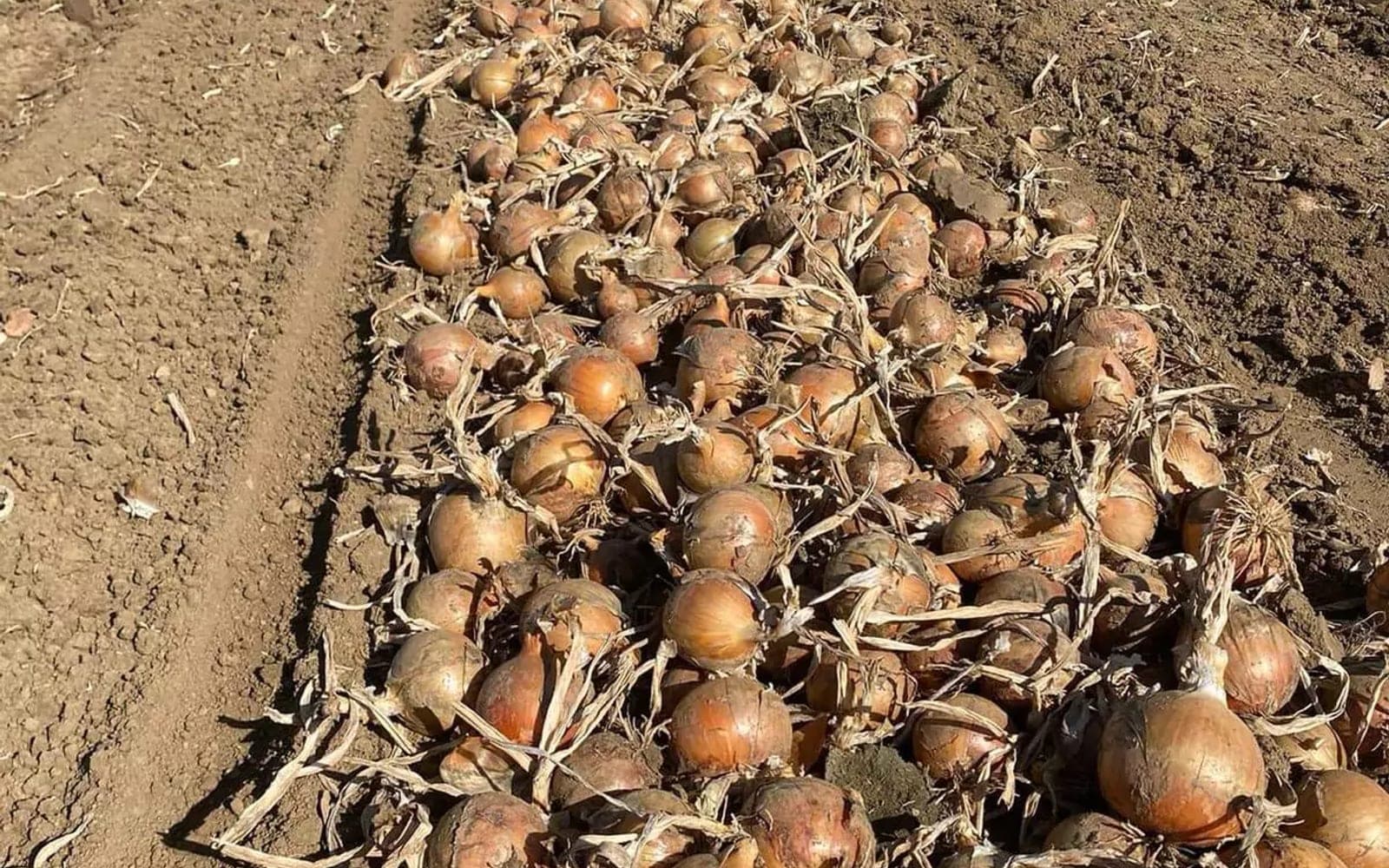
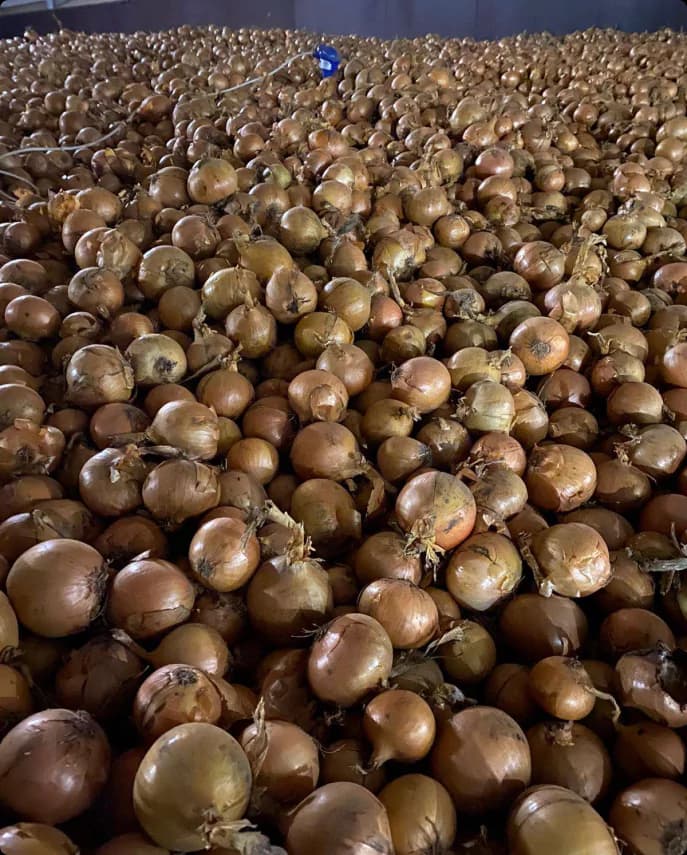
We farm more than 800 hectares, including around 400 hectares of vegetables. Our speciality is onions, which we grow on around 250 hectares and supply to packing houses, as we describe in our guide to wholesale onions. We brought in onions precisely to widen our crop rotation and not rely only on conventional crops.
Alongside vegetables we grow cereals and oilseed rape. Triticale has been in our fields for years, because it is hardy and high-yielding. How cereals and onions share the field, we describe in our post on crop rotation in onion growing.
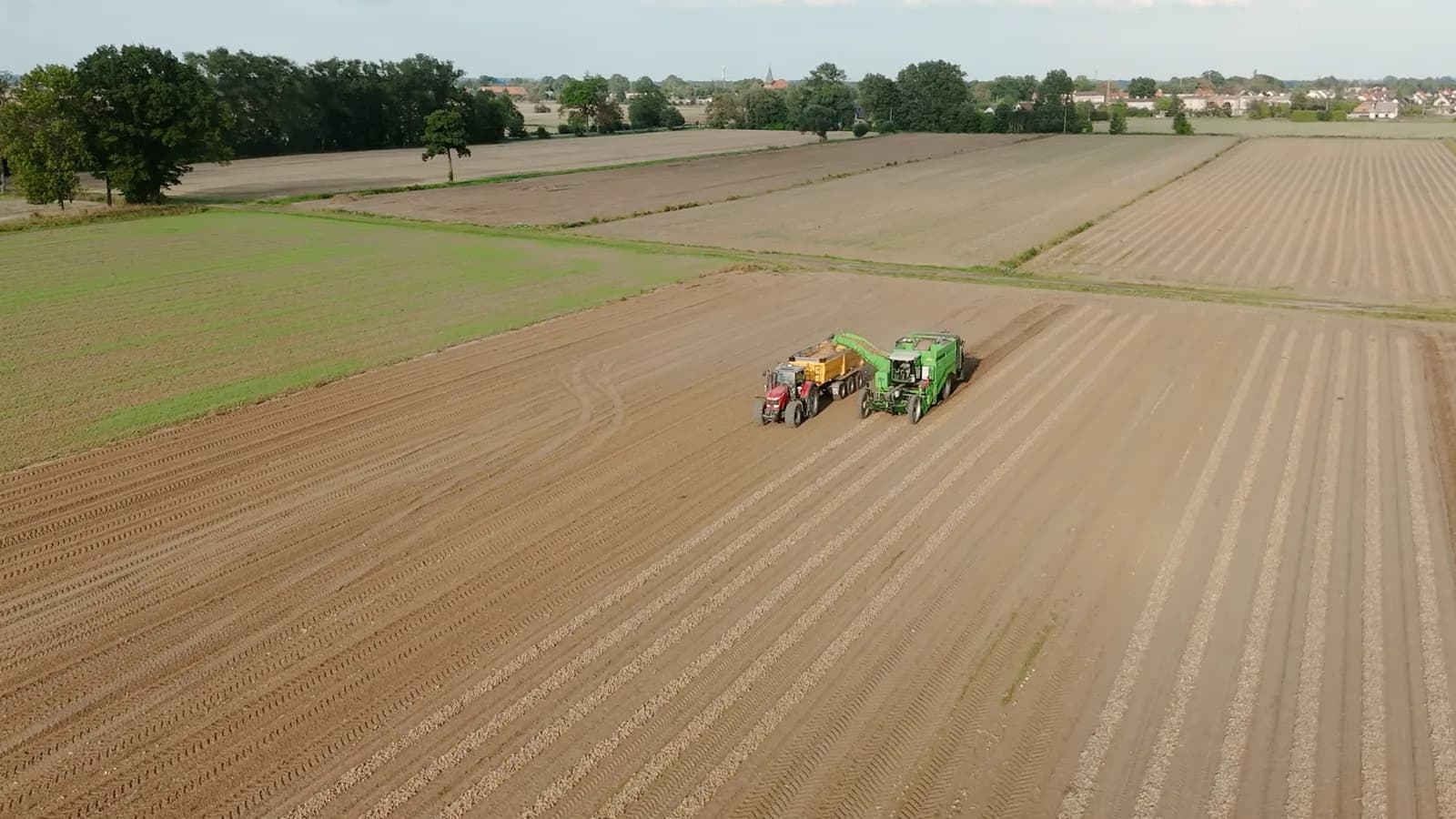
We have 87 machines, and we run the whole acreage with precision farming: Trimble GPS navigation with RTK correction, John Deere Auto Pilot and variable rate fertiliser application.
How to check a batch of feed triticale: step by step
- Ask for a free sample. We send one on request.
- Measure moisture: following PN-EN ISO 712-1:2025-03, IBPRS-PIB gives no more than 14.5% for grain for safe storage.
- Measure bulk density and compare it with the 68.0 kg/hl minimum from the PN-R-74107:1997 standard, cited by IBPRS-PIB.
- Have DON, zearalenone and ochratoxin A tested, and compare the results with the action limits from GMP+ TS1.5: 8, 2 and 0.25 mg/kg for cereals.
- Inspect the grain for ergot, for which TS1.5 gives 1,000 mg/kg in feeds containing unground cereals.
- Check the supplier in the GMP+ certified companies database. If you buy unprocessed grain directly from a farmer without a certificate, TS1.2 describes the gatekeeper protocol for that case.
Delivery, sample and price
We ship triticale in bulk or in big bags, and we agree the delivery method individually. It is one of the 8 items in our offer. Delivery formats and documents are gathered on our triticale from Żuławy page.
The price is calculated based on current market prices. Write to us through the contact form, give the quantity and date, and on request we will send a free sample.