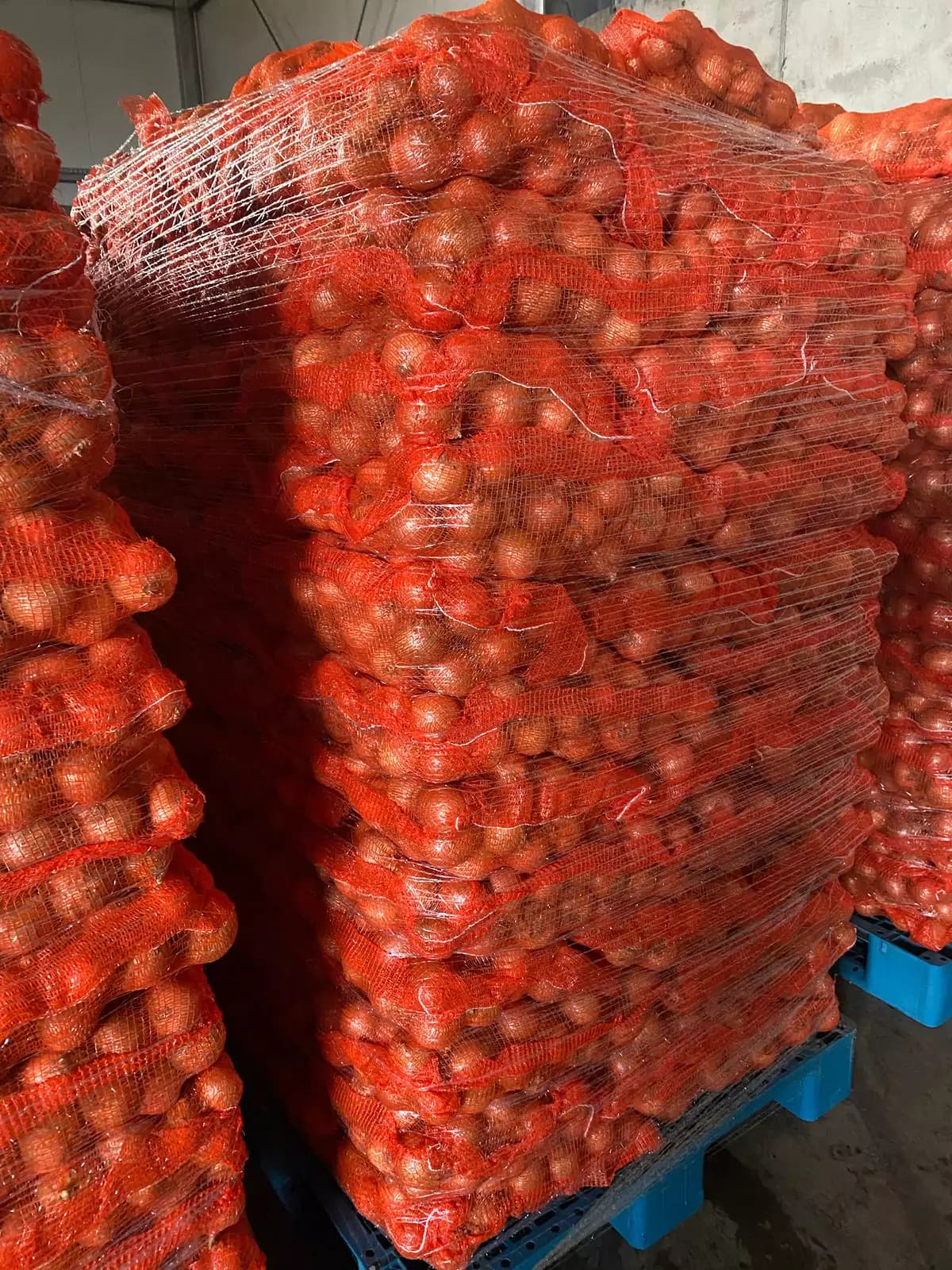
Onion blue mould is a storage disease caused by fungi of the genus Penicillium, which leaves a green to blue-green, powdery growth on the scales. The fungus usually gets into the onion through wounds, bruises and a neck that has not dried properly, so we limit it above all through gentle harvesting, curing and selection. Below we describe how to recognise it, how we deal with it in our 13 000 tonne store and what to check when you receive a batch.
What blue mould looks like on an onion
According to UC IPM, the University of California's plant protection programme, blue mould can be caused by many species of Penicillium. The first symptom, according to UC IPM, is water-soaked spots on the outer surface of the scales. Later, as UC IPM reports, a powdery growth ranging from green to blue-green can appear on the spots. When cut open, the affected parts of the fleshy scales are, according to UC IPM, tan or grey.
The growth is spores, which means it is the final stage. According to UC IPM, once the fungus is inside the onion, it first grows through the fleshy scales. That is why a bulb with no growth on the outside is not always sound inside.
Blue mould is easy to confuse with other storage diseases. We cover black growth separately in our post on onion black mould.
Where blue mould comes from
According to UC IPM, these fungi are common on plant debris and dying tissue. So there is no way to remove them from the onion's surroundings. What we can do is not open the way in for them.
And the way in is a wound. According to UC IPM, the fungus usually gets into the onion through wounds, bruises or neck tissue that has not dried properly. The disease appears, according to UC IPM, at harvest and in storage. The best conditions for the fungus, according to UC IPM, are moderate temperatures and high relative humidity.
In practice, every time an onion hits a trailer side, a bin or a belt, that is a potential way in for the fungus. With large batches, every transfer counts, because the onions pass through several machines before they reach the buyer.
How we limit blue mould
UC IPM recommends handling onions with as few bruises and wounds as possible and drying the neck quickly. That is how we work:
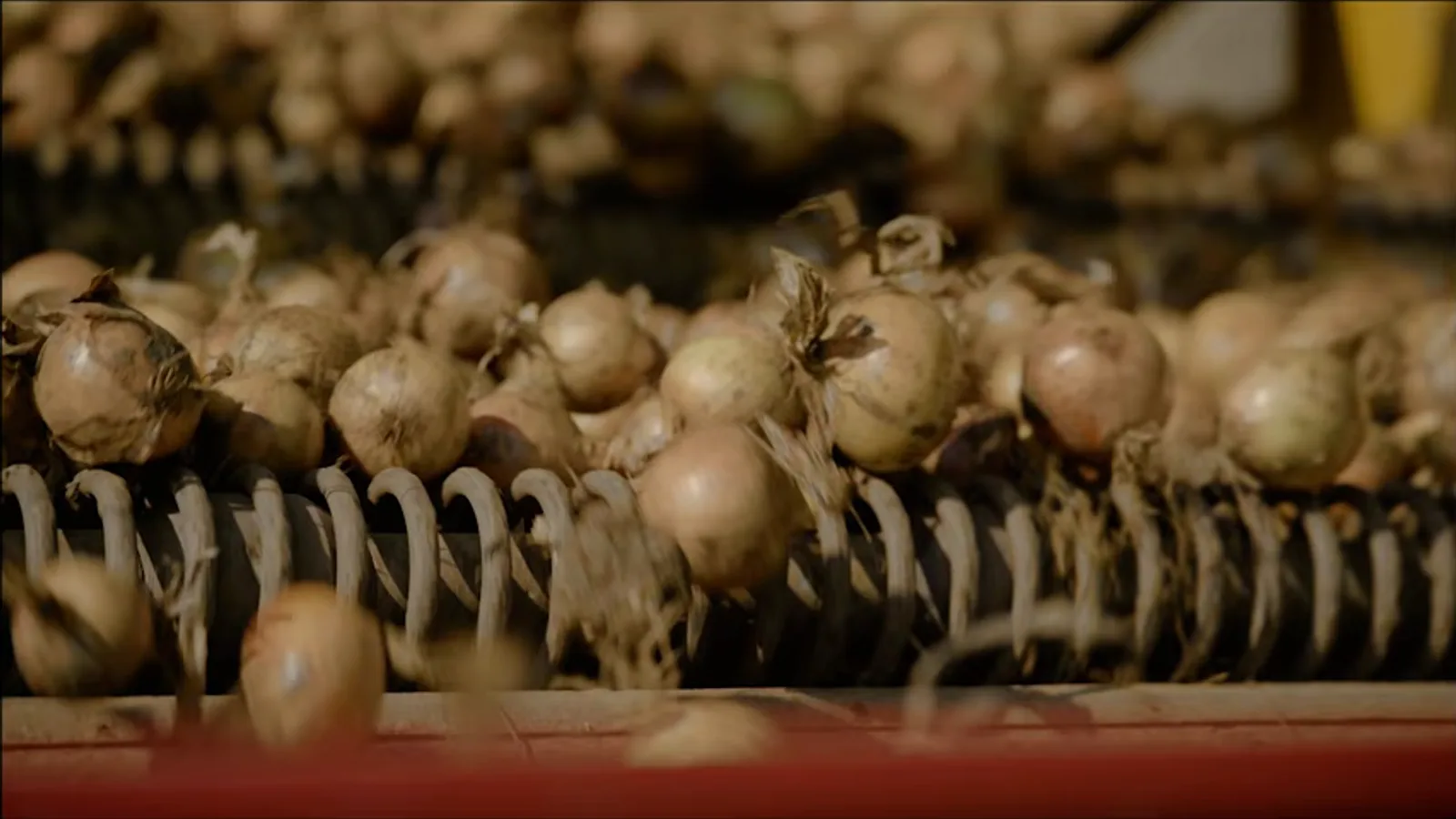
- We harvest gently. The Grimme WV 180 undercuts the onions across a 180 cm width, cleans the soil off them on two rod conveyors and lays them in windrows. The self-propelled AVR Puma 3 harvester picks up the windrows, gently on the skin, and unloads on the move onto trailers. We write more about where bruising comes from in our post on mechanical damage to vegetables.
- We cure for 2-4 days in the store. Controlled ventilation and curing keep the skin dry, and a dry, closed neck is one less way in. Details in our post on how curing onions before storage works.
- We check batches in storage. We keep our onions in our own 13 000 tonne store. We select every batch for firmness, colour and dry skin.
- We sort before shipping. Before onions go to the buyer, they pass through the DOWNS CropVision optical sorter. Cameras and AI scan every bulb through 360 degrees and reject defective bulbs, at up to 100 tonnes per hour.
What temperature to store onions at so they do not go mouldy
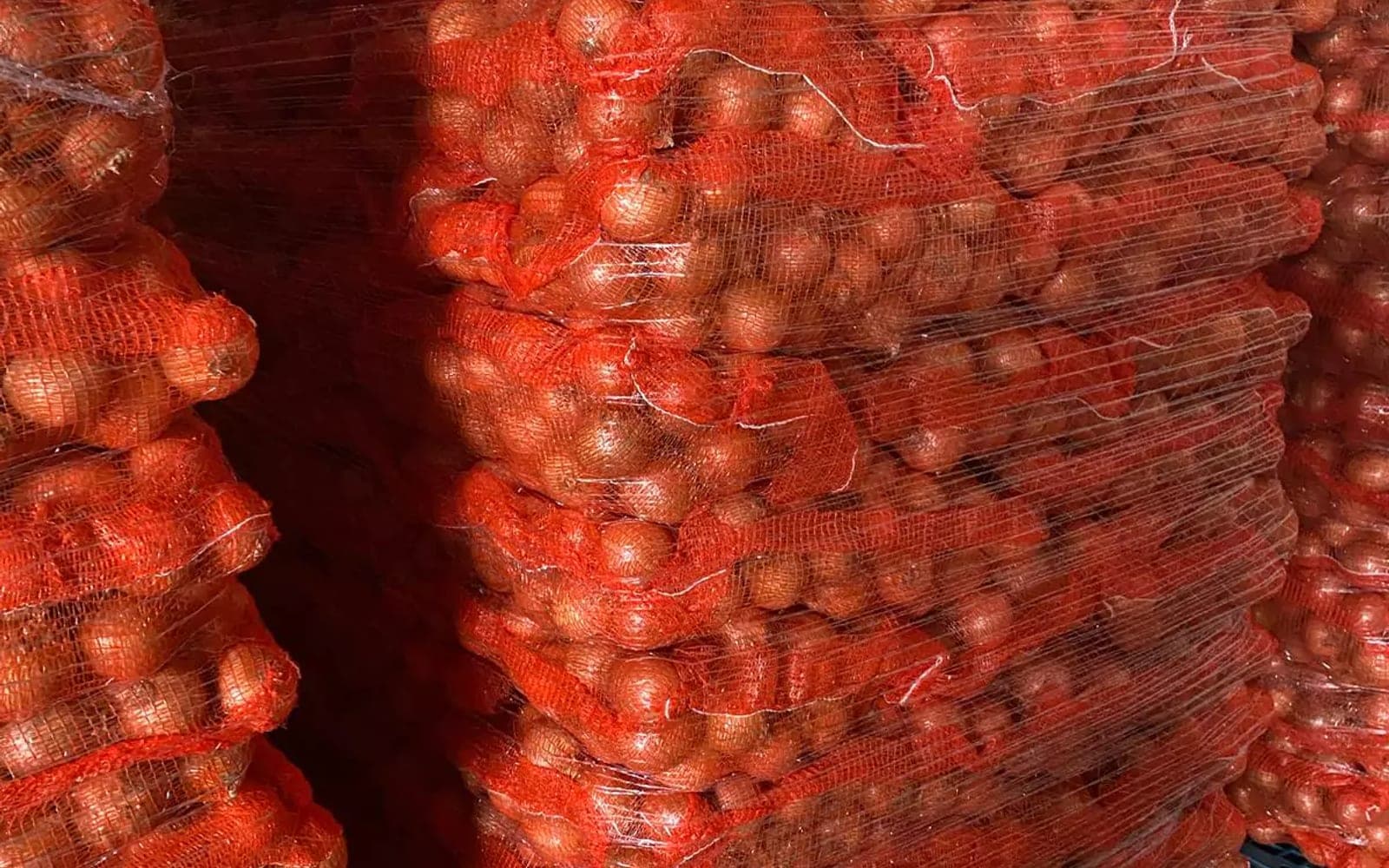
The UC IPM gardening guide recommends keeping onions at 41°F, or around 5°C, or below, at low relative humidity. The FAO table gives 0-5°C and 65-70 percent relative humidity for onions, with a storage period of 6-8 months.
Dry skin matters too, because according to UC IPM high relative humidity favours the fungus. We write more about how our onions keep until spring in our guide to onion storage.
How to check a batch of onions on receipt
Blue mould is easiest to miss inside a sack or in the middle of a big bag. When you receive a batch, it is worth going through a few simple steps:
- Look at the packaging before unloading and check for a greenish dusting on the skins, around the neck and where onions are bruised.
- Take a sample from several places in the batch, not just from the top of a pallet or big bag.
- Squeeze the onions in the sample: a soft neck or a soft side is a signal to take a closer look at the bulb.
- Cut open some of the bulbs and compare the fleshy scales with the description of symptoms above.
- Separate growth on the dry skin only from infection of the fleshy scales, and count the share of each group in the sample.
- Photograph the cross-sections with the batch marking and compare the result with the threshold set in the order.
- After receipt, keep the onions cool and at low humidity, away from warm areas of the warehouse.
Before your first order, you can ask us for a free sample and check it the same way. It is worth agreeing the batch rejection threshold in writing before deliveries start: that way both sides count the same thing, in the same way.
Onions from Żuławy, straight from the grower
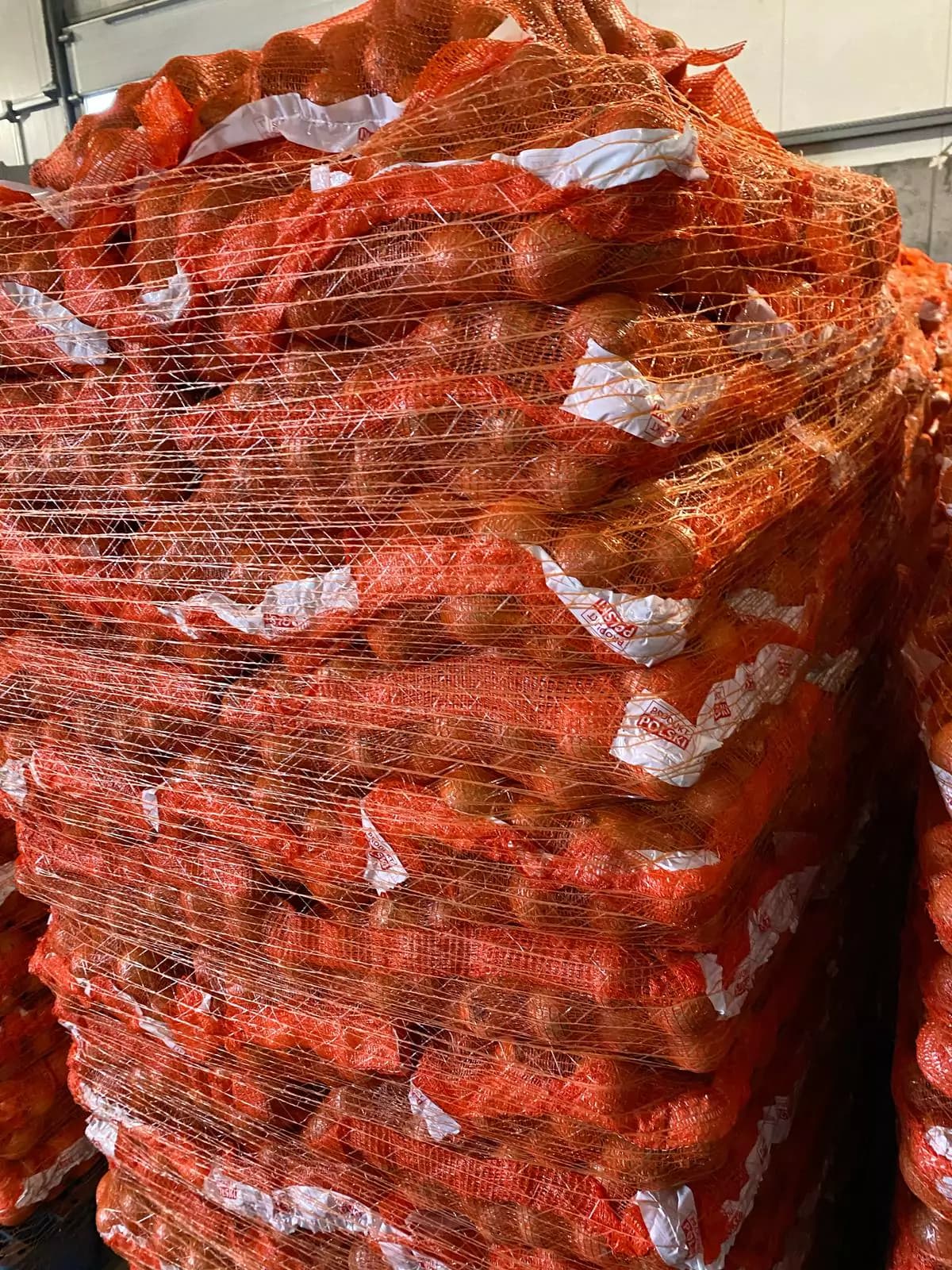
We grow around 250 ha of onions in Żuławy, harvest them with our own machines, cure them and keep them in our own store. That means we are responsible for quality at every stage, from the field, through the store, to packing. We pack loose, in big bags and in 15 kg, 10 kg and smaller sacks. You will find the details of our offer on the yellow onions from Żuławy page. We calculate the price based on current market rates, and the simplest way to send an enquiry is through the contact form.