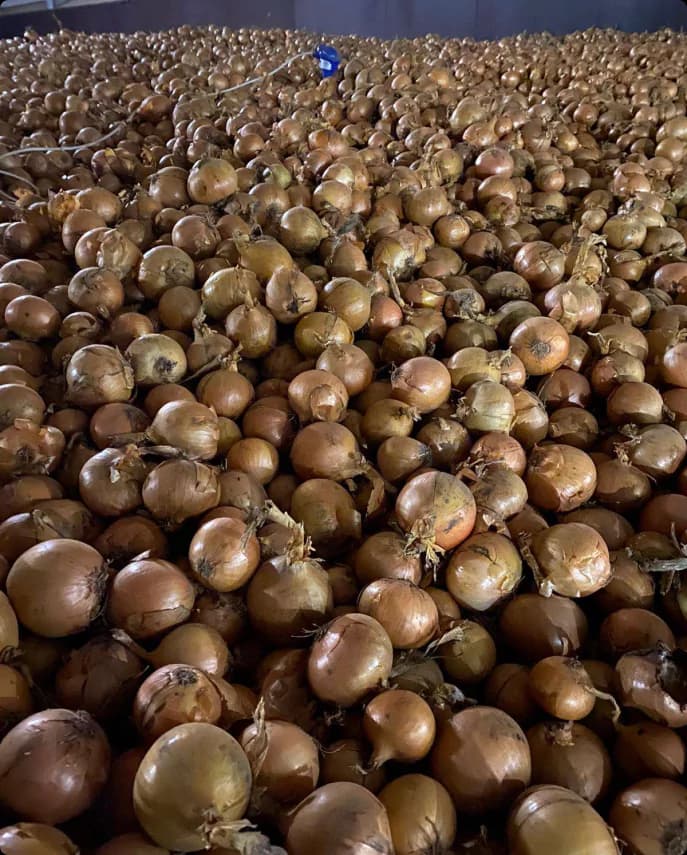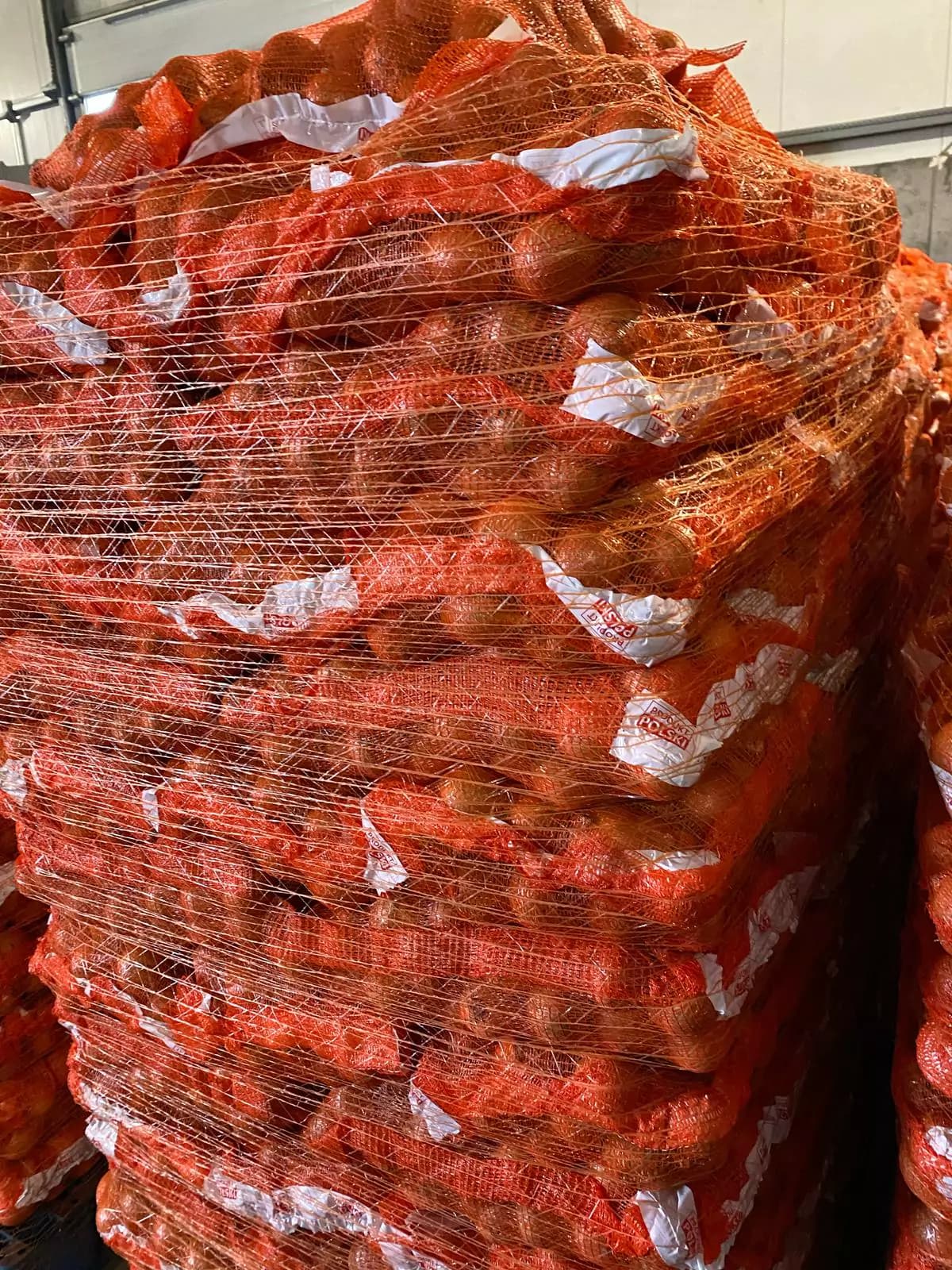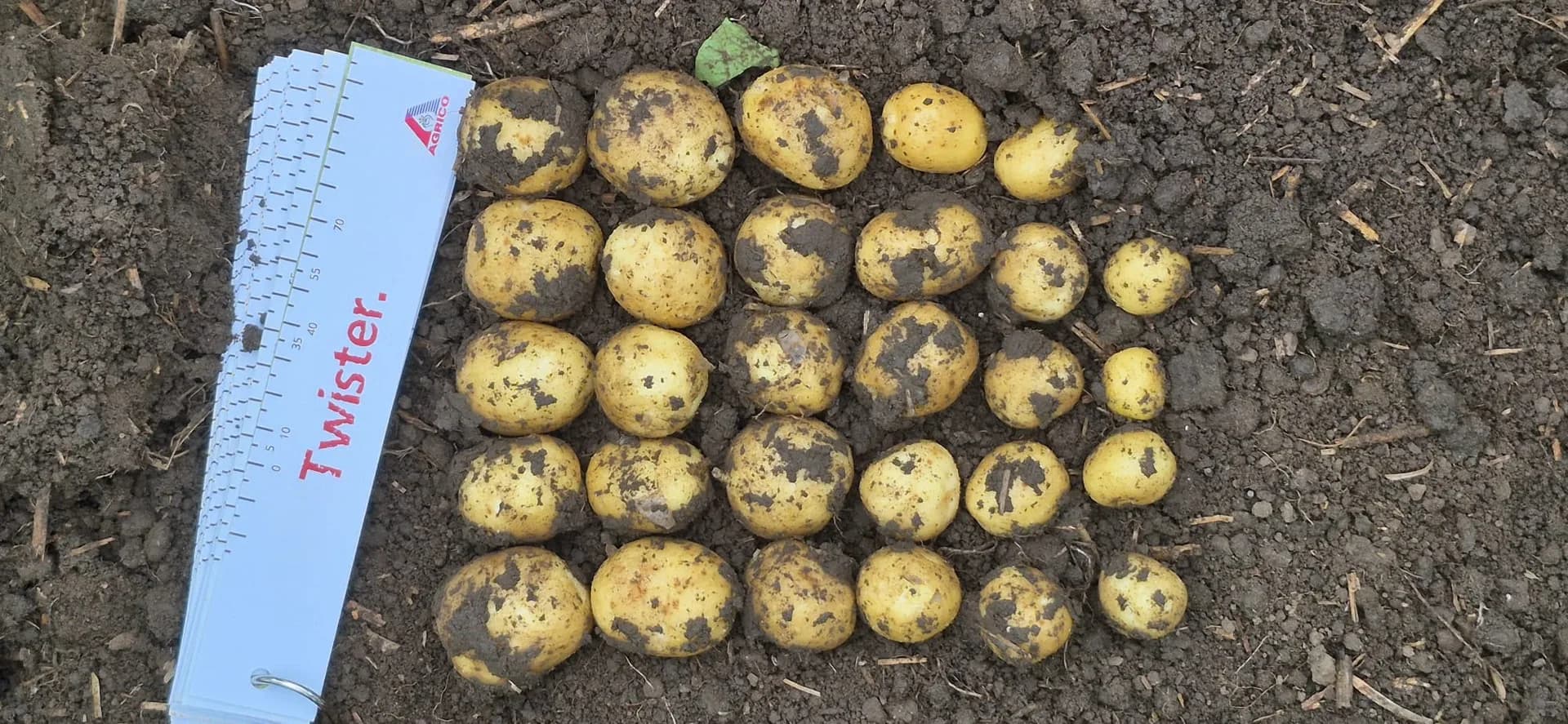
For a few days, yes; for longer, no. Onions and potatoes can travel or sit together in wholesale for a few days, but longer storage needs different conditions: onions want cool, dry air, potatoes want high humidity and a temperature matched to their end use. Moisture given off by potatoes favours rooting and rot in onions. We grow both crops in Żuławy, so below we set out their requirements side by side and explain how to keep them apart in storage.
Two vegetables, two different climates
The clearest comparison comes from the USDA's storage handbook (Agriculture Handbook 66), together with a requirement from the EU acrylamide regulation. Its chapter on onions was written by a researcher from the Polish Institute of Horticulture in Skierniewice.
| Parameter | Onions | Potatoes |
|---|---|---|
| Temperature | close to 0°C for long storage | depends on end use; potatoes for fries above 6°C (minimum under Regulation (EU) 2017/2158) |
| Relative humidity | 65-75 percent | 95-99 percent |
| Light | dark; skins can turn green in light | dark; tubers turn green and build up glycoalkaloids, such as solanine, in light |
| What harms them most | moisture: onions root in air that is too humid | cold: in the cold, starch turns into sugars that darken fries |
The gap in humidity is the key point. For onions, 95 percent is an invitation to rooting and disease; for potatoes, 65 percent means quick water and weight loss. A shared room forces a compromise that harms both vegetables.
Why not keep them together for long
Potatoes respire and give off moisture, and are kept in humid air so they do not lose weight. In that environment, onions wake from dormancy sooner, root and pick up storage diseases more easily. That is why the National Onion Association explicitly recommends not storing onions with potatoes, or with other produce that gives off moisture.
Temperature is the opposite problem. Cold close to zero, where onions sleep most deeply, means starch turning into reducing sugars in a potato. When fried, those sugars darken fries and raise acrylamide levels. The EU acrylamide regulation (EU) 2017/2158 lists storing potatoes above 6°C among the measures that fry manufacturers using fresh potatoes, including foodservice, are expected to apply. We describe how we manage potatoes for fries from harvest to release in our post on storing potatoes for fries.
The USDA handbook also flags odours: potatoes can pick up an off flavour from volatile compounds given off by other produce.
Do onions speed up potato sprouting?
It is a popular claim, but we have not found research confirming it. According to the USDA handbook, onions give off very little ethylene, the gas that speeds up ripening in many fruits and vegetables, and potatoes are not very sensitive to ethylene from outside. In fact, at a steady, controlled dose, ethylene is used in some potato stores as a sprout suppressant.
The real reason to keep these two vegetables apart is humidity and temperature, plus odour transfer, not ethylene. Potatoes sprout because they are too warm or their dormancy period has ended, and onions root because they are too humid.
When they can sit together
For a short time, there is no problem. In its compatibility table for storage of up to 7 days, that is for transport and short-term wholesale storage, the USDA handbook places onions and potatoes in the same group. The shared conditions for that group are 13-18°C and 85-95 percent humidity, a compromise for transport and short-term wholesale storage, not for a store or a kitchen. A few days on the same trailer, or in the same room at a wholesaler, will not cause harm, as long as the stock has airflow and is not sitting in light.
The problem starts at weeks and months. From then on, each vegetable needs its own space:
| Situation in the receiver's warehouse | What happens | What to do |
|---|---|---|
| One chamber close to zero for everything | potatoes turn sweet, fries darken | keep potatoes for fries above 6°C, apart from onions |
| A humid cellar for both potatoes and onions | onions root and rot | move onions to a dry, airy spot |
| Sacks packed tight, with no airflow | moisture builds up between sacks, mould takes hold easily | stack sacks with airflow, on pallets |
| Potatoes standing in light | tubers turn green | keep potatoes in the dark |
When moving onions from cold storage to a warmer room, watch out for dew on the skin. We explain when and why it appears in our post on why onions sweat.
The simplest rule for a kitchen or a wholesaler: potatoes in a dark, humid, not too cold spot, onions in a dry, airy one. Together only for transport and short-term storage, and in a kitchen best kept apart from the start.
Onions and potatoes from one supplier
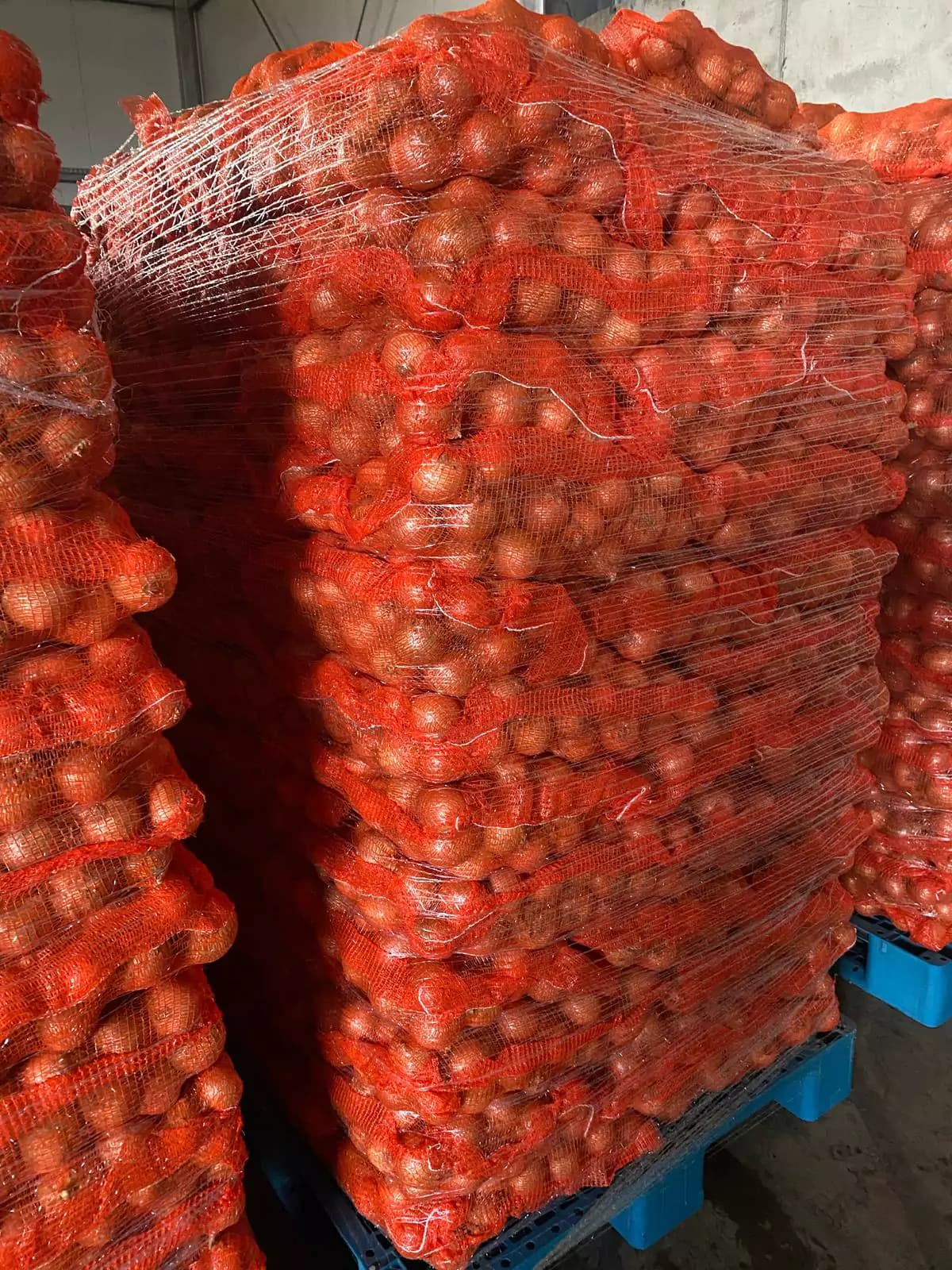
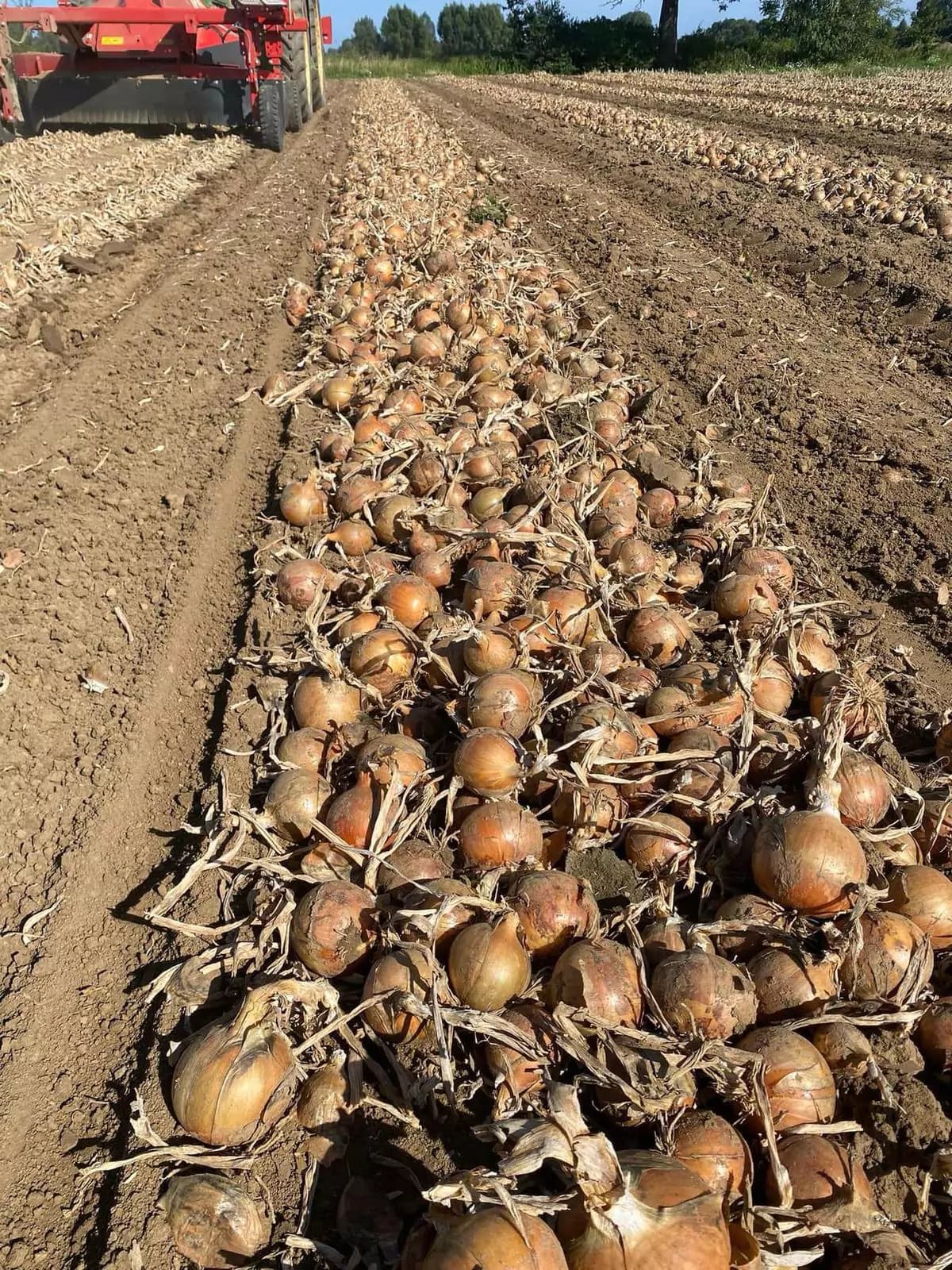
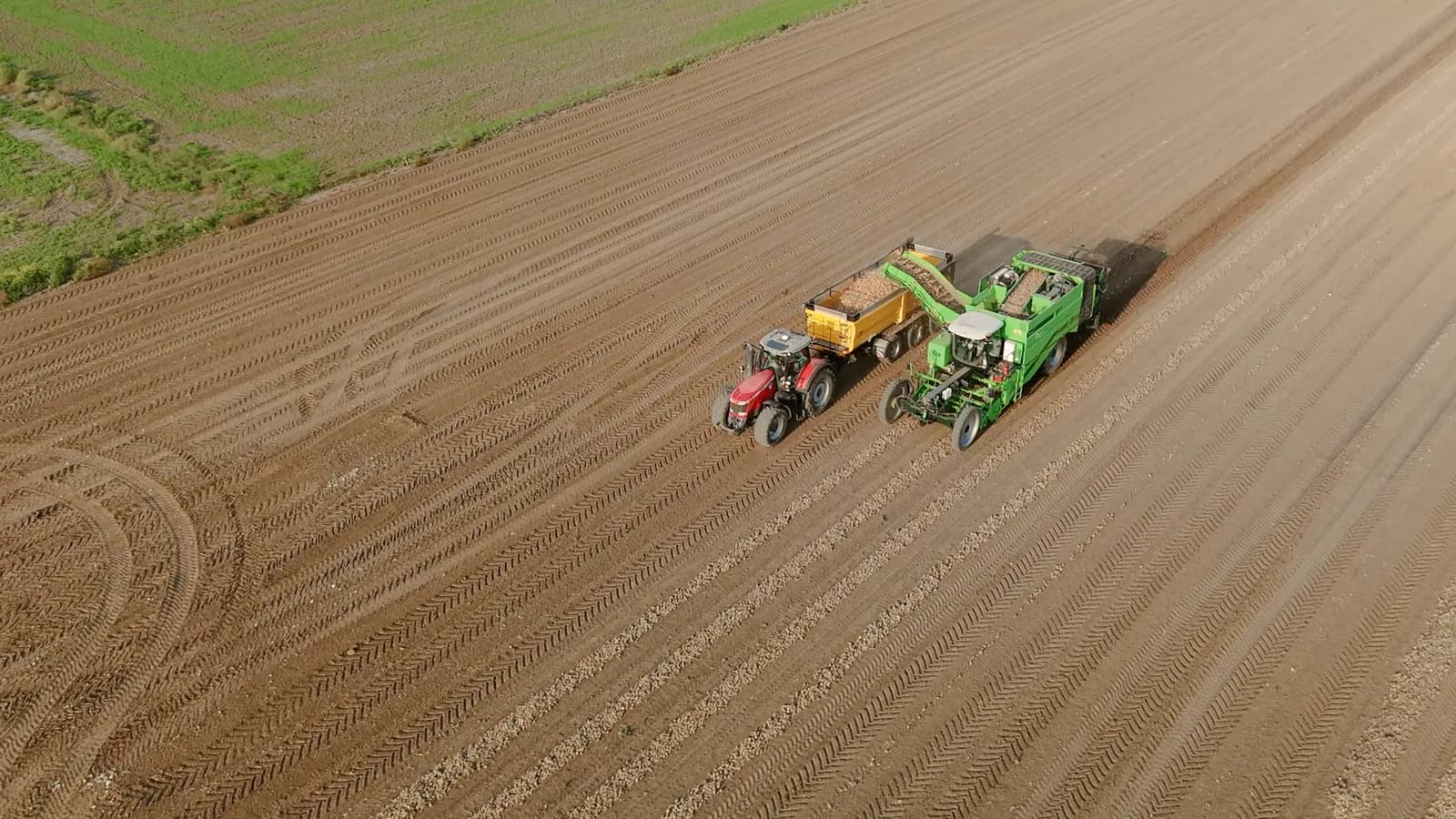
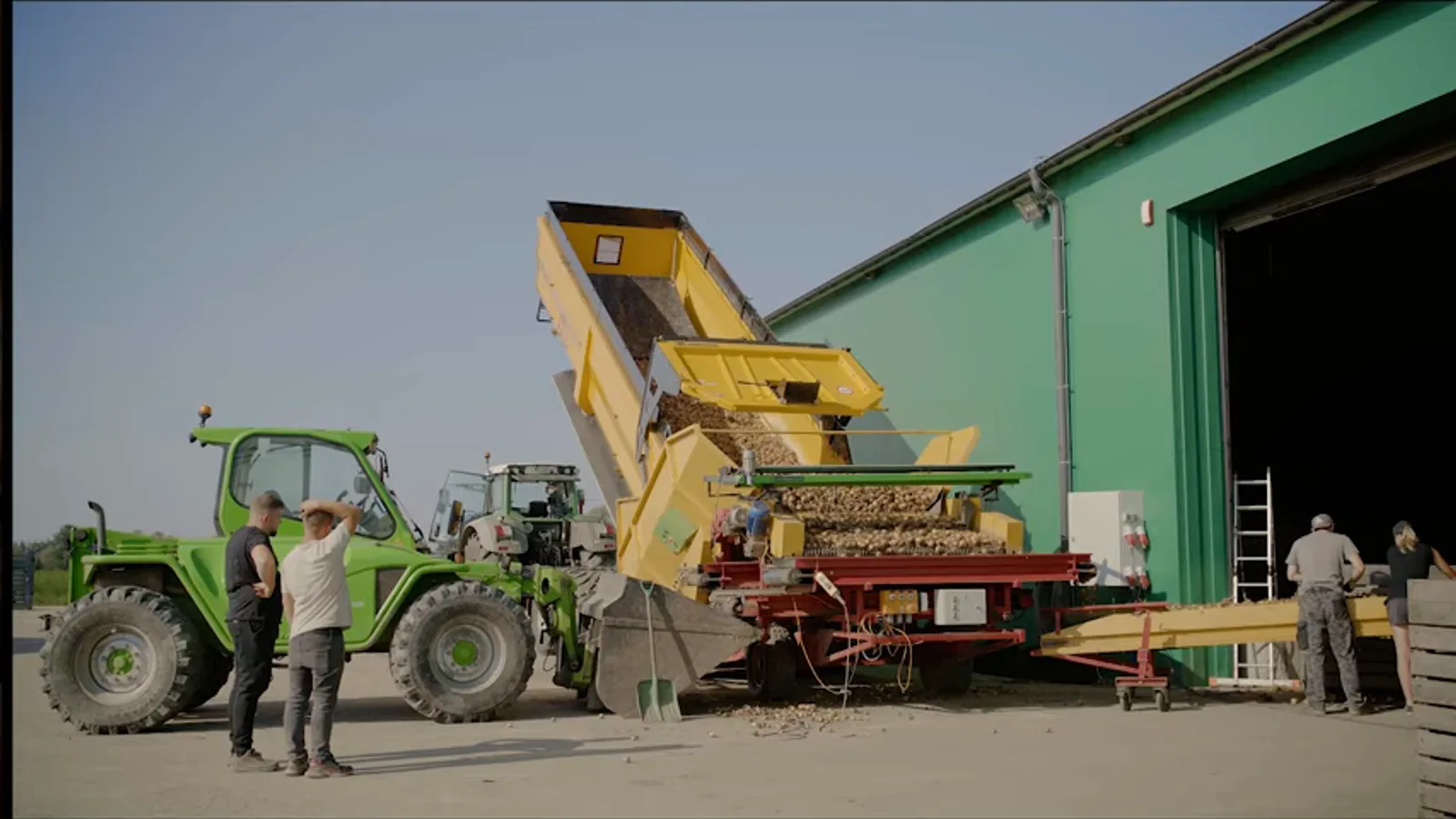
We grow around 250 ha of onions and potatoes for different uses: the fry varieties Innovator and Donata, and the table varieties Twister, Bella Rosa, Joline and Gala. Innovator is the same variety Farm Frites uses. We store our onions in our own 13 000 tonne store, under the conditions we describe in our guide on storing onions.
If you supply a kitchen or a wholesaler with both vegetables, take a look at our potato and onion offers, and send your enquiry through the contact form. We calculate the price based on current market rates.