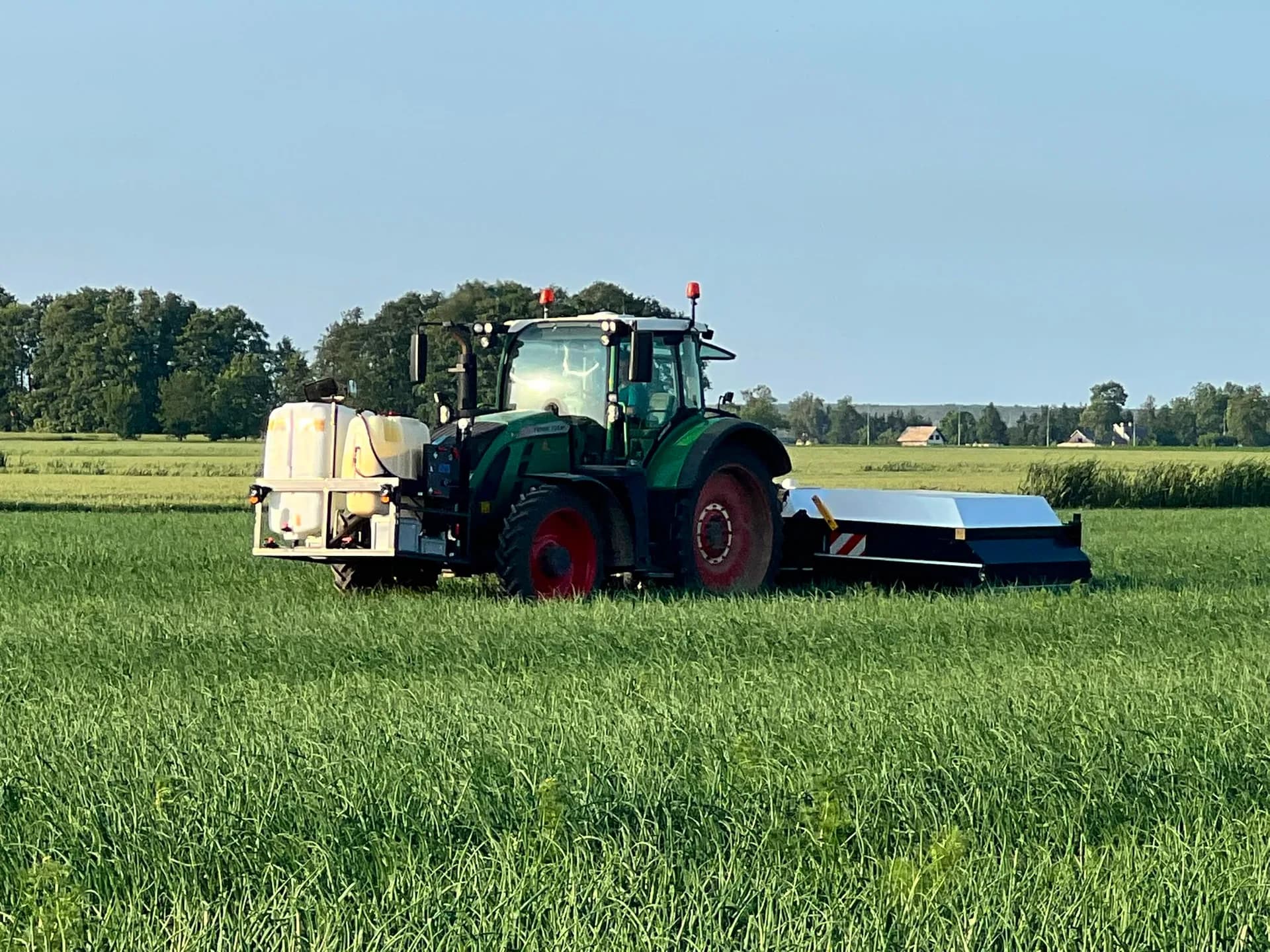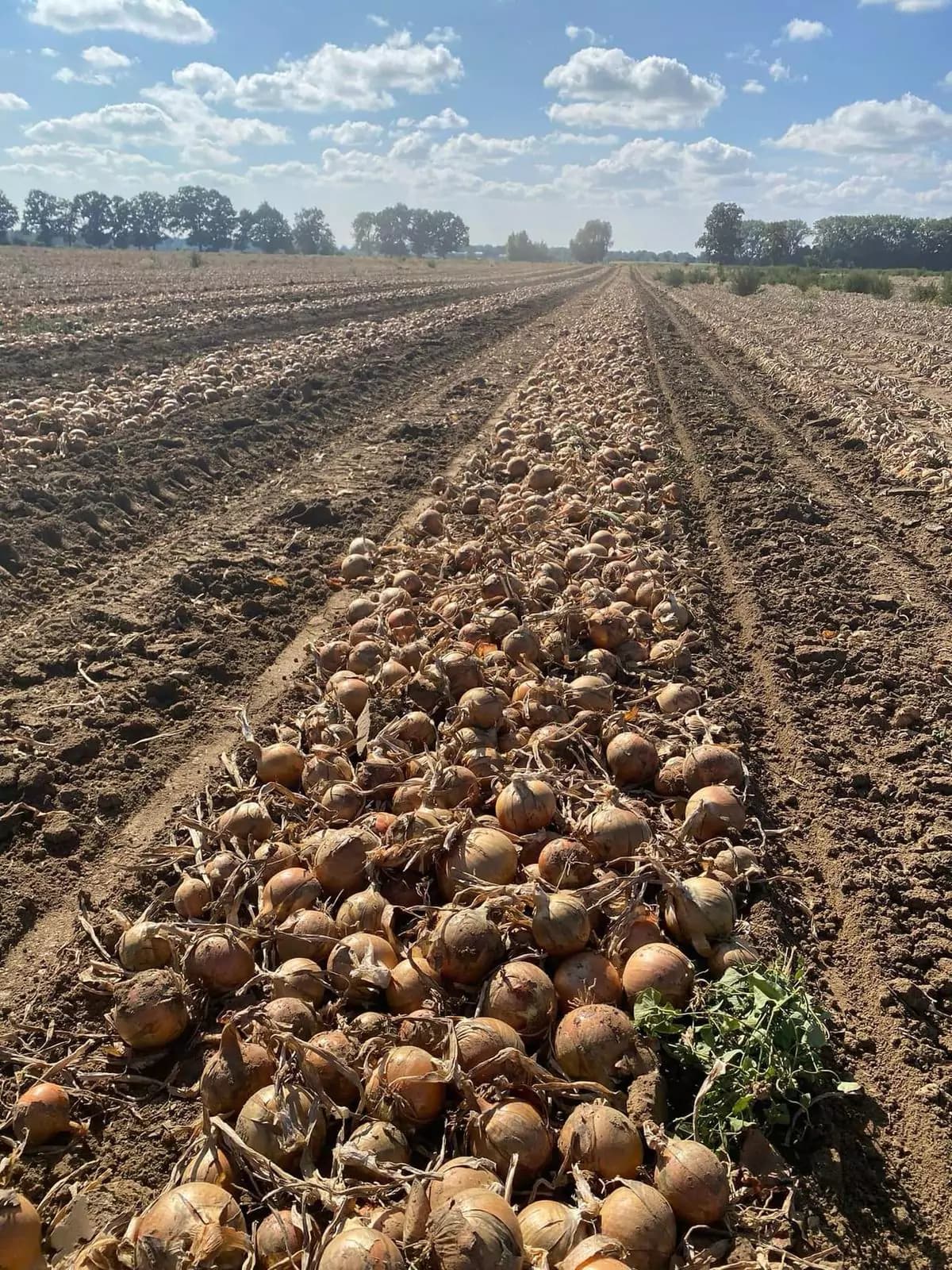
The 2026 onion harvest in Żuławy has just started. The Grimme WV 180 has entered the first fields and is laying onions into windrows, a sign that the most intensive weeks of the season are ahead of us. This year we are harvesting onions from around 250 hectares, a hundred more than in the 2025 season, field by field, in the order set by the ripeness of the tops.
The tops are down, we start with lifting
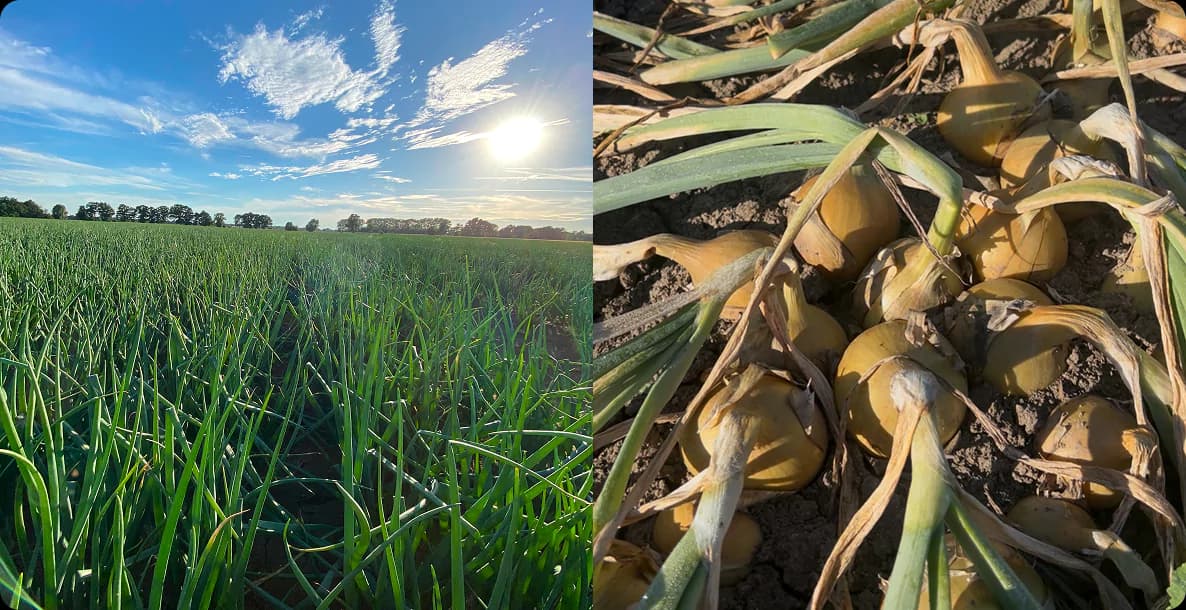
Just two weeks ago we were counting down the days to the start, and today the machines are already in the field. We begin harvesting where the onion tops went down first, because that is the surest sign that the crop has stopped growing and it is time to take it out of the ground.
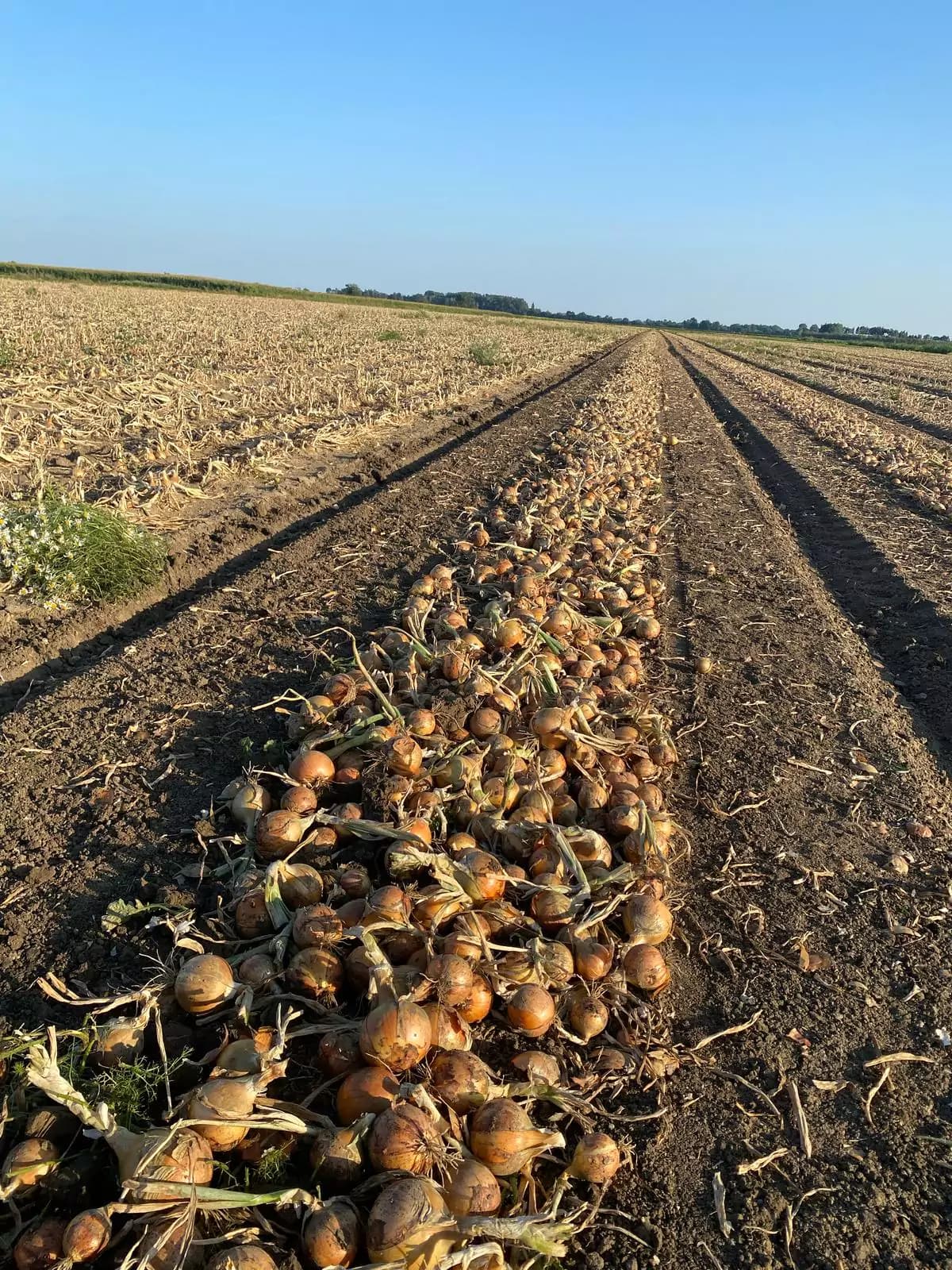
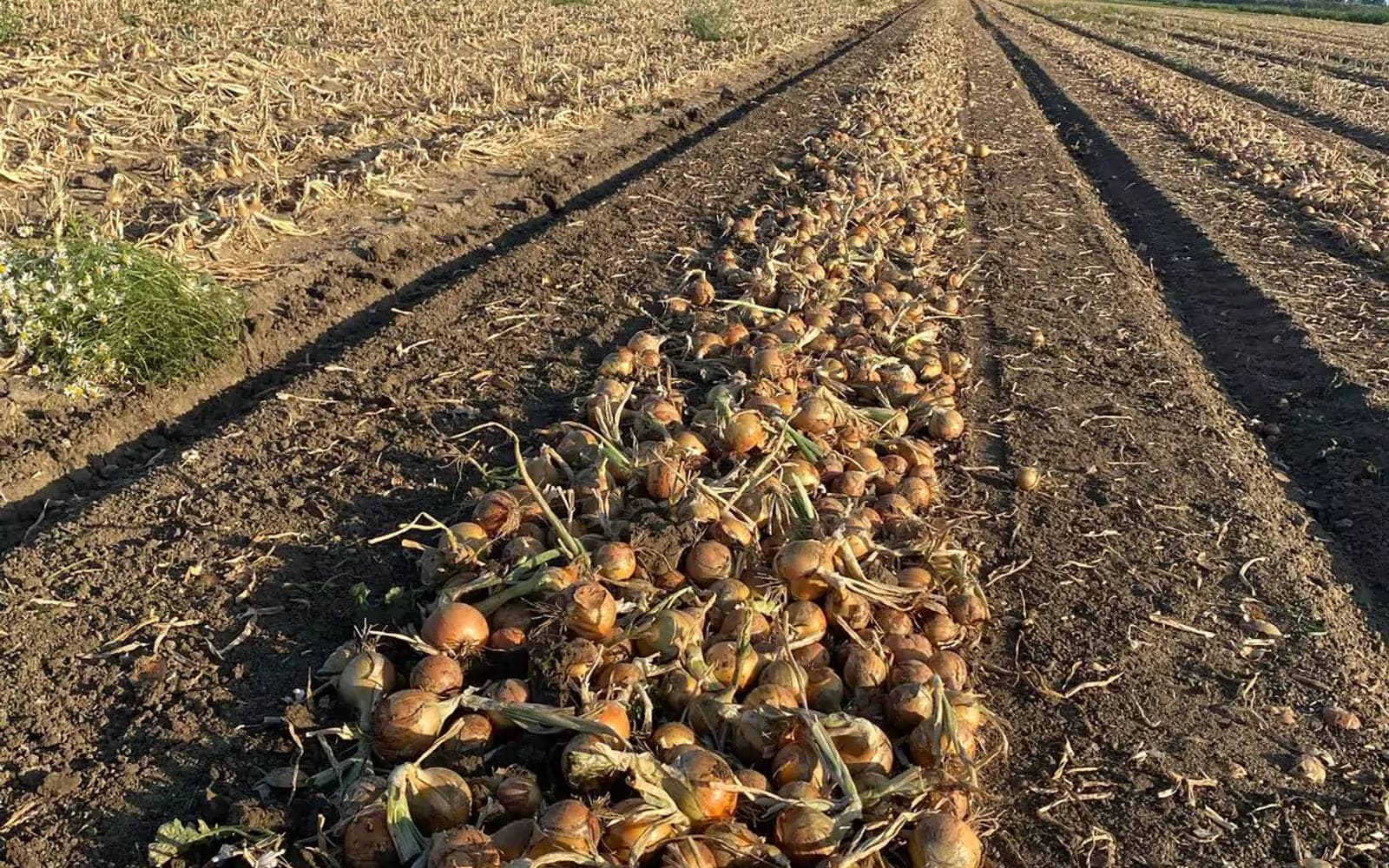
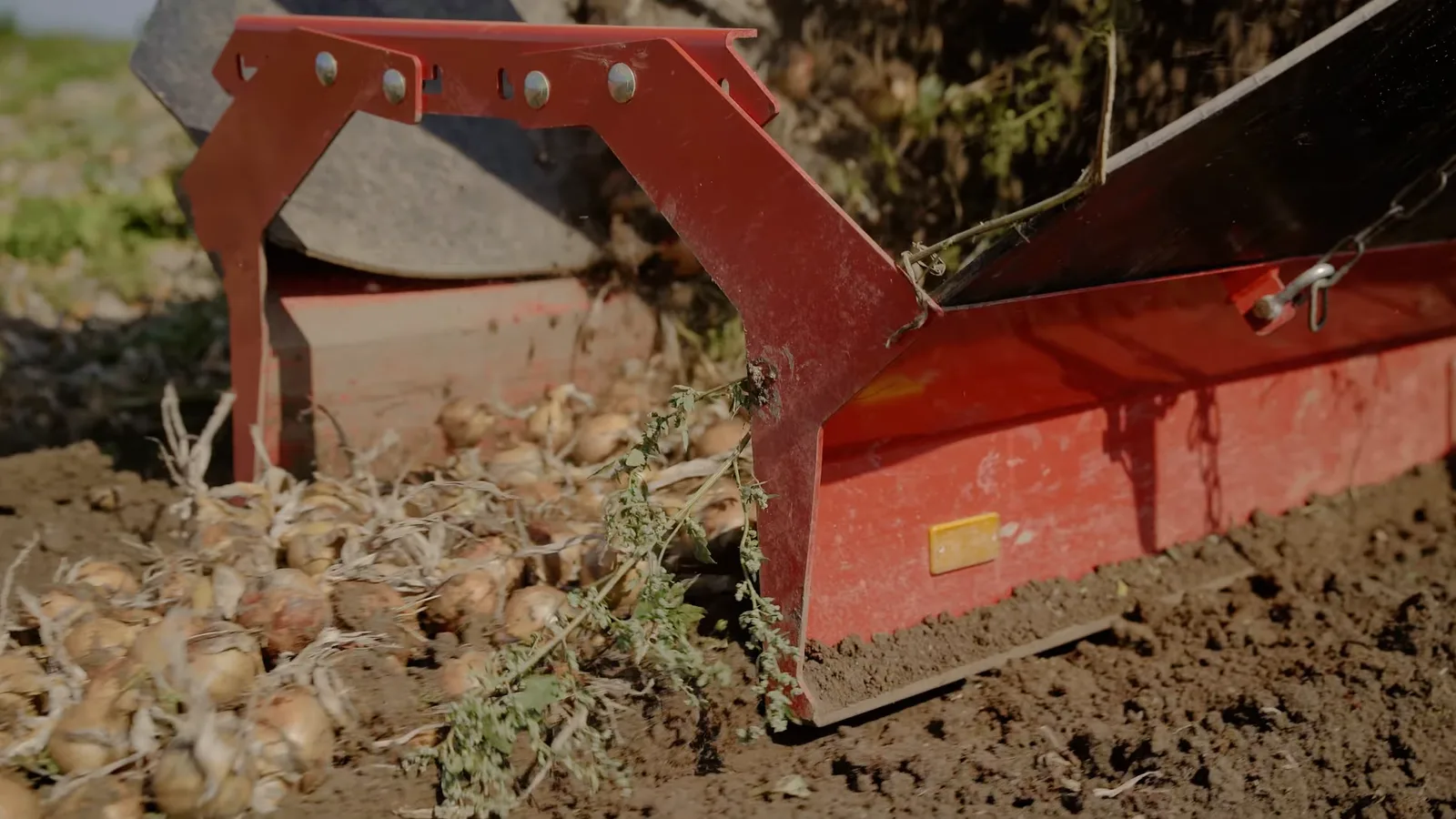
The first stage belongs to the Grimme WV 180 windrower. The machine undercuts the onions, lifts them gently out of the soil and lays them into even windrows 180 centimetres wide. At this stage nothing drives over the onions and nothing gets cut: the whole point is to take them out of the ground without bruising and expose them to sun and wind.
Onions dry in the windrows, the weather sets the pace
The lifted onions stay in the windrows for a few days. During that time the skin dries and sets, and the neck starts to close. It is a simple but crucial stage: onions that dry well in the field handle transport, sorting and long months in storage much better.
How long exactly the onions stay in the windrows is up to the weather. With sun and wind a few days are enough, in cool and damp conditions we wait longer. That is why during the season we drive around the fields every day and check the windrows by hand before we let the harvester in. We described the whole two-stage process step by step in our post on harvesting onions with a harvester.
The harvester follows the windrows
Once the windrows are ready, the self-propelled AVR Puma 3 harvester gets to work, picking up the dried onions from the windrows and unloading them on the go onto trailers. In good conditions it can harvest up to 150 tonnes per hour, so the haul has to keep the machine's rhythm: we cart the onions off the field with a John Deere 6930 Premium and a Wielton tridem trailer.
That kind of output is not showing off. At our scale the weather window can be short, and every hour of sunshine used for harvesting means onions that get under a roof dry and healthy before the autumn rains come.
Our schedule for September is simple: we lift the next fields, the harvester follows the windrows a few days behind, and the storage takes in produce as it comes. We repeat this cycle until the last field.
The storage takes in the first batches
From the field the onions go straight to our 13 000 tonne storage facility. There we finish drying every batch with warm air for 2 to 4 days, until the neck closes completely, and only then does the produce go into calm storage. We write more about why this stage decides winter quality in our post on onion storage.
The storage takes in onions from spring sowing, the backbone of our year-round sales. The onions grown from sets left the fields earlier and were largely sold over the summer, so the September harvest builds the stock for autumn, winter and spring.
What the start of the season means for buyers
For our buyers the start of the harvest is concrete news: from September, deliveries of new-crop onions begin, straight from the Żuławy fields. The first batches head to packing plants and processors even before the storage is full, and in parallel we build up the stock that lets us ship produce all year round.
As every season, each batch goes through sorting and quality control, and we grow according to the principles of Integrated Plant Production, using technology with no pesticide residues. You can read more about how we grow onions in Żuławy in our main post on the crop. If you are planning deliveries of new-crop onions, check our onion offer or write to us via the contact page: September and October are the best time to set up cooperation for the whole season.
Want to see what the whole process looks like from field to warehouse? Have a look at our post on harvesting onions with a harvester step by step or go straight to asking about deliveries from the new crop.