Harvesting onions with a harvester is not a single pass of one machine. It is a two-stage process: first the onions have to be undercut and laid in windrows to cure, and only then lifted from the field. We do this every year on around 250 hectares of onions in the Żuławy region in northern Poland, with our own machines and our own people. In this post we break the whole harvest down into steps, from the windrower's first pass to the moment the onions land in our storage facility.
Why the onion harvest has two stages
An onion straight out of the ground is fit for neither transport nor storage. The skin is damp, the neck is open, scraps of tops still cling to it, and every one of those spots is an open door for storage diseases. That is why, between undercutting and the main harvest, the onions have to cure in the field.
A two-stage harvest gives them the time to do it. Undercut onions lie in windrows on the surface of the field, wind and sun close the neck and dry down the skin, and only then does the harvester come in. The payoff shows up months later: onions that cured in the field simply sit better in storage. The whole growing season that leads up to this moment is covered in our guide to growing onions in Żuławy.
Step 1: undercutting and laying windrows
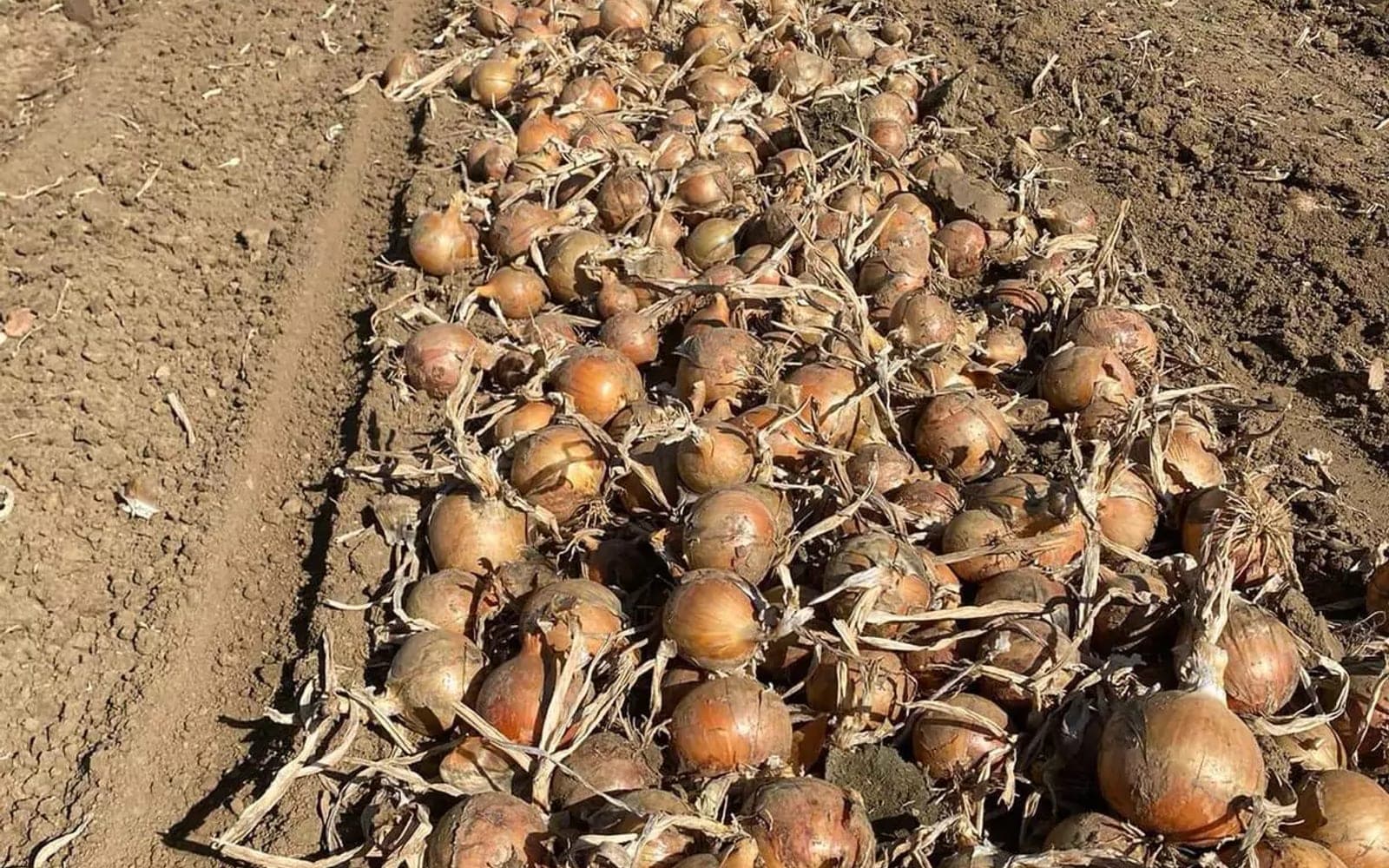
The first pass belongs to the windrower. Ours is a mounted Grimme WV 180, a machine with a working width of 180 cm. The share undercuts the onions together with a narrow band of soil, the sieving webs separate the earth, and the onions go back onto the field, laid in an even windrow. This is not a topper, the windrower cuts nothing, it gently lifts the onions and lays them out to cure.
Even windrows are not about looks, they are a condition for a smooth harvest. The harvester will later drive exactly along their line, so already at this stage we use parallel guidance on a GPS signal with RTK correction. The passes are straight and repeatable, and the windrows lie exactly where they should.
Step 2: curing in windrows
After undercutting, the onions stay in the field, usually from a few days to two weeks, depending on the weather. During that time the neck closes, the skin hardens and takes on colour, and the remaining soil dries off and falls away. In Żuławy, with its maritime climate, this stage takes patience: humid air dries more slowly than in central Poland, but the cooler growing season builds a firm, well-coloured onion.
The weather can put that plan to the test. We check the windrows every day and time the main harvest to a weather window: the onions have to be dry, because wet produce is a straight road to losses in storage.
When the weather window is short, we harvest at night too. The harvester has work lights, and GPS parallel guidance keeps the machine on the windrow no matter the hour. What counts is getting dry onions in before the rain returns.
Step 3: the main harvest with the AVR Puma 3
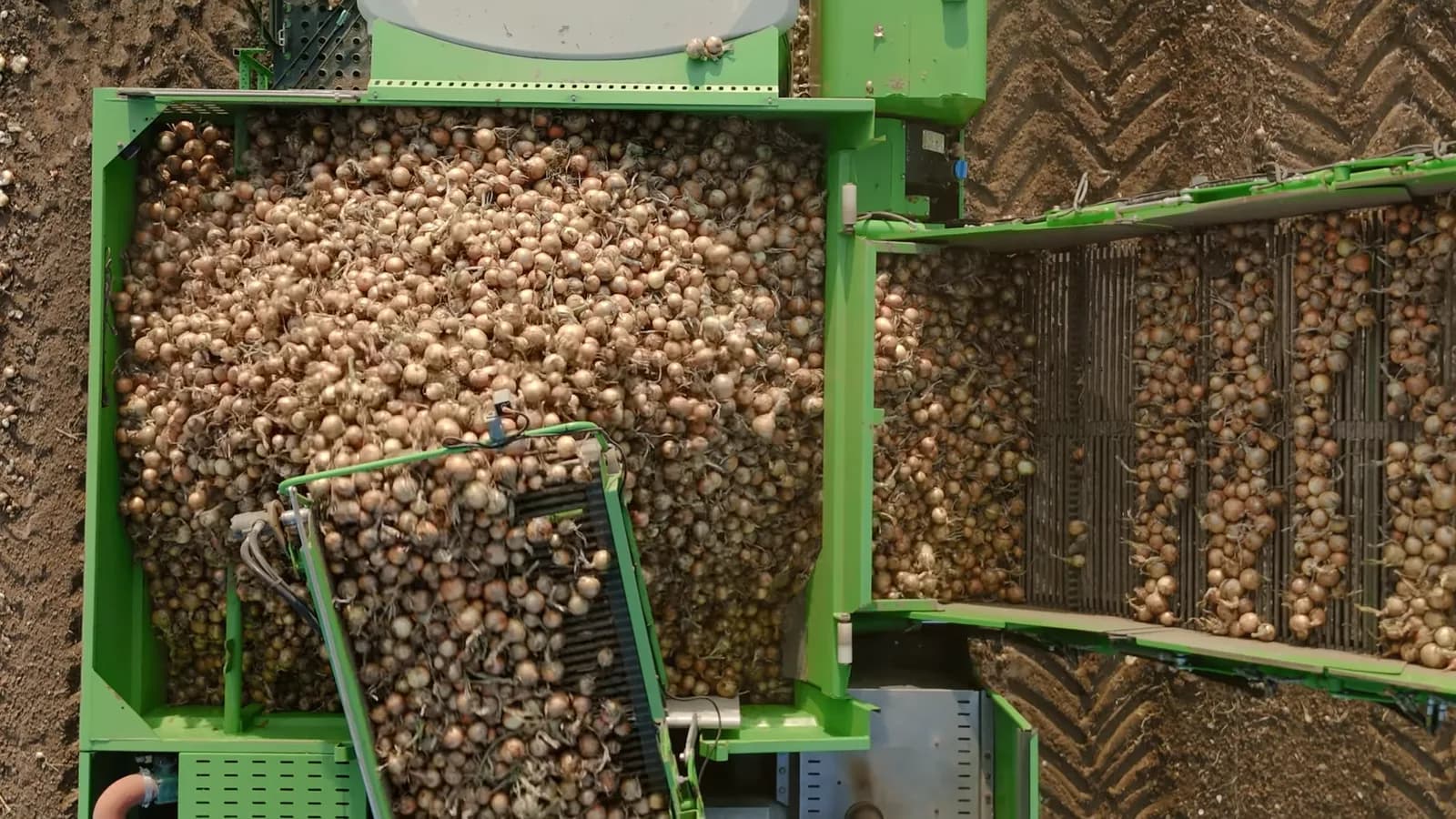
The pick-up from the windrows is done by our self-propelled AVR Puma 3 harvester: a 4-row machine with a 469 hp Volvo engine and an 8-tonne hopper. The pick-up unit lifts the windrow off the surface of the field, the sieving webs separate the remaining soil and loose skins, and the clean onions go into the hopper. In good conditions we pick up two windrows at once and reach up to 150 tonnes of onions per hour.
That output matters, because with yields of around 60 tonnes per hectare, every day of good weather is worth its weight in gold. A fast harvest means less risk of rain catching onions that have already cured. Here are the key numbers for the whole harvest chain in one place.
| Stage | Machine | Key parameters |
|---|---|---|
| Undercutting and windrows | Grimme WV 180 | 180 cm working width, lays windrows |
| Field curing | no machine | a few days to two weeks, depending on the weather |
| Main harvest | AVR Puma 3 | 469 hp Volvo, 8 t hopper, up to 150 t/h |
| Haulage from the field | John Deere 6930 Premium + Wielton tridem | unloading on the move, anti-bruise covers |
| After harvest | storage facility | 2-4 days of drying, capacity up to 13,000 t |
All the equipment we work with, from Fendt tractors to the optical sorter, is shown in our machinery fleet.
Step 4: unloading on the move and haulage
The harvester does not stop to unload. When the hopper fills up, a John Deere 6930 Premium with a Wielton tridem trailer pulls up alongside and the onions are transferred on the move, while both machines keep driving. The harvest runs without pauses, and we do not lose the weather window to logistics.
At this stage, gentleness matters most. An onion looks tough, but every bruise is a spot that can start rotting in storage. So we fill the trailer from the front, keep the drop height low and haul the onions under anti-bruise covers. The quality of a batch is built right here in the field, not later at the sorting line.
Step 5: drying and the storage facility
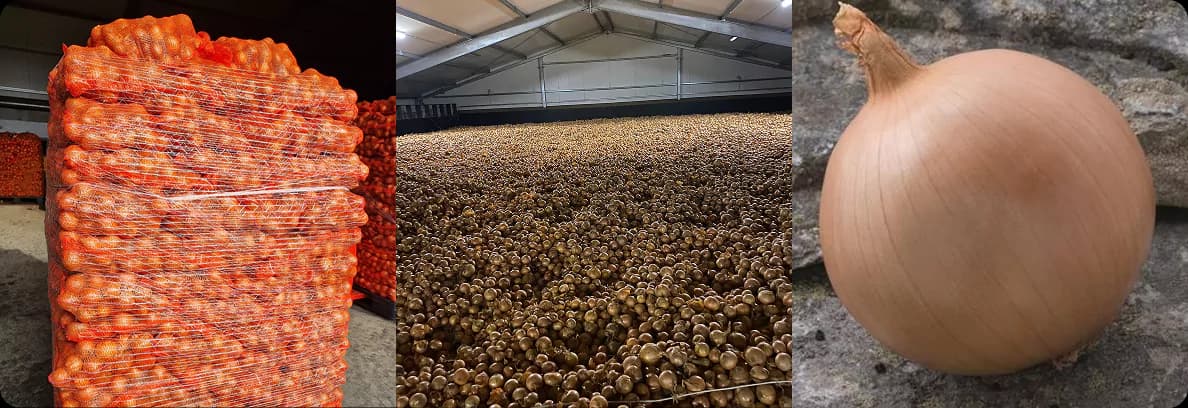
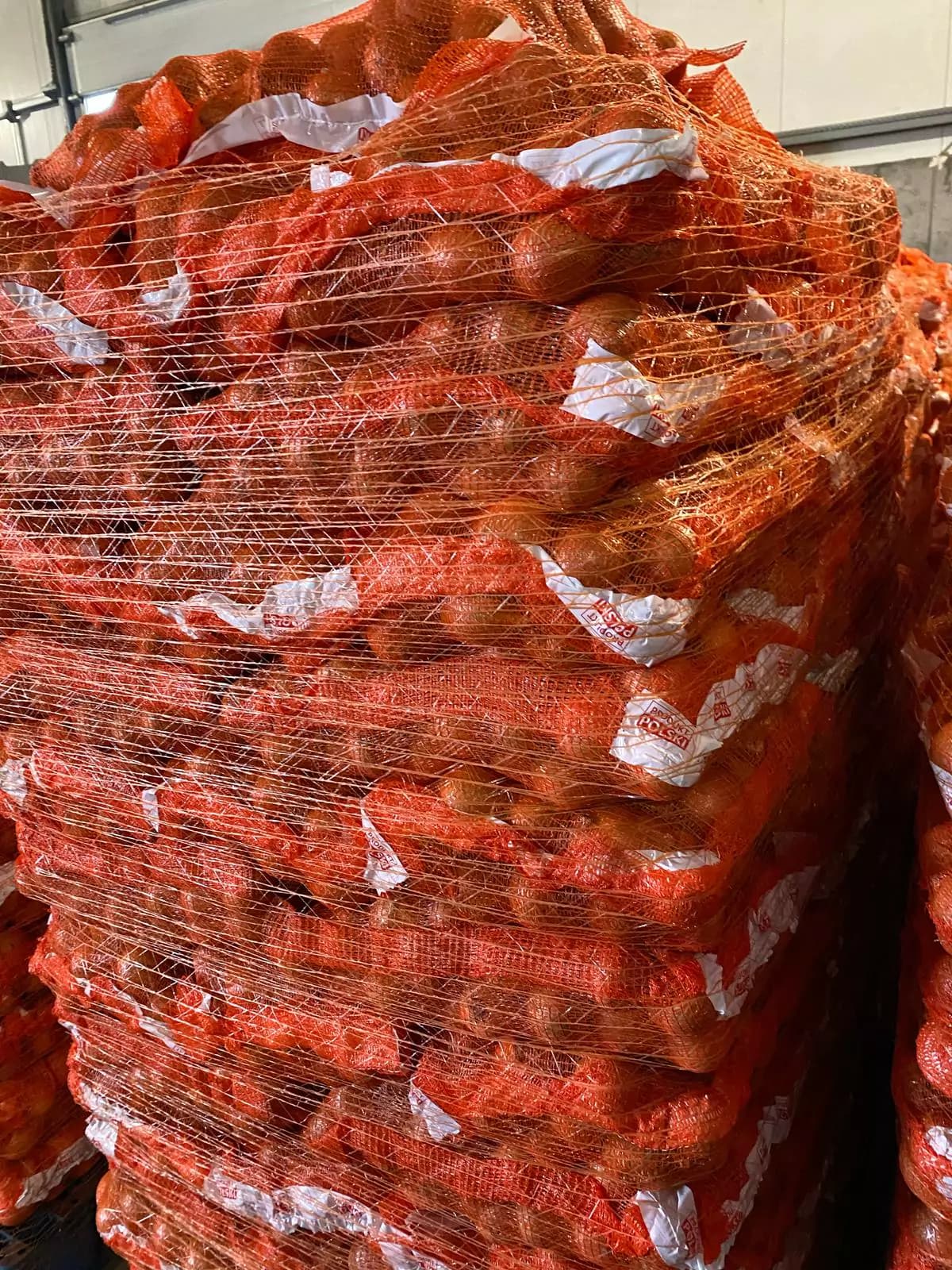
From the field the onions go straight to the storage facility. There they land on ventilated storage and are dried for 2 to 4 days: we finish sealing the necks and take the last of the moisture off the produce, the part the field did not remove. Exactly how we do this is covered in our post on curing onions before storage.
Only dry onions go into long-term storage. Our facility holds around 13,000 tonnes, so we do not have to sell everything right after harvest: we sort, size and release produce in batches all year round, in the form each buyer needs.
Looking for onions harvested and cured to last through long storage? See our onion offer or write to us through our contact page. We work with wholesale buyers all year round.