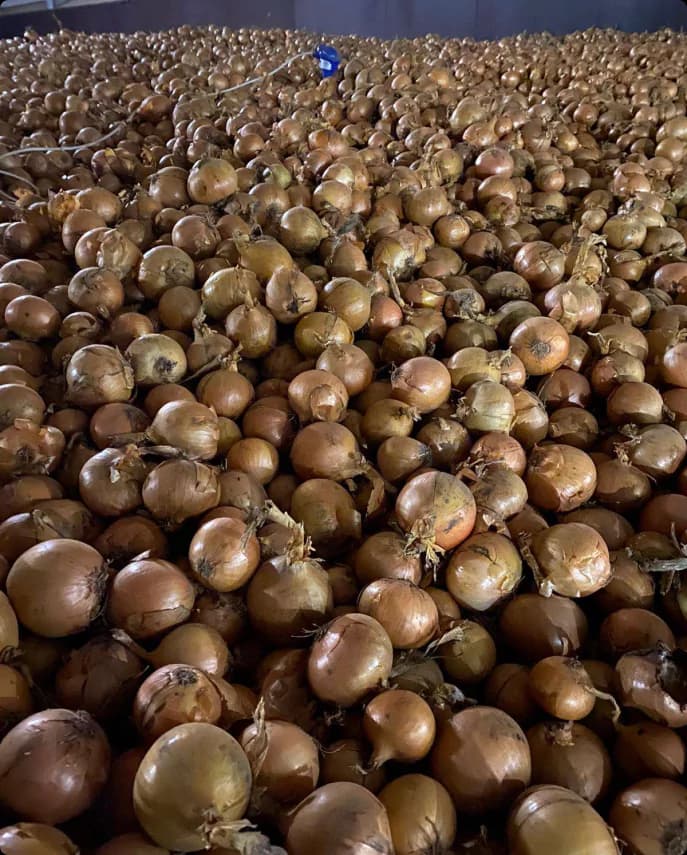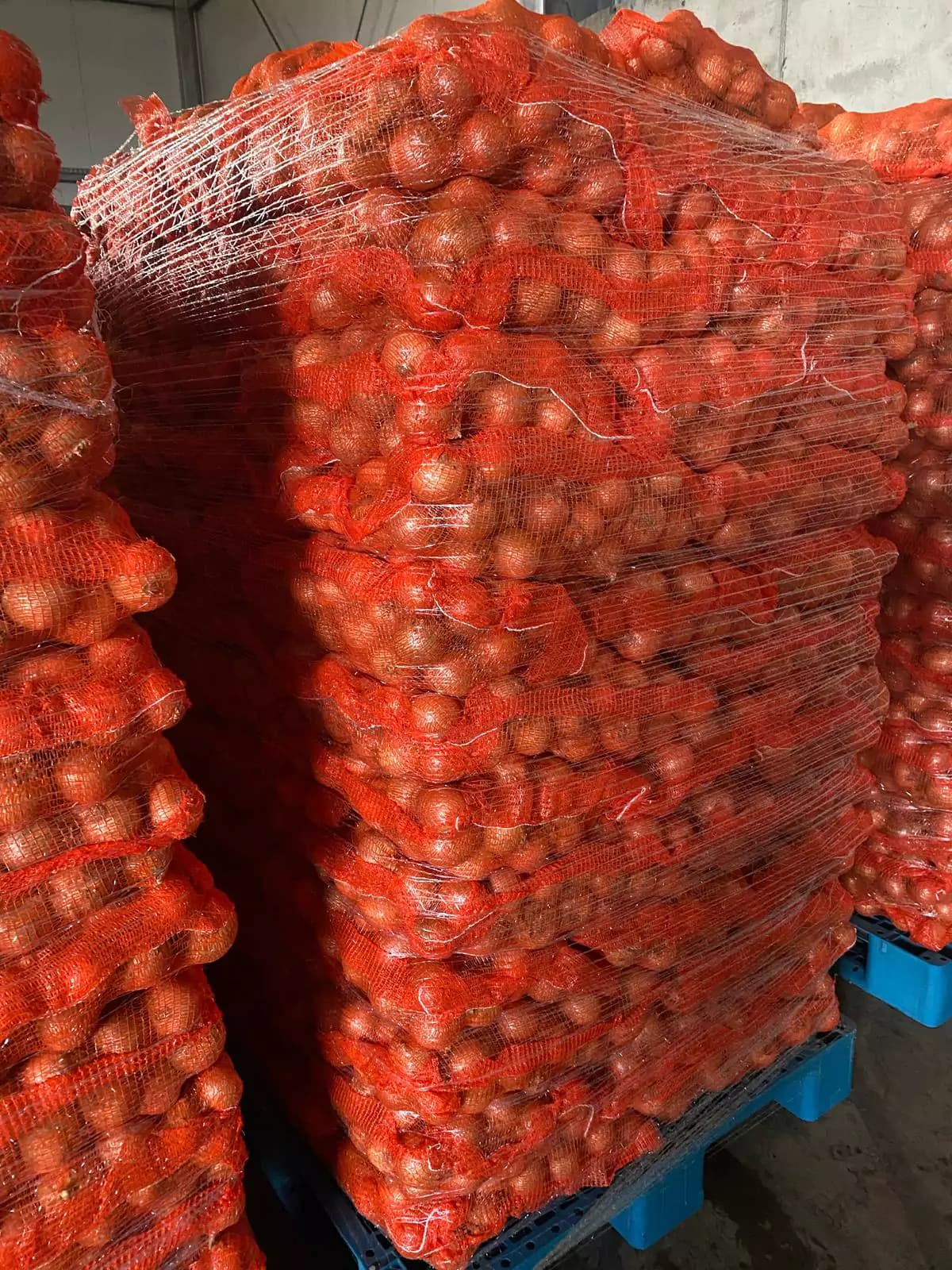
Onions that roll into the store in autumn never leave it at the same weight in spring. Some of the weight disappears on its own, because onions are alive, they breathe and lose water. Some vanishes through rot and sprouting, if the conditions are not under control. We call these storage losses, and for a supplier who sells all year round they are a hard line in the accounts. We write from the practice of our own 13 000 ton store, through which each season passes onions from around 250 hectares of Żuławy fields.
What onion storage losses are
A storage loss is the difference between the weight of onions put into the store and the weight that can actually be sold after storage. It is made up of two different things worth separating.
The first is natural loss. An onion at rest keeps breathing and gives off water through its skin, so week by week it loses a little weight. This is a physiological process that cannot be stopped, only slowed with cold and the right humidity. The second is quality losses, the bulbs that have to be rejected: rotting, sprouting, soft or affected by storage diseases. These losses can largely be avoided, because they depend on how we prepare and manage a batch.
Natural loss is a cost built into storing any onion. Quality losses are a signal that something in the process failed: the harvest, the drying or the conditions in the store.
Where storage losses come from
Most losses are born not in the store but earlier, in the field and right after harvest. A damp, poorly closed neck is an open gate for fungi, and a single diseased onion can spoil the whole cluster around it. That is why low losses are decided above all by what happens before the onion ever goes into long-term storage.
The main sources of loss look like this:
- Respiration and evaporation. Natural weight loss, the greater the warmer and the drier the store.
- Storage diseases. Above all onion neck rot, which enters through an under-dried neck and develops in the warmth.
- Sprouting and root regrowth. It starts when the onion comes out of dormancy, most often at too high a temperature.
- Mechanical damage. Bruises and cuts from the field or the line are the spots through which infection enters.
How much weight disappears
The scale of losses depends on variety, batch health and conditions, so it is more honest to talk about ranges than a single number. With a well-managed, firm Rijnsburger-type onion and steady cold, losses are small. With a poorly dried onion stored too warm, they can grow many times over, because rot and sprouting add to the natural loss.
| Factor | Low losses | High losses |
|---|---|---|
| Neck drying | full, neck closed | incomplete, neck damp |
| Temperature | steady, about 0 to 1°C | variable, too warm |
| Variety | firm, thick skin | thin-skinned, short dormancy |
| Condition after harvest | healthy, sorted | with damage and disease |
| Result | small weight loss | loss plus rot and sprouts |
We do not give a fixed percentage, because every batch is different. Instead of promising a number, we watch over the process that keeps that number low.
How we keep losses low
We start the fight for low losses long before winter. We treat it as a chain of several stages, each of which takes away one more reason for the onion to spoil.
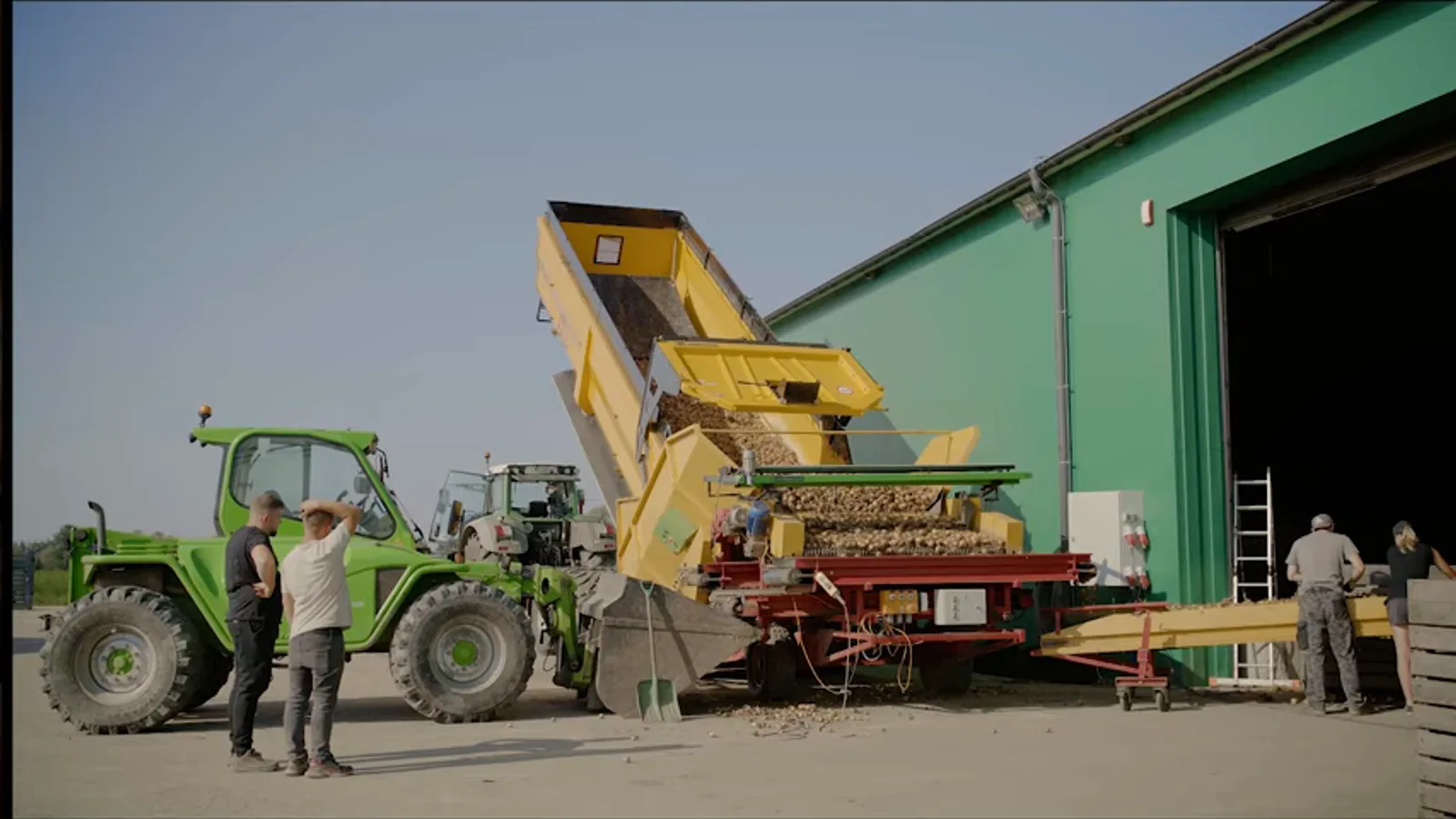
First we dry the onions with warm, dry air for 2 to 4 days, until the neck dries out completely and closes. This is the single stage that cuts later rot the most. Then we sort and reject soft, damaged bulbs and any showing signs of disease, because only healthy, even material should go into the store. In season we are supported by the DOWNS CropVision optical sorter, which catches faults, stones and clods with cameras and a rotating scan faster than the human eye.
Next we watch the conditions. We cool the onions gradually, then hold them in steady cold with a dry, continuous flow of air. We write separately about what temperature to store onions at, because it is stable cold that most strongly curbs respiration, sprouting and disease all at once. We describe this whole chain, from drying to winter storage, in the main post on onion storage.
Low losses are not the work of one trick but of discipline at every stage: a dry neck, sharp selection and steady cold. Neglecting one of them shows only after months, when the batch has to be sorted through.
What low losses mean for the buyer
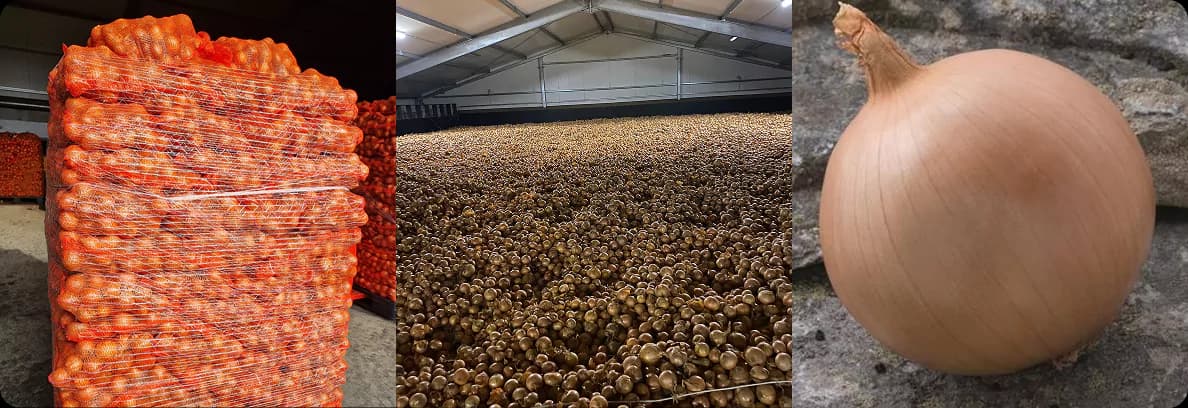
For the buyer, storage losses are not an abstraction but supply certainty. A batch with low losses sits calmly for months, so we can release it when the buyer needs it, not just right after harvest. Our own 13 000 ton store lets us manage sales over time and deliver healthy onions in winter and early spring too, when there is less produce on the market.
Low losses also mean fewer complaints. An onion that reaches the packing house dry and healthy rots less in transit and on the shelf, and that matters to the large packing houses and processing plants we work with. We run the farm according to Integrated Plant Production, we hold GlobalG.A.P. and GRASP certificates, and we check every batch before shipping. If you are looking for an onion supplier who can handle year-round deliveries, see our onion offer or write through the contact page.
Want to know how we manage onions through the whole winter? Have a look at the post on onion storage or write through the contact page.