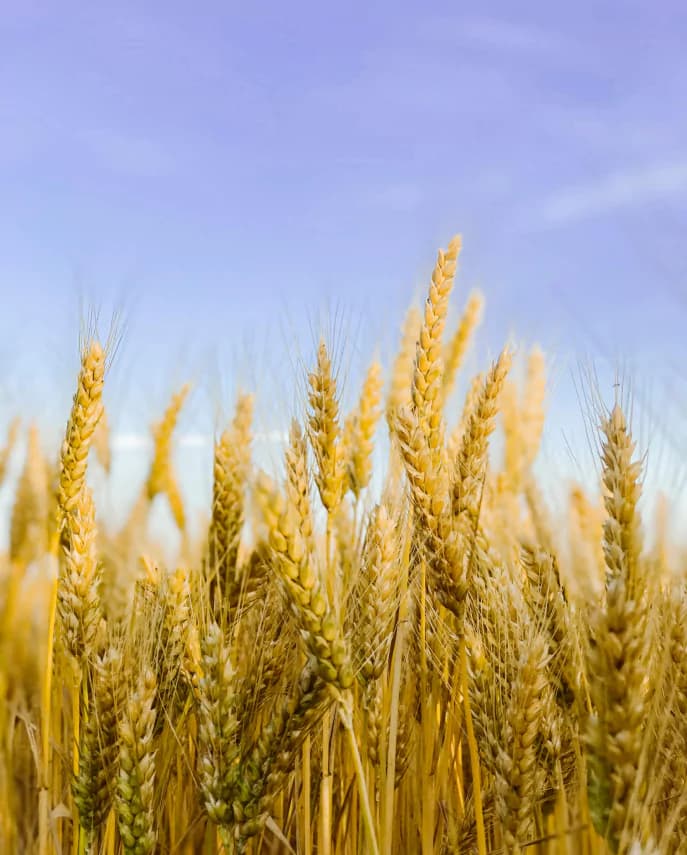
Whether wheat goes into flour or into feed comes down to a handful of numbers from the grain analysis: falling number, protein, gluten, specific weight, moisture and impurity level. The mill looks at those before it ever sees the goods. Here we show what each of these parameters actually means, where it comes from and how we keep an eye on them on our farm of more than 800 hectares.
Why the mill asks about parameters, not about the variety
The variety tells you what to expect. The analysis tells you what is actually sitting in the store. The same variety from two fields, or from two harvest dates, can give completely different results, because grain parameters are set by how the season runs: how rainfall is spread out during grain filling, what the temperature does during ripening and whether the crop got off the field before the rain.
That is why wheat trading is a conversation in numbers. The buyer sets the thresholds, we show the analysis results for a specific batch, and only then do we agree terms. We work the same way in vegetables, where we check quality batch by batch.
Six parameters that settle it
| Parameter | What it tells you about the grain | Typical threshold for milling wheat |
|---|---|---|
| Falling number | activity of the enzymes that break down starch, in other words whether the grain has started to sprout | usually 220 s and up |
| Protein | how much gluten-building material there is, key for dough rise | usually 11.5 to 12.5 percent |
| Wet gluten | how much gluten can actually be washed out of the flour | usually from 25 percent |
| Specific weight (test weight) | how even and well filled the grain is, which translates into milling yield | usually from 76 kg/hl |
| Moisture | whether the grain can be stored safely without heating up | up to 14.5 percent |
| Impurities | how much screenings, foreign seed and mineral matter the batch contains | the less the better, thresholds set by the buyer |
The thresholds in the table are typical market requirements, not a fixed standard. Every buyer has their own specification, and a bakery mill looks at different things than a pasta plant. So whenever an enquiry comes in, we ask for the target specification first, not the other way round.
Falling number, the parameter that goes wrong fastest
Out of all six, falling number is the one that can change in a matter of days. When ripe grain stands in the field in the rain, it starts to sprout, the enzymes get to work and the result drops. Flour from grain like that gives sticky, doughy bread. There is no reversing it, so the whole game is about harvest timing and how fast you can work.
The wet 2025 season showed this very clearly. In July we had 150 to 220 litres of water per square metre in a single day, drainage canals overflowed and fields were flooded. In conditions like that, the result comes down to whether you make it into the weather window.
Where good parameters come from: the field, not the store
The store fixes nothing, it can only avoid spoiling things. Parameters are built earlier, out in the field.
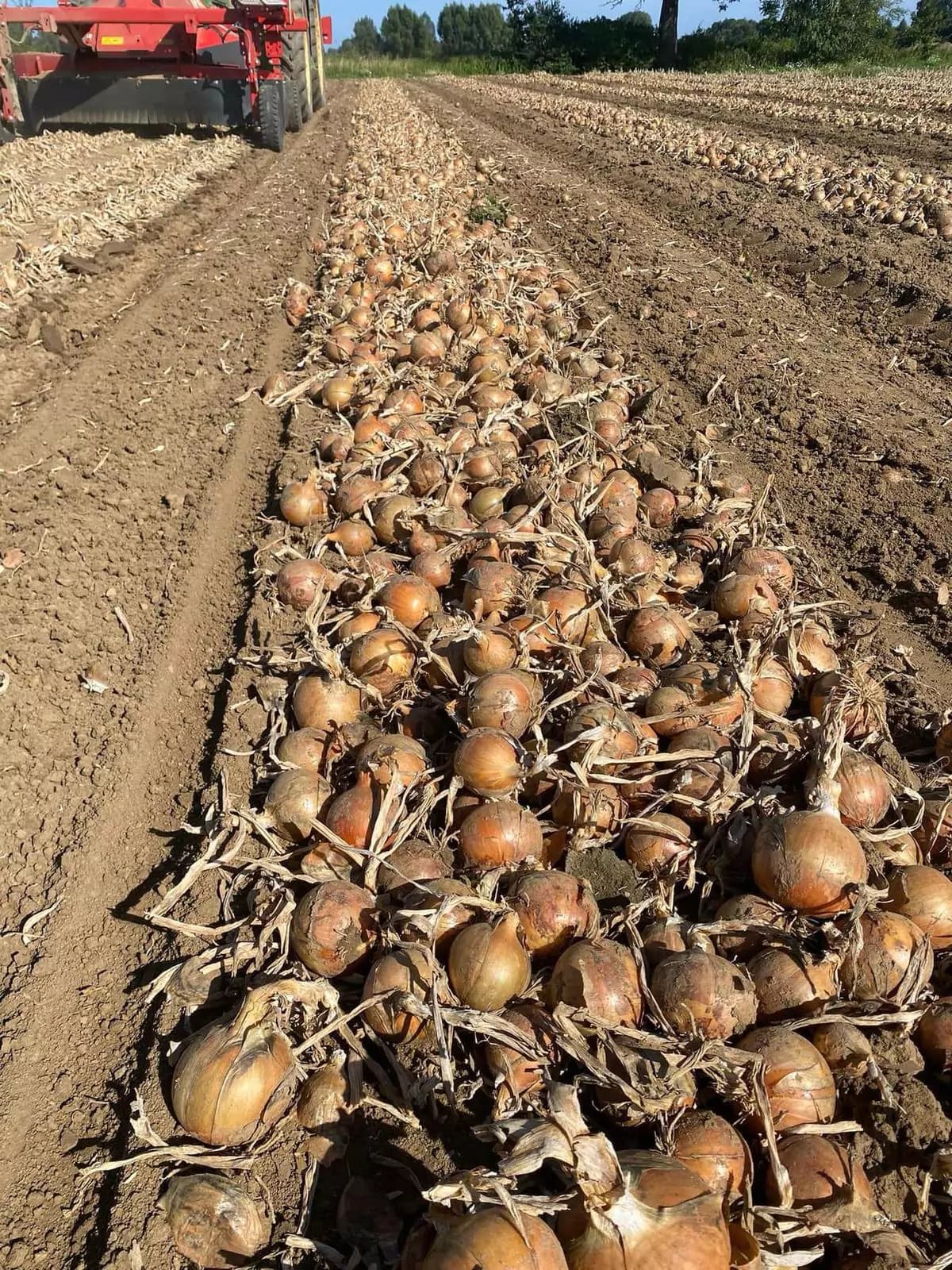
- Field position. We fit wheat and triticale into our crop rotation with onions. Cereals after vegetables get a level, clean and fertile field, and you can see that later in how well the grain is filled.
- Soil. We work on Żuławy alluvial soils, ground with parameters comparable to the Dutch polders. We write more about it in our post on Żuławy alluvial soils.
- Fertilisation. Instead of one rate across the whole field we use variable rate application, so the fertiliser lands where it really works. Protein in the grain depends directly on how much nitrogen the plant got and when.
- Crop protection. We run the farm in line with the principles of Integrated Plant Production. A healthy, weed-free stand means even grain, not a mix of small stuff and screenings.
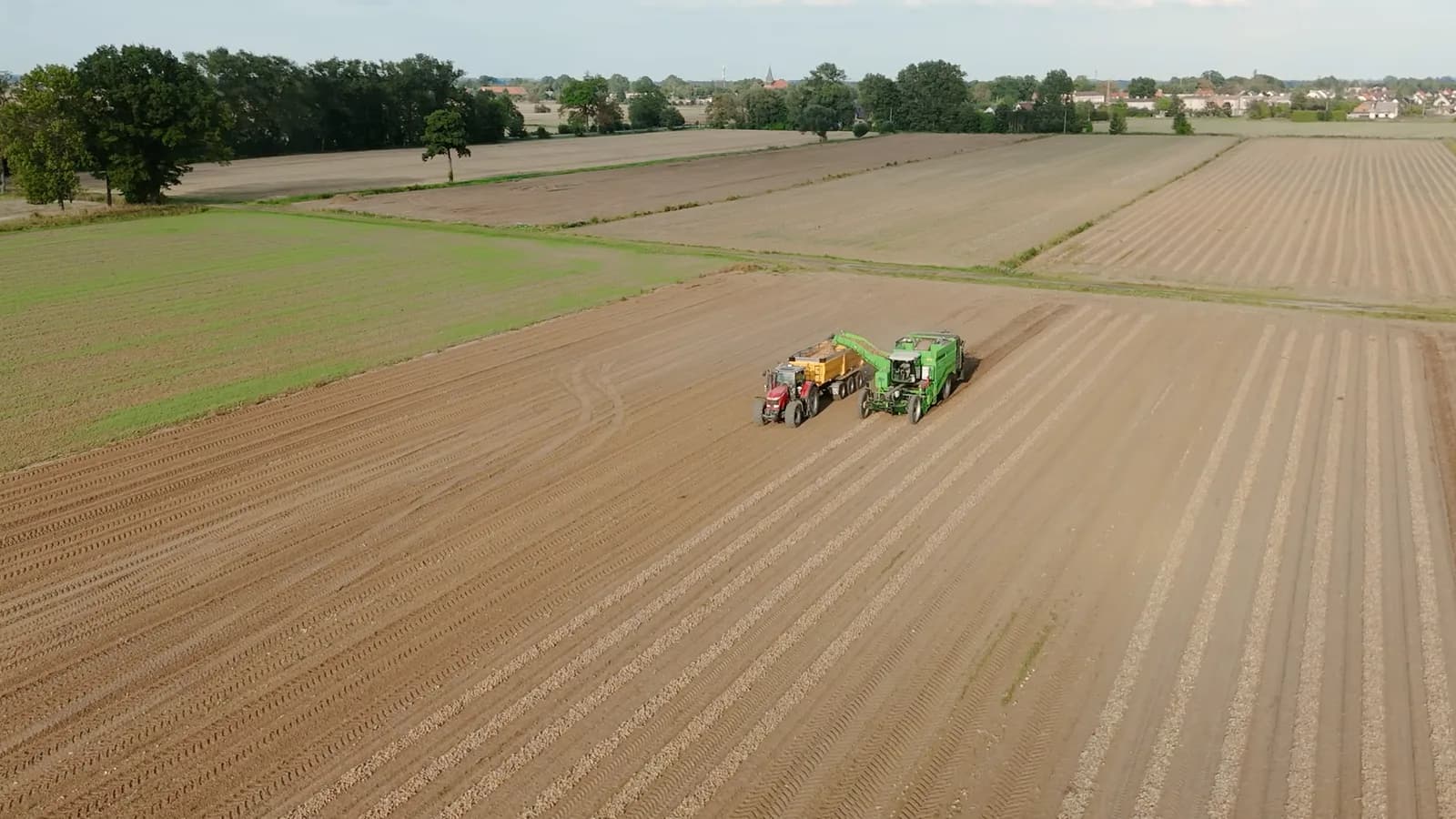
- Harvest timing. We harvest when we need to, not when it happens to suit. With 87 machines in the fleet, we can move into a narrow weather window and get off the field before the rain arrives.
What the buyer gets along with the grain
The analysis alone is not everything. With every batch we hand over documentation showing how that grain was produced. We hold GlobalG.A.P. and GRASP certificates, we run the farm under Integrated Plant Production, and in grain trading GMP+ counts too, the standard for the feed chain. We test every batch for cleanliness, moisture and grain parameters, and on top of that we run pesticide residue and heavy metal analyses.
Before we sign off on a larger delivery, we send a free sample. The buyer checks the grain on their own site, on their own equipment and against their own specification. It is the simplest way to avoid an argument about parameters after unloading.
What delivery looks like
We ship wheat in bulk or in big bags, depending on how the buyer takes the goods. We give the same choice in vegetables, as we describe in our post on bulk, big bags or sacks. We calculate prices based on current market prices and agree them individually per batch, because the grain market shifts from week to week.
The details of the offer and the full list of what we include with a delivery are on our milling wheat page.
Looking for wheat from a farm that shows analyses, not just declarations? See our wheat offer or write to us through the contact page, and we will come back with a specific batch specification.