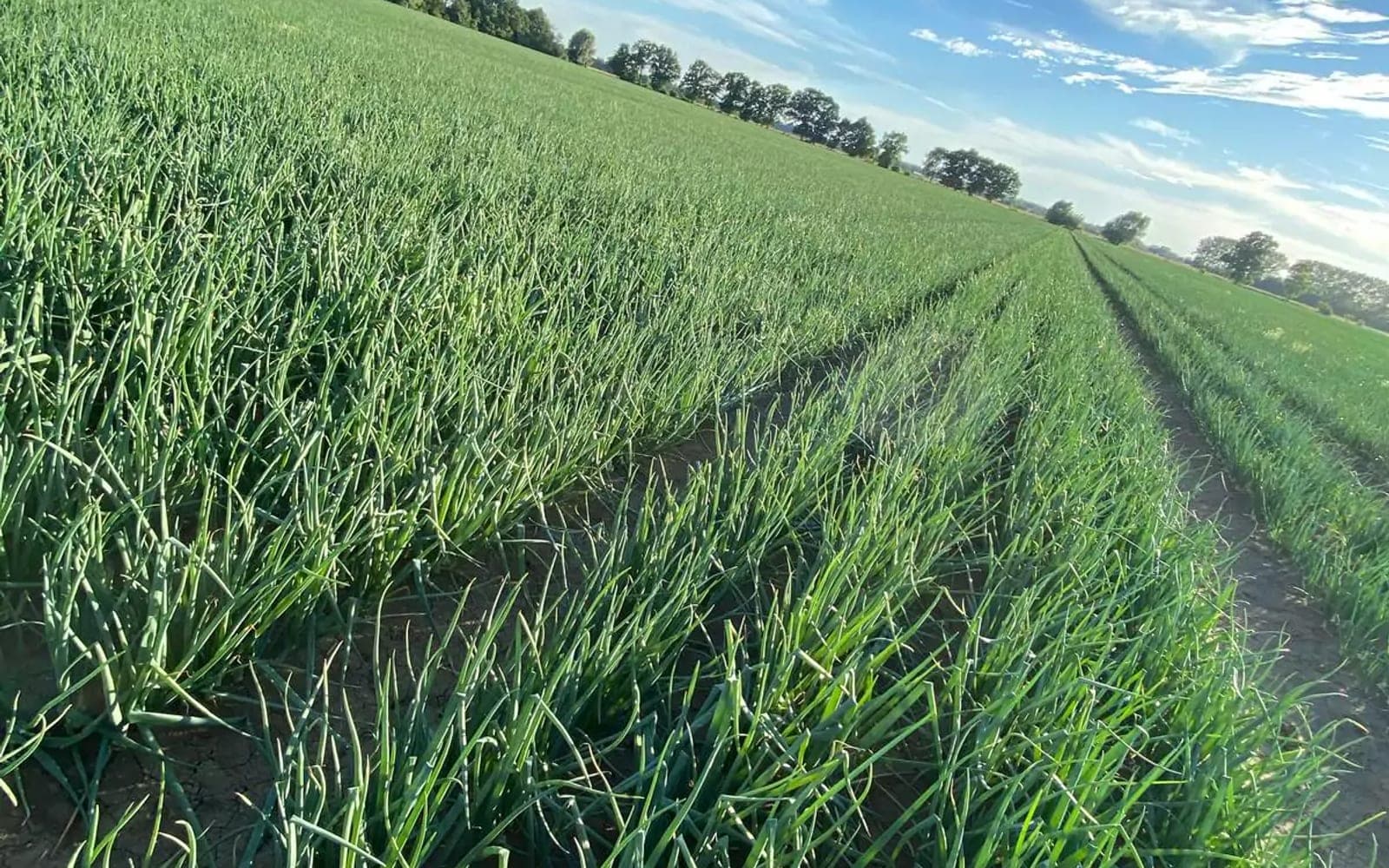
Loose is the choice of processors who work the raw material straight away. Big bags are the standard for packing plants and full-pallet deliveries. Net bags go wherever the onions are meant to sit close to the shelf. In this post we show how in practice we match the delivery format to the buyer, their warehouse and their transport, because we pack onions in all three formats every day.
We decide on the format together with the buyer at the time of ordering, just like the size grade and the delivery date. The wrong format can spoil a good batch: it drags out unloading, blocks the warehouse or creates work nobody accounted for. The right format keeps the produce flowing through the chain without a stop.
Loose: minimum packaging, maximum pace
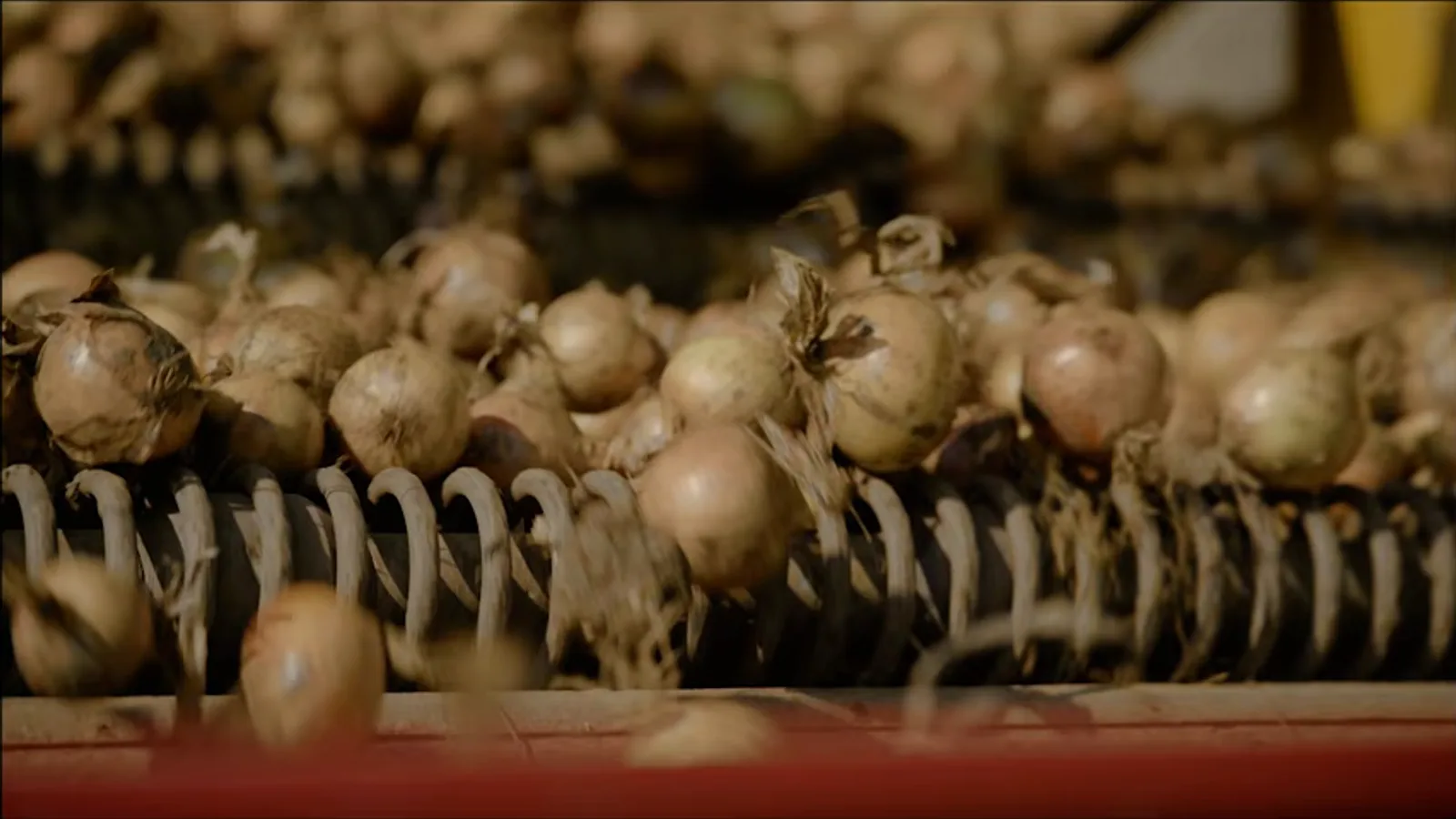
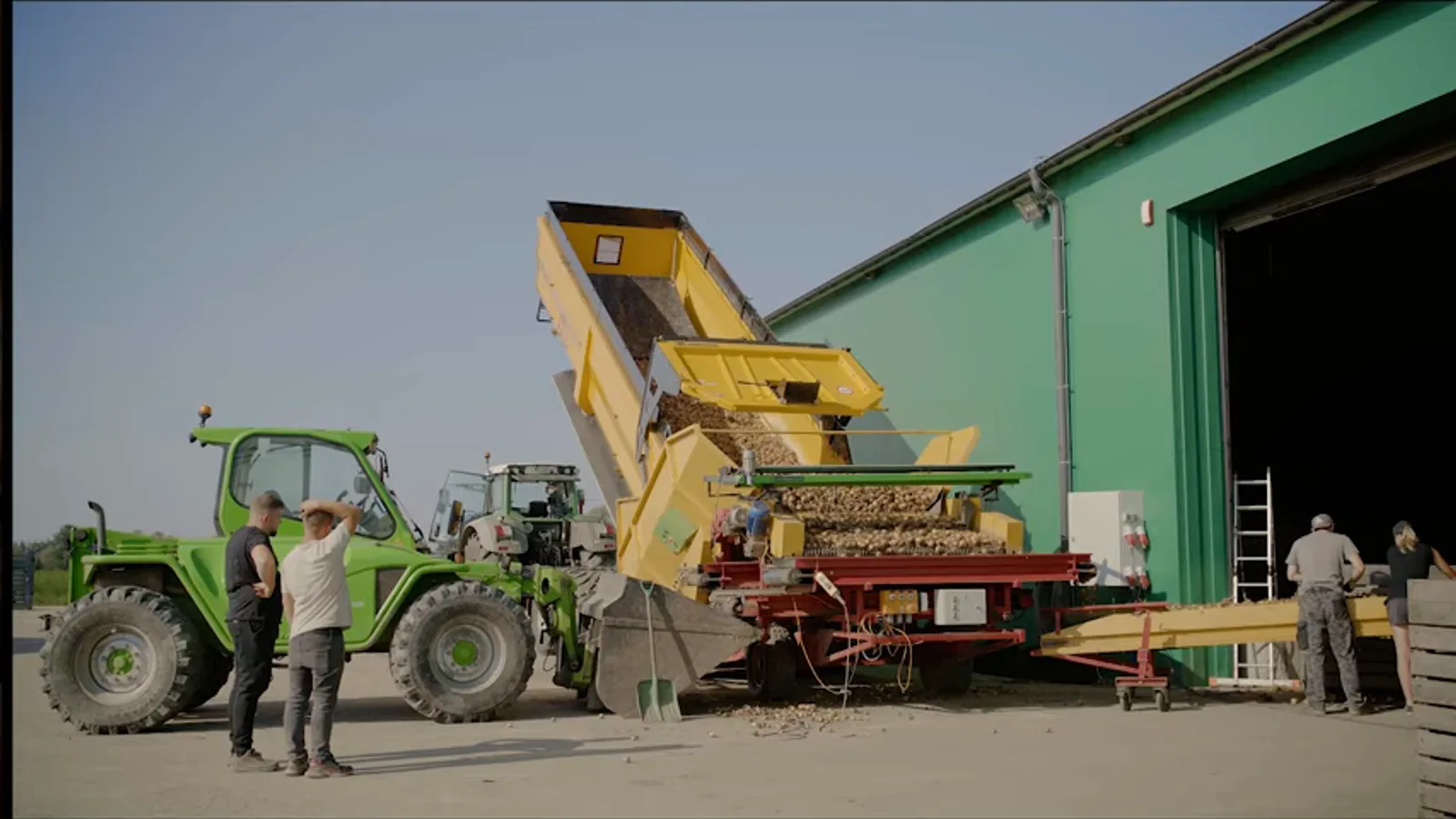
Loose onions travel without any packaging, straight in the trailer or semi-trailer. It is the cheapest format per tonne, because there is no cost of bags or packing work, and loading and unloading are the fastest. It is the choice of processing plants and large packing plants that have their own raw material intake and process the produce right away.
Loose comes with one condition: the onions are not protected by packaging, so the buyer has to be ready to receive and handle them without hold-ups. That is why we plan loose deliveries precisely around the plant's unloading windows.
Big bags: the centre of gravity in wholesale
The big bag, in our case usually the version holding around 1,000 kg, is the most versatile format in wholesale trade. One forklift movement shifts close to a tonne of produce, the bags stack evenly on pallets and in the trailer, and the ventilated walls give the onions a constant flow of air. Exactly how much a big bag holds, what its dimensions are and why it has to breathe, we break down separately in the post on big bags for onions.
Big bags win with packing plants that pack the produce onwards, and in export deliveries where fast turnover of whole pallets is what counts.
Net bags: produce closer to retail
Net bags, usually 25, 15 or 10 kg, are chosen by buyers who distribute onions onwards without their own packing line: wholesalers, food service suppliers, retail. Produce in a net bag is countable, easy to issue in smaller quantities and ready for onward sale. It takes more work on the line, which makes it the most expensive of the three formats per tonne.
How to choose: a decision table
| Format | When we choose it | What to watch out for |
|---|---|---|
| Loose | processing and packing plants with their own raw material intake, immediate processing | produce without packaging protection, efficient unloading is key |
| Big bag (approx. 1,000 kg) | packing plants, factories, export, fast turnover of whole pallets | a forklift with enough lifting capacity and airy placement of the bags |
| Net bags (25, 15, 10 kg) | distribution, wholesalers, food service, produce closer to the shelf | higher packing cost and slower loading |
What this looks like on our line
Whatever the format, every batch follows the same path: sorting and grading first, packing only afterwards. Only uniform produce, free of debris and defective bulbs, goes into a net bag or a big bag. Packing runs on an automated line with a palletiser, which we describe in the post on our onion packing line.
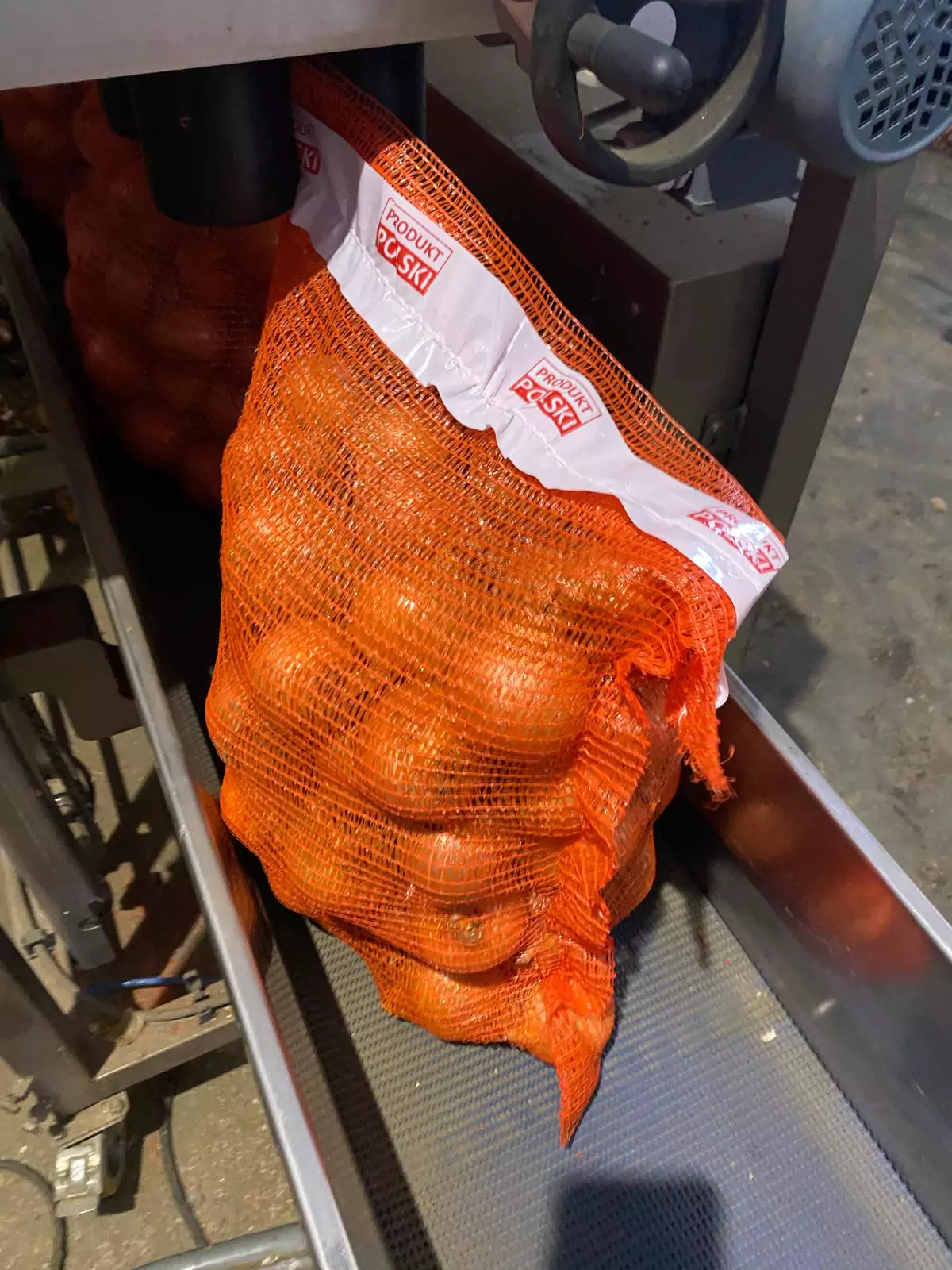
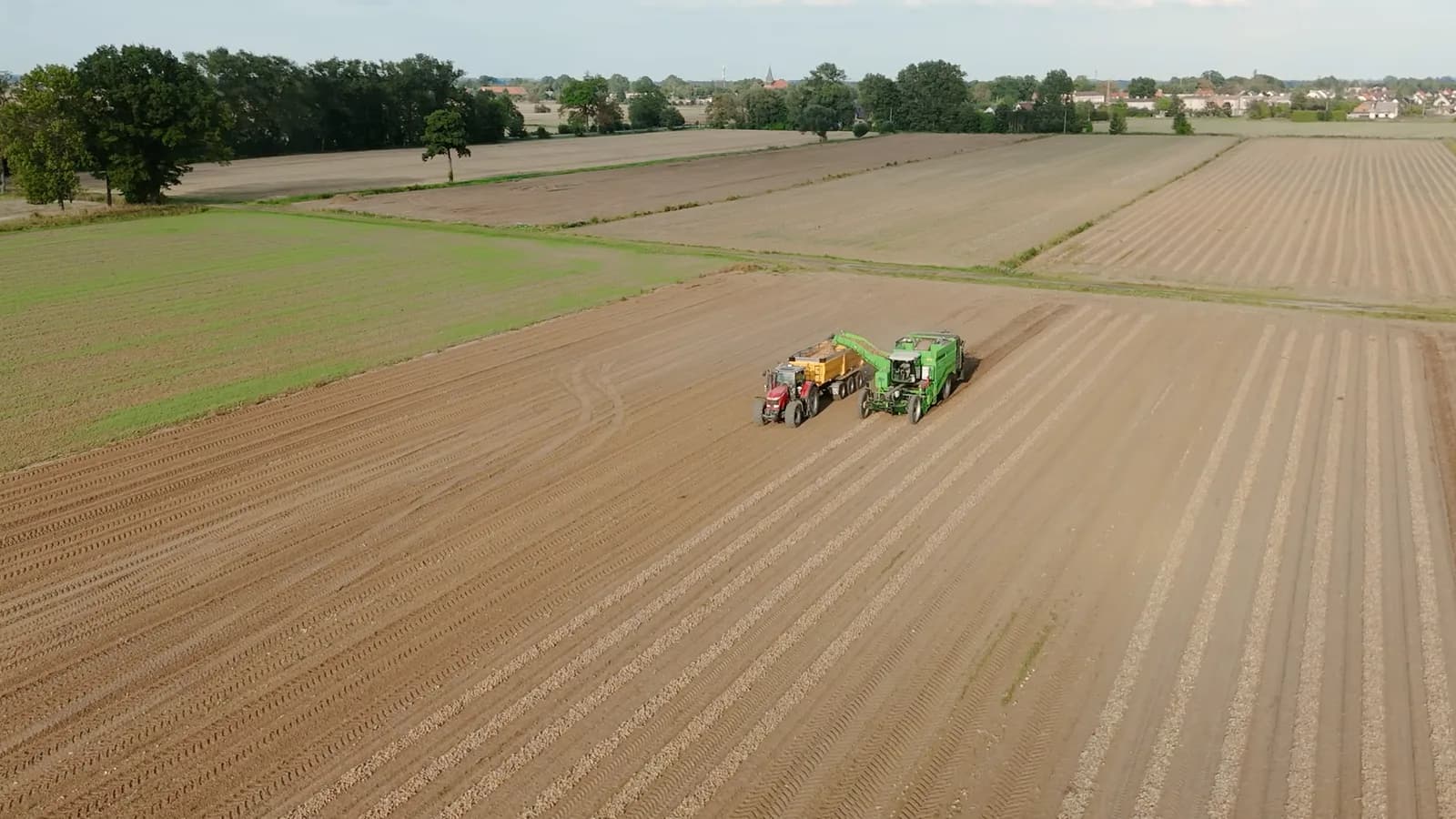
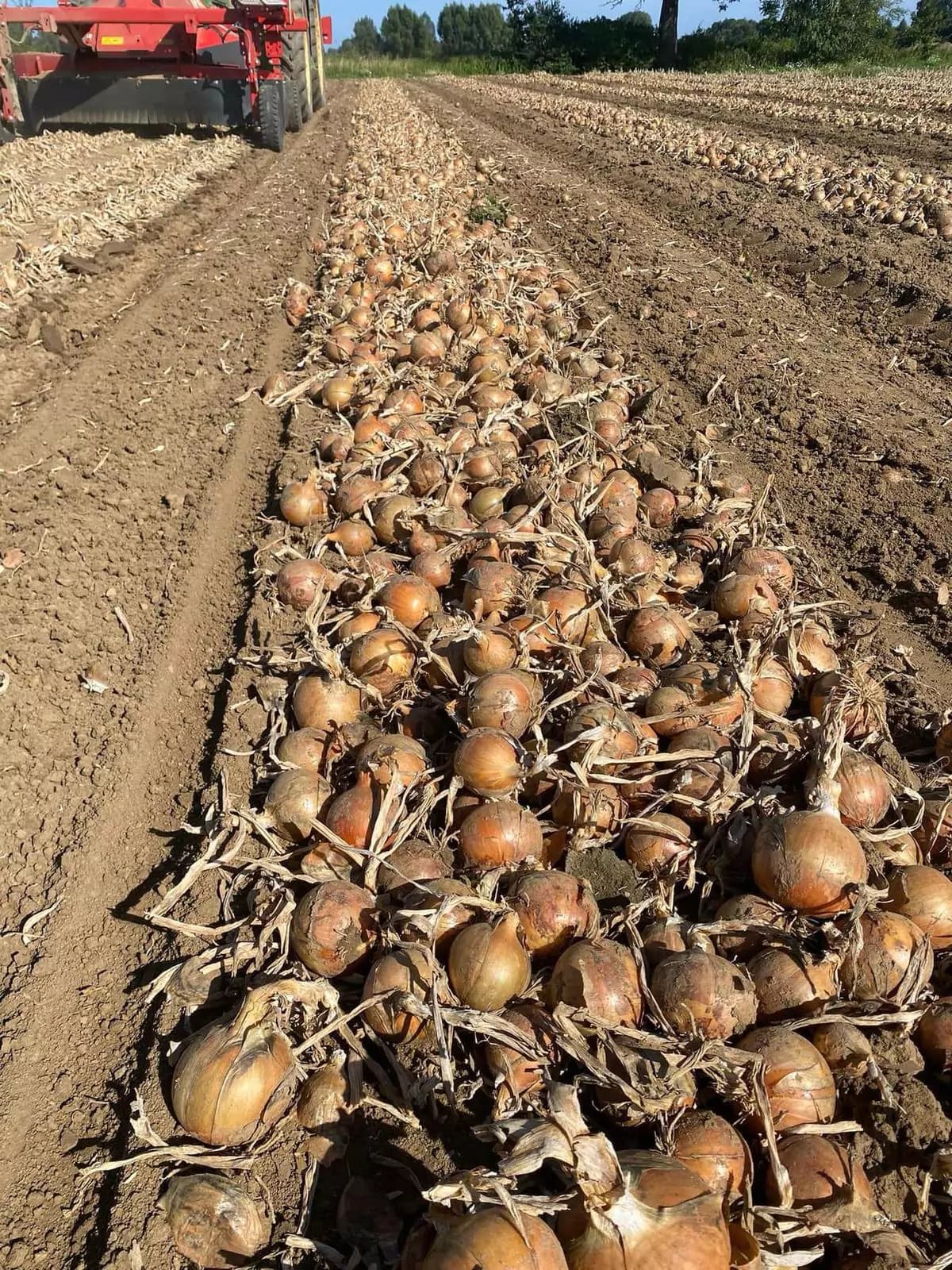
Scale makes the difference here: we grow around 250 hectares of onions and run our own storage facility holding around 13,000 tonnes, so we can match the packing format to the order, not the other way round. The same batch from the store can leave loose for a processing plant in the morning and in big bags for a packing plant in the afternoon.
Delivery format and transport
The packaging format sets up the whole logistics chain: big bags and net bags travel on pallets, loose needs a trailer suited to bulk produce. The format also drives loading time and how the buyer unloads. How we stack pallets, secure loads and plan dispatches, we describe in the post on onion transport and palletising.
The most common mistake with a first order is choosing the format on price rather than on your own facilities. A big bag needs a forklift rated for more than a tonne, and loose needs efficient raw material intake. Before you order, check what you can realistically unload.
Where to start with an order
We settle the delivery format in one conversation, together with the size grade, volume and schedule. How wholesale cooperation and a first delivery work step by step, we explain in our guide for wholesale onion buyers.
Not sure which format will suit your warehouse best? Write to us via our contact page and we will advise you on your first order. Full details of our onions are in the onion offer.