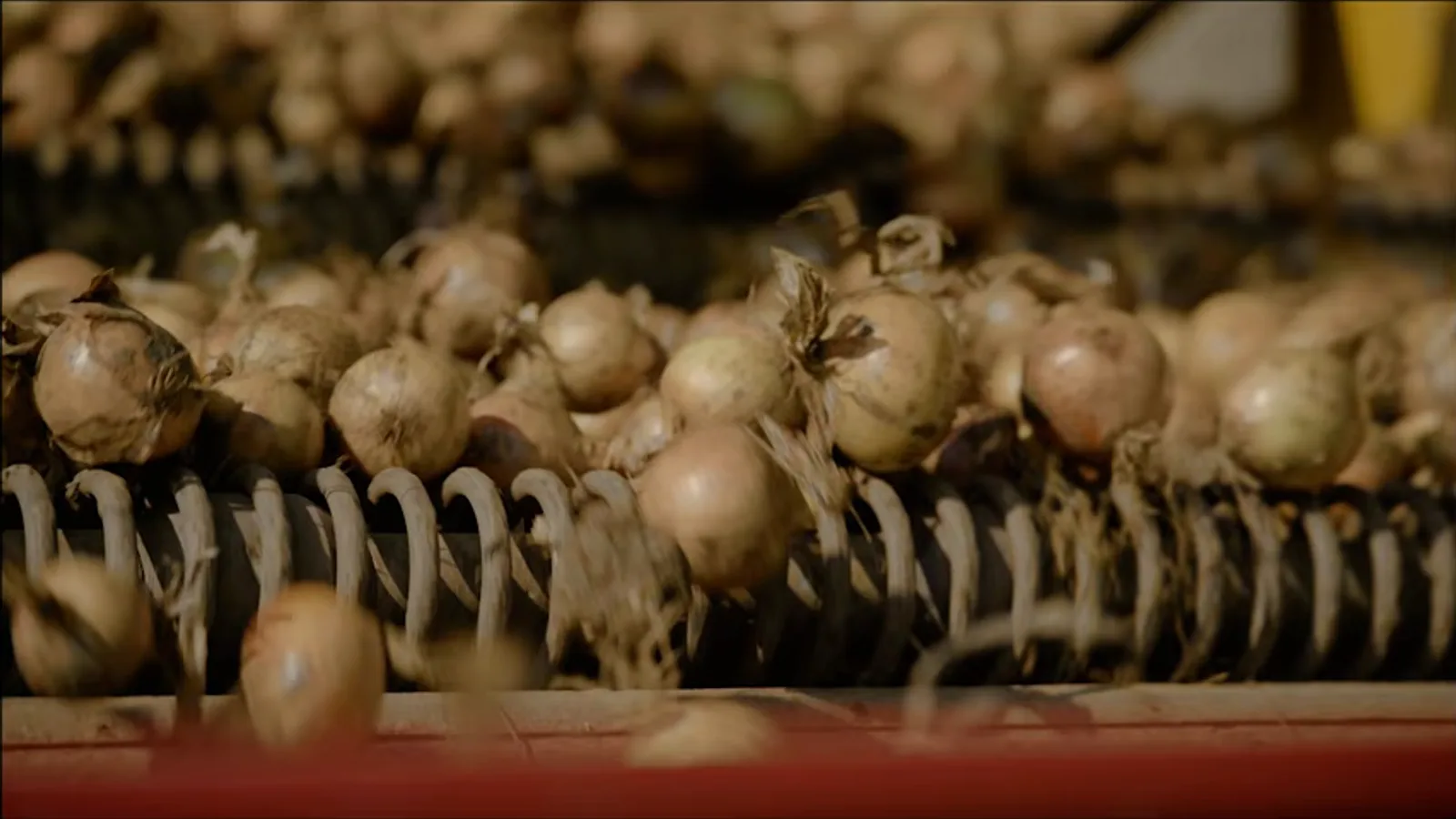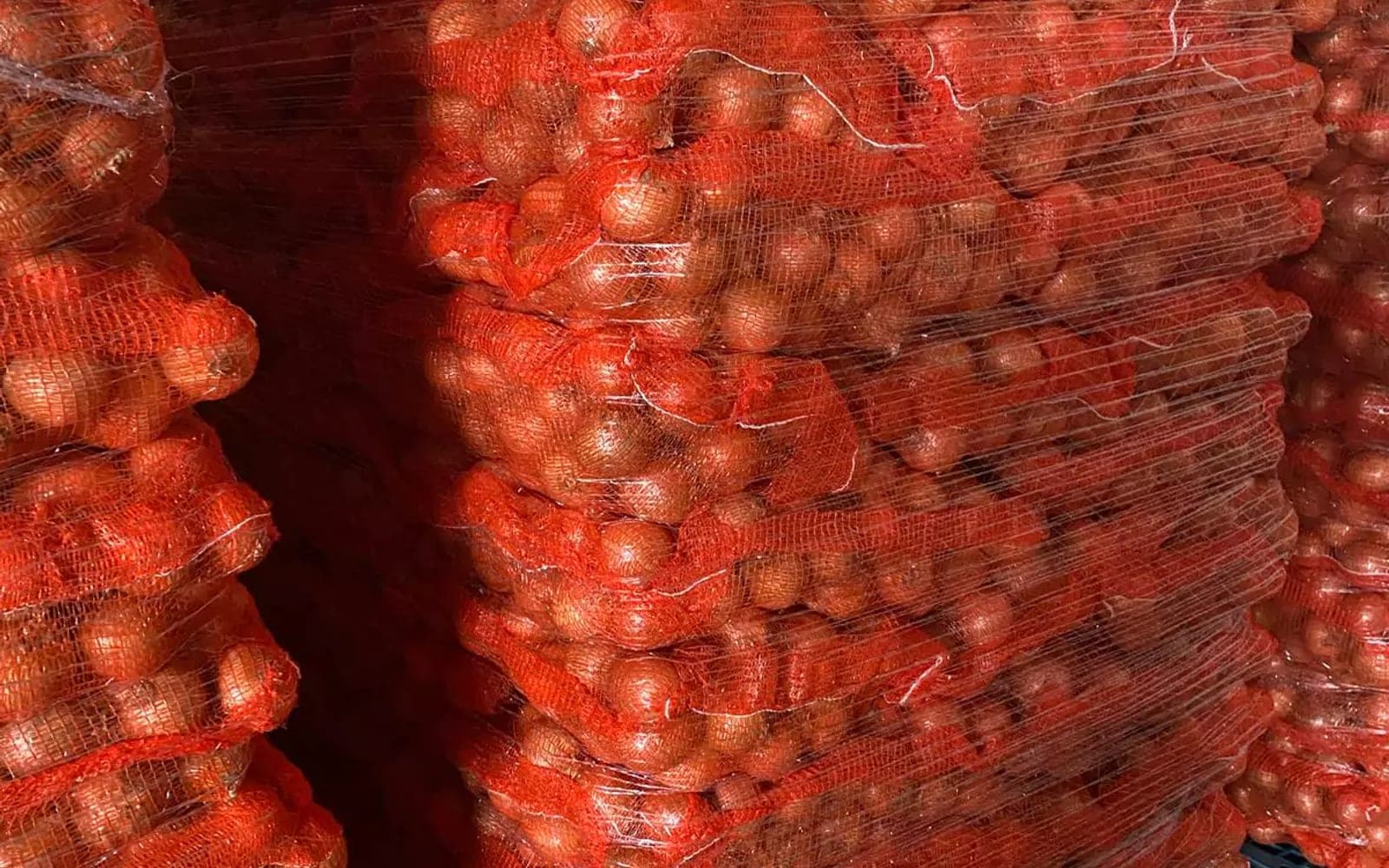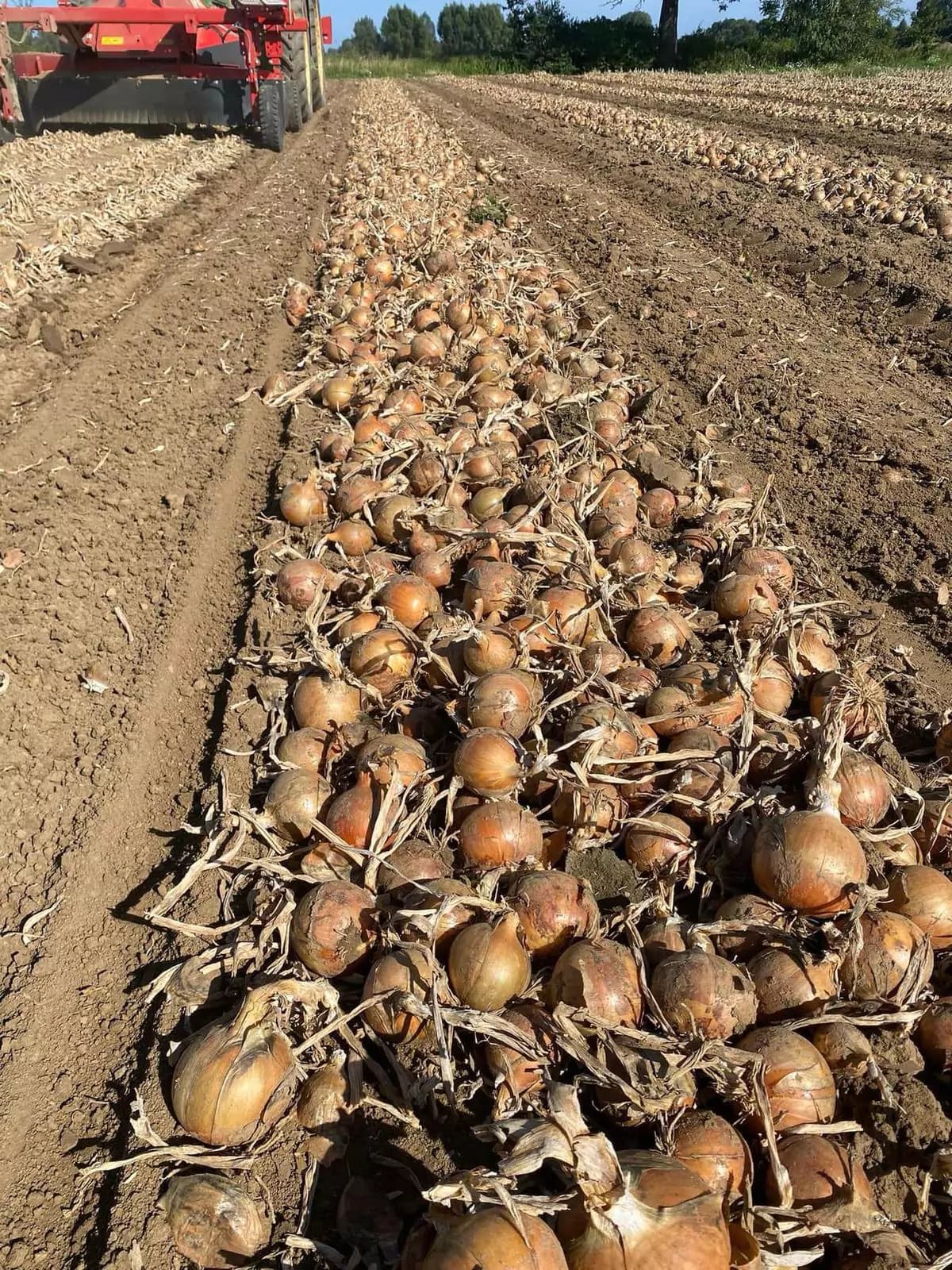
Onion prices rise in winter because supply shrinks while the cost of holding the produce grows. The fresh harvest ends in autumn, and from that moment the market lives off stocks held in storage facilities, with every month of storage adding energy, weight loss and selection to the price. We explain this mechanism from the inside, from the perspective of a farm running its own storage facility holding around 13,000 tonnes.
In autumn the market is full, in winter it lives off the stores
After harvest, supply is at its highest point of the year. Everyone has harvested at a similar time, and some farms have to sell straight away because they have nowhere to keep the crop. That naturally weighs on the market and keeps prices low.
In winter that pressure disappears. Onions straight from the field no longer exist, and produce is held only by those who invested in storage facilities and prepared their batches well for keeping. Supply shrinks week by week as the stores empty out, and there will be no new onions before the next season. Lower supply against steady demand is the first and simplest reason for winter price rises.
What gets added to the price over winter
The second reason is less visible from the outside: winter onions carry real costs in their price that the September produce did not have.
| Cost component | Where it comes from |
|---|---|
| Energy and ventilation | the store maintains constant, controlled conditions for many months |
| Natural weight loss | onions are alive and breathing, so a batch loses weight with every month |
| Selection before dispatch | we re-sort every batch, and some bulbs are rejected |
| Tied-up capital | produce in the store is money that only starts working at the point of sale |
Weight loss is the easiest to underestimate. Onions in storage give off water all the time, so out of a tonne taken in during autumn, fewer kilograms remain for sale by winter. On top of that, before every dispatch a batch is re-sorted, in our case by the DOWNS CropVision optical sorter, which scans every onion through 360 degrees at a throughput of up to 100 tonnes per hour. Bulbs that did not come through storage in good shape are rejected. The buyer therefore pays for the kilograms that genuinely made it to winter in marketable condition, not for those that entered the store in autumn. How we prepare produce to keep those losses as low as possible, we describe in our guide to onion storage.
Spring: the tail end of the stocks raises the bar
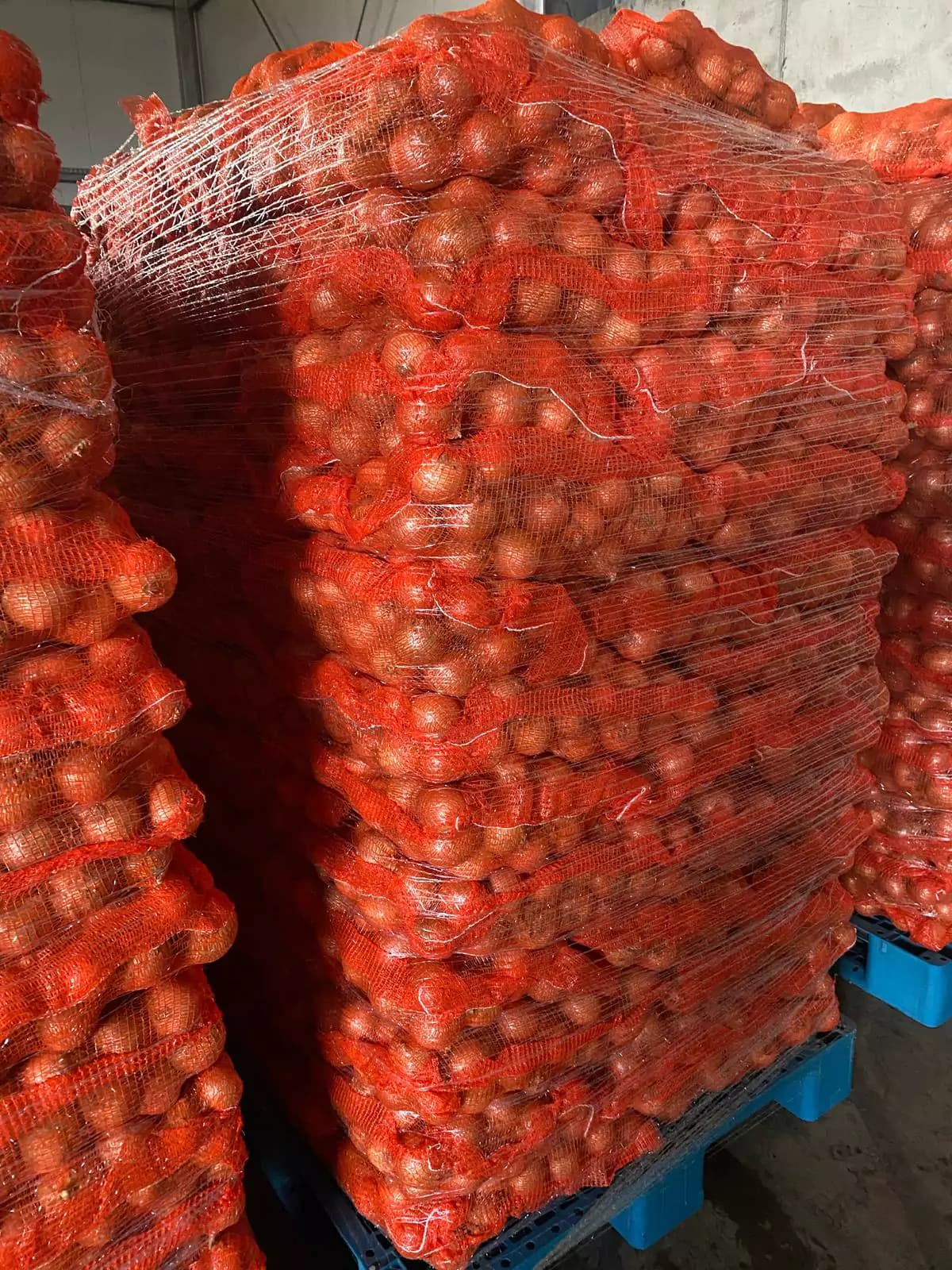
The further into the storage season, the less produce remains on the market and the higher the requirements for what is still in store. Only batches of firm, long-dormancy varieties, well cured and kept in stable conditions, will last into late spring. That is why the price difference between autumn and spring is also a difference in the quality of the produce that survived: weak batches dropped out of the market much earlier.
The winter price of onions is not the same onions as in autumn, only dearer. It is produce that has been through several months of controlled storage, renewed selection and sorting. Comparing a September price with a February one is comparing two different products.
Does winter always mean higher prices
Not always, and it is worth saying so honestly. The baseline is set by the supply balance across the whole of Europe, because Poland, the Netherlands and Germany form one connected market. The 2025 season was a case in point: with large onion surpluses in Europe, winter rises were limited, and results were decided by quality and sorting, not by simply holding produce. The storage cost mechanism works every year, but how strongly it feeds through into prices depends on how much onion is sitting in European storage facilities. We break down the full list of price factors in the post on what determines the wholesale price of onions.
How to buy onions for winter wisely
For a wholesale buyer the practical conclusion is this: winter deliveries are not planned in winter. The best position belongs to companies that agree a release schedule with their supplier in autumn for the whole storage season: they know how much produce they will receive and in which windows, and the supplier reserves specific batches in the store for them. We work in exactly this model and describe it in the post on how we manage sales from our storage facility.
We grow around 250 hectares of onions with yields of around 60 tonnes per hectare, so our stocks let us keep deliveries running from autumn to late spring, and from early summer fresh onions grown from sets take over the continuity. What such cooperation looks like in practice, we explain in our guide for wholesale onion buyers.
Want to secure onion deliveries for winter and spring? Write to us via our contact page and we will agree a release schedule from our storage facility. Varieties and delivery formats are in the onion offer.