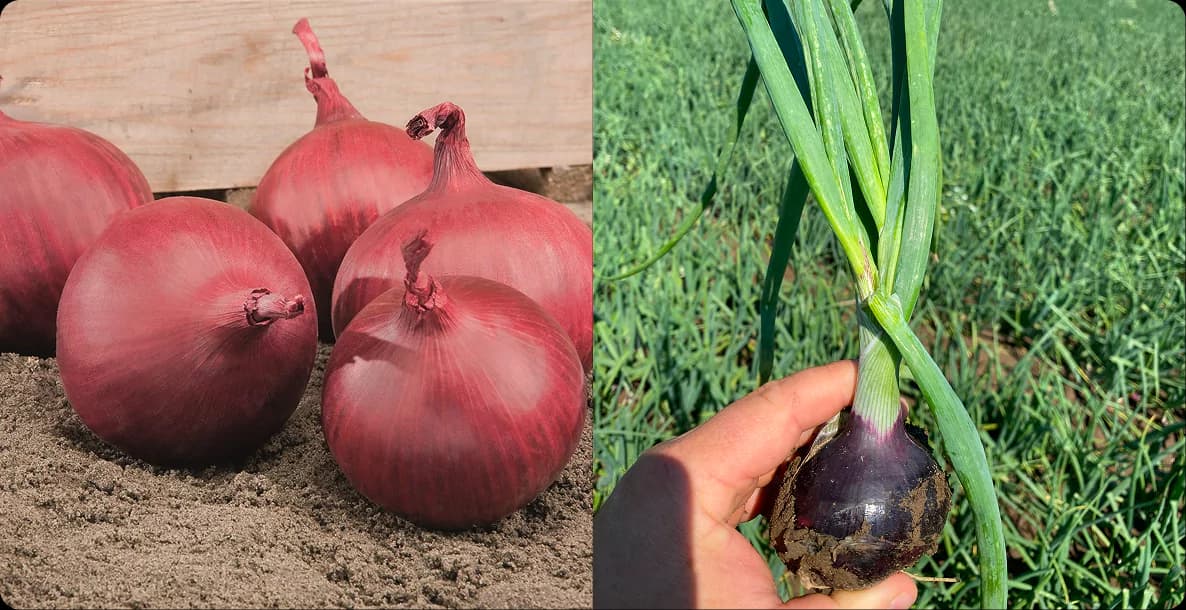
For long-term storage we choose Rijnsburger-type yellow onions: firm, wrapped in a strong skin, able to keep in our storage facility until mid-June. Red onions keep for a shorter time, and we usually plan their sales until the end of March. In this post we explain where that difference comes from and how to factor it in when you plan stocks in your own warehouse or orders for the whole year.
Where the difference between yellow and red comes from
The difference sits in biology, not in warehouse technology. Rijnsburger-type yellow onions have several layers of hard, straw-golden skin and deep dormancy, so they hold off sprouting for a long time even when spring turns warmer. Red onions naturally have a thinner, more delicate skin and shallower dormancy, which is why even the best conditions will not stretch their storage life to match the yellow ones.
The same rule applies in every storage facility, including ours, which holds around 13,000 tonnes. A store can preserve an onion's potential, but it cannot add to it. Which specific traits decide storage life and which varieties we rely on, we break down in the post on onion varieties for long-term storage.
Yellow onions: the backbone of winter and spring deliveries
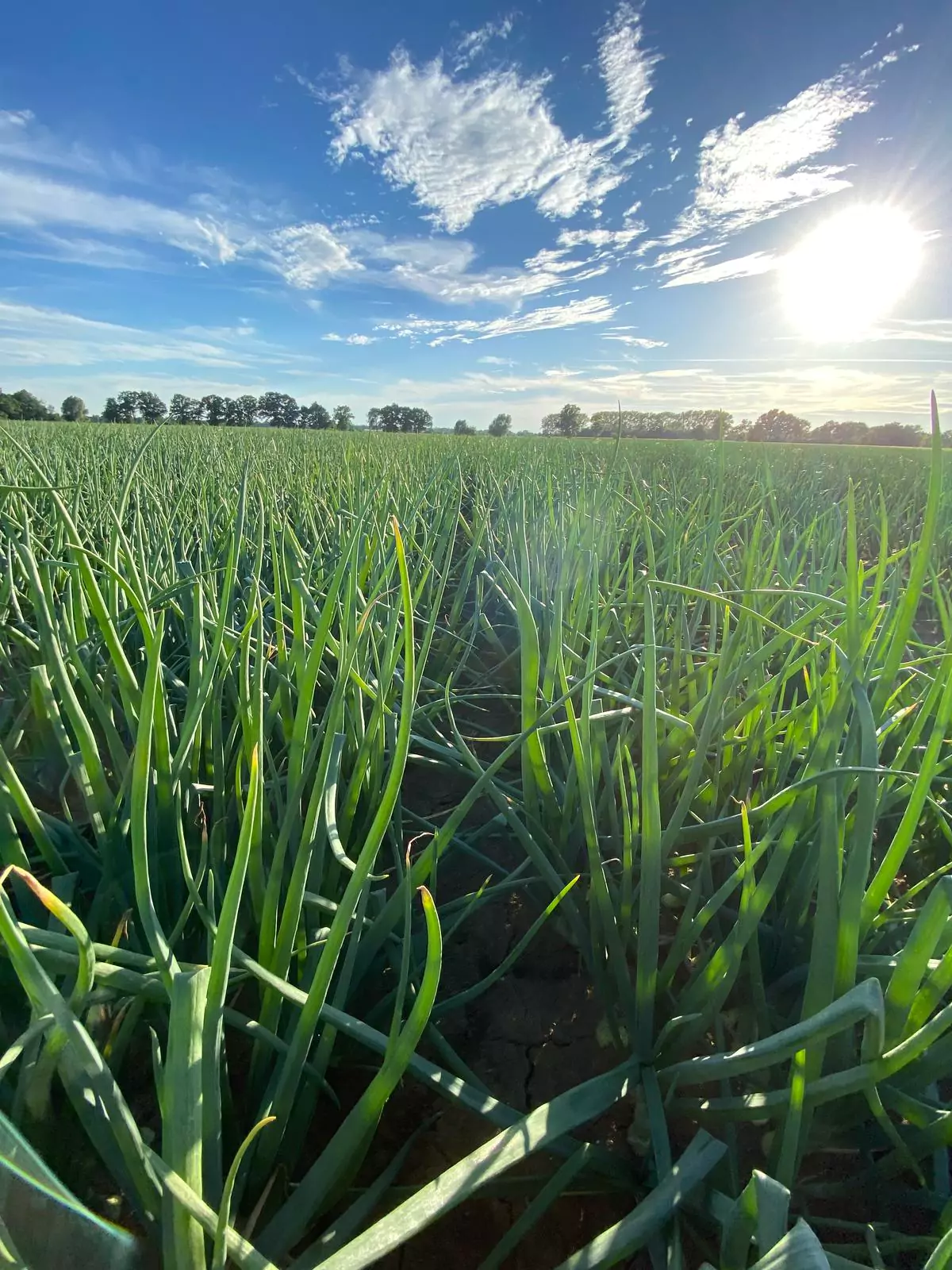
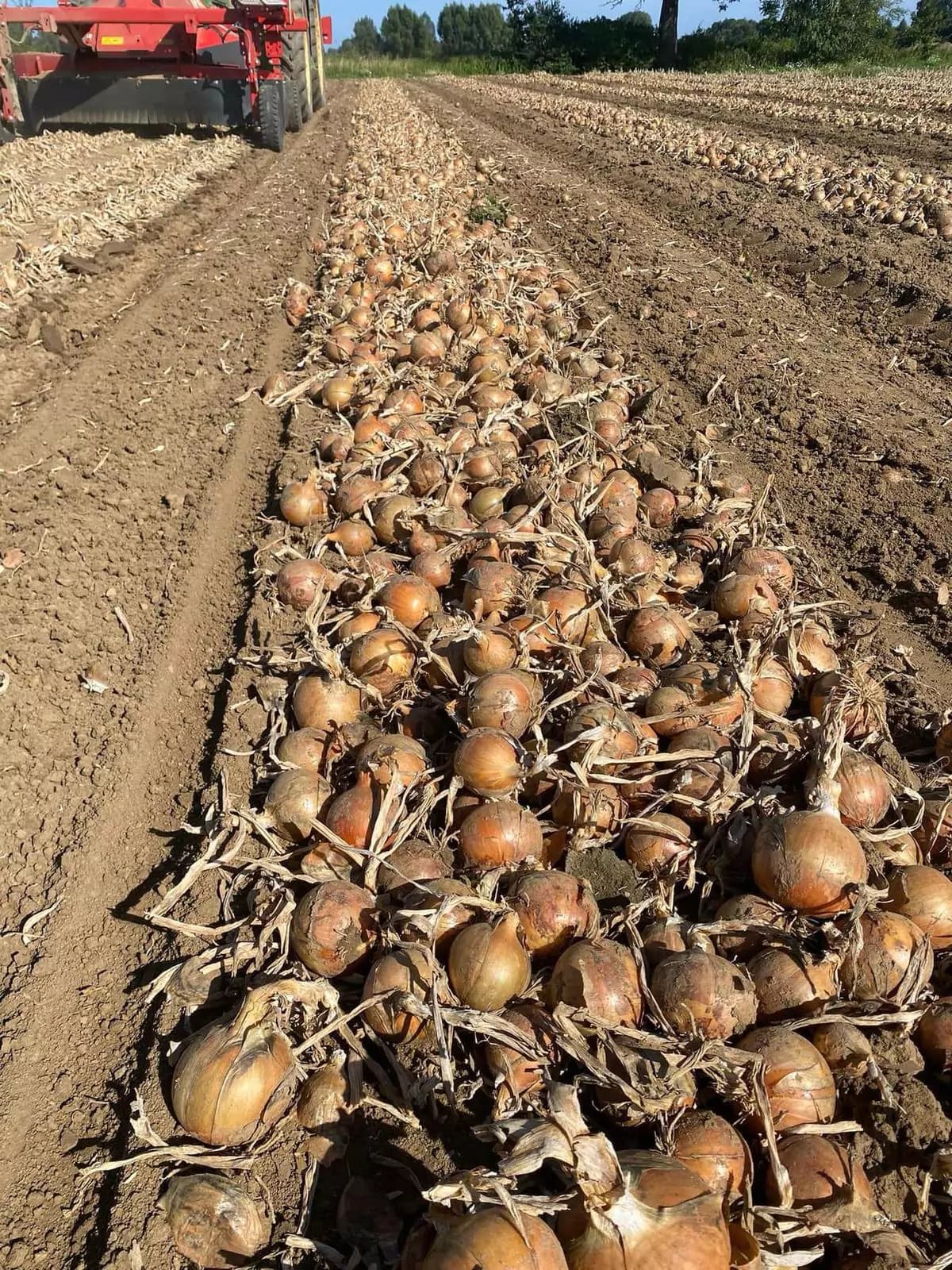
We grow around 250 hectares of onions with yields of around 60 tonnes per hectare, and it is yellow Rijnsburger that forms the core of what we send into storage. We chose varieties such as Hybelle and Hysinger precisely for long keeping: firm bulbs, a closed neck and a skin that holds on to the very end.
For a buyer this means one simple thing: when you order yellow onions from us in February, April or early June, you get produce from the same storage base, re-sorted before dispatch. Yellow onions work for us all year round, and they are what we build fixed delivery schedules on.
Red onions: a shorter horizon, but an important place in our offer
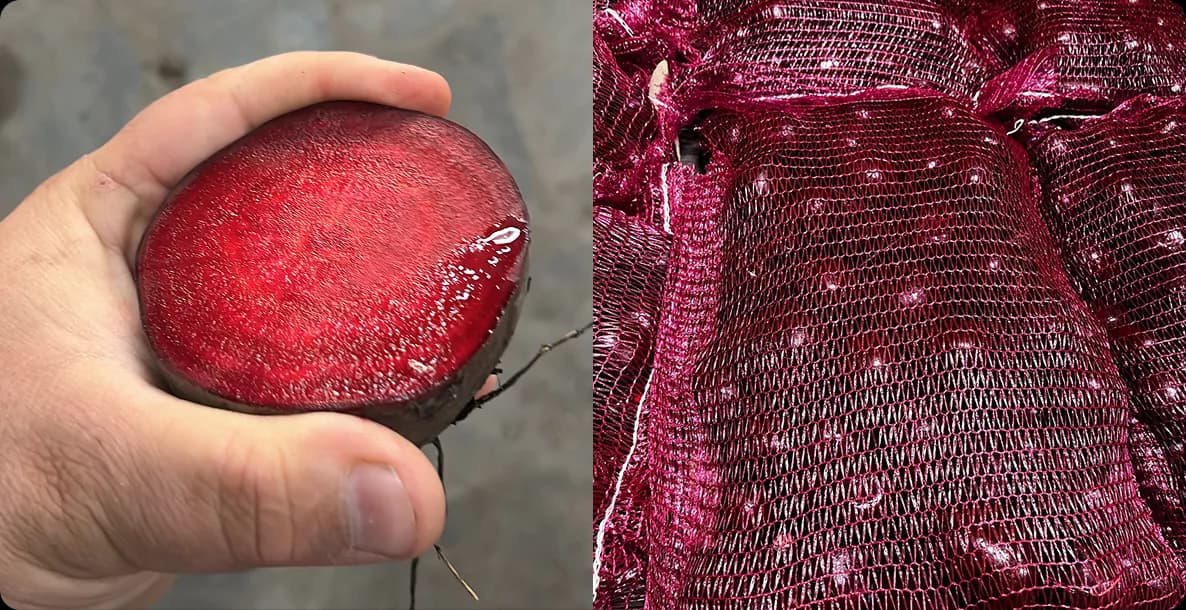
Red onions, for us above all varieties such as Redtide, play a different role. Buyers take them for the colour and the look on the shelf, mainly for the fresh market and food service. Their natural storage horizon is shorter, so we usually plan red batches for release by the end of March, before the more delicate skin and shallower dormancy start to show in the quality. What makes our red onions different and how we grow them, we describe in the post on Redtide F1 red onions.
The comparison in practice
| Trait | Yellow onions (Rijnsburger type) | Red onions |
|---|---|---|
| Skin | several layers, hard and tight-fitting | thinner and more delicate |
| Dormancy | deep, slow to start sprouting | shallower |
| Our sales horizon | until mid-June | usually until the end of March |
| Typical use | processing, packing plants, year-round deliveries | fresh market, food service, colour on the shelf |
| How to plan orders | into late spring as well | larger volumes by early spring |
How we split the store between yellow and red
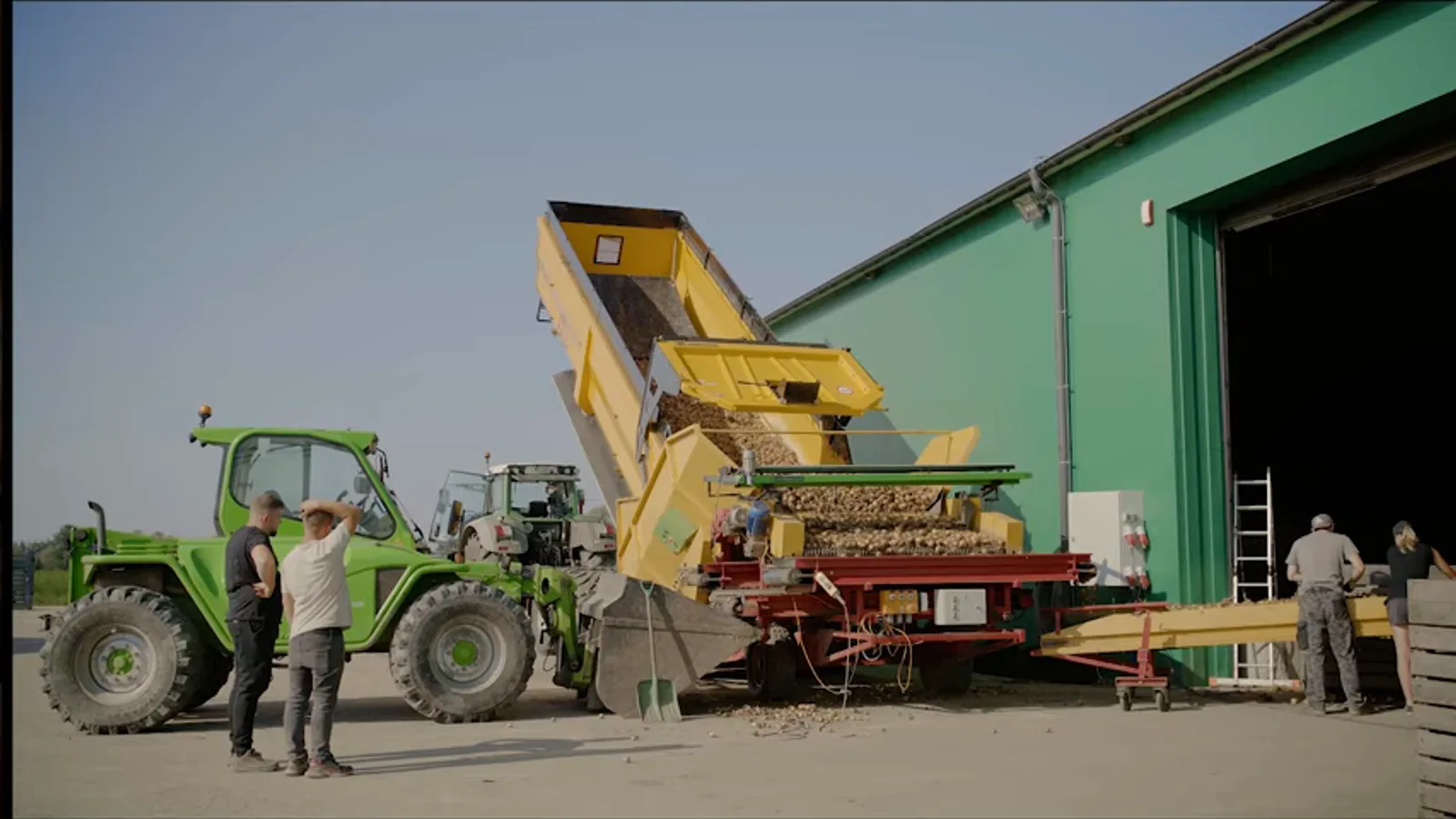
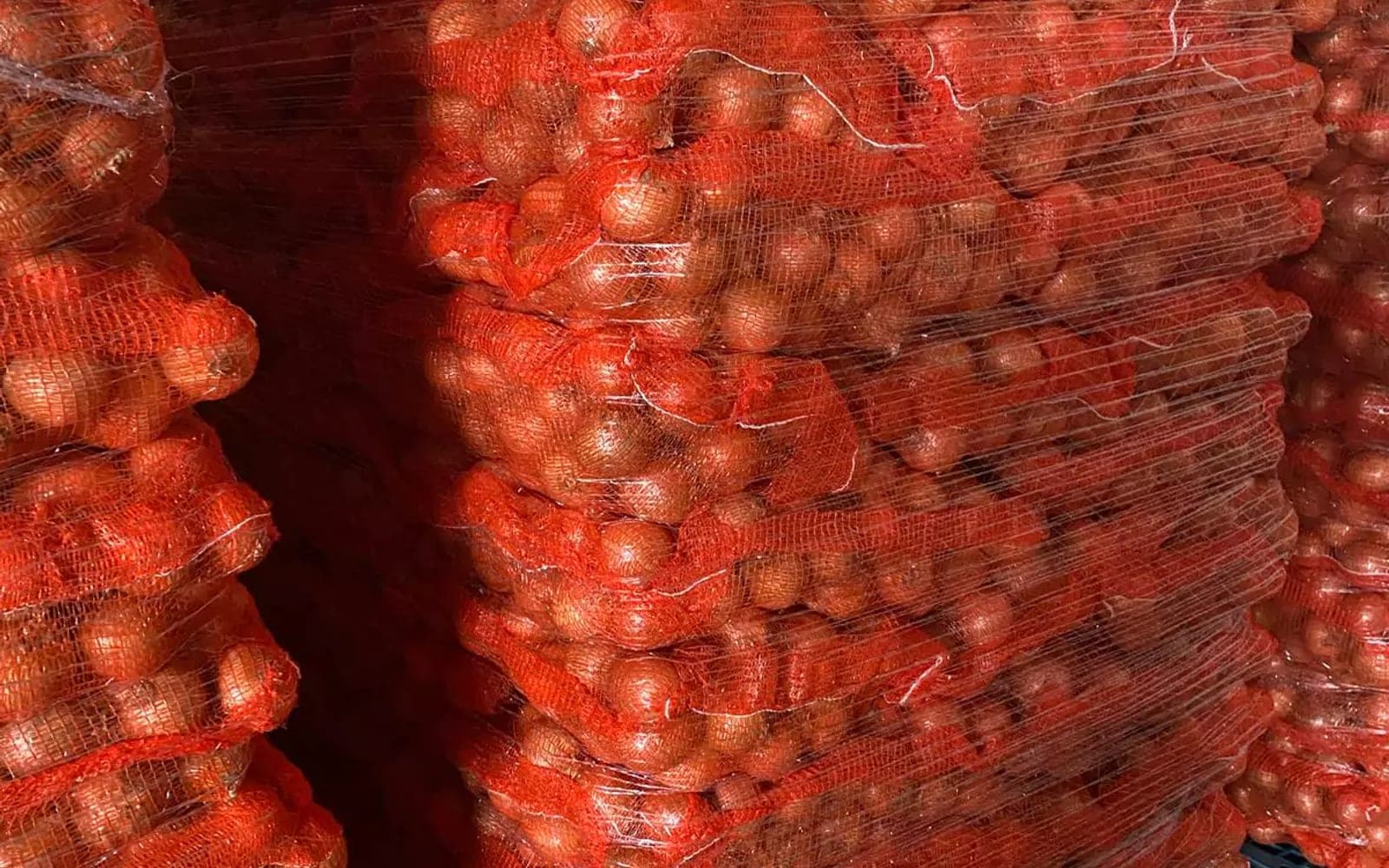
Both onions follow the same path on the way in: curing for 2-4 days until the neck is dry and closed, then strict selection and stable conditions with controlled ventilation. The difference begins in the release plan. We schedule red batches earlier in the calendar and spread the yellow across the whole storage season, with the firmest batches kept back for late spring.
We describe the whole process from harvest to release in our guide to onion storage, and we cover realistic keeping times in the post on how long onions can be stored.
What to choose for your own warehouse and buying plan
If you buy onions in longer intervals and store them yourself, choose Rijnsburger-type yellow: it forgives more and gives you the longest safety margin. If you need red onions for spring, contract them early, because good red batches run out on the market faster than yellow ones.
The shorter horizon of red onions is not a product flaw, it is a trait of the type. We build it into our sales plan from the first day of storage, and we advise buyers to do the same when planning purchases.
There is no gap in early summer either: before the stocks run out, our onions grown from sets come onto the market, including red ones of the Red Baron and Ruby Star varieties. That is how we supply yellow onions all year round. We sell red onions from storage usually until the end of March, and from early summer fresh red onions grown from sets (Red Baron, Ruby Star) come in, so you may want to set up availability with us in advance for April and May.
Planning stocks of yellow or red onions and want help choosing varieties and delivery dates? Write to us via our contact page or see our onion offer and red onion offer.