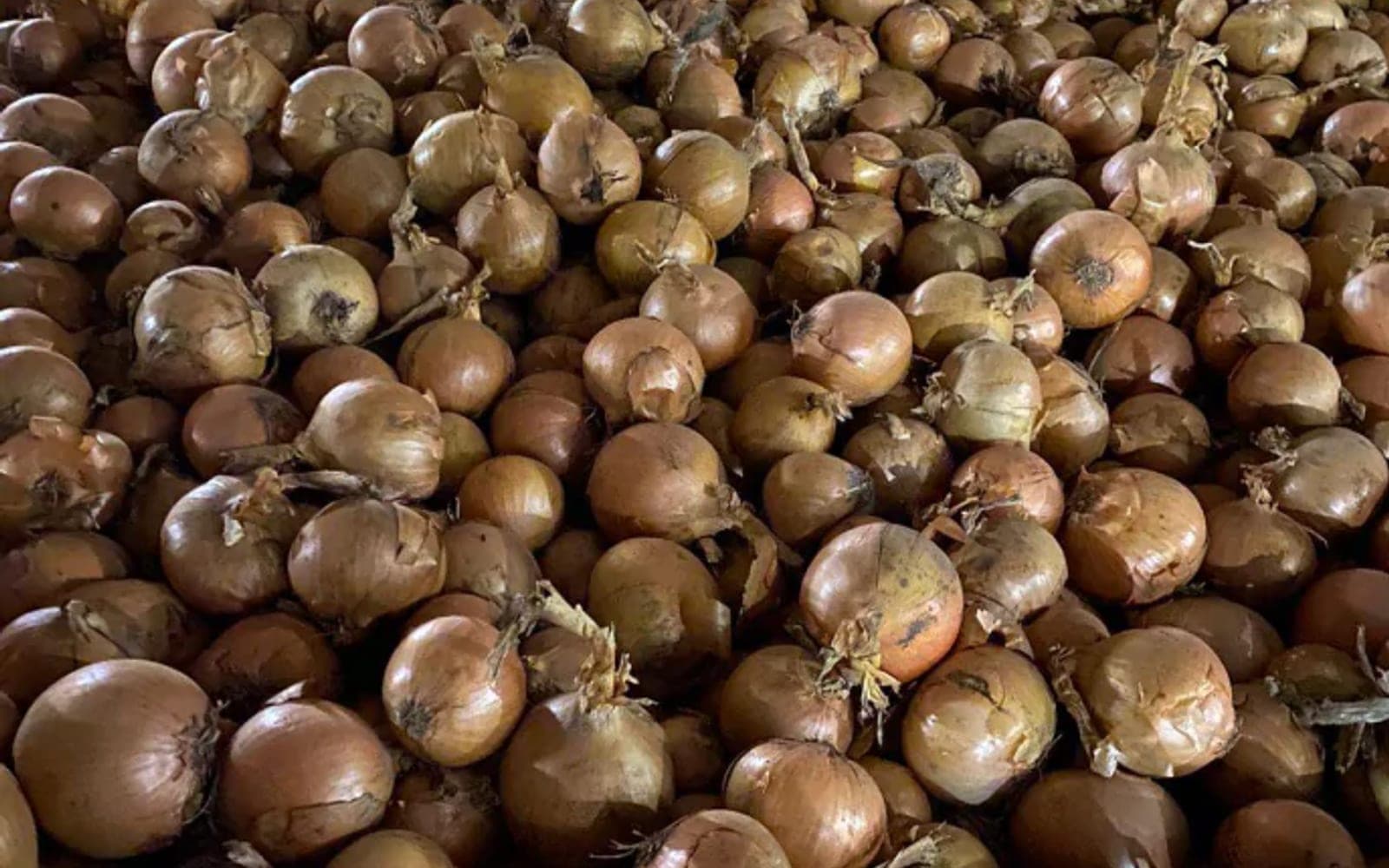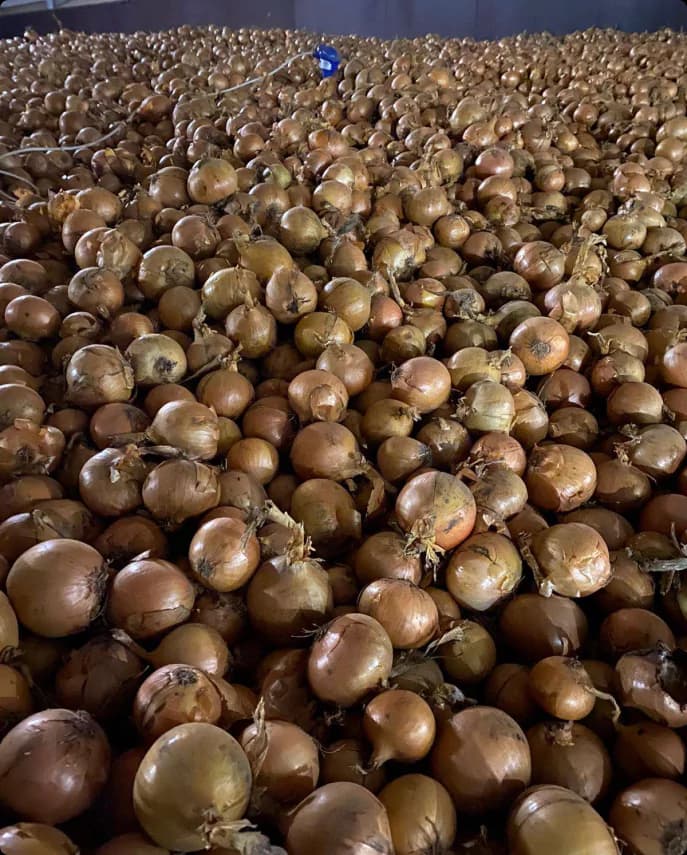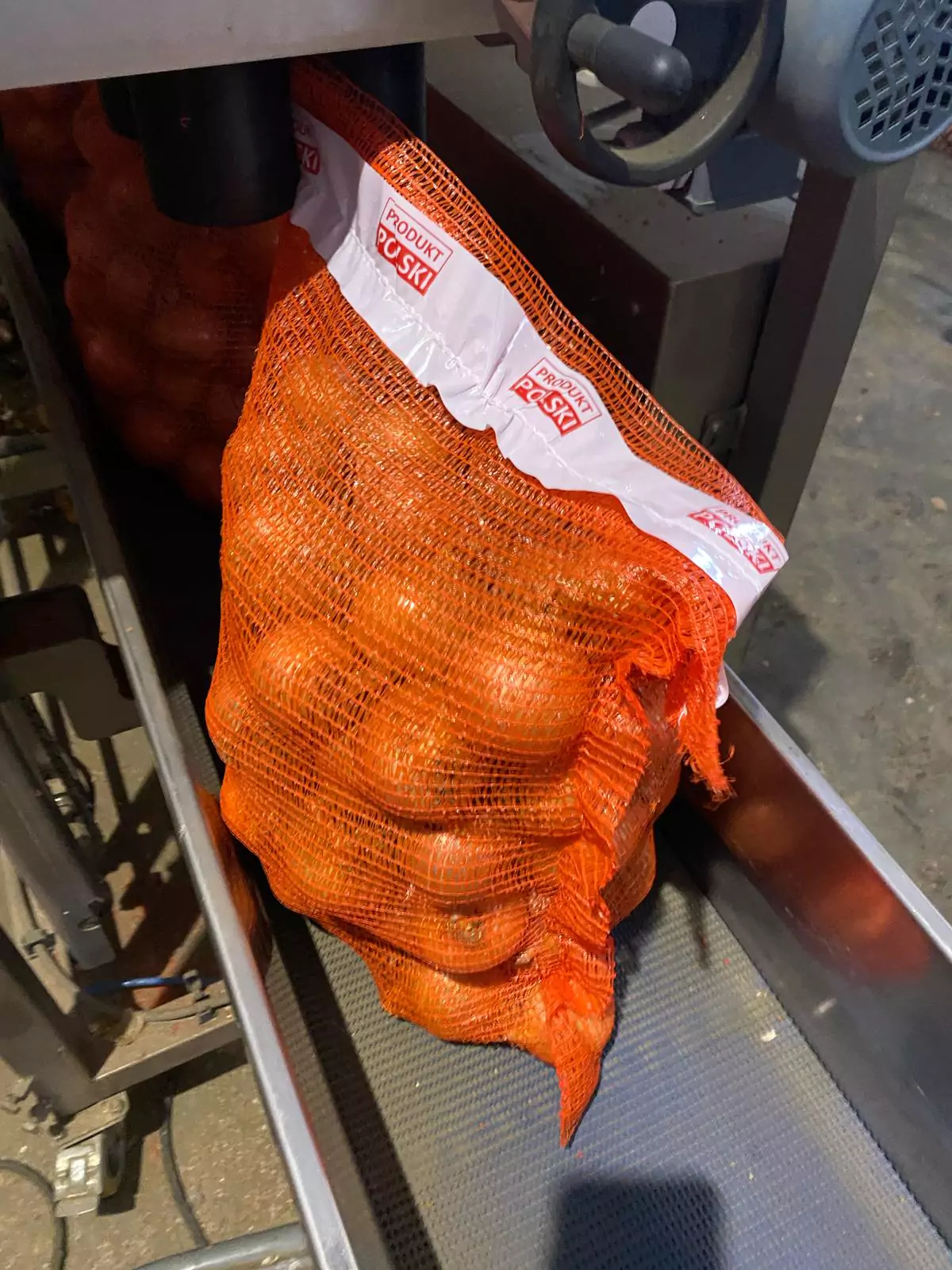
The most common causes of soft onions in storage include water loss, frost, storage diseases (bacterial disease, neck rot, Fusarium basal rot) and sprouting. Many of them can be told apart with your hand, your nose and a knife: you check where the onion is soft, what it smells of and what a lengthways cross-section shows. Below we gather them in one table and say what to do with the batch in each case.
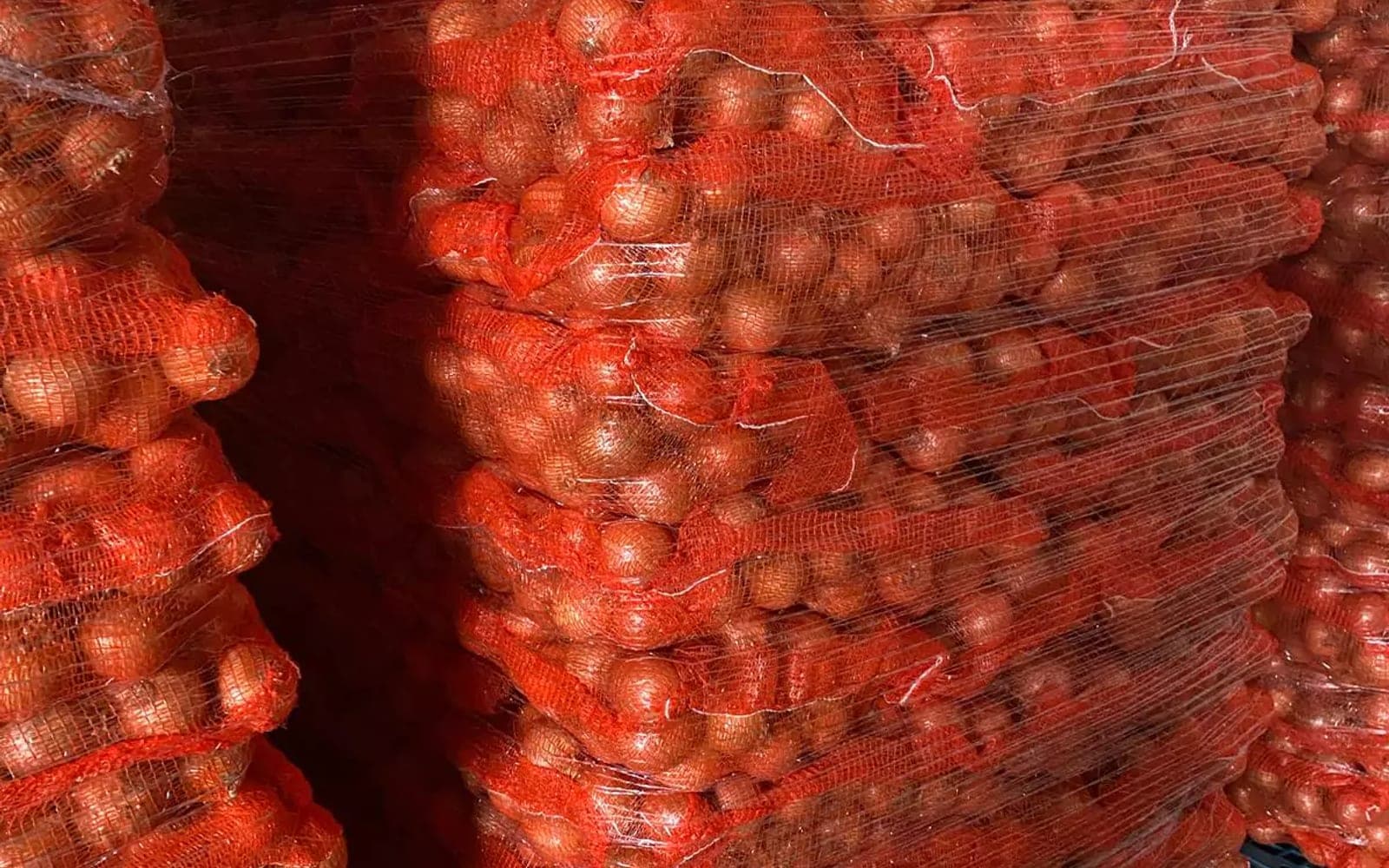
From autumn to spring we release onions from our own 13 000 tonne store.
The causes of soft onions in one table
| What you feel and see | Cause | What to do with the batch |
|---|---|---|
| Evenly soft, lighter, no foreign smell; on the cross-section the scales are clean, just limp | water loss (weight loss) | sound produce, but it will not regain firmness; release it sooner |
| Gives under the finger after thawing | frost | do not assess it frozen; assess only after slow thawing |
| Symptoms depend on the bacterial species; with bacterial soft rot the changes start at the neck, the scales are watery and glassy, with a repulsive smell | bacterial disease | sort out the diseased bulbs, check a larger sample, do not put it off |
| Rotting around the neck; the scales are pale at first, as if soaked in water, later they darken and a grey mould appears | neck rot | sort out the diseased bulbs, check a larger sample, do not put it off |
| Brown, sunken spots, pink or beige clusters of spores | Fusarium basal rot | sort out the affected bulbs, release quickly |
| Loses firmness, a green shoot is visible on the cross-section or from the neck, roots at the base | sprouting | sort out bulbs with a shoot, release first |
How to recognise each cause
Water loss: soft, but sound
An onion gives off water the whole time it lies in storage, and faster in dry, warm air. Such a bulb goes soft evenly, not in one spot, and is clearly lighter. It does not smell of rot, and the cross-section shows no discolouration. For the health of the batch this is the least dangerous cause, but it cannot be reversed. How we limit onion storage losses, we describe separately.
Frost: hard on the ramp, soft after thawing
A frozen onion can be hard as a stone, which is why frost is not assessed straight away. The Institute of Horticulture's onion protection programme names long storage at temperatures below -4 °C as the cause of frost damage. The same onion protection programme recommends slow thawing of onions stored at very low temperatures. What to do with a batch after a frosty night, we write in our post on frozen onions.
Bacterial disease: symptoms depend on the bacteria
The Institute of Horticulture's methodology notes that the symptoms differ depending on the species of bacteria causing the disease. With bacterial soft rot, caused by Pectobacterium carotovorum, according to the Institute of Horticulture the disease develops from the neck, the fleshy scales take on a watery, glassy look, and the surface of the onion can look undamaged, while inside the tissue turns into a cloudy, semi-liquid mass with a repulsive smell. Why onions rot from the inside, we describe separately.
Neck rot: also from the top
The Institute of Horticulture's methodology calls neck rot one of the most widespread and harmful onion diseases, one that spreads quickly during storage. According to the IO methodology, rotting starts around the neck, the fleshy scales are pale at first, as if soaked in water, and the grey mould appears only as the disease develops. At an early stage it is therefore easy to confuse with bacterial disease, and only a laboratory gives a reliable identification.
Fusarium basal rot
The Institute of Horticulture describes that with infection in the late growth phase the disease may show only during storage, and affected onions are covered with brown, slightly sunken spots with pink or beige clusters of spores. Where onion Fusarium comes from, we describe separately.
Sprouting: the onion wakes from dormancy
An onion that starts growing loses firmness. According to the Institute of Horticulture's methodology, the growth of roots and green tops comes with cracking of the dry skins, a change in the colour of the dry skin and in the shape and firmness of the onions. The same methodology links root growth mainly to excessive relative humidity, and the growth of green tops to raised temperature. The season matters too: among the causes of green top growth during storage, the onion protection programme lists high temperature and humidity before harvest preceded by a period of drought. How we keep onions dormant, we describe in our post on onion sprouting in storage.
How to check soft onions on receipt, step by step
A hand, a nose and a knife are enough. Only a laboratory will name the pathogen, but the decision on the batch is made earlier.
- Take a sample from several places in the load: from the front, the middle and the back of the trailer, from the top and the bottom of the big bags.
- Squeeze each onion, then the neck and the base separately. Set the soft bulbs aside and note where they are soft.
- Smell the sack and the soft bulbs. A rotten, repulsive smell is a sign of disease, not of water loss alone.
- Cut the soft bulbs lengthways, through the neck and the base. Look at where the change comes from: from the top, from the bottom, from a single scale, or whether there is a green shoot inside.
- Do not assess frozen onions straight away. Thaw the sample slowly and look at the cross-sections after thawing.
- Count the bulbs by cause and compare the result with the specification. Before repacking, take photos of the cross-sections, labels and pallets and write down the batch code.
How many bulbs to cut and what share of soft onions means a claim, agree in the specification before the first delivery. Without it, the conversation on the ramp is just one word against another.
What we do before onions leave the store
After harvest we cure the onions for 2-4 days and keep them in our own 13 000 tonne store. Controlled ventilation and curing keep the skin dry, and we select every batch for firmness, colour and dry skin. Before dispatch the onions pass through the DOWNS CropVision optical sorter: cameras and AI scan every bulb in 360 degrees and reject stones, clods of soil and bulbs with defects, up to 100 tonnes per hour.
The camera looks at the surface, and bacterial disease can leave it untouched. On request we send a free sample. We describe the whole journey of onions from curing to release in our guide storing onions.
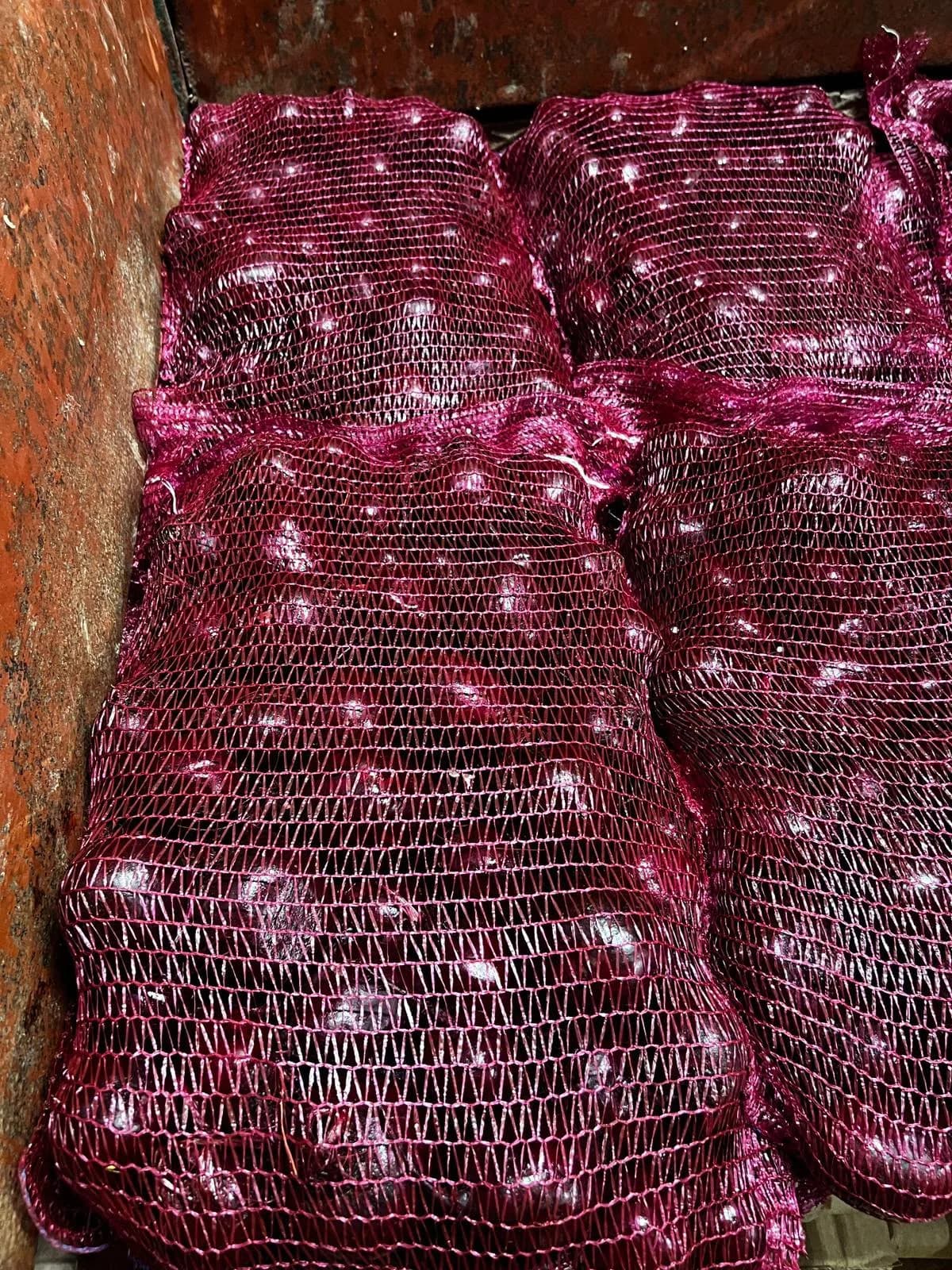
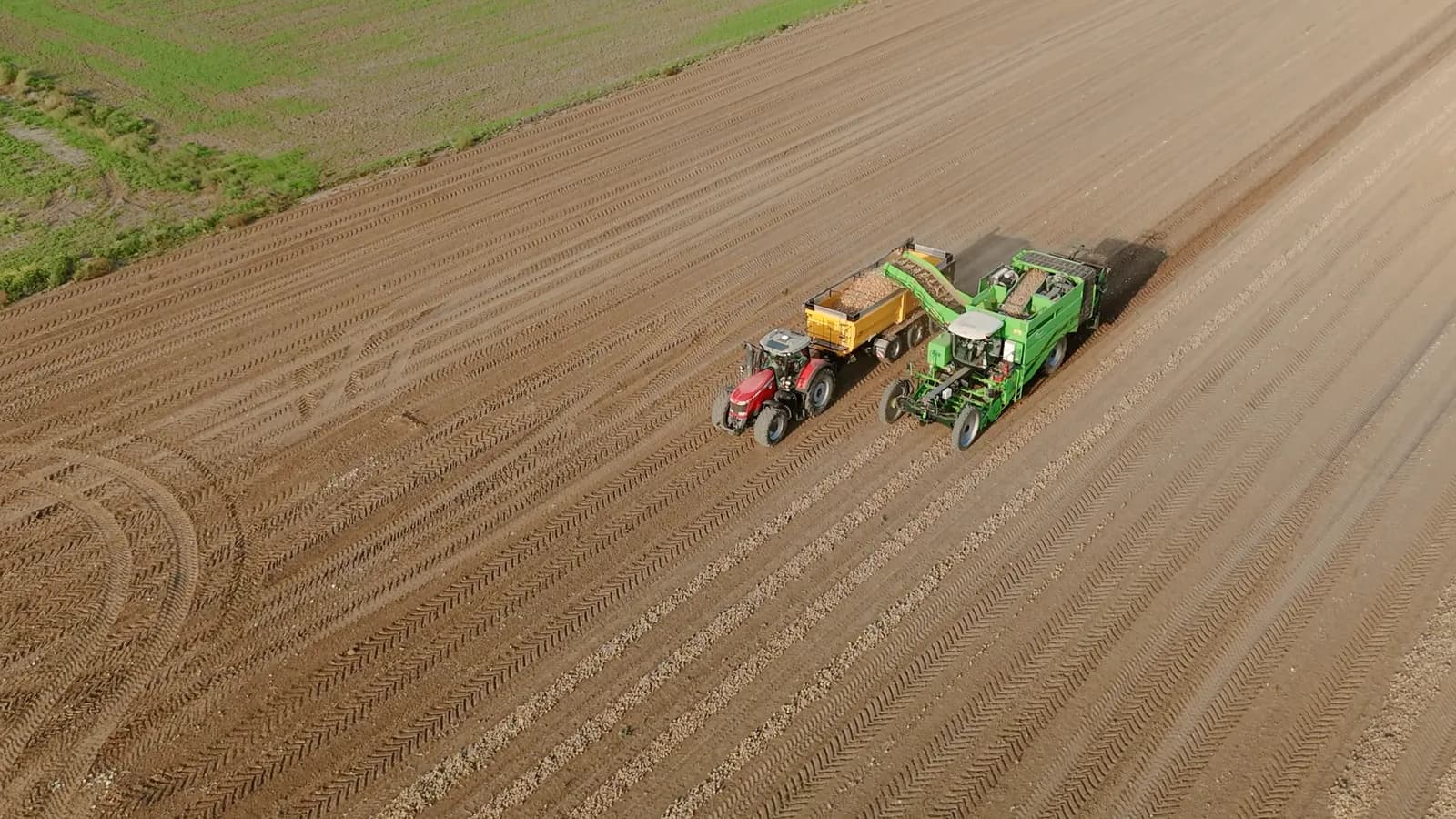
We grow around 250 ha of onions with a yield of around 60 t/ha. Our vegetables go to market leaders such as Onix, Farm Frites and FreshPol, partners supplying the largest retail chains and processing plants in Poland and Europe. You will find varieties, sizes and packaging options in our offer: yellow onions. Ask about a batch to your specification through the contact form. The price is calculated on the basis of current market prices.