We supply wholesale table potatoes to packing houses straight from our fields in Żuławy: we grow the Twister, Bella Rosa, Joline and Gala varieties, lift them with an AVR Puma 3 harvester and sort them on the DOWNS CropVision, at up to 100 tonnes per hour. We pack loose, in big bags or in 15 kg, 10 kg and smaller sacks, and we calculate the price from current market prices. Below we explain how we prepare a batch, what the regulations require and what the IP methodology says about storing table potatoes.
Which table potato varieties we grow
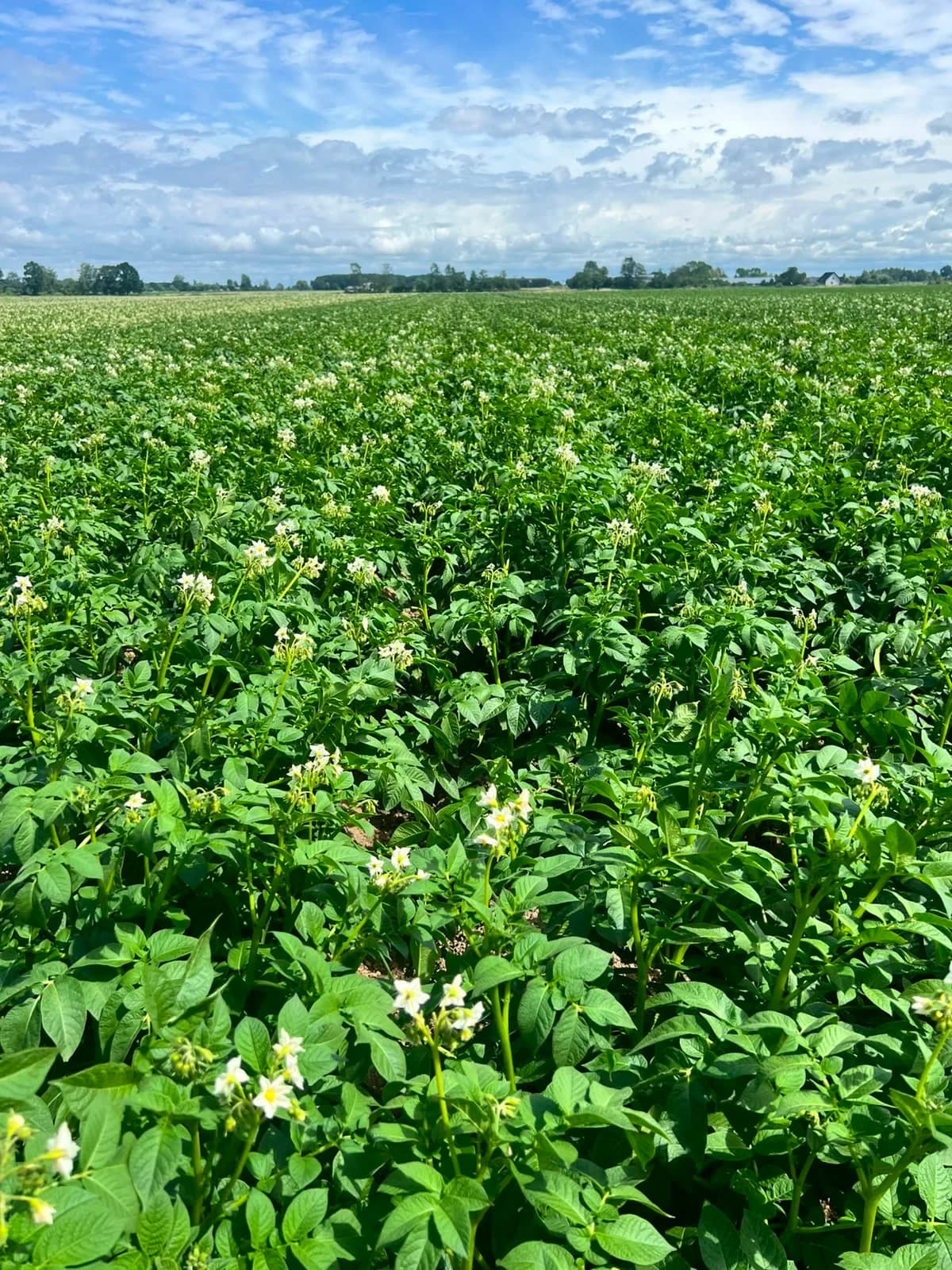
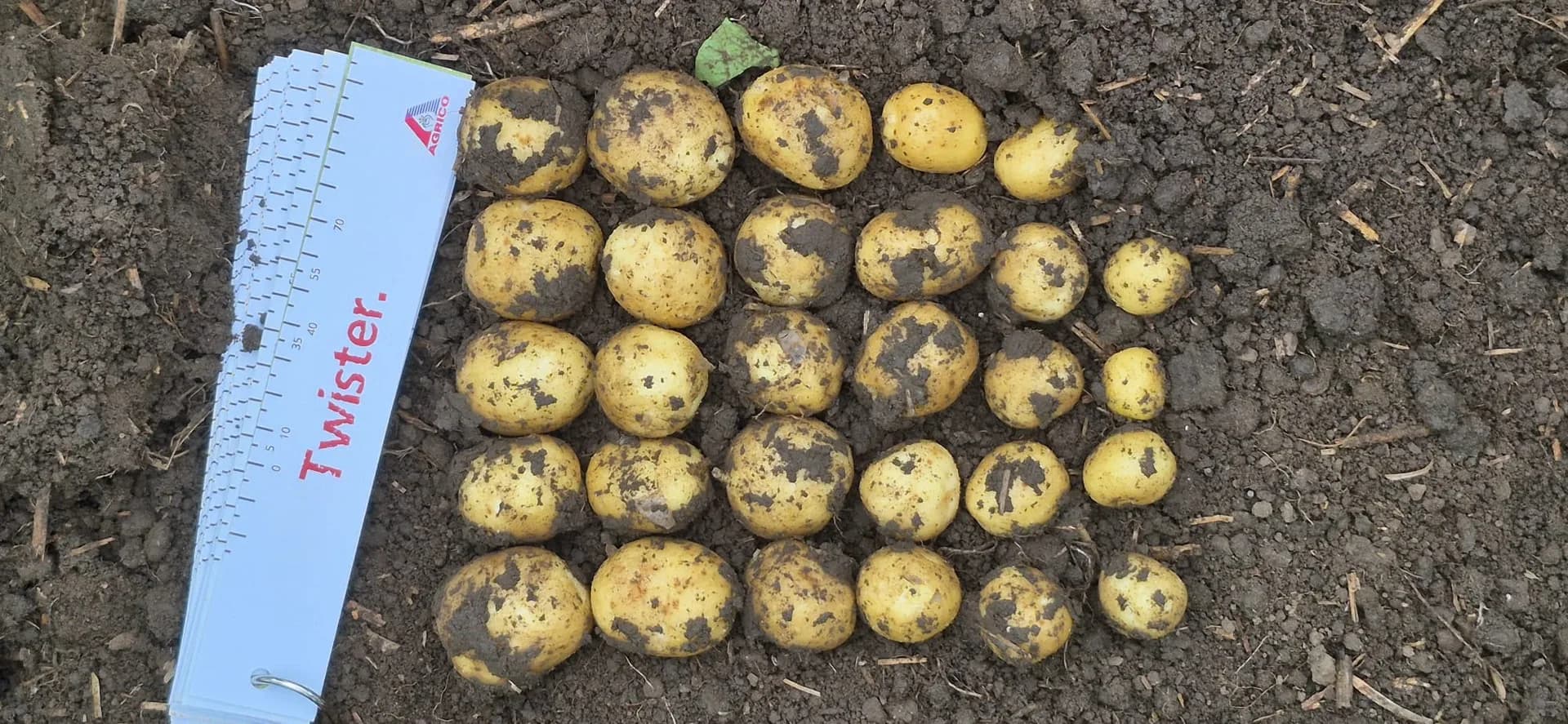
For table potatoes we mostly base our range on four varieties: Twister, Bella Rosa, Joline and Gala. They go to the fresh market, and alongside them we grow the fry varieties Innovator and Donata for processing.
| Variety | What the breeder or our offer says about it | What we agree with the buyer |
|---|---|---|
| Twister | Agrico writes that it is particularly well suited to the retail segment. | quantity, date, caliber and form of delivery |
| Bella Rosa | Europlant describes it as a very early, red-skinned, mostly firm-cooking table potato. | as for Twister |
| Joline | our table variety for the fresh market | as for Twister |
| Gala | our table variety for the fresh market | as for Twister |
A breeder's variety sheet describes the variety, not a specific batch. That is why on request we send a free sample, so you can assess the tubers yourselves before you order.
How we lift: AVR Puma 3, four rows at once
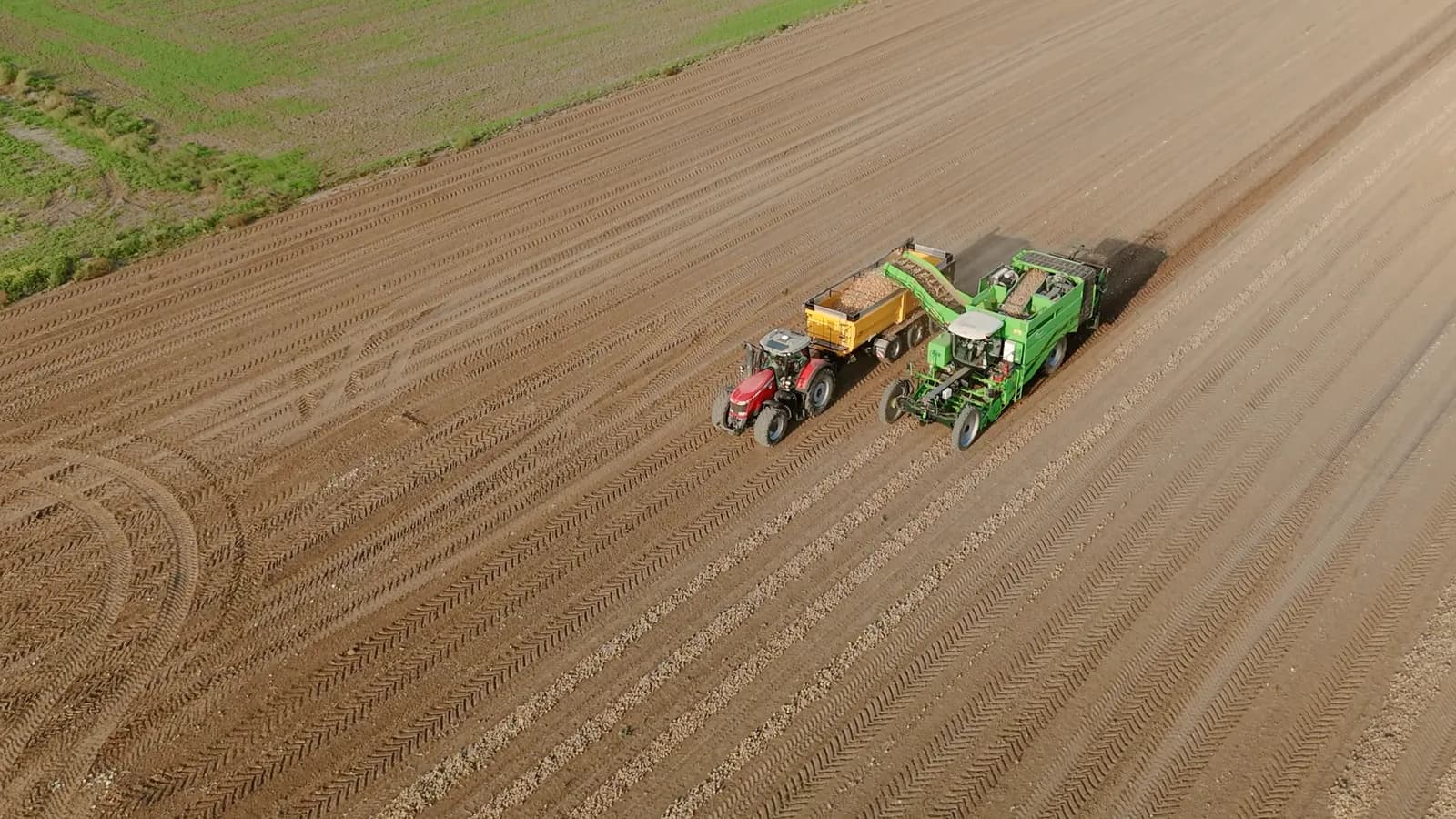
We lift potatoes with a self-propelled AVR Puma 3 harvester. It takes four rows at once and has a 469 hp Volvo engine and an 8 tonne bunker, so it works fast and without downtime, at night too. It is gentle on the tubers.
That matters long after harvest too. According to the Integrated Potato Production methodology, limiting damage to tubers at harvest prevents them from being infected by pathogens and stops diseases developing during storage.
Behind the harvester stands the whole farm. We farm more than 800 ha, including around 400 ha of vegetables, and we work with 87 machines.
How we sort table potatoes
The IP methodology recommends sorting the tubers into individual fractions after the crop is brought in. We sort potatoes on the DOWNS CropVision optical sorter. Cameras and AI scan every tuber through 360 degrees and reject stones, clods of soil and defective ones. The machine handles up to 100 tonnes per hour, so large batches go through quickly, and the buyer receives even, clean produce.
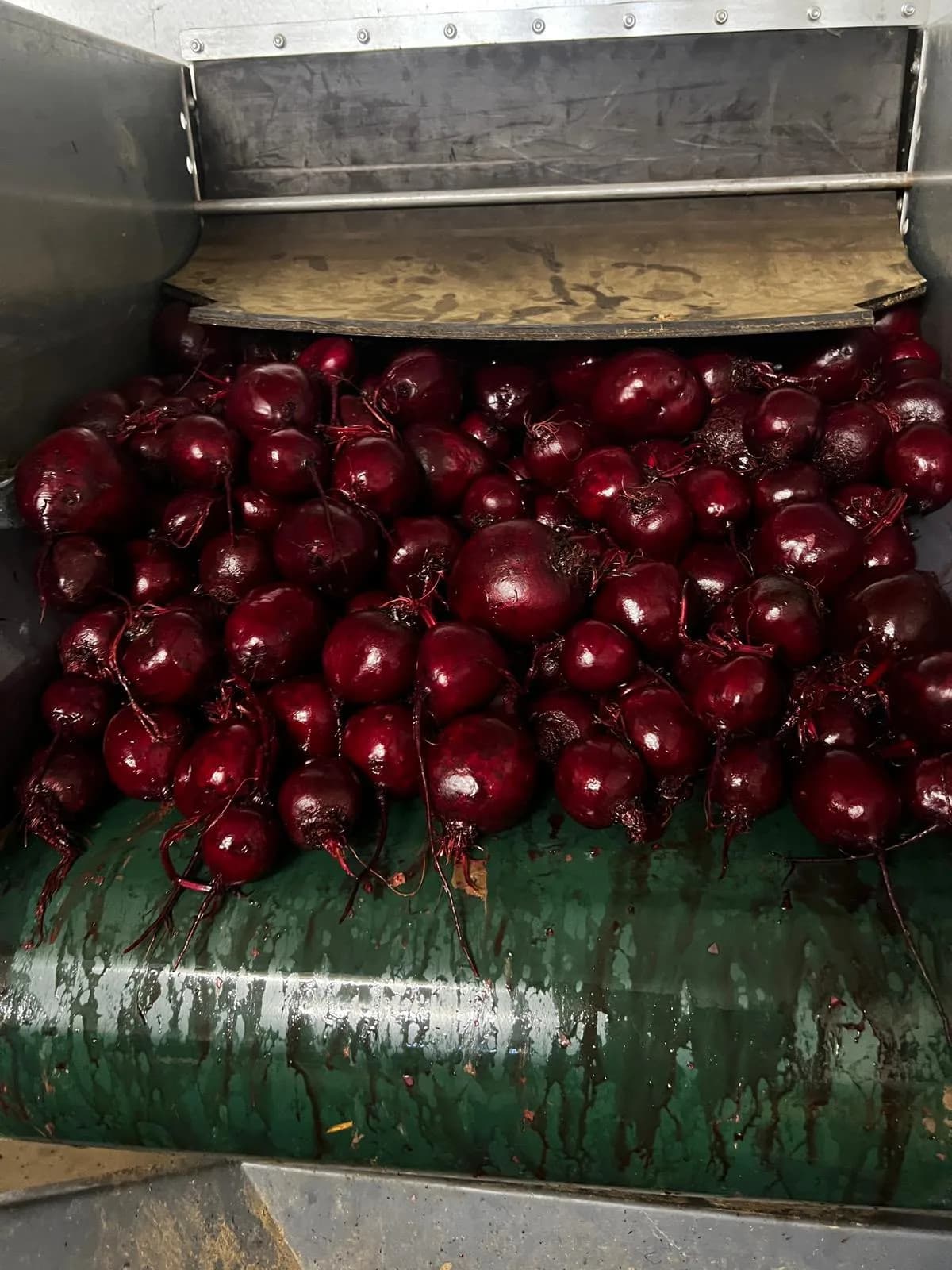
We select every batch for firmness, colour and dry matter content. Then we grade and pack it the way the buyer needs. What exactly the machine rejects and how to compare that with the regulations, we set out in our post on sorting potatoes before dispatch.
Sizes and defects: what the regulations require
The thresholds for table potatoes are given in the annex to the Regulation of the Minister of Agriculture and Rural Development of 23 March 2026, which amends the rules on the marketing quality of potatoes. We have picked the rows that are easy to check on a sample:
| Requirement | Table potatoes according to the regulation |
|---|---|
| Diameter of round and round-oval tubers | transverse from 35 mm |
| Diameter of long tubers | transverse from 30 mm, with the longitudinal at least 2 times the transverse |
| Tubers with sprouts longer than 3 mm | not permitted |
| Frozen tubers | not permitted |
| Total share by weight of tubers with the deviations in item 2 of the annex (including greened, rot-affected, damaged and immature tubers) | up to 8% |
Sprouts and frost have no percentage threshold, so it is worth checking for them in every sample.
What the IP methodology says about storing table potatoes
According to the IP methodology, in long-term storage table tubers are kept at 4-6°C. The relative humidity of the air should then, according to the methodology, be 90-95%, regardless of the intended use.
The same methodology states that losses and shrinkage during this period depend on temperature, air humidity, storage time and the storability of the variety. For Bella Rosa, Europlant gives good tuber dormancy and storage until the turn of the year. For Twister, Agrico lists good storability.
According to the IP methodology, raising the temperature before use makes the tubers more resistant to damage during unloading and sorting and lowers their reducing sugar content. When it comes to frost, remember the regulations: the regulation does not permit frozen tubers in table potatoes.
We describe the storage stages according to the methodology in our post storing table potatoes.
Certificates, testing and forms of delivery
We hold GlobalG.A.P., GRASP, FSA Gold (Farm Sustainability Assessment) and GMP+ certification. We produce using a technology free of pesticide residues, in line with the principles of Integrated Plant Production, and we test every batch for pesticide residues, heavy metals and substances hazardous to health.
We pack table potatoes in a form chosen to suit the buyer:
- loose,
- in big bags,
- in 15 kg, 10 kg and smaller sacks.
Our vegetables go to market leaders such as Onix, Farm Frites and FreshPol, partners that supply the largest retail chains and processing plants in Poland and Europe. We have gathered the varieties and forms of delivery in our potato offer, and how we work with large buyers in our speciality, we describe in our guide wholesale onions.
How to order wholesale table potatoes step by step
- Send an enquiry. Write through the contact form or call us. Give the variety, quantity and date.
- Get our reply. We come back with availability, sizing and a price calculated from current market prices.
- Check the sample. On request we send a free sample. Measure the tuber diameter, look at the sprouts and cut a few tubers open.
- Agree the details. We agree the variety, quantity, date, caliber, form and method of delivery.
- Receive the delivery. We sort, grade and pack, and we test every batch before we dispatch it.