A complaint about a batch of vegetables in B2B trade is reported without delay after the goods have been examined, with the batch marking, a description and scale of the defect, and photographs. On our side, a report lands on a specific batch: we check its history from field to pallet, put a hold on the rest of that batch in the warehouse, and work out with the buyer where the defect arose. Below we describe the rules, what a report should contain, and how we tell a defect from the field apart from one from transport or the buyer's warehouse.
B2B trade is not a shop: deadlines and duties
The food complaint deadlines that circulate online apply to consumers. In sales between businesses, the buyer loses the rights under the statutory warranty for defects (Article 563 of the Polish Civil Code, Kodeks cywilny) if they did not examine the goods within the time and in the manner accepted for that kind of thing, and did not notify the seller of the defect without delay. When a defect only shows up later, what counts is reporting it without delay after it is found.
For vegetables, in practice that means an inspection on the loading ramp, on the day of delivery, not after two weeks sitting in a warehouse.
Separate rules apply to damage in transport, and whether the carrier answers for the damage depends on checking the consignment on receipt. Domestic carriage is governed by the Polish Transport Law (Prawo przewozowe): accepting the consignment without reservations generally closes off claims against the carrier, and for damage that is not visible from the outside, you have to demand a survey of the consignment's condition within 7 days of receipt and show that the damage arose in transit (Article 76 of the Prawo przewozowe). International road transport is governed by the CMR Convention: visible damage is recorded on receipt, and damage not visible from the outside is reported to the carrier in writing within 7 days, not counting Sundays and public holidays (Article 30 of the CMR Convention). Without such a note, it is hard to prove later that the damage arose in transit.
A contract can spell these rules out further: shorten the reporting deadline, describe how a sample is taken, or name an independent surveyor in case of a dispute. That is why our framework agreement sets out the sampling and complaint procedure, which we write about in our post on contract growing of onions, framework agreements and the spot market.
What a report should contain
With a good report we can assess the batch without guessing. We need:
| Element of the report | What it gives us |
|---|---|
| Batch marking from the packaging or the delivery note | we land on one batch and its record, not the whole consignment |
| Date of unloading and the delivery document number | we compare the condition on receipt with the condition on release |
| Description of the defect and its scale in the sample, by piece or by weight | we relate the result to the tolerance in the standard and the order |
| Photographs of the pallets, labels, close-ups of the defects and cross-sections of the pieces | we see the defect the way the buyer sees it |
| Notes on the transport document and the condition of the vehicle at unloading | we separate transport damage from a defect in the batch |
| Information on where the rest of the batch is | the goods can be inspected before they are repacked |
The scale of the defect matters. Under the UNECE FFV-25 standard, Class I onions may have up to 10 percent of pieces that fail to meet Class I requirements but still meet Class II, including at most 1 percent that fail the minimum requirements or are rotten. The tolerance is counted for the whole sample, not for one sack: 1 percent is roughly one piece in a hundred. A single rotten onion in one sack does not, on its own, decide that the batch is defective, but 5 percent rotten pieces in the sample does. We describe the details of the classes and tolerances in our post on onion quality classes.
Do not repack or mix a batch under complaint with other goods before it has been inspected. Once it has been resorted, it is no longer possible to establish what the scale of the defect was or where it arose.
Where the defect came from: field, store, transport or warehouse
Some defects arise on our side, some in transit, and some only at the buyer's. By the look of the defect and when it shows up, it is usually possible to tell them apart.
| Defect | Where it usually arises | When it shows up |
|---|---|---|
| Bruising, split skin, soft patches | harvest, sorting, loading, unloading | straight away or after a few days |
| Neck rot | infection from the field, most often at the end of the season | in storage, usually after 4-8 weeks |
| Size outside the ordered range, stones and clods | sorting and packing | on intake of the goods |
| Wet skin, mould on the surface | condensation from temperature swings in transport or the warehouse | after a few days |
| Regrowth of tops, sprouting | end of dormancy, storage that is too warm | towards the end of the season or in a warm warehouse |
Neck rot can show up at the buyer's through no fault of theirs, because the fungus gets in through the neck back in the field, which we describe in our post on onion neck rot. Wet skin and mould, on the other hand, most often come from temperature swings: cold onions in a warm, humid lorry or warehouse "sweat" and catch mould within a few days. That is why, before a winter dispatch, we let a batch come up to close to ambient temperature for 1-2 days, so the skin does not catch condensation, and we release it dry. We describe the whole temperature curve in our post at what temperature to store onions.
How we handle a complaint on our side
Handling a complaint starts with the batch record. For us, every batch is produce from a specific field, harvested on a known date and packed in one run, and if it lay in the store, in a specific chamber. The next steps look like this:
- We check the batch's history. The field, harvest date, storage chamber if the batch lay in one, sorting and test results. How we build this record, we describe in our post on vegetable batch traceability.
- We put a hold on the rest of that batch. Produce from the same batch that is still with us does not go out until the matter is cleared up. We also establish who else it went to.
- We compare the report with the record. We compare the description of the defect, the photographs and the notes from transport with the batch's record at release.
- We agree a solution with the buyer. How it is settled depends on the scale of the defect and the terms of the contract.
How we limit complaints before they happen
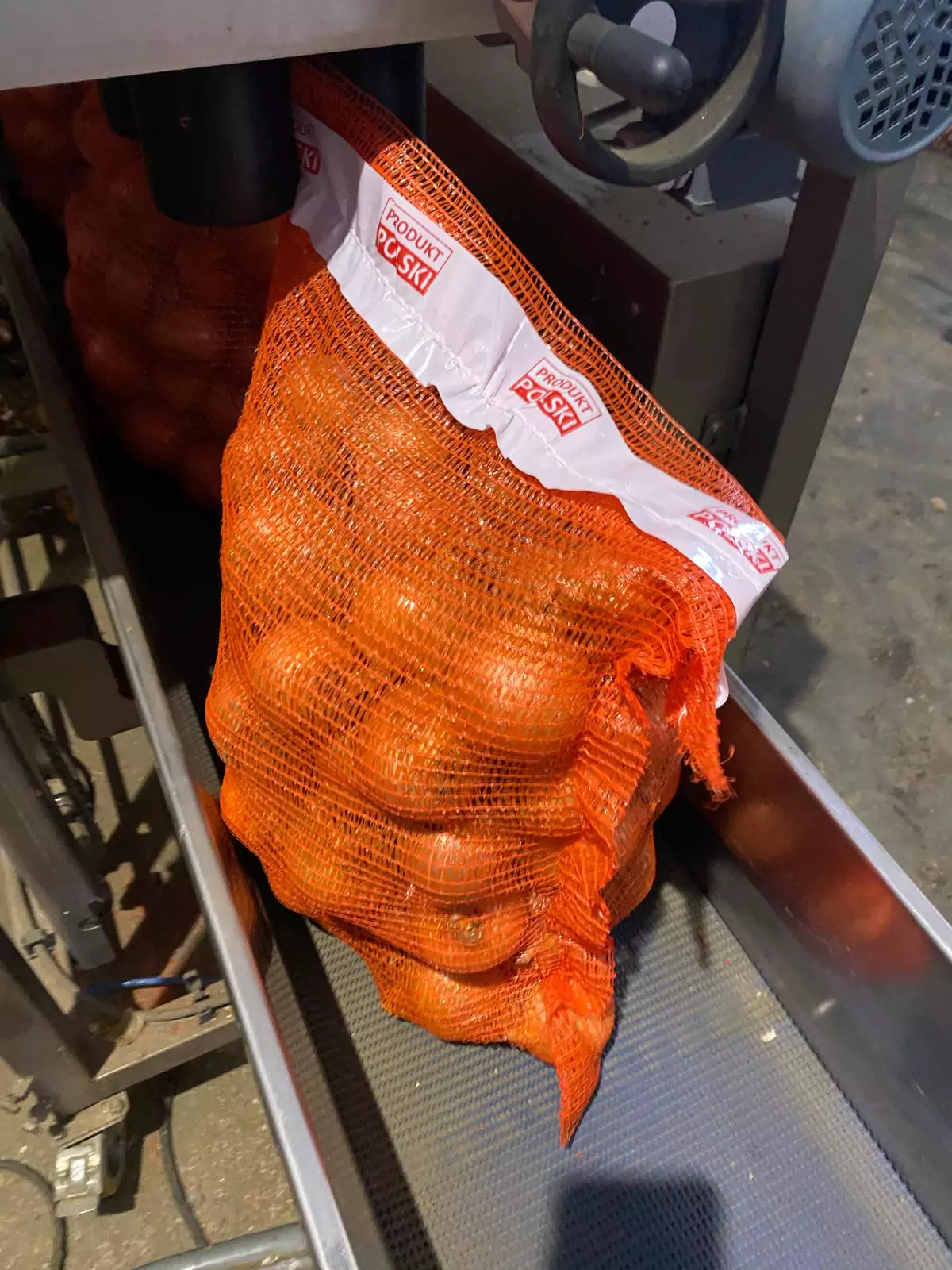
We cure onions for 2-4 days, store them in the chambers of our store of around 13 000 tonnes, and before release every batch goes through the DOWNS CropVision optical sorter, which rejects stones, clods and defective pieces at a capacity of up to 100 t/h. We test every batch for pesticide residues, heavy metals and substances hazardous to health. We can start a new partnership with a sample assessed on the buyer's own line. We describe the terms of wholesale cooperation in our guide wholesale onions: a supplier from Żuławy.
If you are looking for a supplier where a complaint reaches the very people who grew the onions, take a look at our onion offer and get in touch through the contact form. We calculate the price based on current market rates.