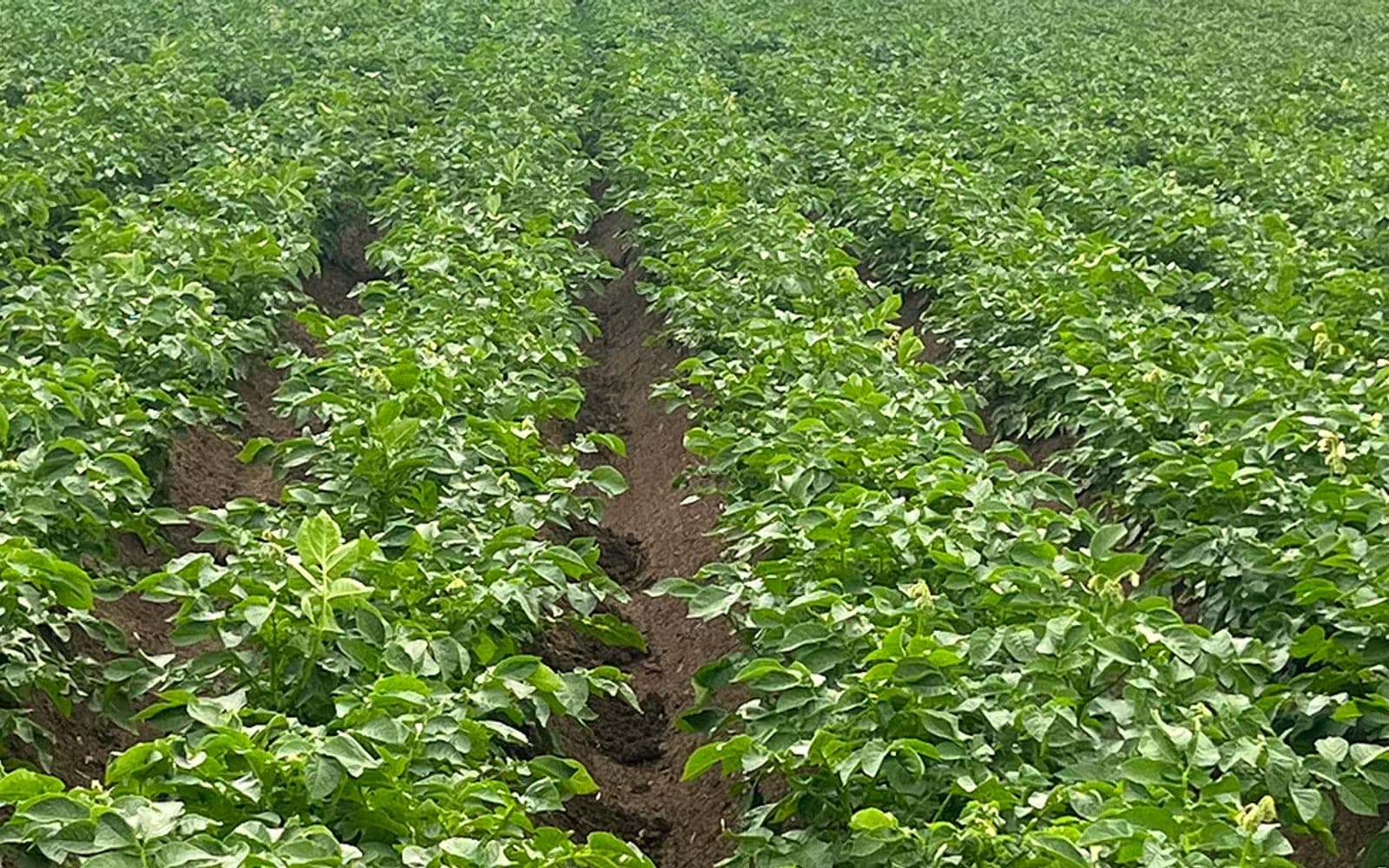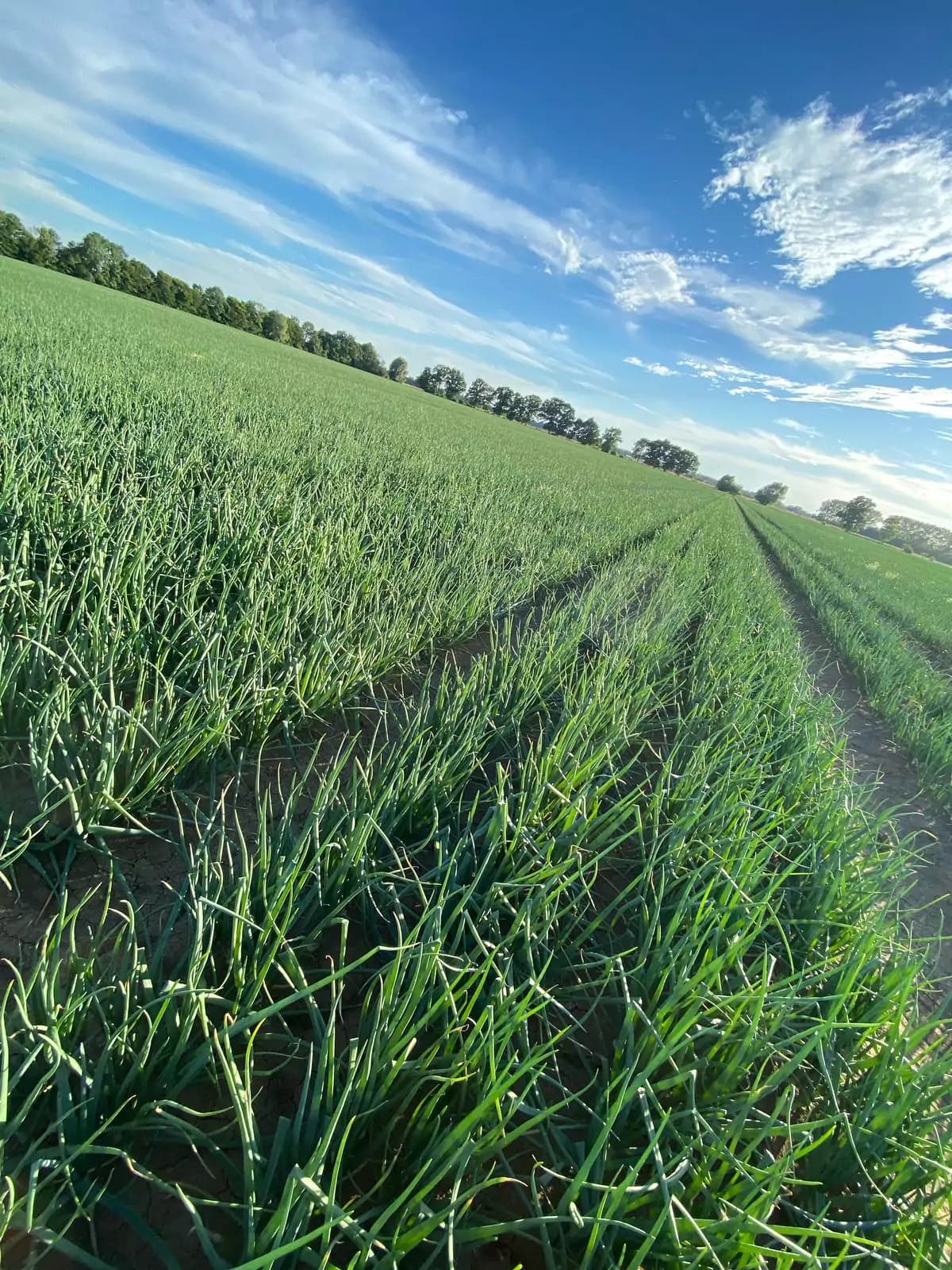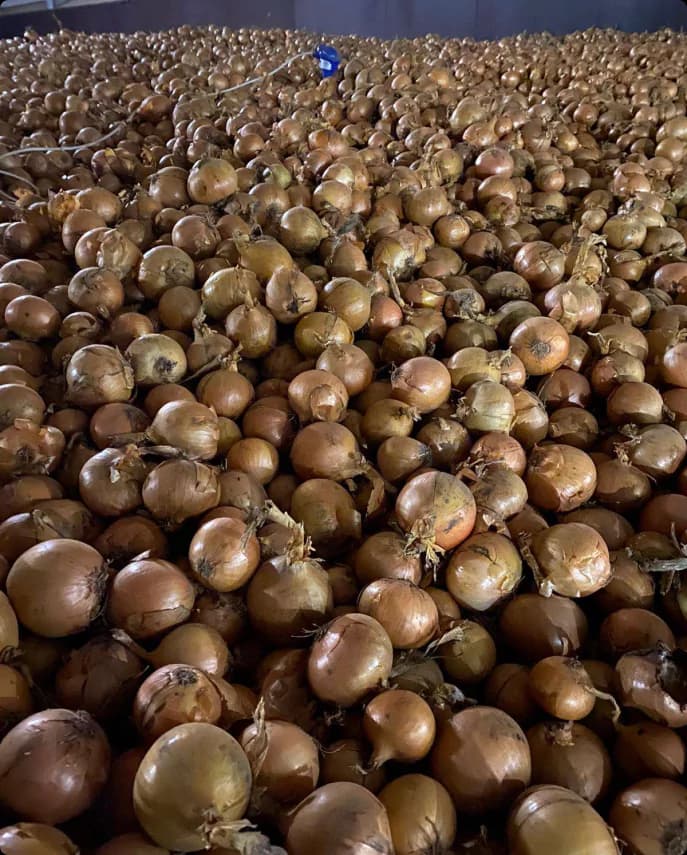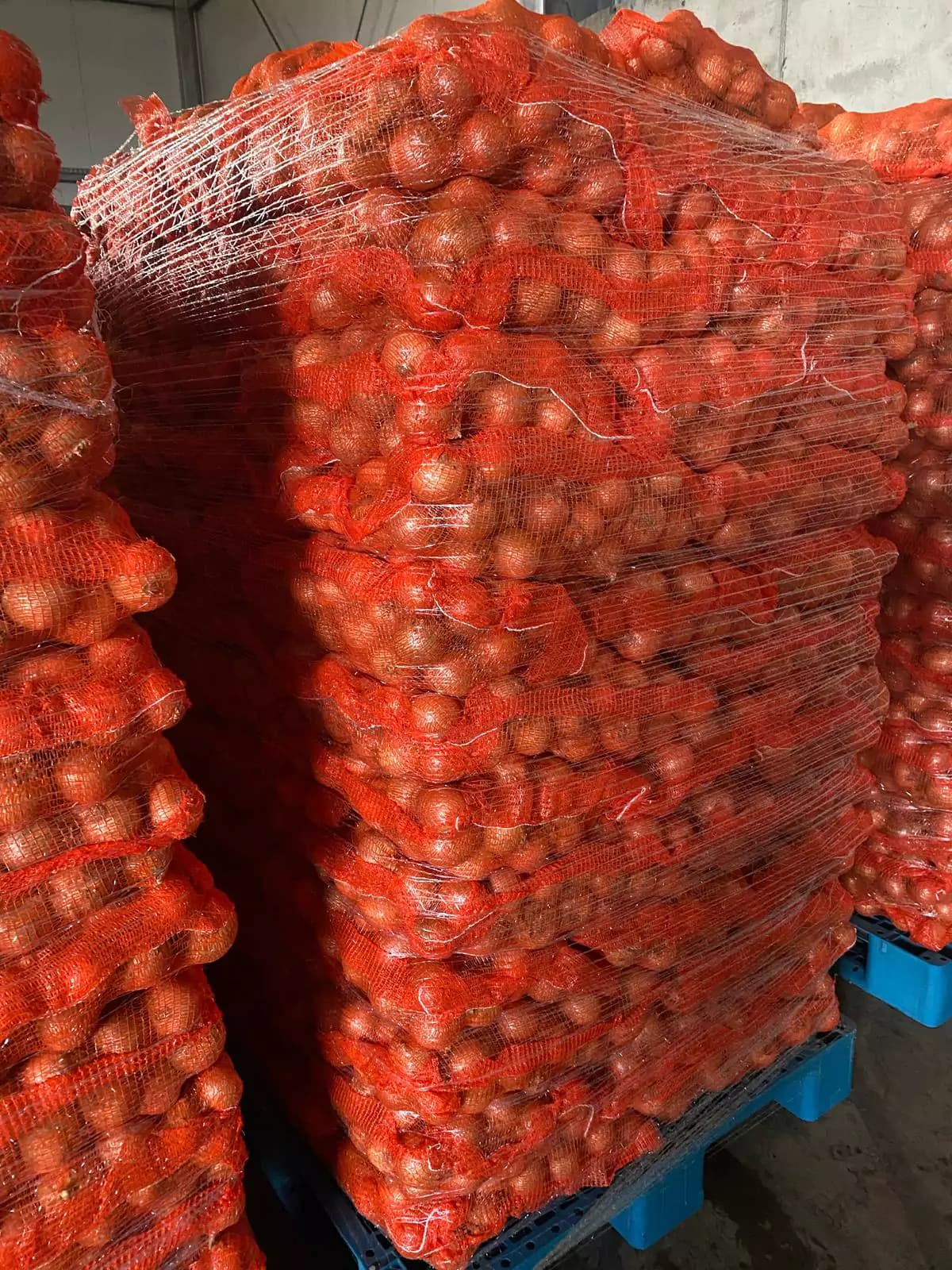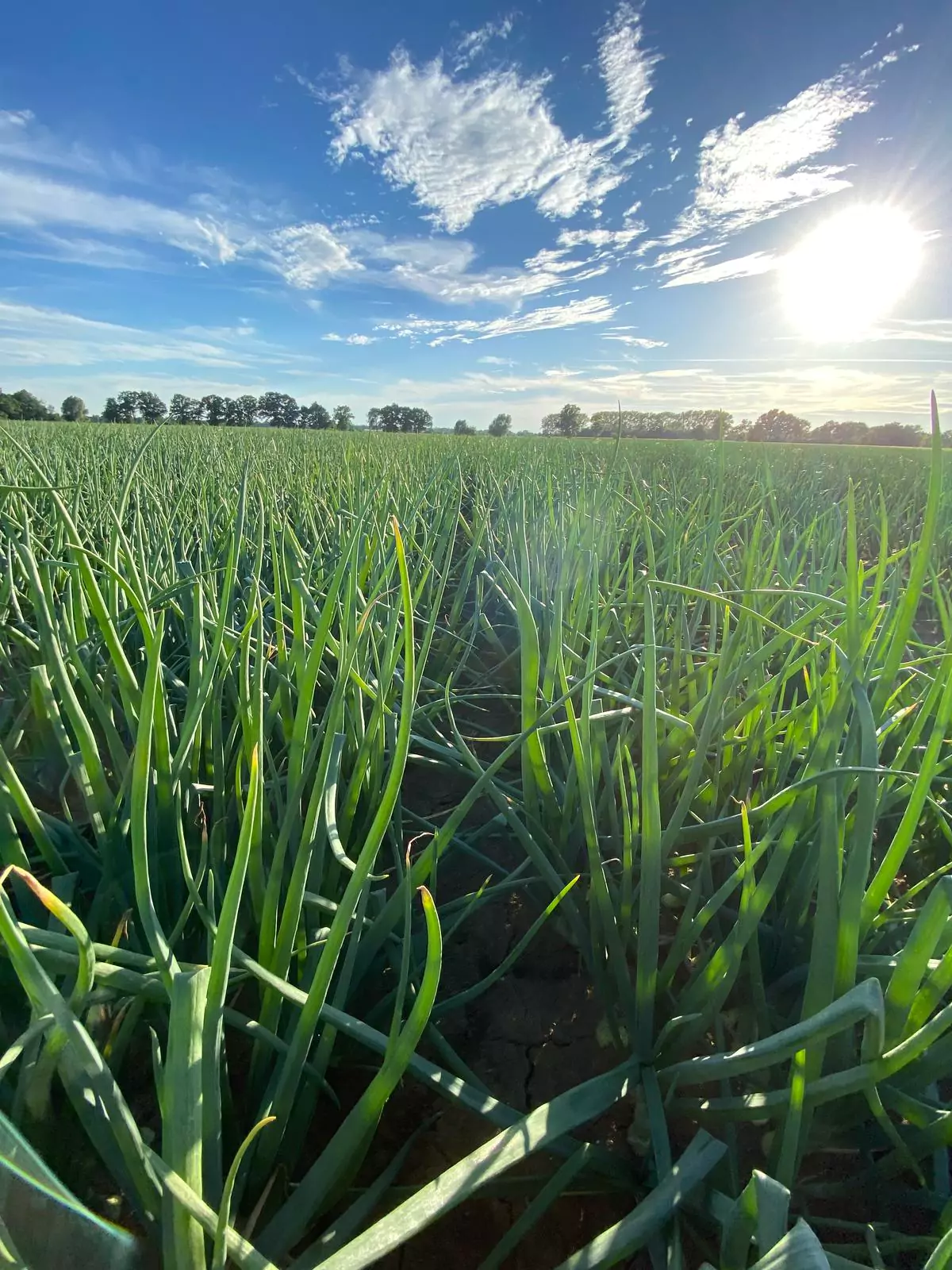
Fertilising onions comes down to three decisions: how much nitrogen to give, how much sulphur, and when to stop. The first two decide the size and the evenness of the crop, the third decides whether the onions will sit in store until spring. Below we explain how we plan fertilising across our 250 hectares of onions, and why the results of those decisions only show up half a year later, in the store.
Why onions are demanding
Onions have a shallow, poorly developed root system. They will not reach for nutrients in the deeper layers the way wheat or oilseed rape will, so the food has to sit close to the surface and be there exactly when the plant needs it. On top of that, the whole crop is built in a few weeks, between the leaves forming and the tops going over.
We farm on Żuławy mada soils, which are fertile and high in humus, and we write more about them in our post on Żuławy mada soils under onions. Good soil does not excuse you from the balance sheet, though. You have to know what is in it rather than assume, because the differences can be large even within a single block.
How much nitrogen, phosphorus, potassium and sulphur
The starting point in commercial onion growing is the set of ranges below. They are a guide for a yield of 50 to 60 tonnes per hectare, not a recipe: the actual rates come from soil tests and from the yield we plan for.
| Nutrient | Guide range | When we apply it | What it affects |
|---|---|---|---|
| Nitrogen (N) | around 120-140 kg/ha | split: before sowing and as a top dressing | onion size, rate of growth |
| Phosphorus (P2O5) | around 60-80 kg/ha | before sowing | rooting and the start of the plant |
| Potassium (K2O) | around 150-200 kg/ha | before sowing | water management, durable skin |
| Sulphur (S) | 40-100 kg/ha in the guidance | before sowing, together with nitrogen | use of nitrogen, pungency and quality |
| Micronutrients | according to soil tests | foliar during the season | an even stand |
We split the nitrogen. Part goes on before sowing, the rest as a top dressing, usually from the last ten days of May to mid June. Anything later works against us.
The last nitrogen dose is the most important date in the whole fertilising plan for onions. Nitrogen given too late delays ripening, leaves thick necks and shortens storage life. The onions look fine in the field and then go off in the store.
Sulphur, the quiet partner of nitrogen
Onions are a sulphur-hungry crop. Sulphur builds the compounds that give an onion its smell and its bite, and it also decides whether the plant will use the nitrogen at all. When sulphur runs short, part of the nitrogen is simply wasted and the stand grows unevenly.
Recommended sulphur rates differ quite a lot between sources, so we do not copy them blind. We set them from soil tests and apply the sulphur together with the nitrogen before sowing, usually as a fertiliser that carries both nutrients at once.
How we set the rates here
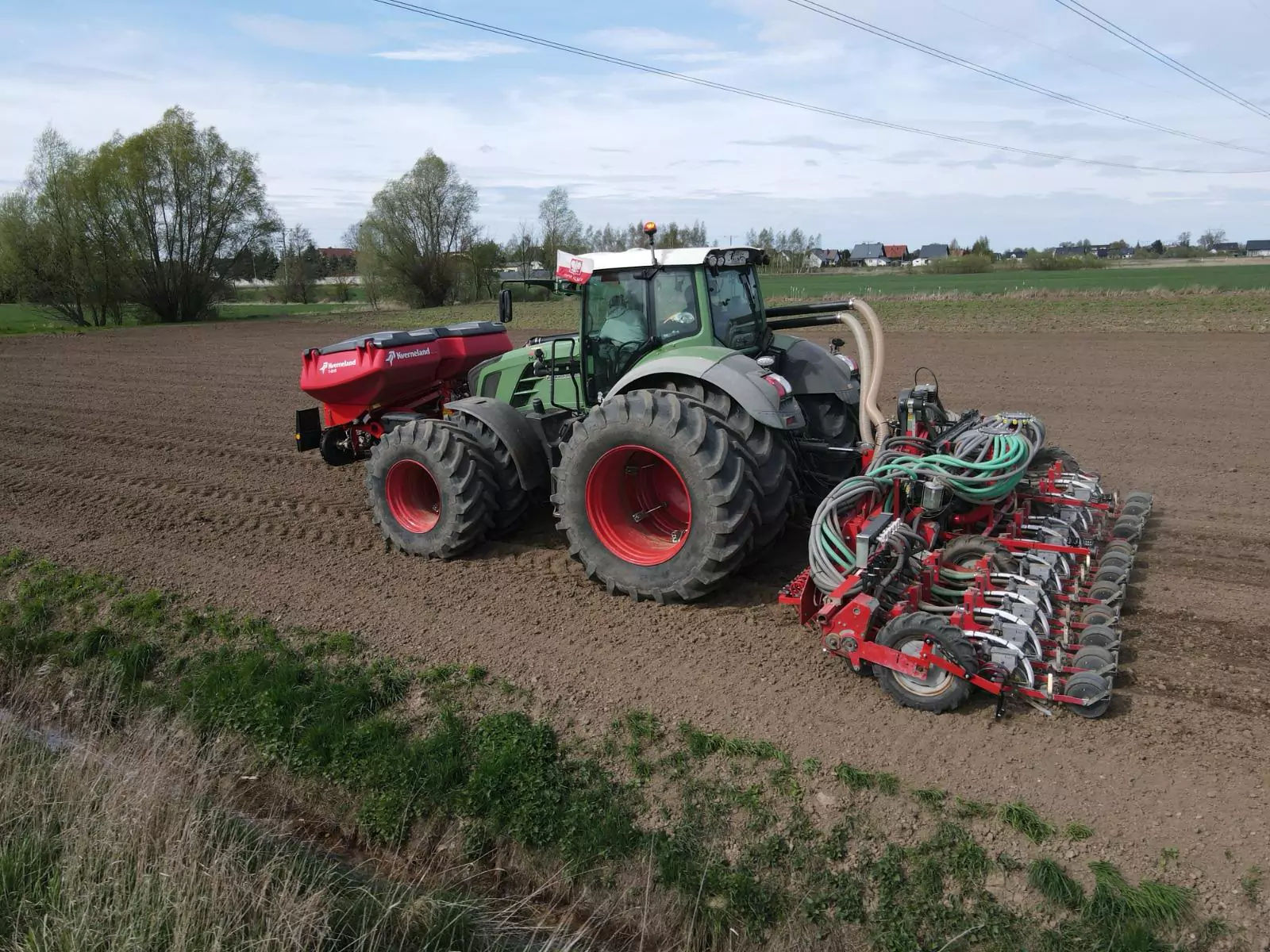
We do not have one rate for the whole farm. Fields differ in fertility, in cropping history and in how the spring runs, so we plan fertilising like this:
- Soil tests before the season, block by block, so we know where we start.
- Fertility maps and variable rate fertiliser application, which puts on more where the soil is poorer and less where the reserve is already there.
- GPS guidance with RTK correction, so passes do not overlap and nothing gets a double dose where two strips meet.
- Foliar feeding with micronutrients during the season, when we can see the stand needs it.
- The rules of Integrated Plant Production, that is integrated production instead of fertilising on autopilot.
Fertilising only shows up in the store
This is where growing for sale off the field differs from growing for the store. We sell onions for most of the year from our own store for 13,000 tonnes, so every batch has to survive months of lying still.
An onion overfed with nitrogen grows lush, but it ripens later and closes its neck badly. That neck is an open door for storage diseases, so the goods start going off in January instead of September. Balanced fertilising, a two-stage harvest and curing are the three things that together decide whether the onions last until spring.
What the buyer gets out of it
A buyer does not ask about nitrogen rates, only about two things: will the size be even, and will a batch delivered in March be as good as one from October. Fertilising answers both, because an even stand gives an even size, and a ripe onion with a closed neck stands up to storage.
We describe the whole cycle in our guide to how we grow onions in Żuławy. If you are looking for a supplier for the season, see our onion offer or write through the contact page, and we will send back the available sizes and dates.