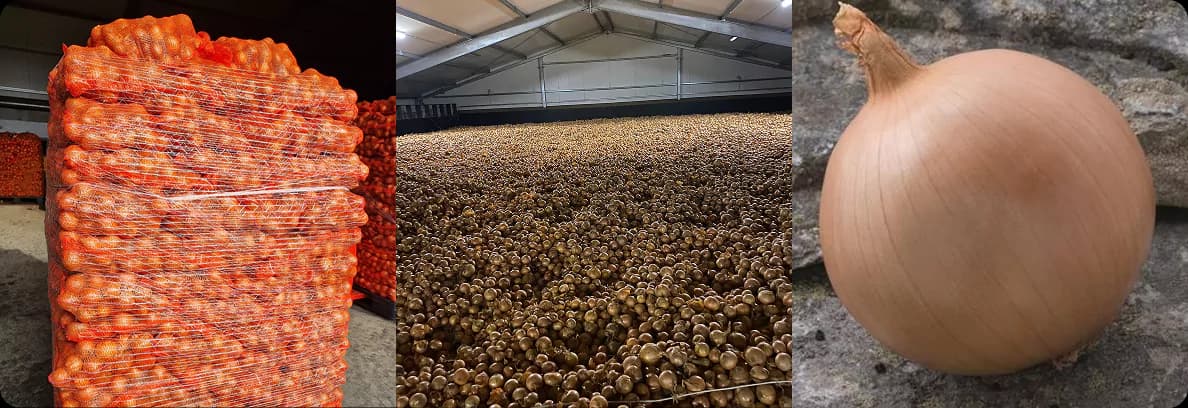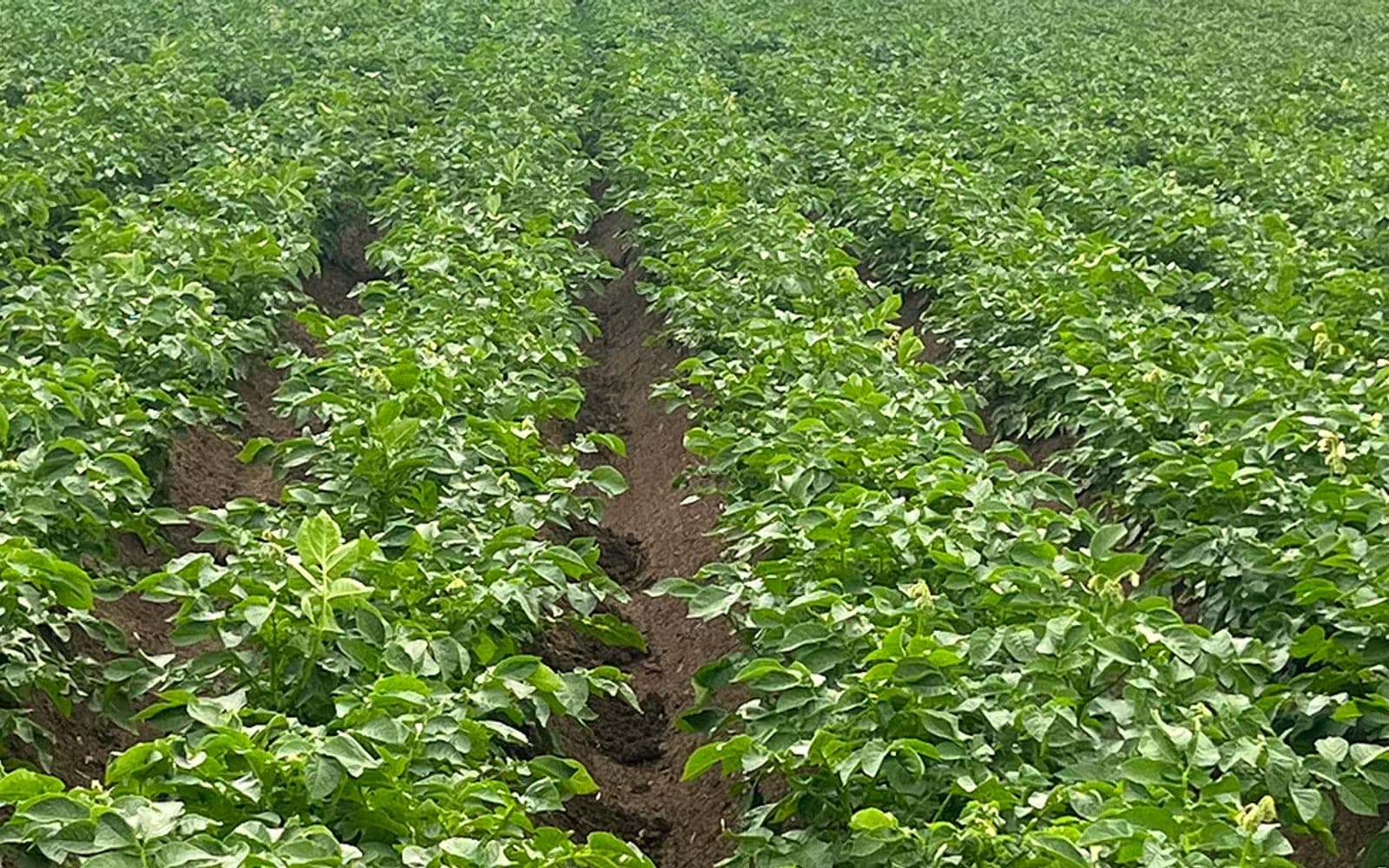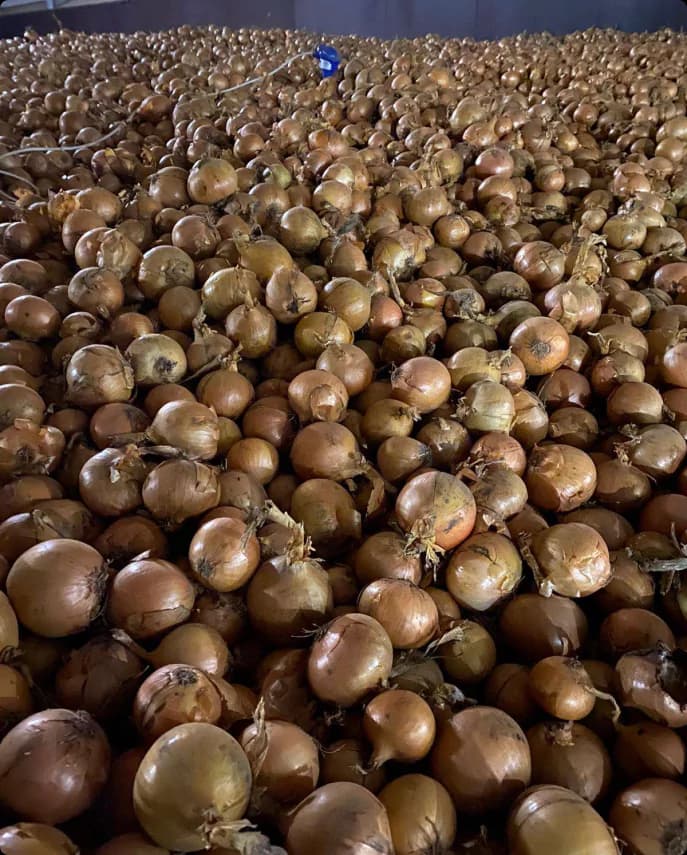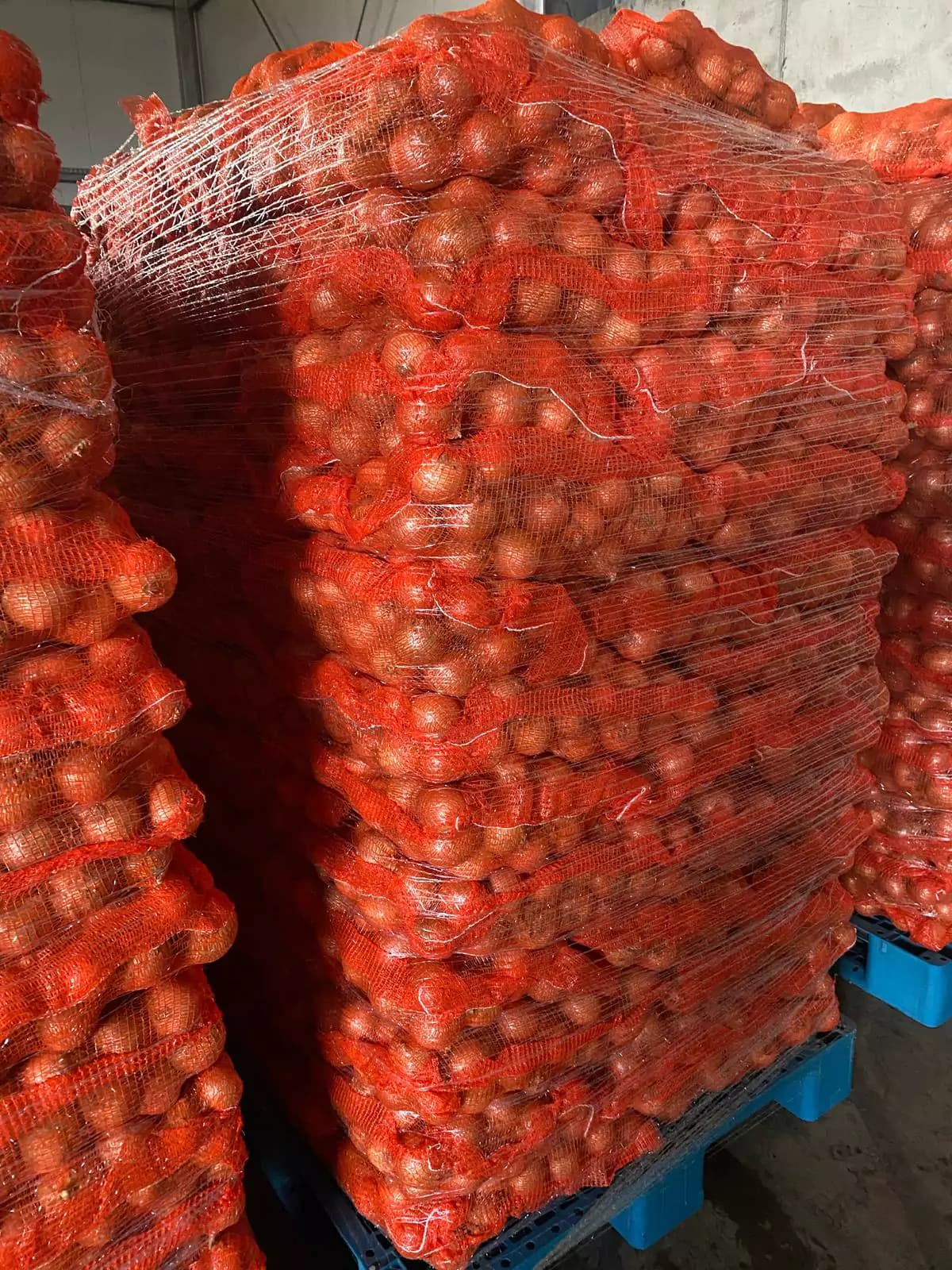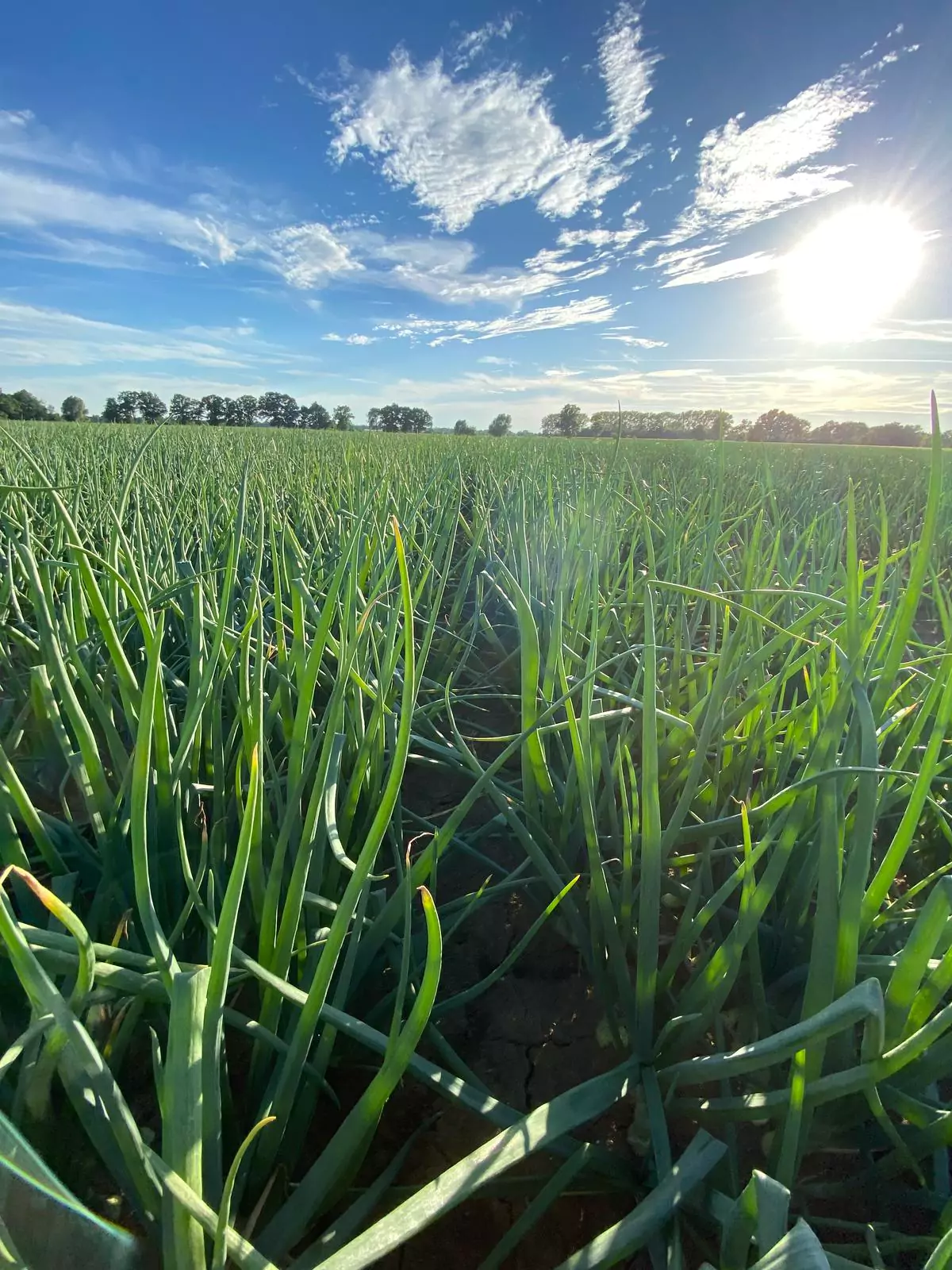
Sowing is the one decision in the season you cannot take back later. The date sets the rest of the calendar, and the plant stand, that is how many onions grow on a square metre, largely decides the size that goes out to the buyer in autumn. Here is how we plan onion sowing in Żuławy, and why we count seeds rather than kilograms.
When we sow onions
We grow onions from seed and we drill them in early spring, usually in April. We do not watch the calendar, we watch the soil: the ground has to dry out enough to work down without smearing, and warm up enough for the seed to move evenly.
On mada soils that is harder than on light land. Our Żuławy mada soils hold water and warm up more slowly, so the sowing window can be narrow. Drilling too early into cold, wet soil gives uneven emergence, and an uneven stand comes back at us all season: the plants ripen at different rates and it ends in uneven size.
Onions from seed need a long season to build the crop and still ripen before harvest. That is why late drilling can rarely be made up with fertiliser or water. A lost week stays lost.
A field prepared for sowing
Onion seed is small and goes in shallow, so the top layer has to be level and fine, with no clods and no hollows. On an uneven field some seed lands too deep and some too shallow, and the crop comes up in steps.
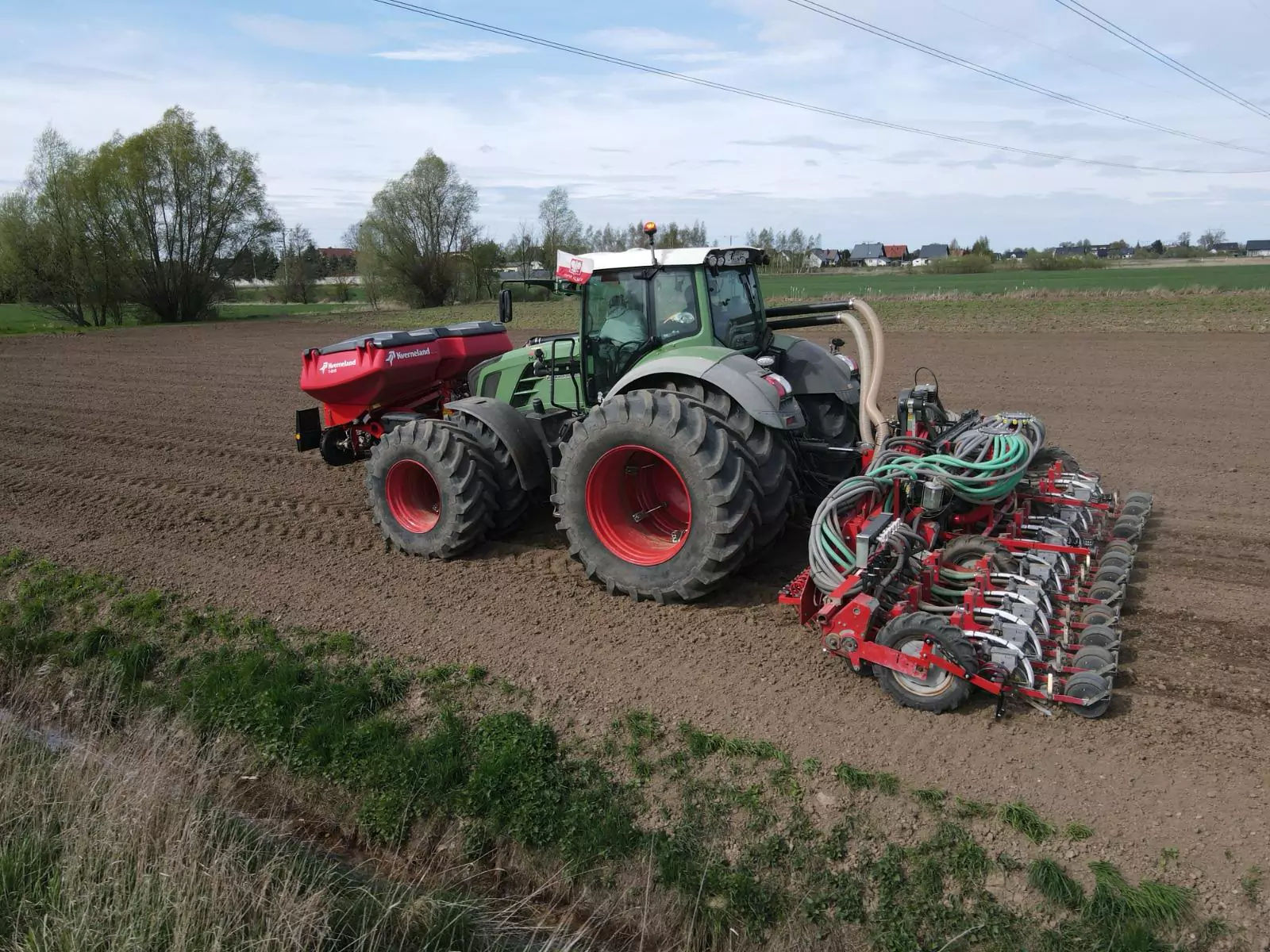
We prepare the ground on fixed traffic lines, steering the tractors with GPS guidance with RTK correction. Passes do not overlap, we compact less of the field, and the drilled rows later line up with the lines used for treatments and for harvest.
Seed rate, or why we count seeds
An onion seed rate given in kilograms tells you very little, because seed differs in thousand seed weight and in germination. In practice what counts is seed units per hectare and the emergence percentage you assume, not the weight of the bag.
The starting point looks like this:
| Target stand | What it gives in the crop | Typical use |
|---|---|---|
| around 60 plants/m2 | more large onions, fewer bulbs | size for packers and net bags |
| 70-90 plants/m2 | a large share of medium size | the usual compromise in commercial growing |
| over 100 plants/m2 | smaller onions, more bulbs | size for specific orders |
On top of that comes a margin for field losses. So we set the drill higher than the target stand, because some seed will not come up and some plants will drop out during the season.
Why the stand decides size
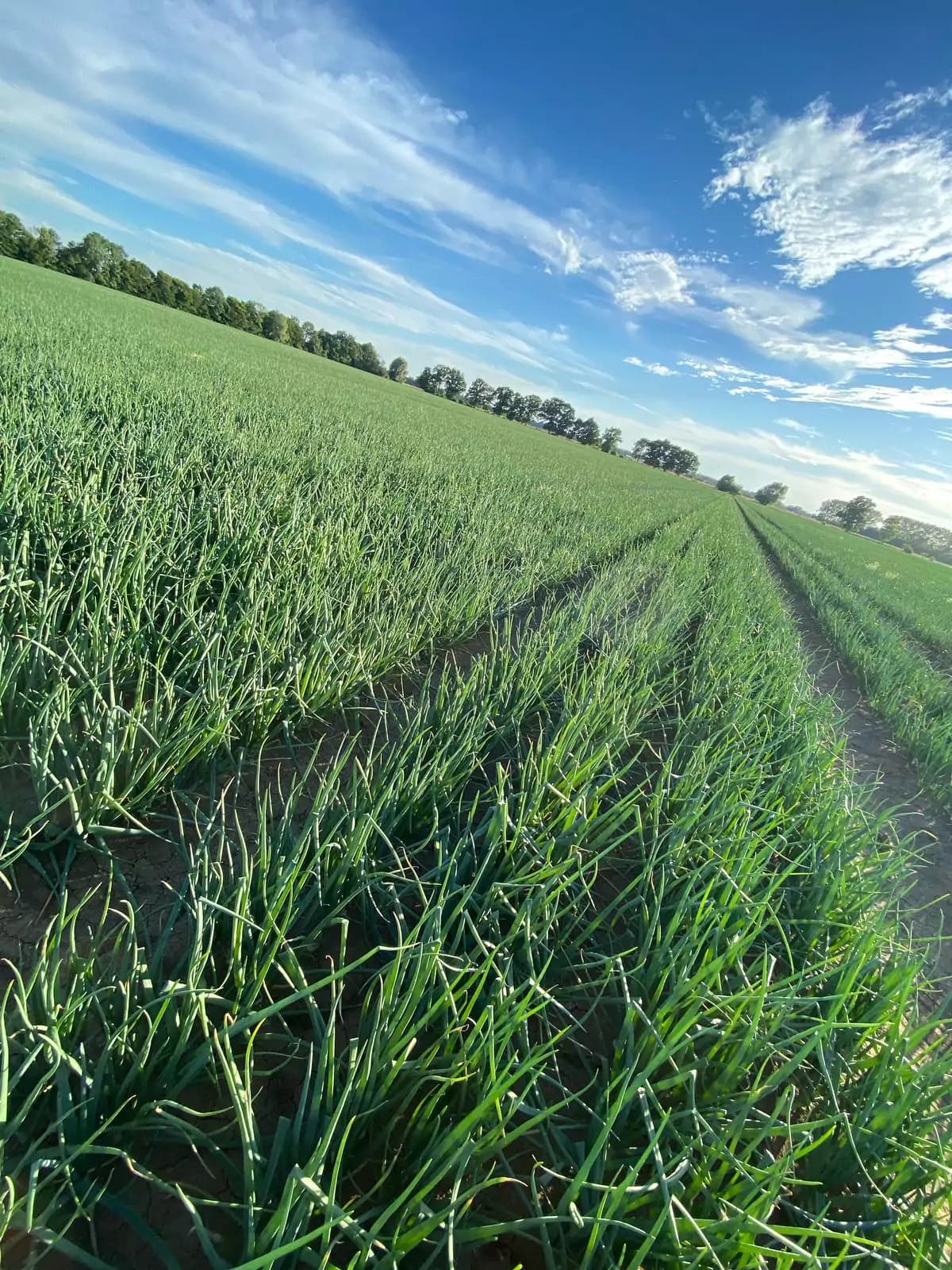
The relationship is simple and it works both ways. The denser the plants grow, the less room, water and light there is for each onion, so the bulbs are smaller but there are more of them. The thinner the stand, the bigger the goods, but the fewer bulbs off a hectare.
So we do not set the stand for maximum yield, we set it for what the buyers need. Size is the first thing a packing house or a processing plant asks about, and we go through the differences between uses in our post on what onion size goes to processing. How much of that comes out in tonnes we show in the post on how much onion we harvest per hectare.
A precision drill, not an ordinary one
You only get an even stand when every seed goes in at the same depth and at equal spacing. An ordinary row drill will not do that, so we sow onions with a precision drill that places single seeds instead of a stream.
We watch three things on every pass:
- Depth, because onion seed is small and will not push through from a deep sowing.
- Even spacing in the row, because clumps of plants give small goods and gaps waste ground.
- Working speed, because rushing the drilling shows for the rest of the season.
The second route: onions from sets
Drilling seed is not the only way. Part of the area we grow from sets, that is small bulbs planted instead of seed, which brings the harvest forward and lets us reach the market as early as summer. How that works in practice we describe in our post on growing onions from sets. Running the two routes side by side is the reason we have onions all year round, not only after harvest.
What the buyer gets out of it
Planning starts here in spring, at the drill, and ends in autumn at the sorter. If we know in good time which sizes will be needed, we can set the stand for them on part of the area instead of sorting whatever comes out.
The available sizes and packaging are gathered in our onion offer. It pays to place orders for the next season early, best of all through the contact page, because then we can still take them into account when we plan the drilling.