In Żuławy water does not run off a field by itself. A large part of the Vistula delta lies in a depression, that is below sea level, so the surplus has to be pumped away. For us that is not a geographical curiosity but a condition of growing: without working drainage you could not run vegetables on the 800 hectares we farm. Here is how the system works and what we do on our own fields.
Why the water does not run off by itself
Żuławy was formed from the silts of the Vistula delta and it is exceptionally flat. On higher ground water drains away by gravity, but across much of the delta the land sits lower than the water in the receiving channel. It is reckoned that around 70 percent of this area is polder, where the water is removed mechanically, by pumps.
That turns the usual logic on its head. In other regions a farmer mostly fights to hold water back. We have to do both: hold it in a drought and take it away when there is too much. The soil plays its part, because Żuławy mada soils are fertile and high in humus, but also heavy and slow to let water through.
The drainage system, level by level
Drainage works like a cascade. Water passes from the field into ever larger parts of the network until it reaches a river or the bay.
| Level | What it is | Who looks after it |
|---|---|---|
| Field drains | pipes under the field, taking water out of the soil profile | the landowner |
| Ditch | an open watercourse beside the field, collecting water from the drains | the landowner and the water board |
| Canal | a larger collector watercourse for many fields and villages | public infrastructure |
| Pumping station | pumps the water up into a higher receiving channel | public infrastructure |
| Receiving water | the Vistula, the Szkarpawa, the Bay of Gdańsk | public infrastructure |
One link stops working and the water stands on the field. A silted-up ditch can undo well-laid drainage, and a pumping station out of order floods the whole polder no matter how well the individual farms are prepared.
What we do on our own fields
We have no say over canals and pumping stations, but we do over the rest. Our part of the work is:
- Clear ditches and drain outfalls, cleaned and checked before the season, because the most expensive water is the water with nowhere to go.
- Soil structure, which we build with crop rotation that includes cereals. A field after wheat or triticale takes water better than one run for years under vegetables alone.
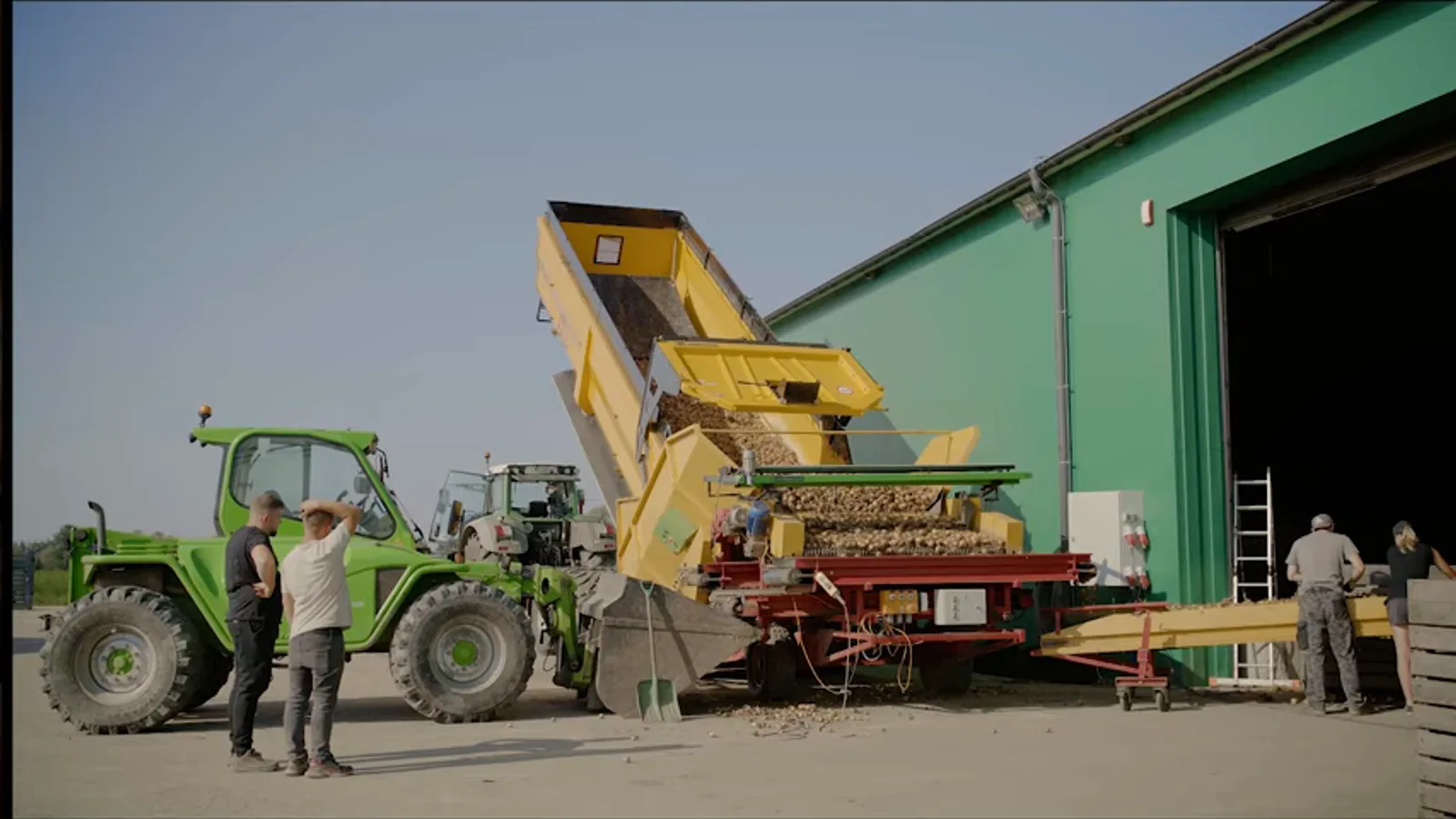
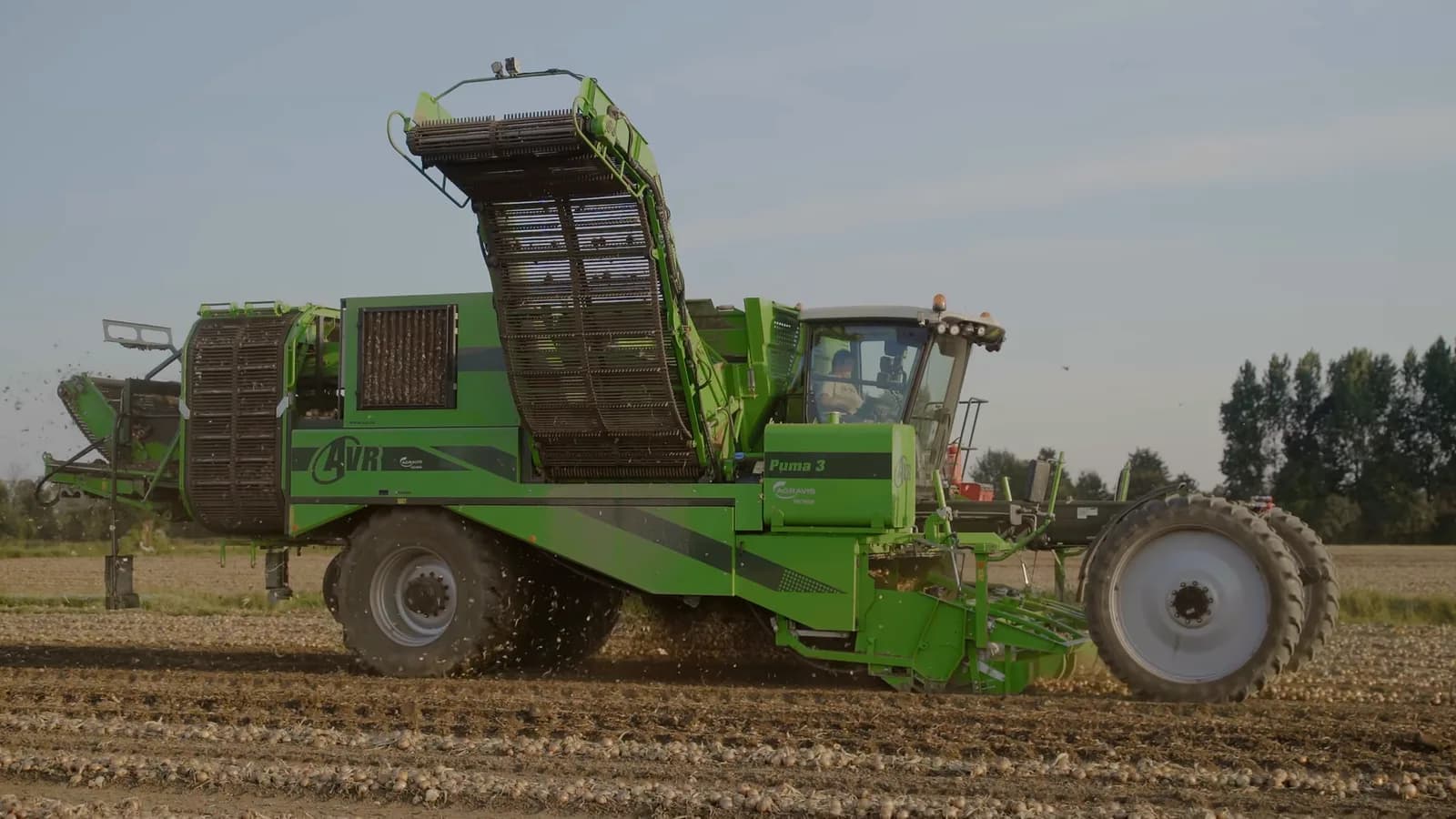
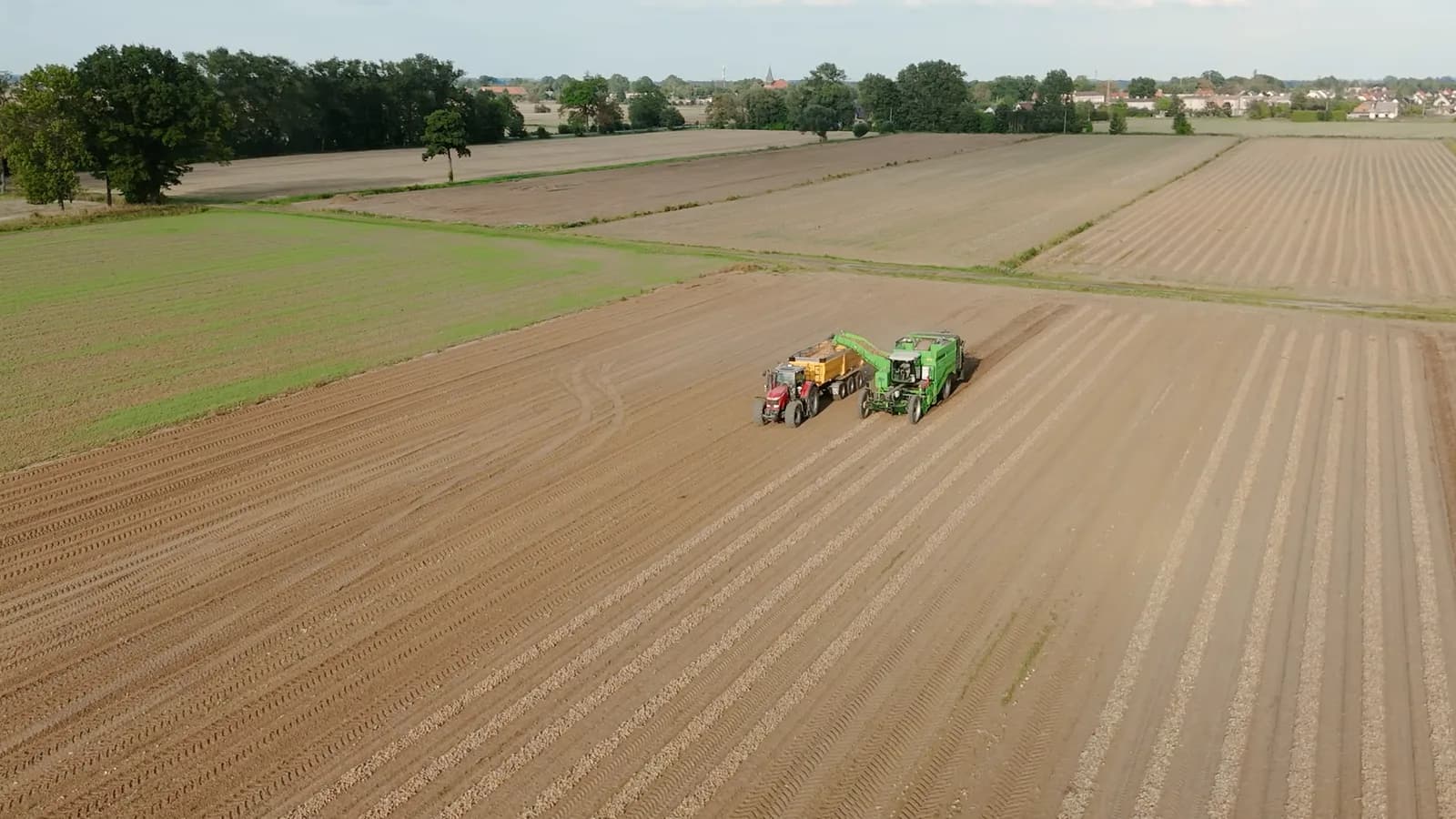
- Less compaction, that is fixed traffic lines steered by GPS with RTK correction and the tracked John Deere 8RX for the heaviest work. Compacted soil does not let water through, and a plough pan, once made, does not go away in one season. The kit we use for this is shown in our machinery park.
- Knowing where the water stands longest, gathered over years of watching. We plan those spots differently: they go under onions less often, because onions cope worst with standing water.
Onions do not forgive standing water. A dozen or so hours in a pool is enough for the roots to suffocate, and the plants in that spot will never catch up with the rest of the field. So we pick blocks for onions with the water map in our heads, not only the soil fertility map.
What the 2025 season taught us
2025 showed both sides of this arrangement. In July we had 150 to 220 litres of water per square metre. The result: flooding, drainage canals overflowing, compacted soil and a weaker finish to the yield. On top of that came heavy pressure from secondary weeds, because onions keep the soil profile bare all season and every rain sets off another flush of emergence.
The lesson for the years ahead is simple: with rain like that, the winner is not the one with the best harvesting kit, but the one who saw to the drainage beforehand. Drainage is work you do out of season, when nothing is happening.
Water works both ways
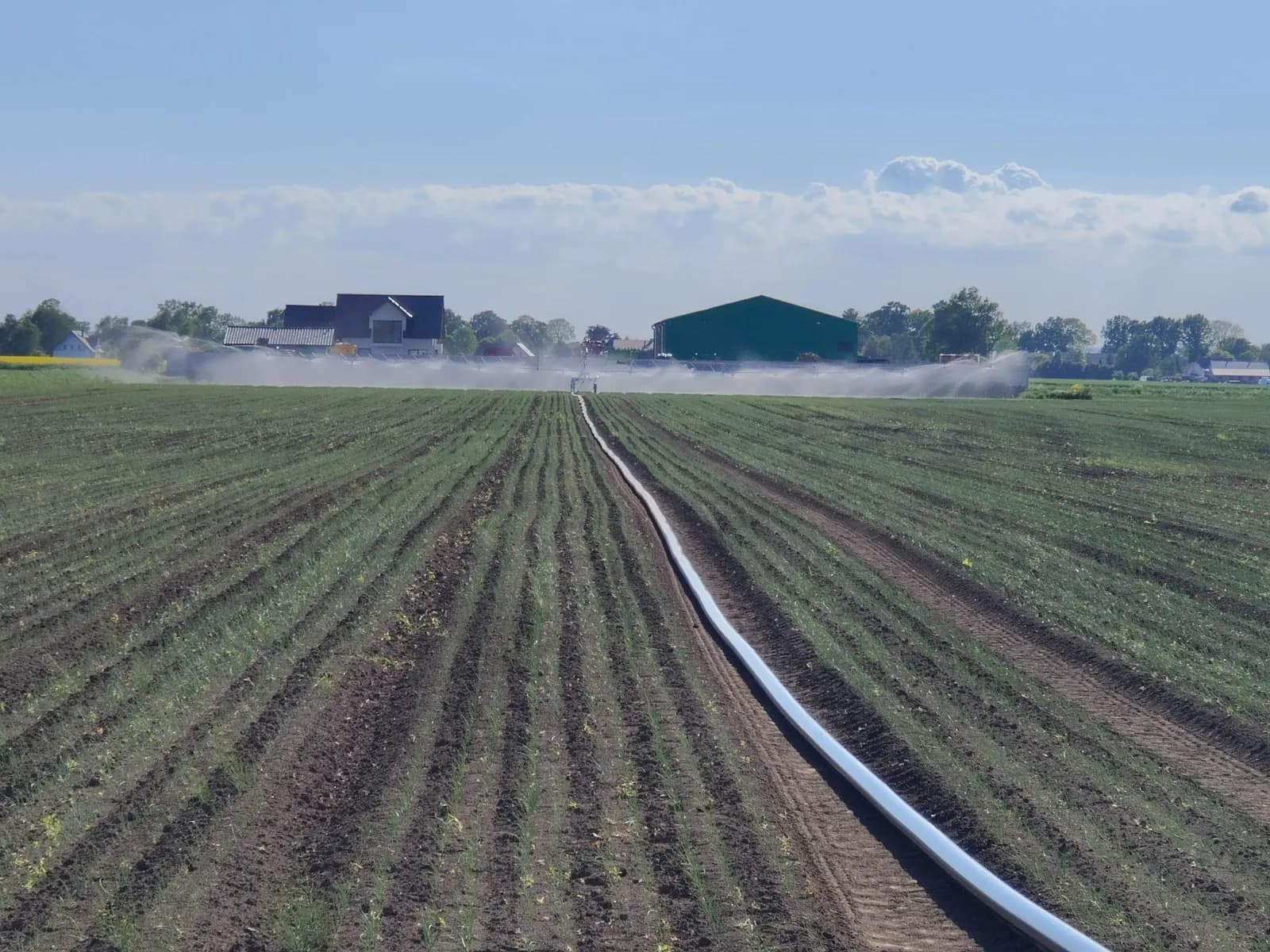
In the same summer we can be irrigating and draining, sometimes two weeks apart. Onions take water shallow and react to a shortage at a few specific points in the season, which we write about in our post on irrigating onions with a reel irrigator. So our water plan for the crop covers both: the kit to put water on and a clear network to take it away.
What this means for the buyer
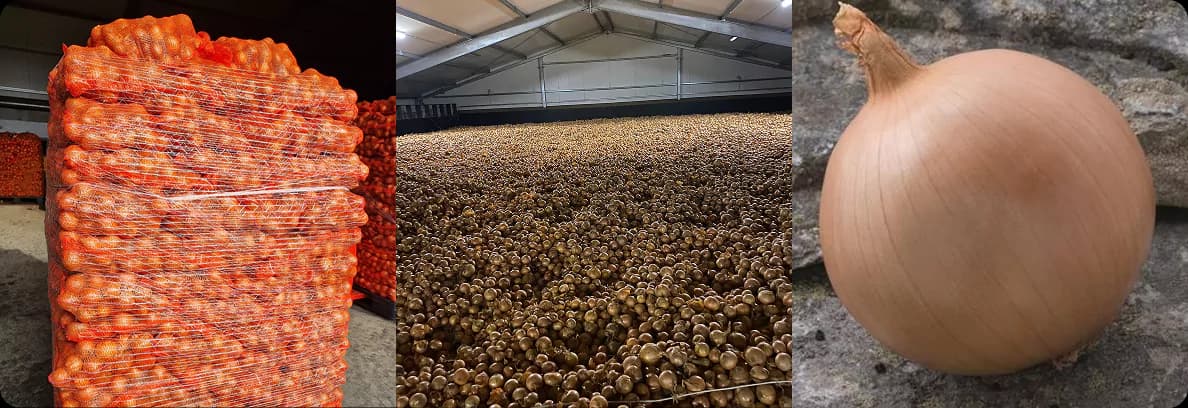
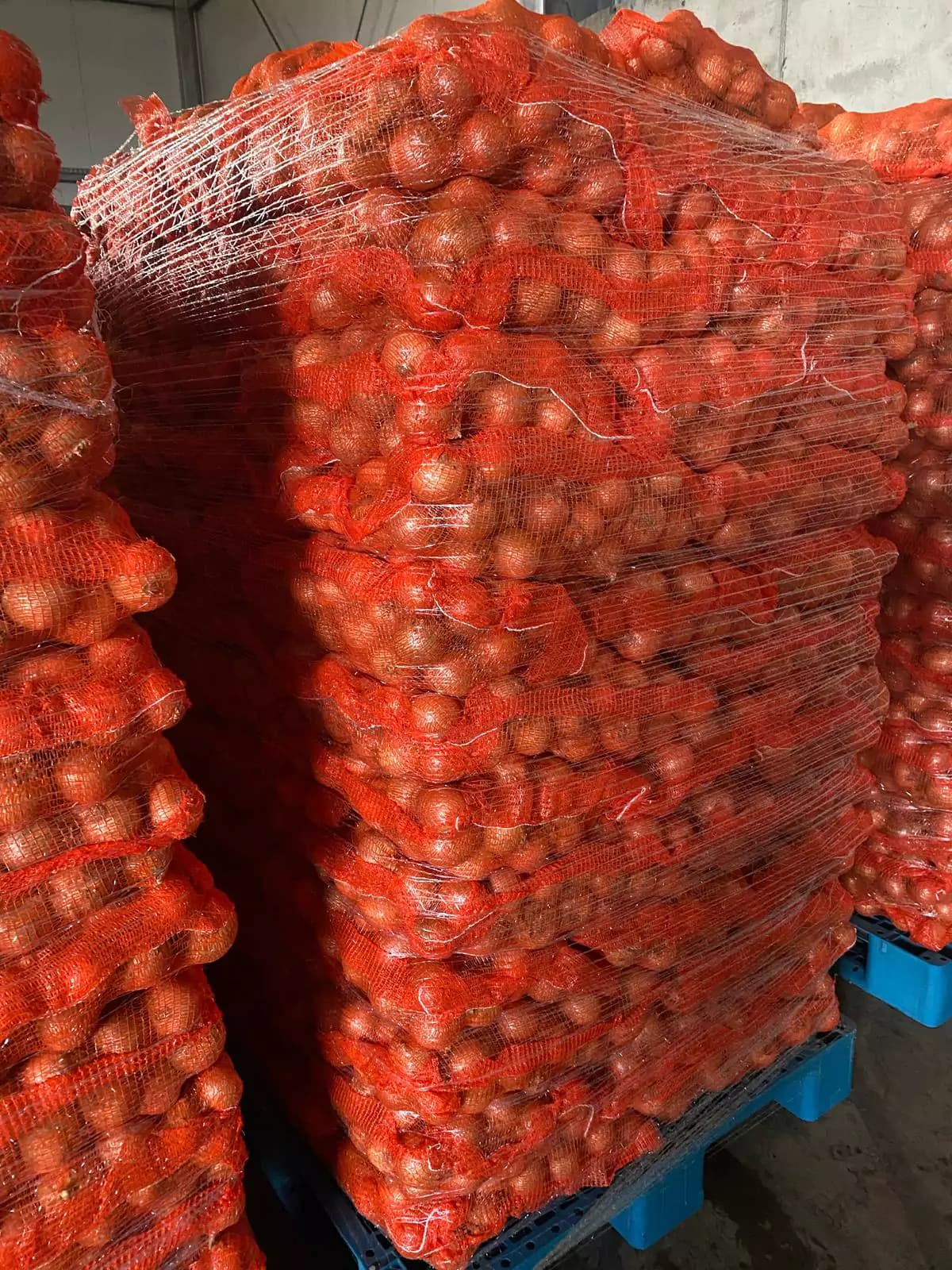
Working drainage translates straight into whether a delivery happens at all. A field the water left in time gives healthy goods fit for storage, and batches like that go into our store and from there out to buyers for most of the year.
The second part is scale. We farm over 800 hectares spread across several blocks, so a local downpour does not take our whole season. The available sizes and packaging are gathered in our onion offer, and if you are planning supply for next year, write to us through the contact page and we will set out the quantities and dates we have.