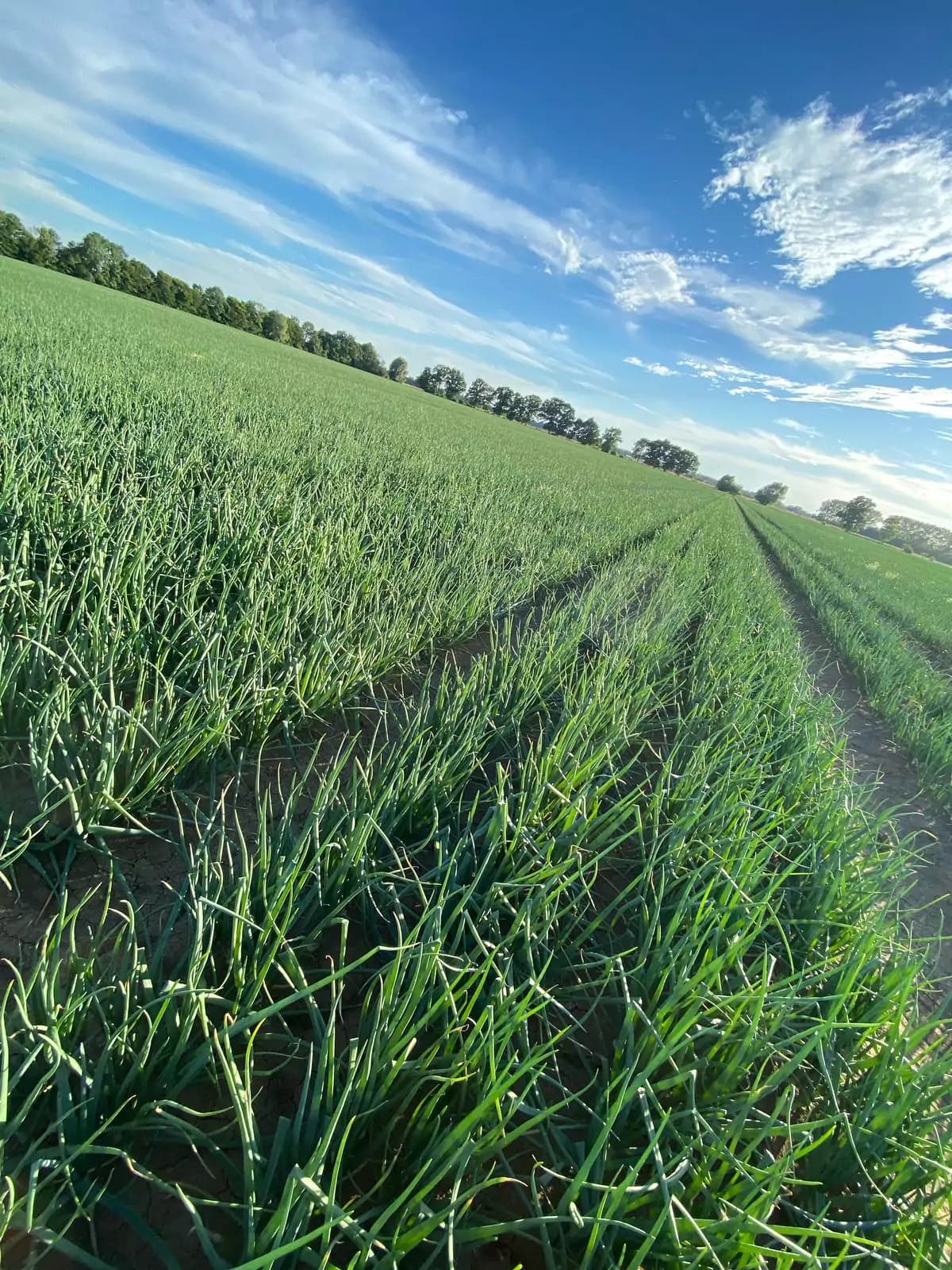
Of the whole onion season, the work that costs us most is neither the harvest nor the fertilising, it is the weeds. Onions have narrow, upright leaves and for most of the season they do not cover the soil, so every weed grows in full light right beside them. Here is when the critical period falls, how we plan protection across around 250 hectares of onions, and why we now spray single plants instead of the whole field.
Why onions lose to weeds
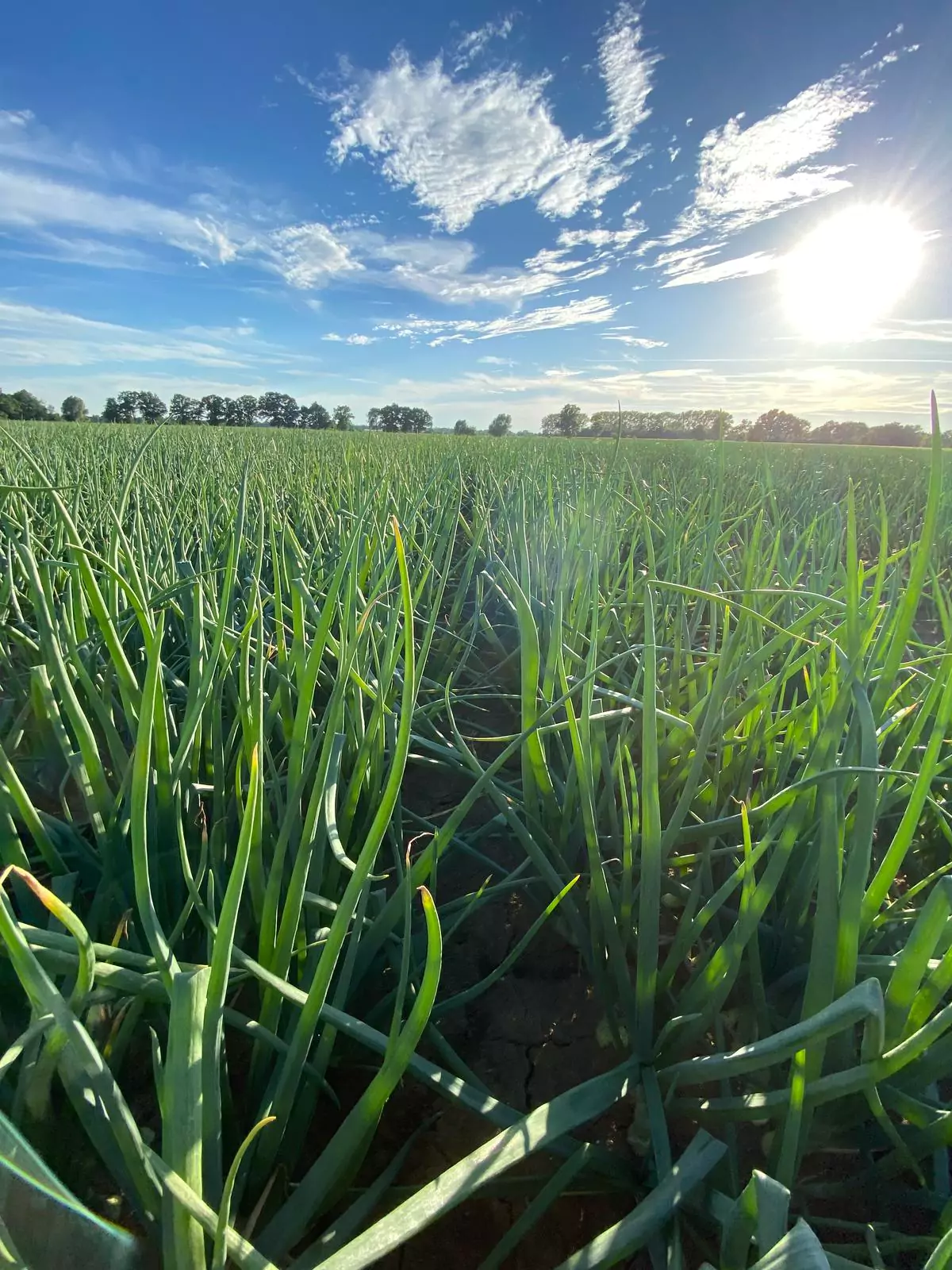
Wheat or oilseed rape help themselves: they build a canopy fast, shade the soil and smother weeds by taking the light. Onions cannot do that. Their leaves are narrow and stand upright, the soil between the rows stays bare almost until harvest, and the start from a small seed is slow.
Then there is the shallow root system. A weed growing alongside takes not only light from the onion, but water and nutrients from exactly the same layer of soil. The competition is direct, and it shows in the yield fast.
The critical period, the first few weeks
The biggest losses happen early. The critical period in onions runs from emergence to the 3-4 leaf stage, and research shows that weeds left until the two leaf stage can cut the yield by more than 45 percent, that is around 3 percent of the potential a day. Weeds in the second half of the growing season, when the onions already have 5-6 leaves, do far less damage.
In onions, being late is measured in days, not weeks. A weed that outgrows the onion at the start takes away a yield no later treatment will bring back. That is why in April and May we walk the fields more often than at the height of the season.
Our protection programme, layer by layer
No single treatment protects onions for a whole season, so our protection is built from several layers that back each other up.
| Stage | What we do | Why |
|---|---|---|
| Before sowing | crop rotation with cereals, levelling the field | a smaller weed seed bank, even emergence |
| Before emergence | a soil-applied treatment | a clean field for the onions to start on |
| After emergence | split treatments at lower rates | weeds killed at the seedling stage, less stress for the onions |
| All season | walking the fields and spot spraying | we react to what actually grows, not on autopilot |
Split rates are the basis. A young weed dies from a low rate, an overgrown one needs a high one, and the onions will take that worse anyway. Better to go in three times with a small rate than once with a big one.
Secondary weeds, the second front
The first flush of weeds is only the beginning. Bare soil means every heavier rain sets off another wave of emergence, and it goes on all season. The 2025 season showed this clearly: after the July downpours, when we had 150 to 220 litres per square metre in a single day, the pressure from secondary weeds was exceptionally strong.
These late weeds rarely cut the yield, but they can spoil the harvest. Green material in the windrows makes it harder for the onions to dry off and goes into the harvester with them, and moisture from weeds is a straight road to trouble in the store. Preventing disease starts in the field, which we cover in our post on onion diseases and pests.
Spot spraying instead of the whole area
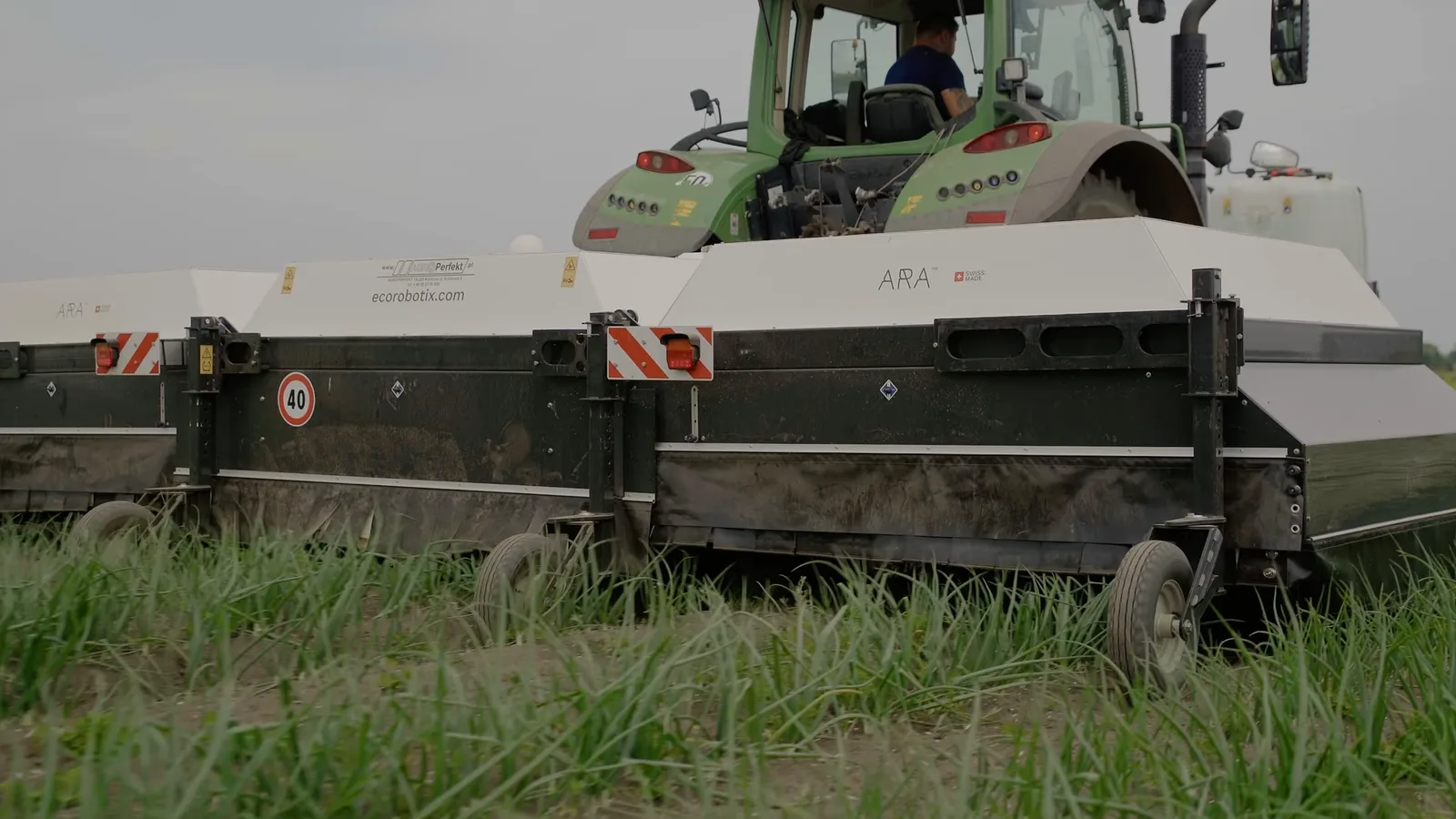
The biggest change here came with the Ecorobotix ARA spot sprayer. The machine has a 6 metre working width and 156 nozzles, and cameras with software recognise plants on a 6 by 6 centimetre grid. Instead of wetting the whole area, it hits single weeds and misses the onions.
The effect is double. Our product use drops by around 70 percent, and the main crop stays untouched, because the liquid never lands on the onions. The manufacturer puts the saving at up to 95 percent, and to the best of our knowledge only three such machines work in Poland. How it goes in the field we describe in our post on Ecorobotix ARA spot spraying.
What the buyer gets out of it
Less chemistry on the field means fewer residues in the goods. We grow in a residue-free technology, in line with the principles of Integrated Plant Production, and we check every batch with pesticide residue testing and heavy metal testing. For a packing house or a processing plant that is a document which closes the subject before anyone asks.
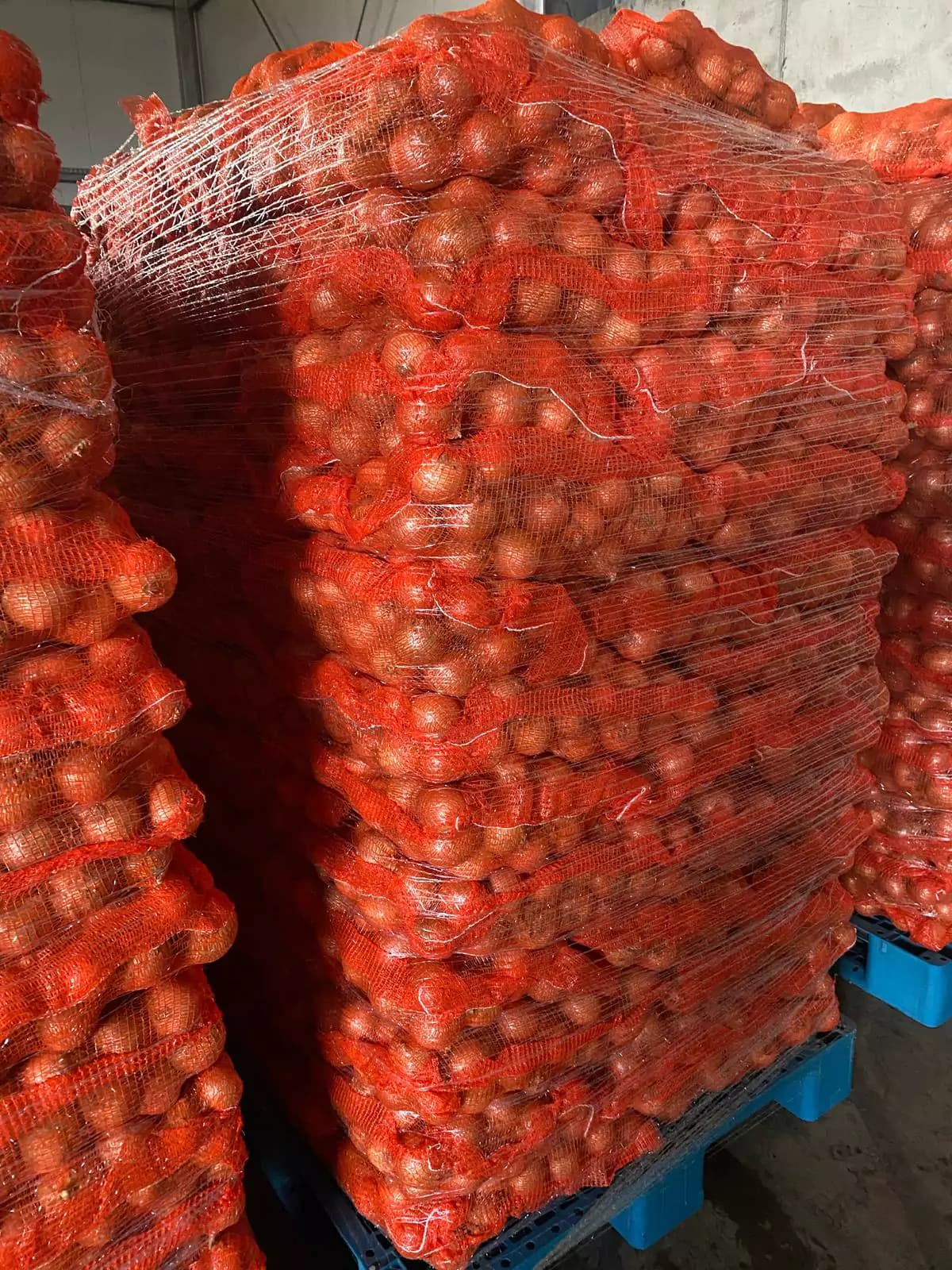
The second gain is practical: a clean field gives a cleaner harvest, and a cleaner harvest means less waste on the sorter and better keeping quality in store. We describe the whole growing cycle in our guide to how we grow onions in Żuławy, and you will find the available sizes and packaging in our onion offer. For a quote on a batch, write through the contact page.